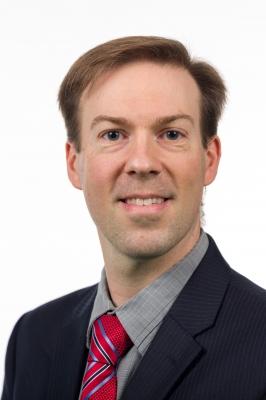
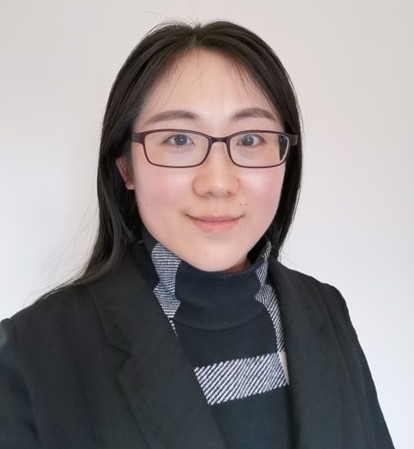
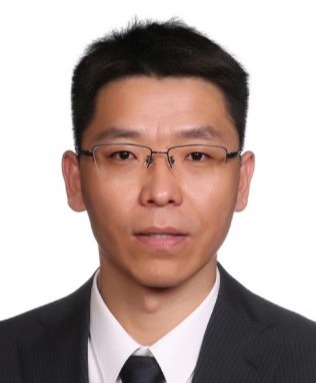
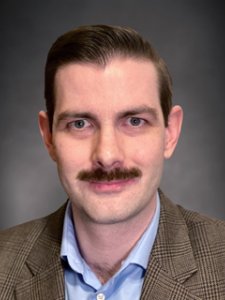
Felix Leach is an Associate Professor of Engineering Science and Shell-Pocock Fellow at Keble College, University of Oxford. He holds a DPhil from Oxford (Oxon), is a Chartered Engineer (MIMechE), and a Fellow of the Higher Education Academy. His research focuses on thermal propulsion systems and air quality, with projects like Ammospray (green-ammonia propulsion) and OxAria (air pollution monitoring in Oxford). He collaborates with Jaguar Land Rover, Siemens, and local governments on emissions reduction and policy. Education: DPhil (Oxford), MEng. Awards include the 2021 ASME ICED Most Valuable Technical Paper Award and multiple SAE recognitions. He co-authored the prize-winning book *Racing Toward Zero: The Untold Story of Driving Green*. Research interests span engine efficiency, alternative fuels (hydrogen, ammonia), and public health impacts of emissions. He leads interdisciplinary projects combining experimental and computational methods, such as machine learning for flow field analysis and sensor networks for urban pollution monitoring. Grants include EPSRC, NIHR, and NERC funding. He advises on policy for Oxford City Council and serves as associate editor for the ASME Journal of Engineering for Gas Turbines and Power. His work bridges academic research, industry collaboration, and public engagement to address climate and air quality challenges.
Lukas Graber is an Associate Professor and Sutterfield Family Early Career Professor at Georgia Tech's School of Electrical and Computer Engineering (ECE). His primary affiliations include the Plasma and Dielectrics Laboratory, focusing on high-voltage engineering, superconductivity, and cryogenic systems. He holds a Ph.D. and M.S. from ETH Zurich (2009 and 2002), with postdoctoral and research faculty experience at Florida State University's Center for Advanced Power Systems. His technical expertise spans gas-insulated switchgear, superconducting power cables, and high-speed mechanical switches. Key research areas include dielectric materials for supercritical fluids, fault current limiters, and insulation coordination for power systems. He has authored/co-authored 40+ publications and holds multiple patents in energy-related technologies. Research interests emphasize commercialization of novel energy technologies, with a focus on cryogenic electronics and eco-friendly alternatives to SF 6 . Notable awards include the ETG Innovation Prize (2010) and Electrosuisse Best Paper Award (2009). His work integrates fundamental research with applied engineering solutions for naval, aerospace, and grid systems. Labs/Teams: Director of the Georgia Tech Plasma and Dielectrics Laboratory, collaborating on projects like the TESLA Breaker and cryogenic link systems for aircraft propulsion. Active in IEEE and the Cryogenics Society of America.
Dr. Xiaoli Li is an Associate Professor in the Department of Chemical and Petroleum Engineering at the University of Kansas. Her research laboratory (PVT Lab) focuses on complex fluid behavior in energy systems, with particular emphasis on phase equilibria, gas transport phenomena, and enhanced hydrocarbon recovery techniques. She maintains active research programs in unconventional reservoirs, CO 2 geostorage, hydrate technology, and nanoscale fluid dynamics. Her core research domains include: Confined phase behavior: Thermodynamics of fluids in nanoporous media Gas transport mechanisms: Rarefied flow and apparent permeability modeling Hydrate science: Structure stability and phase boundaries CO 2 utilization: Enhanced oil recovery and geological sequestration Asphaltene dynamics: Precipitation mechanisms in EOR processes Dr. Li teaches across the petroleum engineering curriculum, including core courses: Chemical Engineering Thermodynamics (C&PE 221), Reservoir Engineering (C&PE 327), Well Logging (C&PE 528), and Petroleum Engineering Design (C&PE 628). Her instructional portfolio emphasizes fundamental thermodynamics, reservoir characterization, and practical field applications. Her publication record (35+ articles) demonstrates consistent focus on reservoir thermodynamics and transport phenomena, with recent emphasis on: CO 2 -oil interactions (2020-2023), gas hydrate stability (2020-2022), shale gas transport (2019-2021), and equation of state modifications for confined fluids (2018-2020). Research methodologies combine molecular simulations, experimental studies, and novel thermodynamic modeling approaches.
Chanel Fallon is a Lecturer in the Department of Mechanical Engineering at the University of Bath, affiliated with the Centre for Integrated Materials, Processes & Structures (IMPS). Her research focuses on dynamic material behavior and infrastructure protection under extreme conditions. She holds a PhD and MEng from the University of Cambridge. Research interests include dynamic experimental techniques (e.g., gas guns, Split-Hopkinson pressure bars), numerical modeling of extreme loading, blast/impact mitigation for civilian infrastructure, and strain-rate/temperature-dependent material characterization. Recent projects include cryogenic composite testing (EPSRC-funded), GKN Prosperity Partnership in aerospace materials, and blast protection strategies for concrete structures. She collaborates widely on material testing and structural resilience. Advising and Grants: Principal Investigator/Co-Investigator on 4 research projects, including EPSRC grants and industry partnerships. Supervises doctoral students in protective materials and structural dynamics. Labs/Teams: Active in the IMPS Centre, specializing in advanced material testing and computational modeling.
Dr. Wenjuan Song is a Lecturer in Electrically Powered Aircraft, Propulsion, Electrification & Superconductivity Group at the James Watt School of Engineering, University of Glasgow. She holds a PhD in Electrical Engineering from Beijing Jiaotong University (2019) and has held postdoctoral positions at Victoria University of Wellington (2016–2018) and the University of Bath (2019–2021). Her research focuses on accelerating net-zero transitions in transport sectors through superconductivity and AI-driven solutions. Research Interests: Net-zero aviation, renewable energy systems, superconducting fault current limiters, cryogenic systems, and AI applications in electrification. Awards: Global Talent (UK Royal Academy of Engineering, 2021), featured in IEEE PES Women in Power, and COST Action publications. Teaching: Course coordinator for Simulation of Engineering Systems, Simulation of Aerospace Systems, and Power Engineering 3. Professional Activities: Organizing Committee member (UK Fluids Conference 2023), guest editor (Superconductor Science and Technology), and session chair at international conferences. Her work integrates superconductivity and AI to address challenges in electric aircraft, high-speed rail, and marine electrification. Key contributions include fault detection systems for HTS components and predictive modeling of superconducting materials.
Cao Haishan is an Associate Professor at Tsinghua University, affiliated with the Department of Energy and Power Engineering in the School of Mechanical Engineering. His research focuses on cryogenic cooling systems, high heat flux thermal management, and the physics of amorphous ice formation and phase transitions. He leads a research group supported by the National Natural Science Foundation of China and industry partners including Huawei, Midea, and Lenovo. Ph.D., Mechanical Engineering, University of Twente, 2013 M.Sc., Chemical Engineering, Dalian Institute of Chemical Physics, Chinese Academy of Sciences, 2009 B.Sc., Chemical Engineering, Zhejiang University, 2006 Dr. Cao's research spans three major areas: cryogenic cooling (including micro cryocoolers and sorption systems), high heat flux electronic cooling (especially with non-condensable gases), and the formation and transformation of amorphous water ice. His work combines theoretical modeling, computational simulation, and experimental validation, often at micro and nano scales. He applies principles from thermodynamics, fluid dynamics, and materials science to solve engineering challenges in refrigeration and thermal control. The recent publications reflect a strong trend toward interdisciplinary research, integrating machine learning for heat transfer prediction, computational screening of MOFs for cryogenic switches, and fundamental studies of ice nucleation on various substrates. The articles span journals in physics, engineering, materials, and applied thermal sciences, indicating broad impact across multiple domains. Notable scientific awards include: Gustav and Ingrid Klipping Award (2016) Cryogenics Best Paper Award (2017) Annual Teaching Excellence Award, Tsinghua University (2023) Excellent Supervisor Award, Tsinghua University (2024) Multiple First Prize Advisor awards in national student contests on energy saving Dr. Cao has been principal investigator on several grants, including projects funded by the National Natural Science Foundation of China on amorphous ice lifetime and micro-cryocooling for semiconductor chips. He has also led industry-university collaborations with Huawei, Midea, and Lenovo. He advises graduate students and leads a research team focused on next-generation cooling technologies. He serves on editorial boards for Journal of Refrigeration , Vacuum and Cryogenics , and Energies , and has chaired sessions at major international conferences such as ICEC-ICMC and ACTS. His research group operates within the Institute of Thermophysics at Tsinghua University, leveraging facilities in the Lee Shau Kee Science and Technology Building. The team collaborates with national laboratories and international institutions, particularly maintaining ties with the University of Twente. Current efforts are directed toward ultra-low vibration cooling, efficient separation of non-condensable gases, and extending the stability of amorphous ice for cryobiological applications.
David K. Hall is an Assistant Professor in the Department of Aerospace Engineering at Pennsylvania State University, College of Engineering. His research focuses on advanced propulsion systems and aerodynamic integration for next-generation aircraft. He is actively involved in projects related to electric and hybrid-electric propulsion, boundary layer ingestion, and sustainable aviation technologies. Assistant Professor, Department of Aerospace Engineering, Penn State Researcher in Electrified Propulsion and Airframe Integration Contributor to NASA-affiliated research initiatives Dr. Hall's research interests center on improving aircraft efficiency and reducing environmental impact through innovative propulsion technologies. His work emphasizes boundary layer ingestion , distributed electric propulsion , and conceptual aircraft design optimization . He investigates how integrating propulsion systems with airframes can reduce fuel consumption and emissions, particularly in transport aircraft. The recent publications demonstrate a strong trend toward electrified and hybrid-electric aircraft systems, with a focus on mitigating flow distortion, optimizing fan-motor co-design, and assessing the environmental and economic viability of liquid hydrogen-fueled aircraft. His work bridges fundamental fluid dynamics with practical engineering applications in sustainable aviation. Dr. Hall has contributed to significant advancements in understanding the benefits and challenges of boundary layer ingestion, collaborating with leading researchers from MIT and NASA. While no formal scientific awards are listed, his publications in top-tier journals such as Journal of Turbomachinery and AIAA Journal reflect high research impact. He is likely involved in federally funded research projects, particularly through Penn State’s Vertical Lift Research Center of Excellence. He advises graduate students in aerospace research, particularly in propulsion and aerodynamics, though specific names are not listed. His lab or research group likely focuses on computational and experimental analysis of advanced propulsion concepts, possibly involving partnerships with industry and government agencies. Future work may explore cryogenic fuels, supersonic sustainable flight, and autonomy in electric aircraft.
Michal Pavelka is an Associate Professor at the Division of Mathematical Modeling, Mathematical Institute, Faculty of Mathematics and Physics, Charles University, Prague, Czech Republic. His career spans roles from Postdoc (part time) at the Institute of Chemical Technology to positions at École Polytechnique de Montréal and New Technologies Research Centre. He earned his Ph.D. in 2015 and M.Sc. in 2012 at Charles University under František Maršík. Michal Pavelka's research integrates Non-equilibrium Thermodynamics , Geometric Mechanics , and Machine Learning . His work bridges advanced mathematical frameworks like GENERIC and Extended Irreversible Thermodynamics with practical applications in electrochemical systems (fuel cells, batteries) and quantum fluids . Notably, he has contributed to Smoothed Particle Hydrodynamics and Hamiltonian mechanics in complex systems. His recent publications focus on Multiscale Thermodynamics , Superfluid Modeling , and Machine Learning in Physics . Scientific awards include the Best paper award, Entropy (2021) and Czech Grant Agency President's award (2020). He has secured significant grants, including a €363k Czech Grant Agency award (2023–2025) for geometric multiscale thermodynamics of complex fluids. Scientific Awards: Best paper award, Entropy (2021) Czech Grant Agency President's award (2020) High quality monographs of Charles University competition (1st-3rd place, 2020) Current Projects: He leads research on geometric multiscale thermodynamics and co-supervises projects on zinc-air batteries and solid oxide fuel cells. His lab develops the SmoothedParticles.jl Julia package for fluid dynamics simulations.
You Zhou is an Affiliate Assistant Professor in the Department of Materials Science and Engineering at the University of Maryland, leading an experimental quantum materials research group. His work focuses on fundamental properties of quantum materials for next-generation information and energy technologies. Dr. Zhou's research centers on quantum phenomena in 2D semiconductors and correlated materials. His group investigates exciton physics in atomically thin heterostructures, metal-insulator transitions in correlated oxides, and emergent quantum phases like Wigner crystals. Key research areas include: Quantum-confined excitons in moiré superlattices Optical properties of 2D materials and van der Waals heterostructures Neuromorphic computing using correlated electron systems Thermal radiation engineering in quantum materials His recent publications (2023-2025) reveal strong emphasis on quantum phase transitions in 2D materials, particularly exciton physics in twisted bilayers and Wigner crystal formation. The work demonstrates sophisticated control of quantum states through electrostatic gating, optical excitation, and heterostructure engineering, with applications spanning quantum computing, optoelectronics, and energy technologies. Notable scientific awards include: 2DM Young Scientist Award (2024) DOE Early Career Award (2022) NSF CAREER award (2021) IUPAP Early Career Prize (2023) Ralph E. Powe Junior Faculty Award (2023) Dr. Zhou actively mentors graduate students including Liuxin Gu (Ann G. Wylie Dissertation Fellow). His research is supported by major grants from the Department of Energy and National Science Foundation. The group maintains strong collaborations with Harvard (Kim and Lukin groups), MIT, and national laboratories. Current openings exist for postdoctoral researchers to explore quantum materials synthesis, nano-fabrication, and optical characterization. The experimental group develops advanced techniques for probing quantum phenomena, including nanoscale thermal imaging, ultrafast optical spectroscopy, and cryogenic quantum transport measurements. Their facilities enable atomic-scale manipulation of 2D materials and correlated oxides for next-generation device applications.
Dr. Kevin M. Crosby is a Professor of Physics, Astronomy, and Computer Science at Carthage College, where he also holds the Hedberg Distinguished Professor of Entrepreneurial Studies title. He serves as Director of the Wisconsin Space Grant Consortium and leads the Carthage Space Sciences program. Dr. Crosby has chaired both the Physics and Astronomy Department and the Computer Science Department, and previously served as Division Chair for Natural Sciences for 10 years and Dean of the Division of Natural and Social Sciences for one year. Dr. Crosby earned his position at Carthage College in 1998, coming from the University of Northern Colorado where he was a visiting assistant professor of physics. His academic journey has positioned him as a leader in space science education and research. Dr. Crosby's research focuses on space science and microgravity fluid dynamics, with particular expertise in propellant gauging technologies for spacecraft. His work bridges theoretical physics with practical space applications, emphasizing undergraduate research opportunities. He has developed innovative approaches to measuring liquid propellant in microgravity environments, which has significant implications for long-duration space missions and in-orbit refueling capabilities. His research program actively involves undergraduate students in meaningful space science projects. Analysis of Dr. Crosby's publication record reveals a strong focus on propellant management in microgravity environments, with particular emphasis on modal propellant gauging techniques. His research spans experimental work on parabolic flights, suborbital payloads, and CubeSat missions, demonstrating a commitment to hands-on space research with undergraduate students. Recent work shows increasing integration of AI and advanced sensor technologies into space applications. Hedberg Distinguished Professor of Entrepreneurial Studies Director of the NASA Wisconsin Space Grant Consortium Dr. Crosby actively mentors undergraduate students in space science research, with notable projects including suborbital payload experiments, parabolic flight experiments, and CubeSat development. His Carthage Space Sciences program has secured significant NASA funding through the Space Grant Consortium. Students like Celestine Ananda '20 have participated in high-profile research that has been featured in media outlets including Wisconsin Public Radio and the Milwaukee Independent. Dr. Crosby leads the Modal Propellant Gauging research team that collaborates with NASA Kennedy and Johnson Space Centers. His Carthage Space Sciences program functions as an active research hub where students participate in real NASA-related projects, including the Blue Origin New Shepard flights that have successfully demonstrated propellant gauging technologies in microgravity.
Dr. Yeong E. Kim is Professor of Physics at Purdue University, where he has maintained continuous faculty appointment since 1967. He currently serves as Director of the Center for Sensing Science and Technology (CSST) since 2001 and leads the Purdue Nuclear and Many-Body Theory Group. His academic career spans over five decades with significant contributions to theoretical physics. Undergraduate studies at Seoul National University (1954-1955) B.S. from Lincoln Memorial University (1959) Ph.D. from University of California, Berkeley (1963) Dr. Kim's research spans theoretical nuclear physics with extensions into condensed matter physics, atomic/molecular/optical physics, nuclear astrophysics, and quantum statistical mechanics. His most distinctive work focuses on theoretical frameworks for low-energy nuclear reactions in condensed matter environments, particularly examining how quantum effects in metal hydrides might enable nuclear reactions at substantially lower energies than conventional nuclear physics predicts. His research bridges fundamental quantum theory with potential applications in clean energy technologies and sensing science. Analysis of Dr. Kim's publication record reveals a consistent trajectory exploring quantum statistical mechanics applications to nuclear phenomena. His work demonstrates increasing focus on Bose-Einstein condensation mechanisms applied to nuclear fusion in metal hydride systems, with particular attention to micro/nano-scale phenomena. This research direction represents an unconventional approach to nuclear reaction theory that has generated both interest and debate within the physics community. Fellow of the American Physical Society (elected 1977) Senior U.S. Scientist Award from Alexander von Humboldt Foundation (1977) Dr. Kim has supervised 10 Ph.D. students throughout his career and authored or co-authored over 200 refereed scientific publications. As Director of CSST, he has successfully translated research into commercial applications, guiding the creation of six startup companies (Griffin Analytical, Prosolia, Quadraspec, 2K, PathoChip, and QE) based on technologies developed by CSST researchers. His leadership extends to numerous advisory roles for government agencies and international conferences in nuclear physics, including chairing the first Gordon Research Conference on Few Body Problems in Physics (1977) and serving on multiple international advisory committees for Asia-Pacific conferences on Few-Body Problems. Dr. Kim leads the Purdue Nuclear and Many-Body Theory Group, established in 1967, and directs the Center for Sensing Science and Technology. His research group has maintained consistent productivity for decades, with recent work focusing on theoretical interpretations of anomalous nuclear phenomena in condensed matter systems. The CSST under his direction has become a significant hub for translating fundamental physics research into practical sensing technologies with commercial applications.
Dr. Mohamed Soliman is the William C. Miller Endowed Professor at the University of Houston’s Cullen College of Engineering, Department of Petroleum Engineering. He holds a Ph.D. in Petroleum Engineering from Stanford University, complemented by an M.S. and B.S. from Stanford and Cairo University respectively. His research focuses on hydraulic fracturing of unconventional reservoirs, waterless fracturing using shock waves, and advanced numerical simulation techniques. He has authored over 250 technical papers and holds 35 patents, with notable works on shale gas transport, dead oil viscosity modeling, and plasma stimulation technologies. Dr. Soliman is a Distinguished Member of the Society of Petroleum Engineers (SPE) and a Fellow of the National Academy of Inventors. He has received the Gulf Coast 2020 Distinguished Achievement Award for Petroleum Engineering Research. His work bridges theoretical models with practical applications, such as the development of machine learning tools for reservoir analysis and innovative methods for fracture closure detection using wavelet transforms. His teaching spans core petroleum engineering courses including PETR 1111 (Introduction to Petroleum Engineering), advanced production operations (PETR 6372), and well completion stimulation (PETR 5397). He actively mentors graduate students, with current advisees Ibrahim Eltaleb, M. Awad, and Fatmir Likframa. His research group collaborates on projects funded by industry and government agencies, focusing on topics like microwave-assisted heavy oil recovery and geothermal reservoir characterization. Dr. Soliman’s lab develops cutting-edge tools for analyzing fracturing pressure data and interwell connectivity through signal processing. Key collaborations involve experimental validation with institutions like the University of Houston’s Advanced Energy Research Laboratory. His recent work emphasizes sustainable energy solutions, including critiques of carbon capture limitations and innovative plasma-based stimulation techniques to enhance reservoir permeability without water use.
Louis N. Cattafesta III is the Carol and Ed Kaplan Dean of Armour College of Engineering at Illinois Institute of Technology, with a faculty appointment in the Department of Mechanical, Materials, and Aerospace Engineering. A Fellow of AIAA, ASME, APS, and RAeS, his research focuses on fluid dynamics, aeroacoustics, and flow control technologies. Ph.D. in Mechanical Engineering, Penn State University (1992) M.S. in Aeronautics, MIT (1988) B.S. in Mechanical Engineering, Penn State University (1986) His research bridges fundamental fluid mechanics with applied aerospace systems, specializing in active/passive flow control, cavity flow dynamics, and advanced measurement techniques. Recent work explores liquid hydrogen storage for zero-emission aviation and turbulence modeling using kinematic decomposition methods. Key article trends include flow control optimization for supersonic cavities, porous media applications for separation bubbles, and data assimilation techniques for turbulent boundary layers. His work spans experimental validations, numerical modeling, and patent-driven innovations. Fellow, American Institute of Aeronautics and Astronautics Fellow, American Society of Mechanical Engineers Fellow, American Physical Society Fellow, Royal Aeronautical Society As an active researcher, he has co-authored over 100 publications, advised numerous graduate students, and contributed to major flow control patents. His collaborations extend to wind tunnel design, cavity flow suppression, and cryogenic measurement systems.
Bodil Holst is a Professor at the University of Bergen's Department of Physics and Technology , specializing in surface science and scientific instrumentation development . Her research spans 2D materials , helium atom scattering , and archaeometry applications. She leads projects like Nanometer-Resolution Matter-Wave Lithography (FET-Open), 2D Material Properties (NFR FRIPRO), and Wind Turbine Erosion Prevention (Equinor). Her Nanophysics Group has produced groundbreaking work on graphene's temperature-dependent rigidity and icephobic surfaces . First neutral helium microscope images (2008) Recorded bending rigidity of 2D materials (2018-2021) Developed solid-state conversion techniques for sapphire (2017-2021) Her teaching innovations in classical mechanics explore retrieval practice and digital learning structure , documented in Physics Education and Physical Review Physics Education Research .
Ragnvald Mathiesen serves as Professor in the Department of Physics at the Norwegian University of Science and Technology (NTNU), Trondheim. His research leverages advanced synchrotron-based X-ray and neutron imaging techniques to investigate dynamic solidification processes in metallic alloys and geomaterials, with significant contributions to understanding microstructure evolution under varied conditions including microgravity. His primary research interests focus on solidification physics , in-situ X-ray radiography/tomography , and microstructure characterization of metallic systems. Key specialties include dendrite growth kinetics, phase transformation dynamics, grain refinement mechanisms in aluminum alloys, and the application of 4D imaging to capture transient phenomena in materials processing. His work bridges fundamental physics with industrial metallurgy applications, particularly in aluminum and magnesium alloy systems. Analysis of his 15 most recent publications (2019-2025) reveals a consistent emphasis on time-resolved imaging methodologies applied to solidification phenomena. His research demonstrates increasing sophistication in multi-modal imaging (X-ray/neutron), with growing applications in geomaterials and electro-active systems. The publications show strong international collaboration patterns, particularly with European synchrotron facilities like ESRF, and address both fundamental questions in solidification physics and practical challenges in materials processing. Professor Mathiesen actively contributes to the development of advanced X-ray microscopy techniques, as evidenced by his 2017 doctoral dissertation on high-energy X-ray transmission microscopy and recent publications on dark-field imaging and diamond lens optimization. His laboratory work utilizes NTNU's materials characterization infrastructure alongside major international facilities including the European Synchrotron Radiation Facility.