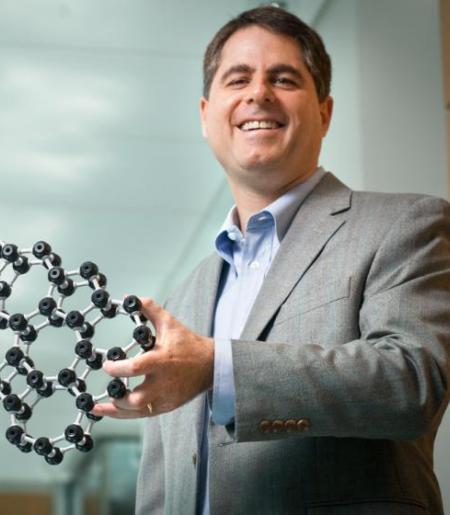
David Muller is the Samuel B. Eckert Professor of Engineering in the School of Applied and Engineering Physics at Cornell University and co-director of the Kavli Institute for Nanoscale Science. His research focuses on atomic-scale characterization of materials for energy applications and developing advanced electron microscopy techniques. Research interests include: Condensed matter physics and quantum materials Electron microscopy and ptychography Nanoscale characterization of energy systems Two-dimensional materials and complex oxides His publications demonstrate cutting-edge developments in electron microscopy resolution and applications to superconductors, fuel cells, and quantum materials. Recent work has achieved atomic-resolution limits set by lattice vibrations. Awards and honors: Joseph F. Keithley Award (2024) John Cowley Medal (2023) AAAS Fellow (2022) Ernst Ruska Prize (2021) Top 10 Science Breakthroughs (2021) Peter Duncumb Award (2016) He leads research groups at PARADIM and Kavli Institute, focusing on novel detector development and materials analysis.
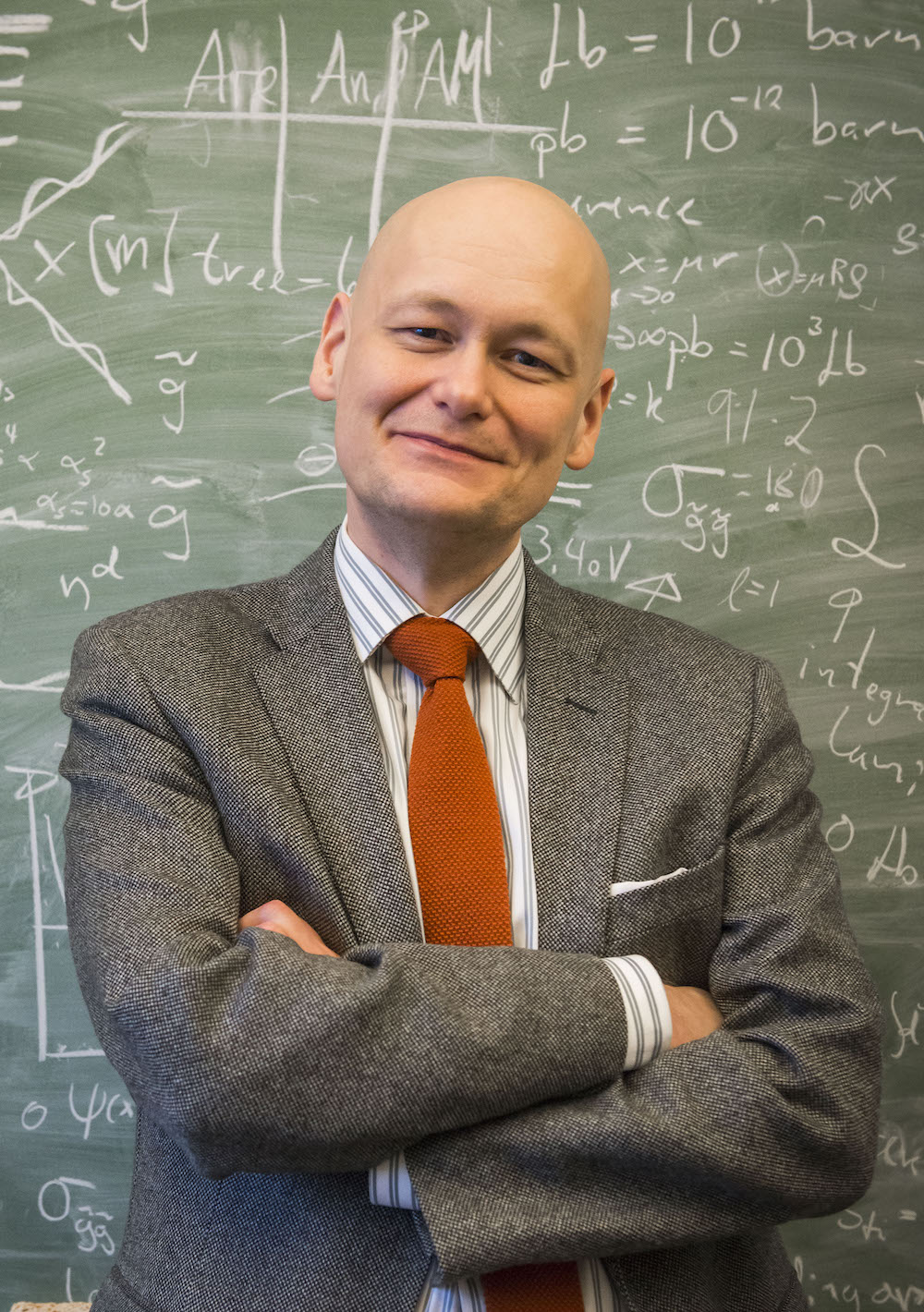
Are Raklev is a Professor at the University of Oslo's Department of Physics. His research focuses on theoretical and computational physics, particularly dark matter, particle physics at CERN's LHC, and applications of machine learning. He holds leadership roles in the GAMBIT Collaboration and its Collider Working Group. Education: PhD (University of Bergen, 2007), Postdoc (University of Cambridge, 2009), and Associate Professor at the University of Oslo (2010-2013) before becoming a full Professor in 2013. His teaching includes classical mechanics and electrodynamics (FYS3120) and supersymmetry (FYS5190/9190). Research Interests: Dark matter detection, Higgs boson studies, software for computational physics, and machine learning techniques like Gaussian processes. He leads projects like GAMBIT (a global inference tool) and PLUMBIN' (to address computational bottlenecks in high-energy physics). Recent publications span superconducting magnet design for colliders, quantum computing error correction, and nuclear isotope production. His work bridges theoretical insights with experimental applications at CERN and other facilities.
Dr. Kamelia Atefi-Monfared is an Associate Professor of Civil Engineering leading research on coupled processes in geomechanics. Her work integrates experimental and computational approaches to address challenges in energy geotechnics and sustainable infrastructure. Key research areas: Bio-mediated soil stabilization Thermo-hydro-mechanical coupling in porous media Tunnel engineering in extreme environments Geothermal energy systems Particle transport in deformable media Recent publications demonstrate advanced modeling of fire damage in tunnels and bio-cementation processes. Experimental work includes multi-laboratory validation of rock tensile tests. Methodologically, research features coupled chemo-thermo-hydro-mechanical models validated through laboratory testing. Awards include the 2023 TUST Best Paper Award for work on fire-induced tunnel damage. Current projects investigate fine particle migration in geothermal reservoirs and bio-cemented soil characterization.
Aleksander Czekanski is a Professor in the Department of Mechanical Engineering at York University's Lassonde School of Engineering. He serves as co-Director of the Manufacturing Technology and Entrepreneurship Centre and previously held the NSERC Chair in Design Engineering. His expertise spans Additive Manufacturing, Bioprinting, Material Characterization, and Artificial Intelligence in Engineering Education. He holds an MBA from York University's Schulich School of Business and a Ph.D. in Mechanical Engineering from the University of Toronto. Dr. Czekanski's research focuses on advanced materials, including soft and super-soft materials, topology optimization, and in-situ bioprinting. He has pioneered studies on 4D printing, fatigue analysis of natural rubbers, and microstructural evolution in additive-manufactured alloys. His work bridges computational modeling with experimental validation, addressing challenges in both industrial and biomedical applications. Received the President's University-Wide Teaching Award and Lassonde Innovation Award. Served as CSME Board Director (2014-2024) and President of the Canadian Engineering Education Association (2020-2021). Active in professional leadership roles, including Fellowships in CSME, CEEA, and the Engineering Institute of Canada. His research outputs emphasize cross-disciplinary innovation, with over 80 publications spanning material science, manufacturing processes, and engineering education. Current projects include developing smart hydrogels for 4D printing and optimizing topology for fluid-structure interaction systems.
Srivatsan Chakram is an Assistant Professor in the Department of Physics and Astronomy at Rutgers University, New Brunswick. He leads a research group focused on quantum information science, quantum optics, and condensed matter physics, with a particular emphasis on developing superconducting circuit-based quantum processors and memory systems. His work combines high-coherence microwave cavities with superconducting circuits to explore quantum control, error correction, and many-body quantum phenomena. Chakram's research group has pioneered the 'flute method' for fabricating low-loss 3D microwave cavities, achieving multimodal systems with millisecond photon lifetimes. These systems enable investigations into non-equilibrium quantum many-body physics and scalable quantum processing architectures. Notable achievements include demonstrating multimode photon blockade for W-state generation, developing random access quantum memory, and exploring dark matter detection using superconducting qubits. Key Projects: Multimode cavity-QED systems, fault-tolerant quantum processors, exotic quantum materials with microwave photons Technical Innovations: High-Q cavity fabrication, fluxonium qubit control, crosstalk-robust quantum control protocols His lab recently installed a Bluefors dilution refrigerator reaching 7.5 mK, enhancing cryogenic capabilities. Students and postdocs in his group have received prestigious awards such as the NSF Graduate Fellowship (Eesh Gupta 2025) and Nokia Bell Labs Scholarship (Jordan Huang 2025). Chakram collaborates extensively with institutions like Argonne National Lab and the University of Chicago Schuster Group. Research funding supports projects in quantum error correction, dark matter detection, and scalable superconducting architectures. Ongoing efforts aim to build exotic quantum materials using microwave photons and improve fault-tolerant quantum processing through multimode cavity systems.
Chulin Jiang is a Lecturer in Mechanical Engineering at Teesside University (SCEDT Engineering). Previously, she worked as a Scientific Officer at the University of Portsmouth's School of Mechanical and Design Engineering and contributed to the Advanced Materials and Manufacturing (AMM) research group. She holds a BEng from Teesside University, an MSc from Manchester University, and a PhD in Mechanical Engineering from the University of Manchester. Her research focuses on sustainable bio-based composite materials, hybrid composites, and their mechanical/thermal properties for engineering applications. Key projects include the Interreg FLOWER and SeaBioComp initiatives funded by the European Regional Development Fund (ERDF). She is also involved in the Innovate UK-KTP project with Ford Aerospace (2025-2027). Recent research emphasizes fiber metal laminates, ultrasonic-assisted machining, and bio-based composites like flax-reinforced PLA. Collaborations span institutions globally, with studies published in journals like Composites Part B and International Journal of Advanced Manufacturing Technology. No scientific awards are explicitly mentioned. Her teaching and research roles include advising on PhD projects and contributing to interdisciplinary teams. She actively participates in lab-based experimental and analytical work, particularly in materials testing and multiscale modeling.
Michel Bockstedte is a Senior Scientist at the Institute for Theoretical Physics at Johannes Kepler University Linz (JKU), affiliated with the Department of Many-Body Systems. His research focuses on theoretical physics with applications in quantum computing, semiconductor materials, and surface chemistry. He actively teaches courses such as Theoretical Quantum Mechanics II and Theoretical Quantum Chemistry, and supervises research projects in these areas. Education: Doctorate (Dr.) and Privatdozent (Priv.-Doz.) titles. Research Projects: Lead the FWF-funded project 'Point Defects in SiC: Coupling of Light, Spin, and Matter' (2021-2025). Research Interests: - Spin and photophysics of color centers in semiconductors (e.g., defects in SiC for quantum computing) - Adsorption of molecules on metal oxide surfaces and nanostructures - Electron-induced reactions at ice surfaces and catalytic mechanisms Recent Work Highlights: - Developed ab initio methods for modeling defect states in SiC - Explored spin-orbit coupling and optical ionization of qubit candidates - Investigated porphyrin adsorption dynamics and functionalization Collaborations include partnerships with Friedrich-Alexander-Universität Erlangen-Nürnberg (funCOS research unit) and Ruhr-Universität Bochum.
Prof. Dr. Martin Fertl is a physicist at the Johannes Gutenberg University Mainz , leading research in the Quantum-, Atomic- and Neutron Physics (QUANTUM) group within the Institute of Physics . His work focuses on high-precision measurements of fundamental particles like neutrons, muons, and neutrinos to test the Standard Model of Particle Physics and Cosmology. Current projects include tSPECT (neutron lifetime via magnetic bottle technique) and contributions to the Muon g-2 experiment at Fermilab (measuring the muon's anomalous magnetic moment at 140 ppb precision). He also leads participation in the Project 8 collaboration, pioneering cyclotron radiation emission spectroscopy (CRES) with tritium and $^{83m}$Kr to determine neutrino mass. Supported by the PRISMA+ Cluster of Excellence and the aMUSE project (European Commission grant 101006726), his research emphasizes magnetic field control, detector innovation, and computational methods for fundamental physics experiments. Recent publications highlight machine learning applications in CRES event reconstruction and precision magnetometry in cryogenic environments.
Professor Hussam Jouhara is a Professor of Thermal Engineering and Department Director for Research at Brunel University London's Department of Mechanical and Aerospace Engineering. He serves as Vice Dean - Research and Head of the Heat Pipe and Thermal Management Research Group. His work focuses on applied heat exchanger research, energy efficiency, and waste heat recovery, with over £15M in research funding from UK/EU grants and industry partners. He leads major EU H2020 projects such as Geoflexheat.eu, ETEKINA, and CULTRAL-E, and has pioneered heat pipe technologies enhancing industrial processes globally. Education: Ph.D. in Mechanical Engineering, University of Manchester (2004) P.G. Cert. in Higher Education, Brunel University (2010) Senior Fellow of the Higher Education Academy (2017) Research Interests: Heat pipe design and thermal management systems Waste heat recovery in industries (steel, ceramics, food) Energy-efficient thermal systems for EV batteries and solar applications Cryogenics and biomedical engineering applications Awards and Recognition: Fellow of the Royal Academy of Engineering (2024) Chartered Engineer (CEng), Fellow of IMechE, FCIBSE, and Engineers Ireland Author of 200+ publications and 17 patents Grants and Projects: Lead on 15+ EU and UK-funded projects (H2020, Innovate UK) Technical Director of iWAYS (Innovative Water Recovery Solutions) Coordinator of ETEKINA (Heat Pipe Technologies for Industrial Applications) Labs and Teams: Directs the Heat Pipe and Thermal Management Research Group, advancing innovations in thermal systems and sustainable energy technologies.
Matteo Masino is an Associate Professor at the Department of Chemical, Life and Environmental Sustainability Sciences, University of Parma. With over 40 publications and extensive teaching experience in physical chemistry and spectroscopy, his research focuses on organic molecular semiconductors and charge-transfer systems for optoelectronic applications. His work combines experimental optical spectroscopy (IR-Vis-UV, Raman) cryogenic and high-pressure techniques theoretical modeling of electron-phonon interactions to investigate materials like organic crystals, thin films, and charge-transfer complexes. Key research trends include neutral-to-ionic phase transitions ferroelectric properties phonon dynamics microplastic detection in biological systems , as evidenced by his 2025-2020 publications. He teaches foundational and advanced courses such as Physical Chemistry I (Bachelor's) Molecular Functional Materials (Master's) Applied Spectroscopy and serves as a tutor for materials science programs.
Dr. Marc Boxberg is a researcher at RWTH Aachen University's Department of Geophysical Imaging and Process Observation, affiliated with the Faculty of Georesources and Materials Engineering. His work focuses on geophysical imaging, environmental risk assessment for radioactive waste disposal, and cryosphere-related planetary exploration. He leads research into seismic wave propagation, data integration frameworks, and robotic exploration systems. Key research interests include icy moon mission preparation, subglacial access technologies, and data-driven approaches for radioactive waste management. He contributes to interdisciplinary projects like the Ice Data Hub and Cryotwin digital infrastructure. Dr. Boxberg's expertise spans geophysical modeling, mission simulation tools (e.g., NEXD software), and field-testing of cryogenic exploration hardware. His recent publications highlight advancements in multi-physical data fusion, cryobot performance analysis, and uncertainty quantification in waste repository safety. Ongoing work includes astrobiology research for icy ocean worlds and development of actionable data hubs for long-term environmental monitoring.
Leon Tolbert is a Chancellor’s Professor and Min H. Kao Professor of Electrical Engineering and Computer Science at the University of Tennessee, Knoxville (UT). He holds a PhD (1999), MS (1991), and BS (1989) in Electrical Engineering from Georgia Tech. He joined UT in 1999 after working at Oak Ridge National Laboratory (ORNL) and is a Fellow of the IEEE. Tolbert serves as a deputy editor-in-chief for IEEE Power Electronics Magazine and has held leadership roles in IEEE societies. His research focuses on power electronics, microgrids, wide bandgap devices, and renewable energy integration. He is a founding member and thrust leader of CURENT, an NSF/DOE Engineering Research Center for future electric grid technologies, and part of the Bredesen Center for Interdisciplinary Research. He has received numerous awards, including the NSF CAREER Award and multiple IEEE prizes. Tolbert is also a registered professional engineer in Tennessee and leads the Min H. Kao Department as a former department head (2013–2018). His research spans power electronics applications, multilevel converters, electric vehicles, and grid stability. Key projects include cryogenically-cooled inverters for aircraft, SiC/GaN device characterization, and resilient microgrid control systems. Tolbert collaborates with ORNL and industry partners, emphasizing hands-on education in wide bandgap devices. Education : PhD in Electrical Engineering, Georgia Tech (1999) MS in Electrical Engineering, Georgia Tech (1991) BS in Electrical Engineering, Georgia Tech (1989, with highest honors) Research Interests : Tolbert’s work centers on advancing power electronics for grid modernization, with emphasis on wide bandgap semiconductors (SiC, GaN), microgrid control, high-power converters, and renewable energy integration. His teams develop technologies for efficient power conversion, grid resilience, and sustainable energy systems. Recent projects include cryogenic inverter systems for aerospace and modular multilevel converters for medium-voltage grids. Grants & Awards : Over 20 years, he has secured NSF/DOE funding through CURENT and individual grants. His awards include UT’s Charles Ferris Faculty Award (2019), Moses Brooks Distinguished Professorship (2010), and multiple Chancellor’s Citations for research excellence. Labs & Teams : Leads CURENT and collaborates with the PEEMRC at ORNL. His lab focuses on high-power converter design, cryogenic testing, and microgrid emulation platforms. Active in OpenFMB initiatives for grid communication standards.
Yu Liu is an Assistant Professor in the Department of Chemistry and Chemical Biology at the University of Maryland, College Park (UMD), where he leads the experimental Liu Lab. He joined the UMD faculty in Spring 2024 and established a state-of-the-art quantum measurement lab in the new chemistry building. His research focuses on advancing quantum science techniques to study chemistry at ultracold temperatures, leveraging laser cooling, optical trapping, and coherent control to create molecules in well-defined quantum states. These ultracold molecules enable high-resolution spectroscopic and reaction studies, with applications in quantum computation, material science, and fundamental chemical dynamics. Research Interests: The Liu lab explores ultracold reaction dynamics, particularly using lithium isotopes (e.g., 6Li and 7Li) to study reaction pathways, entanglement effects, and cluster assembly. They also develop hybrid ion-neutral traps to expand the range of chemically diverse species accessible at ultralow temperatures. These efforts aim to bridge gaps between theoretical predictions and experimental observations in quantum-controlled chemistry. Lab Activities: The lab actively recruits PhD students and postdocs with backgrounds in atomic/molecular optics (AMO) physics, physical chemistry, or related fields. Students are encouraged to apply to UMD’s Chemical Physics, Chemistry, or Physics graduate programs. The lab emphasizes interdisciplinary collaboration and cutting-edge experimental techniques, including laser systems, cryogenics, and quantum control methodologies. Awards and Grants: No scientific awards were explicitly mentioned in the provided text. Lab Infrastructure: The lab is equipped with advanced facilities for quantum measurement, including laser systems, vacuum chambers, and state-of-the-art detection instruments. Ongoing projects include studying isotope exchange reactions in ultracold lithium systems and developing hybrid traps for precision chemistry experiments.
Prof. Martin März is a Professor at the Department of Electrical-Electronic-Communication Engineering at Friedrich-Alexander-Universität Erlangen-Nürnberg, leading the Chair of Power Electronics (Lehrstuhl für Leistungselektronik). His research focuses on power electronics, semiconductor devices, DC microgrids, and cryogenic electronics, with applications in energy systems, electric drives, and fault protection. He has authored/co-authored numerous papers in top journals and conferences, including IEEE Transactions on Power Electronics and IEEE APEC. His work spans topics such as hybrid switch optimization, cryogenic testing of power devices, and decentralized energy management systems for EV charging infrastructure. Education : Not explicitly stated in provided texts. Affiliations : Chair of Power Electronics (FAU), active in IEEE and related professional networks. Key research interests include: SiC/Si hybrid switches and their switching behavior optimization. Cryogenic characterization of gate drivers and power modules. LVDC grid protection mechanisms and fault current limitation. Modeling approaches for distributed DC grids and EV charging systems. Publications since 2022 highlight advancements in semiconductor reliability, soft-switching inverters, and thermal management strategies. His work frequently integrates experimental validation with simulation-based methodologies. Awards : None explicitly mentioned in provided texts. Grants/Advising : Collaborates on projects involving hybrid-electric aircraft systems, DC microgrid stability, and semiconductor embedding solutions. Active in conference organization and editorial roles. Labs/Teams : Leads research groups focused on power electronics, cryogenic systems, and renewable energy integration within the FAU Department.
Robert McDermott is the Roeske Professor of Physics at the University of Wisconsin–Madison, where he leads a leading research group in experimental quantum computing. He is affiliated with the Department of Physics, the Condensed Matter group, and the Wisconsin Quantum Institute, focusing on superconducting qubits and hybrid quantum systems. His research interests include quantum coherence, scalable coherent control, quantum measurement, and hybrid quantum systems. He investigates the origins of noise in superconducting devices and develops novel control and readout techniques using Single Flux Quantum (SFQ) digital logic and microwave photon counters. His lab operates multiple low-temperature platforms for qubit characterization and device testing. His recent publications reflect a strong focus on improving qubit coherence, reducing quasiparticle poisoning, implementing scalable control architectures, and developing hybrid interfaces between superconducting circuits and atomic systems. His work spans quantum error correction, noise characterization, and quantum measurement technologies. Origin and Reduction of 1/f Magnetic Flux Noise in Superconducting Devices (2016) Quantum-classical Interface Based on Single Flux Quantum Digital Logic (2018) Microwave-to-optical frequency conversion using a cesium atom coupled to a superconducting resonator (2017) High-Fidelity Measurement of a Superconducting Qubit Using an On-Chip Microwave Photon Counter (2021) McDermott advises numerous PhD students and has mentored many postdoctoral researchers who have gone on to prominent roles in academia and industry, including at IBM, Google, Rigetti, and Northrop Grumman. His lab collaborates extensively with researchers at UC Berkeley, Caltech, and the University of California, Santa Barbara. He has secured significant research funding to support his experimental facilities, including dilution refrigerators and advanced fabrication capabilities at the Wisconsin Center for Applied Microelectronics (WCAM). The McDermott Lab maintains state-of-the-art facilities for superconducting device fabrication and low-temperature measurement, with five cryogenic platforms and access to advanced lithography and deposition tools. The group is actively working on integrating classical control electronics at millikelvin temperatures and building hybrid quantum systems for future quantum networks.