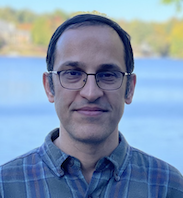
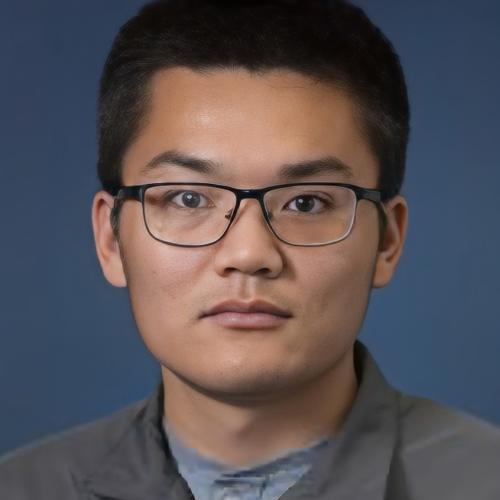
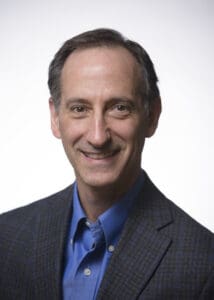
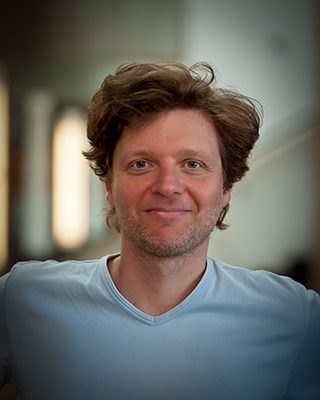
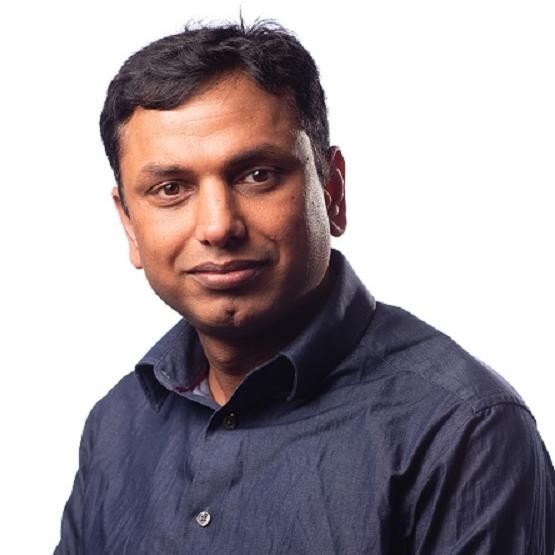
Philip James is a researcher affiliated with Newcastle University (School of Engineering) and the University of Salford (School of Environment and Life Sciences). His work bridges computer science , urban infrastructure , and geospatial analytics . Key research themes include Internet of Things (IoT) , edge computing , smart city applications , and disaster management . Recent projects involve developing simulation frameworks like IoTSim-Edge and IoTSim-Osmosis for modeling IoT and edge environments. His publications show a strong focus on sensor networks , geospatial data , and urban resilience . He has contributed to advancing ontology-based systems for emergency response and smart transport solutions using CCTV and stereo cameras. Philip James collaborates extensively with researchers like Rajiv Ranjan , Stuart Barr , and Tejal Shah , working on applications ranging from landslide detection to social media analytics in crises .
Reza Sameni is an Associate Professor at Emory University's Department of Biomedical Informatics and Adjunct Associate Professor at Georgia Institute of Technology's Wallace H. Coulter Department of Biomedical Engineering. He serves as Scientific Director of Emory's Medical Imaging, Informatics, and AI (MIIAI) Core. PhD in Biomedical Engineering (Sharif University of Technology) PhD in Signal Processing & Telecommunications (INPG) MSc in Biomedical Engineering (Sharif University) BSc in Electronics Engineering (Shiraz University) His research spans biomedical signal processing and model-based machine learning, with applications in cardiovascular diagnostics, maternal-fetal health, psychiatry, and global health equity. The Alphanumerics Lab develops explainable AI tools for multimodal physiological monitoring and open-access platforms like OSET. Current article trends focus on AI-driven diagnostics, cross-modal ECG/PCG analysis, edge computing for rural healthcare, and algorithmic reproducibility in biomedical applications. The lab actively recruits graduate students and postdocs. Georgia Institute of Technology (adjunct appointment) Emory University (tenured associate professor) Former Chair at Shiraz University Former Senior Researcher at GIPSA-lab Lab initiatives include: open-source toolboxes (OSET), crowdsourced AI frameworks for arrhythmia detection, and bias mitigation in clinical AI systems. Research integrates FPGA/ embedded systems for biomedical hardware development.
Paul Hübner is a Researcher affiliated with the Institute of Computer Science at the University of Heidelberg . His work focuses on source code and requirements traceability , software analytics , and knowledge management in requirements engineering . Education : Master's degree in Computer Science from the University of Ulm Key Research Areas : Traceability, Software Repository Analysis, Interaction Data Utilization His 14 publications (2012–2025) examine trace link creation using interaction logs, commits, and issue tracking systems. He has taught advanced software engineering courses at Heidelberg and collaborated extensively with Barbara Paech and others. Teaching Roles : Contributed to courses like "Introduction to Software Engineering" and "Software Practicum: Advanced Software Engineering" (2012–2018).
Jean-Marc Lasgouttes is a Researcher at Inria Paris working within the Astra project team, a joint research initiative between Inria Paris and Valeo. He also holds a teaching position at INSA Rouen Normandie's Department of Mathematical Engineering, where he has instructed courses including Boosting methods (until 2024), Functional Data Analysis (until 2018), and general Data Analysis (until 2024) for both the Mathematical Engineering department and the Specialized Master's program in Data Science. Dr. Lasgouttes' primary research focuses on probabilistic modeling of large systems using statistical physics tools, with particular emphasis on Intelligent Transportation Systems. His work spans traffic flow modeling, vehicle platooning, urban traffic prediction, and geopositioning systems. He frequently employs Markov Random Fields, statistical physics approaches, and game theory to address complex transportation challenges, bridging theoretical statistical methods with practical applications. His research methodology often involves developing novel algorithms like the ★-IPS family for incremental GMRF estimation. Analysis of his recent publications reveals a consistent trajectory of applying advanced probabilistic models to increasingly sophisticated transportation scenarios. His work demonstrates strong expertise in spatio-temporal modeling, with publications covering car-following dynamics, landmark-based positioning, cooperative ITS, and autonomous vehicle systems. The interdisciplinary nature of his research connects statistical physics, machine learning, and transportation engineering to solve real-world mobility challenges. At INSA Rouen Normandie, Dr. Lasgouttes has developed comprehensive teaching materials for data analysis courses, including practical applications of principal component analysis and correspondence analysis using real-world datasets such as European protein consumption patterns and Titanic passenger data. His educational approach emphasizes hands-on implementation with R programming, reflecting his commitment to practical statistical applications. The Astra project team serves as Dr. Lasgouttes' primary research environment, facilitating collaboration between academic researchers and industry partners to address contemporary transportation challenges. His work has contributed to significant research events including the 2018 workshop on Large Random Networks and Constrained Walks honoring Guy Fayolle's 75th birthday, and the 2012 interdisciplinary workshop on inference associated with the Travesti ANR grant.
Yang Zhang is a Teaching Assistant Professor at the School of Information Sciences (iSchool) at the University of Illinois Urbana-Champaign (UIUC). He holds a Ph.D. in Computer Science and Engineering from the University of Notre Dame and is affiliated with the Social Sensing & Intelligence Lab at UIUC as a Senior Researcher. His research focuses on Human-Centered Artificial Intelligence , emphasizing collaboration between humans and AI to enhance model performance, fairness, and accountability. Education: Ph.D. in Computer Science and Engineering, University of Notre Dame; First Class Scholarship, Wuhan University Yang’s work integrates Crowd Intelligence to optimize AI models for applications in disaster response, smart urban sensing, and social impact-aware systems. His recent publications explore hybrid learning frameworks, neural architecture search, and hyperparameter optimization. Yang has received multiple accolades, including a Best Paper Award at ACM/IEEE ASONAM 2022 and a Data Science Scholar Fellowship from Indiana University. Scientific Awards: Best Paper Award (ASONAM 2022), Best Paper Honorable Mention (SMARTCOMP 2022), Outstanding Graduate Research Assistant (Notre Dame), Video Presentation Award (IWQoS 2020), IEEE Student Travel Awards (BigData 2018, 2019), Data Science Scholar Fellowship (Indiana University), First Class Scholarship (Wuhan University) Yang is actively involved in graduate education as a Graduate Faculty member at UIUC. He has cohosted international scholars through the Bolashak International Scholarship Program and been recognized for excellence in teaching. His collaborations span institutions like Argonne National Laboratory, where he served as a W. J. Cody Research Associate.
Utkarsh Mall is an Assistant Professor at the Mohamed bin Zayed University of Artificial Intelligence (MBZUAI) in Abu Dhabi, UAE, starting Fall 2025. His research focuses on computer vision systems for scientific discovery and domain expert collaboration. Previous affiliations: Columbia University (postdoc), Cornell University (PhD 2023), IIT Bombay (BS 2017), Facebook AI Research (FAIR) (internship 2020) Research directions: Supervision-efficient vision systems (self/semi-supervised learning) Trustworthy AI properties (interpretability, uncertainty estimation) Scientific discovery tools (climate monitoring, fashion analysis, urban mapping) Recent article trends: 60% focus on satellite image analysis (change detection, cloud removal, disaster monitoring) and 40% on fundamental vision research (neurosymbolic models, LLM integration, facial expression analysis). Scientific awards: NSF ACED Interdisciplinary Research Grant (2025) NSF Research Grant (2024) Outstanding Reviewer at CVPR 2021 Outstanding Teaching Award (Cornell 2018)
Daniel Nyga is a postdoctoral researcher at the Institute for Artificial Intelligence (IAI) , University of Bremen. He holds a PhD in computational science (summa cum laude) from the University of Bremen (2017), a master's (2014) and bachelor's (2012) in computer science from the Technical University of Munich (TUM) with a focus on AI and Machine Learning. Visited Bio-intelligence Laboratory (Prof. Byoung-Tak Zhang), Seoul National University (2014) Visited Robust Robotics Group (Prof. Nicholas Roy), MIT CSAIL (2014) Lead developer of open-source projects: pracmln , PRAC , and pyrap Recipient of Best Service Robotics Paper Award (ICRA 2015) His research focuses on probabilistic knowledge representation and reasoning for natural language interpretation in robotics, including: Markov logic networks for ambiguous instruction resolution Semantic analogical reasoning for task completion Statistical relational learning for web-enabled knowledge acquisition Probabilistic modeling of symbolic concepts Cloud-based knowledge services for robotic systems Notable publications span ICRA, IROS, ISRR, and Arxiv , with recent work on joint probability trees (2023). He has supervised multiple theses on probabilistic models for robot manipulation and instruction understanding.
Burcu Sayin Günel serves as a Research Fellow at the Department of Information Engineering and Computer Science, University of Trento, where she conducts cutting-edge research at the intersection of artificial intelligence and real-world critical systems. Her work bridges theoretical machine learning with practical implementations in high-stakes environments requiring human oversight. Her research portfolio centers on: Value-aware and cost-sensitive machine learning frameworks Human-AI collaboration mechanisms for medical diagnostics Safety-critical integration of ML in cyber-physical infrastructure Hybrid intelligence systems combining human cognition with algorithmic processing Active learning optimization for resource-constrained scenarios Economic valuation of machine learning models Analysis of her 2021-2025 publications reveals a consistent trajectory toward making AI systems more reliable, economically viable, and human-compatible. Key contributions include novel methodologies for prediction rejection in critical CPS, collaborative diagnostic tools like MedSyn for physician-AI teams, and value-based active learning frameworks that optimize data acquisition costs. Her work increasingly addresses medical domain challenges while maintaining strong foundations in cyber-physical systems safety. No scientific awards, grant funding details, or student supervision activities were documented in the available materials. Similarly, no specific laboratory affiliations or team leadership roles were mentioned within the provided institutional context.
Jeffrey P. Bigham is the Philip Guo Endowed Professor of HCI at the Human-Computer Interaction Institute, Carnegie Mellon University, with a joint appointment in the Language Technologies Institute. His research focuses on accessibility, human-AI interaction, dialog systems, and crowdsourcing. School: School of Computer Science Institute: Human-Computer Interaction Institute His research spans creating accessible technologies for blind users, improving speech recognition for people with disabilities, and developing human-AI collaboration frameworks. Key projects include VizWiz accessibility tools, Scribe captioning systems, and Chorus conversational AI. Recent work emphasizes UI understanding (WebUI dataset, UICoder), generative AI applications (Apple Intelligence), and accessibility infrastructure (System-class Accessibility). Articles highlight intersections between computer vision, NLP, and inclusive design. NSF CAREER Award Best Paper Awards: ASSETS 2021, CHI 2021, W4A 2021 Nominations: CHI 2024, ECCV 2024, DIS 2024 He advises numerous students and postdocs across accessibility, AI, and HCI domains, with trainees now at Google, Apple, University of Michigan, and beyond. Funding comes from Apple, Google, Microsoft, NSF, and other major institutions.
Rhiju Das is a Professor of Biochemistry at Stanford University School of Medicine. He is also a member of Bio-X and the Wu Tsai Neurosciences Institute at Stanford. His research focuses on computational modeling and design of RNA molecules, with applications in biology and medicine. Dr. Das received his education from prestigious institutions: Ph.D. in Physics from Stanford University (2005) M.Res. in Biocomplexity from University College London (2000) M.Phil. in Physics (Radio Astronomy) from Cambridge University (1999) A.B. in Physics from Harvard University (1998) Dr. Das's research interests center on predicting and designing how biopolymer sequences define and regulate structure and function, with a focus on medically important RNA and RNA/protein complexes. His lab develops algorithms to predict RNA structures and energetics at high resolution, with increasing emphasis on ribosomes and viruses. They test these ideas through community-wide blind trials and by solving molecule structures using chemical mapping, NMR, crystallography, and cryo-EM data. A notable achievement includes top models in the majority of RNA-Puzzles blind structure prediction challenges. Complementing computational research, Dr. Das's lab develops biochemical methods to model unknown non-coding RNA structures, focusing on RNA structure and conformational changes in processes like splicing and mRNA transport in brain cells and viruses. They also design new RNA molecules for basic science, diagnostics, therapeutics, and vaccines through the Eterna platform, which engages citizen scientists in solving RNA design problems. Their work has produced the first algorithm for automated 3D RNA design, RNA calculators for point-of-care diagnostics, and RNA sensors for molecular computing. Dr. Das's recent publications show a strong focus on RNA structure determination using cryo-EM, RNA design through community science (Eterna), and RNA structure prediction challenges. His work spans structural biology, computational biology, and molecular engineering, with applications in virology, diagnostics, and therapeutics. Notable 2025 publications include studies of naturally ornate RNA complexes and complex water networks around RNA, while 2024 work featured RNA-Puzzles Round V, OpenASO for antisense oligonucleotide design, and Ribonanza for deep learning of RNA structure. Dr. Das has received numerous scientific awards: Gold Medal, Top US score, 2nd place worldwide, International Physics Olympiad (1995) British Marshall Scholar (1998-2000) Jane Coffin Childs Foundation Fellowship (2006-2008) Career Award at the Scientific Interface, Burroughs-Wellcome Foundation (2008-2015) Keck Medical Research Grant award (2012) OpenEye Outstanding Junior Faculty Award (2015) Discovery Innovation Award, Stanford University School of Medicine (2016) Stanford Medicine Endowed Faculty Scholar (2020-2023) Howard Hughes Medical Institute Investigator Dr. Das advises several doctoral students including Hamish Blair, Rachael Kretsch, and Georgia Tully, and serves as a co-advisor for Christian Choe. He also mentors postdoctoral scholars Alissa Hummer and Jigyasa Verma. His research is funded by multiple sources including the Howard Hughes Medical Institute, Burroughs-Wellcome Foundation, W.M. Keck Foundation, and other major grants supporting his innovative work in RNA biology and computational design. Dr. Das leads the Das Lab at Stanford, which is centered around the Eterna platform - an open science initiative that crowdsources RNA design problems to over 250,000 players of an online video game. The platform provides scoring feedback based on actual wet-lab experiments, enabling citizen scientists to contribute to RNA research. His lab also participates in major community efforts like RNA-Puzzles and CASP for RNA structure prediction assessment, and has made significant contributions to understanding RNA structure in coronaviruses, ribosomes, and other biologically important systems.
Paul Resnick is the Michael D. Cohen Collegiate Professor of Information and Associate Dean for Research and Faculty Affairs at the University of Michigan School of Information. A pioneer in recommender systems and computational social science, he co-developed the GroupLens system which earned the 2010 ACM Software Systems Award. His research spans social computing, online communities, and human-computer interaction with a focus on addressing societal challenges like misinformation and political polarization. Resnick's research interests include computational social science, recommender systems, human-computer interaction, and data visualization. His work focuses on designing socio-technical systems that enhance diversity in information consumption, improve community health, and combat misinformation. He has developed influential metrics like the Iffy Quotient for assessing platform health and the Community Notes Monitor for tracking X's community moderation system. His research on recommender systems, online communities, and social computing has been funded by NSF, Google, and other organizations. His recent scholarly output demonstrates a strong focus on misinformation detection, content moderation, and recommender system design. The research shows increasing emphasis on practical interventions to reduce political polarization and improve digital wellbeing. His work bridges technical innovation with social science insights, particularly in how algorithmic systems affect information ecosystems and user behavior in online communities. 2010 ACM Software Systems Award (for GroupLens system) As an educator, Resnick has mentored numerous PhD students including Sean Munson, Xiaodan Daniel Zhou, and Sam Carton. His work on the book 'Building Successful Online Communities: Evidence-Based Social Design' (2012, MIT Press) with Robert Kraut has become a foundational text in the field. His research projects like BALANCE, RumorLens, Commit To Steps, and MTogether demonstrate his commitment to designing online systems that promote healthy information ecosystems and social interactions.
Zoran Popović is a Professor of Computer Science at the University of Washington's Paul G. Allen School of Computer Science & Engineering, where he directs the Center for Game Science. He is also the founder and Chief Scientist at Enlearn, a company focused on adaptive learning systems. His work bridges computer science, biology, and education through innovative game-based approaches to scientific discovery and learning. Popović received his Sc.B. with Honors in Computer Science from Brown University in 1991, followed by an M.S. and Ph.D. in Computer Science from Carnegie Mellon University in 1993 and 1999 respectively. His doctoral research focused on the automatic synthesis and transformation of realistic character animation. Before joining the University of Washington faculty in 1999, he held research positions at Sun Microsystems, Justsystem Pittsburgh Research Center, and the University of California at Berkeley. His primary research interests span computer graphics, animation, computer vision, and robotics, with a particular focus on scientific discovery through gameplay, learning games, high-fidelity human modeling and animation, and control of realistic natural motion. His work has pioneered the field of scientific discovery games, most notably through Foldit, a biochemistry game that has produced significant scientific results published in Nature. His research has expanded into educational games for mathematics learning and protein structure prediction, creating systems that blend human intuition with computational approaches. Analysis of his recent publications reveals a consistent trajectory toward increasingly sophisticated integration of human computation, machine learning, and educational theory. His work has evolved from foundational computer graphics research to complex systems that leverage collective human intelligence for scientific discovery and personalized learning. The publications demonstrate strong interdisciplinary connections between computer science, biology, education, and cognitive science, with growing emphasis on adaptive learning systems and explainable AI. ACM SIGGRAPH Significant New Researcher Award (2004) Alfred P. Sloan Fellowship (2003-2004) NSF CAREER Award (2001-2006) Schlumberger Foundation Fellowship (1997-1999) Dr. Frank H. Netter Award for Special Contributions to Medical Education (2013) Katerva Award (2013) Nature publications resulting from Foldit player contributions Professor Popović has mentored an extensive group of students who have gone on to successful careers in both academia and industry, including multiple faculty members at prestigious universities and founders of technology companies. His Center for Game Science has secured significant research funding for projects that combine scientific discovery with game mechanics, resulting in practical educational tools used by hundreds of thousands of students. The Center's work with Foldit has demonstrated how games can solve complex scientific problems that have stumped traditional computational approaches for years. The Center for Game Science, which Popović directs, operates as an interdisciplinary research hub bringing together computer scientists, biologists, educators, and game designers. The lab has developed multiple successful game platforms including Foldit (for protein folding), Refraction (for teaching fractions), and Nanocrafter (for DNA nanotechnology). Their research combines cutting-edge computer science with practical applications that have real-world impact in both scientific research and education.
Dr. Mykola Makhortykh is a Lecturer at the Institute of Communication and Media Studies (University of Bern), where he examines how algorithmic systems and AI shape Holocaust memory transmission. Previously, he served as a postdoctoral researcher at the University of Amsterdam and University of Bern, focusing on algorithmic fairness in news personalization and political information behavior in high-choice environments. Education : BA in History (Kyiv Taras Shevchenko University), MA in Archaeology (Kyiv Taras Shevchenko University), Joint MA in Euroculture (University of Goettingen & Jagiellonian University), BA in Computer Science (University of the People), PhD in Communication Science (University of Amsterdam). Research Interests span algorithmic auditing, computational propaganda, trauma/memory studies, cybersecurity, and digital cultural heritage. He combines traditional social science methods with computational approaches like deep learning and agent-based testing to analyze how search engines and recommender systems influence historical memory and political discourse. Recent Work includes audits of search engine biases in representing mass atrocities, studies on political trolling, and analyses of hyperpartisan media. His scientific awards include the Alfred Landecker Lecturer position. As an editor , he contributes to the Studies in Russian, Eurasian and Central European New Media journal and the Transdisciplinary Trauma Studies book series. Teaching includes courses on algorithmic auditing, while his editorial work and conference presentations (over 50) highlight his interdisciplinary impact.
James Evans is a Professor at the University of Chicago's Department of Sociology within the College of Social Science. He serves as Director of Knowledge Lab and founded the Computational Social Science program. Education: PhD in Sociology (Stanford University), B.A. in Anthropology (Brigham Young University) Former Roles: Research Associate (Harvard Business School), Founder of private high school Evans' research explores collective cognition, focusing on how social and technical institutions shape knowledge processes through machine learning, network analysis, and computational methods. His work spans science studies, sociology, and human-machine collaboration, examining phenomena like innovation emergence, agreement/dispute dynamics, and knowledge topology. Article Trends: Recent publications analyze sensor networks (RFID, cell phones), digital observatories, and alternative discovery regimes using AI/ML and network science, covering domains from science to law and religion. Evans teaches courses on augmented intelligence, computational content analysis, and the history of modern science. His work has been supported by NSF, NIH, and AFOSR grants.
Dr Bhupesh Mishra is a Lecturer at the University of Hull's Faculty of Science and Engineering, affiliated with the Data Science AI and Modelling Centre (DAIM). He holds a PhD in Modelling and Optimisation of relief items distribution in disaster scenarios from the University of the West of Scotland. His research focuses on Data Science, Machine Learning, Explainable AI, and IoT applications in smart cities and healthcare. Recent work includes studies on climate change awareness in Kathmandu Valley, graduate salary prediction using machine learning, and predictive models for UK electricity pricing. Research Interests: Data Science and Machine Learning Explainable AI Citizen Science & Smart Cities Scheduling & Optimization Edge Computing Natural Language Processing Key Projects: Principal Investigator: Predictive Manufacturing Optimization using Neural Networks (PROMINN) funded by Innovate UK Co-Investigator: Responsible AI project in Burkina Faso funded by the British Academy His articles explore topics ranging from humanitarian logistics optimization to AI-driven healthcare decision tools. Mishra supervises PhD students in AI and data science domains and actively engages in interdisciplinary collaborations across academia and industry.