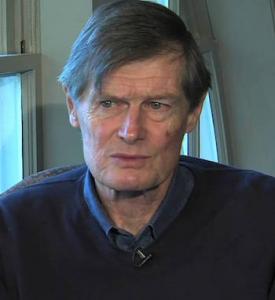
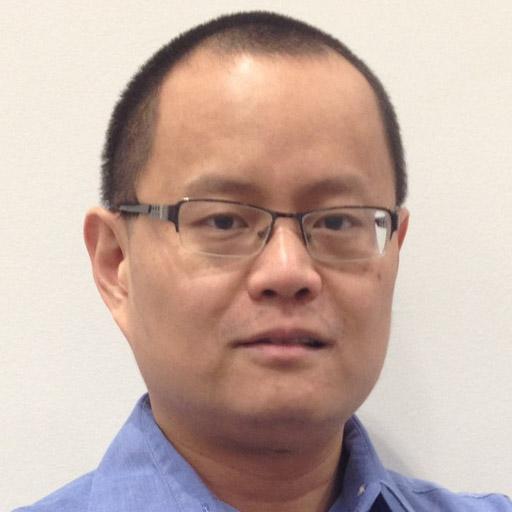
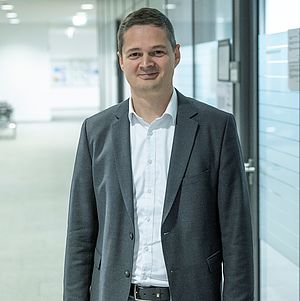
Dr. Anil Ufuk Batmaz is an Assistant Professor in the Department of Computer Science and Software Engineering at Concordia University. His research focuses on Virtual Reality (VR), Augmented Reality (AR), and Human-Computer Interaction, with emphasis on interaction techniques, immersive analytics, and motor skill training systems. He holds a BSc in Electrical and Electronics Engineering (2007-2011), an MSc in the same field (2011-2013), and a PhD in Biomedical Engineering (2015-2018). His work bridges engineering and cognitive science, investigating how visual and haptic feedback impact user performance in immersive environments. Research interests include: 3D interaction techniques for mid-air tasks Effects of display technologies on motor coordination Hybrid UI design for mixed reality systems Training systems for precision tasks using VR Recent publications emphasize evaluation of AR/VR interfaces in healthcare, sports training, and collaborative environments. His work has appeared in venues like IEEE TVCG, ACM CHI, and ISMAR, addressing challenges in spatial navigation, error feedback, and system reliability.
Simo Hosio is an Academy Research Fellow (2022-2027) and Professor of Computer Science and Engineering at University of Oulu's Center for Ubiquitous Computing, where he leads the Crowd Computing Research Group. He also maintains a visiting position at University of Tokyo, Japan. Having graduated as the first Finnish scholar under Microsoft Research Cambridge's Ph.D. scholarship program, he has published over 150 peer-reviewed scientific articles spanning two decades of research. Hosio's research spans three primary domains: crowdsourcing methodologies, human-computer interaction, and digital health applications. His work pioneers novel approaches to online labor markets, investigates the suitability of crowdsourcing for diverse applications, and explores HCI aspects of digital health solutions for chronic conditions. His research group, founded in 2020, has secured nearly two million USD in funding, demonstrating significant research impact and recognition. Analysis of Hosio's recent publications reveals a strong trend toward interdisciplinary research at the intersection of crowdsourcing, healthcare technology, and emerging AI systems. His work increasingly focuses on practical applications of crowd computing in health contexts, with growing attention to mental health, women's health, and workplace well-being solutions. The integration of AI and machine learning techniques with traditional HCI approaches represents another significant trajectory in his recent scholarship. Distinguished Paper Award (2024) Best Paper Honourable Mention Award (2022) PMCJ Best Research Paper (awarded in 2024) Best Paper Award (2022) Best Full Paper Award (2015) Honorable Mention Award (2014) Best Paper Presentation award (2010) As an educator, Hosio has taught Human-Computer Interaction (2019-2025) to over 260 students in 2024, Social Computing (2018-2021) to approximately 60 students annually, and Applied Computing (2015-2018) to around 50 students each year. His research group's nearly two million USD in secured funding demonstrates significant grant acquisition success, supporting innovative work at the intersection of crowd computing, health technology, and human-centered AI systems. The Crowd Computing Research Group, founded by Hosio in 2020, represents a significant research infrastructure focused on advancing methodologies for crowd-powered systems. The group's work spans from fundamental research on crowd labor markets to applied projects in healthcare, workplace well-being, and social computing, demonstrating a strong commitment to both theoretical advancement and practical impact.
David Eltis serves as an Adjunct Professor in the Department of History at Emory University, where he focuses on the early modern Atlantic World, particularly slavery and migration patterns. His distinguished career spans several decades with significant contributions to understanding the transatlantic slave trade through quantitative and historical analysis. Dr. Eltis earned his BA from Durham University (1962), BEd from Dalhousie University (1965), MA from the University of Alberta (1969), and PhD from the University of Rochester (1979). His educational background provided the foundation for his specialized research in economic history and the Atlantic slave trade. His research primarily centers on the early modern Atlantic World, with particular emphasis on slavery systems, the transatlantic slave trade, and migration patterns (both coerced and free). Eltis has pioneered quantitative approaches to studying the slave trade, developing extensive databases that have transformed scholarly understanding of the scale, structure, and economic dimensions of this historical phenomenon. His work examines the demographic impact of slavery, the economic forces driving the trade, and the experiences of enslaved Africans. Eltis's publications demonstrate a consistent focus on quantitative analysis of the transatlantic slave trade, with increasing emphasis on digital humanities approaches in his later work. His research has evolved from broader economic analyses of slavery's role in Atlantic development to more specific studies of individual regions, trade routes, and the experiences of liberated Africans. The integration of database methodologies with traditional historical analysis represents a significant contribution to the field. British Trevor Reese Memorial Prize (for Economic Growth and The Ending of the Transatlantic Slave Trade ) Frederick Douglass Prize John Ben Snow Prize Wesley-Logan Prize (for The Rise of African Slavery in the Americas ) John T. Hubbell Prize for best article in Civil War History (2008) W.E.B. Dubois Medal from Harvard (2025) Dr. Eltis has received significant research funding, including a two-year NEH grant for his collaborative project on the origins of Africans in the transatlantic slave trade. This project analyzes records of 67,000 Africans liberated from slave vessels in the 19th century. He serves as co-editor of the influential Transatlantic Slave Trade database at www.slavevoyages.org, which represents one of the most comprehensive digital resources on this historical phenomenon. While specific student mentorship isn't detailed in the available information, his extensive publication record suggests he has likely advised numerous graduate students throughout his career. As principal investigator of the NEH-funded project analyzing liberated African records and co-editor of the Transatlantic Slave Trade database, Eltis leads significant collaborative research efforts. These projects involve international teams of scholars working with historical records from multiple archives to reconstruct the experiences and origins of enslaved Africans. His work bridges traditional historical research with digital humanities methodologies, creating resources that benefit scholars across multiple disciplines.
Fernando Camelli is an Associate Professor in the Physics & Astronomy Department at George Mason University, holding dual roles as Instructional Faculty and Faculty. His research focuses on computational fluid dynamics (CFD), urban environmental modeling, and high-performance computing. He specializes in simulating complex fluid flows in urban environments, subway systems, and industrial applications, with particular emphasis on turbulence modeling, fluid-structure interaction, and GPU-accelerated algorithms. Key research areas include: CFD for urban airflow and contamination dispersion Meshless and immersed boundary methods Integration of geographic information systems (GIS) with CFD Large-scale simulations using parallel computing His work addresses practical challenges such as subway ventilation optimization, emergency contaminant dispersion prediction, and urban infrastructure design. Recent studies emphasize scalability improvements for fluid-structure interaction simulations and GPU-based code modernization.
Dr. Yang Wang is an Associate Professor in the Department of Computer Science and Software Engineering at Concordia University. His research focuses on computer vision and machine learning, with a particular emphasis on domain adaptation, meta-learning, and privacy-preserving techniques. He actively advises prospective graduate students through a dedicated webpage outlining application procedures. Research interests include few-shot learning, test-time adaptation, and cross-modal applications such as handwritten text recognition and gaze estimation. His work explores how models can adapt dynamically to new domains using limited labeled data, with applications in crowd counting, medical data analysis, and cybersecurity. He also investigates privacy-preserving methods for deep learning models to protect user attributes and sensitive information. Recent publications highlight advancements in meta-auxiliary learning frameworks and efficient user adaptation techniques. His contributions span journals and conferences, showcasing innovations in both foundational machine learning methodologies and real-world applications.
Christian Jacob is a Professor in the Department of Computer Science within the Faculty of Science at the University of Calgary . He holds a B.S. in Computer Science and a Doctor of Engineering Science from Erlangen University . His research focuses on nature-inspired algorithms, biocomputing, and agent-based simulations applied to biological systems and education. Key initiatives include the LINDSAY Virtual Human Project , which uses immersive virtual reality to explore human anatomy and physiology. He contributes to the university's strategic priorities in Digital Worlds and Health and Life initiatives. His work integrates evolutionary algorithms, cellular automata, and swarm intelligence into creative and medical applications. Notable achievements include the ASTech Award (2015) from Alberta Science and Technology. His projects emphasize interactive education through tools like LeukemiaSIM , Eukaryo , and the Giant Walkthrough Gut . Jacob also explores visualization techniques, such as evoVision3D and LifeBrush , to enhance scientific understanding. His research bridges computational methods with real-world applications in healthcare, architecture, and game design. Collaborative efforts include developing agent-based models for immune systems, nervous responses, and crowd behavior. Jacob's work spans interdisciplinary fields, blending computer science with biology, engineering, and the arts.
Marcelo Coelho is a Design Tech Innovation Fellow and Visiting Lecturer at Cornell University's Department of Design Tech within the College of Architecture, Art, and Planning. He is also a Lecturer at the MIT Department of Architecture and Director of the MIT Design Intelligence Lab. His interdisciplinary work bridges artificial intelligence, industrial design, and human-computer interaction, with a focus on physical expression and collaboration between humans and machines. Ph.D., MIT Media Lab Faculty, MIT Department of Architecture Director, MIT Design Intelligence Lab Design Tech Innovation Fellow, Cornell University Marcelo Coelho's research centers on Artificial Intelligence, Machine Learning, Interaction Design, and Industrial Design . His work explores how computation can be embodied in physical forms to enable new modes of creative expression and interaction. He investigates the materiality of computation through installations, products, and large-scale performances that merge art, technology, and design. Projects such as Six-Forty by Four-Eighty and Resolution explore redefining digital pixels in physical space, while Window to the Heart and Beyond Vision demonstrate how computation can transform public experiences. His recent publications reflect a strong trend in physical AI and generative design , particularly in creating intelligent objects and environments that respond to human interaction. Themes include tangible interfaces, crowd-driven assembly, and shape-changing technologies, indicating a trajectory toward more embodied, situated, and collaborative forms of artificial intelligence in design contexts. Marcelo Coelho has received numerous accolades for his innovative work, including: Prix Ars Electronica awards (multiple) Design Miami/ Designer of the Future Award (2010) Red Dot Design Award Fast Company’s Innovation by Design Award Core77 Design Awards (2021, 2014) AIGA 50 Books | 50 Covers (2020) Webby Honoree (2020) Times Square Valentine Heart Design Winner (2018) He has led design initiatives at Formlabs as Head of Design, directing an international team across disciplines including industrial design, software, and mechanical engineering. His work has been exhibited globally at venues such as the Rio 2016 Paralympics, Times Square, Ars Electronica, and the Tel Aviv Museum of Art. He collaborates with artists like Vik Muniz and Aranda\Lasch, and his projects often involve public participation and community engagement. His labs and teams, particularly the MIT Design Intelligence Lab, focus on experimental design research at the intersection of computation and physicality.
Christoph Heinzl is a Professor of Cognitive Sensor Systems at the University of Passau since September 2022. He leads the Knowledge-based Image Processing research group at the Fraunhofer Development Center X-ray Technology (EZRT) . His academic background includes a PhD in Informatics and a Habilitation in 2022 , both from TU Wien . Research Focus: Scientific visualization, visual analytics, immersive analytics, virtual/augmented reality, machine learning, and X-ray computed tomography (XCT). Key Trends: Development of novel visualization techniques for complex volumetric data (e.g., dynamic volume lines, visual coherence frameworks), parameter space analysis, and cross-virtuality collaboration tools. Applications: Aerospace component inspection, defect analysis in composites (CFRP, GFRP), porosity quantification, and 4DCT time-series exploration.
Fabrizio Falchi is a researcher at the Artificial Intelligence for Media and Humanities (AIMH) Lab of the Institute of Information Science and Technologies (ISTI) within Italy's National Research Council (CNR). He also maintains an associate position at the Biorobotics Institute of Scuola Superiore Sant'Anna. His work focuses on developing advanced multimedia retrieval systems, with the VISIONE platform being his most notable contribution, which has won international competitions including the Video Browser Showdown in 2024 and placed second in 2023. Falchi's educational background includes: Ph.D. in Information Engineering from University of Pisa (Italy) Ph.D. in Informatics from Faculty of Informatics of Masaryk University of Brno (Czech Republic) M.B.A. from Scuola Superiore Sant'Anna in Pisa His research spans deep learning, convolutional neural networks, deep features extraction, similarity search algorithms, distributed indexing systems, multimedia information retrieval, computer vision applications, and peer-to-peer systems. Falchi has made significant contributions to fine-grained visual understanding, cross-modal retrieval (particularly image-text matching), and robustness of deep learning systems against adversarial attacks. His work demonstrates a strong focus on practical applications of these technologies, particularly in video retrieval systems and safety monitoring solutions. Analysis of Falchi's recent publications reveals a strong focus on video and image retrieval systems, with the VISIONE platform being central to his work. His research shows increasing emphasis on fine-grained understanding in computer vision, cross-modal retrieval, and addressing practical challenges like cross-resolution face recognition. Recent work demonstrates innovation in making these systems more efficient through techniques like knowledge distillation (ALADIN) and leveraging virtual worlds for training data. His publications consistently bridge theoretical advances with practical applications in surveillance, safety monitoring, and multimedia search. Falchi's work has received significant recognition: Best paper award at CBMI 2024 for 'Is ClLIP the main roadblock for fine-grained open-world perception?' VISIONE 2024 won the Video Browser Showdown competition in Amsterdam VISIONE obtained second place at Video Browser Showdown 2023 in Bergen Best Paper Award for 'Learning Safety Equipment Detection using Virtual Worlds' at CBMI 2019 Falchi collaborates extensively with researchers at ISTI-CNR, particularly within the AIMH Lab. His work on VISIONE involves collaboration with Giuseppe Amato, Paolo Bolettieri, Fabio Carrara, Claudio Gennaro, Nicola Messina, Lucia Vadicamo, and Claudio Vairo. As co-chair of Ital-IA 2023, the 3rd National Conference on Artificial Intelligence, he plays an active role in the academic community. He is a member of ACM (since 2012), the Computer Vision Foundation, the Italian Association for Computer Vision Pattern Recognition and Machine Learning (CVPL), and the CINI Lab on Artificial Intelligence and Intelligent Systems. Falchi is a key member of the Artificial Intelligence for Media and Humanities (AIMH) Lab at ISTI-CNR, where he leads research on video retrieval systems. The lab has developed the award-winning VISIONE platform, which combines multiple scientific results in content-based video retrieval. His team focuses on developing systems that enable users to search for target videos using textual prompts, drawing objects and colors, or images as query examples. The lab's work demonstrates strong interdisciplinary collaboration, bridging computer science with practical applications in media, safety monitoring, and urban environments.
Edward J.K. Gitre is an Associate Professor in the Department of History at Virginia Tech (College of Liberal Arts and Human Sciences). He directs the NEH-funded digital initiative The American Soldier in World War II , which uses crowdsourcing and machine learning to analyze uncensored WWII soldier commentaries. Affiliations : Center for Human-Computer Interaction, ASPECT (Alliance for Social, Political, Ethical, and Cultural Thought) Research Interests include war and society studies, martial racial conflict, interdisciplinarity in social sciences (particularly the 'Culture and Personality' movement), and postwar American cultural legacy. He is working on three book manuscripts focusing on soldier readjustment, transnational social science dialogue, and David Riesman’s The Lonely Crowd . Grants & Awards : American Philosophical Society, Rockefeller Archive funding; CLAHS Excellence in Research, XCaliber and Diggs teaching awards. His scholarly works appear in journals like Journal of the History of the Behavioral Sciences and Current Research in Digital History . Teaching : Courses on WWII, digital history methods, postwar society, and martial racial conflict. He developed the History Minor in War & Society and mentored students in topics like modern American culture. Media : Regular contributor to Business Insider , The Conversation , and Washington Post .
Oksana Tokarchuk is an Assistant Professor at the Competence Centre in Tourism Management and Tourism Economics (TOMTE) within the Faculty of Economics and Management at Free University of Bolzano, Italy. Her research focuses on behavioral economics, consumer behavior, and tourism's impact on quality of life, with specialized work on mental budgeting and cultural event expenditure patterns. She holds a PhD in Economics and Management. Core Research Areas: Tourism economics, mental accounting, behavioral modeling, applied statistics, and urban cultural tourism development Key Publication Trends: Recent articles analyze pandemic-driven teleworking (2021), Christmas market spending behaviors (2015-2017), and tourism's effects on resident well-being. Her methodological approach combines ordered-probit selection models with path analysis. Collaborations: Regularly works with Juan Gabriel Brida (Economic Dynamics, Uruguay) and Roberto Gabriele (University of Trento) on tourism behavior studies.
Steven P. Dow is a Professor at the University of California San Diego leading the ProtoLab, which investigates collective intelligence, creativity, and decision-making through social computing and human-centered design. His work develops systems leveraging LLMs, crowdsourcing, and visualization to scaffold problem-solving for individuals and communities. His research spans Social Computing , Human-Computer Interaction , and Participatory Design , focusing on cognitive/social aspects of collaborative processes. Key areas include AI-augmented creativity tools, value-centered civic engagement frameworks, and metadata-driven collective ideation systems that bridge technical and cultural dimensions of design. 2025 publications reveal a strong trend toward LLM-crowd integration for creative workflows, with work appearing at UIST and Collective Intelligence conferences. Research emphasizes inclusive idea convergence in civic contexts and dynamic exploration in design processes using forward-backward propagation techniques. Prof. Dow actively mentors students, with advisees like Sangho Suh and Nancy Qiu leading publications on AI storyboarding and self-reflective crowds. His ProtoLab drives projects including community-driven design environments and context-aware exploratory search systems. The ProtoLab serves as an interdisciplinary hub developing socio-technical systems for community co-design, leveraging ubiquitous devices and mixed-initiative interfaces to transform how teams solve complex problems through emergent scaffolding and value-centered frameworks.
Shiwei Zeng is an Assistant Professor in the Department of Computer & Cyber Sciences at Augusta University, School of Computer and Cyber Sciences. His research focuses on theoretical aspects of machine learning, emphasizing robustness, data efficiency, and noise tolerance in models. He holds a Ph.D. in Computer Science from Stevens Institute of Technology (2004), an MS in Computer Science from Stevens Institute of Technology (2019), and dual BS degrees in Electrical and Electronics Engineering (Hong Kong Polytechnic, 2015) and Integrated Circuit Design Technology (Sun Yat-sen University, 2015). Education: Ph.D. (2004), MS (2019) – Stevens Institute of Technology BS (2015) – Hong Kong Polytechnic University (Electrical Eng) BS (2015) – Sun Yat-sen University (Integrated Circuit Design) His research interests include PAC learning, robust statistical methods, and innovative approaches to handling malicious noise and data inefficiency. Recent work explores semi-verified learning from crowdsourced data and list-decodable estimation techniques. Advising and grants: No advisees or grants explicitly listed in the provided information. Labs/Teams: No specific lab or team affiliations mentioned.
Dr. Bahador Bahrami serves as an ERC Group Leader and junior faculty member at the Graduate School of Systemic Neurosciences (GSN), affiliated with the Chair of General and Experimental Psychology within the Faculty of Psychology and Educational Sciences at Ludwig Maximilian University of Munich. Previously associated with the Munich Center for Neurosciences (MCN), his current research integrates psychological, neurobiological, and computational approaches to investigate human interactive behavior. His primary research interests center on the cognitive and neurobiological mechanisms of social decision-making, with emphasis on collective intelligence, confidence calibration, influence dynamics, and consensus formation. Utilizing behavioral experiments, fMRI neuroimaging, and psychopharmacology, his work examines how humans share information and negotiate during joint decisions, particularly investigating biases like equality distortion and vulnerability to disinformation in group contexts. The lab actively explores neural substrates of social influence and human-AI collaborative decision-making. Analysis of his 2015-2021 publications reveals a consistent trajectory examining social influence mechanisms across behavioral, neural, and computational domains. Key themes include the neural basis of strategic advice-giving, cultural universality of decision biases, exploitation vulnerabilities in human-AI systems, and disinformation's impact on social influence competition. His work demonstrates interdisciplinary integration of psychology, neuroscience, and game theory to model collective cognition. Scientific recognition includes: ERC Group Leader award supporting his independent research program Dr. Bahrami supervises graduate researchers including Jamal Esmaily, with his ERC-funded laboratory enabling comprehensive investigation of interactive decision-making. His research program combines theoretical modeling with multimodal empirical approaches, securing significant European funding for exploring the biological foundations of social cognition. Current projects examine neural correlates of influence reciprocity and algorithmic exploitation in human-machine teams. He leads an active research group at LMU Munich investigating crowd cognition dynamics, with laboratory facilities supporting behavioral testing, fMRI studies, and computational modeling of social interactions. The team maintains international collaborations across neuroscience and decision science domains, focusing on translating fundamental research into understanding real-world collective behavior in digital and social environments.
Dr. Jie Li is a dual-career academic and creative professional with a PhD in Industrial Design Engineering from Delft University of Technology. As an HCI/UX researcher in industry and Adjunct Professor at multiple institutions, she bridges academia and practice through work on Extended Reality (XR) , Human-AI interactions , and user experience evaluation . Her ACM Interactions column 'Bits to Bites' explores interdisciplinary research methodologies. Education: MSc in Industrial Design Engineering, Delft University of Technology PhD in Industrial Design Engineering, Delft University of Technology (2019) Her research spans social VR platforms , AI-augmented cognition , and privacy-preserving emotion detection , with recent publications analyzing LLM-assisted game design , harassment detection in VR , and XR's impact on remote collaboration . She has received Best Demo Awards (2020, 2022) and the ACM Best Paper Award (2018). Notable trends in her work include emerging immersive technologies (XR, 6DoF displays), human-AI collaboration frameworks , and cross-domain applications from medical VR clinics to cultural heritage experiences . Her advocacy for synthetic UX research and asynchronous co-creation tools reflects industry-academia hybrid innovation. Scientific Awards: Best Demo Award (2020, ACM TVX/IMX 2020) Best Demo Award (2022, ACM Multimedia) ACM Best Paper Award (2018, ACM TVX) While maintaining active roles in CHI conference committees and guest lecturing , Jie also operates a Delft-based creative cake design business , demonstrating her commitment to interdisciplinary exploration and 'slash career' balance between technical research and artistic practice.