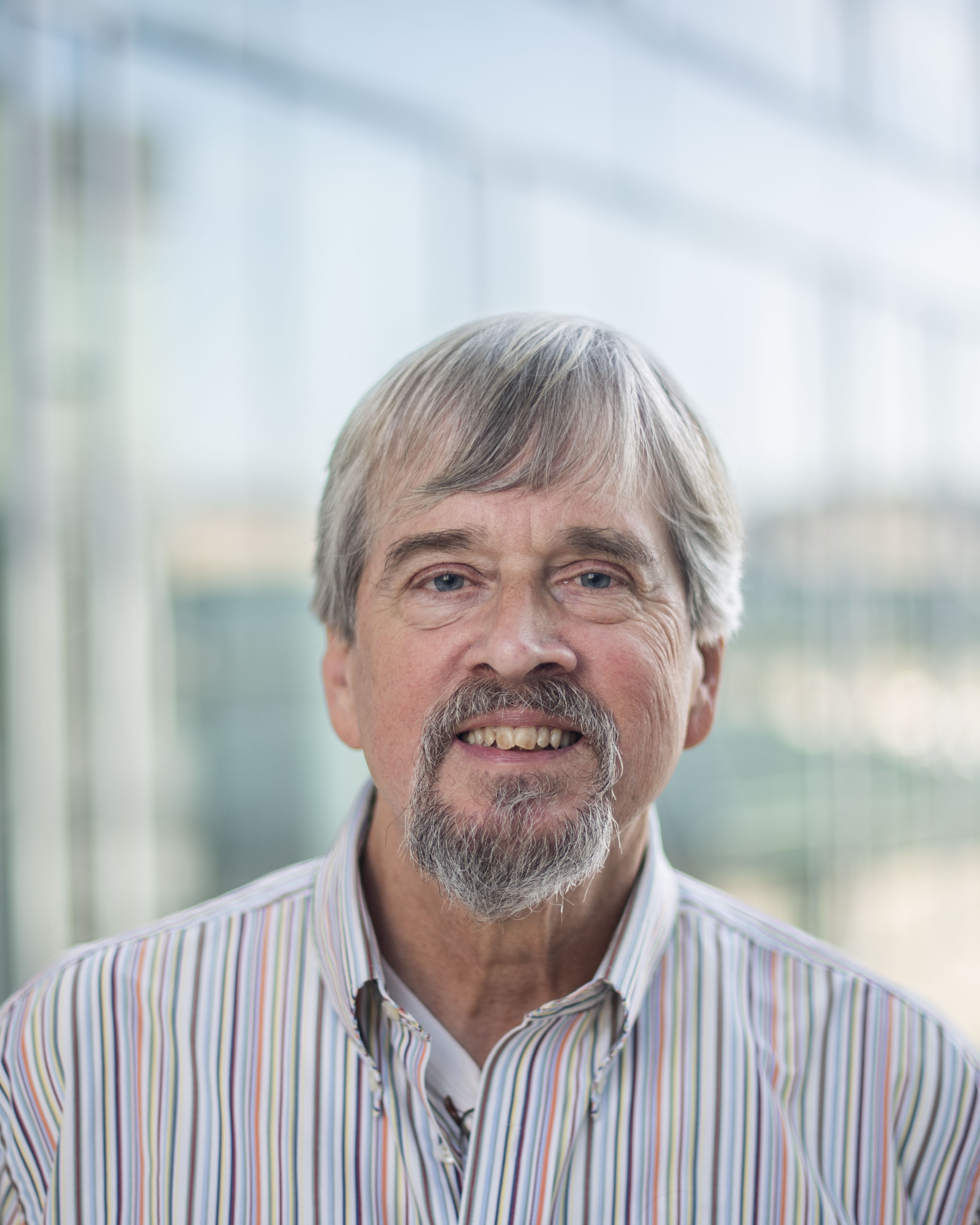
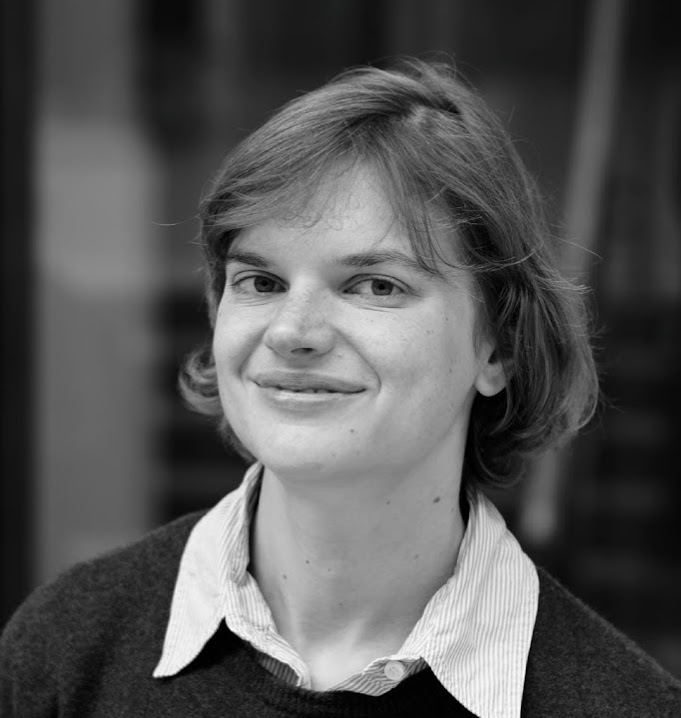
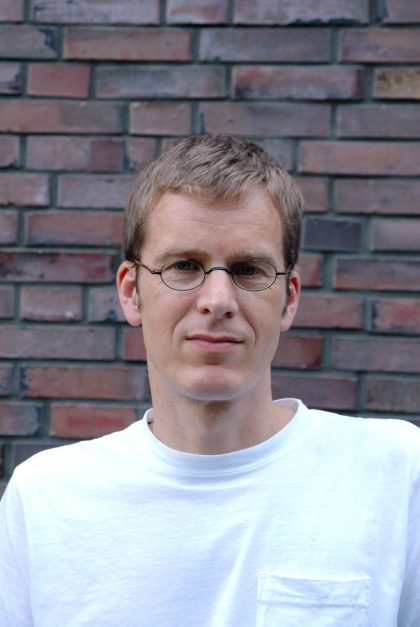
Aaron Steven White is an Associate Professor in the Department of Linguistics at the University of Rochester, with secondary appointments in the Department of Computer Science and affiliation with the Goergen Institute for Data Science. He directs the Center for Language Sciences (CLS) and the Formal and Computational Semantics Lab (FACTS.lab). His research focuses on computational semantics, exploring syntactic and semantic relationships in natural language, particularly through projects like the MegaAttitude Project (analyzing clausal predicates) and the Decompositional Semantics Initiative (annotating corpus data for semantic parsers). He holds a PhD from the University of Maryland (2015) and was a postdoc at Johns Hopkins University (2015–2017). Research Interests: Formal semantics and computational models Syntax-semantics interface Natural language understanding systems Event structure decomposition Neuroimaging of linguistic processing Recent Work Trends: His publications emphasize computational models of clause selection , temporal interpretation in nonfinite clauses , and large-scale corpus annotation frameworks . Key contributions include the Universal Decompositional Semantics dataset and tools for cross-lingual information extraction. Lab & Affiliations: Leads CLS (an interdisciplinary language sciences hub) and FACTS.lab (specializing in formal semantics). Collaborates widely, including with Julian Grove on summer schools.
Robert Frederking is an Associate Dean for PhD Programs and Chair of the Master of Language Technologies program at Carnegie Mellon University's Language Technologies Institute (LTI), part of the School of Computer Science (SCS). With over three decades at CMU, he holds a PhD in Computer Science , specializing in machine translation and computational linguistics . Education : PhD in Computer Science, Carnegie Mellon University Research Interests : Advancing machine translation for low-resource languages Developing speech-to-speech translation systems (Tongues, NineOneOne projects) Building named entity recognition tools for defense applications Creating translingual information retrieval frameworks Designing multilingual processing architectures Scientific Awards : Allen Newell Award for Research Excellence Leadership & Grants : Principal Investigator for NSF KDI Universal Access project Co-PI for NSF/EU Muchmore project Organizer of JGC60 Celebration Representative to NSF-funded LEAP Alliance Labs & Teams : Founding member of CMU's Language Technologies Institute Contributor to evolution of Center for Machine Translation into LTI Key member of Dolphin Communication Project Participant in AMTA leadership (2004-2008)
Florina Piroi is a Senior Scientist (Research Fellow) at the Center for Research Data Management (E058-06) within the Faculty of Informatics at TU Wien. Her research integrates information retrieval, knowledge graphs, and semantic technologies to advance exploratory search systems and research data infrastructure. Her core research interests include: Information Retrieval evaluation and validation methodologies Knowledge graph applications for domain-specific search Patent text mining and semantic technologies Medical concept normalization and entity linking Argumentative zoning in scientific documents Table extraction and classification systems Analysis of her recent publications reveals strong trends in applying machine learning to specialized IR tasks, particularly in patent analysis and medical text processing. Her work emphasizes robust evaluation frameworks and cross-lingual capabilities, with consistent contributions to the CLEF campaign and PatentSemTech workshops. Dr. Piroi actively collaborates with international researchers through the Network Lab at TU Wien and contributes to the university's Center for Research Data Management, focusing on semantic technologies for research data infrastructure and scholarly communication systems.
Frank Keller is a Professor in the School of Informatics at the University of Edinburgh, affiliated with EdinburghNLP, the Natural Language Processing Group. His research spans natural language processing, cognitive science, and computational narrative, with dual foci on language-vision integration and narrative modeling. Professor Keller's primary research encompasses natural language processing and cognitive science, specifically investigating language and vision tasks such as image description, visual grounding, video summarization, and visual story telling. His secondary focus involves computational narrative modeling, where he develops frameworks for analyzing characters, plot turning points, and suspense in long-form texts including movie scripts and books—addressing challenges in LLM comprehension of extended narratives. Recent publications (2023-2025) reveal strong trends in multimodal narrative generation, particularly visual story creation with grounded characters and movie script summarization. His work bridges cognitive modeling with practical NLP applications, exploring human reading mechanisms through neural attention models and advancing procedural video understanding through implicit argument prediction. Scientific Awards: EMNLP Best Paper Award (2002) Nominated for ACL Best Short Paper Award (2019) Professor Keller actively supervises eight current PhD students including Anil Batra and Gautier Dagan, and has mentored 26 alumni now at institutions like MIT, Google DeepMind, and Copenhagen University. His research receives substantial funding through the UKRI Centre for Doctoral Training in Designing Responsible NLP, supporting next-generation NLP researchers. As a core member of EdinburghNLP, he leads interdisciplinary teams collaborating with the Pioneer Center for AI and Copenhagen University. Current projects integrate cognitive science with multimodal learning, focusing on narrative structure analysis, visual grounding, and human-AI interaction systems for complex tasks like trailer creation and scientific poster summarization.
Justin Royer is an Assistant Professor of Linguistics in the Department of Linguistics and Translation at Université de Montréal. His research focuses on theoretical linguistics, particularly the syntax, semantics, and prosody of Chuj (a Mayan language) and Quebec French. Previously, he held a Banting Postdoctoral Fellowship at UC Berkeley and earned a PhD in Linguistics from McGill University. His theoretical work explores the intersection of syntax, semantics, and prosody in under-represented languages, with specific attention to Mayan languages. He investigates phenomena such as ergative anaphors, high-absolutive syntax, numeral classifiers, and definiteness markers. His fieldwork-based research documents Chuj and Mam languages, contributing to linguistic typology and documentation methodologies. Justin's publications (2017–2025) reveal trends in Mayan language analysis, Quebec French syntax, and cross-linguistic comparisons. Key subfields include animacy hierarchies, directional constructions, and nominal domain modality. His collaborative projects with scholars like Amy Rose Deal and Luis Alonso-Ovalle highlight interdisciplinary approaches. Scientific awards include a Banting Postdoctoral Fellowship. He has presented at major conferences (NELS, WCCFL, SALT) and delivered invited talks at institutions across North America. His funded projects (2025–2029) focus on documenting Mayan languages and analyzing argument structure. He is also involved in training students through workshops and seminars. Justin leads fieldwork on Chuj territory in Guatemala, working with local communities to document dialectal variation. His lab, Yolnhajab', operates in Huehuetenango, Guatemala, and collaborates with institutions like Universidad Nacional Autónoma de México and UC Berkeley. His work bridges theoretical linguistics with practical applications in language preservation.
Dr. Elizabeth Pankratz is a Lecturer in the Department of Psychology at the University of Edinburgh, where she teaches statistics. She is affiliated with the School of Philosophy, Psychology and Language Sciences (PPLS) and maintains strong connections with the Centre for Language Evolution. Dr. Pankratz completed her PhD at the University of Edinburgh's Centre for Language Evolution under the supervision of Prof. Jennifer Culbertson and Prof. Simon Kirby. Her doctoral research focused on language acquisition phenomena from a cognitive science perspective, culminating in her thesis "Segmentation, rule formation, and the emergence of generalisation." Her research spans cognitive science, linguistics, and psychology, with particular emphasis on how humans learn and generalize from concrete surface representations to abstract rules and patterns. Dr. Pankratz investigates language acquisition mechanisms, examining word segmentation, rule learning, and generalization processes through diverse methodological approaches including behavioral experiments, computational modeling, and corpus analysis. Dr. Pankratz's publication record reveals a cohesive research trajectory focused on cognitive mechanisms underlying language processing and acquisition. Her work explores how frequency distributions influence linguistic rule generalization, the relationship between language production and morphosyntactic learning, and the cognitive foundations of scalar inferences. She employs complementary methods to investigate language phenomena across different contexts, ages, and languages, contributing to our understanding of the cognitive architecture that supports language knowledge. Supervises undergraduate and postgraduate dissertations Mentored Sigurd Farstad Iversen (MSc Language and Cognition, 2023) Dr. Pankratz is actively engaged in research collaborations examining language register, cognitive modeling of linguistic phenomena, and the statistical properties of language processing. Her teaching focuses on statistics for psychology students, bridging methodological rigor with practical applications in cognitive science research.
Prof. Dr. Gülşen Cebiroğlu Eryiğit is a Professor at Istanbul Technical University (ITU) in the Department of Artificial Intelligence and Data Engineering under the Faculty of Computer and Informatics. As the founder and director of the ITU Natural Language Processing Group , she leads Turkey's foremost research team in Turkish-language NLP. Her work has achieved global impact through the first software export from ITU in NLP, with 6,000+ Google Scholar citations as of 2023. Education: MSc & PhD, Computer Engineering, ITU (2002-2007) BSc, Computer Engineering, Marmara University (1995-2000) High School: Saint-Michel (French curriculum) Her research focuses on natural language processing for morphologically complex languages like Turkish, with specializations in: Dependency parsing and treebank development Multilingual transfer learning systems Abstract meaning representation Language technology infrastructure Coreference resolution in agglutinative languages Gamification of linguistic education Recent publications show active research trends in: Transforming financial document analysis with BiLSTM-CRF architectures Advancing Turkish language models through ViBERTgrid implementations Developing multilingual frameworks under EU COST Actions Creating semantic search engines for job matching platforms Optimizing automotive demand management through dialogue systems Building large language models (LLMs) for Turkish Scientific recognition includes: Siemens Excellence Award (2007) for doctoral research Above Threshold Award (TÜBİTAK, 2015) EU 7th Framework Certificate of Appreciation (2012) ITU Thank You Plaque (2017) Current leadership roles: Senior Action Editor, ACL RR Director, ITU TÖMER (Turkish Language Teaching Center) Coordinator, ITU NLP Group Co-Chair, EU UniDive COST Action WG3 Principal Investigator on 3 active projects
Abhishek Arora is a Pre-Doctoral Fellow in the Department of Economics at Harvard University, working with Professor Melissa Dell on projects combining Natural Language Processing and vision techniques to analyze historical datasets. He holds a Master's in Economics from Delhi School of Economics and a Bachelor's in Management Studies from Shaheed Sukhdev College of Business Studies. His research focuses on Political Economy, Development Economics, and Deep Learning, with particular emphasis on topics like local democracy, social norms, and historical text analysis. He has collaborated with institutions including the World Bank and universities such as NYU, Northwestern, and King’s College London. His work bridges computational methods with social science research, producing tools like EfficientOCR for digitization and datasets like American Stories. Key projects include evaluating local democracy's impact in India and analyzing marriage markets through a gender lens. Abhishek has extensive experience in interdisciplinary collaboration, having worked with economists and political scientists across multiple institutions. His contributions span methodological innovations in NLP, historical data curation, and policy-relevant development studies.
Mr. Boming Xia is a Research Fellow at the Responsible AI Research Centre (RAIR) and the Australian Institute for Machine Learning (AIML), University of Adelaide. He holds a position within the Faculty of Sciences, Engineering and Technology. His research focuses on advancing responsible and safe AI through a software engineering lens, particularly exploring the integration of system-level practices with machine learning approaches. His work emphasizes ethical AI development, including frameworks for risk assessment, ESG (Environmental, Social, Governance) integration, and blockchain-based accountability mechanisms. Key areas of interest include AI safety, privacy protection in generative AI, and the design of transparent software supply chains using tools like SBOM (Software Bill of Materials). Xia's contributions span empirical studies on SBOM adoption, AI system evaluation frameworks, and tools like CDCAT for cross-document entity and event coreference. His research bridges theoretical AI foundations with practical software engineering methodologies to ensure AI systems are both innovative and ethically grounded.
Prof. Dr. Talat Dinar is a faculty member at the Department of Turkish Language and Literature, Faculty of Humanities and Social Sciences, Süleyman Demirel Üniversitesi. He holds a PhD from Pamukkale University (2013) and has conducted extensive research on Turkish dialectology, historical linguistics, syntax, and modality. His work focuses on Anatolian Turkish dialects, morphosyntactic variation, and the evolution of grammatical structures. Education: Licentiate (BA equivalent) in Turkish Language and Literature, Suleyman Demirel University (2001) MA in Turkish Language and Literature, Afyon Kocatepe University (2006) PhD in Turkish Language and Literature, Pamukkale University (2013) Research Interests: Dialectology (Anatolian Turkish), historical linguistics, syntax, modality, grammaticalization processes, lexical semantics, and orthography analysis. His studies emphasize regional variation in verb conjugation, morphological contrasts, and the documentation of endangered dialect features. Publications: Over 15 peer-reviewed articles since 2006, focusing on Anatolian Turkish dialects, modality expressions, and historical texts. Recent works include analyses of modal verb structures, zero anaphora in Turkish literature, and verb tense systems in Yörük dialects. Awards: H-index 7 (Google Scholar), 113 citations, with contributions to Turkish Studies, Gazi Türkiyat, and other indexed journals. Grants & Advising: No specific grants mentioned, but active in academic supervision. His research often involves fieldwork collaborations with colleagues like Elif Burcu Yalçınkaya and Ünzüle Şık. Labs/Teams: Involved in Süleyman Demirel University’s Turkish Language Research Group, contributing to dialect documentation projects and corpus linguistics initiatives.
Ken Safir is a Distinguished Professor in the Department of Linguistics at Rutgers University, within the School of Arts and Sciences. His research centers on syntactic theory, binding, and the syntax of African and Germanic languages. He leads the Afranaph Project, an NSF-funded initiative to document anaphoric phenomena in African languages. Research Interests: His work focuses on the architecture of syntactic theory, anaphora and dependency, clausal complementation, movement, and the morphosyntax of understudied languages. He is especially known for his contributions to binding theory and the analysis of reciprocal and reflexive constructions in Bantu and other Niger-Congo languages. The most recent publications show a sustained focus on anaphora, phase theory, clausal selection, and morphosyntactic variation in African languages. His work combines formal syntactic theory with rich empirical data from fieldwork, often resulting in detailed grammar sketches and technical reports. The Afranaph Project has produced a comprehensive database and numerous open-access resources. NSF Grant BCS-0919086 (Afranaph Project) NSF Grant BCS-0523102 (Afranaph Project) Distinguished Professor Title (Rutgers University) Ken Safir has advised and collaborated with numerous graduate students and researchers, particularly in African linguistics. His work has been supported by continuous NSF funding, reflecting its significance in the field. He has contributed to major theoretical debates in generative grammar and has published extensively in top-tier journals. The Afranaph Project, under his leadership, maintains a robust infrastructure for linguistic data, including case files, questionnaires, and technical reports, serving as a vital resource for researchers worldwide.
Michael Strube is an Honorary Professor at the Department of Computational Linguistics at Heidelberg University and leads the Natural Language Processing (NLP) Group at HITS (Heidelberg Institute for Theoretical Studies) in Germany. He has been with HITS (previously EML Research and European Media Laboratory) since 2003 and became an Honorary Professor at Heidelberg University in 2010. He is also a Fellow of the Association for Computational Linguistics (2019). Dr. Strube received his PhD from the Computational Linguistics Department at the University of Freiburg in December 1996 under the supervision of Udo Hahn. Between 1997 and 1999, he was a postdoctoral fellow at the Institute for Research in Cognitive Science at the University of Pennsylvania, Philadelphia. Michael Strube's research focuses on semantics and discourse pragmatics, graph-based methods for text representation and analysis, extraction of world knowledge from Wikipedia for computational linguistics, and development of methods to synchronize multilingual content. His work spans coreference resolution, discourse processing, text summarization, entity linking, and natural language generation. He has made significant contributions to coherence modeling, anaphora resolution, and the application of geometric deep learning in NLP. His recent publications demonstrate strong trends in discourse processing, coreference resolution, and the application of geometric approaches to NLP problems. Strube has pioneered work in hyperbolic space for entity typing and graph embeddings, while maintaining his foundational work in discourse and coherence. His research bridges theoretical linguistics with practical NLP applications across multiple languages. Dr. Strube has received several prestigious awards, including: Fellow of the Association for Computational Linguistics (2019) Best Paper Award for "Fine-grained entity typing in hyperbolic space" (2019) Honorable Mention for the IJCAI-JAIR best paper prize 2010 for "Knowledge Derived from Wikipedia for Computing Semantic Relatedness" Professor Strube has advised numerous PhD students who have gone on to successful careers in academia and industry. His current PhD students include Yi Fan, Wei Liu, Haixia Chai, Mehwish Fatima, and Sungho Jeon, working on topics such as discourse structure, discourse relations, coreference resolution, and cross-lingual summarization. His former students include Federico Lopez, Benjamin Heinzerling, Mohsen Mesgar, and Nafise Moosavi, who now hold positions at institutions like Argo AI, RIKEN, Bosch Center for AI, and the University of Sheffield. As group leader of the NLP Group at HITS, Strube oversees a team focused on advancing natural language processing through research in discourse analysis, coreference resolution, text generation, and knowledge extraction. The group has been involved in numerous collaborative projects and has made significant contributions to the field through publications, shared tasks, and community building via workshops and conferences.
Justin Royer is an Assistant Professor of Linguistics in the Department of Linguistics and Translation at the Université de Montréal, Faculty of Arts and Sciences. He previously held a Banting Postdoctoral Fellowship at UC Berkeley and earned his PhD in Linguistics from McGill University in 2022 under the supervision of Jessica Coon, Luis Alonso-Ovalle, and Aron Hirsch. Research Interests: Theoretical syntax, semantics, and prosody Mayan languages, especially Chuj (spoken in Guatemala and Mexico) Québec French, particularly negation and clause-typing Language documentation and fieldwork methodologies Linguistic typology and cross-linguistic comparison His research bridges formal linguistic theory and empirical fieldwork, focusing on under-represented Indigenous languages. He investigates how syntactic structures interact with prosody and semantics, with a particular interest in phenomena such as anaphora, definiteness, classifiers, modality, and ergativity. Recent Research Trends: His most recent publications (2022–2025) reveal a strong focus on the interplay between syntax and semantics in Mayan languages, particularly Chuj and Mam. Key themes include animacy hierarchies, binding theory, ergative anaphors, modal indefinites, quantifier interpretation, and the syntax-prosody interface. He also continues to explore expletive negation and clause-typing in Québec French, contributing to the understanding of variation within Romance languages. Scientific Awards: Banting Postdoctoral Fellowship Advising and Grants: While specific advisees are not listed, Justin Royer has co-authored work with graduate students and collaborators such as Cristina Buenrostro, Rodrigo Ranero, and Noah Elkins, indicating active mentoring. His Banting Fellowship—a highly competitive award—demonstrates significant research funding and recognition. His ongoing collaborations and publication record suggest continued grant support and academic leadership. Labs and Research Groups: He is affiliated with research circles and workshops at major institutions, including the Syntax-Semantics Circle at UC Berkeley and the Montreal-Ottawa-Toronto-Hamilton Syntax Workshop. His invited talks at Stanford, UCLA, and the University of Washington reflect active engagement in the broader formal linguistics community.
Professor Irina Nikolaeva is affiliated with the School of Languages, Cultures and Linguistics (LAC) at SOAS University of London . Her research focuses on linguistic typology, morphosyntax, and endangered languages, particularly in Siberian and Uralic language families. Primary Affiliation: School of Languages, Cultures and Linguistics, SOAS University of London Email: in3@soas.ac.uk Her work explores: possessive constructions and switch-reference systems mixed categories in noun modification morphosyntactic features in Tundra Nenets and Yukaghir polarity focus and finiteness in typological frameworks Recent publications analyze vowel harmony in Yukaghir, contact-induced morphosyntactic changes in Siberia, and the morphosyntactic properties of internal possessors across diverse languages. Her scholarship bridges theoretical linguistics with fieldwork on endangered languages.
Erdem Yörük is a Professor in Sociology at Koç University , with additional affiliations as Associate Member at the University of Oxford's Department of Social Policy and Intervention, and Affiliated Faculty at the Ford Institute of Human Security (University of Pittsburgh, Central European University). As Director of the Center for Computational Social Sciences at Koç University, he leads major research initiatives including the ERC-funded projects Emerging Welfare and Politus , along with the H2020 Social Comquant project. Ph.D. in Sociology from Johns Hopkins University (2012) M.A. in Sociology from Johns Hopkins University (2009) M.A. in Sociology from Boğaziçi University (2006) B.Sc. in Electrical and Electronics Engineering from Boğaziçi University (2002) His research integrates Computational Social Sciences with Political Sociology to analyze the interplay between Social Movements and Welfare Policy . Current work focuses on creating cross-national datasets ( Global Welfare Dataset (GLOW) and Global Contentious Politics Database (GLOCON) ) to explore how governments utilize social assistance as both Mobilization and Containment mechanisms in response to grassroots political activity. Major findings from his publications in journals like World Development , Governance , and Politics & Society demonstrate that Emerging Market Economies have developed distinct Populist Welfare State Regimes through interactions between Structural Pressures , Institutional Frameworks , and Political Agency . Notable among these is his 2022 book The Politics of the Welfare State in Turkey (University of Michigan Press), which presents a political explanation for Turkey's shift from employment-based social security to poverty-targeted assistance. He has organized EU-funded Training Workshops on topics including Social Media Data Research , Network Analysis with R , and Digital Trace Data applications. His methodological contributions span Random Sampling techniques for protest event coding, Multilingual Annotation protocols, and Machine Learning Integration with expert rule systems.