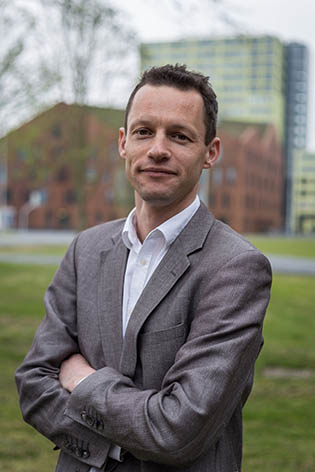
Daan Crommelin holds a part-time professorship in Numerical Analysis and Dynamical Systems at the KdV Institute for Mathematics, University of Amsterdam, and is a senior researcher at CWI Amsterdam's Scientific Computing group. He serves on CWI's management team and previously led its Scientific Computing group (2013–2021). His research focuses on stochastic modeling of multiscale systems, uncertainty quantification, and rare event analysis, with applications in climate science, renewable energy, and fluid dynamics. Crommelin combines methods from scientific computing, applied probability, and dynamical systems to address challenges in atmosphere-ocean-climate modeling. He has contributed to projects like the EU-funded VECMA initiative for exascale computing and collaborated on superparameterization techniques for climate models. His work also extends to epidemic modeling and computational chemistry. Crommelin earned his PhD in 2003 from Utrecht University, with a thesis co-supervised by KNMI, and holds an MSc in theoretical physics and an MA in philosophy from the University of Amsterdam.
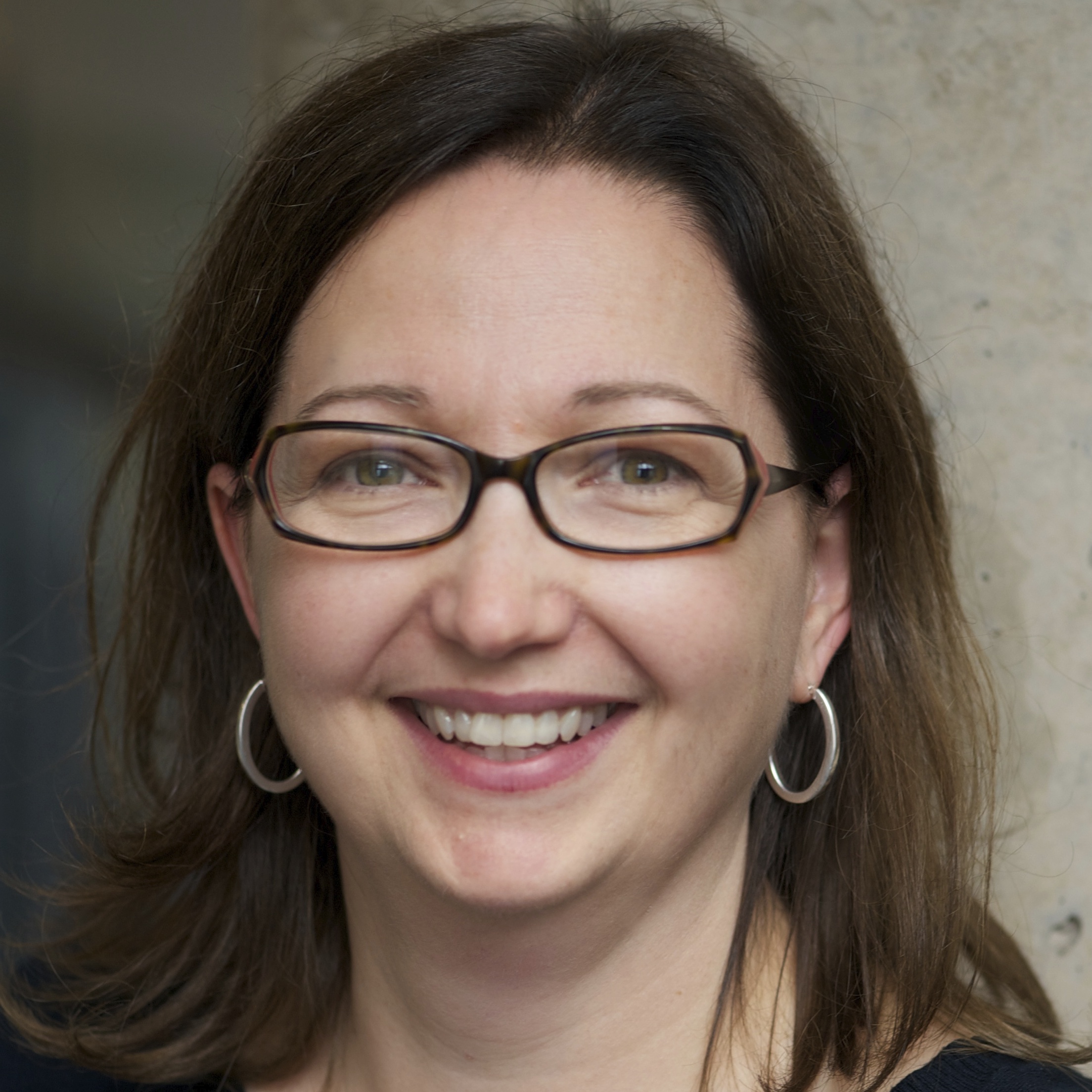
Leah Findlater is a Professor at the University of Washington , Seattle, WA, USA. Her research focuses on Human-Computer Interaction (HCI) and Accessibility , particularly in developing AI and Machine Learning systems for users with disabilities. Key areas: Assistive Technologies , Speech Recognition , Visual Privacy Collaborators: Jon E. Froehlich, Dhruv Jain, Emma J. McDonnell, Abigale Stangl Her recent work includes sound personalization for Deaf users , AI-driven sign language generation , and privacy tools for blind individuals . She explores interactive machine learning and user-centered design to improve accessibility in smartwatches , AR , and generative AI . Articles highlight cross-disciplinary collaborations with disability communities , focusing on inclusive AI , sensory augmentation , and ethical technology design . She advocates for user-driven accessibility solutions in social media and urban environments .
Anna Rogers is an Associate Professor of Data Science at the IT-University of Copenhagen , affiliated with the NLPnorth research group. Her work focuses on Natural Language Processing (NLP) , Artificial Intelligence , and Large Language Models (LLMs) , with a particular emphasis on ethical data use, peer review innovation, and transformer model analysis. She leads projects addressing AI transparency, medical QA hallucinations, and generative AI applications. Her research explores topics including: LLM behavior and evaluation Data governance in NLP Peer review systems optimization Transformer model robustness Medical AI applications Key Projects : PlagAIrism : Tracking LLM training data origins Pioneer Centre for AI : Pre-registered replication studies TinyGPT : Efficient NLP models AIInterviewer : Large-scale qualitative data collection Publications span ACL , EMNLP , and specialized NLP workshops, addressing topics from BERT analysis to AI content farms.
Dr. Diane Horton is a Teaching Professor in the Department of Computer Science at the University of Toronto. She co-leads the Embedded Ethics Education Initiative, a cross-disciplinary effort integrating ethics into computer science curricula. Her research focuses on educational pedagogy, particularly in ethics integration and online learning effectiveness. Leadership roles include: Former Associate Chair, Undergraduate (Department of Computer Science) Acting Director, University of Toronto Centre for Teaching Support and Innovation Co-chair, President's Teaching Academy Research highlights include: Longitudinal studies on embedded ethics education impact Co-designer of the Blocky game-based learning assignment Investigations into inverted classroom models and online CS education Awards include the 2015 President's Teaching Award (UofT's highest teaching honor), 2016 OCUFA Teaching Award, and 2024 Northrop Frye Team Award for the Embedded Ethics Initiative. She co-hosts the In the Loop podcast for CS undergraduates. Current projects include: Leadership in the Schwartz Reisman Institute for Technology and Society Development of ethics modules for CS curricula Professional development programs for educators
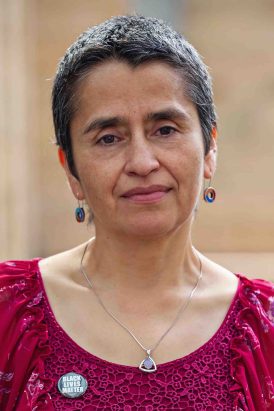
Miri Barak serves as a Professor of Science and Engineering Education at the Technion-Israel Institute of Technology and leads the Science and Learning Technologies (SLT) Lab. She is also an Honorary Research Fellow at the University of Oxford, UK. Her career transitioned from industry as an R&D Engineer in Biotechnology & Food Engineering to academia, where she focuses on educational technology and pedagogy. Previously, she chaired the Institutional Review Board for Ethics in Behavioral Science Research and assisted the Technion’s Senior Vice President for Learning and Teaching Promotion. Education: BSc in Biotechnology & Food Engineering (Cum Laude) MSc and PhD from the Technion’s Faculty of Education in Science and Technology Postdoctoral fellowship at MIT’s Center for Educational Computing Initiatives (CECI), US Research interests emphasize Engineering Education: cultivating innovation through project-based and team approaches in hybrid/MOOC environments Science Education: leveraging location-based technologies and gamification to enhance knowledge construction and motivation. She also examines sociocultural factors in online learning and 21st century skill development. Recent publications (2021–2022) explore technology-driven pedagogy, including gamification strategies, location-based learning for physics comprehension, and comparative studies on online/on-campus engineering education. Her work also addresses cultural dimensions in project-based learning and frameworks for assessing innovative thinking. She leads international projects like AugmentedWorld (location-based learning), Games of Food (gamification), and MOOC development initiatives. No specific advisees are listed, but her academic roles suggest mentorship contributions. Her SLT Lab at the Technion pioneers online learning innovations and 21st century skill enhancement through technology.
Dr. Daniel Richards is a Lecturer in Data Prototyping and Visualisation at the Lancaster Institute for the Contemporary Arts (LICA), part of the Faculty of Arts and Social Sciences (FASS) at Lancaster University. His research focuses on speculative design, digital ethics, sustainable technologies, and innovation ecosystems. He explores provocative concepts such as 'Good Digital Identities' and 'Disruptive Innovation Ecosystems,' emphasizing co-creation and ethical technology integration. Key projects include the Digital Good Network (2022–2027), investigating equity and sustainability in digital relationships, and Qualified Selves (2019–2020), examining post-big data meaning-making. He also leads the Chatty Factories initiative (2018–2021), reimagining IoT-driven manufacturing. Richards has received the FASS Staff Award for Early Career Researcher of the Year and engages in public outreach through exhibitions like the Festival of Futures and workshops such as Speculative Woolgathering . His work bridges art, design, and technology, addressing societal challenges through speculative and participatory methods. He collaborates with interdisciplinary research groups including DSI - Society , Imagination Lancaster , and the Worldbuilding collective, fostering cross-disciplinary innovation. His activities span invited talks on AI in design, business engagement with Stratasys , and academic committee roles.
Antal van den Bosch is a Professor of Language, Communication, and Computation at Utrecht University’s Faculty of Humanities. He also serves as Board Member and Domain Chair for Social Sciences and Humanities at the Dutch Research Council (NWO). His career includes roles as Director of the Meertens Institute (KNAW) and professorships at Radboud University and Tilburg University. His research focuses on machine learning and computational linguistics, particularly Generative AI and Large Language Models. He emphasizes interdisciplinary collaboration, exploring intersections between AI and societal challenges like governance and cultural heritage. Education: Ph.D. in Advanced Computing Sciences at Maastricht University. Key affiliations include guest professorships at the University of Antwerp’s CLiPS and fellowships with EurAI and the Royal Netherlands Academy of Arts and Sciences. Research Interests: Generative AI and LLMs Language Technology Cultural AI Social Implications of AI Historical Language Analysis Articles Trends: Recent work addresses AI governance, societal impacts of generative models, and computational methods in humanities research. Projects like Better-Mods and Cultural AI Lab highlight applied AI for societal benefit. Awards: Vici Grant (NWO), KULAK Francqui Chair, and membership in prestigious academic societies. Advising & Grants: Supervises over 20 Ph.D. students. Leads projects on AI moderation tools, cultural heritage digitization, and digital humanities infrastructure. Notable grants include NWO-funded Better-Mods and Horizon 2020 initiatives like HiTiME and TwiNL. Labs/Teams: Active in CLARIAH, Nederlab, and the Digital Humanities Lab (KNAW). Software contributions include Frog (Dutch NLP suite), T-Scan, and Colibri Core.
Prof. Franciska de Jong is a Full Professor of e-Research for the Humanities at Utrecht University's Department of Languages, Literature and Communication, part of the Faculty of Humanities. She previously served as Executive Director of CLARIN ERIC (2015-2022), the European research infrastructure for language resources, and now acts as a Senior Advisor there. Her research focuses on digital libraries, text mining, cross-language retrieval, and cultural heritage preservation. She holds a PhD in theoretical linguistics and has extensive industry experience at Philips Research (1985-1992). She has held leadership roles in national organizations including the Netherlands Organization for Scientific Research (NWO) and the National Library of the Netherlands (KB), and currently chairs the NWO Advisory Committee for Digitalization Research. She is leading the Horizon Europe project EOSC Focus, addressing sustainability of the European Open Science Cloud. Her work spans interdisciplinary collaboration, policy development, and infrastructure governance in digital humanities and computational social sciences. Education: Dutch Language & Literature (Utrecht University), PhD in Theoretical Linguistics. Key Roles: Board member of Netherlands eScience Center (2014–2023), Chair of Lorentz Center's Computational Science Advisory Board (2016–2021), Steering Board member of Open Science-NL (2023–present). Activities: Organized CLARIN Annual Conferences (2016–2019), Digital Humanities conferences, and workshops on parliamentary data analysis.
Claes Lundström is an Adjunct Professor at Linköping University's Department of Science and Technology (ITN), affiliated with the Media and Information Technology (MIT) school. His primary research focuses on medical imaging, integrating machine learning, visualization, and human-computer interaction in clinical settings. He leads the technical side of digital pathology research at the Center for Medical Image Science and Visualization (CMIV), directing national-scale grants and serving as Arena Director for the Analytic Imaging Diagnostics Arena (AIDA). Since 2010, he has held dual roles as Research Director at Sectra AB and academic researcher, driving innovations that translate into commercial healthcare solutions. Lundström's work spans AI-driven diagnostics, uncertainty visualization, and precision orthopedics, with contributions recognized through leadership in major projects like the €70M BIGPICTURE initiative. His academic credentials include a PhD (2007) and Docent degree (2014), alongside extensive industry collaboration. Education: PhD in 2007 and Docent degree in 2014 from Linköping University. PhD: 2007 Docent: 2014 Research interests emphasize AI integration in diagnostics, particularly digital pathology and medical imaging workflows. His work addresses challenges like domain adaptation in AI models, uncertainty quantification in segmentation tasks, and interactive visualization tools for clinicians. Recent projects include the VAI-B platform for AI validation in breast imaging and the BigPICTURE collaboration for global pathology data sharing. Key grants include leadership roles in national-scale projects, such as the AIDA arena and SCAPIS study-based AI lab. His contributions to AI ethics and clinical adoption include studies on human-AI collaboration and quality assurance frameworks. Lundström also oversees labs like CMIV and AIDA, fostering cross-disciplinary research in medical imaging and AI.
Vilma Mesa is a Professor of Education and Mathematics at the University of Michigan, affiliated with the Center for the Study of Higher and Post-secondary Education. She holds a B.S. in Computer Science and Mathematics from the University of Los Andes (Colombia), and an M.A. and Ph.D. in Mathematics Education from the University of Georgia. Research Interests: Her work focuses on undergraduate mathematics education, particularly in community colleges and inquiry-based learning environments. She investigates instructional resources, textbook use, and equity in STEM education. Key themes include teaching expertise development, student learning trajectories, and the impact of innovative teaching practices. Grants & Awards: Mesa has secured over $6M in federal funding and received notable awards, including the 2022 AWM Louise May Award and the 2022 University of Michigan Outstanding Mentor Award. Her research spans projects like the NSF-funded 'AI@CC 2.0' and 'PROTEUS,' aimed at improving algebra instruction and interactive textbook design. Professional Roles: She serves as co-Editor-in-Chief of Educational Studies in Mathematics and has contributed to editorial roles in Journal for Research in Mathematics Education . Her work integrates cross-disciplinary collaborations, including projects with Tribal colleges and national studies on calculus education.
Dr T. Thang Vo-Doan is a Lecturer at the University of Queensland in the School of Mechanical & Mining Engineering . He directs the UQ Biorobotics Lab and serves as an affiliate of both the Future Autonomous Systems and Technologies and the Queensland Brain Institute . PhD in Mechanical Engineering, Nanyang Technological University (2016) M.Eng. in Manufacturing Engineering, Ho Chi Minh City University of Technology (2010) B.Eng. in Mechanical Engineering, Ho Chi Minh City University of Technology (2008) His research focuses on biohybrid robotics , integrating biological systems with technology through cyborg insects , bio-inspired robotics , and fast lock-on tracking systems. He explores insect biomechanics and brain imaging in untethered insects , developing platforms for search-and-rescue missions and environmental monitoring. Recent work trends include: 2025: On-demand climbing control for cyborg beetles 2024: High-resolution insect tracking and soft textile muscles 2023: Intelligent insect–computer hybrid robots 2022: Autonomous navigation and robotic leg design 2018: Ultralightweight living robots Scientific honors: Human Frontier Science Program Cross-disciplinary Fellowship (2019-2022) He supervises projects on: Insect-machine hybrid robots Insect-inspired robotics Fast lock-on tracking Insect locomotion biomechanics Current grants include: NHMRC IDEAS Grant (2025-2028): Infrared and AI for Ross River virus surveillance Queensland Corrective Services Grant (2024-2027): Wastewater drug misuse analysis
Associate Professor Fatima Nasrallah is an Associate Professor and Principal Research Fellow at the Queensland Brain Institute (QBI), University of Queensland (UQ). Her research focuses on functional neuroimaging and brain injury mechanisms, particularly traumatic brain injury (TBI) and its link to neurodegenerative diseases like dementia. She leads a lab investigating multimodal imaging techniques to map structural, functional, metabolic, and molecular changes post-TBI, linking these to behavioral outcomes and biomarkers. Education: PhD in neurochemistry from the University of New South Wales (2009). Postdoctoral work at Singapore Bioimaging Consortium (2009–2012), followed by roles at the Clinical Imaging Research Center and QBI since 2015. Appointed as a Motor Accident and Injury Commission Fellow in 2015. Active in clinical and preclinical TBI research, translational medicine, and neuroimaging innovation. Research Interests: Her work spans basic and clinical neuroscience, emphasizing early diagnosis of TBI biomarkers and neuroimaging advancements. Key areas include: functional MRI, diffusion tensor imaging, quantitative susceptibility mapping, and biomarker discovery. Her lab explores the pathophysiological pathways connecting TBI to Alzheimer's disease and other dementias. Recent Article Themes: Recent publications highlight advancements in TBI biomarkers, neuroinflammation profiling, preclinical imaging standards, and MRI techniques for rodent models. Work also addresses clinical applications, such as pediatric TBI prediction and stroke rehabilitation via robotic devices. Awards: Recognized with the Motor Accident and Injury Commission Fellowship (2015), supporting her TBI research. Advising & Grants: Supervises PhD students (e.g., Linfeng Liu, Junyan Lyu) and collaborates on projects like the PREDICT-TBI trial (multicenter TBI outcome prediction). Leads teams in biomarker development, imaging innovation, and translational studies. Labs & Teams: Heads her independent research group at QBI, collaborating with institutions like the Singapore Bioimaging Consortium and international ISMRM networks. Engages in cross-disciplinary efforts to bridge preclinical and clinical TBI research.
John A. Ochsendorf is a Professor and Director of the Pierce Laboratory at the Massachusetts Institute of Technology (MIT). He holds dual appointments in the Department of Civil and Environmental Engineering and the Department of Architecture. His research focuses on the mechanics of historical structures, sustainable infrastructure, and masonry engineering. Ochsendorf’s work bridges engineering and architecture, emphasizing the preservation of historic buildings and the development of low-carbon construction methods. He leads initiatives in material reuse, lifecycle assessment, and innovative structural design. Education: B.Sc. in Engineering, Cornell University, 1996 M.Sc. in Civil Engineering, Princeton University, 1998 Ph.D. in Engineering, University of Cambridge, 2002 Research Interests: Dynamics of masonry structures (vaults, domes, arches) Historical structural analysis and preservation Material sustainability and carbon reduction in construction Freeform masonry and sculptural engineering His recent work includes federal grants for steel recycling strategies and collaborations on public art installations like the Storm King Art Center brick sculpture. Ochsendorf’s publications span structural innovation, heritage conservation, and sustainable materials science. He is also involved in educational initiatives to integrate computational tools into structural design education.
Riza Theresa Batista-Navarro is Senior Lecturer in Text Mining at the University of Manchester's Department of Computer Science, specializing in natural language processing and computational linguistics. Her research examines: Explainable AI for text classification and fact-checking Clinical text mining for healthcare applications Human rights investigation using OSINT Bias detection in parliamentary debates As Principal Investigator for the ESRC project The future of human rights investigation: Using open source intelligence to transform documentation of human rights violations , she develops NLP tools for social good. Recent publications analyze transformer-based explanation generation and clinical entity recognition. She contributes to cross-disciplinary initiatives including the Centre for Robotics and Artificial Intelligence, developing methods for misinformation analysis in digital discourse.
Dr. Md Al Masum Bhuiyan is an Assistant Professor in the Department of Mathematics and Statistics at Austin Peay State University, part of the College of STEM. He holds a Ph.D. and two Master's degrees in Applied Mathematics from The University of Texas at El Paso (UTEP) and a Bachelor's in Mathematics from the University of Dhaka. Dr. Bhuiyan specializes in Applied Statistics, high-frequency data analysis, machine learning, and stochastic modeling, with expertise in analyzing diverse datasets including financial markets, geophysics, meteorology, and public health. His educational background includes certifications in Big Data Analytics and SAS Base Programming. His research focuses on applying advanced statistical and computational methods to complex systems, such as financial volatility estimation, earthquake-seismic data analysis, and environmental monitoring. He teaches courses like Stochastic Processes, Probability, and Elements of Statistics at both undergraduate and graduate levels. Dr. Bhuiyan's work integrates interdisciplinary approaches, combining mathematical rigor with real-world applications. His publications span high-impact journals like Physica A and AIMS Environmental Science , addressing topics from ozone concentration prediction to volcanic activity modeling. His research trends emphasize predictive analytics, volatility modeling, and algorithmic solutions for geophysical and financial systems. While no formal awards are listed, his extensive publication record reflects significant contributions to computational science and applied mathematics. His teaching and research roles highlight a commitment to advancing data-driven methodologies across multiple disciplines.