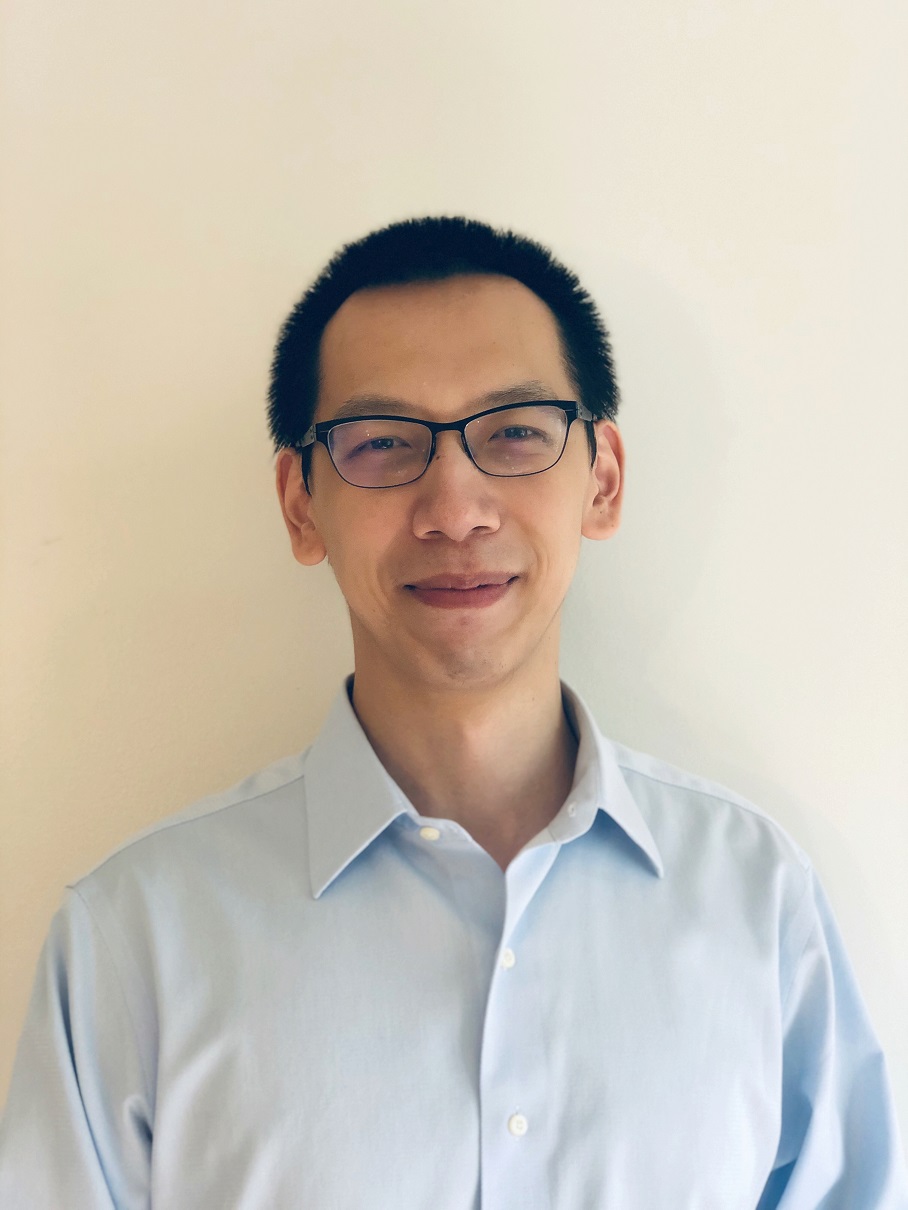
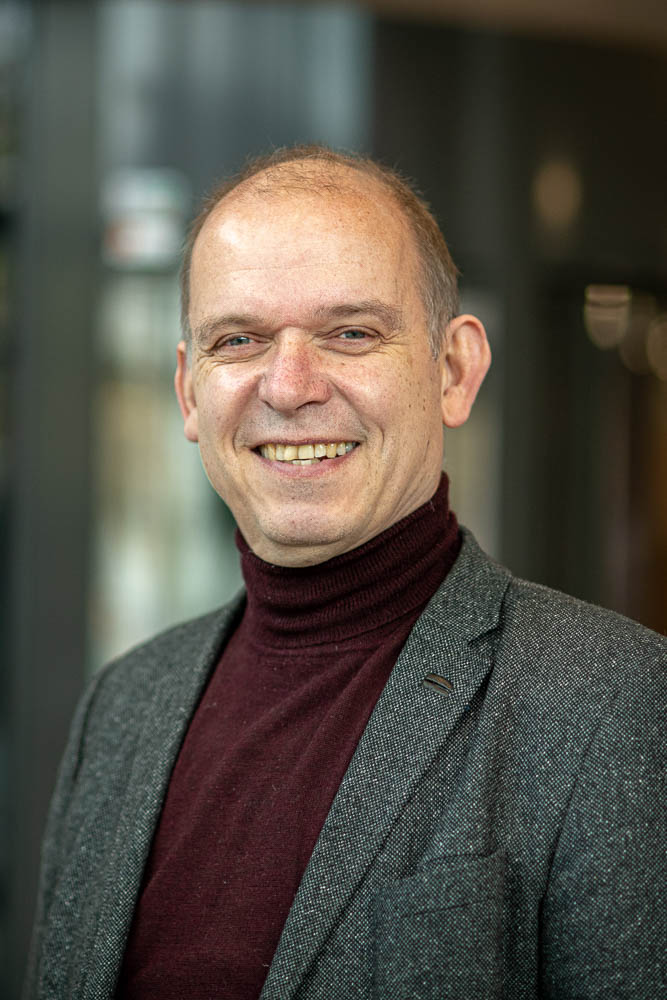
Xiaowei Jia is an Assistant Professor in the Department of Computer Science at the University of Pittsburgh. He holds a Ph.D. from the University of Minnesota (supervised by Prof. Vipin Kumar) and B.S./M.S. degrees from the University of Science and Technology of China (USTC) and SUNY Buffalo. His research focuses on integrating scientific theory with machine learning to address societal and environmental challenges, such as climate modeling, hydrology, and fairness in AI. Education: Ph.D., University of Minnesota (2020) M.S., State University of New York at Buffalo B.S., University of Science and Technology of China (USTC) Research Interests: Knowledge-Guided Machine Learning Spatiotemporal Data Mining Fairness in AI for Social Good Applications in Environmental Science and Healthcare Publications showcase his work on physics-integrated neural networks, spatiotemporal modeling (e.g., water temperature prediction), and fairness-aware algorithms. His work has been recognized with Best Paper awards at SIAM SDM (2022, 2023). Awards include the Best Applied Data Science Paper Award at SIAM SDM in 2022 and 2023. He teaches advanced machine learning courses, emphasizing theory integration with real-world applications.
Prof. Senthold Asseng is a Professor of Digital Agriculture at the Technical University of Munich (TUM), leading the Hans Eisenmann Forum for Agricultural Sciences since 2021. His research focuses on climate-plant-soil systems modeling, addressing global food security, sustainable agriculture, and digital technologies like vertical farming and autonomous robotics. He holds a PhD from Humboldt University Berlin and habilitation from TUM, with prior roles at CSIRO Australia and the University of Florida (as Full Professor and Director of the Florida Climate Institute). His honors include AAAS Fellow, Web of Science Highly Cited Researcher, and multiple teaching/mentorship awards. Education: BSc/MSc in Agronomy & Horticulture, Humboldt University Berlin (1989-1990) PhD in Agronomy, Humboldt University Berlin (1994) Habilitation in Agronomy, TUM (2004) Research Interests: Climate change impacts on crops, digital agriculture technologies, systems analysis for autonomous farming, and vertical farming sustainability. His work integrates modeling, robotics, and environmental control to enhance agricultural resilience and productivity. Awards: AAAS Fellow (2019) Highly Cited Researcher (2019) UF Research Foundation Professor (2016-2019) Grants & Leadership: Led interdisciplinary projects like AgMIP-Wheat, SECC, and FAO advisory roles. Active in editorial roles for journals like Global Change Biology and Environmental Research Letters . Labs/Teams: Chair of Digital Agriculture at TUM, collaborating on projects like Smartfield and Proteins4Singapore , focusing on automation, controlled environment agriculture, and climate-smart solutions.
Thomas Berger is a Professor at the University of Hohenheim , affiliated with the Faculty of Agricultural Sciences and leading the Department of Economics of Land Use . He also contributes to the Computational Science Hub and Hohenheim Tropics initiatives. Focus Areas: Climate change adaptation, land-use modeling, biodiversity-productivity trade-offs, agent-based simulation, and machine learning in agricultural systems. Key Projects: Simulation frameworks for smallholder resilience in Ethiopia, bioeconomic modeling in the Amazon, and hybrid intelligence applications in European agricultural policy. Recent Publications: 2025 study on climate change effects on insecticide reduction in Germany, 2024 work on reconciling biodiversity with productivity via hybrid models, and 2023 methodological contributions to surrogate modeling and seasonal forecast integration. Research Trends: Interdisciplinary integration of climate science, agricultural economics, and computational modeling, with increasing emphasis on AI-assisted decision support systems and sustainability policy validation. Teaching & Outreach: Offers Agricultural Economics seminars and Hohenheim Tropics discussions, requiring advance email registration for office hours.
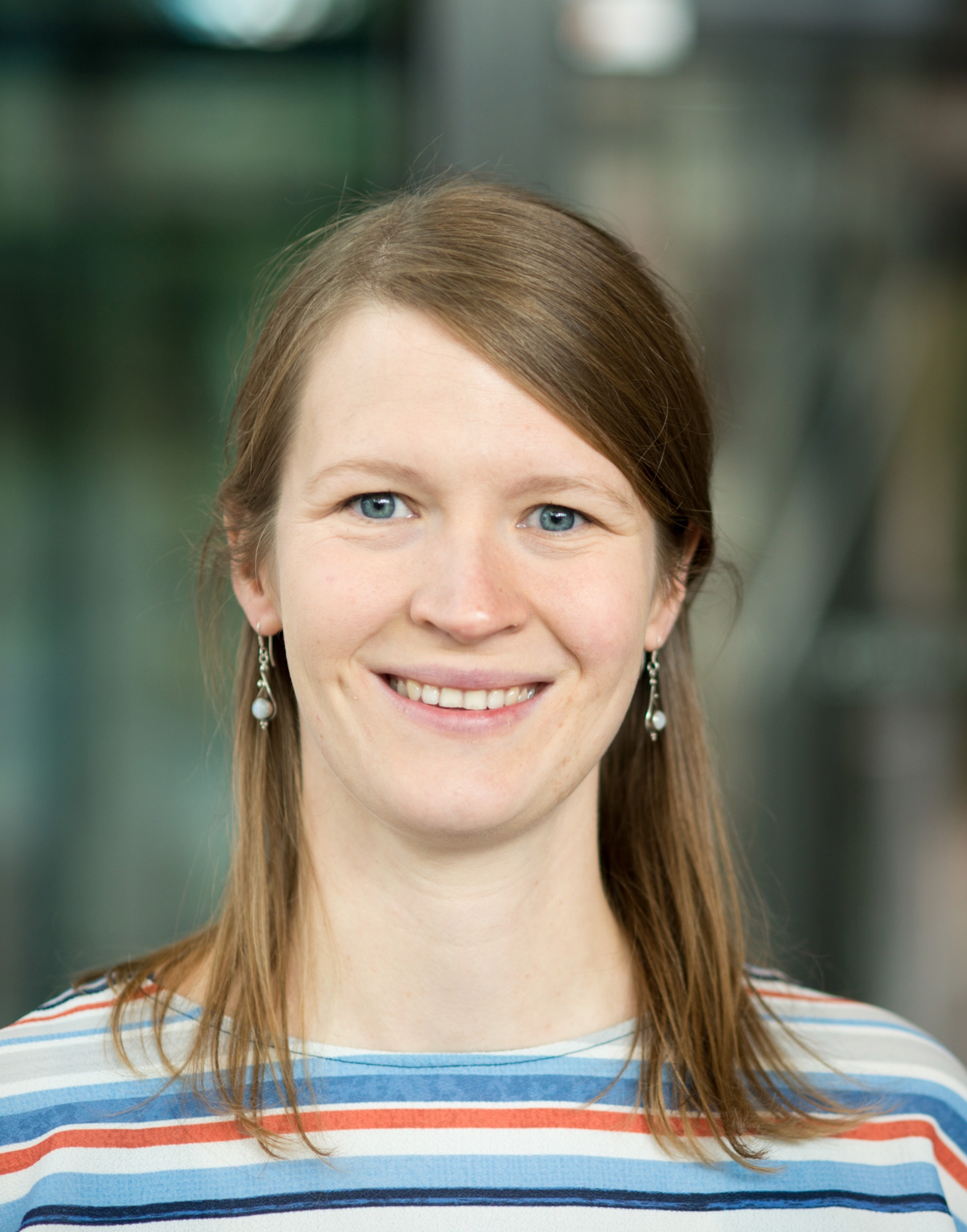
Jule Thober is a Scientific Manager at the Helmholtz Centre for Environmental Research - UFZ , leading Topic 5 "Landscapes of the Future" in the Helmholtz Program and managing the Integration Platform "Robust Pictures of the Future". She contributes to cross-disciplinary research in Smart Models / Monitoring and Computational Hydrosystems , focusing on agent-based models, sustainable land management, and climate risk analysis. Roles : Scientific Manager (2022–), Postdoc (2017–2021), PhD Student (2013–2016) Projects : Copernicus Contract Ulysses 2, LandYOUs Game Development Research Interests center on socio-environmental systems, integrating agent-based models with ecological economics. Her work explores decision-making under climate uncertainty, land use policy, and resilience of pastoral systems through computational methods. Publication Trends (15 most recent) span ecological complexity, environmental informatics, and computational hydrosystems. Key themes include agent-based land use models , climate risk mitigation , and participatory decision support tools . Collaborations involve UFZ departments, international institutions, and interdisciplinary teams in Germany and abroad. She contributes to Helmholtz POF IV programs and EU-funded initiatives like 4DHydro.
Ahmed Elbeltagi is an Assistant Professor in the Agricultural Engineering Department at Mansoura University's Faculty of Agriculture. His work focuses on hydrology, agricultural water management, and climate change adaptation. Specializes in data-driven modeling for water resource optimization Integrates machine learning with traditional hydrological models Active in climate change impact assessments on agricultural systems Recent research trends include: Developing open-source tools like Aqua-MC for irrigation simulation Applying hybrid deep learning models for evaporation prediction Advancing water quality assessment through multivariate analysis Exploring economic applications of wetlands in arid regions He collaborates with institutions across Egypt, India, China, and Saudi Arabia, with a focus on sustainable water management solutions.
Elena Anatolyevna Babushkina is a Professor at the Department of Construction and Economics of Siberian Federal University. She serves as director and scientific consultant of the Scientific and Educational Laboratory 'Dendroecology and Environmental Monitoring' . Her work spans dendrochronology, climate change impacts on tree growth, wood anatomy, and environmental monitoring in Siberian ecosystems. Doctor of Biological Sciences (2020) Corresponding Member of the Russian Academy of Sciences Extensive collaborations with international institutions like University of Arizona, University of Cambridge, and Swiss Federal Institute for Forest, Snow and Landscape Research Her research focuses on climatic reconstruction through tree rings , moisture-limited forest ecosystems , and environmental drivers of xylogenesis . Recent studies analyze earlywood/latewood dynamics, drought sensitivity, and cross-species growth patterns in Siberian larch, spruce, and Scots pine populations. Elena’s publications (100+ scientific, 10+ methodological) include 15 recent articles on tree-ring-based climate proxies , crop yield modeling , and seasonal growth regulation . Key journals include Forests , Dendrochronologia , and Scientific Reports . Notable scientific awards include the 2021 Honorary Worker of Education of the Russian Federation title and multiple Presidential and Ministerial Certificates of Appreciation . She leads national grants (RFBR, RSF) on climate-crop interactions and genetic adaptation to environmental stress .
Prof. Dr. Bernd Klauer serves as Deputy Head of the Department of Economics at the Helmholtz Centre for Environmental Research (UFZ) since 2017 and holds an Honorary Professorship for Sustainability and Water Resources Management at the University of Leipzig since 2015. He leads the Working Group on Social Science Water Research and contributes to interdisciplinary projects spanning Germany, EU, Jordan, and India. Doctorate in Economics (1997), University of Heidelberg Diplom-Mathematiker (1992), University of Heidelberg His research integrates water economics with ecological economics and governance frameworks, focusing on hydro-economic modeling, water resource governance, decision support systems, and multi-criteria evaluation. Key application areas include Food-Water-Energy Nexus, Integrated Water Resource Management, and EU Water Framework Directive implementation. The 15 most recent publications reveal a strong emphasis on coupled human-natural systems modeling, climate change adaptation in agriculture, water scarcity governance, and socioeconomic analysis of informal water markets. His work consistently bridges technical hydrological models with economic decision-making frameworks across diverse geographic contexts. Current projects include FUSE (Food-Water-Energy Nexus) and NexusFootprints, while completed initiatives like the Jordan Water Project demonstrate his commitment to transboundary water challenges. He collaborates extensively with hydrologists, ecologists, and policy experts.
Prof. Volker Grimm is a Professor in the Department Ecological Modelling at the Helmholtz Centre for Environmental Research (UFZ) in Leipzig, Germany. His research focuses on developing and applying ecological models to understand complex environmental systems, with a strong emphasis on individual-based and agent-based modelling approaches. Key areas include pattern-oriented modelling for predictive environmental decision-making, ecological theory exploration (e.g., resilience and stability), and model standardization through protocols like ODD. He leads projects such as VIBee (honeybee vitality monitoring) and BioDT (Biodiversity Digital Twin), leveraging AI and simulation models like BEEHAVE and FORMIND. Active in interdisciplinary initiatives like CauSES (causality in sustainability science), Grimm bridges ecological and social sciences. His work addresses global challenges like pesticide risk assessment, invasive species management, and climate change impacts on ecosystems. Notable achievements include the ODD protocol for model documentation, advancing ecological informatics, and contributions to EU projects such as CREAM (pesticide risk assessment) and BioDT (supercomputing for biodiversity). Collaborations span institutions like FORMIND and EcoEpi, with a focus on open-access publishing and model reusability.
Stefan Julich is a Professor of Landscape Studies at Eberswalde University for Sustainable Development, where he has held a professorship since 2022. He is affiliated with the Faculty of Landscape Management and Nature Conservation, contributing to both teaching and research activities. His academic career spans multiple prestigious institutions across Europe, including TU Dresden, Justus-Liebig University Giessen, and the Potsdam Institute for Climate Impact Research. Dr. Julich earned his Diploma in Geography with minors in Geology and Soil Science from Martin-Luther University Halle-Wittenberg (1998-2004), followed by a Dr. rer. nat. (magna cum laude) from Justus-Liebig University Giessen in 2010. His dissertation focused on uncertainties in modeling water and nitrogen cycles in micro- and mesoscale river catchments. His research primarily investigates soil physics and hydrology, with particular emphasis on the influence of land use on soil hydraulic properties, dynamics of water and material cycles in landscapes, and ecosystem services of soils. He employs advanced modeling techniques to simulate water and material flows from soil to landscape scales and develops innovative monitoring concepts and laboratory methods for environmental assessment. Analysis of his recent publications reveals a strong focus on tropical and temperate hydrology, with particular attention to land use change impacts, soil erosion processes, and water resource management in data-scarce regions. His work often bridges theoretical modeling with practical applications in environmental management, particularly in African and European contexts. Professor Julich actively contributes to long-term environmental observation systems, notably the Ecosystemic Environmental Observation (ÖUB) in Brandenburg's biosphere reserves, which monitors 136 sites across various ecosystem types. His research integrates abiotic (soil and water) and biotic (vegetation and fauna) components in comprehensive ecosystem assessments. He teaches courses in soil science, hydrology, and soil-water science within the Bachelor's programs in Landscape Use and Nature Conservation and Organic Agriculture and Marketing. His research projects focus on long-term ecosystem monitoring in biosphere reserves, examining how regional ecosystems evolve under changing environmental conditions.
PD Dr. habil. Thomas Wöhling serves as a Senior Research Scientist and Team Leader for Stochastic Modelling of Hydrosystems at the Chair of Hydrology, Dresden University of Technology's Faculty of Environmental Sciences. His research spans integrated environmental systems modeling with particular expertise in surface water-groundwater interactions, braided river systems, and vadose zone processes. Previously, he held research positions at Water and Earth System Sciences Competence Cluster in Tübingen (2010-2015) and Lincoln Environmental Research in New Zealand (2006-2010). Dr. Wöhling completed his Dipl.-Hydrol. (1999) and PhD in Hydrology (2005) at Dresden University of Technology, followed by habilitation in Stochastic Hydrology (2021). His educational background includes extensive research at the Institute of Hydrology and Meteorology at TU Dresden (1999-2005) where he developed foundational expertise in hydrological modeling. Wöhling's research focuses on integrated modeling of coupled environmental systems , particularly flow and contaminant transport in surface water-groundwater systems, nutrient and energy fluxes in soil-plant-atmosphere systems, and distributed hydrological modeling. His work emphasizes stochastic modeling and uncertainty analysis , with significant contributions to inverse modeling, model calibration, multiobjective optimization, and Bayesian model averaging techniques. He has pioneered methods for evaluating monitoring network worth and data utility for environmental models. His publication record demonstrates consistent contributions to hydrological science, with recent work (2023-2025) focusing on machine learning applications in hydrology, advanced statistical inversion techniques, and complex karst system modeling. Key trends include integration of physics-based and data-driven approaches, improved uncertainty quantification methods, and applications to climate change impacts on water resources. His work bridges theoretical advances with practical applications in New Zealand's braided rivers and European hydrological systems. STAHY Best Paper Award (2018) ASCE Journal of Irrigation and Drainage Engineering Best Reviewer Awards (2008, 2010, 2011, 2015, 2018) ASCE Journal of Irrigation and Drainage Engineering Best Paper Awards (2008, 2009) Dr. Wöhling leads the Stochastic Modelling of Hydrosystems team and has secured funding for numerous projects including Klimakonform, ISOSIM, VAMOS II, and the International Research Training Group 'Integrated Hydrosystem Modelling.' His work combines novel monitoring techniques with modeling and optimal sensor placement to improve prediction reliability for river-groundwater exchange fluxes. He collaborates extensively with international partners, particularly in New Zealand through the Lincoln Agritech's Braided Rivers program. His laboratory work focuses on combining traditional hydrological measurements with advanced computational techniques, including deep learning applications for soil surface hydrology and time-windowed Bayesian analysis for predictive modeling. The team maintains strong connections with field sites in Germany's Saxon region and New Zealand's Canterbury Plains, facilitating integrated theoretical and empirical research approaches.
Prof. Stefan Sieber is a Professor at the Leibniz Centre for Agricultural Landscape Research (ZALF), leading the 'Sustainable Land Use in Developing Countries' working group under Program Area 2 'Land Use and Governance'. His expertise spans food security, climate change adaptation, bioenergy systems, and agricultural policy. He holds a doctoral degree (Dr. agr. habil.) from Humboldt University of Berlin. His work emphasizes decision support systems for sustainability, policy coordination, and knowledge management in international development contexts. Research interests focus on interdisciplinary approaches to sustainable land use, integrating socioeconomic factors with ecological resilience. Recent projects include analyzing wildfire impacts in Cameroon, stakeholder dynamics in forest landscape restoration (FLR), and policy interventions for deforestation-free cocoa production in Côte d'Ivoire. He coordinates global research initiatives, advising on climate-smart agricultural practices and environmental governance frameworks. Publications highlight FLR adoption in Togo, climate change impacts on crop yields in Kenya, and energy transitions in Zambia. His work bridges academic research with practical policy solutions, particularly in vulnerable regions facing climate and development challenges. Collaborations span Sub-Saharan Africa, Southeast Asia, and Latin America, emphasizing participatory methodologies and equitable resource management.
Masahiro Ryo is a Professor of Environmental Data Science at Brandenburg University of Technology (BTU) and leads the working group "Artificial Intelligence for Smart Agriculture" at the Leibniz Centre for Agricultural Landscape Research (ZALF). His research integrates machine learning with ecological systems to address global sustainability challenges, focusing on biodiversity, soil health, and AI-driven agricultural solutions. His work spans environmental data science, ecosystem services, and smart agriculture. Key themes include explainable AI for biodiversity monitoring, soil organic carbon prediction, and machine learning applications in ecological modeling. Recent publications highlight trends in environmental AI, with applications in yield mapping, fungal taxonomy, and global change ecology. He emphasizes the integration of ecological theory with deep learning to tackle small-data problems and improve model transferability. Contact: masahiroryo@gmail.com | Personal Website
Matthias Becker is a Professor at the Institute for Practical Computer Science within the Faculty of Electrical Engineering and Computer Science at Leibniz University Hannover, where he has been a core member of the Human-Computer Interaction group since 2019. He serves as Internship Coordinator for Computer Science and Computer Engineering and holds key roles in the Computer Science Examination Board and Selection Committee, actively shaping academic governance and student development. His academic journey began with PhD studies at the University of Bremen (1996-2000) supported by a DFG grant, followed by a postdoctoral permanent position at Leibniz University Hannover (2000-2019), an Associated Assistant Professor role at École des Mines de Nantes (2000), and a Habilitation in Computer Science in 2013. This foundation enabled his transition to a full professorship in 2019. Becker's research spans Human-Computer Interaction, Simulation and Modeling, and Bio-inspired Computing, with applications in agriculture, renewable energy, and manufacturing. His work integrates distributed systems, optimization algorithms, and wireless sensor networks to solve complex real-world problems, such as greenhouse monitoring, wind farm logistics, and tire noise reduction. Recent publications reveal a strategic focus on practical validation of simulation models and cross-domain applications of nature-inspired algorithms. His 15 most recent publications (2018-2024) demonstrate consistent innovation in applying simulation techniques to offshore wind farm installation, agricultural pest management, and sports science. These works emphasize real-world validation, collaborative problem-solving, and the development of domain-specific optimization frameworks that bridge theoretical algorithms and industrial implementation. As Internship Coordinator, Becker facilitates critical industry-academia connections for students, while his examination board responsibilities ensure rigorous academic standards. His leadership in the Human-Computer Interaction group drives research on interactive systems for agriculture, energy, and health, with particular emphasis on user-centered design in complex operational environments like wind farm logistics and greenhouse automation.
Brian B. Laird is Professor and Department Chair of Chemistry at the University of Kansas. He earned dual B.S. degrees in Chemistry and Mathematics from the University of Texas at Austin (1982) and a Ph.D. in Theoretical Chemistry from UC Berkeley (1987). His career includes postdoctoral positions at Columbia University, Forschungszentrum Jülich (NATO Fellowship), University of Utah, University of Sydney, and University of Wisconsin, with visiting appointments at the University of Mainz, University of Leicester, and UC Davis. Research focuses on applying statistical mechanics and molecular simulation to materials science, with three primary areas: (1) structure and thermodynamics of condensed-phase interfaces, (2) phase coexistence under nanoscale confinement, and (3) advanced molecular dynamics algorithms. His publications demonstrate strong emphasis on surface thermodynamics, nanomaterial interactions, and ecological applications of computational methods. Honors include the NSF CAREER Award. Professor Laird directs an active research group mentoring 19+ graduate students/postdocs. The Laird Lab frequently collaborates internationally with institutions in China, Germany, and the UK.
Prof. Folkard Asch is a Professor and Head of the Department of Management of Crop Water Stress in the Tropics and Subtropics at the University of Hohenheim's Agricultural Faculty. He specializes in crop responses to abiotic stresses, climate interactions, and agroecological innovations like skyfarming. His research focuses on drought, salinity, and temperature effects on crops, with recent emphasis on grassland ecology and climate adaptation. He has led projects in Africa, Asia, and South America, addressing food security and sustainable land use. Education: Ph.D. in Plant Physiology (University of Hamburg), Habilitation in Agroecology (University of Bonn). Prior roles include Assistant Professor at the University of Bonn and research at the University of Copenhagen. Research Interests: Crop stress physiology, climate-smart agriculture, integrated farming systems, and rice production systems. His work bridges plant biology, agronomy, and ecosystem modeling to develop resilient agricultural practices. Publications: Over 200 peer-reviewed articles, focusing on rice, wheat, and grassland systems. Key themes include water management, nutrient dynamics, and climate impacts. His work emphasizes field-based experiments and model simulations. Awards: Not explicitly listed, but contributions recognized through leadership roles in organizations like ATSAF and international collaborations. Grants/Advising: Led projects funded by German and international agencies, including BMBF and EU initiatives. Supervised numerous PhD researchers and postdocs in tropical and subtropical agricultural research. Labs/Teams: Hans-Ruthenberg-Institute for Tropical Agricultural Sciences, collaborating with global networks on crop stress and climate adaptation.