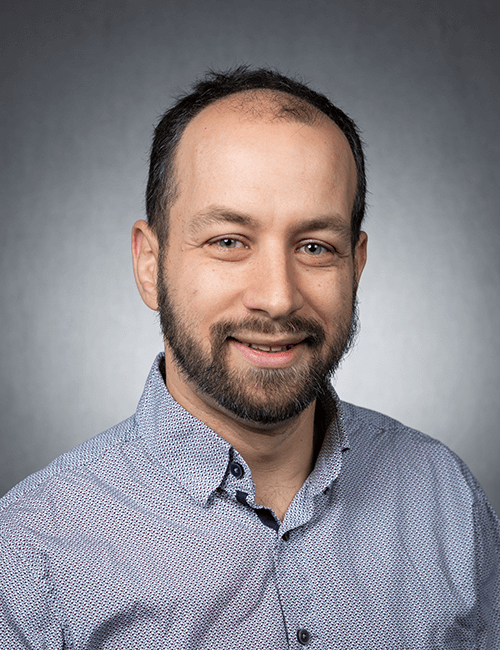
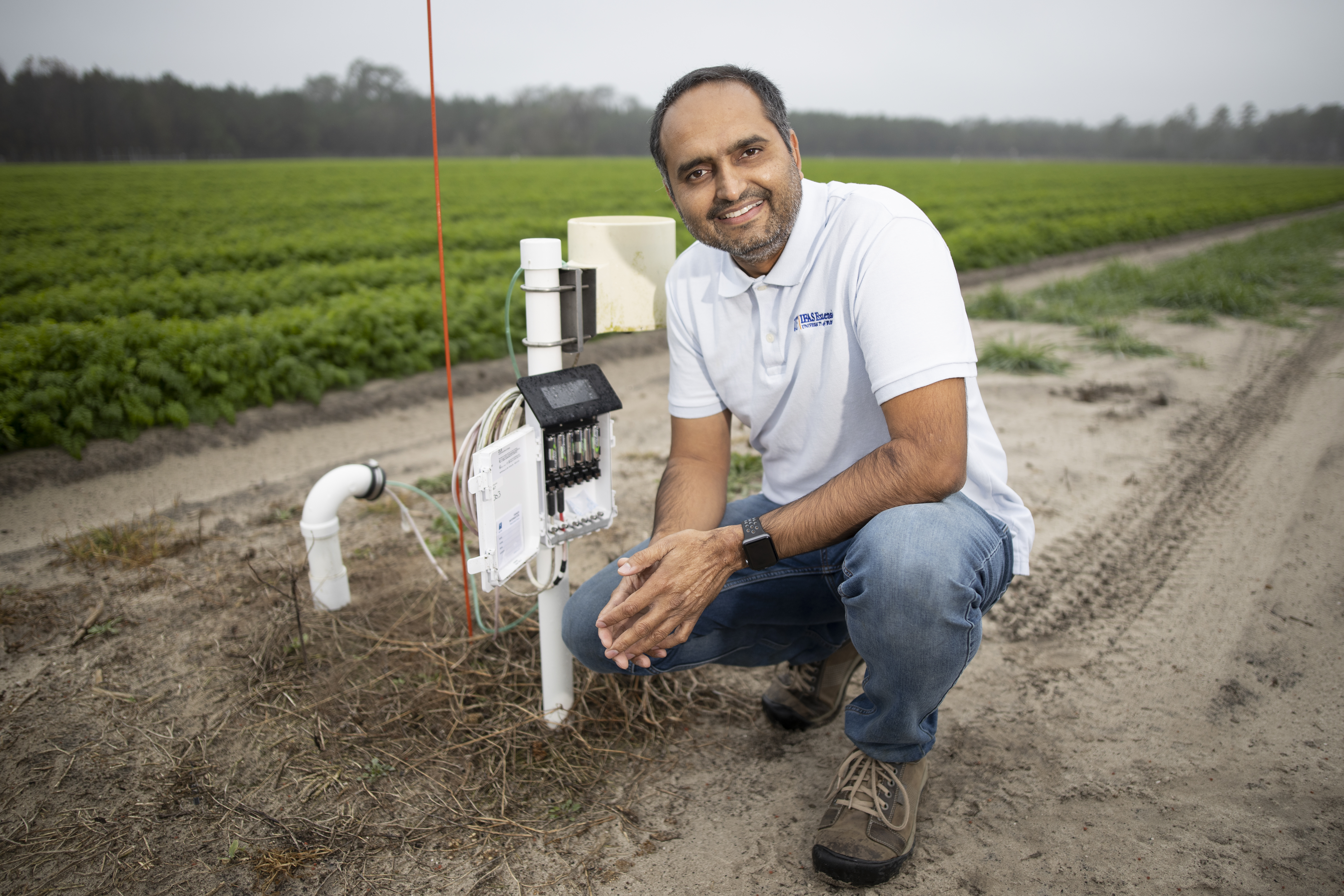
Xavier Martini is an Associate Professor in Entomology at the University of Florida's North Florida Research and Education Center (NFREC). His work focuses on integrated pest management (IPM), insect behavior, and chemical ecology, particularly targeting plant pest vectors like the Asian citrus psyllid and ambrosia beetles. He leads research on citrus greening disease, laurel wilt, and invasive species management. His roles include 70% research and 30% extension, bridging academic and applied pest control strategies. Research emphasizes vector biology, semiochemical-based pest control, and community engagement. He collaborates on publications addressing cucurbit production, onion pest management, and organic vegetable systems. Current projects include repellent development for citrus pests and biological control of invasive vines. His lab group works on ecological interactions between plants, pathogens, vectors, and predators. Key achievements include developing traps for small insect vectors and exploring floral resource enhancements for pollinator populations. He contributes to Florida's citrus and vegetable industries through extension guides and workshops, ensuring practical applications of his research.
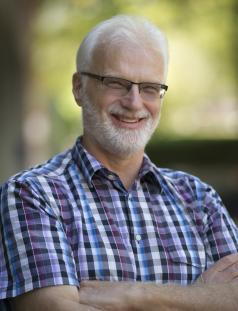
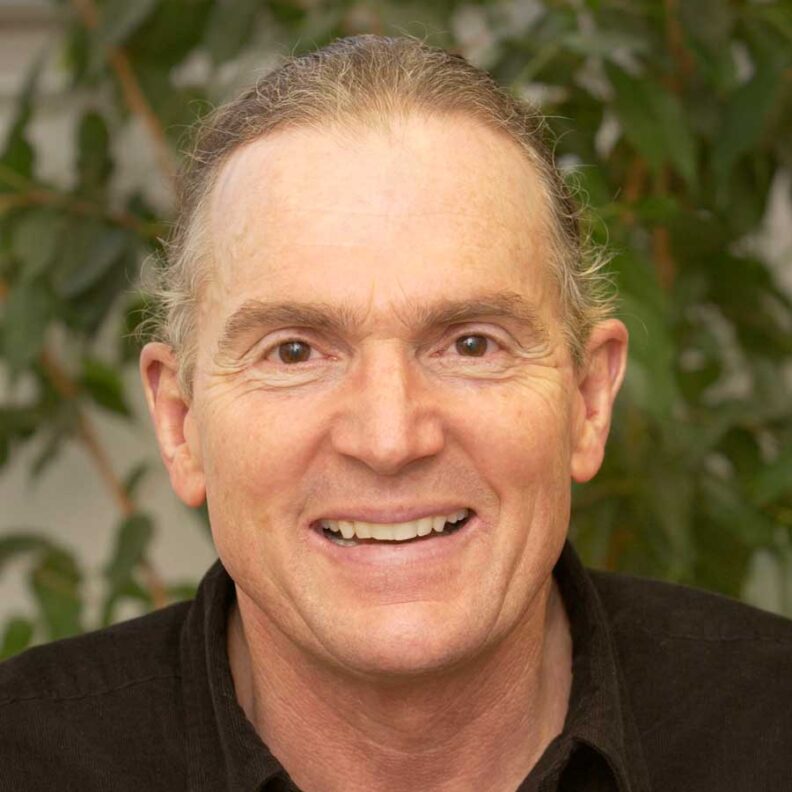
Ralph C. Martin is a retired Professor in the Department of Plant Agriculture at the University of Guelph. His research focuses on sustainable food production, emphasizing resilient farming systems, soil health, and nitrogen use efficiency. He holds a Ph.D. from McGill University and has contributed to interdisciplinary projects across cropping systems, forage agronomy, and environmental stewardship. Education: B.A. and M.Sc. from Carleton University; Ph.D. from MacDonald College, McGill University. Research interests include sustainable agriculture, agroecology, climate change adaptation, and food security. His work bridges agronomic practices with ecological principles to enhance productivity while preserving natural resources. Notable contributions include books like Food Security: From Excess to Enough (2019) and over 150 peer-reviewed publications. He received the 2015 Sustainability Best Paper Award for his review on organic farming's carbon impacts. Recent publications address groundwater nitrate dynamics, cover crop effects, and automated pasture technologies. Martin actively engages in public discourse on food systems through op-eds and keynote talks, advocating for systemic changes to ensure equitable and resilient food production.
Steven Hall is an Assistant Professor and Extension Specialist in the Department of Plant and Agroecosystem Sciences at the University of Wisconsin-Madison (UW-Madison), College of Agricultural & Life Sciences. Previously, he held roles as Assistant and Associate Professor in the Department of Ecology, Evolution, and Organismal Biology at Iowa State University. His research focuses on agroecosystem water quality, soil carbon dynamics, and nutrient management in agricultural landscapes, with an emphasis on how redox conditions, geochemical factors, and microbial communities influence carbon sequestration and greenhouse gas emissions. He obtained a PhD in Ecosystem Science from UC Berkeley and MS/BS degrees from UW-Madison in Environment and Resources/Botany, respectively. His educational background includes studies at the University of California-Berkeley (PhD, Ecosystem Science), University of Wisconsin-Madison (MS, Environment & Resources; BS, Botany). Research priorities include evaluating conservation practices, crop diversification, and novel fertilizer technologies for environmental benefits. The Hall Lab employs mesocosm experiments, isotopic tracing, and continental-scale datasets to address challenges in climate-smart agriculture and water quality preservation. Research highlights include groundbreaking work on iron-driven carbon decomposition mechanisms, microbial controls on lignin mineralization, and nitrous oxide emissions from tile-drained soils. Recent studies emphasize the role of poorly drained depressions as nutrient leaching hotspots and the unexpected carbon losses from anaerobic soils, challenging existing biogeochemical models. Advising and grants involve mentoring current graduate students (Moira Keith, Hariom Yadav) and undergraduate researchers. Opportunities to join his lab depend on funded projects. Collaborations include the International Soil Radiocarbon Database (ISRaD) and partnerships with institutions like the Savanna Institute. The lab is situated in Moore Hall, Plant Sciences Building, with outreach activities through UW-Madison's extension programs. Key infrastructure includes automated gas flux measurement systems and soil block mesocosms. Ongoing work integrates machine learning with NEON soil data to model organic carbon dynamics, while field studies explore digestate amendments and biochar impacts. His research bridges laboratory experiments with landscape-level observations to inform sustainable agricultural practices.
Aziz Amoozegar is a Professor in the Department of Crop and Soil Sciences at NC State University's College of Agriculture and Life Sciences. His research focuses on environmental soil physics, specifically investigating water and pollutant movement through soils, phosphorus dynamics, and soil characterization for agricultural and engineering applications. Research programs include evaluating soil-water interactions in contaminated environments, assessing fertilizer-enhanced phosphorus transport, and developing soil analysis techniques. Key areas of study involve pollutant migration through saprolite, cadmium release kinetics in amended soils, and hydraulic functioning of compacted soils. His work bridges environmental science, agricultural engineering, and soil chemistry. Recent publications cover topics such as phosphate mobility under unsaturated conditions, cadmium release in contaminated soils, and bioenergy grass residue effects on evaporation. He has contributed to methodological advancements in soil testing and remediation strategies for heavy metals like lead. Dr. Amoozegar's research emphasizes practical applications for sustainable agriculture and environmental protection. No specific awards or grants are listed in the provided information, but his involvement in USDA and EPA-related programs suggests active collaborative research efforts.
Ankita Raturi is an Assistant Professor in the Department of Agricultural & Biological Engineering at Purdue University, leading the Agricultural Informatics Lab. Her work focuses on human-centered design, information modeling, and software engineering to enhance resilience in food systems. She develops decision support tools for cover cropping, agronomic data services, and soil health technologies. Her research integrates digital agriculture applications across field crops, livestock, and food systems, emphasizing open-source solutions. Key projects include modular decision tools for diversified farming systems and information management frameworks for community food resilience. Publications highlight her expertise in sustainable tech adoption, precision agriculture, and ecosystem impact design. She actively bridges engineering and agriculture through interdisciplinary collaborations. Dr. Raturi's lab explores digital tools for smallholder farmers, pandemic response systems, and ecological wealth restoration through technology. She emphasizes trust-building in tech-mediated research and advocates for nonhuman-centric design in agroecosystems.
Prof. Dr. Bernd Klauer serves as Deputy Head of the Department of Economics at the Helmholtz Centre for Environmental Research (UFZ) since 2017 and holds an Honorary Professorship for Sustainability and Water Resources Management at the University of Leipzig since 2015. He leads the Working Group on Social Science Water Research and contributes to interdisciplinary projects spanning Germany, EU, Jordan, and India. Doctorate in Economics (1997), University of Heidelberg Diplom-Mathematiker (1992), University of Heidelberg His research integrates water economics with ecological economics and governance frameworks, focusing on hydro-economic modeling, water resource governance, decision support systems, and multi-criteria evaluation. Key application areas include Food-Water-Energy Nexus, Integrated Water Resource Management, and EU Water Framework Directive implementation. The 15 most recent publications reveal a strong emphasis on coupled human-natural systems modeling, climate change adaptation in agriculture, water scarcity governance, and socioeconomic analysis of informal water markets. His work consistently bridges technical hydrological models with economic decision-making frameworks across diverse geographic contexts. Current projects include FUSE (Food-Water-Energy Nexus) and NexusFootprints, while completed initiatives like the Jordan Water Project demonstrate his commitment to transboundary water challenges. He collaborates extensively with hydrologists, ecologists, and policy experts.
Wayne A Fuller is a Research Professor at Iowa State University , specializing in survey methodology and sampling statistics. His work focuses on advanced techniques for handling missing data, small area estimation, and measurement error models, with applications to agricultural surveys and public health research. Education: PhD in Statistics from Iowa State University Research Interests: Fuller's work bridges theoretical and applied statistics through: Development of fractional hot deck imputation methods Bootstrap techniques for variance estimation Small area prediction under constrained models Measurement error correction in health and agricultural data Time series analysis with autoregressive components Integration of administrative data with survey samples Publication Trends: His recent work emphasizes computational approaches to small area estimation (2016-2025), including bootstrap prediction intervals and benchmarking techniques, alongside methodological advancements in imputation and measurement error correction (2004-2015). Contact: Email: waf@iastate.edu Phone: 515-294-5830 Location: Ames, Iowa
Edgar Weippl is a Professor at the Faculty of Computer Science, University of Vienna, where he serves as Vice Dean and Head of the Research Group Security and Privacy. His work spans cybersecurity, blockchain, and machine learning, with teaching roles in information security and software security courses. Current Positions: Vice Dean (Faculty of Computer Science), Head (Security and Privacy Research Group), Deputy Head (Neuroinformatics & Knowledge Engineering Groups) Research Interests: Cybersecurity, blockchain, IoT security, code obfuscation, privacy technologies, reinforcement learning, and socio-technical systems security Selected Publications: Focus on blockchain privacy, VoWiFi security, code obfuscation, and reinforcement learning applications
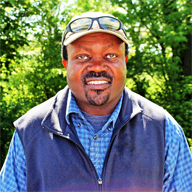
Dr. Emmanuel C. Omondi is an Assistant Professor in the Department of Agricultural Sciences and Engineering at Tennessee State University's College of Agriculture. His research focuses on industrial hemp agronomy, sustainable agriculture, and conservation practices. He holds a Ph.D. and M.Sc. in Agronomy from the University of Wyoming and a B.Sc. in General Agriculture from the University of Nairobi. His research explores industrial hemp’s role in crop rotations, reduced tillage systems, and economic viability in Tennessee. Key projects include USDA-funded studies on organic farming impacts, soil health, and hemp production economics. He has led over $6.8 million in grants, including a USDA NIFA project on organic hemp assessment and a William Penn Foundation initiative on soil health and water quality. Awarded the Gamma Sigma Delta Honor Society and multiple fellowships, Dr. Omondi’s work spans international development, including conservation agriculture projects in Kenya and Uganda. He has authored 20+ peer-reviewed articles on topics like soil carbon dynamics, organic farming profitability, and phytoremediation potential of hemp. Education: Ph.D. (Agronomy, University of Wyoming), M.Sc. (Agronomy, University of Wyoming), B.Sc. (General Agriculture, University of Nairobi) Grants: Over $6.8 million in funding for projects on hemp agronomy, soil health, and sustainable farming systems. His honors include the A.K. Dobrenz Student Paper Competition First Prize (2011) and recognition for international academic excellence. Current initiatives focus on bridging agricultural innovation with environmental stewardship through collaborative research.
Tim Watts serves as an Adjunct Senior Lecturer at the Institute of Agriculture, The University of Western Australia, while concurrently managing a 1,497-hectare mixed farming operation in Pingelly, WA. His leadership extends to Chair of the Western Australian Livestock Research Council (2017–present) and membership on the Sheep Industry Leadership Council (2015–present) and Sheep's Back Advisory Board (2010–present). Master of Veterinary Studies, University of Melbourne (1987) Bachelor of Veterinary Medicine and Surgery, Murdoch University (1984) Bachelor of Science (Veterinary Biology), Murdoch University (1982) His research integrates veterinary science with practical agriculture , specializing in oestrogenic pasture impacts on livestock fertility, benchmarking high-performance sheep/cropping systems, and implementing no-till permanent cropping rotations. As a host farmer for national programs like Life-Time Wool and Pastures from Space, he bridges academic research with commercial farming through intensive grazing techniques and data-driven enterprise management. He currently serves as Investigator 02 on the Department of Primary Industries and Regional Development project "Determining the impacts of grazing oestrogenic clovers on cattle fertility" (2022–2025), collaborating with researchers including Vercoe and Blache to assess clover effects on cattle reproduction. Watts contributes to undergraduate education through AGRI2201 in the Agriculture Science major, leveraging his dual expertise as both academic and practicing farmer to deliver industry-relevant instruction grounded in real-world mixed-farming systems.
Ryan Galt is a Professor in the Department of Community & Regional Development at the University of California, Davis. His research focuses on the governance of agrifood systems, political ecology, and the intersection of agriculture, environment, and society across scales. He holds a Ph.D. (2006) and M.S. (2001) in Geography from the University of Wisconsin, Madison, and a B.A. (1999) in Geography from UC Berkeley. Key research themes include: (1) pesticide use and regulation in global food systems, (2) community-based food systems like CSA models, (3) wildfire resilience in agricultural landscapes, and (4) agroecological transitions in the Corn Belt. He emphasizes participatory methodologies and critical pedagogy in sustainability education. Recent work explores pandemic impacts on direct-market farmers, pesticide trade inequities, and institutional pathways for agricultural diversification. His publications span 30 years of addressing systemic challenges in food systems through interdisciplinary approaches.
John Reganold is a Regents Professor of Soil Science and Agroecology at Washington State University (WSU), affiliated with the Department of Crop and Soil Sciences within the College of Agricultural, Human, and Natural Resource Sciences (CAHNRS). He specializes in sustainable agriculture, soil health, and organic farming systems. Reganold holds a B.A. in German (1971), M.S. in Soil Science (1974), and Ph.D. in Soil Science (1980) from the University of California at Berkeley and Davis. He teaches courses including Organic Gardening/Farming, Advanced Soil Analysis, and oversees the 30-acre Eggert Family Organic Farm research initiative. His research focuses on measuring the sustainability of organic vs. conventional farming systems, with a focus on soil health, crop yields, environmental quality, and economic performance. Notable studies include the long-term impacts of farming systems on soil organic matter and the financial competitiveness of organic agriculture. Reganold has authored influential papers in Nature , PNAS , and Scientific American , emphasizing agroecology and perennial grain development. Reganold directs the Organic and Sustainable Agriculture undergraduate program (~25 students) and the Online Certificate in Organic Agriculture. His work integrates ecological principles with practical farming practices, advocating for policies that support sustainable agricultural transitions. Current projects explore climate change impacts on soil health and the role of perennial grains in future food systems. His teaching and research laboratories emphasize participatory learning and field-based experimentation. Recent collaborations include studies on biodegradable plastics in agriculture and the role of dung beetles in disrupting pest vectors. Reganold’s work bridges academia and practice, aiming to advance global food security while preserving environmental integrity.
Juan Solomon serves as an Associate Professor in the Department of Agriculture, Veterinary and Rangeland Sciences at the University of Nevada, Reno. His research lab operates from Building FA, Room 226d (Mail Stop 202), with direct contact via (775) 784-6888 or juansolomon@unr.edu. Education: B.S. in Agriculture, University of Guyana (2000) Graduate Diploma in Education-Science, University of Guyana (2005) M.S. in Agriculture, Mississippi State University (2010) Ph.D. in Agriculture, Mississippi State University (2013) Research Focus: Dr. Solomon's work centers on grassland ecology and sustainable pastoral systems for ruminant livestock, with emphasis on grazing management, forage quality evaluation, and drought-tolerant crop development. His research program investigates water use efficiency in semiarid forage systems, nutrient cycling dynamics, and climate-resilient crop screening—particularly for native and improved forages in arid western environments. Field studies often integrate ecosystem service valuation with practical livestock production metrics. Publication Trends: Recent work (2023-2025) demonstrates concentrated expertise in alternative forage systems, with 15 high-impact studies examining teff double-cropping, industrial hemp varietals, and cover crop nutrient cycling in Nevada's semiarid landscapes. Key methodological approaches include deficit irrigation analysis, nitrogen optimization trials, and biomass decomposition modeling—all targeting resource-efficient agricultural solutions for water-limited regions.
Dr. Sudeep Singh Sidhu is an Assistant Professor in the Agronomy Department at the University of Florida's North Florida Research and Education Center (NFREC) in Quincy, FL. His research focuses on developing site-specific nutrient and water management strategies for agronomic crops, with a particular emphasis on cropping systems in Florida, including peanut-cotton rotations and sod-based systems. He leads efforts in precision agriculture technologies, such as Veris MSP3 soil mapping, capacitance-based soil moisture probes, and sensor-based nitrogen management tools. His work aims to reduce nitrate leaching, improve soil health, and enhance crop sustainability through cover crops and integrated crop-livestock systems. Roles: Research and Extension Specialist, Lead on Sod-Based Rotation Demonstration, BMP Implementation Affiliations: NFREC-Quincy, UF/IFAS Extension Research Interests: Dr. Sidhu’s work spans precision agriculture, nutrient cycling, crop rotation impacts, and environmental stewardship. His projects address challenges in soil health, irrigation efficiency, and reducing agricultural runoff. He actively collaborates with growers to translate research into on-farm practices, such as nitrogen calibration strips and high-clearance equipment for sidedressing. Key Contributions: He has developed protocols for planting cover crops post-harvest to scavenge nitrogen, demonstrated the use of drain gauge lysimeters for nitrate monitoring, and evaluated new fertilizer technologies in corn, cotton, and peanuts. His extension efforts include organizing in-service trainings and field days to disseminate best practices. Grants and Partnerships: His projects are funded through collaborations with agricultural agencies and industry partners, focusing on BMP adoption and disaster resilience, such as post-Hurricane Idalia recovery strategies.
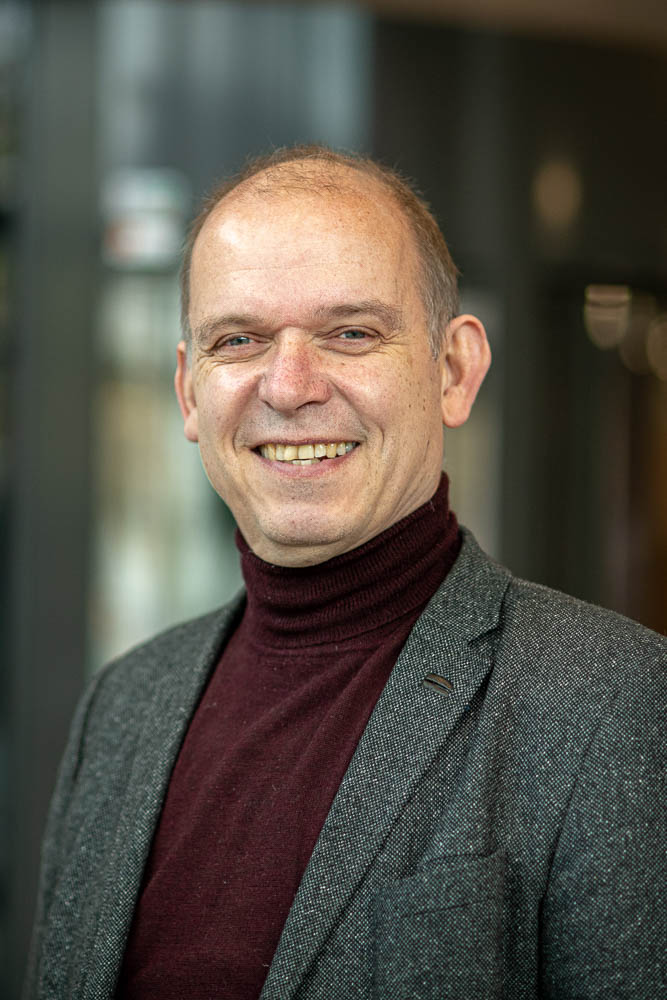
Niels Anten is a Full Professor of Crop and Weed Ecology at Wageningen University & Research, specializing in plant interactions and sustainable agricultural systems. His research focuses on climate change impacts, crop diversification, and optimizing plant productivity under environmental stress. He leads projects on cocoa production resilience, intercropping strategies, and root-shoot signaling mechanisms in cereals and legumes. Key research interests include crop-weed competition, light-mediated plant responses, and the ecological roles of lianas in tropical forests. Anten has supervised 21 PhD candidates, including studies on potato stress responses, spatial crop diversification, and cocoa agroecology. His work integrates field experiments, functional-structural plant modeling, and big data analysis to address global food security challenges. Recent articles highlight breakthroughs in understanding CO2-driven photosynthetic efficiency, drought effects on cocoa yields, and far-red light influences on root systems. His datasets and collaborations span institutions globally, addressing topics like coffee genetic adaptation and arid ecosystem root dynamics. Anten frequently engages in media discussions on climate impacts on agriculture and sustainable farming practices.