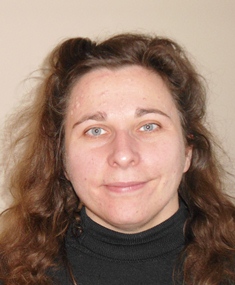
Chad E. Hart is a Professor in the Department of Economics at Iowa State University (ISU), specializing in agricultural economics and international trade policy. His research focuses on WTO agricultural commitments, crop insurance, biofuel policy, and commodity market dynamics. Hart holds a Ph.D. (1999) and B.S. (1991) in economics from ISU and Southwest Missouri State University, respectively. He has served in roles at ISU’s Center for Agricultural and Rural Development (CARD) and the Food and Agricultural Policy Research Institute (FAPRI), examining trade policies and energy-agriculture intersections. Hart has received notable awards, including the CALS Dean’s Citation (2020) and Exemplary Faculty Mentor Award (2016). His work bridges academic research and practical extension, addressing issues like trade disputes, commodity pricing, and agricultural sustainability. Hart’s insights frequently inform USDA outlook reports and policy analyses, with a focus on Iowa’s agricultural economy. Labs/Teams: Active in CARD and FAPRI, contributing to interdisciplinary research on agricultural policy and market dynamics.
Confidence Duku is a researcher at Wageningen University & Research, specializing in climate resilience and agricultural systems. Their work integrates climate science, hydrology, and machine learning to address food security, deforestation impacts, and flood forecasting in data-scarce regions. Research Interests: Climate change modeling in Eastern Africa Hydrology-guided neural networks for flood forecasting Agricultural resilience (common bean, green gram) under climate stressors Economic impacts of deforestation in Brazil Climate services for financial institutions and SMEs Notable Contributions: Developed frameworks for climate-smart business planning and flood prediction, with a focus on regions like East Africa and Brazil. Their work emphasizes ecosystem services and adaptation strategies. Collaborations: Active in multi-institutional projects, including partnerships with SNV and Copernicus. Led LVVN projects on cascading climate risks and reforestation impacts.
Jan Dijkstra is an Associate Professor at Wageningen University specializing in Animal Nutrition . His research focuses on dairy cattle nutrition, methane emissions, and nutrient efficiency. Academic Rank: Associate Professor Department: Animal Nutrition His work emphasizes: Mathematical modelling of methane production Phosphorus and nitrogen balance optimization Feed supplementation strategies for reduced emissions Genotype-environment interactions in dairy systems Recent publications highlight advancements in methane mitigation , nutrient cycling , and rumen microbiome dynamics . He serves as a promotor for multiple PhD projects and contributes to datasets on equine microbiomes and rumen metabolites. Scientific Awards American Feed Industry Association Award (2015) Publicatieprijs ASG (2013) Supervision PhD candidates: Kozorezov, Henry, Koning, Vivares Martinez EngD candidate: Holshof
Peter Huybers is a Professor of Earth and Planetary Sciences and Environmental Science and Engineering at Harvard University , where he investigates the climate system and its societal implications, including interactions between volcanism and glaciation , extreme temperature predictability , and climate change impacts on food production . Research interests span climate change attribution , paleoclimate reconstruction , drought dynamics , crop yield modeling , and earth system feedbacks . His work often integrates art-historical analysis with climate science, as seen in studies of 19th-century air pollution through Turner and Monet paintings . Scientific awards include funding from Harvard Data Science Initiative (2023) for projects on climate change and food supply volatility Amazon Web Services (2023) grant His 20+ peer-reviewed articles since 2020 focus on climate proxies , hydrological modeling , solar forcing , and agricultural-climate interactions , with recent work in Nature , PNAS , and Science Advances . Advising : Mentored 10+ PhD students including Parker Liautaud , Duo Chan , and Marena Lin , while leading research teams with current members like Greta Berendes and Caro Park . Former staff include Jon Proctor and Lucas Vargas Zeppetello , the latter now at UC Berkeley (2024).
Dermot J Hayes is the Charles F. Curtiss Distinguished Professor in Agriculture and Life Sciences and holds the Pioneer Hi-Bred International Chair in Agribusiness at Iowa State University's Department of Economics and Ivy School of Business. His expertise spans agricultural economics, financial economics, and international trade policy with a focus on commodity markets, farm policy, and China's agricultural impacts. Education: Ph.D. and M.S. in Agricultural Economics from the University of California, Berkeley (1986 and 1982). Research Interests: Includes U.S. farm policy, international trade dynamics, agribusiness strategies, crop insurance, financial derivatives, and China's role in global commodity markets. His work emphasizes policy analysis, market resilience, and emerging challenges like disease outbreaks (e.g., African Swine Fever). Awards: AAEA Fellow (2007), AAEA Enduring Quality Award (2006), and J.H. Ellis Teaching Award (2005). His research on food safety auctions remains influential. Consulting: Since 1995, he has advised the National Pork Producers Association on trade economics. His work informs policy debates on tariffs, trade deals, and market disruptions. Labs & Collaborations: Engaged with Iowa State's interdisciplinary initiatives on agriculture-environmental nexus and bioenergy systems.
Nick Haddad is a Professor of Integrative Biology at Michigan State University and serves as the Director of the Long-Term Ecological Research (LTER) site at Kellogg Biological Station. His research focuses on ecological experimentation, particularly examining how habitat loss and fragmentation impact biodiversity and ecosystem functioning. He specializes in reversing these negative effects through landscape connectivity strategies and diversified working landscapes, with a strong emphasis on insect conservation, including critically endangered butterfly species. Role: Professor, Integrative Biology Directorship: KBS LTER Site Location: 322 Kellogg Biological Station Email: haddadn3@msu.edu Haddad's research spans habitat fragmentation, biodiversity conservation, climate change impacts, and agricultural sustainability. His lab conducts large-scale experiments like the Corridor Project and studies rare butterflies (e.g., St. Francis’ satyr, Miami blue) to understand extinction risks and recovery strategies. Recent work explores pesticide effects, prairie restoration, and long-term ecological trends. The 15 most recent publications highlight habitat fragmentation's ecological impacts, climate-driven phenological shifts, and innovative conservation approaches. Key themes include biodiversity monitoring, pesticide-driven declines, prairie restoration for pollinators, and climate adaptation strategies. His work leverages long-term datasets (e.g., 40-year LTER) and integrates theory with applied conservation. Lab activities include mentoring undergraduate and graduate students at KBS, leading the Haddad Lab, and collaborating on projects like the KBS-LTER and SRS Corridor initiatives. Research spans both terrestrial and agroecosystems, emphasizing actionable solutions for conservation and sustainable land use.
Dr. Mahendra Bhandari is an Assistant Professor at Texas A&M AgriLife Research and Extension Center in Corpus Christi, affiliated with the Texas A&M College of Agriculture and Life Sciences. He holds a B.S. in Agriculture from Tribhuvan University (2011), an M.S. in Plant, Soil and Environmental Science from West Texas A&M University (2016), and a Ph.D. in Agronomy from Texas A&M University (2020). Affiliations: Texas A&M AgriLife Research, Texas A&M College of Agriculture and Life Sciences Roles: Lead researcher in Digital Agriculture, UAS-based phenotyping, and precision agriculture His research focuses on integrating remote sensing (UAS, satellite, ground sensors), big data analytics, and machine learning to improve crop management and breeding. Key areas include high-throughput phenotyping for cotton, corn, and sorghum; UAS data integration for crop yield prediction; and digital twin frameworks for in-season management. Collaborators include Dr. Juan Landivar-Bowles and Dr. Jinha Jung. Publications emphasize UAS applications in crop monitoring, yield estimation, and disease detection. His work bridges agronomic principles with emerging technologies to enhance agricultural resilience. Key Projects: UAS-based HTP system development Satellite-UAV data fusion for precision irrigation Mechanistic models for cotton yield forecasting Labs/Teams: Leads the Digital Agriculture research team at Texas A&M AgriLife, focusing on UAS innovation and AI-driven agricultural solutions.
Thomas Berger is a Professor at the University of Hohenheim , affiliated with the Faculty of Agricultural Sciences and leading the Department of Economics of Land Use . He also contributes to the Computational Science Hub and Hohenheim Tropics initiatives. Focus Areas: Climate change adaptation, land-use modeling, biodiversity-productivity trade-offs, agent-based simulation, and machine learning in agricultural systems. Key Projects: Simulation frameworks for smallholder resilience in Ethiopia, bioeconomic modeling in the Amazon, and hybrid intelligence applications in European agricultural policy. Recent Publications: 2025 study on climate change effects on insecticide reduction in Germany, 2024 work on reconciling biodiversity with productivity via hybrid models, and 2023 methodological contributions to surrogate modeling and seasonal forecast integration. Research Trends: Interdisciplinary integration of climate science, agricultural economics, and computational modeling, with increasing emphasis on AI-assisted decision support systems and sustainability policy validation. Teaching & Outreach: Offers Agricultural Economics seminars and Hohenheim Tropics discussions, requiring advance email registration for office hours.
Bruno Basso serves as the Hannah Distinguished Professor in the Department of Earth & Environmental Sciences at Michigan State University, based in 307A Natural Science Building. He teaches GLG 446: Water and Food and maintains active research in sustainable agricultural systems, with contact via 517-353-9009 or basso@msu.edu. His work bridges academic research with practical farm applications across the US Midwest. His core research interests include: Food Security and Plant Resilience mechanisms Soil Science with emphasis on organic carbon dynamics Precision Agriculture technologies (drones, remote sensing) Climate-Smart Agriculture practices Nitrogen and phosphorus use efficiency Yield stability analysis through spatial-temporal modeling Regenerative agriculture impacts on greenhouse gas emissions Ecosystem services valuation in crop-livestock systems Analysis of his 2023-2025 publications reveals a dominant focus on quantifying climate benefits from regenerative practices using multi-model ensembles. His work consistently addresses scalability for farmer adoption, with strong emphasis on N₂O emissions mapping, soil carbon durability, and yield stability zones. Key methodological innovations include hybrid SAR-remote sensing integration and AI-driven nutrient prescription systems, primarily applied across Midwest corn-soybean systems. No scientific awards were documented in the provided materials. While specific advising details are absent, his leadership in the LTAR cropland common experiment and Soil Inventory Project indicates active mentorship of graduate researchers. His research likely attracts significant USDA and NSF funding given the scale of field experiments and modeling initiatives focused on decarbonizing agriculture. Dr. Basso co-leads the Soil Inventory Project at Kellogg Biological Station, developing integrated sampling, data repository, and modeling frameworks for regenerative agriculture. His team combines ground observations, remote sensing, and biophysical modeling to quantify soil carbon and greenhouse gas fluxes, collaborating with farmers, industry partners, and international researchers to translate science into on-farm practices.
Dr. Tim Busker is a Postdoctoral Researcher at the Institute for Environmental Studies (IVM), Vrije Universiteit Amsterdam, specializing in flood and drought early-warning systems and impact-based forecasting. He holds a PhD from VU Amsterdam (2024) and advanced degrees in Earth Surface and Water (Utrecht University) and Earth & Economics (VU Amsterdam). Education: Bachelor’s (cum laude) in Earth & Economics, Vrije Universiteit Amsterdam (2012–2015) Master’s in Earth Surface and Water, Utrecht University (2015–2017) His research focuses on translating forecasts into actionable warnings for regions like East Africa and Europe. Key interests include: Flood and drought forecasting methodologies Impact-based early action frameworks GIS/remote sensing applications in water management Recent work emphasizes machine learning for food security crises and transboundary flood risk assessments in NW Europe. Projects include JCAR-ATRACE and Resilience nEtwork of Smart Innovative cLImate-adapative rOoftops (RESILIENT). Grants/Projects: 6 active/funded projects, including EU-funded CoastMove ERC (2020–2026) Awards: EGU OSPP Award (2023), IWA-ASPIRE Poster Prize (2019)
Stavros G. Vougioukas is a Professor and Vice Chair in the Department of Biological and Agricultural Engineering at the University of California, Davis. His research focuses on agricultural robotics, mechanization, and automation for specialty crops, with particular emphasis on robotic harvesting systems and precision agriculture technologies. He leads initiatives in developing actuator systems, perception, and control mechanisms to optimize crop management. Key areas of expertise include robotic fruit harvesting, autonomous vehicle navigation in orchards, and site-specific pest management strategies. His work integrates mechanical engineering principles with advanced automation to address labor shortages and improve agricultural efficiency. Recent projects emphasize data-driven solutions for yield estimation, worker activity analysis, and economic viability of robotic systems. Academic contributions span over 50 peer-reviewed publications (2023-2025), with a focus on robotic orchard platforms, crop transport systems, and sensor-based automation. Notable innovations include vacuum suction end-effectors for fruit harvesting and GNSS-free navigation systems for autonomous vehicles. He also explores sustainable agricultural machinery through techno-economic analyses of electric/hybrid tractors. Current research bridges robotics and agricultural economics, addressing labor cost optimization and precision irrigation. His lab collaborates with industry partners to translate prototypes into field-ready solutions, emphasizing practical applications for specialty crop production systems.
Tri Setiyono is an Assistant Professor in the School of Plant, Environmental, and Soil Sciences at Louisiana State University (LSU). Previously, he served as a Scientist at the Sustainable Impact Platform of the International Rice Research Institute (IRRI), Los Baños, Philippines (2011–2021), and as a Postdoctoral Research Associate in the Department of Agronomy and Horticulture at the University of Nebraska-Lincoln (2007–2011). He is affiliated with the LSU AgCenter and the LSU College of Agriculture, contributing to research and extension services in precision agriculture and crop resilience. Education: PhD in Agronomy, University of Nebraska-Lincoln (2007) MS in Agronomy, Kansas State University (2003) BS in Agronomy, Bogor Agricultural University (1998) Research interests focus on precision agriculture, remote sensing, and AI applications to enhance crop production resilience against climate change. He specializes in GIS for agronomic research, crop growth models (e.g., ORYZA, SoySim), and integrating SAR and MODIS satellite data for yield estimation. His work emphasizes sustainable practices and technology-driven solutions for row crops in dynamic environments. Publications highlight advancements in rice monitoring systems, soybean and maize modeling, and decision tools for nutrient management. These contributions bridge technological innovation with practical agricultural challenges in Asia and the US. Scientific awards: None explicitly mentioned in the text. Advising and grants: No formal advisees/students are listed. Professional experience includes roles at IRRI and UNL, suggesting involvement in grant-funded research projects, but specific grant details are not provided. Labs/Teams: Associated with Louisiana State University AgCenter research stations and collaborative projects like the RIICE initiative, but no specific lab names or teams are detailed in the text.
Lilyan Fulginiti is a Roy Frederick Professor of Agricultural Economics at the University of Nebraska-Lincoln. Her work focuses on agricultural productivity, climate change impacts, irrigation policies, and sustainable resource management, particularly in regions like the Ogallala Aquifer and South America. Research areas include agricultural economics, environmental economics, and climate policy. Her recent publications address gene-edited crops, carbon farming, and productivity disparities linked to trade and climate. Her scholarly output spans topics such as irrigation efficiency, biofuel economics, and conflict impacts on agriculture, reflecting a commitment to integrating economic theory with pressing environmental challenges. While no specific awards or student advisement details are listed, her extensive publication record underscores her contributions to advancing sustainable agricultural practices and policy analysis.
Sandy Dall'Erba is a Professor in the Department of Agricultural and Consumer Economics at the University of Illinois at Urbana-Champaign. He holds additional affiliations with the European Union Center, Center for Latin American and Caribbean Studies, Lemann Center for Brazilian Studies, and the Center for Digital Agriculture at NCSA. His research spans regional economic analysis, spatial econometrics, and climate change impacts on agriculture. PhD in Economics, University of Pau (2004) MSc in Economics, University of Pau (2000) Postdoctoral, Spatial Economics at Free University of Amsterdam (2005-2006) Postdoctoral, REAL at UIUC (2004-2005) Dall'Erba specializes in spatial econometric modeling to analyze regional growth, innovation systems, and climate change effects. His work integrates interregional input-output frameworks and structural gravity models to quantify economic spillovers. Recent studies address agricultural vulnerability to climate shocks, plastic waste embedded in trade, and tax revenue disruptions from natural disasters. His publications focus on regional economics, environmental accounts, and climate resilience, with applications in the U.S., Latin America, and China. Key trends include spatial heterogeneity in climate impacts, supply chain vulnerabilities, and policy design for disaster mitigation. RSPP Best Paper Award Regional Studies Association Best Paper Award Tiebout Prize Epainos Prize Dall'Erba has co-authored works with graduate students and secured grants from NSF, NASA, and USDA. He directs the Regional Economics Applications Laboratory (REAL) and co-founded the Center for Climate, Regional, Environmental and Trade Economics (CREATE) , advancing system-wide approaches to climate and trade challenges.
Dr. Emily Black is a Professor of terrestrial processes and climate at the University of Reading's Department of Meteorology, where she serves as research division lead for Earth Observation and Space and is a senior scientist at the National Centre for Atmospheric Science (NCAS). She leads the TAMSAT programme (Tropical Applications of Meteorology using SATellite data and ground-based observations), which provides real-time rainfall products and soil moisture forecasts to stakeholders across Africa through the TAMSAT-ALERT system. Her work bridges fundamental climate science with practical applications for climate risk management, particularly in vulnerable African communities. Dr. Black's research focuses on the hydrological cycle and its associated hazards, land-atmosphere interactions and their impact on climate, African climate and rainfall monitoring, and soil moisture monitoring and forecasting. She has established herself as a leading expert in African climate systems, with particular expertise in understanding rainfall patterns, drought mechanisms, and the development of forecasting tools that translate scientific knowledge into actionable information for decision-makers. Her work combines observational analysis, modeling approaches, and direct engagement with stakeholders to ensure scientific outputs address real-world needs. Analysis of Dr. Black's recent publications reveals a strong focus on the practical application of climate science for risk management, particularly through the TAMSAT-ALERT system. Her work spans multiple disciplines including climatology, hydrology, meteorology, and agricultural science, with consistent emphasis on African contexts. The research shows evolving sophistication in forecasting techniques, moving from basic rainfall monitoring to integrated systems that predict soil moisture, agricultural impacts, and drought risks. A notable trend is the increasing integration of user needs into scientific development, reflecting her commitment to user-driven science and knowledge exchange. Dr. Black has built an extensive collaborative network across institutions globally, with frequent co-authors including Richard P. Allan, Tristan Quaife, Brian J. Hoskins, Pier Luigi Vidale, and Julia Slingo, all from the University of Reading. Her work has been cited by numerous leading climate scientists worldwide, demonstrating her significant impact on the field. She has secured funding for multiple projects focused on climate monitoring, forecasting, and risk management in Africa, with particular emphasis on agricultural applications and drought resilience. As leader of the TAMSAT programme, Dr. Black oversees a team that combines satellite data analysis, ground-based observations, and modeling expertise to develop climate services specifically tailored for African contexts. The TAMSAT-ALERT system represents a major advancement in seasonal forecasting capabilities for the continent, providing critical information for agricultural planning and disaster risk management. Her team's work has evolved from basic rainfall monitoring to integrated systems that predict soil moisture, crop conditions, and drought risks, demonstrating continuous innovation in climate service development.