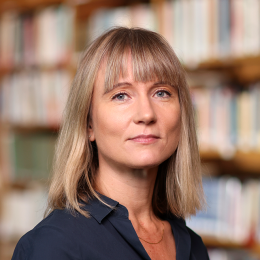
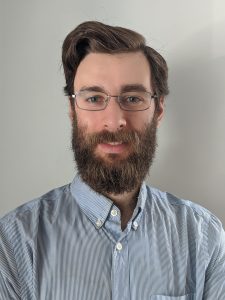
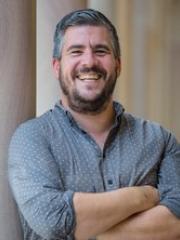
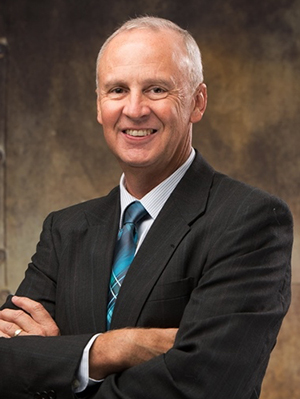
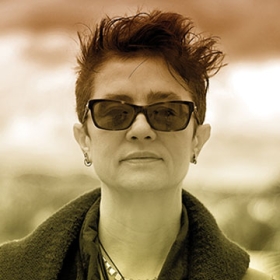
Ken S. McAllister is a Professor in the Department of Public & Applied Humanities at the University of Arizona, where he also serves as Associate Dean for Research & Program Innovation in the College of Humanities. He co-directs the Learning Games Initiative Research Archive, focusing on game studies, digital humanities, and software preservation. His work bridges game culture, educational technology, and critical theory. Primary Affiliation: University of Arizona (College of Humanities, Public & Applied Humanities) Key Roles: Associate Dean, Professor, Co-Director His research explores game studies, digital preservation, and the intersection of technology with education and culture. He has contributed to understanding game industry labor, software sustainability, and the pedagogical applications of games and VR, often emphasizing critical approaches to digital media. Article trends show a focus on game preservation, critical analysis of game culture, educational applications of games/VR, and the materiality of digital technologies. He frequently examines the socio-political dimensions of gaming, including labor practices, ideological impacts, and historical contexts. McAllister co-directs the Learning Games Initiative Research Archive , a hub for preserving and studying gaming history, software, and related artifacts. His work emphasizes community-driven approaches to digital archiving and the entrepreneurial potential of humanities scholarship.
Frida Beckman is a Professor in the Department of Culture and Aesthetics at Stockholm University. Her academic career spans roles at Uppsala University, Linköping University, and Stockholm University's Department of English before her current appointment in 2018. She serves as director of literary research and sits on the Faculty of Humanities' scholarship committee, while also contributing to editorial boards for journals like Symploke and Modern Fiction Studies . Education: PhD in Literature from Uppsala University (2009) Beckman's research focuses on American literature and culture post-WWII, with deep engagement in critical theory and Gilles Deleuze's philosophy. Her work explores themes such as agency, subjectivity, spatiality, temporality, and the intersection of culture with political power structures. Her current project examines African American literature and critique after 11940, while her recent popular science book Postmodernismen (2023) provides accessible insights into postmodernist thought. Her publications reflect a synthesis of theoretical frameworks, including postcritique, Foucault-Deleuze analysis, and allegorical interpretations of contemporary narratives. She actively bridges academic discourse with public intellectual work through podcasts, interviews, and media contributions on topics like postmodernism, conspiracy theories, and critical philosophy.
Sara Magliacane is an Assistant Professor at the University of Amsterdam , affiliated with the Amsterdam Machine Learning Lab (AMLab) and the Informatics Institute . She also holds a Research Scientist position at the MIT-IBM Watson AI Lab and has been an ELLIS Scholar since 2022. Education PhD in Artificial Intelligence (2017), VU Amsterdam MSc in Computer Engineering (2011), Politecnico di Milano BSc in Computer Engineering (2008), Università degli Studi di Trieste Research Focus : At the intersection of Causality and Machine Learning , her work addresses Causal Representation Learning from high-dimensional data (images, sequences) Causal Discovery in latent confounder scenarios Causality-inspired Reinforcement Learning for robustness and adaptability Neurosymbolic AI for theoretical guarantees Publication Trends : Her recent work explores Factored adaptation in non-stationary environments (NeurIPS 2022) Temporal causal identifiability (ICML 2022) Binary interaction-based causal discovery (UAI 2023) Safe exploration in visual RL (HSCC 2021) Structure learning lower bounds (NeurIPS 2020) Scientific Recognition : ELLIS Scholar (2022–present) Spotlight presentations at ICML 2022 and ICLR 2022 Advising & Collaborations : Currently supervising 6 PhD students at the University of Amsterdam and AUMC, with 12 alumni advisees. Collaborates with researchers at MIT-IBM Watson AI Lab, Simons Institute, and TUM.
David Blakesley is Professor of Rhetorics, Communication, and Information Design and Campbell Chair in Technical Communication at Clemson University's College of Arts and Humanities, Department of Interdisciplinary Studies. He currently serves as President of the Faculty Senate for 2023-2024. His academic career spans over three decades with significant contributions to rhetorical theory, digital publishing, and technical communication. Blakesley earned his PhD in Rhetoric, Linguistics, and Literature from the University of Southern California (1990), an MA in English from San Diego State University (1986), and a BA in English from the same institution (1983). His research spans multiple interconnected fields including rhetorical theory, history of rhetoric, digital and visual rhetorics, print and digital publishing, film theory and production, technical communication, and digital humanities. He has focused particularly on Kenneth Burke's rhetorical theory and its applications across various media. His scholarly work demonstrates a consistent trajectory from traditional rhetorical theory toward digital applications and publishing innovations. Over the past decade, his research has increasingly focused on the intersection of digital technologies with rhetorical practices, particularly examining how digital platforms transform scholarly communication and publishing. His 2022 TUGboat article on production versus distribution in publishing exemplifies his ongoing interest in how technological shifts impact academic and professional communication. Fellow, Rhetoric Society of America George Yoos Distinguished Service Award (RSA) Charles Moran Award for Distinguished Contributions to the Field of Computers and Composition Blakesley has secured significant funding including the $11 million Clemson-Adobe Partnership for Campus-Wide Creative Cloud implementation. He serves as Editor of KB Journal, Co-Editor of WAC Journal, and General Editor of The Writing Instructor. His editorial work has been instrumental in shaping scholarly communication in rhetoric and composition studies, particularly through his leadership in digital publishing initiatives.
Phil Pavilionis is an Associate Professor of Kinesiology in the School of Public Health at the University of Nevada, Reno. With over 20 years of clinical experience as a Certified Athletic Trainer (ATC) and Certified Strength and Conditioning Specialist (CSCS), he bridges academic research with practical applications in sports medicine. His roles include teaching undergraduate/graduate courses, conducting research in the Neuromechanics Laboratory, and serving as an adjunct clinical athletic trainer for Nevada Sports Medicine. Education: Ph.D. in Neuroscience, University of Nevada, Reno (2024) M.S. in Exercise Science, California University of Pennsylvania (2007) B.S. in Health Science, University of Nevada, Reno (1995) Dr. Pavilionis specializes in head injury prevention and virtual reality applications for concussion evaluation. His research leverages clinical experience to develop standardized assessment protocols, focusing on vestibular-ocular motor screening (VOMS) using virtual reality to reduce administrator variability. Key investigations include oculomotor deficits following concussion, head impact biomechanics in football using instrumented mouthguards, and minimal detectable change metrics for neurocognitive tests like ImPACT. His work integrates neuroscience, kinesiology, and engineering to improve concussion diagnosis and management. Analysis of his 45 publications (2022-2025) reveals three dominant trends: (1) Virtual reality standardization of concussion assessments, particularly VOMS protocols; (2) Head impact monitoring using instrumented mouthguards to evaluate protective equipment like Guardian Caps; and (3) Machine learning applications for objective concussion detection through eye-tracking and biomechanical data. These studies consistently address the critical need for objective, standardized tools to overcome subjective symptom reporting in sports concussion management. Dr. Pavilionis actively collaborates with the Neuromechanics Laboratory and Nevada Sports Medicine, translating research into clinical practice. While no specific grants are documented in the provided materials, his extensive publication record (including 15 articles in 2023 alone) demonstrates sustained research productivity and interdisciplinary collaboration across neuroscience, engineering, and sports medicine disciplines.
Cherise Smith is the Joseph D. Jamail Chair in African American Studies and a Professor in the Department of African and African Diaspora Studies at the University of Texas at Austin, with affiliations in the Art History department. She serves as Executive Director of the Art Galleries at Black Studies and is a renowned scholar in African American art, performance studies, and critical race theory. Education: Ph.D. in Art History, Stanford University (advised by Drs. Wanda Corn and Pamela Lee). Her research examines African American art, the history of photography, and how performance art interrogates racial, gender, and class identities. At UT Austin, she leads the Art and Archive Initiative, expanding collections and exhibition spaces for art by Black creators. Recent publications include Michael Ray Charles: Studies in Blackness (2020), which won the Charles C. Eldredge Prize, and Enacting Others (2011), analyzing identity negotiation in performance art by Eleanor Antin, Nikki S. Lee, Adrian Piper, and Anna Deavere Smith. Smith’s work has been funded by the Getty Foundation, Ford Foundation, and Harvard’s W.E.B. Du Bois Institute. She has held curatorial roles at major institutions, including the Art Institute of Chicago and the Metropolitan Museum of Art. She serves on editorial boards for American Art and Art Journal , and the Archives of American Art Journal’s Advisory Board.
Gabriel Koch Ocker is an Assistant Professor in the Department of Mathematics & Statistics at Boston University, specializing in theoretical and computational neuroscience. His research investigates how neural activity encodes sensory information, shapes behavior, and evolves through learning mechanisms. Research Focus: Structure-function relationships in neuronal networks Methodology: Dynamical systems, stochastic processes, statistical physics Collaborations: Experimental validation of computational models Recent publications analyze integrate-and-fire networks, dendritic calcium spiking, inhibition-stabilized circuits, and metastability in stochastic neuronal systems. His group combines mathematical rigor with biological relevance to explore neural coding, plasticity, and functional hierarchy in cortical structures. Key contributions include tensor decomposition approaches to correlation analysis, reconciling recording technique discrepancies, and developing field-theoretic frameworks for compartmental modeling. Work spans from molecular-level channel dynamics (Kv7 channels) to brain-area-level functional organization.
Cynthia D. Rudin is the Gilbert, Louis, and Edward Lehrman Distinguished Professor of Computer Science at Duke University, with joint appointments in the Departments of Electrical and Computer Engineering, Statistical Science, Mathematics, and Biostatistics & Bioinformatics. She directs the Interpretable Machine Learning Lab and has held previous positions at MIT, Columbia, and NYU. Her educational background includes: Undergraduate degree from the University at Buffalo PhD from Princeton University (2004) Research Interests: Dr. Rudin's research focuses on interpretable machine learning and its applications across multiple domains. Her work emphasizes creating machine learning models whose reasoning processes people can understand, which includes algorithms for extremely sparse models, interpretable neural networks, interpretable matching methods for causal inference, and dimension reduction for data visualization. She applies these techniques to critical societal problems in healthcare, criminal justice, materials science, and other domains. Her lab has developed practical code for sparse models such as decision lists, decision trees, and additive models that provably optimize accuracy and sparsity. Dr. Rudin's recent publications (2024-2025) demonstrate a strong focus on interpretable AI applications across diverse fields including healthcare (mortality risk scores, breast cancer prediction), materials science (metamaterials design), and environmental justice (location-based health analysis). Her work consistently emphasizes practical implementations with real-world impact, particularly in high-stakes decision-making domains where model transparency is critical. Scientific Awards: Squirrel AI Award for Artificial Intelligence for the Benefit of Humanity (2022) - often described as the "Nobel Prize of AI" INFORMS Society on Data Mining Prize (2024) Guggenheim Fellowship (2022) Three-time winner of the INFORMS Innovative Applications in Analytics Award (2013, 2016, 2019) Winner of the 2023 John M. Chambers Statistical Software Award for PaCMAP Winner of the 2024 Award for Innovation in Statistical Programming and Analytics Dr. Rudin has advised numerous PhD students and postdocs who have co-authored significant publications with her. Her lab has received substantial funding for projects applying interpretable machine learning to healthcare (seizure prediction in ICU patients), criminal justice (crime series analysis), and energy infrastructure (underground electrical distribution networks). Her work on the Series Finder algorithm has been adapted by the NYPD and has been running live in NYC since 2016. She directs the Interpretable Machine Learning Lab at Duke, which includes the Almost-Matching-Exactly Lab focused on interpretable causal inference. Her team develops practical code implementations for all their research, emphasizing usability and real-world application in critical domains.
Dr. Alastair Stark serves as Associate Professor at the School of Political Science and International Studies, Faculty of Humanities, Arts and Social Sciences at The University of Queensland (UQ). As Director of the Graduate Centre in Governance and International Affairs, he combines academic leadership with public policy scholarship. Current research focuses on institutional amnesia in governance, policy learning mechanisms, and deliberative democracy applications to environmental policy Recipient of Mayer Prize (Australian Journal of Political Science) and Lasswell Prize (Policy Sciences) Principal investigator for Australian Research Council Discovery projects (2021-2025, 2018-2022) Active supervisor with current PhD projects on disaster recovery, institutional memory, and rapid evidence application Research Interests His work addresses three core areas: institutional memory in governance, crisis management through public inquiries, and deliberative democratic practices in policy-making. Recent articles explore Australian royal commissions, policy inaction dynamics, and post-pandemic governance responses. Scientific Contributions Authored/edited 4 books including Risk and Crisis Management in the Public Sector (3rd ed, 2024) and Public Inquiries and Policy Design (2024) Published 27 journal articles across Public Administration , Policy Sciences , and Governance Developed analytical frameworks for policy adoption, crisis dramaturgy, and deliberative governance Awards & Grants 2021-2025: ARC Discovery Project - Institutional Memory and Policy Processes 2018-2022: ARC Discovery Grant - Public Inquiries Implementation 2016-2019: ARC Discovery Grant - Social-Urban Planning Integration 2015: UQ Early Career Researcher Grant - Post-Crisis Policy Learning Professional Involvement Contributes to multiple research centers including the Graduate Centre in Governance and International Affairs. Participates in the Visual Politics Research Program and Visiting Researcher Program. Maintains active roles in policy evaluation and crisis management analysis.
Suzie Telep is an Assistant Professor in the Department of Anthropology and European Union Center at the University of Illinois at Urbana-Champaign. A linguistic and cultural anthropologist, she examines intersections of language, race, and artistic production within the African diaspora in postcolonial France. Educational background includes a PhD in Linguistics from Paris Cité University, a Marie Sklodowska-Curie Postdoctoral Fellowship at the University of Pennsylvania, and affiliations with institutions like Stanford University and University of Angers. Her research focuses on race, gender, and language ideologies in Black diasporic communities, particularly Cameroonian immigrants in Paris, analyzing practices like 'whitisation' (accent mimicry) and Afro-feminist aesthetics in digital media and fashion. Key methodologies blend ethnographic fieldwork with arts-based research , exploring how language and performance negotiate identity in contexts shaped by anti-Black racism and colonial legacies. Scientific awards include the Marie Sklodowska-Curie Fellowship (2021) and the Richard Mille - La Francophonie en Débat prize (2021) . Her creative work includes a multimedia performance-lecture, My Afropean Musical Journey , presented at conferences like the African Studies Association and Unsettling Images, Engaging Fictions.
George Z. Gasyna is a Professor at the Department of Slavic Languages & Literatures and the School of Literatures, Cultures & Linguistics at the University of Illinois at Urbana-Champaign (UIUC). He also serves as Co-Director of Undergraduate Studies and is affiliated with the Program in Comparative and World Literature, the Unit for Criticism and Interpretive Theory, and the Program in Jewish Culture and Society. Education: PhD, University of Toronto MA, McGill University BA, McGill University Gasyna’s research spans 20th-century Polish literature, diasporic and minority cultures, and Jewish cultural history in pre-1939 multiethnic Poland. His work explores migration, exile, autobiography, memory, postmemory, and travel literature, with a focus on heterotopia and transcultural narratives. His recent publications analyze Polish literature through transnational and postcolonial lenses, emphasizing borderlands, national identity, and cultural displacement. Themes like imperialism, diaspora, and avant-garde poetics recur across his scholarship. Scientific Awards: Conrad Humanities Scholar (2020-2025) Humanities Research Institute Fellowship (2017-18) Gasyna has taught courses on Polish culture, modernism, Joseph Conrad, and radical political thought. His affiliations with interdisciplinary programs reflect his broad scholarly engagement.
Neal R. Feigenson serves as the Lynne L. Pantalena Professor of Law at Quinnipiac University School of Law, where he has been a faculty member since 1987. He teaches core courses including torts, evidence, civil procedure, and visual persuasion in the law, blending doctrinal instruction with interdisciplinary perspectives on legal cognition. Education: BA, University of Maryland JD, Harvard University Professor Feigenson's scholarship fundamentally explores how cognitive and social psychology shapes legal decision-making processes, with particular emphasis on the transformative impact of visual and multimedia evidence in courtroom settings. His research investigates juror perception biases, the psychological mechanisms behind legal blame attribution, and the evolving challenges posed by digital evidence presentation in both physical and virtual courtrooms. This work bridges empirical psychological research with practical legal theory to address critical issues in evidence evaluation and judicial procedure. Analysis of his recent publications (2021-2024) reveals a concentrated focus on virtual legal proceedings, demonstrating how video evidence framing influences juror judgments about police conduct and damage awards. His scholarship consistently examines the tension between technological innovation in evidence presentation and foundational legal principles of fairness, credibility assessment, and human interaction within the justice system. Scientific Awards: No specific scientific awards, fellowships, or major honors are documented in the available sources. While detailed information about student advising and research funding is unavailable, Professor Feigenson maintains an active scholarly profile with over 60 publications. His professional activities center on teaching and research within Quinnipiac's law school, where he maintains an office in the School of Law and Education building (Room 110C) and welcomes media inquiries regarding his expertise in legal psychology and evidence law.
Lauri Väkevä is a Professor in the Department of Education at the University of Helsinki, specializing in educational sciences with a focus on performing arts, music education, and STEAM pedagogy. He actively supervises doctoral students in the Doctoral Programme in School, Education, Society, and Culture and leads the SKAPA project (2024–2026) on developing study paths in arts education. His research explores the intersection of artificial intelligence, creativity, and multimodal learning environments. Key Affiliations: Department of Education, Sibelius Academy collaboration, Gaudeamus publishing network Research Themes: AI in music education, safe spaces for artistic expression, responsible AI pedagogy, historical evolution of Finnish music institutions Recent Work Highlights : 2025: Generative AI as a Collaborator in Music Education (Action-Network Theory application) 2025: Voicing Responsible AI Pedagogy (Ethical frameworks for arts education) 2024: Changing Role of Sibelius Academy (Historical analysis of Finnish music education) Leadership & Engagement : Project Manager for SKAPA, organizing committee member for the 2024 Ainedidaktinen Symposium, and active participant in AI research events.
John Valasek is a Professor in the Department of Aerospace Engineering at Texas A&M University, holding the Drs. L. Diane '88 and John E. Hurtado '91 Professorship. He directs the Vehicle Systems & Control Laboratory (VSCL) and serves as Site Director for the NSF Center for Autonomous Air Mobility and Sensing (CAAMS) and the FAA Center for General Aviation Research (PEGASAS). His research focuses on autonomous control systems, UAV navigation, and cybersecurity for aerospace vehicles. Valasek earned his Ph.D., M.S., and B.S. in Aerospace Engineering from the University of Kansas (1995) and California State Polytechnic University (1986). Education: Ph.D., Aerospace Engineering, University of Kansas - 1995 M.S., Aerospace Engineering, University of Kansas - 1990 B.S., Aerospace Engineering, California State Polytechnic University - 1986 Research Interests: Autonomous systems, nonlinear control, vision-based navigation, UAV control, bio-nano materials control, and aerospace systems engineering. Key Contributions: Over 100 invited lectures/seminars, leadership in NSF-funded research centers, and development of advanced control algorithms for aerospace systems. Notable publications include work on reinforcement learning for autonomous systems and real-time system identification for UAS. Awards: John Leland Atwood Award (2015) McElmurry Outstanding Teaching Award (2001, 2004, 2014) Engineering Hall of Fame inductee (2019) Advising & Grants: Advised over 60 graduate students, including recent NSF GRFP winner Evelyn Madewell. PI on multi-million-dollar grants, including the NSF CAAMS project and Air Force-funded research on autonomous systems. Labs & Teams: Directs the Vehicle Systems & Control Laboratory (VSCL), focusing on low-cost attritable aircraft technology and autonomy. Collaborates with industry partners like Stratolaunch and VectorNav through CAAMS initiatives.
Katarzyna Marciniak is Professor and Department Chair of Media Arts & Culture at Occidental College, appointed in 2019 after serving as Distinguished Visiting Professor during the 2019-20 academic year. Her office is located in Weingart 112 with regular office hours on Tuesdays and Thursdays. Her academic credentials include: Master of Arts from the University of Lodz Master of Arts from the University of Montana Doctor of Philosophy from the University of Oregon Professor Marciniak's research interrogates the aesthetics and politics of transnational visual cultures, with rigorous focus on representations of foreignness, immigration, national (un)belonging, and border zones as sites of contention. She integrates feminist theory, refugee studies, and postsocialist media analysis—particularly regarding Eastern European cultures—to examine how visual media construct identities in contexts of displacement. Her pedagogical innovations emphasize ethics in teaching trauma cinema and creating transnational classrooms that engage critically with migration narratives. Analysis of her recent publications reveals a cohesive scholarly trajectory centered on refugee cinema, transnational visual representation, and socialist/post-socialist cultural studies. Her work consistently applies feminist and ethical frameworks to dissect cinematic mediation of migration, border politics, and cultural alienation, while pioneering pedagogical approaches for teaching difficult subjects through film. Her distinguished recognition includes: 2025 Linda and Todd White Teaching Prize Modern Language Association Florence Howe Award for Outstanding Feminist Scholarship (2010) for her article 'Pedagogy of Anxiety' in Signs While the source text does not specify graduate student mentorship or research grants, Professor Marciniak's prolific scholarly output and editorial leadership demonstrate active academic community engagement. She serves as Lead Editor for Palgrave's Global Cinema series and has co-edited five major volumes including The Oxford Handbook of Communist Visual Cultures (Oxford University Press). Her authored monographs include Alienhood: Citizenship, Exile, and The Logic of Difference (University of Minnesota Press) and Streets of Crocodiles: Photography, Media, and Postsocialist Landscapes in Poland (Intellect/University of Chicago Press). Her forthcoming co-authored book Refugee Cinema with Bruce Bennett (Lancaster University) is scheduled for Oxford University Press publication in 2025.