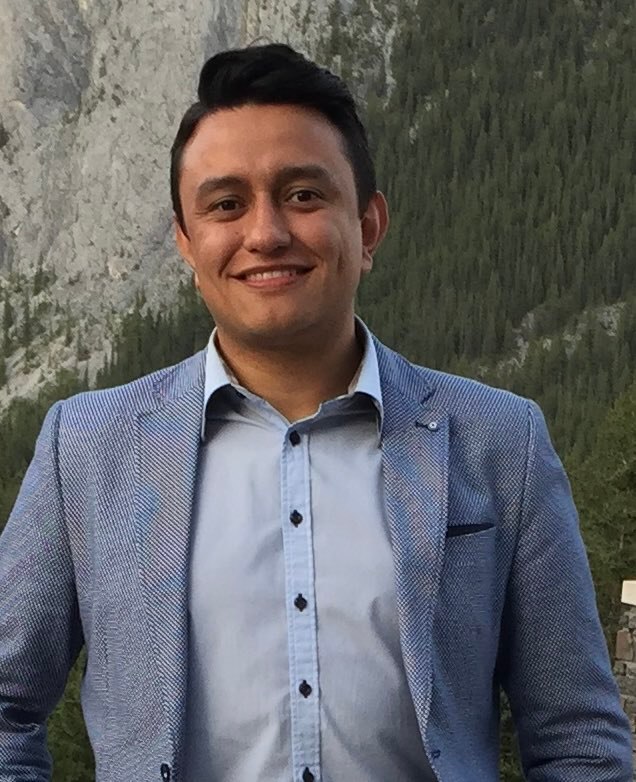
Dr. Edyta Chlebowska is an Assistant Professor at the Cyprian Norwid Research Center, John Paul II Catholic University of Lublin. Specializing in the visual art and literary legacy of Cyprian Norwid, she explores intersections between Polish Romanticism, art history, and cultural studies. Her work extends to album art analysis and interdisciplinary connections with music (e.g., Pink Floyd, Czesław Niemen). Her research focuses on Norwid's self-portraits, eschatological themes in his drawings, and comparative studies with 19th-century Warsaw painting. She reconstructs lost artworks, documents private collections (e.g., Konstancja Górska, Victor Gomulicki), and examines Norwid's reception in Florence and Odessa. Key projects include translating Studia Norwidiana and critical editing of Norwid's complete works. As editor-in-chief of multiple On Cyprian Norwid. Studies and Essays volumes and organizer of conferences like Niemen Non Stop and Colloquia Norwidiana , she bridges academic rigor with public engagement. Her publications span peer-reviewed books, journal articles, and popular science pieces, emphasizing Norwid's unpublished works and symbolic programs.
Professor Brian Dillon is the Professor of Creative Writing and Director of Creative Writing at Queen Mary University of London's School of English and Drama. Previously, he served as Head of the Writing Programme at the Royal College of Art. He holds a PhD from the University of Kent (1999) and has authored numerous books blending creative nonfiction, literary criticism, and art analysis. His research focuses on the essay form, autobiography, literature-visual arts intersections, and writing about illness. Key publications include *Suppose a Sentence* (2020), an experimental essay collection analyzing literary sentences, and *Affinities* (2023), exploring photographic imagery. Current projects include a study of Kate Bush's *Hounds of Love* and an essay on education. Dillon frequently contributes to *The Guardian*, *London Review of Books*, and *Artforum*, and has curated exhibitions for Tate and Hayward Galleries. His awards and fellowships are not explicitly listed here, but his work has been widely exhibited and published internationally. He supervises doctoral students in creative writing and related fields, emphasizing interdisciplinary approaches to literature and art. Public engagement includes talks at institutions like the British Museum and Pompidou Centre, and appearances on BBC Radio 3 and RTE Radio. His work bridges academic critique with accessible creative writing, making complex themes engaging for broader audiences.
Dr Alison Powell is an Associate Professor in the Department of Media and Communications at the London School of Economics and Political Science (LSE), serving as Programme Director for the MSc Media and Communications (Data and Society). Her research focuses on technology design, public sector technology, and digital futures. She is known for her book Undoing Optimization: Civic Action in Smart Cities (2021) and her participatory research method, data walking. From 2019–2023, she directed the JUST AI network, supported by the Ada Lovelace Institute and UKRI, advancing AI ethics research. Her work integrates critical theory, participatory methods, and interdisciplinary collaboration. Education: PhD in Communication from Concordia University (Canada), MA in Media Studies from Toronto Metropolitan University, and postdoctoral research at the Oxford Internet Institute. Prior to academia, she worked in the film and TV industry. Research interests include civic engagement in data-driven governance, ethical AI, and participatory urbanism. She has advised projects like Africa Just AI and Operationalising Ethics for AI, funded by Horizon Europe, AHRC, and the Open Society Foundations. Her articles address topics such as AI governance, urban light ecology, feminist research praxis, and the ethical implications of technology for marginalized communities. She contributes to blogs like Media@LSE and leads initiatives at Polis and the LSE’s Digital Futures for Children project. Grants and collaborations include work with Projects by IF, Open Rights Group, and the Human Data Interactions Network (EPSRC). She explores intersections of technology, justice, and sustainability, emphasizing equitable and inclusive innovation.
Christopher M. Chinn is a Professor of Classics at Pomona College since 2007, specializing in Augustan and Imperial Roman poetry. He teaches Latin and Greek languages alongside translation courses like Ancient Epic and Introduction to the Greeks and Romans . Research Focus: Roman poetry, ecocriticism, art-text relationships Key Contributions: Studies on Statius, Pliny, and intertextual analysis His work bridges visual art analysis with literary interpretation, particularly in Flavian-era texts. Recent publications address environmental themes in ancient Mediterranean literature and the evolution of ekphrastic techniques. Scientific Awards & Honors Jim Greenfield Dissertation Fellowship (University of Washington, 2001-2002) Downing-Pomona Exchange Fellow (2009) Pomona College Summer Research Grant (2011) His teaching includes advanced language courses and senior seminars on classical studies, reflecting his commitment to both pedagogy and research in ancient literature.
Timothy Hampton is a Professor of French and Comparative Literature at the University of California, Berkeley , and serves as Director of the Doreen B. Townsend Center for the Humanities . He was previously the Director of the Designated Emphasis in Renaissance and Early Modern Studies and co-chairs the Democracy, Free Speech, and Values study group. His research explores intersections of literature and politics , poetry and song , and the history of emotion and diplomacy in Renaissance and early modern periods. Recent projects include a 2022 France-Berkeley Fund grant on poetry translation and a Diebold Foundation grant for interdisciplinary cultural studies. Notable publications include Bob Dylan: How the Songs Work (2019) and Cheerfulness: A Literary and Cultural History (2022). Upcoming works address premodern colonialism and American education through memoir and cultural critique. His scholarship appears in MLN , Critical Inquiry , and public venues like Salon and Aeon/Psyche .
Dr. Yaron Meron is a Lecturer and researcher in design at the University of Sydney's School of Architecture, Design and Planning. He holds a PhD (RMIT, Melbourne) and two Master's degrees (RMIT, Central St Martins). His work bridges academic research and professional practice, focusing on graphic and communication design, socially engaged design, AI integration, and responsible design thinking. Meron’s research explores interdisciplinary challenges, design collaboration, and the societal impact of emerging technologies like AI. He coordinates the Civic & Social Design Research Group. Educations: PhD in Design (RMIT University, Melbourne) MA in Design (RMIT University, Melbourne) MA in Communication Design (Central Saint Martins, London) Research Interests: Graphic design as an interdisciplinary practice Artificial intelligence in design education and practice Media literacy and defamiliarisation techniques Socially engaged design methodologies Design briefs and stakeholder relationships Articles & Trends: Recent publications emphasize AI's role in design education, speculative urban futures, and critical design approaches to media literacy. His work frequently intersects with pedagogy, ethics, and technology’s societal implications. Labs/Teams: Coordinator of the Civic & Social Design Research Group, fostering collaborative projects on responsible design and interdisciplinary innovation.
Dr. Mo Adda is a Principal Lecturer at the University of Portsmouth's School of Computing, part of the Faculty of Technology. He holds a PhD in Distributed Systems and Parallel Processing from the University of Surrey. His research focuses on network security, distributed systems, wireless networks, and cybercrime prevention. He leads projects in the Centre for Cybercrime and Economic Crime, exploring fault management in networks, blockchain applications, and IoT forensics. With 16 supervised theses, he advises on topics like energy-efficient cloud systems and machine learning for environmental modeling. His work bridges academia and industry, addressing challenges in software-defined networks, traffic control, and secure data sharing in social networks. Education: PhD in Distributed Systems (University of Surrey) Affiliations: Centre of Excellence in Defence, Risk & Resilience; Portsmouth Centre for Advanced Materials and Manufacturing Research Interests Dr. Adda's research spans: Network security and fault detection mechanisms Blockchain applications in IoT and forensics Energy-efficient cloud data center optimization Machine learning for climate modeling Self-organizing network protocols Grants & Collaborations His projects include collaborations with industry partners on secure data leakage detection in cloud systems and resilient wireless protocols for harsh environments. He has pioneered fault classification systems using clustering algorithms and fuzzy logic. Labs & Teams He contributes to the Centre for Cybercrime and Economic Crime, focusing on digital forensics and network intrusion analysis. His team develops frameworks for privacy management in social networks and proactive routing in software-defined networks.
Karsten Lambers is Professor of Digital and Computational Archaeology at the Faculty of Archaeology, Leiden University, where he leads research and teaching in the application of computational methods to archaeological data. His work integrates machine learning, remote sensing, text mining, and citizen science to advance archaeological prospection and heritage management. He is affiliated with the Department of Archaeological Sciences and plays key roles in research groups and university-wide initiatives such as SAILS and ARCHON. His research interests span Digital Archaeology , Machine Learning in Archaeology , Remote Sensing , Geoarchaeology , and Human-Environment Interaction . He investigates how computational tools can extract meaningful archaeological information from large datasets, including LiDAR imagery and excavation reports. His fieldwork spans Central Europe and Latin America, with a focus on prehistoric landscapes and cultural heritage. The analysis of his recent publications reveals a strong trend toward automated detection using deep learning (e.g., R-CNN, WODAN), named entity recognition in archaeological texts (e.g., ArcheoBERTje), and citizen science integration for data validation. His work bridges archaeology with computer science, geomatics, and environmental science, emphasizing interdisciplinary collaboration and methodological rigor. His scientific awards include: Best Thesis Award (University of Zurich, 2005) EUROPA NOSTRA Award (2020, 2022) Membership in the German Archaeological Institute (since 2022) Lambers actively supervises students and leads major research projects such as ABMA, EXALT, and Heritage Quest. He has secured substantial research funding and collaborates widely with computer scientists, geophysicists, and palaeoecologists. His teaching includes digital methods, modeling, and simulation, often linked to ongoing research. He has also contributed to open educational resources and digital textbooks in archaeology. He leads or participates in several research labs and teams, including the Digital Archaeology Research Group (which he chairs), the Heritage Quest citizen science project, and interdisciplinary teams focusing on alpine terraces and Iraqi prospection. His work emphasizes the integration of digital tools into practical archaeological workflows, advocating for complementary human-computer strategies.
Prof. Ismail Xavier is a prominent Brazilian film scholar affiliated with the Institute of Film and Television at Universidade de São Paulo. He has served as a visiting professor at New York University, Sorbonne Nouvelle in Paris, and the University of Chicago. His academic work focuses on the intersection of aesthetics, politics, and cultural identity in Brazilian cinema, particularly Cinema Novo and its contemporary evolution. Xavier's research examines the mythical role of the Sertão (Brazilian backlands) in shaping national identity and its connection to migration narratives. His seminal book Allegories of Underdevelopment (1997) remains a foundational text in Brazilian modern cinema studies. At the Center for Intercultural Studies (ZIS) in Mainz, he delivered a guest lecture exploring how Cinema Novo's legacy informs contemporary Brazilian films through themes of migration and cultural transformation. As a key figure in film historiography, Xavier has edited critical volumes on cinema history and theory while analyzing the interplay between film movements like Tropicalismo and broader sociocultural contexts. His work bridges cinematic analysis with intercultural studies, emphasizing visual representation in postcolonial frameworks.
Juan Ortiz-Apuy is a Canadian-Costa Rican artist and Assistant Professor in the Department of Studio Arts at Concordia University . His practice critically examines intersections of commodity fetishism , object-oriented ontology , and post-colonialism through installations addressing sustainability and environmental exploitation . He has exhibited internationally in institutions such as Les Abattoirs Museum (France) and MASS MoCA (USA). MFA, NSCAD University (2011) PG Dip, The Glasgow School of Art (2009) BFA, Concordia University (2008) His research investigates material cultures and ecological impacts of consumerism, employing found objects, 3D animation, and industrial materials. Key projects include Tropicana (2020), which critiques tropicality commodification, and La Guaria Morada (2019), exploring Costa Rican identity through environmental systems. Best International Representation (2024) by AICA, Costa Rican Chapter Grants from Canada Council for the Arts, Conseil des arts et lettres du Québec, and SSHRC Ortiz-Apuy has participated in residencies at MASS MoCA and Guldagergaard Ceramic Research Center . His work has been reviewed in Canadian Art , MOMUS , and local Montreal publications.
José Eduardo Villalobos Graillet is an Assistant Professor of Spanish at Idaho State University , specializing in Modern Peninsular Literature and Culture with a focus on visual culture (film and television) . He previously held a position as Spanish Instructor at Wilfrid Laurier University in the Department of Languages and Literatures. Research Areas : Spanish Film Studies, Spanish Medieval Literature, Latin American and Caribbean Studies, Teaching Spanish as a Foreign Language, Visual Culture, and Critical Pedagogy. His scholarly work examines film and television adaptations of 'La Celestina' , analyzing censorship dynamics across Francoist Spain, the Democratic Transition, and contemporary Spain. He also contributes to Spanish pedagogy , developing technological tools like Lang-8 for written expression and culturally immersive teaching units on topics such as winter festivals and Caribbean music. His publications span both critical academic analysis and methodological innovations for language instruction. Key Themes in Publications : Adaptation fidelity, political censorship, intercultural pedagogy, and the role of digital platforms in language learning.
Andrea Korda, PhD (University of California, Santa Barbara), is an Associate Professor of Fine Arts & Humanities and Associate Dean (Research) at the Augustana Campus of the University of Alberta. Her academic career bridges art history, material culture studies, and pedagogical innovation. Educations: BA in Fine Arts, Queen's University MA in Art History, Concordia University PhD in Art History, University of California, Santa Barbara Research Focus: Dr. Korda specializes in 19th-century visual and material culture, with a focus on education's visual dimensions, children's literature, and community-engaged projects like the award-winning Crafting Communities initiative. She co-curated the virtual exhibition Photographies (Bruce Peel Special Collections) and explores hands-on learning through historical crafts. Teaching: Courses include modern art history (AUART 220), photography theory (AUART 225), and special topics in visual culture (AUART 382). She emphasizes experiential learning and digital humanities integration, as seen in her work with the Getty Museum Challenge and OER projects. Collaborations: Leads interdisciplinary teams on projects like Crafting Communities , blending scholarship with public engagement. Her research bridges historical methodologies with contemporary pedagogical practices, fostering connections between academia and communities.
Professor Peter John Edgley Robinson is a distinguished academic and poet at the University of Reading, where he holds the position of Professor in the Department of English Literature, part of the School of Humanities. He is renowned for founding the English Literature with Creative Writing joint degree program and the MA in Creative Writing. His research focuses on modern and contemporary poetry, publishing, and translation, with a particular interest in 20th-century literary movements and interdisciplinary studies. Responsibilities include leading the Poetry & Poetics strand of the Modern Studies Centre and supervising doctoral research in creative writing and academic topics such as post-war Japanese poetry, Muriel Rukeyser’s work, and travel writing. He has held roles as poetry editor for Two Rivers Press and contributed to academic publications like The Fortnightly Review . His career includes teaching at Tohoku University in Japan and organizing events like the Reading Poetry Festival. Key awards include the Cheltenham Prize (1988), the John Florio Prize (2008), and Poetry Book Society recommendations. His publications span poetry collections, critical essays, translations, and novels, reflecting his expertise in literary analysis and creative expression. Notable works include The Sound Sense of Poetry (2018), Ravishing Europa (2019), and Retrieved Attachments (2023). Education: BA from University of York (1974), PhD from University of Cambridge (1981). Translations: Includes works by Vittorio Sereni, Pietro De Marchi, and Giorgio Bassani. Editorial Roles: Numbers magazine, Reading Poetry Festival , and The Oxford Handbook of Contemporary British and Irish Poetry . His research explores intersections between poetry, economics, and cultural identity, with a focus on publishing policies and lyrical forms. He remains active in mentoring emerging writers and fostering interdisciplinary collaboration.
Lucien Castaing-Taylor is the John Cowles Professor of Art and Anthropology at Harvard University and Director of the Sensory Ethnography Lab (SEL), currently on leave for Fall 2025. His work bridges anthropology and artistic practice through sensory ethnography, engaging critically with ecological crises and political challenges while maintaining an ethnographic commitment to lived experience. His research spans sensory ethnography, phenomenology, media anthropology, and post-human/multi-species relations, with deep engagement in cultural and political ecology across the Franco-Creole Caribbean, Europe, and American West. Castaing-Taylor interrogates intellectual history and reason while developing methodologies that merge artistic negative capability with ethnographic rigor to capture life's flux without imposing conventional narrative structures. Castaing-Taylor's creative output demonstrates a consistent trajectory from early works like In and Out of Africa (1992) to recent projects such as De Humani Corporis Fabrica (2022), evolving from representational ethnography toward immersive sensory experiences. His filmography and installations increasingly address the Anthropocene, human-animal relations, and embodied knowledge through experimental audiovisual techniques that challenge documentary conventions and expand ethnographic possibilities. His major awards include: Alpert Award in the Arts (2013) True Vision Award (2013) Los Angeles Film Critics' Circle Douglas Edwards Independent and Experimental Film Award (2012) FIPRESCI Award (2012) As Director of the SEL, Castaing-Taylor cultivates a collaborative environment where anthropology converges with experimental filmmaking and installation art. The lab functions as an incubator for boundary-pushing audiovisual research that engages with urgent planetary issues through sensory immersion, fostering new modes of ethnographic inquiry that transcend traditional academic publishing.
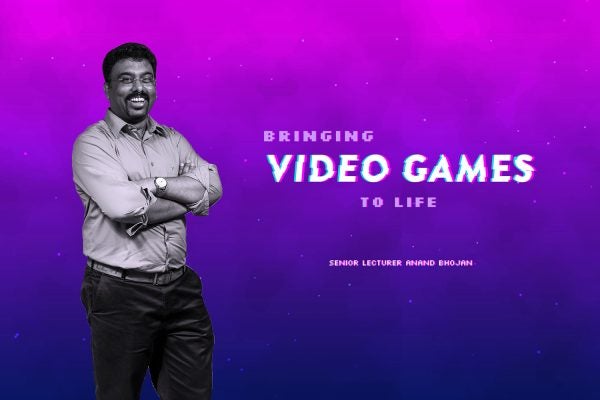
Anand Bhojan is an Associate Professor (Educator Track) at the Department of Computer Science, School of Computing, National University of Singapore (NUS). He is a member of the Communication and Internet Research Lab and serves on the Graduate Studies Committee. Dr. Bhojan is also the founder of Anuflora Systems and Virtual and Augmented Reality Labs (www.varlabs.org), and serves as Associate Editor of Computers and Electrical Engineering Journal, Elsevier, and Vice President of International Researchers Club, Singapore. Dr. Bhojan earned his Ph.D. in Computer Science & Engineering from NUS in 2011, where his thesis was nominated for the Best PhD Thesis Award. He also holds a Professional Master's in Computer Applications from Bharathidasan University (1999), a Bachelor's degree in Computing with Gold Medal (University topper) from Bharathiar University (1994), and a Postgraduate Certificate in Teaching Higher Education from University of Sheffield, UK (2003). His research spans multiple domains including Distributed Computing and Wireless Networks (IoT, Security, Blockchain), Artificial Intelligence (Generative AI, FinTech), and Entertainment Computing with focus on Games, VR/AR/Metaverse technologies. Dr. Bhojan leads the Metaverse Foundry research group which focuses on content generation for games & XR simulations across multiple domains including entertainment, healthcare, and architecture, while also experimenting with innovative teaching methods for entertainment media technologies. Dr. Bhojan's recent research has pioneered hybrid rendering techniques that strategically combine ray tracing and rasterization to create more realistic video game graphics without compromising performance. His work addresses critical challenges in real-time rendering, particularly in depth of field and motion blur effects, with the goal of making Hollywood-quality graphics accessible on a wider range of hardware. Earlier work focused on energy efficiency in mobile gaming, including power management techniques and latency optimization for cloud gaming. Among his notable achievements: 2012 Nominated for Best PhD Thesis Award (Wang Gungwu Medal & Prize), NUS 2011 Dean's Graduate Research Achievement Award (PhD), SoC, NUS 2006 Best R&D Project award from TOTE Board, Singapore 1995 Gold medal for first Rank (out of 4000) in Computing, Bharathiar University Dr. Bhojan has served as Organizing Chair and Program Chair for multiple international conferences and has delivered keynote talks at IEEE/ACM International Conferences. He teaches courses including Computer Networks Practice, Game Development, Interaction Design for Virtual and Augmented Reality, and Game Development Project. He leads the Metaverse Foundry research group and the Virtual and Augmented Reality Labs, where undergraduate and graduate students have won multiple research and innovation awards. His research bridges entertainment, education, and emerging technologies with practical applications in making immersive experiences more accessible across different hardware capabilities while maintaining energy efficiency.