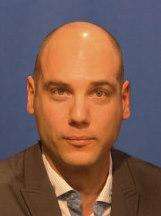
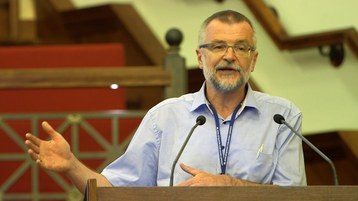
Maurizio Viroli is a Professor of Government at the University of Texas at Austin , a Professor of Political Communication at the University of Italian Switzerland (Lugano) , and Professor Emeritus of Politics at Princeton University . Ph.D. in Political and Social Sciences from the European University Institute of Firenze Degree in Philosophy from the University of Bologna His research focuses on the history of political thought , particularly classical republicanism , neo-republicanism , and the works of Niccolò Machiavelli and Jean Jacques Rousseau . He explores republican iconography , the relationship between religion and politics , patriotism , constitutionalism , and civic education . His publications span critical analyses of Machiavelli's works, Rousseau's philosophy, and the interplay between religion and liberty in Italian history. Key themes include republican governance , political communication , and democratic theory . Ufficiale dell'Ordine al Merito of the Italian Republic Jean Monnet Fellow at the European University Institute Viroli has advised the President of the Italian Republic during Carlo Azeglio Ciampi's tenure and coordinated national projects on republican culture . He founded the Master’s program in Civic Education at Asti, Italy, and contributed to constitutional reforms through consultancy roles.
Jacqueline Rhodes is the Joan Negley Kelleher Centennial Professor of Rhetoric and Composition at the University of Texas at Austin, where she has been a faculty member since 2005. Her career spans over 30 years, including previous roles at Michigan State University and Cal State San Bernardino. Ph.D., University of Southern Mississippi M.A., University of Idaho B.A., University of Montana Her research focuses on feminist and queer rhetorics, multimodal composition, and the intersections of embodiment, technology, and sexuality. She has co-authored award-winning works like Techne: Queer Meditations on Writing the Self and On Multimodality: New Media in Composition Studies , which explore queer theory in writing and digital practices. Her recent projects include the documentary Once a Fury , profiling a 1970s lesbian separatist collective, and co-editing the Routledge Handbook of Contemporary Feminist Rhetoric (2025). Her film work integrates feminist ethnography, allowing subjects to curate their own narratives through revision processes. Key themes in her 10+ articles and handbook chapters include feminist historiography, queer digital spaces, and critical agency. Awards highlight her collaborative work with Jonathan Alexander, such as the 2023 CCCC Exemplar Award and multiple CCCC Lavender Rhetorics Awards for queer scholarship. Rhodes advocates for "slow composition" as a pedagogical approach, emphasizing mindfulness in teaching and writing. As former editor of Rhetoric Society Quarterly (2020–2023), she prioritized developmental editing and collaborative authorship. Her current research leave involves a book on Shulamith Firestone's radical feminism and a film cycle I Am My Beloveds , reflecting on material relationships and feminist praxis.
Nikola Vangelov serves as Associate Professor in the Department of Communication, Public Relations and Advertising at Sofia University, where his academic work centers on the intersection of advertising theory, digital innovation, and historical communication practices. His research particularly examines technological applications in advertising within smart city environments and social media ecosystems. His scholarly focus spans digital advertising methodologies, influencer marketing dynamics, political communication frameworks, and the historical evolution of advertising in Bulgaria. Key contributions include analyses of AI-driven out-of-home advertising, metaverse marketing strategies, and socialist-era propaganda techniques. His interdisciplinary approach bridges traditional advertising principles with emerging digital paradigms, emphasizing consumer engagement in technologically advanced urban contexts. Analysis of his 2022-2025 publications reveals a pronounced shift toward AI integration in digital out-of-home advertising, with significant contributions to understanding influencer marketing in book publishing and historical political communication in socialist Bulgaria. His work consistently demonstrates methodological rigor through critical reviews, historical analyses, and empirical studies of contemporary advertising phenomena, establishing him as a leading voice in Balkan advertising research.
Rasha Diab serves as Associate Professor in the Department of Rhetoric and Writing at the University of Texas at Austin's College of Liberal Arts, holding a Ph.D. in Composition and Rhetoric from the University of Wisconsin-Madison (2009). Her educational background includes: Ph.D. in Composition and Rhetoric, University of Wisconsin-Madison, 2009 Diab's research traverses rhetorical theory, critical discourse analysis, transnational rhetoric, and rhetorics of reconciliation with emphasis on Arab-Islamic traditions. She examines how rhetorical practices operate across cultural boundaries in political discourse, peacemaking contexts, and multilingual writing environments, frequently employing qualitative methodologies to analyze power dynamics in communication. Her work bridges composition studies with postcolonial theory and religious rhetoric. Her 15 most recent publications (2017-2025) reveal three dominant trajectories: 1) Transnational religious rhetorics (particularly Arab-Islamic traditions in legal and peacemaking contexts), 2) Ethical accountability in writing pedagogy and institutional practices, and 3) Feminist and human rights discourses intersecting with microaggression interventions. The scholarship consistently applies cross-cultural rhetorical analysis to contemporary sociopolitical issues while recovering marginalized rhetorical traditions. Diab teaches advanced courses including Transnational Rhetorics (E 387M/RHE 391), Feminist Rhetoric (RHE 330D), and Peacemaking Rhetoric (RHE 330E) across multiple semesters through Fall 2025, demonstrating sustained engagement with her research areas in pedagogical practice.
Prof. Dr. Maarten Delbeke serves as Full Professor at ETH Zurich's Department of Architecture and Deputy Head of the Institute for the History and Theory of Architecture. His academic career spans Ghent University, where he was appointed Full Professor in 2014, and University of Leiden, before joining ETH Zurich in 2017. At ETH, he leads the Chair for History and Theory of Architecture with a focus on examining architectural history c.1400-1900 and its relevance to contemporary architectural practice. Delbeke received his PhD from Ghent University in 2001 after studying Architecture at the Faculty of Architecture and Engineering. His academic development included fellowships at the Belgian Historical Institute in Rome, Worcester College in Oxford (2001-2003), and the Canadian Centre for Architecture. His career progressed from Assistant Professor positions at Ghent University (2005) and University of Leiden (2006), where he secured a Vidi-grant from NWO for 'The Quest for the Legitimacy of Architecture in Europe, 1750-1850' (2010-2015). His research centers on early modern art and architecture across Europe, particularly examining the interface between religion and aesthetics, architectural representation in literature and print media, and origin myths. Delbeke has made significant contributions to Baroque studies through publications on Bernini, Algardi, and Sforza Pallavicino, and has investigated architectural theory from the 17th-19th centuries through works on the Perrault brothers, Fischer von Erlach, Piranesi, and Victor Hugo. His current work increasingly focuses on Swiss and German Rococo architecture and identity formation in architectural discourse. Delbeke's extensive publication record shows a clear trajectory from focused Baroque studies toward broader investigations of architectural identity, legitimacy, and character across European contexts. His recent works demonstrate growing integration of digital humanities approaches, while maintaining his core interest in how architecture constructs meaning through historical narratives and aesthetic concepts. He has secured significant research funding including current Swiss National Science Foundation projects 'Building Identity: Character in Architectural Debate and Design, 1750-1850' and 'Swiss Rococo Cultures: Idioms of ornament and the architecture of East Switzerland.' As founding Editor-in-Chief of 'Architectural Histories' (EAHN), he has shaped scholarly discourse in architectural history. Delbeke actively contributes to research infrastructure as board member of SARI (Swiss Art Research Infrastructure) and international core member of Copenhagen's Centre for Privacy Studies. His 'Graph' project with Benoît Seguin and ETH Library exemplifies his commitment to methodological innovation in architectural history, while his upcoming Herbstsemester 2025 courses demonstrate his active engagement in architectural education.
Tris Hedges is a Postdoc Research Fellow in the Department of Cross-Cultural and Regional Studies at the University of Copenhagen, currently on a 3-year Carlsberg Foundation fellowship. The first two years of this fellowship are being spent at the Affective Societies Research Centre in FU Berlin. Hedges' research project, 'The Politics and Affects of Doubt,' explores the intersections of phenomenological inquiry with contemporary social and political concerns. Hedges' research focuses on phenomenology, social ontology, and queer feminist philosophy, with particular attention to issues surrounding normalisation, gender, sexuality, and group identity. Their scholarly approach examines how social structures shape individual experiences through affective and phenomenological lenses, investigating concepts like doubt, discrimination, and identity formation. Recent work has increasingly addressed the political dimensions of affect and the phenomenology of social categories. The publication record reveals a strong trajectory in critical phenomenology with significant contributions to understanding social kinds, third-person sociality, and the affective dimensions of political doubt. Hedges' work consistently bridges continental philosophical traditions with contemporary social justice concerns, particularly in gender and sexuality studies. Carlsberg Internationalisation Fellowship (August 2025) DFI Visiting Fellowship for Junior Scholars (February 2024) Hedges has taught courses in Applied Phenomenology at the BA level during Fall 2022 and Fall 2023, as well as a Seminar in Ethics and Meta-ethics at the University of Copenhagen. Their teaching integrates theoretical philosophical frameworks with practical applications relevant to contemporary social issues. As part of their fellowship, Hedges maintains active collaboration with the Affective Societies Research Centre at FU Berlin, participating in interdisciplinary research on emotions in social contexts.
Dana Horton is an Associate Professor of English and Race, Ethnic, Gender, and Sexuality Studies at St. Olaf College, serving as Director of Gender and Sexuality Studies. She holds a Ph.D. in English from Northeastern University and a B.A. in English and African American Studies from Temple University. Her research focuses on Black Feminist Theory, Hip Hop Studies, African American Literature, and intersections of spirituality in cultural production. Dr. Horton advocates for pedagogical approaches using popular culture, encouraging students to connect course material to personal experiences. She co-edits The Journal of Hip Hop Studies and has published works like Gender, Genre, and Race in Post-Neo-Slave Narratives (2022) and Don’t You Fuck with My Energy , an autoethnography exploring occult spirituality in Hip Hop. Her recent scholarship critiques traditional academic frameworks and highlights marginalized narratives in cultural studies. Her teaching portfolio includes courses like Black Science Fiction and Hip Hop Feminism. She actively challenges boundaries between academia and community through interdisciplinary approaches. Outside academia, she enjoys biking, volleyball, collecting purple items, and spontaneous walks.
Michael Azar is a Professor at the Department of Literature, History of Ideas, and Religion at the University of Gothenburg. His work spans philosophy, cultural analysis, and historical inquiry, often intersecting with existentialist themes and contemporary sociopolitical issues. University: University of Gothenburg Department: Literature, History of Ideas, and Religion Academic Rank: Professor Email: michael.azar@lir.gu.se His research focuses on existentialism, cultural studies, and the philosophical implications of historical events. He explores themes such as self-perception, mortality, and the ethical dimensions of war and revolution. Articles like "The Cultural Imaginary of Terrorism" and reflections on Albert Camus and Jean-Paul Sartre highlight his intellectual range. Recent publications analyze absurdism, the role of festivity in human existence, and the legacy of Cold War-era narratives. His work appears in platforms like Sveriges Radio, Dagens Nyheter, and academic journals.
David W. Fearn is Professor of Greek and Head of Department at the University of Warwick, Faculty of Arts. He joined the Warwick department in 2008 after holding Junior Research Fellowships at Corpus Christi College, Cambridge (2003-5), Corpus Christi College, Oxford (2005-7), and Jesus College/Faculty of Classics, Oxford (2007-). His academic career spans over two decades with a focus on Greek literary texts across various socio-political and cultural contexts from archaic and classical Greece through to modern spaces of reception. His educational background includes: BA/MA, Literae Humaniores, Magdalen College, University of Oxford, 1998 (Demy; Double First) MSt, Greek and/or Latin Languages and Literature, Magdalen College, University of Oxford, 1999 (Distinction) DPhil, Greek Literature, Magdalen College, University of Oxford, 2003 PCAPP, University of Warwick, 2011 Professor Fearn's research centers on the poetics, aesthetics, and socio-political contextualizability of archaic and classical Greek literature, with particular emphasis on lyric poetry. He investigates the relationship between Greek literature and its original contexts of production and reception, while also exploring contemporary critical-theoretical approaches to literature. His work often engages with Pindar's poetry as a key touchstone. Beyond classical studies, he has developed a significant interest in the history, theory, and practice of photography, which he increasingly integrates with his scholarship on ancient lyric poetry, creating innovative connections between ancient texts and contemporary visual culture. His publications demonstrate a consistent focus on Greek lyric poetry, particularly the works of Pindar and Bacchylides, while expanding into broader questions of classical reception, the relationship between text and visual culture, and the application of contemporary theoretical frameworks to ancient literature. His work shows an evolving trajectory from close philological studies toward more interdisciplinary approaches that bridge classical scholarship with philosophy, visual studies, and critical theory. Professor Fearn is an active member of several academic communities: Member of the Society for the Promotion of Hellenic Studies Committee member of Warwick's Centre for Research in Philosophy, Literature, and the Arts Member of Warwick's Environmental Humanities Network Associate member of Warwick's Centre for Research in Post-Kantian European Philosophy He serves as a referee for numerous prestigious journals and reviews academic books for major publishers. Professor Fearn is deeply committed to teaching and supervision, offering undergraduate modules on Greek texts and lyric poetry, and supervising postgraduate students in Ancient Literature and Thought. He also maintains an active photography practice, with his work available through his portfolio website, which increasingly intersects with his academic interests.
Professor Christian Mair is Chair of English Linguistics at the University of Freiburg, Germany, with a distinguished career spanning decades in linguistic research. He holds a prominent position in the Department of English Linguistics within the Faculty of Humanities and maintains an active research profile with regular publications and supervisory responsibilities. Professor Mair's scholarly work centers on corpus-based approaches to understanding language variation and change, with particular expertise in: World Englishes and their global development Corpus linguistics methodology and application Historical and contemporary grammatical changes in English Sociolinguistic aspects of language contact and variation Pidgin and creole languages in diaspora contexts English as a Lingua Franca in non-traditional English-speaking environments His recent research demonstrates sustained engagement with contemporary linguistic issues, particularly examining English in German-speaking contexts, migration's impact on language variation, and digital methodologies in linguistic analysis. Professor Mair frequently collaborates with international scholars on projects investigating English in diverse sociolinguistic settings across the globe. Professor Mair has received significant academic recognition: Member of the Heidelberg Academy of Sciences Corresponding Member of the Austrian Academy of Sciences in Vienna He leads multiple research initiatives including the DFG project "West African Englishes on the Move" and research on "New Forms of English as a Lingua Franca (ELF) in Germany." His research team comprises several associates and assistants working on various aspects of English linguistics, with regular visiting scholars from international institutions. Professor Mair maintains active collaborations worldwide, hosting researchers such as Dr. Azizeh Chalak and Dr. Hossein Heidari Tabrizi from Iran. His work bridges theoretical linguistics with practical applications in understanding how English functions in increasingly globalized and multilingual contexts, with particular attention to non-colonial English language environments.
Therese Fuhrer serves as Professor of Ancient Latin Philology at the Ludwig Maximilian University of Munich (LMU), holding a W3 professorship since 2013. Her distinguished career includes previous appointments at the Free University of Berlin (2008-2013), Albert Ludwig University of Freiburg (2004-2008), University of Zurich (1997-2004), and University of Trier (1996-1997). She earned her doctorate from the University of Bern in 1989 with a dissertation on Callimachus and completed her habilitation there in 1995 on Augustine's Contra Academicos . Professor Fuhrer's research spans multiple interconnected fields including Latin philology, Augustine studies, gender studies in antiquity, late antique literature, and spatial studies of ancient cities. Her work consistently examines how philosophical, theological, and literary discourses intersect in classical and late antique texts. She has made significant contributions to understanding Augustine's early dialogues, the reception of Hellenistic philosophy in late antiquity, and gender constructions in ancient literature. Her research output reveals a sophisticated approach that combines philological precision with theoretical innovation. The most recent publications demonstrate her continued engagement with textual interpretation, narrative strategies, and the philosophical implications of literary forms in antiquity, particularly focusing on issues of human fallibility, gendered discourse, and the relationship between myth and historical representation. Ausonius Prize of the University of Trier (2024) Member of the Academia Europaea (since 2020) Full member of the Bavarian Academy of Sciences (since 2015) Member of the Scientific Advisory Board of the Walter Benjamin Kolleg, University of Bern Professor Fuhrer has secured significant research funding including DFG projects on ancient city spaces within the Exzellenzcluster 'TOPOI' and research on the rhetoric of monotheism in the Roman Empire. She has supervised numerous research projects and edited multiple conference proceedings, particularly in the areas of gender studies and spatial representation in antiquity. Her leadership roles include spokesperson for research groups within excellence clusters and editorial responsibilities for major reference works. As a principal investigator in the Munich Center for Ancient Worlds and former member of the Berlin Graduate School of Ancient Studies, Professor Fuhrer has fostered interdisciplinary collaboration across classical studies, philosophy, and theology. Her research group 'Ancient City Spaces' within the TOPOI excellence cluster has produced influential work on urban space representation in literature, architecture, and art of late antiquity.
Evelynn Maxine Hammonds is the Barbara Gutmann Rosenkrantz Professor of the History of Science and Professor of African and African-American Studies at Harvard University. She previously served as Dean of Harvard College from 2008 to 2013, becoming the first African-American and first woman to head the college. Her academic career spans institutions including Harvard University, Massachusetts Institute of Technology, and Georgia Tech, with research focusing on the intersections of race, gender, science and medicine. Dr. Hammonds' educational background reflects her interdisciplinary approach: Bachelor of Science in Physics from Spelman College Bachelor of Science in Electrical Engineering from Georgia Institute of Technology Master of Science in Physics from Massachusetts Institute of Technology PhD in History of Science from Harvard University Professor Hammonds' research explores the complex intersections of race, gender, and science throughout American history. Her work critically examines how scientific and medical practices have constructed racial categories and shaped health outcomes, particularly for African Americans. She has made significant contributions to understanding the historical roots of contemporary health disparities and the role of race in genomic research. Her scholarship also addresses Black feminist theory, particularly focusing on the historical silencing of Black female sexuality and its implications for contemporary health issues including HIV/AIDS. Analysis of Professor Hammonds' recent publications reveals a consistent focus on the ethical and social implications of race in science and medicine. Her work increasingly addresses contemporary genomic research while maintaining historical perspective, examining how historical racial classifications continue to influence modern scientific practice. She has become a leading voice in critiquing the use of racial categories in medical practice and genomic research, advocating for more nuanced approaches that recognize both biological variation and social construction of race. Professor Hammonds has received numerous prestigious honors recognizing her scholarly contributions: President of the History of Science Society (2024-2025) Elected member of the American Academy of Arts & Sciences (2021) Namesake of the Harvard LGBTQ Students' "Evelynn Hammonds Award for Exceptional Service to BGLTQ+ Inclusion" (2021) Election to the Bates College Board of Trustees (2018) Appointment to the National Academies' Committee on Women in Science, Engineering, and Medicine (2017) History of Science Society Distinguished Lecturer (2016) Founder's Award from Lawyers' Committee for Civil Rights and Economic Justice (2014) Throughout her career, Professor Hammonds has been deeply committed to mentoring the next generation of scholars, particularly women and people of color in STEM and humanities fields. She founded MIT's Center for the Study of Diversity in Science, Technology, and Medicine and helped organize the first national academic conference for Black female scholars, "Black Women in the Academy: Defending Our Name 1894-1994." Her leadership extends to significant institutional roles, including serving as Harvard's first senior vice provost for Faculty Development and Diversity before becoming Dean of Harvard College. Professor Hammonds' scholarly impact extends beyond traditional academic settings through her engagement with policy and public discourse. She has served on national committees addressing diversity in science and has been a vocal advocate for more inclusive scientific practices. Her work continues to shape conversations about race, science, and medicine in both academic and public spheres.
Henrik Blicher is an Associate Professor in the Department of Nordic Studies and Linguistics at the University of Copenhagen's Faculty of Humanities, holding a permanent position since 2001. His academic career includes significant administrative roles such as Head of Studies (2009-2014) and Director of common lectures in Literary History, alongside extensive national and international scholarly collaborations. His educational background features an MA (1991) and PhD (1997) in Nordic Literature from the University of Copenhagen, with doctoral research centered on Schack von Staffeldt's critical edition. His research spans literary history from 1600-1900, specializing in Nordic Baroque, Romanticism, and Enlightenment literature through book history, philology, and textual scholarship approaches. Blicher's recent publications (2023-2025) reveal a concentrated focus on 18th-century Danish prose, metafiction, and sensibility, particularly through Jens Baggesen's works and Scandinavian Enlightenment literature. His scholarship consistently bridges philological precision with literary contextualization, examining stylistic elements and rhetorical structures across Nordic-Italian cultural exchanges and Romantic drama. Key recognition includes: Jens Baggesen-prisen (2014) His academic service encompasses PhD committee participation (e.g., Alexander Conroy's 2024 defense), editorial work for Danske Studier, and leadership in major projects like The Continuation of Labyrinten (DSL-funded digital edition of Baggesen's diaries). He actively contributes to international networks including Romanhaftwerden (Zurich) and ISECS. Blicher's collaborative ecosystem includes digitization initiatives with Karin Hoff (Kiel), sensibility workshops with Anna Sandberg and Juliane Engelhardt, and participation in EU-level projects on Scandinavian Enlightenment literature, reflecting his integrated approach to textual scholarship and literary history.
Oded Nir is an Assistant Professor of Hebrew at Queens College (CUNY), holding a PhD from The Ohio State University (2014). His research employs Marxist theory to analyze how Israeli cultural texts reflect tensions within contemporary capitalism, examining intersections of literature, film, and social form. As Associate Editor for CLCWeb: Comparative Literature and Culture , Nir maintains active scholarly engagement. Research interests include Israeli-Palestinian conflict representation, political economy of culture, and materialist approaches to cultural production. Recent publications explore themes ranging from structural analysis of Hebrew fiction to examinations of populism in Israeli television. Teaching encompasses Hebrew literature, Israeli film/TV, and conflict representation courses, emphasizing multidisciplinary analysis of cultural texts as social commentary. Publications demonstrate consistent focus on cultural critique and social theory.
Prof. Thomas R Hatina is a Professor at Trinity Western University (TWU), specializing in Biblical Studies and Christian Thought within the Faculty of Humanities & Social Sciences. He concurrently serves as a Visiting Professor at Charles University in Prague, leading graduate seminars and supervising doctoral research in New Testament and Early Christian Studies. His expertise spans Social Memory Theory, New Testament Theology, and Hellenistic Greek grammar. Education includes a PhD (University of Bristol, 2000) in Early Jewish and Christian Interpretation, an MA (Regent College, 1995) with First Class Honours in Biblical Studies, and a BA (Trinity Western University, 1993) with Great Distinction in Religious Studies and Philosophy. Research focuses on social memory, historiography, and mythmaking in early Christianity, particularly how New Testament texts engage with Jewish scriptures and contemporary cultural contexts. Current projects include a monograph on Social Memory Theory in the New Testament, a digital New Testament introduction, and a Gospel of Matthew commentary for NICNT. Recent publications include The Cradle of Christianity (2024) and New Testament Theology and Its Quest for Relevance (2013, translated into Czech). Awards include SSHRC Institutional Grants (2018–2019). Teaching spans undergraduate and graduate courses in New Testament Greek, biblical exegesis, and theological method.