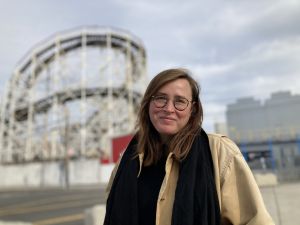
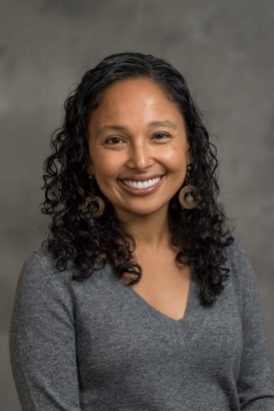
Jessica Straley is an Associate Professor in the Department of English at the University of Utah, where she has served since 2005 (Visiting Assistant Professor 2005-2007, Assistant Professor 2007-2016, Associate Professor 2016-present). She holds a PhD in English from Stanford University, an MA in Literature, Culture, and Modernity from Queen Mary and Westfield College, University of London, and a BA in English from Cornell University. Education: PhD, English - Stanford University MA, Literature, Culture, and Modernity - Queen Mary and Westfield College BA, English - Cornell University Her research focuses on intersections between Victorian literature, children's literature, animal studies, disability studies, and ecocriticism. She explores how literary imagination interacts with scientific and moral discourses, particularly in 19th-century contexts. Recent publications analyze feral child narratives, zoo representations, and evolutionary theory in children's texts. Her work bridges historical literary analysis with contemporary critical frameworks like disability rights and environmental ethics. Scientific Awards: Faculty Fellowship Award (University Research Council, 2017) Ramona W. Cannon Award for Teaching Excellence (2016) Tanner Humanities Center Fellowship (2016) University Research Committee Faculty Fellowship (2011) Newberry Library Short-Term Library Research Fellowship (2008) She teaches courses in 19th-Century British Literature, Intellectual Movements, and Honors Thesis/Project supervision. Her external grant (Animal Testing URC, 2017-2018) demonstrates institutional support for her interdisciplinary work.
Ramsey McGlazer is an Associate Professor specializing in twentieth-century European and Latin American literature, film, and critical theory. His research engages with poetry, politics-aesthetics intersections, critical carceral studies, and feminist/queer/psychoanalytic frameworks. He holds a Ph.D. in Comparative Literature and Critical Theory from UC Berkeley (2015) and previously taught at the University of St Andrews and Brown University’s Pembroke Center. McGlazer’s work interrogates modernist critiques of progress, radical psychiatry movements, and the interplay between aesthetic practices and institutional critique. His acclaimed monograph Old Schools: Modernism, Education, and the Critique of Progress (2020) won the American Association for Italian Studies First Book Prize. Current projects include The Clinic and its Double , exploring mid-century radical psychiatry and avant-garde art. He serves as Senior Editor of Critical Times and Coeditor of Italian Culture , and has translated key works like Rita Segato’s The War Against Women . McGlazer’s writing appears in venues such as Los Angeles Review of Books and n+1 . Research interests span Surrealist provocations, Brazilian artist Lygia Clark’s propositions, and transnational feminist solidarities. His scholarship bridges literary analysis with critical engagements in carceral studies, postcolonial theory, and decolonial thought.
Lindsay Turner is an Associate Professor in the Department of English at Case Western Reserve University. A poet, critic, and translator, her work bridges creative writing, translation theory, and interdisciplinary research. Her prior role as Assistant Professor at the University of Denver’s Department of English and Literary Arts underscores her commitment to literary education. AB in English, Harvard College Masters in cinema studies, Université Paris III Sorbonne-Nouvelle MFA in poetry, New York University PhD in English, University of Virginia Turner’s research spans creative writing , transnational poetry , and gender studies , with a focus on the intersections of literature and labor. Her recent work examines gendered domestic and reproductive labor through poetic forms. Key trends in her publications include experimental translation , queer theory , and postcolonial philosophy . National Translation Awards Best Translated Book Awards French American Foundation recognition She has received grants such as the WPR Creative Grant from Harvard’s Woodberry Poetry Room and multiple French Voices Grants . Her translations have been praised by The New Yorker and The New York Times for their intellectual rigor and stylistic innovation.
Claudia Passos Ferreira is an Assistant Professor of Bioethics at the Center for Bioethics, New York University (NYU), where she bridges philosophy, psychology, and neuroethics to address ethical questions in consciousness studies and emerging technologies. Education: MA and Ph.D. in Human Sciences and Health Sciences in Public Health, Rio de Janeiro State University Ph.D. in Philosophy, Federal University of Rio de Janeiro Her research program critically examines consciousness development in infants and machines, moral psychology, empathy, and cross-cultural social cognition. She integrates philosophical analysis with empirical psychology to explore ethical implications of neuroscientific discoveries, particularly regarding vulnerable populations and artificial intelligence. Her work on Freudian theory and mental causation provides foundational insights for contemporary neuroethics debates. Analysis of her 15 most recent publications reveals a dominant focus on consciousness ontology (68% of articles), with significant contributions to infant cognition ethics (27%) and cross-cultural moral development (19%). Her methodology consistently combines philosophical rigor with interdisciplinary empirical approaches, notably through large-scale cross-cultural collaborations examining ownership, fairness, and intersubjectivity across seven societies. Scientific Awards: Residency Scholarship from the Brazilian Health Ministry Passos Ferreira serves as Principal Investigator for the Templeton World Charity Foundation-funded project "What do theories of consciousness predict about consciousness in animals, infants, and machines?". Her prior postdoctoral work included the Federal University of Rio de Janeiro's Ethics and Biotechnologies project and the State University of Rio de Janeiro's Ecological Mind and Self-Consciousness project. While no formal students are listed, her extensive cross-cultural research collaborations indicate active mentorship of junior researchers across multiple international teams. Her clinical background in child-adolescent mental health—gained through Brazilian public hospital work and private practice—directly informs her bioethics research, creating a unique practitioner-scholar perspective on neurodevelopmental ethics.
Max Cavitch is an Associate Professor of English at the University of Pennsylvania's School of Arts & Sciences, specializing in American literature, psychoanalytic studies, and cinema. He joined Penn in 1999 after earning his B.A. from Yale and Ph.D. from Rutgers. His research spans 19th- and 20th-century literature, African American studies, and interdisciplinary fields like animal studies and gender theory. Cavitch has authored influential works such as *American Elegy* (2007) and co-edited volumes on Whitman and early American studies. He directs Penn's Psychoanalytic Studies program and edits the blog *Psyche on Campus*, honored with the 2022 American Psychoanalytic Association's Excellence in Journalism Award. His teaching includes courses on psychoanalysis, autobiography, and American poetry. Cavitch has held fellowships from the Fulbright Foundation, Newcombe Foundation, and others. His recent projects explore world autobiography, psychoanalysis in academia, and the history of 'ashes' as a conceptual and material symbol. Award-winning scholar and educator, Cavitch's work bridges literary criticism with clinical theory, media studies, and transnational frameworks. He advises doctoral students in American literature and affiliated programs, maintaining active collaborations with institutions like the McNeil Center for Early American Studies and the Psychoanalytic Center of Philadelphia.
Jocelyn Saidenberg is a Lecturer specializing in comparative literature, ancient poetry, and interdisciplinary studies. She holds a doctoral degree in Comparative Literature from the University of California, Berkeley. Her research integrates linguistics, social anthropology, and psychoanalysis to analyze didactic poetry’s transformative potential, as seen in her dissertation Echo Otherwise on Lucretius’s atomic poetics. Her creative work includes multiple poetry collections and essays exploring themes like displacement, existential inquiry, and interdisciplinary art. Key publications span academic interviews and poetry anthologies, with notable works such as kith & kin (2018), Dead Letter (2015), and Shipwreck (2013). Dr. Saidenberg has received prestigious awards including the Frances Jaffer Award and the American Academy of Poets Greenwald Prize (2001). Her creative and critical outputs reflect a sustained engagement with language’s capacity to interrogate human experience across historical and cultural contexts.
Dr. Ewan Jones is Associate Professor in Nineteenth-Century Literature at the University of Cambridge's Faculty of English and a Fellow at Downing College, where he serves as Director of Studies for Part II. He completed his BA, MPhil, and PhD at King's College, Cambridge, and was previously Thole Research Fellow at Trinity Hall. His educational background includes comprehensive training in English literature at Cambridge, with specialization in nineteenth-century literary studies. His academic journey reflects deep engagement with both traditional literary scholarship and innovative computational approaches to textual analysis. Dr. Jones's research concentrates on poetics, embodied cognition, and computational approaches to intellectual history. His work fundamentally questions how we understand 'close reading' not as interpretation but as a specific cognitive practice. He explores how aesthetic phenomenology can illuminate historical reading communities, develops pedagogical routines to de-habituate standard attention modes, and seeks constructive engagement between computational analysis and traditional reading practices. His scholarship bridges literary studies with cognitive science, demonstrating how rhythm, attention, and cognition intersect in literary form. His research trajectory shows increasing focus on attentional practices in reading, with recent work examining group attention practices and rhythm in Victorian poetry. The computational dimension of his work has grown steadily, moving from individual textual analysis to large-scale corpus studies through projects like the Concept Lab. Fulbright Scholar Leverhulme Research Fellowship (2021/22) on 'Close Reading as Attentional Practice' Residential fellow at the Swedish Collegium of Advanced Study Visiting fellow at Ludwig Maximilian Universität Visiting fellow at Pomona College Dr. Jones supervises doctoral work on diverse topics including 'radical conservatism' in Victorian poetry, queer theory and historical poetics, Wagner reception in Anglophone poetry, morphogenetic conceptions of form, and metre and exact measurement. His interdisciplinary collaborations include work with Phyllis Weliver on digitizing Tennyson manuscripts and with Peter de Bolla on computational concept analysis projects that have secured significant research funding. He has developed innovative teaching approaches that integrate cognitive science with literary analysis. He co-founded and participates in the Concept Lab, an interdisciplinary project developing open-source computational resources for historical dataset analysis. This initiative has fostered collaborations across humanities and computer science disciplines, creating tools that bridge traditional literary scholarship with digital methods. His work with the Princeton Prosody Archive demonstrates his commitment to building scholarly infrastructure for rhythm and meter studies.
Martin Hägglund is the Birgit Baldwin Professor of Comparative Literature and Humanities at Yale University, with a secondary appointment in the Department of Philosophy. He holds a Ph.D. in Comparative Literature from Cornell University (2011) and Philosophy from Leipzig University (expected 2026). His work bridges Post-Kantian philosophy, critical theory, and modernist literature, with notable books including This Life: Secular Faith and Spiritual Freedom (2019), which won the René Wellek Prize, and Dying for Time: Proust, Woolf, Nabokov (2012). Research focuses on temporality, mortality, and freedom, engaging thinkers like Heidegger, Marx, and Hegel. His writing explores secular ethics, political Marxism, and the interplay between philosophy and literature. Hägglund has held global appointments, including at Sorbonne University and invited professorships in Bonn and Cornell. Awards include the Guggenheim Fellowship (2018) and Myrdal Grand Prize (2024). Publications span over 60 articles and essays, addressing topics from Kierkegaard’s existentialism to Knausgaard’s secular confession. His current projects include The Mortality of the Soul and I Care, Therefore I Am . Teaching emphasizes Heideggerian thought, narrative temporality, and literary theory. Awards and fellowships include Harvard Society of Fellows membership (2009–2012), Berlin Prize (2024), and multiple honorary distinctions. His interdisciplinary approach unites philosophy, literature, and political theory, influencing debates on secularism, capitalism, and freedom’s material conditions.
Mats Alvesson is a Professor in Organizational Studies at the Department of Business Administration, School of Economics and Management, Lund University. He is actively engaged in research, teaching, and supervision at the PhD and master's levels, with a focus on critical perspectives in management and organization theory. University: Lund University School: School of Economics and Management Department: Department of Business Administration Academic Rank: Professor Email: mats.alvesson@fek.lu.se His research centers on leadership, organizational culture, identity, power, gender, knowledge-intensive firms, qualitative methods, and the philosophy of science. He is known for co-developing the concept of 'functional stupidity' and for his critical analyses of symbolic management and leadership. His recent work explores the paradoxes of meaning and emptiness in modern organizations. The 15 most recent articles and books reflect a sustained engagement with critical management studies, strategy as practice, organizational change, and reflexive methodologies. His publications span qualitative theory development, leadership critique, cultural analysis, and methodological innovation, often published with leading academic presses like Oxford University Press, Sage, and Cambridge University Press. While no specific scientific awards are listed in the provided material, his extensive publication record, high research output (231 items), and international collaborations indicate significant scholarly recognition. Mats Alvesson supervises PhD students, including Rachel Waldo, and has been involved in teaching qualitative methods, knowledge work, and organizational change. He has participated in external academic activities, such as visiting Hanken School of Economics and hosting scholars like Yiannis Gabriel. His work contributes to the UN Sustainable Development Goals in the domain of social sciences and business administration. He is currently leading a dissertation project titled 'The enchanted sense making: An exploration of employee-brand love relationships in the luxury-brand sector,' reflecting his ongoing interest in symbolic and affective dimensions of organizational life.
Dr. Caterina Albano is a Reader at Central Saint Martins, University of the Arts London. She holds a PhD in Renaissance Studies (London University, 1993–1998) and specializes in interdisciplinary research at the intersection of art, medical sciences, and cultural theory. Her work explores the cultural history of emotion, politics of memory, and contemporary art practices, with a focus on themes like fear, vulnerability, and the unconscious. Albano is a prominent curator, organizing exhibitions such as Psychoanalysis: The Unconscious in Everyday Life (Science Museum, London) and Crossing Over: Art, Science and Biotechnologies (Royal Institution). She also co-founded the Art and Science Research Group at CSM and chairs the College Research Degree Subcommittee. Her research integrates curatorial practice with academic inquiry, addressing topics such as neuroscience, biogenetics, and the ethics of air in contemporary art. Albano supervises doctoral students in art and curatorial practices and actively contributes to academic discourse through editorial roles and grant assessments. She speaks multiple languages, including Italian, French, German, and English, and her work bridges art, science, and humanities to explore complex cultural and societal issues.
The Courtauld Institute of Art, University of LondonUnited Kingdom
Sarah Wilson is Professor of Modern and Contemporary Art at The Courtauld Institute of Art, University of London. She has been a faculty member since 1982 and has held leadership roles including Head of the Modern and Contemporary Section (2005-2008) and Head of Diploma programmes (2014-2015). She is internationally recognized as the English-language expert on Post-War European art and has held visiting positions at Paris-IV Sorbonne and the University of Versailles-Saint Quentin. Wilson was educated at the University of Oxford (BA English Literature) and at the Courtauld Institute of Art (MA and PhD). She was awarded the title Chevalier des Arts et des Lettres in 1997 for services to French art and culture, and received the International Association of Art Critics' Award for Distinguished Contribution to Art Criticism in 2015. She has held visiting professorships at Paris-IV Sorbonne (2002-2004), École Nationale Supérieure des Beaux-Arts (2006-2007), and University of Versailles-Saint Quentin (2012-2013). Sarah Wilson's research spans post-war and Cold War European art, contemporary global art practices, and the intersections between conceptual art, political theory, and visual culture. Her work extends from European avant-gardes to contemporary art across the former Soviet Union and Asia. She is particularly known for her expertise in French Stalinism, neo-Marxism and the arts, and conceptual art practices beyond the 'first world.' Wilson has initiated important academic programs such as the 'Global Conceptualism' MA course with Boris Groys, which connects Anglo-American conceptual art with practices from Moscow and beyond. She has also expanded her research to include modern and contemporary Asian art since 2013. Her extensive publication record shows a consistent focus on European art history with increasing engagement with global perspectives, particularly Asian contemporary art since 2013. Wilson's scholarship bridges art historical analysis with philosophical inquiry, especially regarding French theory and its visual manifestations. Her major publications include 'Paris, Capital of the Arts, 1900-1968' (2002) and 'The Visual World of French Theory: Figurations' (2010), with a second volume 'The Visual World of French Theory II: Interventions' in preparation. Chevalier des Arts et des Lettres (1997) International Association of Art Critics' Award for Distinguished Contribution to Art Criticism (2015) Marie Curie Actions – RBUCE-UP, Chaire d'excellence, Université de Versailles-Saint Quentin (2012-2013) Professor Wilson has supervised 36 PhD students to completion and over 230 MA dissertations, creating what she describes as 'a unique English-language archive in the field of post-1945 European and global art history.' Her former students now hold prominent positions in major institutions worldwide including Tate, the British Museum, Design Museum, Scottish National Gallery of Modern Art, British Council, Centre Georges Pompidou, Kunsthalle Bremen, and universities across Europe and North America. She has received significant research funding including a Marie Curie Actions grant for her project 'Globalisation before globalisation: avant-gardes, academies, revolutions.' Wilson is actively involved with the Courtauld alumni's former East Wing Collection (now VS1, Vernon Square) and has contributed to the Research Forum's programmes. She has curated numerous exhibitions including the 'Global Conceptualism'-related projects and served on the curatorial team of the 1st Asian Biennale (China-Guangzhou) in 2014. Her commitment to women artists has led to early exhibitions of artists like Zofia Kulik and Alina Szapocznikow before their international prominence. She is involved with CCRAC (Cambridge-Courtauld Russian Art Centre), Calvert 22, and Pushkin House in London, reaching out to Russia and Eastern Europe.
Dr. Konstantinos Kalantzis is a Lecturer in Anthropology and Visual Culture at the Department of Anthropology, University College London (UCL). His academic journey includes a PhD in Anthropology from UCL (2010), an MSc in Visual Anthropology from the University of Oxford (2005), and a BA in History from the University of Crete (2004). He also serves as an Honorary Research Fellow at UCL. PhD in Anthropology, UCL (2010) MSc in Visual Anthropology, University of Oxford (2005) BA in History, University of Crete (2004) Kalantzis specializes in the intersection of visual culture, anthropology, and political imagination, with a focus on Greece and the Mediterranean. His research explores colonialism/postcolonialism, photography, ethnographic film, materiality, psychoanalysis, and rural societies. He has contributed to critical debates on crisis representation, Occidentalism, and the role of photography in documenting social imaginaries. His publications span ethnographic books, journal articles, and exhibitions, including Tradition in the Frame (2019) and the Citizens of Photography series (2021–2022). Recent work like "The Indigenous Sublime" (2023) and "Slippery Delight" (2022) examines visual ambiguity and pleasure in crisis contexts, while earlier articles analyze the debt crisis, tourism, and ethnographic film. He has received an ERC grant for the Citizens of Photography project, which investigates the camera's role in political imagination. His publications frequently address themes of displacement, crisis, and cultural representation through visual methods.
Dr Emma Bond is a Professor at the School of Modern Languages , University of St Andrews. Her work focuses on transnational literature and visual cultures , particularly the circulation of migration narratives, cultural artifacts, and colonial legacies. Key Affiliations : Academic Lead, Recollecting Empire Exhibition (2022); Co-editor, Transnational Italian Cultures series; Section Editor, Modern Languages Open . Research Themes : Migration, material culture, body studies, psychoanalytic theory, and decolonization in literature and museums. Scientific Awards : Philip Leverhulme Prize (2019), Associate Senior Fellow (2021), Sugaropolis Award (2015). Projects : Research Leave (2020-2022) for Curating Worlds ; Transnational Scotland Network (2019); Carnegie Trust-funded migration study (2017).
Miriam Chorley-Schulz is an Assistant Professor and Mokin Fellow of Holocaust Studies at the University of Oregon , affiliated with the Schnitzer School of Global Studies and Languages and its German & Scandinavian, Judaic Studies Program . Her scholarly focus encompasses Yiddish diasporic cultures, Jewish socialist traditions, historical and theoretical analyses of racism and fascism, Holocaust studies, and critical theory. Education: Post-Doc, University of Toronto M.A., M.Phil., Ph.D., Columbia University M.A., B.A., Freie Universität Berlin Miriam co-founded the EU-funded digital archive project We Refugees. Digital Archive on Refugeedom, Past and Present , highlighting her commitment to interdisciplinary research on displacement and diaspora.
Aida Levy-Hussen is an Associate Professor in the Department of English Language and Literature at the University of Michigan's LSA (Literature, Science, and the Arts) College. Her research focuses on African American literature, trauma studies, gender and sexuality studies, and 20th-century American literature. She holds an A.B. from Harvard University (2003) and a Ph.D. from Emory University (2009). Levy-Hussen's work interrogates the intersections of race, memory, and cultural expression. She examines how African American writers engage with historical trauma, particularly slavery's legacies, and explores themes like boredom, affect, and narrative form in contemporary works. Her recent scholarship includes analyses of Ishmael Reed’s postmodern historiography and Spike Lee’s satirical film Bamboozled . She currently teaches courses on African American literature, Toni Morrison, and narrative theory. Her office is located in 3232 Angell Hall, with regular appointment-based office hours. No scientific awards are explicitly mentioned, but her prolific publication record reflects sustained academic impact in literary studies. Levy-Hussen’s writing emphasizes interdisciplinary approaches, blending literary criticism with cultural theory, psychoanalysis, and historical analysis. Her book How to Read African American Literature (2016) provides a transformative framework for interpreting post-civil rights fiction.