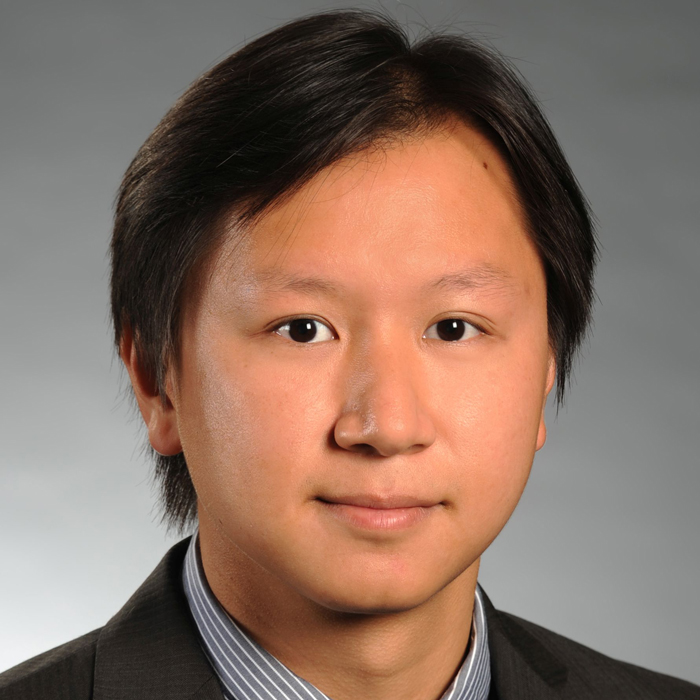
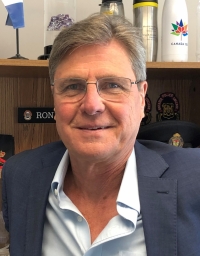
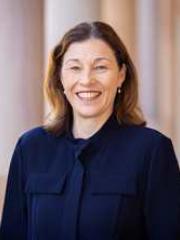
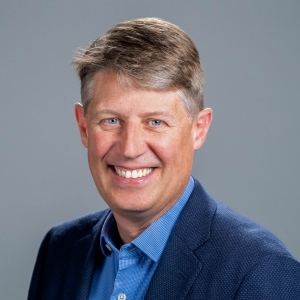
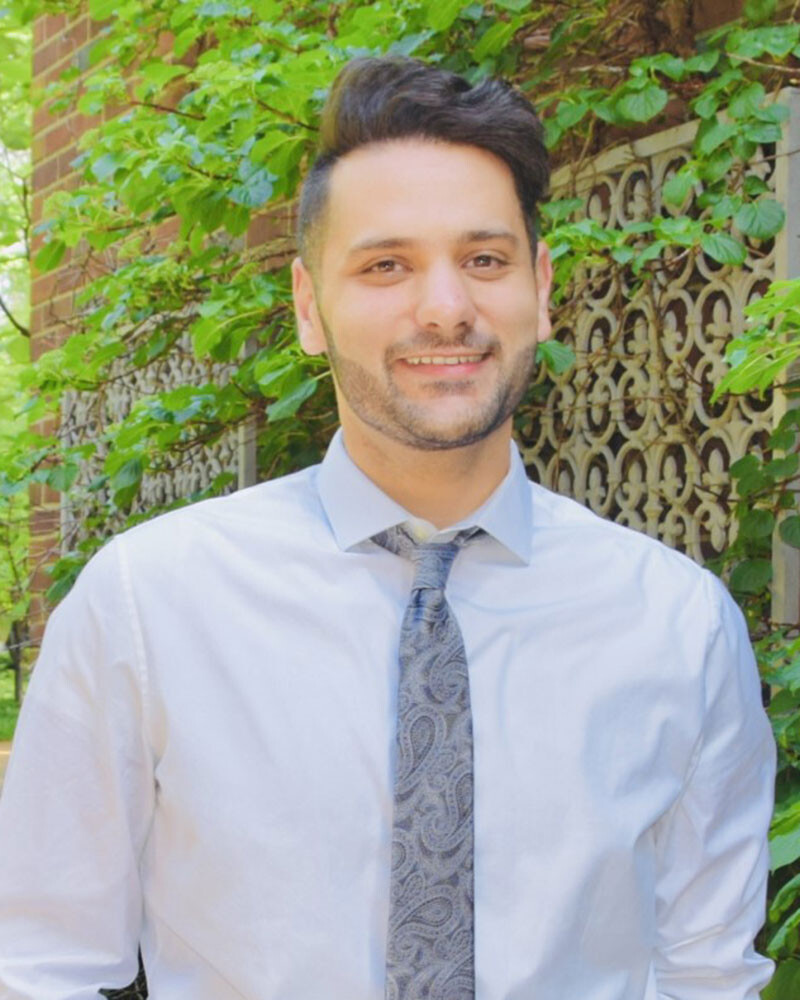
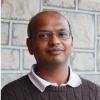
Nam Nguyen is a Professor in the Department of Computer and Information Sciences at Towson University. He holds a Ph.D. in Computer Science from the University of Florida (2013), an M.S. from Ohio University (2009), and a B.S. from Vietnam National University (2007). His research focuses on complex network analysis, mobile computing, social data analysis, and data mining with applications in cybersecurity and big data. Education: Ph.D., Computer Science, University of Florida (2013) M.S., Computer Science, Ohio University (2009) B.S., Computer Science, Vietnam National University (2007) Research Interests: His work explores network vulnerability assessment, dynamic community detection, and applications in cybersecurity, mobile systems, and social computing. Recent projects include analyzing misinformation containment in social networks and developing robust algorithms for adaptive network structures. Professional Contributions: Nguyen has authored over 30 publications in top-tier venues like IEEE INFOCOM and IEEE Transactions journals. He serves as Associate Editor for Computational Social Networks and has organized conferences like CSoNet 2015. His reviews span multiple IEEE journals and conferences, emphasizing computational methods in social systems and network science. Labs/Teams: Engages in interdisciplinary collaborations on network resilience, mobile computing, and big data analytics through Towson University’s research initiatives.
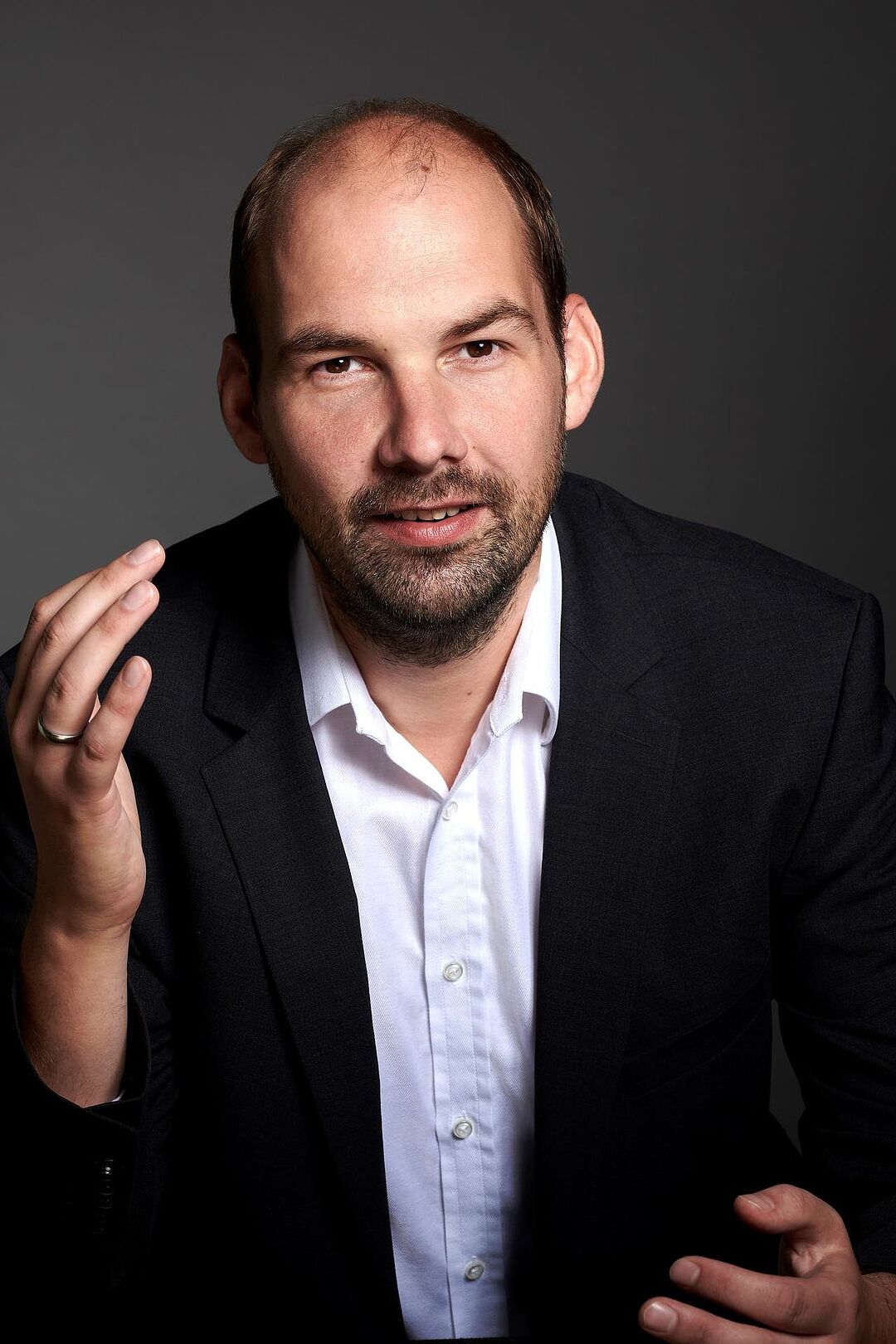
Dr. Marco Prandini is an Associate Professor at the University of Bologna's Department of Computer Science and Engineering, specializing in cybersecurity systems and networks. He coordinates Bologna's Cybersecurity National Laboratory node and directs the university's Master in Cybersecurity program. Leadership Roles: Adjunct professor at University of Southern Denmark ECSO (European Cyber Security Organization) representative Local organizer for CyberChallenge.IT training His research focuses on secure transaction architectures and critical infrastructure protection. Teaching includes System Administration Laboratory and industrial cybersecurity modules.
Alexander Harpke is a Researcher in the Department of Community Ecology at the Helmholtz Centre for Environmental Research (UFZ) in Halle (Saale), Germany, where he contributes to the 'Ecosystems of the Future' research program. His work focuses on butterfly ecology and conservation, with significant involvement in national and European biodiversity monitoring initiatives. Dr. Harpke's research spans multiple critical areas in conservation biology with emphasis on practical applications. His expertise in butterfly monitoring has been instrumental in developing and maintaining the 'Tagfalter-Monitoring Deutschland' (German Butterfly Monitoring) program, one of Europe's longest-running citizen science initiatives for biodiversity assessment. He has made substantial contributions to understanding species distribution patterns and how they respond to environmental changes, particularly climate change and land use modifications. His research integrates field data with sophisticated modeling approaches to assess biodiversity trends and develop evidence-based conservation strategies. Dr. Harpke has also been deeply involved in evaluating the effectiveness of protected areas and conservation policies through rigorous scientific analysis of long-term monitoring data, with his work informing European biodiversity indicators including the EU Grassland Butterfly Index. Analysis of Dr. Harpke's recent publications (2023-2025) reveals a continued focus on butterfly conservation with increasing integration of advanced data management principles. His work demonstrates a strong commitment to making biodiversity data FAIR (Findable, Accessible, Interoperable, and Reusable), as evidenced by contributions to projects like FAIR-EuMon. There's also a clear trend toward more sophisticated analyses of landscape-scale effects on biodiversity, examining how agricultural practices, grassland management, and landscape configuration influence butterfly communities. His research increasingly bridges traditional ecological knowledge with modern technological approaches to create more robust conservation frameworks that can inform policy decisions at multiple scales. Dr. Harpke has been instrumental in developing and maintaining the German Butterfly Monitoring scheme, which engages hundreds of citizen scientists in systematic data collection. This program has generated one of Europe's most comprehensive long-term datasets on insect population trends, providing critical evidence for conservation policy development. His work has contributed significantly to European biodiversity indicators, including the EU Grassland Butterfly Index, which informs conservation policy at the continental scale. His research on agricultural impacts on butterfly diversity provides evidence for sustainable land management approaches that balance production needs with biodiversity conservation.
Prof. Dr. Martin Sebastian Haase is a Lecturer at the Technical University of Berlin , affiliated with the Faculty VII - Economics and Management and the Institute of Economics and Law's Business and Technology Law Department . His work focuses on the intersection of data protection, information law, and innovation , with notable contributions to 3D printing, artificial intelligence, and digital transformation legal frameworks. Key research themes include: Data Privacy (GDPR, consent, cross-border data flows) Technology Law (surveillance, e-communication, medical informatics) Intellectual Property (patent eligibility, design protection) Digital Transformation (Industry 4.0, smart services, compliance) His 15 most recent publications span topics like: AI's legal implications in legal practice GDPR challenges for additive manufacturing Privacy in healthcare communication EU law harmonization attempts Awarded the DSRI Science Prize 2016 and Faculty Prize 2015 , Haase combines academic rigor with practical expertise, having worked as a lawyer (2013-2015) and contributed to eLearning design and medical data protection initiatives.
John Winn is a Professor of Business Law at Shenandoah University's School of Business, a role he has held since 2005. He previously served as an Associate Professor at the U.S. Military Academy (2000-2005) and held multiple legal roles within the U.S. Army Judge Advocate General's Corps from 1985 to 2005. His career includes positions such as Command Judge Advocate and Chief of Operational Law. Education: B.A., Guilford College J.D., Campbell University L.L.M., Judge Advocate General’s School, U.S. Army Research focuses on business law, healthcare compliance, national security, and professional ethics. Notable areas include pandemic response protocols, medicinal marijuana regulatory challenges, and employment screening best practices. His work frequently addresses intersections between legal frameworks and organizational management. Publications reflect expertise in cybersecurity, maritime law, and counter-terrorism strategies. Collaborations with co-authors like Kevin Govern and Clifford Thies emphasize interdisciplinary approaches to legal challenges. Advising and Grants: While no formal grants are listed, his extensive military and academic roles imply involvement in institutional research initiatives. No lab affiliations are explicitly stated.
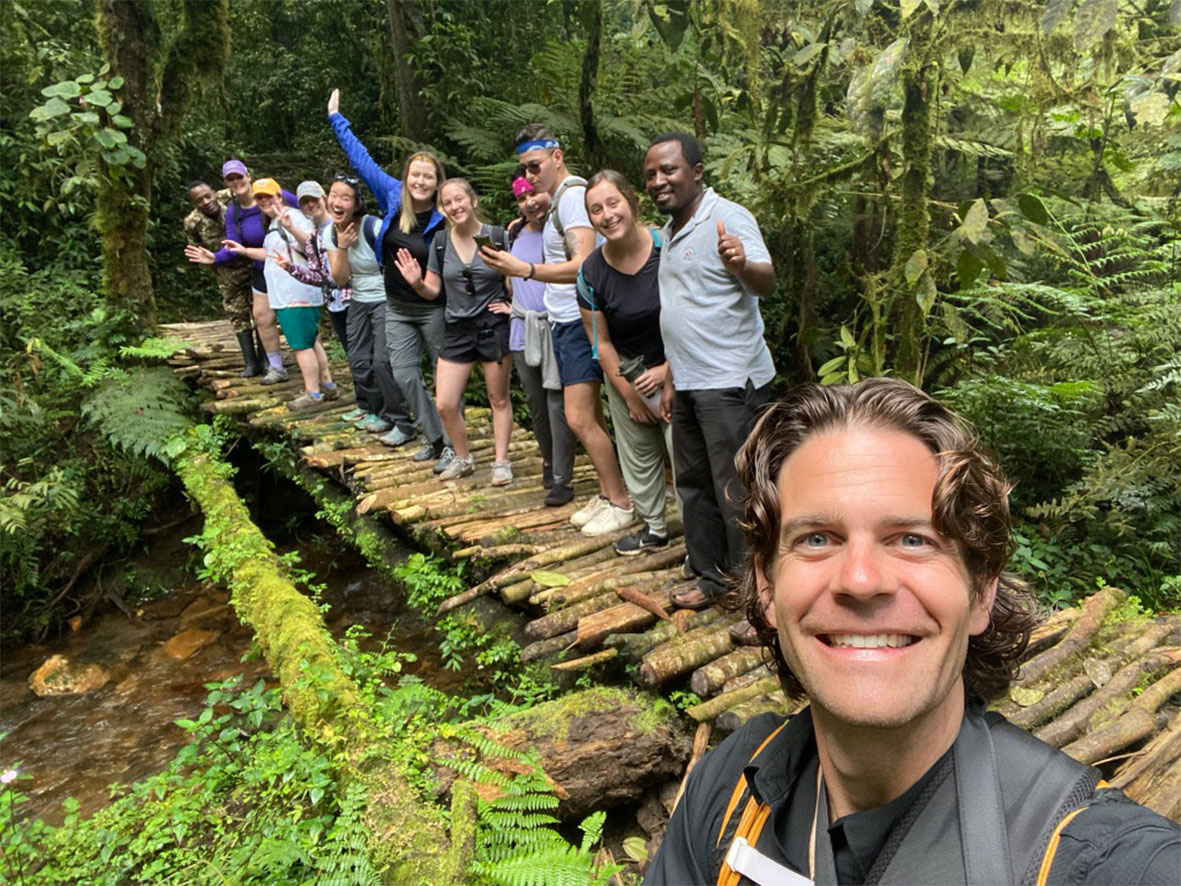
Cyrus P. Olsen III serves as Associate Professor of Theology/Religious Studies at The University of Scranton and holds Affiliate Faculty status in Health Humanities. His academic appointments include Research Fellow for AI&Faith and Affiliate Research Fellow through a Templeton World Charity Foundation Grant at the Human Network Initiative (Harvard Medical School's Dhand Lab). Previously, he held the Lo Schiavo Chair in Catholic Social Thought at the University of San Francisco during Academic Year 2022-2023. Dr. Olsen's research spans three primary domains: the intersection of artificial intelligence and theological ethics, health humanities with focus on African contexts, and public health theology. His work examines AI alignment through virtue ethics frameworks, analyzes Ugandan community health systems through religious lenses, and develops theological anthropologies for ecological sustainability. Current projects include Templeton-funded brain health research in Uganda and collaborative NEH-supported Health Humanities curriculum development. His scholarship demonstrates consistent interdisciplinary integration across theology, medical ethics, and technology studies. Recent publications reveal growing emphasis on AI ethics (40% of recent output), African health systems (35%), and critical care philosophy (25%), with increasing collaboration between neurology researchers and theologians. Lo Schiavo Chair in Catholic Social Thought (University of San Francisco, 2022-2023) Templeton World Charity Foundation Grant #20714 (2022-2025) for Ugandan brain health research National Endowment for the Humanities Grant for Health Humanities Concentration development Multiple invited presentations at UN Science Summit, African Studies Association, and Harvard-affiliated forums Dr. Olsen directs collaborative health humanities initiatives involving Makerere University, Bwindi Community Hospital, and Brigham and Women's Hospital. His Templeton-funded work with the Human Network Initiative examines neurological impacts of environmental stressors in Ugandan communities, while his Health Humanities Concentration development (with Holy Cross and Geisinger Commonwealth) creates new interdisciplinary pathways. Current advising focuses on graduate students researching AI ethics and global health theology, with emerging projects on Batwa indigenous medical knowledge preservation. His laboratory affiliations include the Dhand Lab at Harvard Medical School (neurology focus) and the Bannakroli Health Clinics research network in Uganda. The Human Network Initiative team integrates neurologists, theologians, and Ugandan community health workers to study brain health determinants in resource-limited settings, while his US-based work connects with the Lane Center for Catholic Social Thought for policy applications.
Dr. Ron Hoffman is an Associate Professor at Nipissing University's School of Criminal Justice within the Faculty of Education and Professional Studies. He holds a PhD from the University of Waterloo, and prior academic credentials from Carleton University. As a full-time faculty member and graduate program participant, his research focuses on police response to vulnerable populations, mental health screening protocols, and evidence-based training methodologies. His work bridges criminal justice and mental health systems through innovative tools like the interRAI Brief Mental Health Screener and the Developmental Disabilities Justice Toolkit. Dr. Hoffman's career spans roles as a police officer, probation officer, and educator, giving him unique insights into frontline criminal justice operations. His research has addressed critical topics including youth mental health crises, costs of police screening protocols, and dementia-related missing persons strategies. He has contributed to major textbooks such as Criminology: The Core and Introduction to Criminology , reflecting his commitment to advancing educational resources in criminal justice. Notable collaborations include developing transition protocols between police and healthcare systems, optimizing emergency department workflows, and creating assessment tools used nationally. His publications demonstrate a consistent focus on improving outcomes for marginalized groups through interdisciplinary approaches. While no awards are listed, his extensive contributions to policy frameworks and training materials reflect significant professional impact.
Mark O’Malley is the Leverhulme Professor of Power Systems at Imperial College London, affiliated with the Department of Electrical and Electronic Engineering within the Faculty of Engineering. He co-founded the Global Power System Transformation Consortium and serves as a Global Director of the Electric Power Innovation for a Carbon-Free Society Centre. His roles include Chief Scientist positions at the Energy Systems Integration Group (2020–2022) and the US National Renewable Energy Laboratory (2018–2020). He has held visiting professorships, including at McGill University (2017). His research focuses on Energy Systems Integration, grid integration of renewable energy, and addressing interdisciplinary challenges in transitioning energy systems. Collaborations span economics, social sciences, mathematics, and geology. He is a Foreign Member of the US National Academy of Engineering, a Royal Irish Academy member, and holds IEEE Fellow status. Key research interests include renewable energy integration, grid stability with inverter-based resources, and resilience against climate risks. His work emphasizes multi-stakeholder analysis and policy frameworks for sustainable energy systems. Notable contributions include studies on system services from renewable resources, demand response mechanisms, and flexibility in hybrid energy systems. Awards include two Fulbright Fellowships and recognition from the Chinese Society for Electrical Engineering. His publications span over two decades, addressing topics like wind integration, energy market design, and cyber-physical grid resilience.
Dr. Kim Weinert is a Lecturer in the TC Beirne School of Law at The University of Queensland. Their research focuses on charity law, social justice, and public policy intersections, with particular emphasis on colonial studies, indigenous rights, and non-profit governance. Dr. Weinert holds a PhD in Law from Griffith University and has been cited by Queensland Supreme Court and Western Australian Parliament for their impactful scholarship. Research interests include: Critical analysis of charity law frameworks Decolonial legal methodologies Non-profit organizational governance Gender equity in sports law Public policy reform in charitable sectors Recent publications explore topics like First Nations representation in cinema, comparative non-profit structures across jurisdictions, and legal challenges in elite sports. Their work bridges doctrinal law with sociocultural critiques, emphasizing practical legal reform. Award recognition includes: Cited by Queensland Supreme Court (2024) Western Australian Parliament references (2023) Eminent scholar endorsements Active in policy engagement through submissions to Australian Productivity Commission and New Zealand Government. Available for media commentary and doctoral supervision in law and related interdisciplinary fields.
Thomas W. Kirchstetter serves as an Adjunct Professor of Civil and Environmental Engineering at the University of California, Berkeley, and as the Scientific Division Director for the Energy Analysis and Environmental Impacts Division at Lawrence Berkeley National Laboratory. He also acts as the Chief Scientific Advisor to the Cyclotron Road Program, which focuses on turning scientific concepts into marketable products. With over 25 years of experience at Lawrence Berkeley National Laboratory, Kirchstetter maintains a dual role bridging academic research and national laboratory leadership. Dr. Kirchstetter's research spans several critical environmental areas, with primary focus on pollutant emissions and controls , climate and environmental impacts of transportation , pollutant measurement technologies and community monitoring , and atmospheric aerosol chemical & optical properties . His work has pioneered the development of small, low-cost black carbon sensors and community air quality networks, particularly through partnerships with the West Oakland Environmental Indicators Project and the Environmental Defense Fund. Kirchstetter's research includes quantifying emissions from diesel trucks, developing new air pollutant sensing technologies, and analyzing emissions from dry anaerobic digestion of municipal solid waste-to-energy facilities. His recent publications (2020-2025) reveal a strong focus on urban air quality monitoring, waste-to-energy systems, transportation emissions, and sensor technology development. These works demonstrate consistent application of high-resolution monitoring techniques to address environmental justice concerns, particularly in communities disproportionately affected by air pollution. His research group has made significant contributions to understanding black carbon distribution in urban environments and developing cost-effective monitoring solutions. American Chemical Society Editor's Choice award (2019) Top Environmental Technology Paper in Environmental Science & Technology award (2017) DOE Alexander Hollaender Distinguished Postdoctoral Fellowship (1998) 2016 R&D 100 Award: Cool Roof Time Machine Outstanding Mentor Award by the Department of Energy's Office of Science (2006) As an educator and mentor, Kirchstetter has advised numerous students including postdoctoral fellow Chelsea Preble, graduate student Julien Caubel, and undergraduate researchers Annie Rosen, Kelly Archer, Shannon Chang, and Carter Keeling. His research has been supported by various grants from the Environmental Protection Agency, Department of Energy, and California Energy Commission, focusing on air quality monitoring, emissions characterization, and sustainable waste management solutions. Kirchstetter's work bridges fundamental scientific research with practical applications that inform environmental policy and improve community health outcomes.
Mark Stacey is the Henry and Joyce Miedema Professor of Environmental Engineering in the Department of Civil and Environmental Engineering at the University of California, Berkeley's College of Engineering. Formerly serving as Department Chair, he leads research in environmental fluid mechanics with emphasis on coastal and estuarine systems and climate adaptation. His educational background includes: Ph.D. in Civil and Environmental Engineering, Stanford University (1996) M.S. in Civil and Environmental Engineering, Stanford University (1993) B.A.S. in Physics and Political Science, Stanford University (1991) Stacey's research centers on climate change impacts on coastal communities, integrating environmental fluid mechanics , sea-level rise physics , and infrastructure resilience . His work examines how precipitation changes, storms, and sea-level rise affect coastal ecosystems and human settlements through numerical modeling , field observations , and theoretical analyses . Key focus areas include shoreline adaptation, marsh survival as protective features, and developing community-informed adaptation pathways that address regional interdependencies. His approach bridges fundamental hydrodynamics with practical climate resilience solutions. Analysis of his recent publications reveals intensifying focus on infrastructure vulnerability under climate change, with increasing attention to community exposure networks, wastewater system risks, and multiscale sea-level interactions. His work spans from fine-scale sediment transport to regional infrastructure interdependencies, consistently emphasizing practical adaptation frameworks. His scientific recognition includes: National Science Foundation CAREER award Fofonoff Award from the American Meteorological Society As an educator and advisor, Stacey mentors graduate students in environmental engineering, with research supported by competitive grants including the NSF CAREER award. He actively engages with initiatives like the Berkeley Water Center and WeRISE Summit Conference, fostering interdisciplinary collaboration on water challenges. His work integrates community perspectives to develop viable adaptation strategies that account for complex physical and social interdependencies in coastal regions.
Dr. Ahmad F. Taha is an Associate Professor at Vanderbilt University with dual appointments in the Department of Civil and Environmental Engineering and the Department of Electrical and Computer Engineering . Holding a Ph.D. and B.E. in Electrical and Computer Engineering from Purdue University and the American University of Beirut, respectively, Taha joined Vanderbilt in August 2021 after serving as an Assistant Professor at the University of Texas at San Antonio and as a visiting researcher at Argonne National Laboratory, University of Toronto, and MIT. Education: Ph.D. (2015) and B.E. (2011) in Electrical & Computer Engineering Previous Affiliation: University of Texas at San Antonio (Assistant Professor) Visiting Roles: Argonne National Laboratory, University of Toronto, MIT Taha’s research focuses on dynamic systems sciences , control theory, optimization, and cybersecurity, applied to energy, water, and transportation infrastructure. He explores how technological advances in dynamic systems and data sciences can shape future infrastructure networks, emphasizing real-time control and physics-informed decision-making. His work addresses critical challenges such as contaminant regulation in water systems, traffic monitoring on highways, and cybersecurity of power grids. Recent publications highlight advances in sensor placement, controllability analysis, and attack detection for nonlinear systems, with applications in power networks and water distribution systems. Taha’s research leverages Lyapunov theory, submodular optimization, and empirical Gramians to solve complex control problems. Scientific Awards NSF CAREER Award (2021) Taha actively mentors graduate students, including Ph.D. advisees Salma and Marcus, whose recent papers in Automatica and Journal of Water Resources Planning and Management demonstrate his group’s productivity. He also teaches courses on control theory, optimization, and cyber-physical systems, and leads initiatives in the Control Systems Society (CSS), including founding the CSS State-Space Forum and serving as Associate Editor for IEEE Transactions journals.
Anil Vullikanti is a Professor in the Department of Computer Science and a core faculty member of the Biocomplexity Institute at the University of Virginia. He holds affiliations within the School of Engineering and Applied Science. His research bridges theoretical computer science and applied domains like epidemiology, critical infrastructure, and public health. Previously, he held roles at Virginia Tech (2005–2018) and Los Alamos National Lab (2003–2005), and completed postdoctoral work at the Max Planck Institute for Computer Science. Education: B. Tech from Indian Institute of Technology, Kanpur (1993); PhD from Indian Institute of Science, Bangalore (1999). Research Interests: Randomized Algorithms, Combinatorial Optimization, Distributed Computing, Network Science, Machine Learning, and AI applied to epidemiological modeling, infrastructure protection, and healthcare systems. His work emphasizes scalable algorithms for real-world systems like pandemic forecasting, evacuation planning, and infection control. Key Awards: College of Engineering Faculty Fellow Award (Virginia Tech, 2017) Excellence in Research Award (Biocomplexity Institute, 2017) DOE Early Career Award (2010) NSF CAREER Award (2009) Grants & Projects: Focus on large-scale computational epidemiology, disaster management systems, and AI-driven public health interventions. His lab develops frameworks for epidemic scenario modeling, agent-based simulations, and privacy-preserving analytics. Labs & Teams: Leads research groups at the Biocomplexity Institute, collaborating on interdisciplinary projects with engineers, epidemiologists, and policymakers to address societal challenges like pandemic response and infrastructure resilience.
Mark Duckworth is a Senior Research Fellow and Political Adviser at Deakin University's Alfred Deakin Institute for Citizenship and Globalisation (ADI), affiliated with the Faculty of Health and Office of the Executive Dean Health. He holds a Master of Arts in History and a Bachelor of Laws (LLB) from the University of Melbourne. His career spans over 30 years in Victorian and NSW public sectors, focusing on policy reform in intergovernmental relations, multiculturalism, security, and disaster resilience. Research interests include counter-terrorism, community resilience, critical infrastructure protection, and preventing violent extremism. He played a pivotal role in establishing Australia's national counter-terrorism framework post-9/11, leading to his Public Service Medal (2007). He co-authored the National Strategy for Disaster Resilience (2011) and chaired multiple government resilience committees. Recent grants include 'Effective Community-Lead Disaster Planning and Response' ($221k, 2024–2026) and 'CRIS 2.0: The Future of the Centre for Resilient and Inclusive Societies' ($1M, 2024–2025). His work bridges academic research and policy practice, emphasizing inclusive disaster management and social cohesion.
Ivan Vidal is an Associate Professor at Universidad Carlos III de Madrid, affiliated with the Department of Telematics Engineering at Escuela Politécnica Superior. He holds a Telecommunication Engineering degree from the University of Vigo (2001) and a Ph.D. in Telematics Engineering from Universidad Carlos III de Madrid (2008). His career includes roles as Teaching Assistant (2002–2008) and Visiting Professor (2008–2022) before his current position. Research focuses on Network Functions Virtualization (NFV), 5G networks, unmanned aerial systems, network security, Information-Centric Networking (ICN), and multimedia networking. He leads projects like H2020 FISHY (cyber resilient supply chains) and H2020 LABYRINTH (drone traffic management), and co-leads the national project TRUE5G (self-managed 5G networks). His work involves collaborations with institutions like Telefónica I+D and the Instituto de Telecomunicações (Portugal). Teaching includes courses on Audiovisual Services across three undergraduate programs. He contributes to the NETCOM research group, managing projects like the L2S-M open-source Kubernetes networking solution. Ongoing initiatives emphasize multi-site NFV testbeds and 5G vertical services integration.