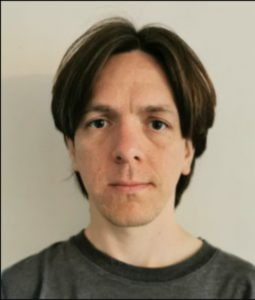
Prof. Dr. Sakibe Nalan BÜYÜKKANTARCIOĞLU is a Professor at Çankaya University, Faculty of Arts and Sciences, Department of Translation and Interpreting Studies (English). She previously served as Professor (2007–2019), Associate Professor (2000–2007), and Assistant Professor (1997–2000) at Hacettepe University, Department of English Linguistics. PhD in English Linguistics (Hacettepe University, 1991) MA in English Language Teaching (Middle East Technical University, 1985) BA in English Teaching (Istanbul University, 1978) Her research spans Linguistics, Cognitive Linguistics, Discourse Analysis, Psycholinguistics, Sociolinguistics, Translation Studies , with a focus on figurative language, interjections, political discourse, and endangered languages. She received the European Language Award (2011) and has supervised numerous PhD and MA theses, including work on Turkish idioms, gender representation, and language awareness. A prolific editor and conference participant, she has contributed to interdisciplinary projects and publications on Turkish sociolinguistics.
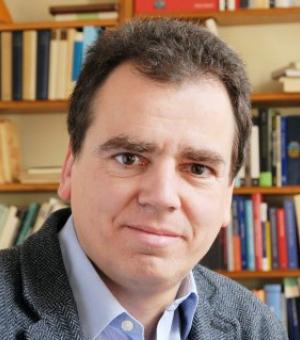
Pieter d'Hoine serves as Professor and Vice Dean of Education at KU Leuven's Higher Institute for Philosophy. He is affiliated with the Wulf Mansion Centre for Ancient, Medieval and Renaissance Philosophy and LECTIO – KU Leuven Institute for the Study of Textual Transmission. Additional institutional roles include membership on the Board of the Institute for Living Languages, HIW Faculty Council, and Philosophy Program Oversight Committees. His research centers on Ancient Philosophy with emphasis on Neoplatonism, particularly Proclean metaphysics, logical structures in Platonic/Aristotelian commentaries, and mechanisms of philosophical canon formation. He investigates knowledge transmission from Greek-Roman antiquity through medieval and Renaissance scholarship, integrating digital humanities methodologies to analyze textual evolution and conceptual continuity across historical periods. Recent publications (2024) exhibit concentrated focus on Proclus' metaphysical frameworks, including predication theory, modes of being, and theological elements within Platonic exegesis. His work bridges textual criticism with systematic philosophy, examining how ancient commentators shaped enduring philosophical paradigms through citation practices and logical innovation in works like the Elements of Theology . No major scientific awards are documented in the provided materials. He actively supervises doctoral research, including G.J. Ruz Troncoso's analysis of Proclus' argumentative structures and S-H. Yang's study of Aristotelian metaphysics. Current funding supports eight major projects: "Een nieuw model voor de editie van antieke filosofische fragmenten" (2025-2031) as Co-promotor "De filosofische canon en de citaties van Plato en Aristoteles" (2024-2028) as Promotor "Rechtvaardigheid voor dieren" (Justice for Animals, 2024-2028) as Promotor "De mechanica van Canonvorming" (Canon Formation Mechanics, 2024-2028) as Promotor His research ecosystem operates through the Wulf Mansion Centre and LECTIO institute, which coordinate international collaborations on premodern textual transmission, utilizing digital tools to map philosophical concept evolution across millennia.
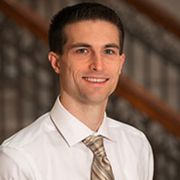
Andrea Selleri is an Assistant Professor in the Department of English Literature at Bilkent University, where he joined in September 2020. He holds a BA and MA from the University of Trieste and a PhD from the University of Warwick. His research focuses on the intersections between British literature, criticism, and philosophy in the long nineteenth century, with particular attention to authorship, aesthetics, and interdisciplinary approaches. Dr. Selleri has published extensively on Victorian literature and its philosophical contexts, including a monograph exploring the evolution of authorship concepts and co-editing Literary Studies and the Philosophy of Literature (Palgrave, 2016). His recent work includes a three-volume critical edition, Literature and Philosophy in Nineteenth-Century British Culture (Routledge, 2024), which compiles annotated primary sources. At Bilkent, he teaches courses such as ELIT 246 (Drama and Performance) , ELIT 366 (Victorian Literature) , and ELIT 458 (Literature and Philosophy in Nineteenth-Century British Culture) . He coordinates the Philosophy and Literature Colloquia series and serves as a review editor for the Journal of Victorian Culture . His research interests span literary history, modern literatures in English, French, Spanish, and Italian, and the philosophy of literature. Current projects include studies on free will in Victorian fiction and the legacy of Romantic authorship in formalist aesthetics.
Johnny Golding is a Professor at the Royal College of Art (RCA), School of Arts & Humanities. His career spans roles such as Director of the Centre for Fine Art Research at Birmingham City University, Professor of Philosophy in the Visual Arts & Communication Technologies (2000–2012), and honorary Professorship in Philosophy and Imaging at Dundee School of Art (2009). Born in New York, he holds a PhD from the Universities of Toronto and Cambridge. Education : - PhD in Philosophy from the Universities of Toronto and Cambridge. - Earlier studies in Toronto and New York. Research Interests : Golding’s work explores post-Newtonian analytics, new materialisms, and the erotics of sense as 'radical matter.' His interdisciplinary approach bridges art, philosophy, and 'wild sciences' like AI, robotics, and quantum theory. Key themes include data proliferation's societal impact, emergent systems, and the interplay between art and technology. Recent Articles & Projects : Focus on Data Loam (2020), exploring future knowledge systems through art and science collaborations. Recent works address radical empathy, distributed intelligence, and the ethics of AI. His 2018 opera Entanglement: The Opera and installations like Of The Thick and the Raw exemplify his practice-led philosophy. Grants & Leadership : - Led the Data Loam project (FWF-PEEK funded), involving over 20 artists and scholars. - PI for AiDesign Labs on generative AI at RCA. Labs & Collaborations : - Radical Matter Lab (2017–2018), a pedagogical experiment at RCA. - Collaborations with institutions like the University of Applied Arts Vienna and the British Library.
Professor T. Ryan Byerly is a faculty member in the Department of Philosophy at the University of Sheffield's School of History, Philosophy and Digital Humanities. He joined in Spring 2015 after completing his PhD at Baylor University and teaching at Regent University in the USA. His research focuses on Philosophy of Religion, Epistemology, and Virtue Theory, with particular attention to topics like divine foreknowledge, moral character, and religious epistemology. He currently supervises four PhD students in areas such as theistic moral arguments, moral psychology, and intellectual humility's role in social relationships. Byerly's educational background includes a PhD from Baylor University and prior academic roles at Regent University. His interdisciplinary work bridges theology, ethics, and social philosophy, with contributions to journals like Mental Health, Religion and Culture and Philosophical Studies . He serves as Series Editor for the British Society for the Philosophy of Religion book series and is affiliated with the Centre for Engaged Philosophy at the University of Sheffield. His research emphasizes the intersection of virtue ethics and religious practice, such as exploring how intellectual virtues like humility and transparency impact communal life. Byerly also investigates the philosophical implications of religious beliefs on moral behavior and well-being, including studies on how accepting divine love affects psychological health. In addition to his academic contributions, Byerly advocates for pedagogical approaches that cultivate intellectual virtues in critical thinking education. His work often addresses contemporary debates in the philosophy of religion, including free will theodicies and the ontological status of divine attributes. He actively collaborates with scholars across disciplines to advance virtue epistemology and collective moral character research.
James Hankins is Professor of History in the Department of History at Harvard University's Faculty of Arts and Sciences, located at Robinson Hall 206, 35 Quincy Street, Cambridge, MA 02138. A leading scholar in Renaissance intellectual history, his work focuses on the intersection of political thought, philosophy, and classical traditions within 15th-16th century Europe. His research centers on Renaissance political thought, the history of philosophy, and classical tradition reception, with emphasis on Italian humanism and virtue politics. As Founder and General Editor of the I Tatti Renaissance Library (Harvard University Press) and Associate Editor of the Catalogus Translationum et Commentariorum, he has shaped critical editions and scholarly resources. He is currently completing The Virtue Politics of the Italian Humanists and recently launched The Pratrizi Project on Francesco Patrizi's political theory. Publications reveal sustained engagement with Renaissance philosophy through critical editions, monographs, and editorial projects spanning five decades. Key themes include Platonic theology, civic humanism, and classical philosophy recovery, demonstrating methodological rigor in intellectual history and textual scholarship across European Renaissance contexts. He actively participates in the Harvard Colloquium for Intellectual History. Information regarding students, grants, scientific awards, and laboratory affiliations was not provided in source materials.
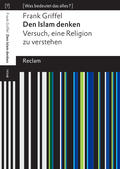
Frank Griffel is the Louis M. Rabinowitz Professor of Religious Studies at Yale University, where he has been teaching since 2000. His academic work is deeply rooted in Islamic intellectual history, focusing on theology, philosophy, and the interplay between reason and revelation. He holds a PhD from the Freie Universität Berlin and previously worked as a research fellow at the Orient Institute in Beirut. University: Yale University Department: Department of Religious Studies Academic Rank: Professor His research expertise lies in classical and post-classical Islamic philosophy, particularly the works of al-Ghazālī, Fakhr al-Dīn al-Rāzī, Avicenna, and Averroes. He has made significant contributions to understanding how philosophical discourse evolved in the Islamic world after the so-called classical period, challenging the notion of decline and highlighting the emergence of new genres such as ḥikma . His scholarship bridges theology and philosophy, examining how Muslim thinkers reconciled Aristotelian and Neoplatonic ideas with Islamic doctrine. Griffel’s most recent major work, The Formation of Post-Classical Philosophy in Islam (2021), redefines the field by demonstrating the continuity and innovation in 12th-century Islamic thought. His earlier book, Al-Ghazali’s Philosophical Theology (2009), is widely regarded as a seminal study. He has also published extensively on topics such as apostasy, virtue ethics, and the reception of philosophical texts, with articles spanning from 2011 to 2025. His work often appears in major academic handbooks and journals, and he has edited and translated key texts into German, Arabic, and Turkish. Islamic Philosophy Islamic Theology (Kalām) Post-Classical Islamic Thought Al-Ghazālī Studies Fakhr al-Dīn al-Rāzī Avicenna and Averroes Griffel has contributed to collaborative volumes such as Shari’a: Islamic Law in the Contemporary Context and Islam and Rationality , and his research engages with both historical and contemporary debates in Islamic thought. He has no listed scientific awards or students in the provided texts, but his influence is evident through citations and scholarly engagement. He maintains an active research profile, with recent publications addressing ambiguity, contradiction, and the popularization of philosophy in medieval Islam. He has held affiliations with the University of Oxford as a Faculty Member in the Faculty of Theology and Religion, indicating a strong international academic presence. His work continues to shape the understanding of Islamic intellectual history, particularly in the West.
Nicholas Wiltsher is an Associate Professor at the Department of Philosophy; Aesthetics at Uppsala University since 2019. His research focuses on aesthetics, philosophy of mind, and race/gender studies, exploring topics like imagination's role in art, gender norms in aesthetics, and electronic dance music's philosophical dimensions. He holds a PhD from the University of Miami and has held academic roles at institutions including Antwerp, Auburn, Porto Alegre, and Leeds. Education: PhD in Philosophy from the University of Miami. Previous affiliations include universities in Antwerp, Auburn, Porto Alegre, and Leeds. Research interests include: the interplay between art and imagination, aesthetic norms and gender, expression theory, philosophy of race and gender, and electronic dance music aesthetics. He critiques traditional disciplinary boundaries in aesthetics and advocates for interdisciplinary approaches. His recent publications (2023–2025) emphasize imagination's epistemic role, the aesthetic constitution of gender identities, and critiques of additive imagination theories. Earlier work (2016–2019) addressed electronic dance music's cultural ontology and Collingwood's expression theory. Awards: No scientific awards explicitly listed. Grants and advising: No grants or student advisees explicitly mentioned in sources. Labs/Teams: No specific research groups or labs mentioned, though his work engages interdisciplinary collaborations in aesthetics and cultural philosophy.
Kyle Bellucci Johanson serves as a Visiting Critic in Cornell University's College of Architecture, Art, and Planning, Department of Art. Holding an MFA from California Institute of the Arts and a BA in Art and Reconciliation Studies from Bethel University, he merges artistic practice with critical theory through performance architecture and collaborative media. Whitney Independent Study Program (2022–23) Founding fellow at land's edge free school (Los Angeles) Teaching experience at SAIC, UIC, CUNY, and Cooper Union His research investigates: Power structures through spatial interventions Critical theory applications in art practice Post-capitalist imaginaries Hauntology and historical materialism Transdisciplinary approaches to social critique Project trends reveal: Reinterpretation of Soviet design principles Investigation of worker identity in post-industrial contexts Temporal and spatial dislocation in artistic practice Monument critique through performative methods Quantum theory-inspired architectural concepts Reimagining of common spaces as political sites Scientific awards include: Creative Research Grant (2025) Whitney ISP participation (2022–23) Automata Studio Residency (2022) Artists Run Chicago Grant (2021) BOLT Residency (2020–21) Through projects like KLUB WRKR —a nomadic workers' club reimagined for the gig economy—and table (2018–2022), a Chicago-based experimental space for artistic practice, he interrogates institutional frameworks while fostering community through discursive meals and collaborative exhibitions.
Roland Greene is the Mark Pigott KBE Professor and Anthony P. Meier Family Professor of the Humanities at Stanford University, holding dual appointments in the Department of English and the Department of Comparative Literature. He serves as Director of the Stanford Humanities Center and co-chair of the Renaissances and Poetics Workshop research groups. Educated at Brown University (A.B., 1979) and Princeton University (Ph.D., 1985), his academic career includes prior roles at Harvard and Oregon universities. His research focuses on Renaissance literatures of England, Latin Europe, and the transatlantic world, with expertise in poetry and poetics from the Renaissance to the present. Major works include Five Words: Critical Semantics in the Age of Shakespeare and Cervantes (2013) and editing the Princeton Encyclopedia of Poetry and Poetics (2012). Recent lectures address topics like Juan Caramuel’s Metametrica , Baroque aesthetics, and digital humanities challenges. Greene has advised over 50 Ph.D. students, many of whom hold academic positions globally. Awards include American Academy of Arts and Sciences membership and leadership roles like MLA President (2015–2016). His work engages with interdisciplinary themes such as colonial baroque, digital humanities, and global literary history.
Angelika Malinar, Professor of Indology at the University of Zurich and member of its Gender Studies Department, specializes in Hinduism, Indian philosophy, and Sanskrit literature. Her work spans historical and modern contexts, with a focus on epic texts and Indo-European exchanges. She co-edits the Brill's Encyclopedia of Hinduism and contributes to the University Research Priority Program "Asia and Europe." PhD and habilitation from University of Tübingen Researcher at Tübingen, Berlin, and London Her research integrates Sanskrit epics, philosophical traditions, and modern Hindu identity. Recent publications analyze Mahābhārata theology, ritual practices, and cross-cultural interpretations. She explores how texts like the Bhagavadgītā and Nārāyaṇīya bridge ritualism, aesthetics, and individual authority. Key article trends examine cosmological monotheism , epic decision-making , and colonial reinterpretations . Her editorial roles include interdisciplinary volumes on time, purity, and Indo-European cultural dialogues. As a Senior Lecturer at SOAS and Professor in Zurich, she has led projects on monastic institutions, rasas, and canonical formation. Her work contextualizes Indian philosophy within global frameworks, notably nineteenth-century German Indology.
Jocelyn Saidenberg is a Lecturer specializing in comparative literature, ancient poetry, and interdisciplinary studies. She holds a doctoral degree in Comparative Literature from the University of California, Berkeley. Her research integrates linguistics, social anthropology, and psychoanalysis to analyze didactic poetry’s transformative potential, as seen in her dissertation Echo Otherwise on Lucretius’s atomic poetics. Her creative work includes multiple poetry collections and essays exploring themes like displacement, existential inquiry, and interdisciplinary art. Key publications span academic interviews and poetry anthologies, with notable works such as kith & kin (2018), Dead Letter (2015), and Shipwreck (2013). Dr. Saidenberg has received prestigious awards including the Frances Jaffer Award and the American Academy of Poets Greenwald Prize (2001). Her creative and critical outputs reflect a sustained engagement with language’s capacity to interrogate human experience across historical and cultural contexts.
Kimberly Brewer is a Lecturer in the Department of Philosophy at Princeton University. She holds a PhD from Cornell University's Sage School of Philosophy, awarded in 2018. Her research focuses on Kantian philosophy, particularly the concept of the intuitive intellect, theological determinism, and the intersection of metaphysics with philosophical theology. She has contributed to debates on divine omniscience, modal metaphysics, and the philosophical implications of Kant's critical system. Education: PhD in Philosophy, Cornell University (2018). Research Interests: Brewer’s work centers on Kant’s theories of intellectual intuition, divine intellect, and freedom. She explores how Kant’s ideas engage with Spinozistic and Leibnizian thought, addressing challenges to theological determinism and the metaphysical foundations of human agency. Her scholarship bridges historical and contemporary philosophical inquiries into modality, epistemology, and ethics. Labs/Teams: No specific lab or team affiliation is listed. Her research appears to be primarily individual or collaborative through academic publications.
Dr Juliet Bennett is a Research Fellow at the Sydney Centre for Healthy Societies (SCHS) and Charles Perkins Centre, University of Sydney. Her work bridges process philosophy with systemic interventions for social and ecological wellbeing. She holds a PhD in Peace and Conflict Studies, focusing on paradigm shifts from static to process thinking. Previously, she managed collaborative research at Sydney Policy Lab and directed the Sydney Peace Foundation. Education: PhD (Peace and Conflict Studies), MPhil/MA (Peace and Conflict Studies). Teaching includes units on peace studies, narratology, and structural violence at the University of Sydney and Lenoir Rhyne University. Research interests center on mitigating social/ecological injustice, structural violence, and climate change through critical sociology, contextual economics, and participatory methods. Current projects examine food systems and ultra-processed foods via critical social theory. Awards: 2020 Excellence in Teaching for 'Key Issues in Peace and Conflict Studies'. Memberships include Sydney Policy Lab, New Economic Networks Australia, and the International Peace Research Association. Publications span process philosophy applications, climate policy, and participatory research methods. Her work advocates for systemic transformations toward ecological civilization through interdisciplinary collaboration.
Professor Johannes Zachhuber holds a professorship in Historical and Systematic Theology at the University of Oxford's Faculty of Theology and Religion. His research focuses on modern and postmodern theology, the Continental tradition of philosophy of religion (Kant, Schleiermacher, Hegel), theology of late antiquity, 19th-century theology, religion and politics, and theories of secularization. He examines theological institutions' role in shaping modern discourse while addressing contemporary debates on secularity. His scholarly work bridges historical theology with systematic inquiry, analyzing figures like Schleiermacher, Gregory of Nyssa, and Baur. Recent publications include studies on early Christian cosmology, Schleiermacher’s theology, and Baur’s historicist approach. He critiques secularization narratives and explores patristic thought’s philosophical dimensions. Publications span monographs, edited volumes, and reviews, reflecting his interdisciplinary engagement with theology’s historical and philosophical foundations. He contributes to debates on theology’s role in modern academia and society, emphasizing the interplay between historical context and theological reflection.