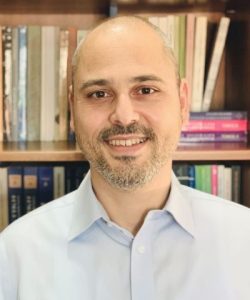
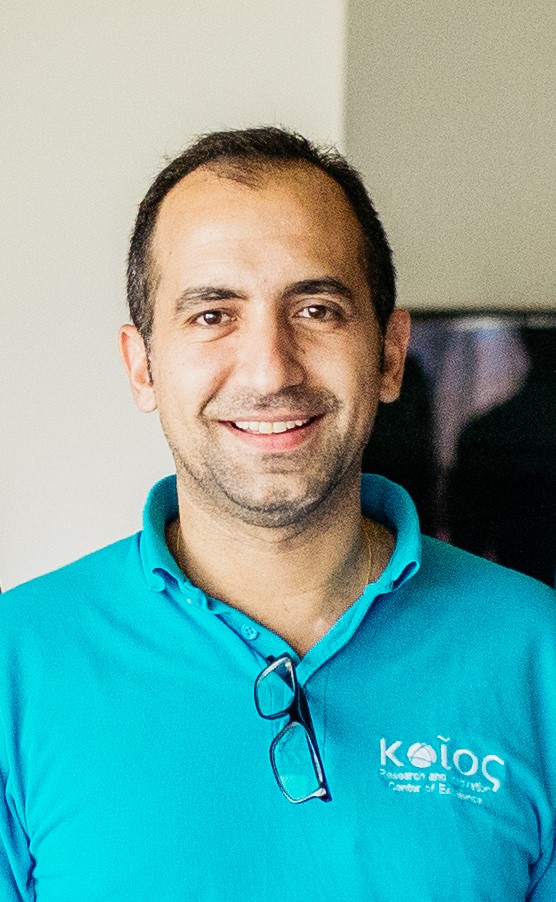
Stelios Timotheou is an Associate Professor at the Department of Electrical and Computer Engineering and faculty member at the KIOS Research and Innovation Center of Excellence, University of Cyprus. He holds a Dipl-Ing from National Technical University of Athens, and MSc/PhD from Imperial College London. His research focuses on developing real-time distributed methodologies using mathematical optimization, machine learning, and computational intelligence to enhance efficiency in critical infrastructure systems. Research interests center on data-driven decision making for urban mobility management, traffic control systems, and energy optimization. Key areas include: Intelligent UAV-based sensing for traffic monitoring Cooperative control algorithms for multi-agent systems Optimization of renewable energy integration Robust infrastructure protection strategies Recent publications demonstrate strong focus on traffic state estimation (76%), energy system optimization (16%), and UAV applications (8%). Awarded the Cyprus Research Award (2017) and ERC Consolidator Grant for URANUS project. Secured multiple research grants focusing on real-time control systems.
Marios Polycarpou is a Professor of Electrical and Computer Engineering and Director of the KIOS Research and Innovation Center of Excellence at the University of Cyprus. He holds honorary positions at Imperial College London and is a member of Academia Europaea. His expertise spans intelligent systems, adaptive control, machine learning, and critical infrastructure. Education: B.A. Computer Science (Rice University, 1987) B.Sc. Electrical Engineering (Rice University, 1987) M.S. Electrical Engineering (University of Southern California, 1989) Ph.D. Electrical Engineering (University of Southern California, 1992) Research Focus: Polycarpou’s work emphasizes fault diagnosis in cyber-physical systems, water distribution networks, and adaptive control. He pioneers digital twin technologies for infrastructure resilience and develops algorithms for real-time anomaly detection and system optimization. Article Trends: His recent publications address adaptive control strategies, cybersecurity in networked systems, and AI-driven solutions for water management. Key themes include distributed control, event-triggered mechanisms, and transformer-based anomaly localization. Awards: 2023 IEEE Frank Rosenblatt Technical Field Award 2016 IEEE Neural Networks Pioneer Award Fellow of IEEE and IFAC Grants & Leadership: He secured prestigious grants including ERC Advanced and Synergy Grants. He led KIOS CoE’s Horizon 2020 projects and served as IEEE Computational Intelligence Society President (2012–2013). Labs & Teams: Directs the KIOS CoE, a hub for AI in critical infrastructure. Collaborates on projects like ERC Water-Futures, focusing on long-term water system transitions and contamination mitigation.
Panayiotis Kolios is an Assistant Professor at the Department of Computer Science, University of Cyprus (UCY). Previously, he served as a Research Assistant Professor at the KIOS Research and Innovation Centre of Excellence (2013–2024) and a Visiting Lecturer at UCY. He holds a BEng and PhD in Telecommunications Engineering from King’s College London (2008 and 2012, respectively). His research focuses on networked intelligent systems, emergency management using AI and UAV technologies, and cyber-physical systems. Education: BEng in Telecommunications Engineering, King’s College London, 2008 PhD in Telecommunications Engineering, King’s College London, 2012 Research Interests: His work centers on autonomous systems, intelligent transportation, and emergency management. Key areas include AI-driven disaster response, UAV-based surveillance, and algorithmic optimization for critical infrastructure. He develops solutions for real-time situational awareness and decision-support in emergencies. Recent work trends show a focus on multi-UAV coordination, disaster management platforms (like AIDERS), and AI applications in emergency response. His team’s 2023 win in the Cooperative Aerial Robots Inspection Challenge highlights advancements in UAV inspection algorithms. Scientific Awards: First Prize in Cooperative Aerial Robots Inspection Challenge (CDC 2023) Grants and Advising: He has secured over €40 million in EU and industrial grants, leading projects like PREDICATE, SWIFTERS, and AIDERS. His team advises on emergency response strategies and has trained first responders through EU-funded programs such as the Exchange of Experts training. Labs and Teams: He leads the Security and Emergency Response Group at KIOS CoE and established the Cyprus Civil Defence Aerial Observation Unit. His team collaborates with institutions like the Cyprus Police and Fire Service to operationalize UAV technologies in disaster scenarios.
Ali Akdoğan is an Assistant Professor in the Department of Educational Sciences at Final University. His academic career spans over two decades with doctoral studies completed in 2014, following a Master's degree in 1995 and Bachelor's degree in 1992. Educational Background: Doctoral Degree: 2014 Master's Degree: 1995 Bachelor's Degree: 1992 Research Interests: Dr. Akdoğan's work explores educational psychology, teacher development, and the impact of global educational frameworks like the International Baccalaureate program. His research analyzes school culture, emotional intelligence in educational settings, and pandemic-induced distance learning challenges. Publication Trends: Recent work (2021-2022) focuses on psychological impacts of the pandemic on students, effectiveness of international educational programs, and teacher emotional intelligence. Earlier research (2002, 1995) examines social capital and personnel selection in educational institutions.
Christos Nicolaides is an Assistant Professor at the Department of Business and Public Administration within the School of Economics and Management at the University of Cyprus (UCY), holding a secondary appointment as a Digital Fellow at MIT's Initiative on the Digital Economy. Previously, he spent three years as a James McDonnell Foundation-funded Postdoctoral Fellow at MIT Sloan School of Management. His educational background includes a PhD in Engineering from Massachusetts Institute of Technology (2014), SM from MIT (2011), MSc in Applied Mathematics from Imperial College London (2009), and BSc in Physics from University of Thessaloniki (2008). Nicolaides' research applies mathematical, statistical, and computational tools to large-scale empirical questions in social influence mediated by digital technologies. His work spans Data Science , Machine Learning , Social Networks , and Computational Social Science , with significant contributions to understanding human mobility patterns, disease transmission dynamics, and social contagion effects. His research has established novel methodologies for analyzing complex network structures in mobility data and social interactions. Analysis of his 15 most recent publications reveals a consistent focus on applying network science to real-world problems, particularly in pandemic response (12 publications), human mobility analytics (9 publications), and social contagion dynamics (7 publications). His work demonstrates increasing interdisciplinary integration, combining computer science, epidemiology, and organizational behavior since 2020. Marie S. Curie Fellow Two Highly Cited Papers by Web of Science (2017, 2020) Best Paper Award by Risk Analysis Society (2019) Professor of The Week by Poets & Quants (2020) As principal institutional investigator, Nicolaides has secured over €1 million in research funding from the European Commission, industry partners, Cyprus Innovation and Research Foundation, and Cyprus Ministry of Health. His current teaching includes Social Networks and Entrepreneurship, Introduction to Operations Management, and Quantitative Methods in Management. Media coverage of his work spans major outlets including The New York Times, CNN, Nature, and Science, with significant impact on public health policy discussions during the COVID-19 pandemic.
Maria K. Michael is an Associate Professor at the Electrical and Computer Engineering Department (ECE), University of Cyprus, and a cofounding faculty member of the KIOS Center of Excellence. She leads the Center’s Education and Training activities and coordinates the MSc program in Intelligent Critical Infrastructure Systems, a collaboration between UCY, KIOS CoE, and Imperial College London. Her expertise spans dependability, security, and reliability in cyber-physical systems, embedded systems, and AI/ML optimization for edge intelligence. Education: BSc in Computer Science MSc in Computer Science Ph.D. in Engineering Sciences (Computer Engineering), Southern Illinois University, USA Research Focus: Hardware-enabled security, cyber-security in intelligent embedded systems, reliability of edge-based accelerators, and applications in smart grids, UAVs, robotics, and autonomous vehicles. Her work emphasizes safety-critical systems and resource-constrained environments. Grants & Team: Leads a 15-member research team (postdocs, PhD/MSc/BSc students). Funded by EU FP7, H2020, Horizon Europe, NSF, Intel Corp., and the Cyprus Research and Innovation Foundation. No scientific awards listed explicitly in provided text. Labs & Initiatives: Director of Education/Training at KIOS CoE; core contributor to the MSc program in Intelligent Critical Infrastructure Systems.
Dr. Fotios Nikolaou serves as Assistant Professor of Civil Law at the Department of Law, School of Law, University of Nicosia, Cyprus, where he has taught since February 2015. His instruction encompasses General Principles of Civil Law, Contract Law, Property Law, and Consumer Law within the Cypriot legal framework. His academic credentials include: Bachelor of Law from National and Kapodistrian University of Athens LL.M. in Law from Freie Universität Berlin PhD in Civil Law from National and Kapodistrian University of Athens (2014), with doctoral thesis "Acquisition of ownership of a movable by a good faith transferee" published by Nomiki Vivliothiki Nikolaou's research centers on Civil Law with specialized focus on Property Law, Contract Law, and Consumer Protection Law. His work critically examines Cypriot and Greek civil jurisprudence through analysis of court decisions, particularly addressing contract validity, consumer rights, and interpretation of civil codes. Recent scholarship demonstrates consistent engagement with Greek judicial bodies including Areios Pagos and Athens/Piraeus Courts of Appeal. His 2024-2025 publications reveal thematic concentration on contract nullity mechanisms, threat-induced contractual defects, and moral principles in civil law application. These works bridge theoretical civil law concepts with practical judicial interpretation across Cypriot and Greek legal systems. Scientific awards: No awards documented in source materials. Professional activities include ongoing membership in the Association of Greek Civil Law Scientists (since 2018), Athens Bar Association membership (since 2007), and prior editorial work for P.N. Sakkoulas Law Publications (2014). No student advising or grant activities were specified in available documentation. Research infrastructure: No dedicated laboratories or research teams referenced in provided materials.
George Pallis is a Professor in the Department of Informatics at the University of Cyprus, affiliated with the School of Science. He holds a BSc and PhD from Aristotle University of Thessaloniki. His research focuses on Distributed and Network Computing, Big Data Analytics, and Cloud/Edge/Fog Computing. He leads the Master's Program in Data Science and has secured over €5.5M in research funding from the EU, Cyprus, and industry partners like Google. Education: BSc (2001), PhD (2006) from Aristotle University of Thessaloniki. Research Interests include Internet technologies, large-scale network environments, and cloud computing. He has published over 100 articles in top-tier journals and conferences (e.g., IEEE TKDE, ACM TOIT, WWW, ICDCS) and contributed to international standards (DIN, CEN). His work spans topics like fake news detection, edge computing frameworks, and energy-efficient micro-data centers. Key Achievements: Editor-in-Chief Emeritus of IEEE Internet Computing, recipient of multiple best paper awards, and contributor to projects like RAINBOW (H2020), UNICORN, and ICARUS. His research explores cutting-edge areas such as LLM manipulation, polarization detection, and carbon-aware computing. He has supervised five PhD students and served as General Chair for IEEE/ACM SEC 2024 and IEEE IC2E 2024. His work bridges academia and industry through collaborations on AI, IoT, and sustainable computing.
Dr. Andria Procopiou is a Lecturer in Artificial Intelligence and Cybersecurity at the University of Central Lancashire Cyprus, serving as Course Leader for the MSc Computing program and Deputy Course Leader for the MSc Cybersecurity. She holds a PhD in Computer Science (City, University of London, 2022), an MSc in Human-Computer Interaction (University College London, 2014), and a BSc in Computer Science (University of Surrey, 2013). Her research spans AI applications in sports analytics, cybersecurity for smart cities/IoT, hate speech detection, and metaverse safety. She has led modules in User Experience Design, Penetration Testing, and Cybersecurity. Research interests include AI-driven solutions for sports injury prediction, real-time DDoS detection in IoT networks, and ethical challenges in the metaverse. Her work emphasizes explainable AI (XAI) for transparency in decision-making systems. She has published extensively in journals like Wireless Communications and Mobile Computing and conferences such as IEEE CYBER and the International Conference on Human-Computer Interaction. Education: PhD Computer Science (City University London), MSc HCI (UCL), BSc Computer Science (University of Surrey) Key Roles: Course Leader (MSc Computing), Deputy Course Leader (MSc Cybersecurity) Administrative Contributions: Module leadership in AI, Cybersecurity, and Digital Forensics Her recent publications address critical issues like privacy concerns in smart campuses, gender-based hate speech in virtual spaces, and injury patterns in professional football using data analytics. She collaborates with industry on IoT security solutions and metaverse governance frameworks.
Harald Gjermundrod is a Professor of Computer Science in the Department of Computer Science at the University of Nicosia's School of Sciences and Engineering, where he has served since September 2008. Previously, he was a Post-Doctorate Associate (2006-2008) at the High-Performance Computing Systems Laboratory, University of Cyprus. Education: PhD in Computer Science, Washington State University (2006) MS in Computer Science, Washington State University (2001) BS in Computer Science, Washington State University (1999) Dipl.-Ing, Oslo Metropolitan University (1998) His research spans Distributed Computing Systems , Computer Security , Blockchain Technology , and Data Protection , with emphasis on practical implementations like GridStat middleware for power grids and privacyTracker for GDPR compliance. As co-director of the Informatics Security Laboratory, he leads research on active defense mechanisms and data protection frameworks. His 87+ publications since 2001 show evolving focus from grid computing (2006-2010) to blockchain applications (2016-present), with recent work emphasizing privacy engineering, secure e-voting, and AI-driven security analytics. Key trends include transitioning from infrastructure-focused research (GridStat, ICGrid) to policy-compliant systems (privacyTracker, HoneyCY). Scientific Recognition: Senior Member of ACM Eclipse Committer Status (Alumni) Chair of ACM Cyprus Chapter (2015-2018) He has secured funding from EU programs, US National Science Foundation, and National Institute of Technology, developing software products including GridStat (critical infrastructure middleware), ICGrid (medical data sharing), and ReProTool (Bologna Process compliance). His supervision has produced student-developed prototypes like NoteLocker and HoneyCY. Current projects include privacyTracker (GDPR compliance) and SmartTeV (blockchain voting). As co-director of the Informatics Security Laboratory, he oversees research on active defense systems, honeypot frameworks (HoneyCY), and verifiable data traceability, with applications in e-government and healthcare security.
Prof. Costas N. Papanicolas is an Institute Professor at The Cyprus Institute (CyI) and serves as President Emeritus and CEO of the Cyprus Research and Educational Foundation (CREF). He holds adjunct professorships at the University of Athens, Greece, and the University of Illinois at Urbana-Champaign, USA. With a B.Sc. and Ph.D. from MIT, he has held roles including Director of the Institute of Accelerating Systems and Applications at the National Technical University of Athens and chaired key committees shaping Cyprus’ educational and research policies. Education: B.Sc. and Ph.D. in Physics, Massachusetts Institute of Technology (MIT) Research Interests: Nuclear & Particle Physics, Medical Imaging, Solar Energy, Climate Change Policy, and Educational Policy. His work bridges theoretical physics, medical diagnostics (e.g., SPECT/PET imaging), and renewable energy systems (e.g., CSP technologies like PROTEAS). He has pioneered thermal tomography via neural networks and contributed to solar thermal storage and hybrid energy systems. Awards: Medal of Excellence (Cyprus), Commendatore dell’Ordine della Stella d’Italia (Italy), Fellow of the American Physical Society. Prof. Papanicolas advises the Cypriot government on climate change and led the establishment of the University of Cyprus’s Physical Sciences departments. He directs CyI’s research centers and promotes international collaborations in energy sustainability and cultural heritage preservation.
Andreas Grondoudis is an Assistant Professor in the Department of Computer Science and Engineering at the School of Sciences, European University Cyprus. Previously, he held academic roles at Cyprus College (2003–2007) and worked as a Senior Software Developer at Quad Computer Services (2001–2003). He earned a PhD in Computer Science from Sheffield University (2000), an MSc (Eng) from the same institution (1994), and a BSc in Computer Science from the University of East Anglia (1993). His research focuses on protocol specification using formal methods (e.g., X-machines), quality assurance in medical imaging systems, and disaster surveillance technologies. Notable projects include the EU-funded 'Interfaces' and 'JOBIT' initiatives, where he contributed to online learning platforms and software development methodologies. Grondoudis' publications span medical imaging automation, wildfire surveillance systems, and protocol verification. His work demonstrates expertise in integrating formal methods with practical applications in healthcare and environmental safety. Awards include the 2001 'Third Party Developer' recognition from Pegasus Software and a Cambridge English certification (1985). He has advised on interdisciplinary projects such as the YPE NEPRO0204_02 research package and contributed to EU-funded educational technology initiatives. His academic consulting roles include editorial and technical support for online platforms.
Violetta Raffay is an Assistant Professor of Medical Education at the School of Medicine, European University Cyprus , and serves as Coordinator for Physiology I . She holds an MD (1997) and PhD (2017) from the University of Kragujevac, specializing in Emergency Medicine. Her career includes roles as National Coordinator for major European resuscitation studies (EuReCa TWO, EuReCa ONE) and leadership positions in the European Resuscitation Council (ERC) , including Chair of the BLS International Course Committee and current President of the Serbian Resuscitation Council . Her research focuses on cardiopulmonary resuscitation (CPR) outcomes, OHCA epidemiology , and resuscitation guideline development . Key areas include geographic disparities in emergency response, ethical decision-making in end-of-life care, and training methodologies for healthcare providers. She has led over 20 research projects and contributed to ERC’s international consensus documents on resuscitation science. Notable achievements include the 2010 ERC Fellowship and pioneering work in integrating generative AI into medical education . She actively promotes public health initiatives like the Restart a Heart Day and has trained thousands of clinicians across Europe through ERC courses.
Dr. Panayiota I. Pyla is a Professor of Architecture at the University of Cyprus, holding a primary appointment in the Department of Architecture within the Faculty of Engineering. Her academic career spans prestigious institutions including the University of Illinois at Urbana-Champaign and Harvard University, establishing her as a leading scholar in architectural history and theory. Her educational trajectory reflects exceptional achievement: Ph.D. in History-Theory of Architecture and Urbanism, Massachusetts Institute of Technology (2002) Master of Science in Architectural Studies, Massachusetts Institute of Technology (1994) - Outstanding Graduating Student Award recipient Professional Degree in Architecture, Rensselaer Polytechnic Institute (1991) - American Institute of Architects Gold Medal recipient Professor Pyla's research program critically interrogates the intersections of architectural production, political economy, and environmental discourse. Her work excavates alternative narratives within modern architectural history, particularly focusing on Mediterranean contexts where colonial legacies, postwar development, and contemporary crises converge. She challenges conventional sustainability discourses through historical analysis while examining how cultural memory becomes embedded in contested urban landscapes, especially in postcolonial Cyprus where architecture serves as both witness and participant in political conflict. Her publications reveal a sustained engagement with modernization narratives across the Eastern Mediterranean, tracing how architectural knowledge production intersects with geopolitical power structures. Key thematic threads include the material politics of vernacular architecture, the spatial dimensions of economic crisis, and the historical preconditions of contemporary environmental thought - all approached through rigorous archival research combined with critical theoretical frameworks. Her scholarly recognition includes: Best Article Award, Journal of Architectural Education (2007) for "Hassan Fathy Revisited" American Institute of Architects Gold Medal for architectural excellence Outstanding Graduating Student Award from MIT Professor Pyla directs the MESARCH research laboratory, which serves as an interdisciplinary hub for investigating architecture's relationship to environmental and societal transformations in Mediterranean contexts. The lab fosters collaborative research connecting historical inquiry with contemporary design challenges, particularly regarding cultural heritage in conflict zones and sustainable development paradigms.
Andreas Grontoudis serves as Assistant Professor in the Department of Computer Science and Engineering at the School of Sciences, European University of Cyprus since October 2007, following prior appointments as Assistant Professor at Cyprus College (2003-2007) and senior software development manager at Quad Computer Services (2001-2003). His academic credentials include: PhD in Computer Science, University of Sheffield (2000) - Thesis: X-machine based specification and design for testing of the CATV protocol MSc (Eng) in Computer Science, University of Sheffield (1994) - Thesis: An initial approach to X-machine specification of Distributed systems BSc in Computer Science, University of East Anglia (1993) - Thesis: A computer automated measurement system Dr. Grontoudis specializes in bridging theoretical computer science with practical applications, particularly in protocol specification using X-machines, quality assurance systems for medical imaging, and disaster monitoring technologies. His research evolved from foundational work in formal methods for protocol testing to applied solutions in diagnostic imaging toolboxes and integrated surveillance systems for forest fires/disasters using aerial and space-based platforms. Recent work focuses on educational software for IT vocational training. His publication history demonstrates consistent interdisciplinary contributions spanning biomedical engineering, environmental monitoring, and software engineering, with emphasis on translating theoretical models into real-world safety-critical applications. Professional recognition includes: Third Party Developer Pegasus Opera II award (Pegasus Software, 2001) First Certificate in English (University of Cambridge, 1985) Research leadership spans multiple EU-funded initiatives: Interfaces project (2016-2020): Website and learning platform management for EU interdisciplinary music program JOBIT project (2015-2017): Researcher for Erasmus+ vocational training software development YPE NEPRO0204_02 (2004-2006): Research assistant and software programmer for Cyprus Research Foundation He maintains active scholarly engagement through his Google Scholar profile and continues developing applied solutions at the intersection of computer science and critical domain applications.