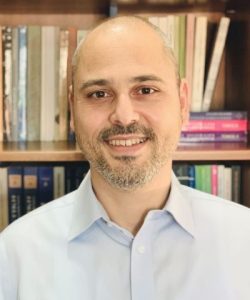
Dr. Mohammad Zulkernine is a Full Professor and Canada Research Chair in Cyber-Physical System Security at Queen’s University’s School of Computing (Faculty of Arts and Science). He leads the Queen’s Reliable Software Technology (QRST) research group and directs the Queen’s Centre for Security & Privacy. His research focuses on secure software systems for cyber-physical systems, including autonomous vehicles, IoT, and cloud computing. Dr. Zulkernine holds a cross-appointment in Electrical and Computer Engineering and is a licensed Professional Engineer in Ontario. Education: BSc (Bangladesh BUET), MEng (Japan), PhD (University of Waterloo). He joined Queen’s in 2003 and has held sabbaticals at University of Trento, Italy and Irdeto Canada. He has published over 250 papers, led 35+ research projects, and supervised 120+ students. Awards include Canada Research Chairs (Tier I and II), Queen’s Excellence in Graduate Supervision Award, and Distinguished Supervision Award from the School of Computing. Research Interests: Cyber-Physical System Security, Software Reliability, IoT Security, Vehicle Networks, Secure Software Engineering, and Cybersecurity Risk Assessment. Active industry collaborations include EU-funded projects and Canada-Africa initiatives.
Professor Ernest Foo is a distinguished academic at Griffith University's School of Information and Communication Technology, specializing in cybersecurity with a focus on industrial control systems and cryptographic protocols. With over 15 years of experience in computer networking, he has established himself as a leading expert in SCADA security and smart grid cybersecurity. His research has significant practical applications in critical infrastructure protection, and he has developed hands-on security training programs that have trained professionals from major Australian utilities and government agencies. Professor Foo's educational background includes: Bachelor of Engineering with Honours in Electronic and Computer Engineering from University of Queensland Doctor of Philosophy from Queensland University of Technology Professor Foo's research interests center around secure cryptographic protocols with specific applications in industrial control system security and cyber physical systems. His work spans SCADA security, smart grid protection, wireless sensor network security, and post-quantum cryptography. He has made significant contributions to understanding vulnerabilities in industrial protocols like Modbus and DNP3, and has pioneered the application of process mining and data mining techniques for attack detection in critical infrastructure systems. His research bridges theoretical security concepts with practical implementations in real-world industrial environments. Professor Foo's recent publications demonstrate a clear trajectory toward increasingly sophisticated security frameworks for critical infrastructure. His work shows a progression from foundational SCADA security research to advanced applications of artificial intelligence, machine learning, and formal methods in cybersecurity. A notable trend is the integration of zero trust principles with industrial control systems, alongside growing emphasis on post-quantum cryptographic solutions. His publications span high-impact journals and conferences in cybersecurity, with increasing focus on anomaly detection in cyber-physical systems and the application of graph-based machine learning techniques to network security challenges. Professor Foo's notable scientific achievements include: Best paper award at the 2nd International Cyber Resilience Conference for "Gap analysis of Intrusion Detection in Smart Grids" Professor Foo has secured significant research funding including an ARC Linkage grant with Powerlink Queensland focused on cyber security for electricity sub-stations. He currently leads multiple research projects including Westpac Micro-Credentials in Financial Crime Investigation, Digital Banking Micro-credentials with ANZ, and research on quantum-safe cryptography. As a dedicated educator, he serves as Program Director for multiple cybersecurity programs including the Master of Cyber Security, and has supervised numerous doctoral and masters students. His Cyber Security: Industrial Control System course, conducted annually from 2013-2018, featured innovative hands-on training with real-world participants from major Australian utilities. Professor Foo has been instrumental in establishing the SCADA security research laboratory with multiple vendor system miniatures running industrial PLCs. His work bridges theoretical security concepts with practical implementations, making significant contributions to the security of industrial control systems and critical infrastructure worldwide.
Myriam Dunn Cavelty serves as Deputy Head of Research and Teaching at the Center for Security Studies (CSS) at ETH Zurich, where she leads significant academic initiatives in cybersecurity and digital governance. She holds formal affiliations as an associate researcher at the Center for Advanced Security Theory at the University of Copenhagen, and has held prestigious visiting positions at Brown University, the University of Darmstadt (as a Mercator Fellow), and the Central European University. Her research expertise centers on how digital technologies influence political behavior and societal values, with particular attention to governance arrangements for digital technologies and their embedding in social, political, and economic processes. Her scholarly contributions span cybersecurity politics, cyber warfare, critical infrastructure protection, and strategic foresight, reflecting an interdisciplinary approach that bridges political science, international relations, and technology studies. Dunn Cavelty's publication record demonstrates remarkable consistency and impact, with works spanning from 2008 to the present. Her research shows an evolution from early analyses of cyber-threat construction to contemporary examinations of AI in security contexts and the political dimensions of cybersecurity governance. Her work consistently addresses the intersection of technological capabilities and political constraints, examining how states and other actors navigate security challenges in the digital domain. Mercator Fellow at the University of Darmstadt Editor-in-Chief of Contemporary Security Policy Advisory work for governments, international institutions, and corporations As an academic leader, she has advised numerous doctoral students and supervised research projects examining the political dimensions of cybersecurity. Her work with the Center for Security Studies involves directing research programs that connect academic inquiry with policy relevance, particularly in the areas of risk analysis and strategic foresight. She has established herself as a leading voice in European cybersecurity scholarship, with particular expertise in the Swiss context and broader European security frameworks.
Rida Khatoun is a Professor in Cybersecurity at the Computer Sciences and Networks (Infres) Department at Télécom Paris. He holds a M.Sc. in Computer Engineering and a Ph.D. from the University of Technology of Troyes (UTT), France, awarded in 2004 and 2008, respectively. His research focuses on cybersecurity in networks, including cloud computing security, IoT security, vehicular networks security, intrusion detection systems, and blockchain technology. He has taught at Telecom Paris since 2014, Shanghai Jiao Tong University (SJTU) since 2016, and other institutions in China and France since 2005. His work spans theoretical frameworks and practical solutions for network security challenges. Key research areas include DDoS attack detection, vehicular communication security, and cryptographic protocols. He leads the Cybersecurity and Cryptography (C²) research team and is affiliated with the Laboratoire Traitement et Communication de l'Information (LTCI). His contributions include developing secure routing protocols (e.g., ASROP), statistical trust systems in wireless networks, and blockchain-based authentication for IoT. He has authored over 115 publications, including peer-reviewed articles and conference proceedings, with recent work addressing vehicular platooning security, TLS handshake optimization for C-ITS, and machine learning for cyberbullying detection. Rida’s academic activities include teaching courses on network security protocols, wireless network fundamentals, and QoS mechanisms. He collaborates internationally, contributing to smart city cybersecurity architectures and 6G programmable communications. His research emphasizes practical cybersecurity solutions for emerging technologies, ensuring robust protection against evolving threats in vehicular, IoT, and cloud environments.
Dr. Yongjia Song is an Associate Professor in the Department of Industrial Engineering at Clemson University's College of Engineering, Computing and Applied Sciences. His research focuses on optimization under uncertainty, stochastic programming, and network interdiction with applications in disaster logistics, energy systems, and humanitarian operations. BS in Computational Mathematics (2009), Peking University MS in Industrial Engineering (2012), University of Wisconsin-Madison MS in Computer Sciences (2012), University of Wisconsin-Madison PhD in Industrial Engineering (2013), University of Wisconsin-Madison His work addresses complex systems under uncertainty through: Stochastic and robust optimization frameworks Integer programming for discrete decision problems Applications in disaster response and transportation networks Evacuation planning and shelter management Human trafficking disruption modeling Recent publications demonstrate trends in: Multistage stochastic programming for dynamic disaster response Bayesian preference elicitation for complex design problems Network interdiction models for security and trafficking disruption Integration of logistics and evacuation planning under uncertainty Adaptive algorithms for large-scale optimization Professional affiliations include: Institute for Operations Research and the Management Sciences (INFORMS) Mathematical Optimization Society (MOS) Society for Industrial and Applied Mathematics (SIAM) He teaches graduate courses in risk modeling (IE 8090) and actively works on practical implementations of optimization techniques in real-world systems.
Maria Apostolaki is an Assistant Professor of Electrical and Computer Engineering at Princeton University. Her research focuses on designing secure, reliable, and high-performance networked systems, integrating expertise in networking, security, blockchain, and machine learning. She holds a Ph.D. from ETH Zurich (2021) and an M.Eng. from the National Technical University of Athens (2015). Education: Ph.D., ETH Zurich 2021 | M.Eng., NTUA 2015 Her work investigates challenges in network security, distributed systems, and adversarial resilience. Notable contributions include SABRE (protecting Bitcoin from routing attacks) and TANGO (collaborative route control). She has advised multiple graduate students in computer science and engineering. Key honors include the NSF CAREER Award and the IRTF/IETF Applied Networking Research Prize (2018). Her lab explores cutting-edge topics like contextual robustness in ML-driven network functions and formal methods for secure systems. Advising: 6 advisees in COS/ECE domains Grants: NSF CAREER Award, innovation grants for AI/robotics Her TANGO framework enables secure cross-domain routing, while recent work addresses vulnerabilities in Ethereum PoS and BGP routing protocols.
Wei Sun is an Associate Professor in the Department of Electrical and Computer Engineering at the University of Central Florida, where he also serves as the Director of the Siemens Digital Grid Lab. His research focuses on power system restoration, self-healing smart grids, cyber-physical security, and renewable energy integration. Dr. Sun received his Ph.D. from Iowa State University in 2011, and his M.S. and B.S. from Tianjin University in 2007 and 2004, respectively. Prior to joining UCF, he was an Assistant Professor at South Dakota State University (2013-2015), a power system engineer at Alstom Grid (2011-2012), a visiting scholar at the University of Hong Kong (2011), and an intern at California Independent System Operator (2010). His research interests include: Power System Restoration and Self-healing Smart Grid Resilient and Secure Critical Infrastructure Cyber-Physical Systems Renewable Energy and Microgrid Distributed Energy Resources Integration Dr. Sun's recent publications demonstrate strong focus on cyber-physical security in power systems, distributed energy resource integration, and resilient grid operations. His work shows increasing emphasis on AI and machine learning applications for grid security and resilience, particularly in the context of high renewable penetration. His notable scientific awards include: Microsoft Software Engineering Innovation Foundation Award (2014) Best Paper Award, 2019 IEEE PES ISGT Asia Mentor of the Year, UCF Graduate Student Association (2019) Dr. Sun has successfully secured multiple research grants totaling millions of dollars from agencies including the US Department of Energy, National Science Foundation, Florida Center for Cybersecurity, and Microsoft. He currently serves as PI or Co-PI on several major projects including "Secure and Resilient Operations Using Open-Source Distributed Systems Platform (OpenDSP)" funded by the Department of Energy. He leads the Siemens Digital Grid Laboratory at UCF, which is equipped with utility-grade software and hardware including Spectrum Power Microgrid Management System, Power System Simulator for Engineering, and Siemens Distribution Feeder Automation. The lab provides capabilities for both software modeling and hardware-in-the-loop testing of power systems.
Santiago Grijalva serves as Georgia Power Distinguished Professor and Director of the Advanced Computational Electricity Systems (ACES) Laboratory at Georgia Institute of Technology's School of Electrical and Computer Engineering. He also holds the position of Associate Director for Electricity Systems at the Strategic Energy Institute (SEI). His educational background includes an Electrical Engineer degree from EPN-Ecuador (1994), M.S. in Information Systems from ESPE-Ecuador (1997), and M.S./Ph.D. in Electrical and Computer Engineering from University of Illinois at Urbana-Champaign (1999/2002). Grijalva pioneers research in decentralized power system architectures, renewable energy integration, and grid cybersecurity. His work spans smart grid technologies, electricity markets design, AI applications for power systems, and ultra-reliable grid architectures. The ACES Laboratory under his direction focuses on real-time power system control, informatics, and economics. His recent publications demonstrate strong trends in photovoltaic integration, multi-agent control systems, voltage stability analysis, and prosumer-based grid architectures, reflecting the industry's shift toward distributed energy resources and decentralized control paradigms. Georgia Tech ECE Outstanding Faculty Award Great Minds in STEM National Achievement Award ARPA-E More Than Smart Grid Disruptor Award IBM Faculty Award As principal investigator for major research projects funded by U.S. Department of Energy, ARPA-E, EPRI, PSERC, NSF, and industry sponsors, Grijalva leads initiatives modernizing electrical infrastructure. His past roles include Senior Software Developer at PowerWorld Corporation and Department Head at Ecuador's National Center for Energy Control (CENACE). He serves as Associate Editor for IEEE Transactions on Industrial Informatics and has published over 250 peer-reviewed papers. The Advanced Computational Electricity Systems (ACES) Laboratory operates at the intersection of power systems engineering and computational science, developing next-generation grid technologies for renewable integration and cyber-physical security.
Magdy M. A. Salama is a Professor and University Research Chair at the University of Waterloo's Department of Electrical and Computer Engineering, Faculty of Engineering. He holds a P.Eng. license and is a Fellow of the IEEE. His research spans Energy Systems (Power Quality, Smart Grids, Renewable Energy) and Biomedical Engineering (Medical Imaging, Sleep Analysis). He has authored/co-authored over 460 publications and supervised numerous graduate students. Education: PhD (University of Waterloo), M.Sc. and B.Sc. (Cairo University). Awards include the IEEE Fellow distinction, University Research Chair, and multiple teaching/research awards from the University of Waterloo. Research trends in his articles focus on Smart Grid resiliency, renewable integration, cyber-physical security, and biomedical applications of AI. Notable projects include voltage sag mitigation, EV fleet electrification, and blockchain-based energy trading platforms. Scientific Awards: IEEE Fellow, University Research Chair, Teaching Excellence Award (2000) Grants/Consultation: Extensive industry and institutional collaborations on power systems and biomedical tech. Labs/Teams: Active in High Voltage Lab, Smart Grids Research Group, and Medical Image Processing Lab.
Prof. Dr. Sebastian Steinhorst is an Associate Professor (W3-level with tenure) at the Technical University of Munich (TUM) within the Embedded Systems and Internet of Things group at the TUM School of Computation, Information and Technology . His research focuses on advancing the security, predictability, reliability, and interoperability of smart connected and autonomous systems, particularly for applications in Internet of Things (IoT) , Industry 4.0 , and automotive systems . PhD in Computer Science (2011) from Goethe University Frankfurt Postdoctoral roles at TUMCREATE Singapore (2011-2016) and Aarhus University (2016) Joined TUM in 2016 as Rudolf Moessbauer Tenure Track Professor His research areas include decentralized embedded systems, hardware/software co-design, modeling and verification of cyber-physical systems, security protocols for automotive networks, and time-sensitive networking (TSN) for industrial applications. Recent work explores blockchain-based data sovereignty, zero-knowledge proofs for vehicle authentication, and resilient architectures for autonomous systems. Key scientific contributions include the 2019 ACM TODAES Best Paper Award and pioneering work on CyberSecDome , LeapChain , and Simutack frameworks. He serves on editorial boards and conference committees, including co-organizing the Autonomous Systems Design initiative at DATE. His teaching portfolio spans lectures on System Design for IoT , Software Architecture for Distributed Systems , and IoT Security across multiple semesters. He also leads advanced seminars on embedded systems and IoT.
Geert Deconinck is a full professor at KU Leuven , leading the Electrical Energy Systems and Applications (ELECTA) research group within the Department of Electrical Engineering (ESAT). He also serves as scientific leader of the EnergyVille research center's algorithms domain, focusing on smart electrical networks and thermal systems. M.Sc. and Ph.D. from KU Leuven Head of ELECTA since 2012 (10 professors, 8 postdocs, 70+ PhDs) Over 8 million EUR research budget in last 5 years 44 completed PhDs and 10 current advisees IEEE Transactions editorial board member His research spans smart grid architectures , distributed control , and cyber-physical security , with recent focus on EV-grid integration , renewable energy democratization , and multi-carrier energy systems . Current projects include: Smart Charging - E-Mobility meets Renewable Energy Early Detection and Defense Systems for Smart Grids Open-source P2P energy sharing platforms Microgrid control strategies for PV-battery systems Awarded IET Fellow and IEEE Senior Member status, his work combines machine learning with power systems engineering through both theoretical modeling and experimental validation . He has contributed over 575 publications with 9800+ Google Scholar citations.
Stelios Timotheou is an Associate Professor at the Department of Electrical and Computer Engineering and faculty member at the KIOS Research and Innovation Center of Excellence, University of Cyprus. He holds a Dipl-Ing from National Technical University of Athens, and MSc/PhD from Imperial College London. His research focuses on developing real-time distributed methodologies using mathematical optimization, machine learning, and computational intelligence to enhance efficiency in critical infrastructure systems. Research interests center on data-driven decision making for urban mobility management, traffic control systems, and energy optimization. Key areas include: Intelligent UAV-based sensing for traffic monitoring Cooperative control algorithms for multi-agent systems Optimization of renewable energy integration Robust infrastructure protection strategies Recent publications demonstrate strong focus on traffic state estimation (76%), energy system optimization (16%), and UAV applications (8%). Awarded the Cyprus Research Award (2017) and ERC Consolidator Grant for URANUS project. Secured multiple research grants focusing on real-time control systems.
Christina L. Garman is an Assistant Professor in the Department of Computer Science at Purdue University, where she joined in Spring 2018. Her research focuses on practical cryptography and cryptographic automation to make secure system development accessible to non-experts through error-resistant design methodologies. Her educational background includes: Bachelor of Science in Computer Science and Engineering from Bucknell University (2011) Bachelor of Arts in Mathematics from Bucknell University (2011) Master of Science in Engineering in Computer Science from Johns Hopkins University (2013) Doctor of Philosophy in Computer Science from Johns Hopkins University (2017) Professor Garman's work centers on real-world cryptographic system security, spanning protocol analysis (e.g., RC4 in TLS, Apple iMessage flaws), decentralized anonymous systems (Zerocash/ZCash), and cryptographic automation. She pioneered techniques for removing human error in cryptographic deployments through automated tools and frameworks. Her research bridges theoretical cryptography with practical implementation challenges in privacy-preserving technologies and secure infrastructure. Analysis of her 2021-2025 publications reveals expanding research horizons: hardware security vulnerabilities (Rowhammer, SGX), privacy network enhancements (Tor onion services), software supply chain security (SBOM tools), and advanced cryptographic protocols (zkSNARKs, MPC). This evolution demonstrates consistent focus on real-world security impact while diversifying into hardware-software cross-layer threats and formal verification methods for cryptographic implementations. Her major scientific recognitions include: NSF CAREER Award (2021) for cryptographic automation research ACM CCS Best Paper Award (2016) for iMessage security analysis IEEE Test of Time Award (2024) for foundational Zerocash work Professor Garman co-founded ZCash, a privacy-focused cryptocurrency based on her Zerocash protocol, and her NSF CAREER grant supports cryptographic automation development. Her research has received significant media coverage in The Washington Post, Wired, and The New York Times, highlighting real-world relevance. While specific student advising details aren't public, her active publication record indicates ongoing mentorship of graduate researchers in security and cryptography. Her work maintains strong industry connections through ZCash development and Tor network contributions, with recent projects like keyless CDNs demonstrating practical applications of cryptographic automation. She remains a leading voice in cryptographic research communities through conference participation and collaborative projects addressing evolving security challenges.
Associate Professor Madeline Taylor is an Australian Research Council (ARC) Early Career Industry Fellow at Macquarie Law School and Co-Lead of the Energy, Communities, and Market Regulation Stream at the Transforming Energy Markets Research Centre. She specializes in socio-legal aspects of energy transition, focusing on regulatory frameworks, energy justice, and land-use conflicts between energy developers and communities. Her work bridges property law, commercial law, and comparative law to address challenges in renewable energy integration and resource governance. Affiliations: Honorary Associate at Sydney Environment Institute, Member of Sydney Institute of Agriculture Industry Partners: NSW Department of Primary Industries and Spark Renewables (FAARM Project) Research Interests: Energy law and policy, agricultural-legal synergies, renewable energy siting, and just transition principles. She co-edits the Oil, Gas and Energy Law Journal and contributes to the LexisNexis Energy and Resources Law in Australia . Recent Articles Highlight Key Themes: Offshore wind governance, agrivoltaics regulatory systems, hydrogen licensing, and energy justice frameworks. These works emphasize interdisciplinary approaches to balancing economic, environmental, and social dimensions of energy transitions. Awards: 2023 Lawyers Weekly Women in Law Academic/Researcher of the Year, 2024 AFR Higher Education Awards Finalist, Clean Energy Council Transformational Leadership Scholarship Teaching and Engagement: Embeds climate justice in commercial law education; advises governments and NGOs on energy policy. Active in RE-Alliance Management Committee and IUCN Climate Change Law initiatives.
Annie BLANDIN is an Enseignant Chercheur (Professor) at IMT Atlantique, a leading French technological university, where she is affiliated with the Department of Network Systems, Cyber Security and Digital Law at the Rennes campus. Her academic work bridges legal studies and digital technology, focusing on the evolving relationship between law, governance, and the digital world. Professor BLANDIN's research interests center on digital law and governance, with particular emphasis on European digital sovereignty, data protection frameworks, internet regulation, telecommunications law, and the intersection of market forces with digital rights. Her work critically examines how legal frameworks can address the power dynamics between large digital platforms and nation-states, exploring whether law can serve as a tool for digital sovereignty rather than merely accommodating existing technological and economic power structures. Her recent publications (2020-2024) reveal a consistent focus on European regulatory approaches to digital challenges, with particular attention to data sovereignty, digital market regulation, and the geopolitical dimensions of internet governance. Her work demonstrates a sophisticated understanding of how digital sovereignty operates both as a factual reality shaped by platform dominance and as a legal construct that can be shaped through regulation and ethical frameworks. The research shows increasing attention to practical implementation challenges of digital rights, such as data portability, and the international dimensions of digital governance, particularly regarding EU-Asia and EU-Canada relations. Professor BLANDIN has maintained a productive academic career spanning nearly three decades, with publications dating back to 1996. Her early work focused on telecommunications regulation within the European context, evolving to address broader digital governance issues as technology advanced. She has authored significant books including Droits et souveraineté numérique en Europe (2016) and L'Union européenne et internet : entre logique de marché et préoccupations citoyennes (2001), demonstrating her longstanding engagement with the legal and policy challenges posed by digital technologies. Her scholarly contributions appear across various formats including peer-reviewed journal articles, conference papers, book chapters, and research reports. She frequently collaborates with other scholars from diverse disciplines, reflecting the interdisciplinary nature of digital governance issues. Her work has been cited in academic and policy contexts, particularly regarding European approaches to digital sovereignty and data protection.