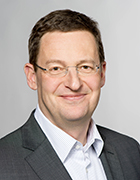
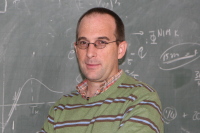
Prof. Dr. Nikolaus A. Adams is a full professor and Chair of Aerodynamics and Fluid Mechanics at the Technical University of Munich (TUM), affiliated with the TUM School of Engineering and Design. Born in 1963, he holds a doctorate from TUM (1993) and habilitation from ETH Zurich (1999). His research focuses on numerical methods, turbulent flows, microfluidics, and multiphase systems. He has held leadership roles, including Dean of the Faculty of Mechanical Engineering since 2023 and Vice Dean (2015–2016). Education: PhD from TUM (1993), habilitation from ETH Zurich (1999) Research interests include aerodynamics, fluid-structure interaction, and numerical techniques for compressible flows. His work spans high-speed aerodynamics and computational fluid dynamics (CFD). Awards include ERC Advanced Grants (GENUFASD 2023, NANOSHOCK 2015), the Gordon Bell Prize (2013), and Fellow of the American Physical Society (2011). Grants and leadership: Spokesperson of DFG SFB/TRR 40 (2008–2020), co-author of 'Large-Eddy Simulation for Compressible Flows' (2009), and editorial roles in J. Comput. Phys.
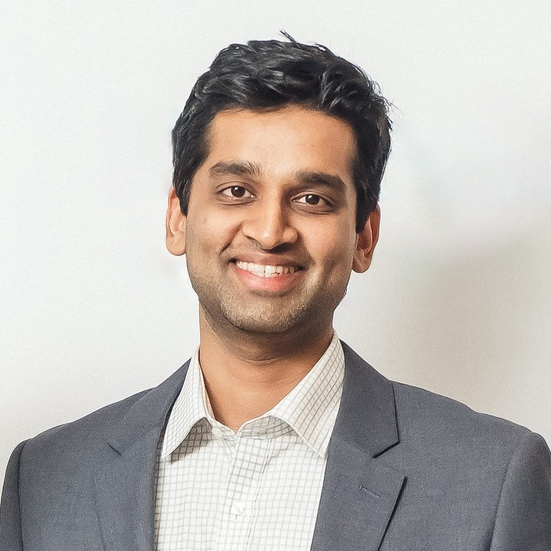
Tim G. J. Rudner is an Assistant Professor in the Department of Statistical Sciences at the University of Toronto, a Faculty Member at the Vector Institute, and a Title A Fellow at Trinity College, University of Cambridge. He was previously an Assistant Professor and Faculty Fellow at New York University. University: University of Toronto School: Faculty of Arts and Science Department: Department of Statistical Sciences Affiliation: Vector Institute, Trinity College (Cambridge) He holds a PhD in Computer Science and an MSc in Statistics from the University of Oxford, where he was advised by Yee Whye Teh and Yarin Gal, and a BS in Applied Mathematics and Economics from Yale University. PhD: Computer Science, University of Oxford MSc: Statistics, University of Oxford BS: Applied Mathematics and Economics, Yale University His research focuses on building robust, transparent, and trustworthy machine learning systems, particularly for high-stakes applications. He develops probabilistic models that improve generalization under distribution shifts, provide reliable uncertainty estimates, and enable fair and interpretable predictions. His work spans generative models, large language models, healthcare, and biomedical discovery. The recent publications highlight a strong trend toward function-space modeling, Bayesian regularization, and AI safety. Tim's work emphasizes principled uncertainty quantification, robustness to subpopulation and semantic shifts, and the development of frameworks for AI governance and specification. His research bridges theoretical advances with real-world applications, especially in safety-critical domains like medicine and defense. Tim has received numerous accolades including being named a Rhodes Scholar, Qualcomm Innovation Fellow, and 2024 Rising Star in Generative AI. He was awarded a $700,000 Foundational Research Grant and a $30,000 Apple Seed Grant for improving LLM trustworthiness. Rhodes Scholar Qualcomm Innovation Fellow AISTATS Notable Paper Award (2024) Outstanding Paper Award, ICLR GenAI4DM Workshop (2024) Apple Seed Grant ($30,000) Foundational Research Grant ($700,000) NeurIPS Spotlight Talk 2024 Rising Star in Generative AI He actively mentors students, particularly first-generation and low-income scholars, and has contributed to major policy frameworks including the OECD AI Classification Framework and a series of CSET issue briefs on AI safety. His work demonstrates a strong commitment to responsible AI development, combining technical rigor with societal impact. Tim leads research efforts at the intersection of machine learning theory and practical deployment, with ongoing projects in generative modeling, reliable LLMs, and AI governance. His lab produces high-impact work regularly published at top-tier conferences such as NeurIPS, ICML, and AISTATS.
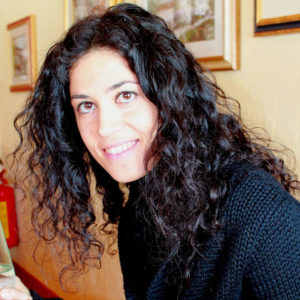
Elisa Ricci is a Full Professor at the Department of Information Engineering and Computer Science (DISI) at the University of Trento and serves as Head of the Research Unit Deep Visual Learning at Fondazione Bruno Kessler. She coordinates the Doctoral Program in Information Engineering and Computer Science at the University of Trento and holds prestigious fellowships from ELLIS and IAPR. Her research focuses on advancing computer vision and deep learning systems capable of operating in open-world environments. Key interests include domain adaptation, continual learning, and self-supervised learning for visual and multi-modal data processing. Her work addresses critical challenges in enabling machines to adapt to new domains without forgetting prior knowledge, with applications spanning robotics perception, medical imaging, and privacy-preserving AI systems. Recent publications reveal a dominant trend toward leveraging vision-language models for open-vocabulary tasks, training-free adaptation methods, and federated learning architectures. Significant research thrusts include machine unlearning for privacy, robustness against bias in visual classifiers, and novel class discovery using foundation models—particularly evident in 2025 publications addressing medical imaging, 3D segmentation, and collaborative generative systems. Her major recognitions include: ELLIS Fellow IAPR Fellow As Doctoral Program Coordinator at the University of Trento, she oversees PhD training while leading the Deep Visual Learning unit at Fondazione Bruno Kessler. Her research group secures competitive grants in AI-driven perception systems, though specific funding sources aren't detailed in the source material. The Deep Visual Learning Research Unit specializes in open-world computer vision challenges, developing frameworks for domain adaptation, continual learning, and multi-modal perception. Current projects integrate generative models with robotics applications while addressing privacy concerns in vision-language systems through unlearning techniques.
Jan Jokisch is a Researcher and PhD student at the Max Planck Institute for Empirical Aesthetics in Frankfurt am Main, Germany, affiliated with the Heisenberg research group. His academic background includes a Master's in Comparative Literature from Johannes Gutenberg University Mainz and the University of Massachusetts Amherst, and a Bachelor's in Comparative Literature and Philosophy from Mainz. He has lectured in German language and literature at Argentine universities and served as a translator for the DEFA Film Library. His research focuses on drama history, quantitative and digital literary studies, and methodologies in the humanities, with current collaboration on the DFG-funded 'Forager Folklore Database (FFDB)' project. Education highlights include a thesis on 'Epistemological Horror in Literature' (2021) and a BA thesis reinterpreting Shklovsky's literary theory through Heidegger's phenomenology (2018). Jokisch has been recognized with DAAD scholarships (2019, 2021) and the Gutenberg Lehrkolleg Award (2018). He has authored and edited conference proceedings, including works on distant reading methodologies and interdisciplinary language studies. His academic work bridges computational analysis with traditional humanities, emphasizing the role of technology in literary research. Collaborations and editorial roles reflect his commitment to fostering international student scholarship and innovative research practices.
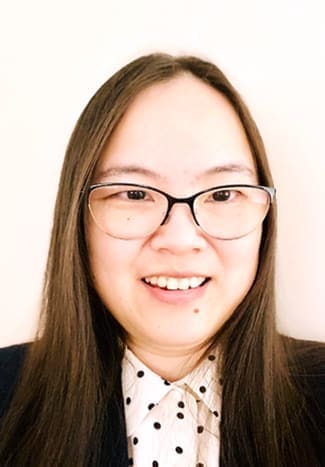
Yaojun Zhang is an Assistant Professor in the Department of Physics & Astronomy and the Department of Biophysics at Johns Hopkins University. She earned her PhD in Physics from the University of California, San Diego (2015), followed by postdoctoral fellowships at the Princeton Center for Theoretical Science (2015-2018) and the Princeton Center for the Physics of Biological Function (2018-2021). Her research focuses on biological physics, particularly the complex behaviors of biomolecules and their assemblies across scales—from single-molecule folding to intracellular transport and biomolecular phase separation. She employs theoretical, mathematical, and computational tools to bridge biological questions with physical principles. Education PhD in Physics, University of California, San Diego (2015) Postdoctoral Fellowships: Princeton University (2015-2021) Research Interests Her group studies biomolecular condensates and liquid-liquid phase separation, exploring how microscopic interactions determine macroscopic properties of cellular compartments. Key areas include: Biomolecular condensate formation and dynamics Phase separation in cellular environments Interactions between biomolecules and cellular components Biophysics of intracellular transport Collaborations & Tools Zhang collaborates with experimentalists to validate theoretical models and develops frameworks for understanding condensate functions, such as surface tension, stoichiometry, and phase diagrams. Her work addresses challenges like condensate stability, molecular exclusion, and biological function regulation. Labs & Resources She leads the Zhang Lab , which integrates experimental and computational approaches. Her team’s research is supported by resources at the Bloomberg Center for Physics and Astronomy.
Karthik R. Narasimhan is a Professor at Princeton University's School of Engineering and Applied Science in the Department of Computer Science. Previously, he earned his PhD from MIT under Regina Barzilay and served as a visiting research scientist at OpenAI during 2017-18. His research focuses on the intersection of language and decision-making, building autonomous agents that learn from both experience and human knowledge. His research spans multiple high-impact areas including language agents (Text-DQN, CALM, ReAct, Tree of Thoughts), reinforcement learning (h-DQN, Multi-Objective RL), and AI safety (Toxicity in ChatGPT, DataMUX). He has developed critical datasets and benchmarks such as WebShop, InterCode, SWE-bench, and SILG that have become standard evaluation tools in the field. Current work emphasizes agent capabilities, software engineering automation, and multimodal interaction. His publication trends show strong focus on practical agent deployment (SWE-agent, Tree of Thoughts), safety evaluation (Probing AI Safety), and efficiency improvements (DataMUX). Recent work increasingly addresses real-world challenges in software engineering, security, and human-AI collaboration through rigorous benchmarking. Co-author of foundational GPT (2018) paper Key developer of Text-DQN (2015), CALM (2020), ReAct (2022), Tree of Thoughts (2023) Creator of influential benchmarks: WebShop (2022), SWE-bench (2023), InterCode (2023) He actively advises students through Princeton's computer science program, with research supported by multiple grants focused on autonomous agent development and language-based decision systems. His GitHub repositories (nlp-datasets, text-world-player) demonstrate strong community engagement in open-source research tools. Current projects include advancing language agent capabilities through Reflexion (2023) and Tree of Thoughts (2023) frameworks while addressing critical safety and efficiency challenges.
Jan von Delft is a Professor (chair) at Ludwig-Maximilians-University (LMU) Munich, working in the Faculty of Physics within the Chair of Theoretical Solid State Physics. His research group consists of postdocs, PhD students, and master's students working on various aspects of strongly correlated electron systems, with physical space located at Theresienstr. 37 (Room A420) in Munich. von Delft's research focuses on correlated electron and spin systems, with particular interest in dynamical and transport properties, quantum impurity models, Hund metals, unconventional superconductors, quantum magnets, and quantum criticality. His methodological expertise includes many-body field theory, parquet formalism (FRG), DMFT, and tensor networks (NRG, DMRG, PEPS, XTRG, etc.). His work bridges theoretical concepts with computational approaches to understand complex quantum phenomena in condensed matter systems. He has developed a distinctive emphasis on real-frequency calculations and numerical methods for studying quantum critical phenomena. Analysis of von Delft's recent publications reveals a strong focus on developing and applying advanced computational methods to study strongly correlated electron systems. His group has made significant contributions to numerical renormalization group techniques, tensor network methods, and the parquet formalism for calculating real-frequency correlation functions. His research shows increasing sophistication in handling quantum criticality, particularly in heavy-fermion systems, and exploring unconventional superconductivity mechanisms. Notably, his group has developed specialized computational libraries like KeldyshQFT to make these advanced methods more accessible to the broader physics community. von Delft actively mentors a substantial research group consisting of one postdoc (Markus Scheb), eleven PhD students (Anxiang Ge, Sasha Kovalska, Mathias Pelz, Marc Ritter, Nepomuk Ritz, Changkai Zhang, Markus Frankenbacher, Felipe Picoli, Simone Fodera, Ming Huang), and two master's students (Ester Pages, Gianluca Grosso). His detailed Style Guide for scientific communication demonstrates his commitment to high-quality research presentation. The group appears well-funded with ongoing research activities spanning theoretical development, computational implementation, and physical interpretation of complex quantum phenomena.
Andre Levchenko is the John C. Malone Professor of Biomedical Engineering at Yale University, with secondary appointments in the Department of Neurosurgery and affiliations with the Cancer Signaling Networks, Immunology, and the Yale Program in Neurodevelopment and Regeneration. His research focuses on systems biology, signal transduction, and cell-cell communication, utilizing microfluidics and computational modeling to study cancer progression, stem cell behavior, and neurological disorders. PhD, Columbia University MEng, Moscow Institute of Physics and Technology Levchenko's work explores how cells process dynamic signals to make critical decisions, particularly in glioblastoma migration, organoid development, and cardiovascular tissue engineering. His lab develops innovative microfluidic platforms and mathematical models to dissect multicellular communication and signaling networks. Recent publications highlight his contributions to understanding YAP-driven cancer invasion , NOTCH signaling in angiogenesis , and metabolic regulation of hypoxia responses . He has pioneered methods for organoid modeling and single-cell analysis , advancing precision in biological signaling studies. Scientific Awards : Computational Molecular Biology Post-Doctoral Fellowship (Burroughs Wellcome Fund) National Academies Keck Futures Conference Invitee Distinguished Guest Lecturer, University of Virginia American Asthma Foundation Early Excellence Award Fellow, American Institute for Medical and Biological Engineering Levchenko leads the Levchenko Lab at the Yale Systems Biology Institute, collaborating with institutions like Mayo Clinic and Yale Cancer Center. His research has received recognition in Faculty of 1000 and multiple journal highlights.
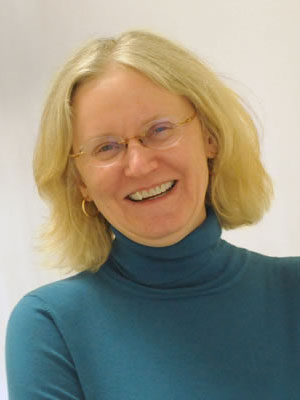
Gail E. Kaiser is a Professor of Computer Science and the Director of the Programming Systems Laboratory (PSL) in the Computer Science Department at Columbia University. She has been with Columbia University since 1985, becoming a full Professor in 1998. Prof. Kaiser's research spans software engineering, program analysis, software testing, and software security, with recent focus on addressing challenges in AI/ML systems testing and security. Prof. Kaiser received her PhD in Computer Science from Carnegie Mellon University in 1985 and her ScB in Computer Science and Engineering from MIT in 1979. Her dissertation at CMU was titled "Semantics for Structure Editing Environments" under advisor Nico Habermann, and at MIT she completed "Automatic Extension of an Augmented Transition Network Grammar for Morse Code Conversations" under advisor Al Vezza. Prof. Kaiser's research interests primarily focus on software engineering following a systems building approach, with recent emphasis on static and dynamic program analysis techniques to improve software reliability and security. Since 2005, she has investigated testing "non-testable" programs, particularly in machine learning, data mining, and scientific computing applications where traditional testing oracles are insufficient. She has developed novel techniques and tools for detecting bugs and verifying repairs in complex systems. Concurrently, she has worked on collaboration environments for computational scientists, creating knowledge sharing and domain-aware environments to support scientific workflows. Prof. Kaiser's recent publications demonstrate a strong focus on the intersection of software engineering and artificial intelligence. Her work addresses critical challenges in testing AI systems, code understanding through deep learning, vulnerability detection, and educational tools for computational thinking. There's a clear evolution from traditional software engineering topics toward AI/ML applications, with particular emphasis on metamorphic testing for non-testable systems, code similarity analysis, and educational applications. Prof. Kaiser has received numerous prestigious awards throughout her career: Distinguished Journal Award (10 Years) from 18th IEEE International Conference on Software Testing, Verification and Validation (ICST), April 2025 Best Research Paper Award at 24th IEEE International Conference on Source Code Analysis & Manipulation (SCAM), October 2024 Distinguished Reviewer Awards for ASE 2024 and FSE 2024 ACM SIGSOFT Distinguished Paper Award for "CONCORD: Clone-aware Contrastive Learning for Source Code", July 2023 Best Student Paper Award at ICCE 2021 Multiple ACM SIGSOFT Distinguished Paper Awards dating back to 2014 Presidential Young Investigator in Software Engineering and Software Systems from NSF (1988-1993) Prof. Kaiser has chaired Columbia's doctoral program since 1997 and served on editorial boards including IEEE Internet Computing and as a founding associate editor of ACM Transactions on Software Engineering and Methodology. Her lab has been continuously funded by major agencies including NSF, NIH, DARPA, ONR, NASA, and numerous companies. Current grants include significant NSF funding for secure containers architecture, learning semantics of code for software assurance, and finding semantic security bugs. As Director of the Programming Systems Laboratory (PSL), Prof. Kaiser leads research in software systems, program analysis, and software testing. The lab has developed numerous tools and techniques for software reliability and security, with recent focus on challenges in AI/ML systems. Her work bridges theoretical foundations with practical applications, often resulting in deployable tools that address real-world software engineering challenges.
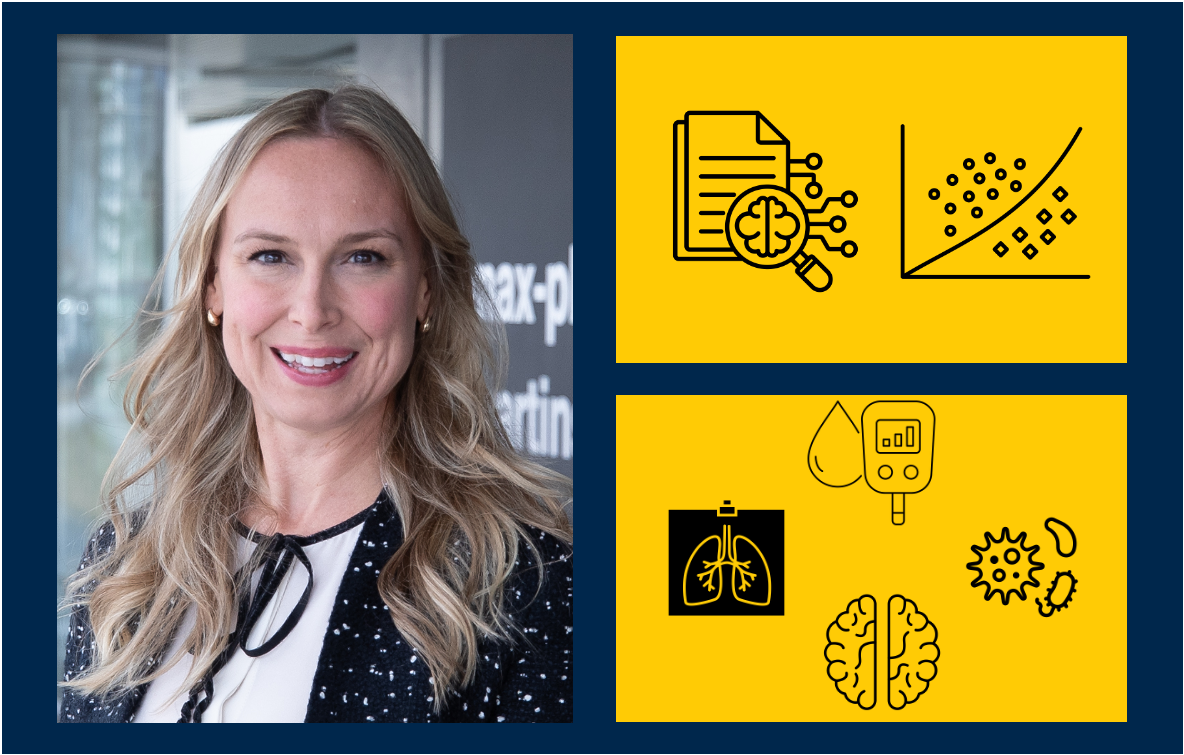
Jenna Wiens is an Associate Professor of Computer Science and Engineering at the University of Michigan's College of Engineering. She serves as Associate Director of the Artificial Intelligence Lab and co-Director of AI & Digital Health Innovation. Leading the MLD3 research group, her work focuses on machine learning and AI applications for healthcare data. PhD from MIT (2014) under John Guttag NSF CAREER Award recipient (2016) Humboldt Foundation Carl Friedrich von Siemens Award (2024) Her research addresses four key technical thrusts: Time-series analysis for predicting clinical outcomes Robust machine learning against spurious correlations Decision-making with causal inference and offline reinforcement learning Human-AI collaboration frameworks Notable methodological contributions include the FIDDLE preprocessing pipeline for clinical time-series data, foundational work on survival analysis, and novel approaches to model selection in healthcare reinforcement learning. Her work has led to real-world AI deployments in infection prevention and patient risk stratification. Scientific honors include: Forbes 30 Under 30 (2015) MIT Tech Review 35 Innovators Under 35 (2017) Sloan Research Fellowship in Computer Science (2020) Sarah Goddard Power Award (2023) Wiens collaborates with clinicians across disciplines, emphasizing clinician-in-the-loop AI systems and ethical implementation in healthcare workflows.
Amartya Sanyal is a Tenure Track Assistant Professor at the Department of Computer Science (DIKU), University of Copenhagen, specializing in Machine Learning. He also serves as an Adjunct Professor at the Indian Institute of Technology Kanpur (2023–2025). His research focuses on critical areas of AI safety, data privacy, and robust learning. University: University of Copenhagen Department: Department of Computer Science Academic Rank: Assistant Professor Adjunct Role: IIT Kanpur (2023–2025) His work addresses challenges like differential privacy , data poisoning attacks , machine unlearning , and robust mixture learning . Recent publications analyze privacy-preserving techniques for large language models, fairness in collective action algorithms, and certified data release mechanisms. Amartya has received the Villum Young Investigator Award (2025). His research outputs emphasize online learning , adversarial robustness , and privacy-utility tradeoffs through rigorous theoretical frameworks and practical implementations. Scientific Award: Villum Young Investigator Award His collaborations span institutions like IIT Kanpur and involve interdisciplinary projects with industry partners. Current activities include talks on privacy with correlated data and machine unlearning advancements.
Muhannad S. Bakir is the Dan Fielder Professor in the School of Electrical and Computer Engineering at Georgia Institute of Technology and serves as the Director of the 3D Systems Packaging Research Center. His research focuses on heterogeneous integration of microsystems, including 2.5D and 3D ICs and packaging technologies, with significant contributions to advanced cooling systems, electrical and photonic interconnects, and biosensor integration with CMOS. Dr. Bakir's research interests span heterogeneous microsystem design and integration, advanced cooling and power delivery for emerging architectures, electrical and photonic interconnect technologies, biosensor technologies, and nanofabrication. His work addresses critical challenges in next-generation electronics, enabling polylithic integration that concatenates heterogeneous ICs of various functionalities while mimicking monolithic-like densities. His research particularly focuses on co-design of thermal technologies, power delivery networks, and signaling networks for silicon nanoelectronic systems. His recent publications demonstrate strong trends in fused-silica stitch-chip technology for heterogeneous integration, with particular emphasis on RF and mm-wave applications, power delivery for AI accelerators, and thermal management solutions. His work bridges electrical engineering, materials science, and thermal management to solve critical bottlenecks in computing performance and efficiency. 2013 Intel Early Career Faculty Honor Award 2012 DARPA Young Faculty Award 2011 IEEE CPMT Society Outstanding Young Engineer Award 2012 National Academy of Engineering Frontiers of Engineering Symposium Invited Participant 2015 IEEE CPMT Society Distinguished Lecturer 2014 Best Paper of the IEEE Transactions on Components Packaging and Manufacturing Technology More than 25 conference and student paper awards Twelve issued US Patents Dr. Bakir leads the Integrated 3D Systems Lab (I3DS) at Georgia Tech, which is actively researching advanced packaging, interconnects, electrical and thermal design, and system integration. His team has received significant recognition for their work, including multiple best paper awards from major conferences like ECTC, IITC, and CICC. The lab is currently seeking postdoctoral researchers and research faculty to advance next-generation electronics through collaborative research. His lab focuses on enabling the next phase of Moore's Law through polylithic integration, which concatenates heterogeneous ICs of various functionalities (digital, analog, photonic, and mm-wave) using advanced off-chip '2.5D' and '3D' heterogeneous interconnects and packaging. This work impacts applications in high-performance computing, machine learning, edge intelligence, autonomous vehicles, augmented/virtual reality, and healthcare.
Bradley D. Olsen is a full professor in the Department of Chemical Engineering at the Massachusetts Institute of Technology (MIT), where he leads research at the intersection of polymer science, soft matter physics, and bioengineering. His work focuses on designing materials for critical applications in biotechnology, hemostasis, and sustainable polymer development while advancing fundamental understanding of polymer network mechanics and self-assembly. Education: Ph.D. in Chemical Engineering, University of California Berkeley (2007) S.B. in Chemical Engineering, Massachusetts Institute of Technology (2003) Olsen's research spans protein-based materials, block copolymer phase behavior, and mechanochemical hydrogels. He has pioneered methods for quantifying polymer network topology, developing hemostatic nanoparticles, and creating bio-inspired materials for selective biomolecular transport and medical applications. His recent publications emphasize data-driven approaches to polymer characterization and educational outreach in materials science. Scientific Awards: American Physical Society (APS) Fellow (2023) Fulbright Amazonia Scholar (2023) Alexander and I. Michael Kasser Chair in Chemical Engineering (2021) ACS Macro Letters Young Investigator Award (2021) MIT Committed to Caring Honor (2019) AIChE Owens Corning Early Career Award (2019) APS Dillon Medal (2018) Kavli Emerging Leader in Chemistry (2017) ACS Polymer Division Fellow (2016) Camille Dreyfus-Teacher Scholar (2015) Alfred P. Sloan Research Fellow (2014) NSF Career Grant (2013) NIH Postdoctoral Fellowship (2008-2009) Hertz Fellow (2003-2007) Barry M. Goldwater Scholarship (2002) Olsen has received significant grant support including NSF Career (2013) and AFOSR (2012) awards. His teaching activities include innovative international outreach like the 2025 soccer-themed science camp in Brazil. The Olsen Group at MIT explores advanced materials with applications ranging from trauma care to sustainable polymers.
Andy Pavlo is an Associate Professor with Indefinite Tenure in the Computer Science Department at Carnegie Mellon University's School of Computer Science. He is an active member of the CMU Database Group and the Parallel Data Laboratory, where he leads research in database management systems with a focus on self-driving architectures, transaction processing, and large-scale analytics. His work bridges academic research and industry applications through projects like NoisePage, OtterTune (which he co-founded and served as CEO before it ceased operations), and Peloton. Dr. Pavlo's research interests span database management systems with particular emphasis on autonomous database architectures that can self-tune and optimize without human intervention. His work explores transaction processing systems that can handle high-throughput workloads while maintaining consistency, and large-scale data analytics techniques that efficiently process massive datasets. He has made significant contributions to query optimization, database extensibility, and automatic database tuning using machine learning techniques. His recent work on database extensibility revealed critical issues in PostgreSQL's extension ecosystem, showing that approximately 16% of extensions are incompatible with at least one other extension due to API violations and memory errors. His research output demonstrates a consistent focus on practical database systems challenges, with recent publications examining database extensibility, user-defined function optimization, and the cyclical nature of database research. The articles show a strong trend toward making database systems more autonomous, with increasing integration of machine learning techniques for automatic tuning and optimization. His work often combines deep theoretical analysis with practical implementation in open-source systems. Dijkstra Award 2024 for contributions to database systems research Dr. Pavlo actively mentors graduate students, with current advisees including Wan Shen Lim, William Zhang, and Sam Arch (co-advised with Todd Mowry). His former students have gone on to successful careers in both industry and academia. He has secured significant research funding through CMU's affiliate program with major database companies including ClickHouse, DataStax, dbt, Firebolt, MotherDuck, RelationalAI, SingleStore, Spiral, PingCAP/TiDB, Yellowbrick, and Yugabyte. His research is supported by these industry partnerships and likely includes NSF funding given his active participation in the database research community. At CMU, Dr. Pavlo leads the Database Group and organizes several seminar series including "SQL or Death," "Database Building Blocks," and "ML⇄DB Technical Talks." These seminars bring together researchers and practitioners to discuss cutting-edge developments in database systems. He also runs a summer research internship program that has attracted students for multiple consecutive years, indicating a strong research group with ongoing projects and funding.
Lourens Waldorp is an Associate Professor at the University of Amsterdam within the Faculty of Social and Behavioural Sciences , specifically the Department of Psychological Methods . His research focuses on network theory, causal inference, and statistical modeling in psychology and neuroscience. University of Amsterdam IAS Fellow (2024) His research interests include: Network psychometrics Causal inference in psychological models High-dimensional statistical methods Dynamical systems in psychopathology Graph theory applications Signal processing for biophysical data The trends in his recent publications center on causal modeling, network analysis of psychopathology, and statistical techniques for time-series data. He has developed methods for perturbation graphs, moderated network models, and dynamic intervention frameworks. Notable scientific awards : IAS Fellowship for 6 months (2024) He advises PhD students like Kyra Evers and collaborates with researchers across disciplines, including J. Haslbeck , D. Borsboom , and O. Ryan . His work intersects with network theory and clinical psychology .