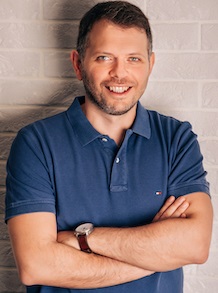
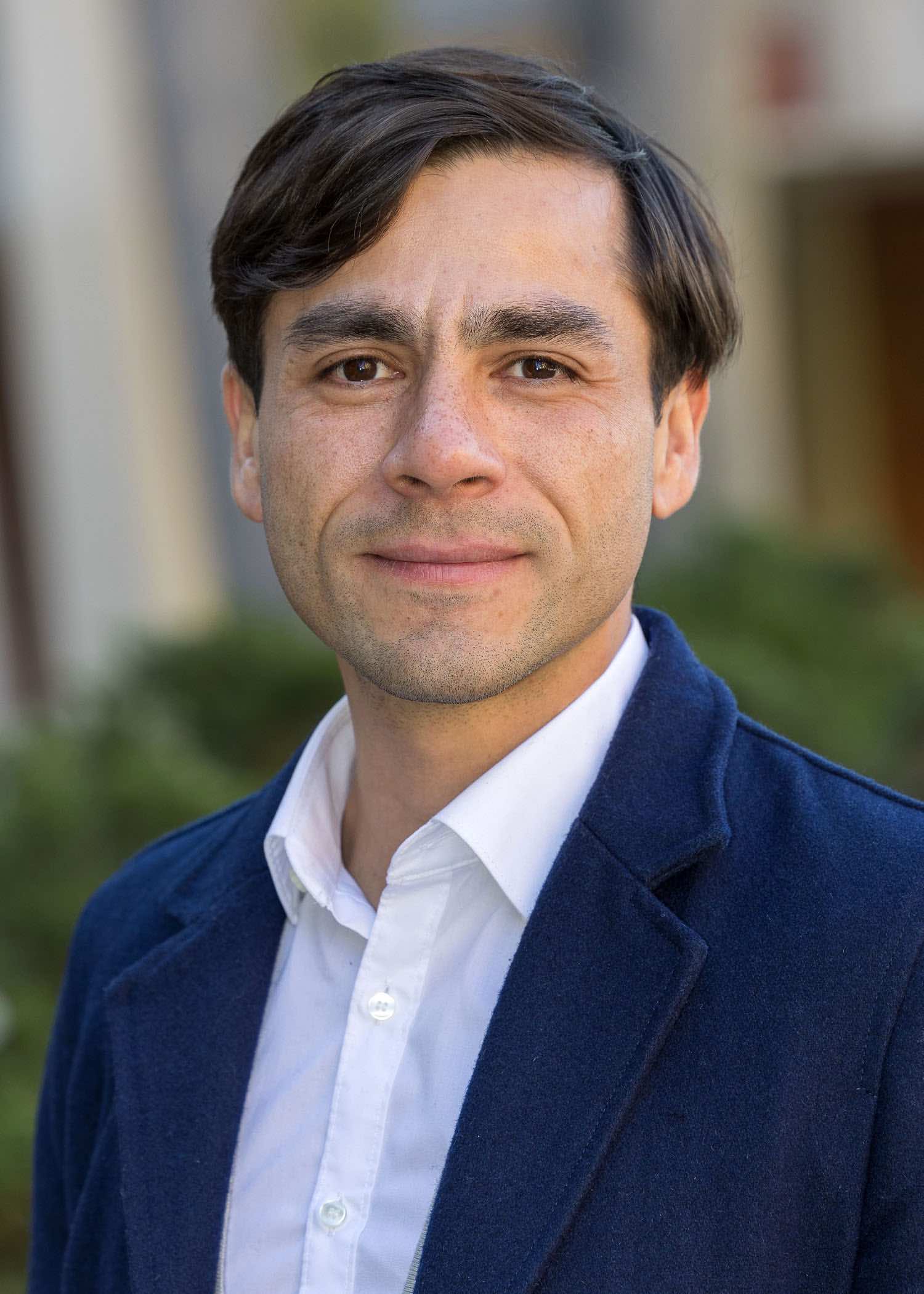
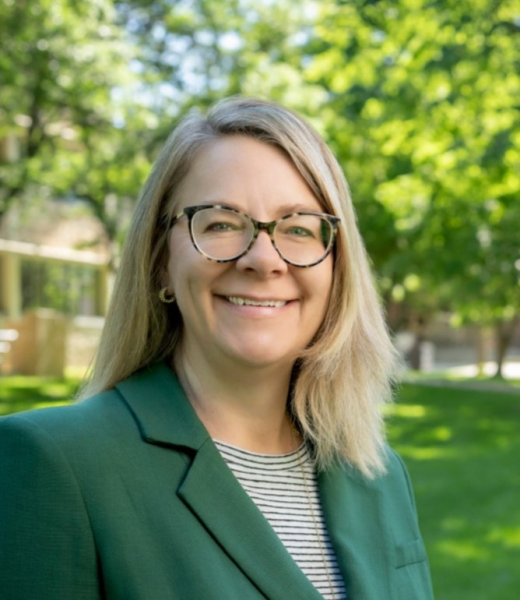
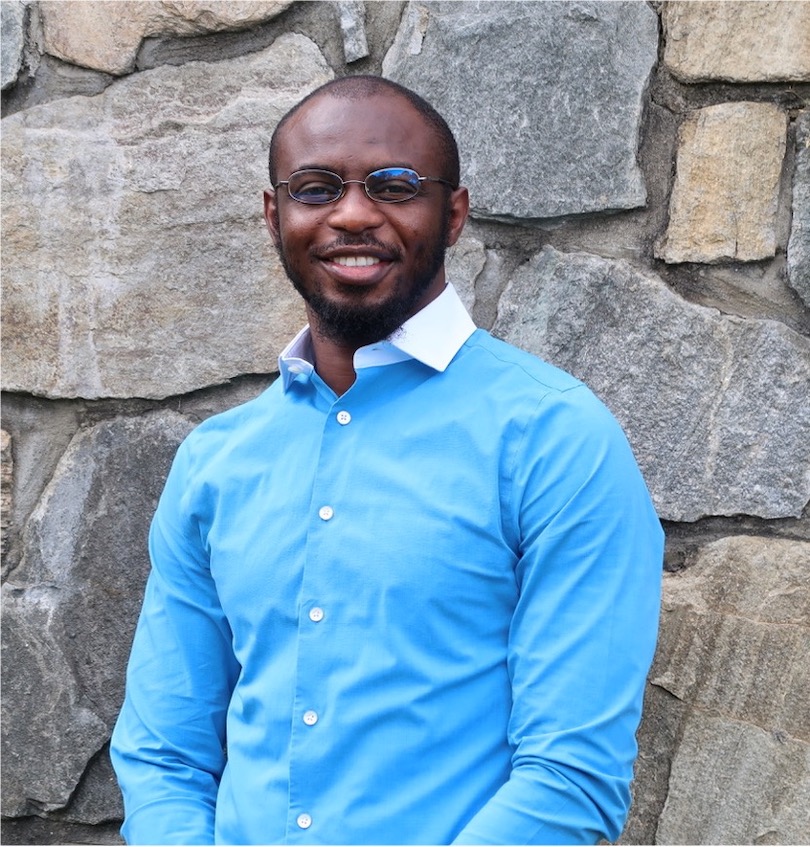
Niall Winters is a Visiting Fellow at the University of Oxford's Department of Education, previously serving as Professor of Education and Technology and an Official Fellow. His research focuses on socially-just technology innovations, particularly in healthcare and education, supported by over €7 million in funding. He holds a PhD in Computer Science from Trinity College Dublin. Key roles include co-convenor of the Critical Digital Education Research Group, director of the MSc Education (Digital and Social Change), and mentor to Kellogg students. Prior to Oxford, he was a Reader in Learning Technologies at UCL Institute of Education and Deputy Head of the Department of Culture, Communication and Media. His research integrates global health challenges with digital solutions, emphasizing community health workers' training in low-resource settings. Collaborations include the Global Centre on Healthcare and Urbanisation at Kellogg and projects with UNESCO, WHO, and the NHS. He has held fellowships at institutions like Sciences Po and MIT Media Lab Europe. Publications span mobile health technologies, gamification in medical education, and policy frameworks for digital equity. His work bridges theory and practice, advocating for ethical technology design that addresses systemic inequalities in education and healthcare systems.
Gauthier Gidel is an Associate Professor at the Department of Computer Science and Operations Research (DIRO) within the Faculty of Arts and Science at Université de Montréal, where he also holds the prestigious Canada CIFAR AI Chair position. He is a core faculty member of Mila, Quebec's AI research institute, and maintains active research collaborations with leading institutions. His academic journey includes a PhD in Computer Science under the supervision of Simon Lacoste-Julien, with internships at Sierra, ElementAI, and DeepMind during his doctoral studies. Dr. Gidel's research spans multiple critical areas in machine learning, with particular emphasis on generative modeling , adversarial machine learning , and variational inequalities for machine learning. His work explores the intersection of optimization theory and practical AI systems, focusing on challenges like LLM safety alignment, multi-agent cooperation, and robustness against adversarial attacks. He is particularly known for his contributions to understanding the theoretical foundations of generative adversarial networks through variational inequality frameworks. His recent publications reveal a strong trend toward addressing critical challenges in large language model safety and alignment, with numerous 2024-2025 papers focusing on adversarial robustness, safety evaluation methodologies, and alignment techniques for LLMs. Simultaneously, his foundational work continues in optimization theory, particularly in variational inequalities and performative prediction, demonstrating his dual focus on practical AI safety concerns and theoretical machine learning foundations. Canada CIFAR AI Chair Core member of Mila Organizer of popular NeurIPS workshops on smooth games Co-founder of the ICLR blog post track Dr. Gidel actively supervises an extensive research group with approximately 10 current graduate students and numerous alumni who have secured positions at leading institutions including Inria Lyon, Oxford, and industry research labs. His research is supported by multiple substantial grants from CRSNG, MITACS, and IVADO, including the prestigious CRSNG Discovery Grant program and MITACS Acceleration Québec projects focused on fraud detection in music streaming and conditional generation. His laboratory maintains strong connections with both academic and industry partners, fostering a collaborative environment focused on advancing AI safety and theoretical understanding.
Roles and Affiliations : Dimitris Kolovos is a Professor of Software Engineering at the University of York's Department of Computer Science. He leads the Automated Software Engineering (ASE) research group and is an Eclipse Foundation committer, leading development of the Epsilon open-source platform. His roles include research leadership, teaching, and academic service. Education : PhD in Software Engineering - University of York MSc in Software Engineering with Distinction - University of York First Class Honours Degree in Informatics - Athens University of Economics and Business Research Interests : Kolovos focuses on advancing Model-Driven Engineering (MDE), GenAI integration in software development, low-code platforms, and data analytics. His work emphasizes scalable modeling tools, education technology (e.g., MDENet platform), and industry collaboration with organizations like NASA, BAE Systems, and Siemens. Labs and Projects : He leads the Epsilon project under the Eclipse Modelling initiative, developing tools for model transformation, validation, and code generation. His research group also explores AI-driven model transformations and hybrid graphical-textual editors.
Guido Montúfar is a Professor in the Departments of Mathematics and Statistics & Data Science at the University of California, Los Angeles (UCLA), effective since 2024. He also leads the Mathematical Machine Learning Group at the Max Planck Institute for Mathematics in the Sciences (MPI MIS) in Leipzig, Germany since 2018. His academic journey includes a PhD in Mathematics from Leipzig University (2012), and Diplom degrees in Physics and Mathematics from TU Berlin (2009 and 2007). Montúfar's research focuses on the theoretical foundations of deep learning, mathematical machine learning, and the interplay between geometry and learning. Key areas include neural network architecture theory, optimization landscapes, and information geometry. His work bridges algebraic statistics, graphical models, and topological data analysis. His grants and awards include an ERC Starting Grant (2018-2023), a Sloan Research Fellowship (2022), and an NSF CAREER Award. He has advised numerous PhD students and postdocs, contributing to significant advancements in machine learning theory and applications. Montúfar teaches courses on applied mathematics, optimization, and machine learning at UCLA. His research also explores topics like oversquashing in graph neural networks and the geometry of policy gradients in reinforcement learning.
Kjerstin Thorson serves as the Dean of the College of Liberal Arts at Colorado State University, a position she assumed on August 1, 2024. Previously, she was the Brandt Endowed Professor of Political Communication and Associate Dean for Strategic Initiatives at Michigan State University’s College of Communication Arts & Sciences. An internationally recognized scholar, her research centers on digital platforms and their impact on civic life and culture. Her educational background includes: BA in English from Macalester College MA in Journalism from the University of Missouri-Columbia PhD in Mass Communication from the University of Wisconsin-Madison Thorson's research explores the intersection of digital media, political communication, and civic engagement. She investigates how social media platforms shape political participation, news consumption, and civic discourse, with a particular focus on young adults and historically marginalized communities. Her work addresses critical issues such as equity in digital civic infrastructure, the role of algorithms in political exposure, and the dynamics of online moderation and community governance. She examines both the empowering potentials and the challenges of digital media for democratic participation. Her recent publications (2023-2025) reveal a sustained investigation into platform governance, volunteer moderation, and the urban-rural divide in digital civic engagement. She also delves into Gen Z's civic behaviors, the spread of misinformation, and the evolving landscape of political learning on social media. Her work often employs mixed-methods approaches, combining digital trace data with surveys to understand complex media effects. Thorson has received notable recognition for her contributions: Michigan State University’s Teacher-Scholar Award 2022-2023 Fellow of the Big 10 Academic Alliance Leadership Program Her research has been supported by prestigious organizations including the National Science Foundation (NSF), the Social Science Research Council, and the Spencer Foundation. In her administrative roles, she has prioritized student success through initiatives like the Ignite the Future program, which supports first-generation and marginalized students, and has championed faculty development through the creation of a Center for Teaching and Learning. While specific advisees are not listed, her leadership in student success programs underscores her commitment to mentoring. Under her leadership at Michigan State University, the College of Communication Arts & Sciences expanded its revenue-generating partnerships, created a college-wide Center for Teaching and Learning, launched the Ignite the Future family of programs, and grew the esports initiative. She has also focused on improving culture and climate through promotion pathways for non-tenure track faculty, climate surveys, and community-building events.
Habeeb Olufowobi is an Assistant Professor in the Department of Computer Science and Engineering at the University of Texas at Arlington (UTA), where he leads the Cyber-Physical System Security Lab. He holds a PhD in Computer Science from Howard University (2019) and previously served as a Lecturer at Howard before joining UTA in 2020. His research is centered on the security and trustworthiness of embedded and distributed systems, particularly in the domains of autonomous vehicles, IoT, and healthcare AI. He investigates cybersecurity challenges at the hardware-software interface in real-time systems and develops AI/ML models that are transparent, explainable, and equitable. His interdisciplinary work integrates principles from cybersecurity, real-time systems, and machine learning. The recent publications reflect a strong trend in securing cyber-physical systems using advanced AI techniques, with emphasis on intrusion detection, secure communication (e.g., named data networking), and robustness of autonomous systems. His work frequently appears in top-tier venues such as IEEE Transactions, VehicleSec, and ICMLA. Project Management Professional (PMP), PMI (2012–Present) Member, Institute of Electrical and Electronics Engineers (IEEE) (2020–Present) Habeeb has secured significant research funding, including an NIH grant on ethical AI for Chagas disease prediction and an AIM-AHEAD grant focused on health equity. He mentors several graduate students, including Paul Agbaje and Afia Anjum, who have received awards and internships at prestigious institutions like Los Alamos National Laboratory. He teaches courses in cloud computing, embedded systems, and information security, and serves as a faculty advisor for the National Society of Black Engineers (NSBE) at UTA. His lab, the Cyber-Physical System Security Lab, focuses on developing scalable and reliable security solutions for critical infrastructure, with growing emphasis on healthcare applications and fairness in algorithmic decision-making.
Eric Paulos is a Professor in the Department of Electrical Engineering and Computer Sciences at the University of California, Berkeley, directing the Hybrid Ecologies Lab, Master of Design program, CITRIS Invention Lab, and co-directing the Swarm Lab. He holds faculty appointments at the Berkeley Center for New Media and Jacobs Institute for Design Innovation. He earned his PhD in Electrical Engineering and Computer Science from UC Berkeley, where he pioneered internet tele-operated robots including Space Browsing blimps and Personal Roving Presence devices. Paulos is a foundational figure in urban computing (coined in 2004) with research spanning critical making, physical computing, and sustainability-focused design. His work consistently bridges Human-Computer Interaction with social justice, emphasizing inclusive prototyping and the societal implications of emerging technologies through hands-on making practices. His recent publications examine hybrid materials as design mediums, failure-mitigation in creative workflows, and light as computational material, revealing a trajectory toward empowering creators through accessible tool development and critical reflection on technological embodiment. No scientific awards were explicitly documented in the source material. He has advised seven PhD students including Katherine Song (2024), Molly Nicholas (2022), Sarah Sterman (2022), Rundong Tian (2021), Christine Dierk (2020), Cesar Torres (2019), and Joanne Lo (2016), with current recruitment for 2026 focusing on technical prototyping skills and equity-centered innovation in the Hybrid Ecologies Lab. His leadership spans the Hybrid Ecologies Lab (critical making research), Swarm Lab (collaborative robotics), and CITRIS Invention Lab (public fabrication space), fostering interdisciplinary work at the intersection of technology, art, and social impact through facilities like Jacobs Hall and the College of Environmental Design.
Bruna Damiana Heinsfeld serves as Assistant Professor of Learning Technologies within the Department of Curriculum & Instruction at the University of Minnesota's College of Education and Human Development. Her research critically examines the intersections of technology, society, and education through the lens of Critical Studies of Education and Technology (CSET), with emphasis on power dynamics and social justice implications. Her academic credentials include: Ph.D. in Interdisciplinary Learning and Teaching (Learning Design and Technologies concentration) from UTSA M.A. in Education (Digital Languages, Media and Education concentration) from PUC-Rio, Brazil Multiple Postgraduate Certificates from Brazilian institutions: Media Discourse Analysis, Ontology and Epistemology, Philosophy/Sociology/Social Sciences, and Distance Learning Management B.A. in English Language and Literature from UERJ, Brazil Dr. Heinsfeld's research program centers on critical discourse analysis of educational technology narratives across corporate, policy, and educational contexts. She investigates how technological discourses are constructed and operationalized, particularly regarding digital equity, participatory exclusion, and the sociopolitical dimensions of technology adoption. Her methodological approach combines Critical Discourse Analysis (CDA) with critical pedagogy to unpack ideological, cultural, and economic factors shaping educational technology implementations. She examines epistemological foundations of technological beliefs and challenges neoliberal narratives in EdTech through rigorous deconstruction of policy documents and marketing materials. Analysis of her recent publications (2019-2023) reveals consistent focus on corporate influence in educational technology, with particular attention to Google and Microsoft's marketing narratives, pandemic-era remote learning disparities, and Latinx student experiences. Her work demonstrates how technological solutions often reinforce existing inequalities through participatory exclusion mechanisms, while her policy analyses expose contradictions between equity rhetoric and actual implementation. Recurring methodological threads include discourse analysis of educational landscape reports and critical examination of public policy frameworks. No scientific awards were documented in the provided materials. As an advisor, Dr. Heinsfeld cultivates a supportive environment grounded in social justice principles, emphasizing critical consciousness development and student autonomy. Her advising philosophy centers on accessible feedback, interdisciplinary exploration, and preparation for meaningful societal engagement. She teaches foundational courses including CI 4311W Technology and Ethics in Society (examining algorithmic bias, privacy concerns, and AI ethics) and CI 8147 Critical Discourse Analysis in Educational Research (focusing on language-power dynamics in educational contexts). While specific research laboratories aren't detailed, her collaborative work spans international contexts with Brazilian institutions and U.S. colleagues, particularly evident in joint publications with researchers like V. Marone and M. Pischetola. Her research trajectory indicates ongoing critical engagement with emerging technologies like AI in education policy, as evidenced by upcoming 2025 conference presentations.
Juan Carlos De Martin is a Full Professor of Computer Engineering at the Polytechnic of Turin, where he is also co-founder and co-director of the Nexa Center for Internet & Society. He holds a Faculty Associate position at the Berkman Klein Center for Internet & Society at Harvard University and is a member of the Scientific Council of the Treccani Institute and the Steering Committee of Biennale Democracy. He previously served as Vice Rector for Culture and Communication at the Polytechnic of Turin (2018–2023) and as president of its libraries (2007–2015). His research centers on the societal implications of digital technologies, with a strong emphasis on algorithmic and data justice, digital power, and the democratic challenges posed by modern technology. He advocates for a more democratic and ethical technological future, particularly critiquing the dominance of smartphones and promoting digital sovereignty. His recent publications reflect a clear trend toward ethical AI, data protection, and the social impact of algorithms. He has published on gender bias in language models, GDPR compliance tools, and non-discrimination audits in software, demonstrating a sustained commitment to fairness, transparency, and accountability in digital systems. Best Student Paper Award IEEE ISCC 2011 Best Student Paper Award IEEE ICME 2005 Fellow at Harvard University (Berkman Klein Center) (2011–2015, 2016–2024) Faculty Associate at Collège d'études mondos, France (2016) De Martin has advised PhD students like Marco Rondina on Responsible AI and has led numerous EU-funded research projects such as COMMUNIA and DECODE. He has also played a key role in public policy, serving on ministerial working groups on AI and online hate. He is the founder of the Biennale Tecnologia and has authored influential books on the future of universities and technology, all published under Creative Commons licenses. He leads the Nexa Center for Internet & Society, a multidisciplinary research group focused on the legal, economic, and social aspects of the Internet. The center fosters collaboration between computer scientists, legal scholars, and social scientists to address pressing digital challenges.
Dina El-Zanfaly serves as an Assistant Professor in the School of Design at Carnegie Mellon University (CMU), where she directs the hyperSENSE: Embodied Computations Lab. Her work bridges computational design and human-centered interaction, focusing on how physicality shapes sensory experiences and cognitive processes through intelligent systems. Education: PhD in Design and Computation, Massachusetts Institute of Technology (MIT) Master of Science in Design and Computation, MIT (Fulbright scholar) Her research critically examines computational methods for augmenting sensory perception, with emphasis on embodied sense-making in hybrid environments. She investigates co-creative interactions between humans and intelligent systems, exploring how computational tools empower designers and non-designers to shape products, social spaces, and interconnected technologies. Key questions address mutual learning between humans and machines through improvisation and creative production. Analysis of her 2022-2025 publications reveals dominant themes in mixed reality interfaces, AI-augmented skill acquisition (particularly in crafts and welding), and tangible co-creation with generative AI. Her work consistently integrates physical computing with mindfulness applications and privacy-aware smart environments, demonstrating interdisciplinary reach across education, manufacturing, and therapeutic contexts. Scientific Awards: Fulbright Scholarship As lab director, El-Zanfaly mentors students in computational making and embodied interaction projects. Her research is supported through initiatives like Fab Lab Egypt and collaborations with MIT, where she co-founded the Computational Making Group. She chairs major conferences including Fab15 in Egypt and serves on the DESFORUM program committee, indicating significant leadership in maker education and design research communities. She founded and leads the hyperSENSE Lab at CMU, which investigates computational embodiment through projects like Origami Sensei and Sand-in-the-loop. Previously, she co-established the Computational Making Group at MIT and co-founded Fab Lab Egypt (the first community maker space in North Africa/Arab world), demonstrating sustained commitment to global maker ecosystems and interdisciplinary team building.
Hamid Abdolvand is an Associate Professor and Tier-2 Canada Research Chair in Advanced Materials for Low-Emission Energies in the Department of Mechanical and Materials Engineering at Western University's Faculty of Engineering. He earned his PhD in Mechanical and Materials Engineering from Queen's University in 2012, followed by a three-year postdoctoral position at the University of Oxford focusing on electron and synchrotron x-ray diffraction analysis. Prior to Oxford, he developed finite element codes for Rolls-Royce Plc and AMEC-Europe at the University of Manchester. His research integrates computational and experimental approaches across multiple scales, with core expertise in: Deformation and failure mechanisms of engineering materials Fatigue, fracture, and (irradiation) creep phenomena Finite element, crystal plasticity, and dislocation dynamics modeling Synchrotron x-ray, neutron, and electron diffraction/tomography techniques Dr. Abdolvand's Tier-2 Canada Research Chair recognizes his leadership in developing advanced materials for sustainable energy applications, bridging industrial collaboration with fundamental materials science. He leads an active research group utilizing multi-scale methodologies to address critical challenges in material behavior under extreme conditions, with strong connections to national facilities and industry partners.
Shiri Azenkot is an Associate Professor of Information Science at the Jacobs Technion-Cornell Institute, Cornell Tech, Cornell University, where she directs the Enhancing Ability Lab. She also serves as an affiliate faculty member in the Computer Science Department at the Technion--Israel Institute of Technology. Her research leverages artificial intelligence to design enabling systems that promote equity and improve quality of life for marginalized populations, with a current focus on visual impairments. Her educational background includes a PhD in Computer Science & Engineering from the University of Washington, advised by Richard Ladner and Jacob Wobbrock. Azenkot's research centers on intelligent interactive systems that enhance perception and ability for people with disabilities. She investigates perceptual abilities and behaviors to design novel systems for navigation, STEM learning, and socialization. Her work spans accessibility, human-computer interaction, and the application of AI/XR technologies to create inclusive solutions for blind and low-vision populations, addressing critical gaps in assistive technology. Recent publications reveal strong trends in developing real-time AI-powered assistive tools for low-vision users, accessible STEM education through tactile interfaces, and examining social dynamics of disability in digital spaces. Her work bridges technical innovation with deep user-centered design, particularly in XR accessibility through co-founded initiatives like XR Access. Scientific awards include: NSF CAREER Award NSF CRII Award 10-year Impact Award at MobileHCI Google Faculty Award Azenkot has advised students including Yuhang Zhao (now Assistant Professor at University of Wisconsin-Madison), Lei, and Danielle. Her research is funded by NSF, AOL, Verizon, and Facebook. She co-founded XR Access and leads the Enhancing Ability Lab, which conducts user studies and develops systems like Markit/Talkit and Livefonts. Current projects include XR accessibility REU programs and symposiums advancing industry-academia collaboration. She directs the Enhancing Ability Lab at Cornell Tech and co-leads XR Access, driving community initiatives to make augmented/virtual reality accessible while mentoring the next generation of accessibility researchers through funded REU programs and industry partnerships.
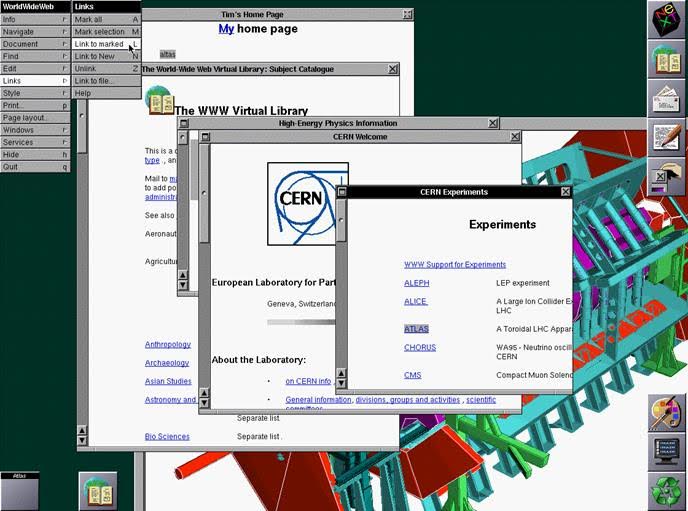
Tim Berners-Lee is a British computer scientist and inventor of the World Wide Web. He holds the 3Com Founders Chair at the Massachusetts Institute of Technology (MIT) Computer Science and Artificial Intelligence Laboratory since 1994 and is a Professor at the University of Southampton (2004-present) and the University of Oxford (2016-present) in Computer Science. His work revolutionized global information sharing through the creation of HTML, HTTP, URLs, and the first web browser/server, enabling the Web's scalability via existing Internet protocols. Key research areas include networked hypertext systems, semantic web technologies, Internet architecture, and societal impacts of digital infrastructure. He founded the World Wide Web Consortium (W3C) in 1994 to standardize web technologies and the World Wide Web Foundation in 2008 to advocate for digital equality. His technical minimalism prioritized immediate utility over theoretical perfection, leveraging Unix and TCP/IP foundations. ACM A.M. Turing Award (2016) Knighted as KBE (2004) Order of Merit (2007) Fellow of Royal Society, IEEE, and American Academy of Arts and Sciences Berners-Lee's advocacy spans data privacy, open standards, and resistance to centralization. He criticized proprietary social media dominance and promoted decentralized systems like Solid for personal data control. His career bridges technical innovation with profound societal reflection, emphasizing harmonious global digital cooperation and ethical governance.
Tatiana Smirnova-Nagnibeda is an Associate Professor in the Mathematics Section at the University of Geneva, where she obtained her PhD before holding positions at ETH Zurich and KTH Stockholm. She returned to UNIGE where she has established herself as a leading researcher in geometric and combinatorial group theory. Her research focuses on combinatorial, asymptotic and geometric group theory, as well as probabilities on groups and graphs. She has made significant contributions to the understanding of branch groups, self-similar groups, Schreier graphs, and spectral properties of group actions. Her work often bridges algebra, probability, and geometry, revealing deep connections between these areas through the study of Thompson's groups, Grigorchuk's group, and other important group constructions. Her recent publications demonstrate a consistent focus on subgroup structure in various classes of groups, spectral properties of Schreier and Cayley graphs, and connections to dynamical systems. She frequently collaborates with researchers from around the world, particularly with Rostislav Grigorchuk, and has mentored numerous doctoral students who have gone on to successful academic careers. Managing Editor for Groups, Geometry, and Dynamics Editor for L'Enseignement Mathématique Organizer of GAGTA conferences (2022, 2024) Organizer of specialized workshops on high-dimensional expanders (2015, 2016) She leads an active research group comprising postdoctoral fellows and doctoral students working on various aspects of group theory and its applications. Her teaching includes advanced courses on graph theory, random walks on groups, spectral theory of graphs, and amenability at the University of Geneva.
Professor Louise Amoore holds a faculty position at Durham University's Department of Geography, where she serves as Professor of Political Geography and Deputy Head of Department. Her work explores intersections of geopolitics, technology, and security, with a focus on algorithmic governance and data-driven practices. Co-editor of Progress in Human Geography Appointed to UK ethics body on biometric technologies Recipient of RCUK Global Uncertainties leadership fellowship Her research examines how data and algorithms reshape security paradigms, democracy, and societal norms. Recent projects analyze generative AI, cloud computing, and machine learning's political implications. She has secured funding from Leverhulme Trust, ESRC, EPSRC, AHRC, and NWO. Key article trends reveal expertise in algorithmic sovereignty (2024), border governance (2024), predictive security models (2023), data reuse ethics (2022), and post-9/11 surveillance practices (2021). Her work critically interrogates machine learning's epistemological foundations (2019) and data sovereignty implications (2018). RCUK Global Uncertainties leadership fellowship (2012-2015) Leverhulme Trust funding ESRC, EPSRC, AHRC, NWO grants Current PhD supervisees include Anna Okada and Charlotte Lock. She co-developed the Algorithmic Life book (2015) and serves as editor for Progress in Human Geography , maintaining active research collaborations in Europe.