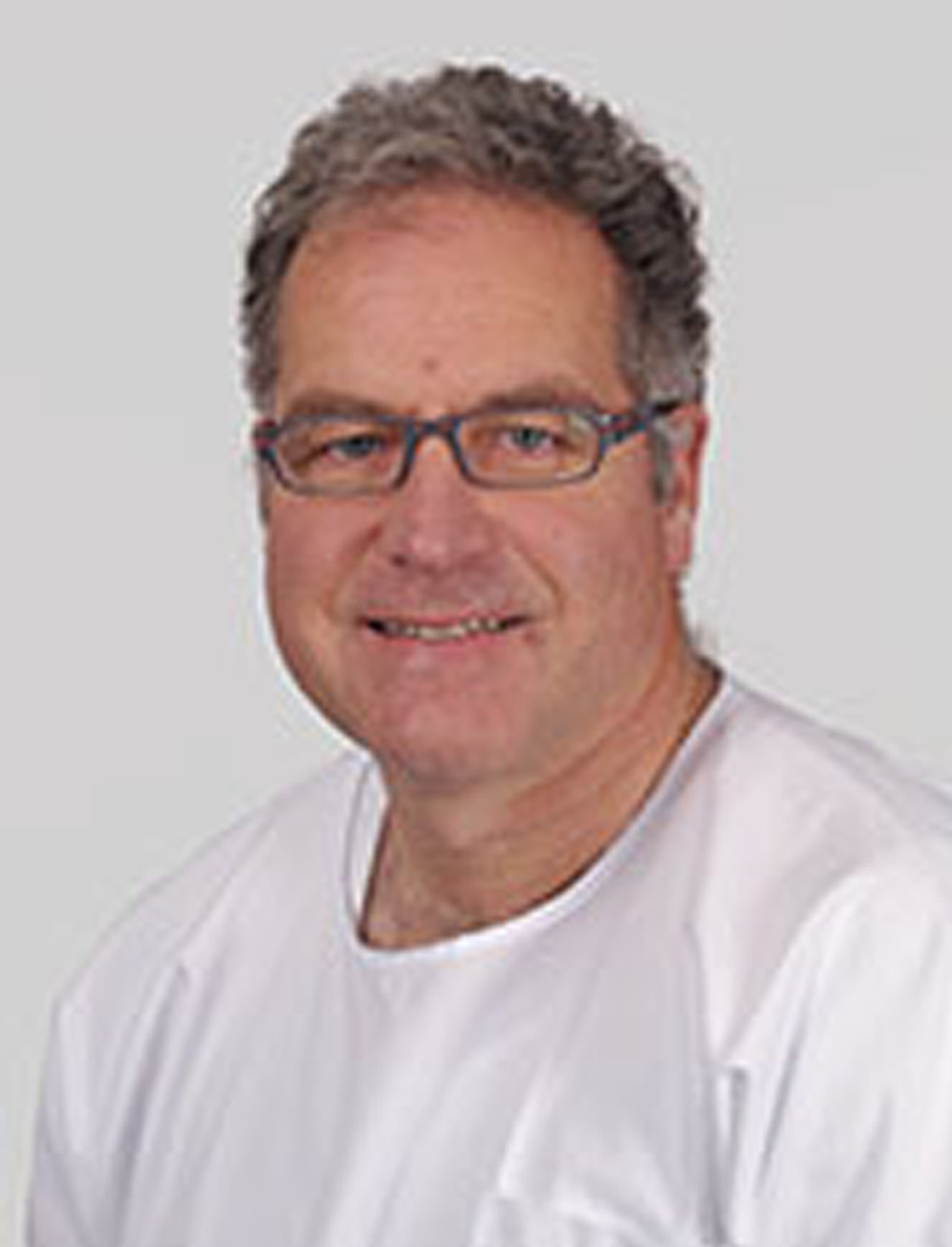
Andreas Sonderegger is a Lecturer at the Department of Psychology , University of Fribourg , and group leader of the Human Factors Lab . His research focuses on Human-Computer Interaction , Usability Engineering , and User Experience (UX) , with particular emphasis on: Web accessibility for diverse user groups Neurofeedback systems for cognitive enhancement Human factors in automated driving Cross-cultural usability testing Physiological computing for user state assessment His recent publications analyze: Neurofeedback applications for tinnitus treatment Human-AI decision-making comparisons Physiological indicators in automated driving Usability of no-code robotics programming He has contributed to journals such as: Computers in Human Behavior Scientific Reports Ergonomics International Journal of Human Computer Studies
Matthias Studer is an Associate Professor of quantitative methods for social sciences at the LIVES center and Institute of Demography and Socioeconomics of the Faculty of Social Sciences at the University of Geneva. His work focuses on developing and applying advanced statistical methods for analyzing life course trajectories and social inequalities. With a PhD in Socioeconomics from the University of Geneva, he has established himself as a leading expert in sequence analysis methodology. Studer's research interests center on quantitative methods for longitudinal data analysis, sequence analysis, gendered career inequalities, and labor market and social policy evaluation. His work bridges methodological innovation with substantive applications in sociology, demography, and public health. He has made significant contributions to the development of sequence analysis techniques, particularly through his work on the TraMineR package for R, which has become a standard tool in life course research. His recent publications (2023-2025) demonstrate the breadth of his research, spanning applications in cognitive aging, women's empowerment, labor market transitions, and cancer risk. These works consistently employ sophisticated sequence analysis techniques to examine complex life trajectories across different domains. His methodological contributions include advancements in validating sequence typologies, handling missing data in multichannel sequence analysis, and developing feature selection approaches to identify critical aspects of trajectories. Studer actively collaborates with researchers across multiple disciplines and institutions, contributing to interdisciplinary projects that examine life course vulnerabilities, social inequalities, and health outcomes. His work has significant implications for understanding how early life conditions shape later outcomes and how social policies might mitigate vulnerabilities across the life course.
Matteo Favero is a Lecturer and Scientist at the Swiss Federal Institute of Technology Lausanne (EPFL), affiliated with the School of Architecture, Civil and Environmental Engineering (ENAC). He conducts research at the ETHOS Lab, focusing on data-driven interventions to enhance environmental and social sustainability in the built environment. His work integrates computational tools with human-centric approaches to optimize building performance and occupant well-being. Education: PhD in Civil and Environmental Engineering, Norwegian University of Science and Technology (NTNU), 2022 MSc in Building Engineering, Politecnico di Milano, 2015 BSc in Building Engineering, Politecnico di Milano, 2012 Research Interests: Favero's research explores occupant behavior modeling, statistical analysis of thermal comfort, and human-building interactions. He emphasizes multi-domain studies to bridge gaps between energy efficiency, indoor environmental quality, and user satisfaction. His work supports the development of adaptive building controls and sustainable design guidelines through empirical data and interdisciplinary methodologies. Publication Trends: Recent articles (2020–2024) prioritize occupant-centric building operations, statistical rigor in comfort studies, and standardized documentation for behavior models. Themes include predictive algorithms for thermal preferences, validation of human-in-the-loop methods, and critical reviews of multi-domain research practices, reflecting a consistent focus on enhancing data reliability and practical applicability in sustainable building science. Awards: 2022 Best Paper Award: A guideline to document occupant behavior models for advanced building controls (Building and Environment) 2022 Best Paper Award: Quality criteria for multi-domain studies in the indoor environment (Building and Environment) Labs and Teams: He is a core member of the ETHOS Lab at EPFL, an interdisciplinary group advancing sustainability through computational and engineering solutions for human-oriented built environments.
Prof. Dr. Franz E. Weber serves as an Associate Professor in Oral Biotechnology and Bioengineering at the Center for Dental Medicine, University of Zurich. His research laboratory focuses on innovative approaches to bone regeneration, particularly addressing large bone defects in the head region. With expertise spanning biomaterials science, tissue engineering, and regenerative medicine, Weber leads a research group dedicated to developing novel therapeutic strategies for cranio-maxillofacial reconstruction. Dr. Weber's research interests center on the healing of large bone defects in the head region through the development of growth factors, synthetic bone substitute materials, and biomimetic materials including fibrin gels, platelet rich plasma, synthetic hydrogels, and HA/TCP based materials. His laboratory has pioneered work on delivery systems for bone morphogenetic proteins (BMPs) and vascular endothelial growth factor (VEGF), with particular focus on identifying enhancers of these growth factors. Recent work involves osteoconduction research to determine optimal microarchitecture of 3D scaffolds for bone ingrowth, utilizing both titanium powder laser sintering and calcium phosphate based scaffolds produced through lithography-based additive manufacturing. His research bridges the gap between materials science and clinical applications in oral and maxillofacial surgery. Analysis of Weber's recent publications reveals a strong focus on the intersection of additive manufacturing and bone biology, with particular emphasis on how microarchitectural design influences osteoconduction. His work spans from fundamental research on scaffold design principles to preclinical validation in animal models. A significant thread throughout his research involves epigenetic regulation of bone formation, particularly through bromodomain inhibitors like N-methyl pyrrolidone and N,N-dimethylacetamide. His laboratory has made important contributions to understanding how scaffold geometry, material composition, and growth factor delivery systems interact to optimize bone regeneration outcomes. As principal investigator, Weber leads a multidisciplinary research team within the Oral Biotechnology and Bioengineering laboratory at the University of Zurich's Center for Dental Medicine. The laboratory maintains specialized capabilities in biomaterials fabrication, including additive manufacturing for patient-specific scaffolds, as well as comprehensive in vitro and in vivo testing facilities for evaluating bone regeneration strategies. Current projects focus on mineralized exosome therapies, advanced ceramic scaffolds, and novel delivery systems for growth factors and epigenetic modulators, positioning the laboratory at the forefront of translational research in craniofacial bone regeneration.
Dr. Patric Wyss is a Research Associate at the School of Applied Psychology, University of Applied Sciences Northwestern Switzerland (FHNW) and concurrently serves as a Research Associate at the Institute for Social and Preventive Medicine (ISPM), University of Bern. His interdisciplinary work bridges psychology, data science, and healthcare, focusing on innovative approaches to health diagnostics and workplace mental health. Dr. Wyss completed his academic training at the University of Bern, Switzerland with a Doctorate in Biomedical Sciences (2019-2022), Master's degree in Statistics and Data Science (2017-2020), Master's degree in Psychology (2014-2017), and Bachelor's degree in Psychology with a Minor in Mathematics (2010-2014). His research interests center on work and health, predicting health variables with complex algorithms, and data-driven personalized health diagnostics. Dr. Wyss has made significant contributions to dementia diagnosis through data-driven approaches, cognitive assessment tools, and digital interventions for mental health. His work often integrates machine learning with clinical psychology to develop predictive models for health outcomes. Analysis of his recent publications reveals a strong focus on neurodegenerative diseases, particularly dementia and cognitive decline in aging populations. His research increasingly incorporates digital health technologies, virtual reality, and algorithmic approaches to develop personalized diagnostic tools. The publications demonstrate a progression from fundamental cognitive neuroscience to applied health diagnostics with practical workplace applications. Dr. Wyss has been actively involved in several significant projects including Digital Balance, Healthy@Work, and work-related stress and mental disorders in the workplace. His current position at the Institute for Mental and Organizational Health at FHNW focuses on how digitalization, social upheavals, and new forms of work present both opportunities and challenges for mental and organizational health. His professional activities include research collaboration across multiple institutions, development of digital assessment tools, and investigation of HR analytics applications for health monitoring. Dr. Wyss has also contributed to the development of serious games for cognitive assessment and rehabilitation, particularly for older adults and patients with neurological conditions.