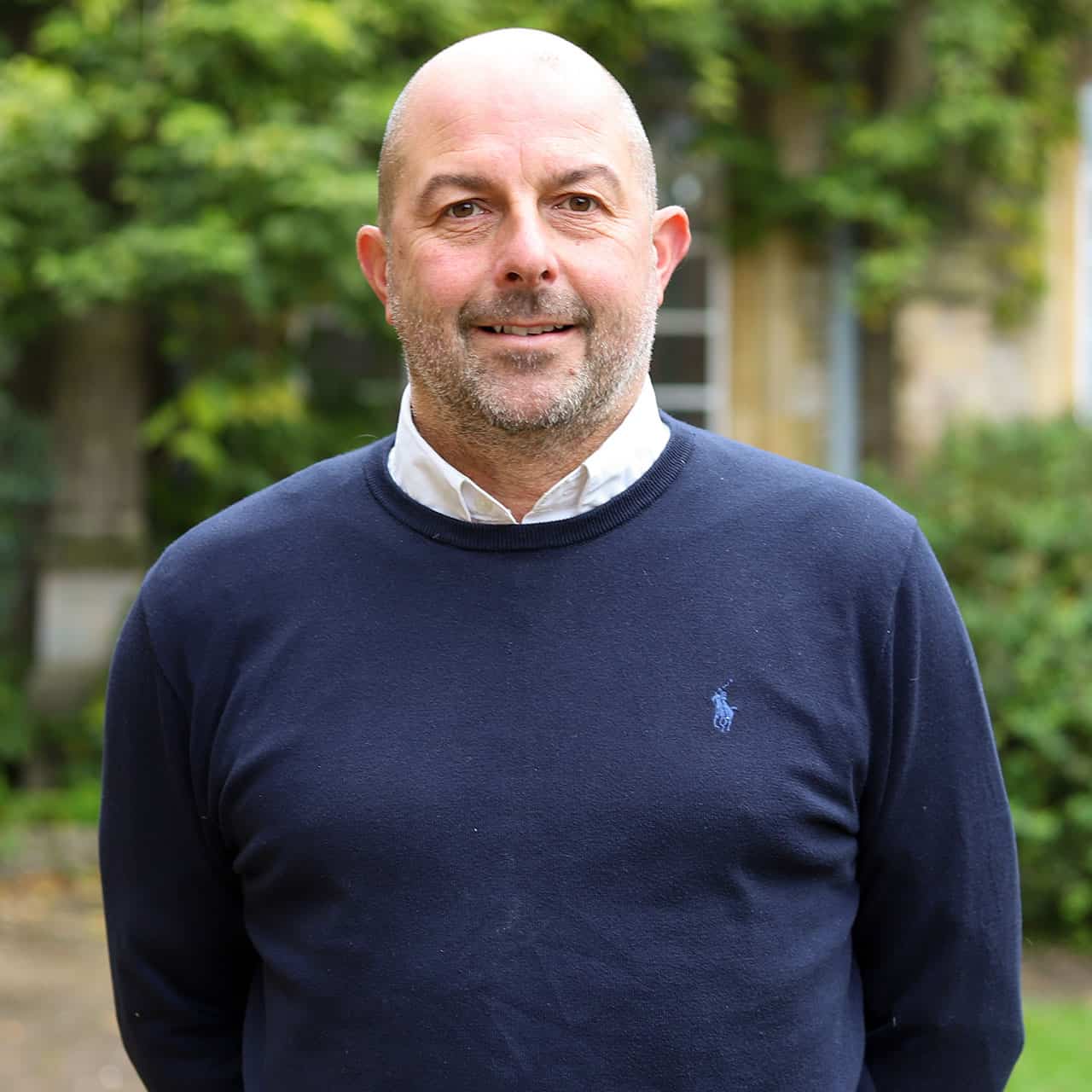
Lewis Whales is a Lecturer in the Management Discipline Group at UTS Business School. His research examines not-for-profit management, sport leadership, event management, and volunteering, with particular focus on relational leadership in professional sports contexts. He currently serves as Program Director for the Master of Social Impact and Not-for-Profit Management and Major Coordinator for Sustainability and Social Impact in the Bachelor of Management. Prior to academia, Whales worked with AFL, Cricket Australia, and Police Citizens Youth Clubs NSW. Publications investigate leadership development in sports organizations, pandemic impacts on athletes, and commercial aspects of Australian rugby. His doctoral thesis analyzed relational leadership in professional sport, contributing to understanding of temporal and contextual factors in sports management.
Dr. Peter English is a Senior Lecturer in Journalism at the University of the Sunshine Coast's School of Business and Creative Industries. His research focuses on sports journalism, including journalists' roles, content analysis, and social media impact. He has over two decades of experience as a sports journalist, contributing to domestic and international publications. His work explores themes like media commercialization, digital transitions, and the evolving landscape of sports reporting. Key research projects include a typology of Australian sports journalists and academic support strategies for student-athletes. Dr. English has secured grants, including the 2018 Journalism Education and Research Association of Australia grant. He teaches Sports Journalism and Investigative Journalism, emphasizing practical skills and industry readiness. His professional memberships include the Journalism Education Association of Australia, and he contributes to media commentary and social media engagement.
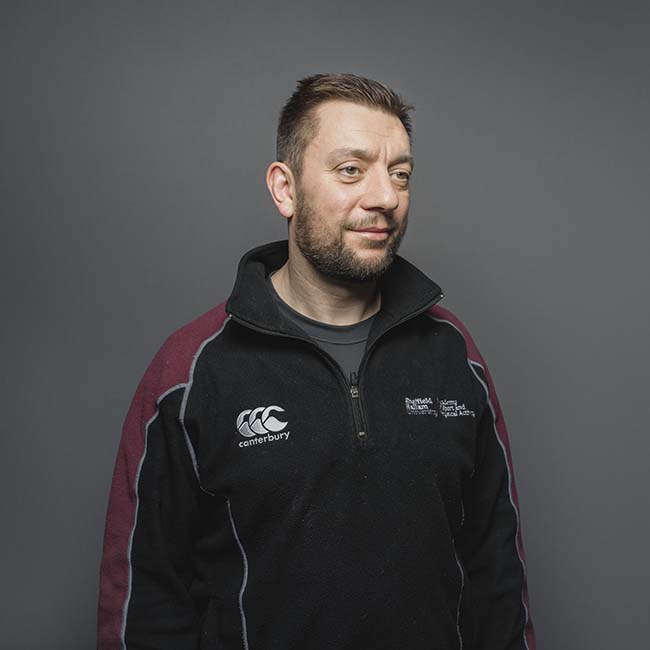
Dr Harvey Anderson is a Senior Lecturer and Researcher in Sport Coaching & PE at Sheffield Hallam University's School of Sport and Physical Activity, part of the College of Health, Wellbeing and Life Sciences. He serves as Collaborative Course Leader for the BSc(Hons) Sport Coaching program and has held leadership roles including Distance Learning Champion and Social Media & Marketing Coordinator. Education: BSc(Hons), PG Cert, MSc Senior Fellow of the Higher Education Academy (SFHEA) His research focuses on cricket biomechanics, existential psychology in sport, strength & conditioning frameworks, and feedback methodologies in Higher Education. He has presented globally at conferences in the USA, Japan, Australia, and more. His work explores topics like fast-bowling technique analysis and mental toughness through an existential lens. Recipient of multiple 'Inspirational Teacher' nominations and CIMSPA Chartered High-Performance Coach certification, Anderson also serves as an External Examiner (University of Worcester/Lincoln), Disciplinary Panel member (Paddle UK), and Assessor for CIMSPA coaching certifications. Current research projects include systematic reviews of fast-bowling biomechanics and investigations into expert coaches' experiential knowledge.
Patrick Rhodes is an instructor of technical/visual communication and data visualization at Arizona State University (ASU), affiliated with the College of Integrative Sciences and Arts' School of Applied Professional Studies (CISA). He joined ASU in 2017 and teaches courses on visual communication, data visualization tools, and technical writing. His expertise spans computer science, data analysis, graphic design, and science communication. Education: M.S. Geographic Information Systems Technology, University of Arizona M.A. English, Arizona State University B.S. Computer Engineering, University of Memphis A.O.S. Graphic Design, Sessions College Research interests focus on data visualization, technical communication, and applying visual methods to science, sports, and environmental studies. His articles explore topics like gravitational waves, AI ethics, and sports analytics, showcasing interdisciplinary approaches to complex problems. He has also contributed to geographic information science, particularly in riparian ecology. Despite no formal awards listed, his work bridges technical expertise with creative design, evident in editorial artwork and data-driven storytelling. Advising and grants are not explicitly documented in available texts.
Professor Andy Harland is a Professor of Sports Technology and Director of the Sports Technology Institute and Sports Technology Research Group at Loughborough University. He holds a BEng in Engineering Science and Technology and a Ph.D. in Optical Engineering from Loughborough University, with research collaboration at the National Physical Laboratory. His roles include leading academic research, industry partnerships, and overseeing sport-related technology innovation. His research focuses on sports equipment design, biomechanics, and material science. Notable projects include developing soccer balls for UEFA and FIFA tournaments, analyzing cricket batting mechanics, and studying injury prevention through helmet design. He has led EPSRC/IMCRC-funded projects and collaborated with major sports brands. Recent work explores SARS-CoV-2 transmission risks via sports equipment and airborne spread in sports like cricket, alongside advancements in gesture recognition for prosthetics and computational optimization of sports gear. His contributions span aerodynamics of sports balls, surface material analysis, and player performance metrics. Professor Harland's expertise bridges engineering and sports science, with impactful applications in elite sports safety, equipment innovation, and athlete performance enhancement.
Mohammad Arshad Rahman is an Associate Professor in the Department of Economic Sciences at IIT Kanpur. His research spans Bayesian econometrics, quantile regression, machine learning, and applied econometrics. He has held positions at Zayed University and University of California, Irvine, and currently teaches econometrics and finance courses. Education: Ph.D. Economics, University of California, Irvine (2013) M.S. Statistics, UC Irvine (2011) M.A. Economics, UC Irvine (2009) M.A. Economics, Delhi School of Economics (2006) B.Sc. Economics Hons., St. Xavier's College, Kolkata (2004) Research focuses on developing Bayesian methods for econometric problems, with applications in energy economics, finance, and social policy. Research areas include: Bayesian inference techniques, quantile regression models, machine learning applications in economics, discrete choice modeling, and time series analysis. Awards and Honors: Social Science Merit Fellowship Multiple Summer Research Fellowships All India Post-Graduate Scholarship Analyst Accolade Award
Kendall Jarrett is a Senior Lecturer in the Department of Childhood, Education & Professional Development at the University of Chester. With a multidisciplinary background spanning Australia, Japan, New Zealand, and the UK, his work integrates sport pedagogy and teacher education to explore global educational leadership practices. He focuses on how leadership opportunities are accessed in higher education, collaborating with institutions in France, the USA, Spain, and beyond. He holds a Senior Fellowship of the Higher Education Academy and contributes to academic practice through roles as an external examiner for tertiary programs and peer reviewer for education-focused journals. His consultancy includes involvement with the Chevening Secretariat and Turing schemes in the UK. Research interests center on leadership dynamics in educational settings, comparing practices across sectors and climates. Notable work examines game-based approaches in physical education, teacher training, and the intersection of global-local leadership paradigms. He has published extensively on topics ranging from curriculum design innovations to leadership development strategies in complex systems. Teaching responsibilities include leading modules like CD7603 (Power, Policy & Politics in Educational Leadership) and CD7208 (Dissertation). He supervises EdD and PhD students in educational leadership and pedagogical innovation. Key achievements include advancing teaching and learning capabilities through collaborative frameworks and advocating for inclusive digital education to enhance social mobility.
Shahid Awan is a Lecturer at the School of Computing, Engineering and Physical Sciences. He holds a Ph.D. in Computer Science, specializing in Machine Learning, with a focus on applying intelligent systems to United Nations Sustainable Development Goals (UNSDGs), particularly in circular economy, IoT-enabled smart agriculture, and health informatics. His work emphasizes innovation, as seen in projects like 'Cricket Video Scene Categorisation' (Rector’s Award for Innovation, 2018) and predictive models for electric demand and dengue fever spread. Education: Ph.D. in Computer Science. Professional Development: Completed the 'Innovation Strategy Course' by KTN UK and 'Leadership and Management Training Modules' from Ashorne Hill Management College, UK. Research Interests: Machine Learning applications, Deep Learning, IoT, and Data Science in healthcare, sustainability, and smart systems. His publications highlight contributions to blockchain security, medical imaging analysis, and education technology. Notable Projects: Led projects on electric demand forecasting (collaborating with National Grid) and dengue fever prediction (health department). Founded the circular economy startup Circulayo, focusing on innovation strategy. Scientific Awards: Rector’s Award for Innovation (2018). Advising and Grants: Accepting PhD students and secured funding for startups like 'Electrical Demand Forecasting' through Silicon Valley pitches. Collaborates with industry partners like Crickingif and the National Grid. Labs/Teams: Active in interdisciplinary teams addressing SDGs through tech solutions, though no specific lab names are provided.
Dr Alex Dinsdale is a Senior Lecturer in Sport and Exercise Biomechanics at the Carnegie School of Sport, Leeds Beckett University. He serves as Course Leader for the MSc Strength and Conditioning program. Primary roles: Academic teaching, research supervision, and biomechanical analysis expertise Professional affiliations: UKSCA, Higher Education Academy His research focuses on enhancing human performance through strength and conditioning programs, with specific interests in: Mechanical loading and similarity Post-activation potentiation Strength-speed training strategies Biomechanical analysis in athletics (shot put, hammer throw) Long-term athlete development Teaching activities include module leadership in: Scientific Principles of Strength and Conditioning Practice (Level 6) Planning, Delivery and Evaluation of Training (Level 7) Professional Contributions: Biomechanical analysis for IAAF World Championships (2017-2018) Support for external clients in Athletics, Martial Arts, Rugby Union, Cricket, Weightlifting, and Telemark skiing
Kevin Judge serves as Associate Professor in the Department of Biological Sciences within MacEwan University's Faculty of Arts and Science, specializing in insect behavior and evolutionary biology with emphasis on orthopterans. His research examines sexual selection dynamics in sexually-cannibalistic insects and field crickets through integrative field and laboratory approaches. Education: PhD, University of Toronto M.Sc., University of Guelph B.Sc., University of Guelph Dr. Judge's research program investigates how ecological constraints shape mating systems in insects, particularly focusing on Cyphoderris orthopterans and Gryllus crickets. His work spans bioacoustic monitoring , sexual dimorphism , and evolutionary adaptations in weaponry and behavior, contributing significantly to understanding sexual selection mechanisms in natural populations. Current side projects include Mormon cricket morphological variation, bullfrog vocalization studies, and orthopteran distribution ecology. Analysis of his 15 most recent publications reveals consistent focus on acoustic communication, mating strategy evolution, and condition-dependent traits across diverse insect taxa. The research demonstrates methodological integration of field observations, morphological analysis, and behavioral experiments to address fundamental questions in evolutionary ecology. Scientific Awards: Dr. Sherrill Brown Distinguished Research Award, MacEwan University (2023) Dr. Judge has secured substantial research funding including a Natural Sciences and Engineering Research Council Discovery Grant (2017-2022) and multiple MacEwan University grants (Project Fund 2015/2023, Environmental Studies Institute Grants 2021/2023). He actively mentors undergraduate researchers, evidenced by numerous student co-authors on publications, and teaches core courses including ZOOL 325: Entomology and BIOL 108: Introduction to Evolution. His professional engagement spans eight scientific societies with lifetime memberships in the Canadian Society for Ecology and Evolution and Orthopterists' Society.
Dr Neal Smith is a Reader in Biomechanics at the University of Chichester, teaching undergraduate and postgraduate modules including Sports Injury and Prevention, Biomechanical Techniques, and MSc Ergonomics in Sport and Exercise while providing sports science support to elite divers and cricket bowlers. His academic credentials include: BSc (Hons) Sport and Exercise Science, Liverpool John Moores University (1993) MSc Ergonomics, Loughborough University (1994) PhD Sport Biomechanics, University of Southampton (1999) Smith's research centers on sports biomechanics with pioneering work in non-linear motion analysis for soccer and racket sports, kicking biomechanics across multiple sports, and ergonomic footwear design . His methodology integrates ground reaction force measurement, kinematic analysis, and practical sports applications to enhance athletic performance and prevent injuries. Analysis of his 15 most recent publications reveals dominant research themes in soccer biomechanics (particularly instep kicking dynamics across approach angles and velocities), ACL injury risk assessment through advanced signal processing, and expanding investigations into women's rugby breast health and concussion biomarkers in youth football. His work consistently bridges laboratory findings with real-world athletic contexts. Smith currently supervises 2 PhD candidates and serves as external examiner for BSc/MSc programs at Teesside and Portsmouth Universities. His collaborative research spans orthopaedics, sports medicine, and performance science teams across multiple institutions. His research operations involve interdisciplinary collaboration with sports scientists, orthopaedic specialists, and performance coaches, focusing on translating biomechanical insights into practical training modifications and injury prevention protocols across soccer, cricket, rugby, and cycling disciplines.
John Warmenhoven is a Lecturer at the University of Technology Sydney's School of Sport, Exercise and Rehabilitation within the Faculty of Health. His research intersects applied analytics, movement science, and meta-research, focusing on translating data science—especially functional data analysis—into real-world applications in high-performance sport, health, and defense. He co-leads national grants in the CSIRO Sports AI Consortium and has authored over 40 peer-reviewed publications. His research interests include AI-driven skill acquisition, biomechanics-informed performance optimization, and data science capability-building for defense. Dr. Warmenhoven supervises PhD students working on innovative projects ranging from sports AI to biomechanical analysis. Recent publications demonstrate trends in advanced biomechanical modeling, athlete performance diagnostics, and meta-research methodologies. He engages extensively with elite sports industries to develop practical, problem-centered research solutions.
Deirdre McGhee is an Associate Professor at the University of Wollongong's School of Medical, Indigenous and Health Sciences. She has been with the university since 1998 and is Co-Director of Breast Research Australia (BRA), an interdisciplinary center focused on breast-related research to enhance physical activity and athletic performance in women. Her work bridges clinical practice (sports physiotherapy background) with research, addressing breast injuries, sports bra design, and breast-related barriers in sports and health contexts. Research Interests include: breast injuries in contact/combat sports, sports bra design/fit for athletes, and breast-related issues in pregnant/postpartum women and those with breast cancer. She collaborates with global organizations like World Rugby, International Olympic Committee, and the Australian Physiotherapy Association. Deirdre holds a Fellowship with Sports Medicine Australia and is an ambassador for The Sports Bra Project, advocating for equitable access to sports for women. She supervises PhD/MPhil students focusing on breast-related health and performance. Her grants include funding from World Rugby and internal university initiatives to study breast injury prevention and biomechanics. Teaching roles include clinical musculoskeletal anatomy for medical students and functional rehabilitation for exercise science students. She chairs the UOW Anatomy Committee and participates in national education committees for sports medicine.
Associate Professor Mark Sayers is an academic and researcher in Sports Biomechanics at the University of the Sunshine Coast (UniSC), affiliated with the School of Health. He holds a PhD from RMIT University (2001) and has been with UniSC since 2005. His expertise includes biomechanics of team sports, injury prevention, and high-performance coaching. He served as the biomechanist for the New Zealand All Blacks (2000–2001, 2004–2008) and currently directs UniSC’s High Performance Sport programme. Awards include a national Office of Learning and Teaching Citation (2012) and recognition as one of Australia’s top ten lecturers (2010). His research focuses on technique analysis in sports like rugby union, agility training, spinal biomechanics, and the biomechanics of injury prevention. He has secured nearly AUD$900,000 in grants and supervised over 50 HDR students. Current projects include investigating concussion in rugby league and developing computer vision tools for sports coaching. Teaching responsibilities include courses like Biomechanics 2 and Performance Enhancement. He is also involved in community projects promoting healthy aging through sport for First Nation Australians.
Peter Charlish is a Senior Lecturer at Sheffield Hallam University, serving as acting Deputy Head of the Department of Law, Criminology and Community Justice and Head of University Academic Workplanning. He leads the sports law module at undergraduate level and oversees academic workplanning across the Department. His roles include managing staff and developing courses such as the Graduate Diploma in Law and LLB Business Law degree. Education: BA (Hons), PGCE, MA (Law), MPhil, and Senior Fellow of the Higher Education Academy (SFHEA). Current roles also include Operations Manager for the Department and Academic Conduct Panel Chair. Research focuses on sports law, particularly legal regulation of doping and negligence in sports violence. Publications include analyses of anti-doping policies, high-profile doping cases (e.g., Lance Armstrong), and negligence frameworks in sports injury incidents. He contributes to the International Sports Law Review editorial board. Media engagement includes BBC Radio interviews on doping scandals and parliamentary consultations on volunteering legislation. His work has been cited in Hansard for contributions to the Private Members Promotion of Volunteering Bill and Childhood Review submissions.