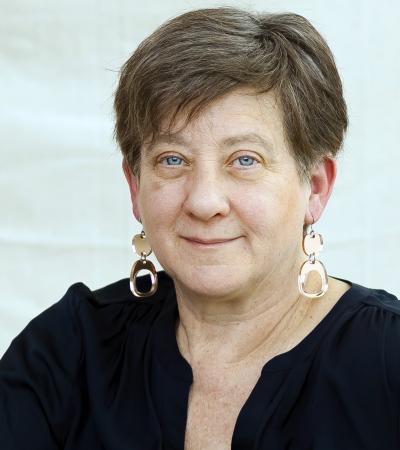
Ananya Kabir is a Professor of English Literature in the Department of English Language & Literature. She holds an ORCID identifier (0000-0003-1895-8412) and has been active in research networks spanning India, Vietnam, France, and the Indian Ocean Rim. British Academy Fellowship (2023) Humboldt Research Prize (2019) Infosys Prize for Humanities (2017) Her research focuses on archipelagic memory frameworks across postcolonial spaces, particularly examining connections between India, Vietnam, and the Caribbean through literary and cultural analyses. She explores how decolonial imaginaries emerge from fragmented geographies and multidirectional memory practices. Recent publications analyze archipelagic intimacy, échos-monde resonance, and memory-making in Indian Ocean spaces. Her collaborative works with Luca Raimondi demonstrate interdisciplinary approaches combining literary theory, cultural history, and oceanic studies. Alegropolitics: Connecting on the Afromodern Dance Floor (British Academy, 2022-2023) IATIO Project: India and Indian Ocean in Decolonial Period (EU Commission, 2021-2024) MODERNMOVES: Afro-Diasporic Rhythms (EU Commission, 2013-2018)
Kris Sealey is a Professor of Philosophy at Penn State University, specializing in Critical Philosophy of Race, Caribbean Philosophy, and Decolonial Theory. She holds a B.S. from Spelman College (2001), an M.A. (2005) and Ph.D. (2007) from the University of Memphis. Her work examines post-colonial identity, creolization, and resistance to Western hegemony. Dr. Sealey’s acclaimed book Creolizing the Nation (2020) won the Guillén Batista Award (2022). She co-edits volumes on Creolizing Sartre and Critical Theory, and her current projects explore abolitionist world-making and Black cultural production. Education : Spelman College (B.S.), University of Memphis (M.A., Ph.D.) Key Research Themes : Creolization, necropolitics, Black geographies, Caribbean intellectual traditions Her recent articles engage Cedric Robinson’s theories of racial capitalism, Mbembe’s necropolitics, and Octavia Butler’s temporal explorations. Sealey’s interdisciplinary approach bridges philosophy with activism, emphasizing reciprocity and decolonial praxis. She resides in Connecticut and actively contributes to academic and public discourses on racial justice.
Karen B. Graubart is Professor of History at the University of Notre Dame and has been a Kellogg Institute faculty fellow since 2007. She specializes in colonial Latin American history with particular expertise in Indigenous and Afro-Peruvian communities, gender studies, and customary law. Her research examines how marginalized communities navigated colonial structures while maintaining cultural autonomy, often employing innovative methodologies including GIS mapping alongside traditional archival research. Graubart's scholarship has significantly contributed to our understanding of self-governance in Black and Indigenous communities following the Spanish conquest of the Americas. Dr. Graubart earned her Ph.D. from the University of Massachusetts - Amherst, establishing the foundation for her distinguished career in colonial Latin American history. Her doctoral work focused on Indigenous women's roles in the formation of colonial society in Peru. Karen Graubart's research centers on self-governance in Black and Indigenous communities after the Spanish conquest of the Americas, examining how customary law intersected with race, gender, and ethnicity in colonial contexts. Her work employs innovative methodologies including GIS mapping to visualize historical spaces and social boundaries. She investigates how marginalized communities navigated colonial structures while maintaining cultural autonomy, with particular attention to legal frameworks that both constrained and enabled self-determination. Her scholarship reveals how Indigenous and Afro-Peruvian peoples actively shaped colonial society through legal strategies, community organization, and cultural preservation. Graubart's publication record demonstrates a consistent focus on colonial Peru, particularly examining how Indigenous and Afro-Peruvian communities maintained autonomy through legal and social structures. Her work increasingly incorporates spatial analysis and GIS mapping to visualize historical communities. A clear trajectory shows her moving from studies of Indigenous women's experiences to broader examinations of racial and religious self-governance across the Iberian Atlantic world, culminating in her award-winning book 'Republics of Difference.' Her scholarship consistently highlights how marginalized communities creatively adapted colonial frameworks to serve their own interests. Graubart has received numerous prestigious awards recognizing the significance of her scholarship: James Alexander Robertson Prize (2015) for 'Learning from the Qadi: The Jurisdiction of Local Rule in the Early Colonial Andes' Ligia Parra Jahn Prize (2008) from the Rocky Mountain Council for Latin American Studies Transatlantic Studies Association and Cambridge University Press Book Prize (2023) for 'Republics of Difference' Guggenheim Fellowship (2025) National Endowment for the Humanities Fellowships American Council of Learned Societies Fellowship Throughout her career, Graubart has secured substantial research funding from major institutions including the National Endowment for the Humanities, the American Council of Learned Societies, Fulbright, the American Association of University Women, and the John Carter Brown Library. Her current research projects include 'Making Malambo: Black Collective Action in Early Spanish America' (2024-2025) and 'Fugitive Blackness: Finding African Diasporic Self-Governance in the Early Circum-Caribbean' (2018-2019). While specific student advisees aren't listed in the provided materials, her work has undoubtedly shaped the next generation of scholars in colonial Latin American history through her teaching and mentorship at Notre Dame. Graubart co-chairs the Latin American History Working Group at Notre Dame, which brings together faculty and graduate students for intellectual exchange on Latin American historical topics. She has organized numerous conferences and workshops, including the 'La Patrona Workshop' and participation in the Tepoztlan Institute International Conference. Her collaborative work with scholars like María Cecilia Ulrickson demonstrates her commitment to interdisciplinary and team-based scholarship in the field of Latin American history.