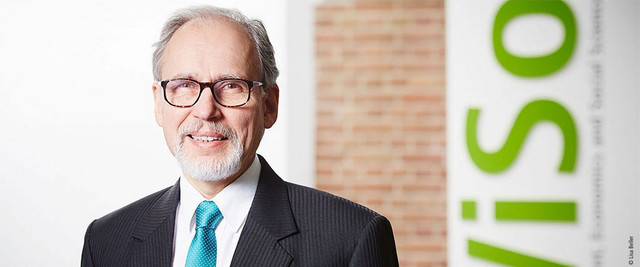
Prof. Francesca Biagini is a Full Professor of Applied Mathematics at the University of Munich (LMU), leading the Department of Mathematics within the Faculty of Mathematics, Computer Science, and Statistics. She holds additional roles as Vice President for International Affairs and Diversity at LMU since 2019, and served as President of the Bachelier Finance Society (2022–2023). Her academic career includes professorships at LMU (since 2009) and prior roles at the University of Bologna and Leibniz University Hannover. She specializes in financial and insurance mathematics, focusing on asset pricing, systemic risk, and model uncertainty. Education: PhD in Mathematical Finance (Scuola Normale Superiore, 2001), Laurea in Mathematics (University of Pisa, 1997). She has advised over 14 PhD students and 180+ master/bachelor students, collaborating with institutions like Allianz, MunichRe, and SwissRe. Research: Biagini’s work bridges financial and actuarial mathematics, including stochastic processes, systemic risk modeling, and insurance frameworks. Notable contributions include modeling asset bubbles, xVA calculations, and liquidity-based frameworks. She has published extensively in journals like *Finance and Stochastics* and *Mathematical Finance*. Awards and Activities: Recipient of the Prinzessin Therese von Bayern Preis (2019) and Zonta Clubpreis (2015). She organizes international conferences, serves on editorial boards (e.g., *Mathematical Finance*), and chairs the Munich Risk and Insurance Center. Her research is funded by grants from BayernLB and LMU Excellence programs.
Prof. Dr. Carsten Herresthal is a full-time Professor at the University of Regensburg, Faculty of Law, where he holds the Chair of Civil Law, Commercial and Corporate Law, European Law and Legal Theory. His work is centered on German and European corporate law, with a focus on banking, capital markets, compliance, arbitration, and European private law. He emphasizes methodological rigor and foundational legal principles in both national and EU contexts. University: University of Regensburg School: Faculty of Law Department: Department of Civil Law, Commercial and Corporate Law, European Law and Legal Theory Position: Professor Email: carsten.herresthal@ur.de, sekretariat.herresthal@jura.uni-regensburg.de Prof. Herresthal’s research spans key areas such as corporate governance, financial regulation, contract law, and legal methodology. He is particularly active in analyzing judicial decisions on standard terms, prepayment penalties, and EU legal harmonization. His work often critiques legislative and judicial overreach, advocating for clarity and coherence in legal frameworks. The recent publications of Prof. Herresthal reveal a strong trend in banking and capital markets law, especially concerning consumer protection, contract validity, and EU regulatory alignment. His articles frequently engage with rulings from the Federal Court of Justice (BGH) and the European Court of Justice (ECJ), analyzing their doctrinal soundness and practical implications. Topics include prepayment compensation, negative interest clauses, and the scope of consumer credit directives. His contributions are primarily in authoritative German legal journals such as NJW, ZIP, and WuB, reflecting his influence in national legal discourse. Prof. Herresthal is deeply involved in academic publishing and education. He serves as co-editor of the book series 'Writings on Corporate Law' (Nomos Verlag) and has contributed to major legal commentaries including the Münchener Kommentar zum HGB and the Staudinger Kommentar. He also co-authored a textbook on legal methodology for law students. He supervises doctoral and master’s theses and organizes a lecture series that bridges theoretical and practical aspects of corporate law, featuring leading practitioners from international law firms. His editorial roles and consistent scholarly output underscore his leadership in legal academia. He has not received explicitly mentioned scientific awards in the provided text, but his editorial positions and frequent publications in top-tier journals indicate high professional recognition. He also contributes to public legal discourse through commentary on legislative proposals, such as those concerning dormant accounts and supply chain due diligence. Prof. Herresthal leads a research team comprising scientific staff, student assistants, and a dedicated secretariat. He organizes academic events and fosters collaboration between academia and legal practice. His chair supports young scholars through thesis supervision and participation in scholarly publications. The ongoing projects include major commentary works on commercial and civil law, reflecting a sustained commitment to doctrinal scholarship and legal education.
Prof. Dr. Francesca Biagini is a full Professor at the Department of Mathematics, University of Munich (LMU Munich) , leading the Stochastics and Financial Mathematics working group. She serves as Vice President for International Affairs and Diversity at LMU Munich since October 1, 2019, and as President of the Bachelier Finance Society (2022–2023). She is also a Correspondent of the Deutsche Aktuarvereinigung (DAV) and a member of the Executive Board of the Munich Risk and Insurance Center (MRIC) since 2017. Her research focuses on stochastic processes in financial markets , particularly asset price bubbles , default risk modeling , and robust hedging under model uncertainty. Recent work includes deep learning applications to bubble detection and non-linear affine processes for market dynamics. She actively contributes to academic leadership through teaching and publications, including 15+ recent articles on topics like liquidity-induced bubbles, machine learning calibration, and systemic risk transfer equilibrium. Her workgroup collaborates on quantLab initiatives and DAV certificate programs .
Professor Andreas Schabert is a W3 Professor of Economics (Macroeconomics) at the Faculty of Management, Economics and Social Sciences, University of Cologne, since 2013. He serves as Academic Director for the MSc Economic Research and PhD Program in Economics, Vice-Dean for International Relations, and former Executive Director of the Center for Macroeconomic Research. He is a Principal Investigator at the Cluster of Excellence ECONtribute: Markets & Public Policy, a joint initiative of the Universities of Bonn and Cologne. Specializes in Monetary Policy, Fiscal Policy, Financial Markets, and International Macroeconomics Key roles: Spokesperson for the Economics Department (2021-2022), Co-Spokesperson for ECONtribute (2020-2021) Education: Habilitation (2004), Doctorate (1999) from University of Cologne; Studies in Chemistry and Economics (1988-1996) Research Focus: His work examines monetary-fiscal policy interactions, liquidity provision, and macroeconomic stability. Current research links macroeconomic modeling to real-world policy challenges like financial crises and inequality through ECONtribute’s interdisciplinary framework. Publications: His recent articles include analyses of fiscal multipliers, central bank balance sheets, and sovereign default theories, reflecting his expertise in macroeconomic policy design. Affiliations: Active in the Reinhard Selten Institute Executive Board, Key Profile Area 'Social and Economic Behavior', and ERSP funding programs at University of Cologne.
Prof. Markus Rudolf is a full Professor of Finance at WHU – Otto Beisheim School of Management since 1998, holding the Chair of Finance. He leads the WHU Center of Asset and Wealth Management and previously served as dean from 2015 to 2023. With a PhD and habilitation from the University of St. Gallen, his expertise spans banking, risk management, derivatives pricing, and Eurozone sovereign risk. He co-edits *Financial Markets and Portfolio Management* and advises major financial institutions such as Boeker & Paul AG. Research focuses include cryptocurrency dynamics, sustainable finance, and systemic risk. Notable contributions analyze market interdependencies, investor behavior, and regulatory frameworks like Basel II/Solvency II. His leadership roles include academic director of the Campus for Finance conference and supervisory board positions at financial firms.
Christian Andres is a Professor at WHU-Otto Beisheim School of Management, specializing in corporate finance, governance, and payout policies. He leads the Finance and Accounting Group, focusing on empirical studies of executive compensation, capital structure, and family-owned enterprises. His work addresses how rumors, tax policies, and ownership dynamics impact corporate behavior and market outcomes. Research Interests : Empirical Corporate Finance Dividend and Repurchase Policies Family Business Governance Credit Risk Analysis Executive Compensation Structures Recent Research Trends : His 2023-2025 publications analyze how takeover rumors depress productivity, the evolving landscape of corporate governance research, and the influence of accounting professionals in financial analysis. Earlier work (2014-2021) explored dividend sustainability, M&A dynamics, and the interplay between tax regimes and ownership structures. Labs/Teams : He collaborates within the Finance and Accounting Group, contributing to interdisciplinary projects on market efficiency and corporate decision-making.
Professor Ralf Kellner holds the Chair of Financial Data Analytics at the University of Passau, Faculty of Economics. His work integrates economics, data science, and statistics, focusing on empirical and application-oriented research to explore how statistical learning and AI can uncover insights in data-driven decision-making processes that generate economic value. He also teaches courses such as Deep Learning and Text Analysis in Finance, Financial Data Analytics and Machine Learning, and Scientific Computing with Python. His research examines the intersection of financial markets, statistical learning, and artificial intelligence, with specific interests in modeling adverse financial developments, systemic risks, and analyzing text data via domain-specific language models. Publications highlight collaborations with researchers like D. Rösch and N. Gatzert. Recent publications include work on hybrid service agents, quantile neural networks, default resolution time analysis, Bayesian sovereign bond risk models, and international diversification studies. His methodological approaches span extreme value theory, quantile regression, and multivariate statistical techniques applied to financial and insurance contexts. Contact: ralf.kellner@uni-passau.de
Max Nendel is a Junior Professor (Assistant Professor) at Bielefeld University, specifically affiliated with the Institute of Mathematical Economics within the Faculty of Business Administration and Economics. He is actively involved in the Collaborative Research Center 1283 (CRC 1283) "Taming uncertainty and profiting from randomness and low regularity in analysis, stochastics and their applications" as subproject manager for C7: "Markovian dynamics under model uncertainty". Additionally, he is a member of the Bielefeld Graduate School in Theoretical Sciences and an expert for the Center for Uncertainty Studies (CeUS) with expertise in Financial markets and Risk management. Dr. Nendel's research focuses on the intersection of mathematics, probability theory, and financial applications, with a particular emphasis on model uncertainty and its implications for financial markets. His work spans mathematical finance, stochastic analysis, nonlinear expectations, and risk management. He approaches these fields through rigorous mathematical frameworks, developing theoretical foundations that have practical applications in financial risk assessment and decision-making under uncertainty. His publication record reveals a strong trend toward addressing model uncertainty in mathematical finance, with recent works exploring risk measures based on weak optimal transport, convex semigroups, and Markov processes under nonlinear expectations. These publications demonstrate his expertise in bridging abstract mathematical concepts with concrete financial applications, particularly in the areas of risk management and financial modeling. Dr. Nendel serves as Principal Investigator for multiple significant research projects, including the Bielefeld University Research Training Group 2865 "Coping with Uncertainty in Dynamic Economies" (CUDE) and Project C7 of CRC 1283. His research has been presented at numerous international conferences and seminars across Europe, North America, and Australia, demonstrating the global recognition of his work in mathematical finance and uncertainty quantification. As an educator, Dr. Nendel has supervised numerous Ph.D. and Master's students, with several currently in progress. His teaching portfolio includes advanced finance courses with specific focus on stochastic control and model uncertainty in economics and finance. He has also organized and participated in various academic events related to risk measures, uncertainty in insurance, and robust finance.
Christoph Memmel is a Research Professor at the Deutsche Bundesbank's Directorate General Financial Stability. His research focuses on interbank contagion, market price risk of banks, and the behavior of bank management. He holds a Ph.D. in economics and has extensive experience in financial stability analysis and banking sector risk assessment. Memmel leads the Bundesbank's research on interest rate risk exposure, bank risk management strategies, and systemic risk dynamics. His work integrates quantitative methods with regulatory analysis to inform central bank policies. Key research areas include: Interest rate risk and liquidity management in banking Interbank market stability and contagion mechanisms Impact of low interest rate environments on bank behavior Regulatory frameworks for banking risk exposure Memmel's recent publications analyze how banks forecast risk exposures, manage net interest margins, and adapt to monetary policy shifts. His findings highlight the importance of hedging strategies and regulatory thresholds in mitigating systemic risk. He collaborates with international institutions on stress testing and macroprudential policy design.
Thomas Hartmann-Wendels is Professor of Bank Management at the University of Cologne's Faculty of Management, Economics and Social Sciences. He has held the Chair of Bank Management since 1999 and serves as Director of both the Institute for Leasing Research (since 2002) and the Institute of Bank Management and Banking Law (since 1999). His research focuses on banking management, corporate finance, leasing, risk management, and financial regulation. His extensive publication record in prestigious journals demonstrates expertise in areas such as bank funding stability, risk reporting standards, loss given default estimations, and the impact of Basel III regulations on the financial system. His work often combines theoretical frameworks with empirical analysis of German and international banking markets. His recent publications show a continued focus on banking risk management, with particular attention to regulatory requirements, leasing industry practices, and private equity compensation structures. His research bridges academic theory with practical banking applications, making significant contributions to both scholarly literature and industry practices. Arthur Anderson Research Award (1987) Professor Hartmann-Wendels has been actively engaged in media commentary on banking issues, with interviews in Deutsche Welle, Kölnische Rundschau, and Capital magazine discussing topics such as bank mergers, fintech disruption, and sustainable banking strategies.
Marti G. Subrahmanyam is the Charles E. Merrill Professor of Finance, Economics, and International Business at NYU’s Leonard N. Stern School of Business, and a Global Network Professor at NYU Shanghai. He joined Stern in 1974 and holds a Ph.D. in Finance and Economics from MIT, alongside degrees from IIT Madras (Mechanical Engineering) and IIM Ahmedabad (Business Administration). Both alma maters awarded him Distinguished Alumnus status. His research focuses on corporate securities valuation, derivatives markets, market microstructure, and fixed income markets. He has published over 125 articles in top journals like Journal of Finance , Journal of Financial Economics , and Review of Financial Studies , and authored books such as Financial Options: From Theory to Practice . He serves on editorial boards of leading finance journals and founded the Review of Derivatives Research . Teaching & Mentoring: Teaches across NYU’s undergraduate, graduate, and executive programs. Advised over 80 doctoral committees (chairing 35), with students at top global business schools. Founded Stern’s Undergraduate Honors Program (2000) and NYU Shanghai’s Business Honors Program (2015). Awards: NYU’s Distinguished Teaching Medal (2003), Anneliese Maier Award (2016 – first economist recipient). Consulting & Boards: Advises global financial institutions, corporations, and governments. Board memberships include ICICI Bank (NYSE), Infosys (NYSE), and several startups in India/US. Non-profit roles include Indian School of Business and IIT Madras Foundation. Subrahmanyam’s global academic footprint includes visiting professorships at over 20 institutions worldwide, spanning Europe, Asia, and the Americas. His research emphasizes liquidity dynamics, credit risk, and systemic financial markets challenges.
Prof. Dr. Katharina Oberpriller is a faculty member at the Department of Mathematics, University of Munich, working in the Financial and Insurance Mathematics research group. Her research focuses on model uncertainty, insurance risk markets, and credit risk modeling. She collaborates extensively on publications related to stochastic processes, affine models, and financial risk management.
Björn Imbierowicz is a Research Fellow at the Research Centre of the Deutsche Bundesbank, Germany's central bank. His work focuses on banking, corporate finance, and financial stability. He has been with the Research Centre since April 2018. Research Interests : His primary areas of research include banking sector dynamics, corporate finance, empirical finance, risk management, and the interplay between monetary policy and financial stability. He explores topics such as market discipline in banking, startup valuation methodologies, and the impact of regulatory policies on lending behavior. Articles Overview : His recent publications analyze how risky banks are disciplined by corporate depositors, drivers of startup valuations, and the effects of capital requirements on bank lending. His work bridges theoretical frameworks with empirical evidence from unique datasets, contributing to understanding financial stability mechanisms and policy implications. Labs/Teams : As part of the Bundesbank's Research Centre, he collaborates with interdisciplinary teams to address macroeconomic and financial stability challenges, leveraging the institution's resources for policy-relevant research.
Dr. Philipp Klein is an Assistant Professor at the Chair of Banking within the School of Business and Economics at the University of Münster. He holds a PhD in Finance (2020) from the same institution, preceded by a Master's and Bachelor's in Economics from the University of Münster (2015 and 2013). His research focuses on Risk Management , Financial Intermediation , Green Finance , and Information Processing in Financial Markets . He has published in journals like Journal of Financial Stability and Journal of Financial Intermediation , with notable works addressing ABS market dynamics and regulatory frameworks. Klein has received awards including the Ieke-van-den-Burg-Preis (2025) and a Walter Benjamin Fellowship (2021/22). Teaching responsibilities include courses on Financial Intermediation , Sustainable Finance , and Business Administration . He has held visiting roles at the University of Zurich (2021-2022) and served as Temporary Professor at the University of Paderborn (2023-2024). Klein actively participates in international conferences, presenting at events like the Financial Intermediation Research Society (FIRS) and European Accounting Association (EAA) . His work on synthetic capital relief trades and textual disclosures in ABS prospectuses highlights innovative approaches to bridging the green finance gap and improving market transparency. Research outputs frequently emphasize empirical analysis of banking practices and regulatory impacts.
Viral V. Acharya is a Professor of Finance and the C.V. Starr Professor of Economics at New York University's Leonard N. Stern School of Business. He is affiliated with several leading research institutions, including the Centre for Economic Policy Research (CEPR), the European Corporate Governance Institute (ECGI), and the National Bureau of Economic Research (NBER). His research spans critical areas in financial economics, with a focus on systemic risk, financial regulation, banking stability, corporate governance, liquidity risk, sovereign debt, and the implications of unconventional monetary policy. His work frequently addresses real-world financial crises and regulatory challenges. The trends in his scholarly output reveal a consistent emphasis on understanding the interconnectedness between financial institutions and broader economic stability. His publications explore topics such as credit derivatives, shadow banking, securitization, market freezes, and climate-related financial risks, often combining theoretical models with empirical analysis to inform policy. Notable contributions include seminal papers on measuring systemic risk, the design of prudential regulation, the role of liquidity in asset pricing, and the real effects of sovereign debt crises. His recent work continues to address pressing issues such as banking stress in 2023 and the rise of shadow banking in China.