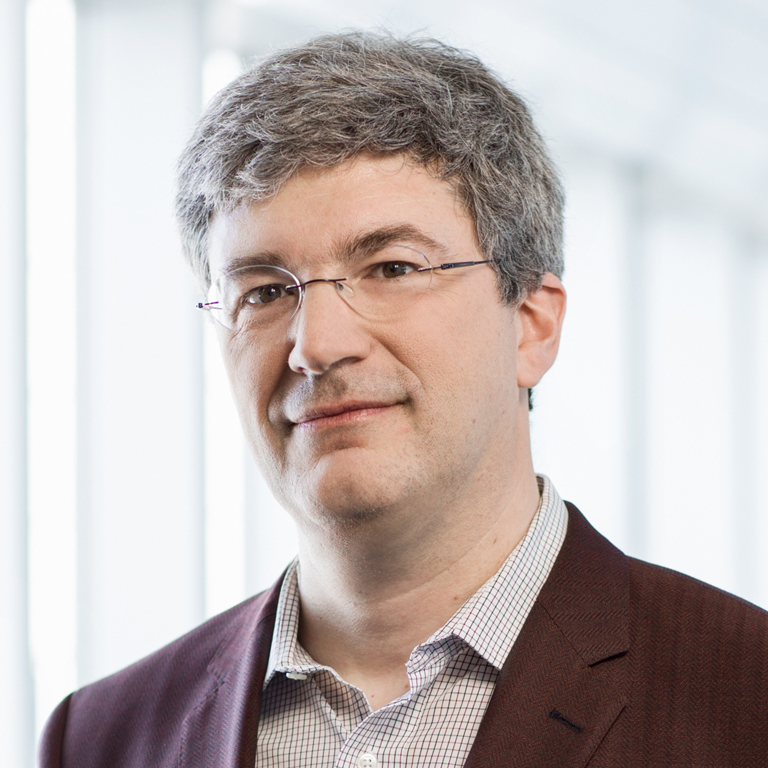
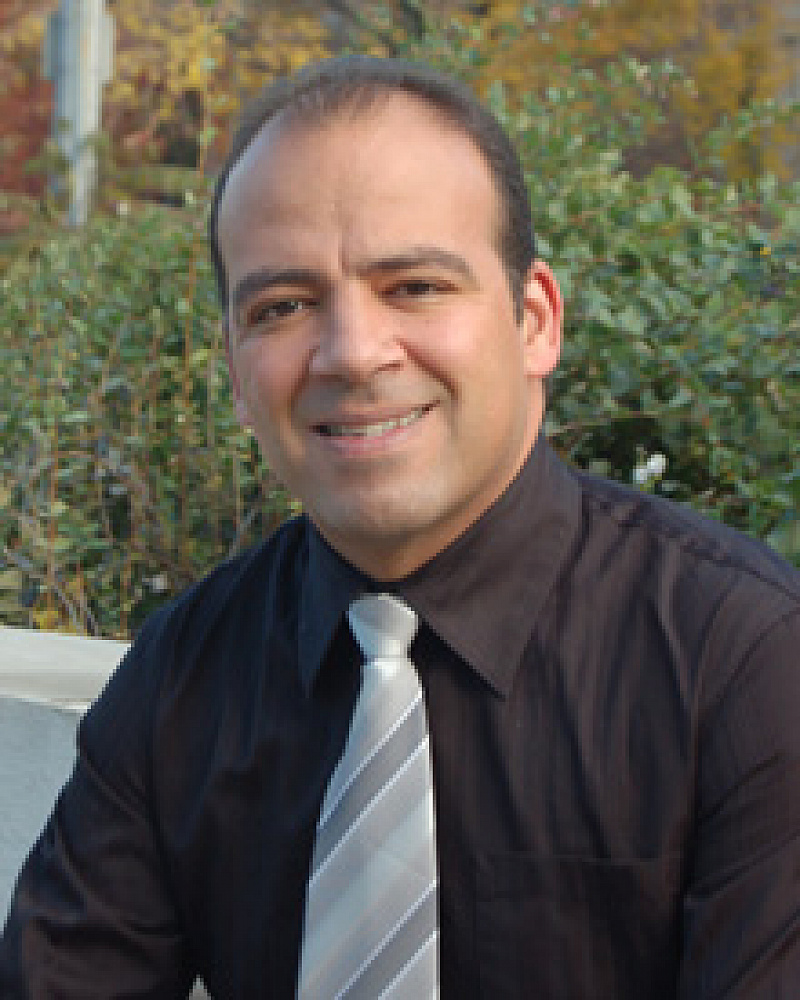
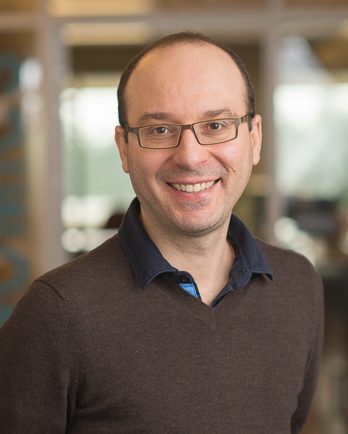
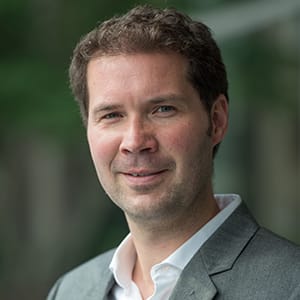
Pascal François is a Professor of Finance at HEC Montréal, specializing in Corporate Finance, Credit Risk, and Debt Pricing. He holds a D.E.A. in Finance from Paris I Sorbonne and a joint doctorate in Management Sciences from Paris I Sorbonne and ESSEC. His research focuses on corporate financial strategies, hedging techniques, bankruptcy procedures, and credit risk modeling. Recent work examines tax benefits of debt structure, volatility surface modeling, and bankruptcy law implications. Teaching includes Fixed Income Securities, Derivatives, and Continuous-Time Corporate Finance. He has supervised 25+ master’s theses and projects on topics like credit risk prediction, option pricing during crises, and ESG analysis in banking. Publications span top journals such as Journal of Corporate Finance , Finance Research Letters , and Journal of Futures Markets . Co-authored The Complete Guide to Portfolio Performance (2024). Active in academic supervision and financial markets research.
Avis Devine is an Associate Professor of Real Estate Finance and Sustainability at the Schulich School of Business, York University, affiliated with the Brookfield Centre in Real Estate & Infrastructure. She holds a B.S. from Westminster College, an M.B.A. from Duquesne University, and a Ph.D. in Finance from the University of Cincinnati. Her research focuses on the intersection of sustainability, ESG factors, and commercial real estate finance, with emphasis on environmental certifications, energy efficiency, and emerging markets. Dr. Devine’s work explores how sustainability impacts real estate valuation, risk management, and investment decisions. Notably, her studies investigate gender diversity in REIT leadership, green bond performance, and the role of foreign direct investment in promoting sustainable construction in emerging economies. She has received multiple grants and awards, including the 2017 Nick Tyrrell Research Prize and RERI grants (2018–2021). Her teaching portfolio includes courses on sustainable cities, commercial real estate asset management, and development prototypes at the Schulich School of Business. She actively engages with industry, contributing insights to publications like The Globe and Mail and Commercial Property Executive .
Valentina Galvani is a Professor and Chair of the Economics Department at the University of Alberta's Faculty of Arts. She holds a Ph.D. in Economics from Purdue University (2005), an MSc in Economics (2003), a Doctoral Degree in Mathematical Finance (2002) from the University of Brescia (Italy), and a Laurea (BS+MS) in Mathematics. Her research focuses on financial markets microstructure, energy economics, and corporate bond markets, with a strong emphasis on momentum investing and data-driven industry collaborations. Dr. Galvani has led MITACS-accelerated research projects with Alberta's banking sector since 2013, applying machine learning and model development to commercial finance challenges. Her early work included foundational contributions to general equilibrium theory in infinite-dimensional asset markets (Lp spaces). She joined the University of Alberta in 2005 and assumed the Chair position in 2022. Her research interests span financial economics, including market-state effects, corporate bond predictability, and energy market dynamics. Recent work addresses geopolitical conflicts' impact on oil markets, U.S. strategic petroleum reserves, and Saudi Arabia's competitive positioning under sanctions. She teaches graduate-level directed research and undergraduate courses in labor economics and personnel economics. Dr. Galvani's MITACS collaborations span 12 consecutive years (2013–2024), reflecting her industry engagement. While no specific awards are listed, her extensive publication record and leadership roles highlight her academic impact. She advises on energy diversification, market liquidity, and policy interventions in financial systems.
Imed Chkir is a Full Professor at the Telfer School of Management, University of Ottawa, specializing in Corporate Finance, Financial Markets, and International Finance. He holds a Ph.D. from Université Laval and has been affiliated with the University of Ottawa since at least 2016. Education: Baccalauréat from Lycée d'El Menzah VI, Maîtrise from Faculté des Sciences Économiques et de Gestion de Tunis and Université Laval. His research focuses on corporate governance, political connections, innovation, and sustainable finance. He has published extensively in top-tier journals including the Journal of Corporate Finance and Emerging Markets Review. Recent publications explore topics such as economic policy uncertainty and carbon emissions, green technology innovation, and board diversity. Funded by SSHRC, CPA Canada, and internal grants, his work spans corporate social responsibility, cybersecurity implications, and cannabis legislation analysis. Scientific awards include: Best student paper award at ASAC conference (1998) Finalist status for cannabis legislation research (2018) His funded projects (2016-2024) address innovation determinants, governance diversity, and risk management, with grants ranging from $1,500 to $65,884.
Giovanni Gallipoli is a Professor at the Vancouver School of Economics, part of the Faculty of Arts at the University of British Columbia. His research focuses on macroeconomics and applied microeconomics, with particular emphasis on economic inequality, labor market dynamics, firm heterogeneity, and computational methods. He holds a Ph.D. from University College London. Key professional roles include Associate Editor of the Journal of Political Economy , Faculty Associate at the Stone Centre on Wealth and Income Inequality, and membership in the CEPR and HCEO. His work bridges theoretical rigor and empirical analysis, exploring topics such as general equilibrium effects of policies, household responses to shocks, and skill dispersion across workers and firms. Notable awards include the Killam Research Prize and the Young Economist Award from the European Economic Association. His research outputs span influential journals in economics, with recent studies addressing structural transformation, digital intensity impacts, and intergenerational transfers. He actively contributes to policy discussions through affiliations with institutions like the Panel Study of Income Dynamics (PSID).
Gorkem Bostanci is an Assistant Professor of Economics at the University of British Columbia, affiliated with the Vancouver School of Economics within the Faculty of Arts. His office is located in Room 201E Iona Building. Dr. Bostanci's primary research focuses on Macroeconomics, specifically examining how market frictions impact aggregate productivity through distortions in the allocation of workers and capital across firms. His work spans several interconnected fields including Firm Dynamics, Labor Economics, and Economics of Information. His research employs both theoretical modeling and empirical analysis to address fundamental questions in macroeconomic theory. His recent publications demonstrate a consistent focus on market frictions and their macroeconomic implications. His work spans multiple high-impact journals including Management Science (2023), Journal of Banking and Finance (2020), and he has several papers under review at top journals like Journal of Political Economy Macroeconomics and Quarterly Journal of Economics. His research often combines theoretical modeling with empirical testing, using sophisticated econometric techniques to validate his theoretical predictions. Dr. Bostanci teaches Intermediate Macroeconomic Analysis I (ECON 302) at UBC, where he instructs multiple sections of this core economics course. He obtained his Ph.D. from the University of Pennsylvania and maintains an active research agenda with several working papers in progress. His research has practical implications for understanding economic policy responses to inflation, financial market functioning, and international economic linkages.
Fan Yang is an Associate Professor in the Department of Statistics and Actuarial Science at the University of Waterloo. His research focuses on quantitative risk management and actuarial science, with emphasis on extreme value theory, asymptotic analysis of rare events, and heavy-tailed distributions. He holds a PhD in Applied Mathematical and Computational Sciences from the University of Iowa (2013), and BS degrees in Computational Mathematics and International Economics & Trade from Xi’an Jiaotong University (2008). Education: PhD, Applied Mathematical and Computational Sciences, University of Iowa, 2008–2013 MS, Mathematics, University of Iowa, 2008–2010 BS, Computational Mathematics, Xi’an Jiaotong University, 2004–2008 BS (minor), International Economics and Trade, Xi’an Jiaotong University, 2004–2008 Research Interests: Yang’s work addresses theoretical and applied aspects of risk modeling in insurance and finance. Key areas include extreme value theory for financial and insurance risks, asymptotic analysis of rare events, risk aggregation under dependence structures, and heavy-tailed distribution modeling. His research bridges mathematical rigor with practical applications in risk management, including catastrophe insurance and portfolio diversification. Publications: His recent work examines topics like asymptotic portfolio diversification, CAT bond premium prediction, and extreme risk estimation using copula models. These studies highlight trends in quantifying and managing extreme risks through advanced statistical methods. Awards: No specific prizes or fellowships are noted in the provided texts. Teaching & Service: Yang teaches courses on advanced actuarial topics including extreme value theory, quantitative risk management, and financial mathematics. He actively contributes to the academic community through peer-reviewed publications and graduate supervision.
Paula Branco is an Assistant Professor at the School of Electrical Engineering and Computer Science, University of Ottawa (since 2020). Previously, she was a PostDoctoral Fellow at Dalhousie University's Faculty of Computer Science (2019). She holds a PhD in Computer Science from the University of Porto, alongside a MSc in Data Mining and a Mathematics degree. She is an external researcher at INESC TEC's LIAAD laboratory. Her research focuses on Machine Learning, particularly utility-based learning and imbalanced domains, with applications in cybersecurity, healthcare, and environmental monitoring. Key areas include anomaly detection, fraud detection, rare event prediction, and spatio-temporal data analysis. Recent work emphasizes resampling techniques for imbalanced regression (e.g., SMOGN, ImbalancedLearningRegression Python package), evaluation metrics for imbalanced domains, and cybersecurity applications like intrusion detection and malware analysis. She has supervised seven graduate students and contributed to open-source projects like UBL (R package) and ImbalanceMetrics. Her teaching includes courses on databases and AI for cybersecurity. She actively publishes in top venues and collaborates on tools like SMOGN-LIDTA17 and NeighborhoodBiasResamplingRegression.
Balbinder S. Deo is an Associate Professor at the School of Business, University of Northern British Columbia (UNBC), where he has been serving since 2002. He holds two PhDs—one in Industrial Engineering from the University of Manitoba and another in Business Management from Punjab Agricultural University, Ludhiana, India—along with an MBA and MSc from Indian institutions. His academic and industrial experience spans over 30 years, with affiliations at the University of Saskatchewan, University of Manitoba, and Punjab Agricultural University prior to joining UNBC. PhD, Industrial Engineering – University of Manitoba, Canada PhD, Business Management – Punjab Agricultural University, Ludhiana, India MBA – HP University, Simla, India MSc – Guru Nanak Dev University (GNDU), Amritsar, India Dr. Deo's research focuses on improving operational efficiency and productivity across manufacturing and service sectors. His work includes Activity Based Costing, Operation Based Costing, productivity measurement, green operations, materials flow analysis, and biofuels. He has also explored retail shrinkage reduction, hospital costing models, and business process management in non-profit organizations. His interdisciplinary research bridges industrial engineering with business management, particularly in sustainability and cost optimization. His recent publications (2011–2019) reflect a strong trend toward sustainability, energy systems, and operational analytics. Key themes include wood-based biofuels for northern communities, carbon neutrality in heating systems, environmental accounting in biofuel trade, and innovative models to reduce retail theft. These works appear in peer-reviewed conference proceedings and journals such as Model Assisted Statistics and Applications and Low Carbon Economy, demonstrating consistent scholarly output. Dr. Deo has served on multiple academic committees at UNBC, including the Senate Committee on University Business (SCUB), the Academic Standards Committee (ASC) for the School of Business, and various program and college-level committees. He has also collaborated extensively with industrial organizations such as Inco Limited, NewHolland Canada, International Tractors Limited, and Punjab Markfed. While no formal awards or fellowships are mentioned in the provided text, Dr. Deo's applied research and industry engagement underscore a career dedicated to practical, impactful scholarship. He has taught core courses such as Operations Management, Management Science, and Total Quality Management at both undergraduate and graduate levels.
Frederik Noack serves as Associate Professor in the Food and Resource Economics group at the University of British Columbia's Faculty of Land and Food Systems, holding a prestigious Canada Research Chair (Tier 2) in Environmental Economics. His work bridges economic theory with environmental science to address critical challenges in natural resource management and sustainability across global contexts. His academic foundation includes a PhD in Economics from the University of Kiel (2014) and a Diplom in Landscape Ecology from the University of Greifswald (2008), creating a unique interdisciplinary perspective. This dual expertise enables rigorous analysis of complex socio-ecological systems. Dr. Noack's research program centers on the intricate relationship between economic development and environmental sustainability, with particular focus on how market access and property rights structures influence rural welfare and natural resource conservation. His methodology integrates advanced mathematical modeling with empirical analysis, frequently collaborating with environmental scientists to quantify ecological changes. Key investigation areas include: Biodiversity conservation economics under agricultural intensification Property rights dynamics in common-pool resource management Climate change adaptation through crop diversification Human-wildlife conflict cost-benefit analysis Spatial spillovers from organic farming practices Analysis of his 15 most recent publications reveals a pronounced interdisciplinary trajectory, with 60% combining economic modeling with ecological data collection. A significant cluster examines agricultural technology impacts (GM crops, organic farming) on biodiversity metrics, while another substantial body investigates migration-environment linkages using spatial econometrics. His work increasingly incorporates remote sensing data and large-scale field experiments. His scientific recognition is anchored by the Canada Research Chair appointment, which provides critical funding for his innovative research program investigating market-based conservation mechanisms. Canada Research Chair (Tier 2) in Environmental Economics Dr. Noack actively mentors doctoral candidates including Raahil Madhok (migration-land use dynamics), Julia Brewer (rural-urban migration impacts), and Dennis Engist (GM crop biodiversity effects), with several advising relationships emerging from his Wildlife and Conservation Economics Laboratory. His research attracts substantial grant funding for projects examining property rights reforms in forest-dependent communities and economic incentives for biodiversity conservation. Current initiatives include longitudinal studies on post-migration agricultural reorganization and cross-border ecological legacies. The Wildlife and Conservation Economics Laboratory, co-led by Dr. Noack, functions as an interdisciplinary hub connecting economists, ecologists, and policy specialists. The lab maintains field sites across three continents and has developed novel methodologies for quantifying non-market environmental values, with particular emphasis on translating research into actionable conservation policies through stakeholder engagement with Indigenous communities and government agencies.
Lorenzo Garlappi is the TSX Venture Exchange Professor of Finance at the Sauder School of Business, University of British Columbia. He holds a PhD from UBC, a Doctorate from the University of Trieste, and a BS in Economics from Bocconi University, Italy. His research focuses on asset pricing, credit risk, real options, and portfolio choice, with applications to corporate finance and investment strategies. Education: PhD in Finance, University of British Columbia (UBC) Doctorate in Economics, University of Trieste, Italy BS in Economics, Bocconi University, Milan, Italy Research Interests: Garlappi explores theoretical and empirical aspects of financial markets, including: Credit risk dynamics and debt issuance strategies Monetary policy impacts on investment behavior Climate change effects on real estate pricing Optimal portfolio diversification under uncertainty Real options in corporate decision-making Awards & Recognition: Dimensional Fund Advisors Distinguished Paper Award (2021) Best Paper Award at ASU Sonoram Winter Conference (2019) Summer Haven Investment Management Prize (2019) Crowell Memorial Prize (2010) Teaching & Contributions: Teaches Risk Management and Financial Engineering at Sauder. His work bridges academic rigor and practical finance, offering frameworks for addressing market inefficiencies and uncertainty. He collaborates with industry practitioners to refine asset allocation strategies and corporate finance policies. Labs & Teams: Leads research initiatives at Sauder’s Finance Division, focusing on computational finance, corporate governance, and sustainable investing. Engages in interdisciplinary projects with economics and environmental science departments.
Christina C. Christara is a Professor in the Department of Computer Science at the University of Toronto, specializing in scientific computing and numerical methods. Her research focuses on numerical solutions of partial differential equations, high performance computing, parallel computation, and financial mathematics applications. She holds a Ph.D. in Computer Science from Purdue University (1988), an M.Sc. from Purdue (1986), and a B.Sc. in Mathematics from Aristotle University (1982). She has taught courses such as Numerical Methods for Optimization Problems (CSC466/2305), High-Performance Scientific Computing (CSC456-2306), and Numerical Algorithms (CSC436), emphasizing both theoretical and computational aspects. Her research interests span numerical weather prediction, computational finance, and advanced numerical techniques like spline collocation and penalty methods. She has supervised over 20 graduate students in topics ranging from GPU-accelerated PDE solvers to XVA pricing models. Her work often addresses challenges in computational efficiency and accuracy, with applications in engineering, finance, and environmental science. She is affiliated with the Numerical Analysis and Scientific Computing Group and actively contributes to high-performance computing methodologies.
Si Li is Professor of Finance and Director of the Financial Services Research Centre at Wilfrid Laurier University's Lazaridis School of Business and Economics. His research examines corporate bankruptcy impacts, labor market dynamics, fintech, and financial regulation using advanced econometric methods. With over 30 publications, Li's work explores: Employee costs during corporate restructuring Fintech's impact on inequality Managerial compensation trends Market risk factors He teaches finance courses and maintains active industry collaborations through the Research Centre.
Jan Ericsson is an Associate Professor of Finance and Director of the Master of Management in Finance program at McGill University's Desautels Faculty of Management. He holds a PhD in Financial Economics from the Stockholm School of Economics. His research focuses on risk premia in corporate bond and credit derivative markets, liquidity in fixed income markets, and sovereign default risk. Ericsson has published in top-tier journals like the Journal of Finance , Review of Financial Studies , and Journal of Financial Economics . He teaches derivatives, fixed income, and alternative investments at undergraduate, graduate, and executive levels, including courses like Applied Quantitative Finance and Derivatives . Ericsson has also designed credit derivative courses for executives in Montreal, Stockholm, and New York. His consulting work includes projects for the Swedish National Debt Office and a Nordic real estate firm. Ericsson has received grants from SSHRC, IFM2, and the Fonds Québecois. He is a Desmarais Faculty Scholar and served as a Marie Curie Fellow at the Catholic University of Louvain. His research spans empirical finance, structural models, and risk management strategies.
Cheryl McWatters is a Full Professor at the Telfer School of Management, University of Ottawa, with a distinguished career in accounting history and management accounting research. She holds a BA (Hon.) from Queen's University, an MBA with distinction from Queen's University, and a Ph.D. from Queen's University, in addition to professional designations including CPA and CMA. Her academic credentials include: BA (Hon.) from Queen's University MBA (with distinction) from Queen's University Ph.D. from Queen's University Certified Management Accountant (CMA) Chartered Professional Accountant (CPA) Professor McWatters' research focuses on accounting history, with particular attention to mercantilism, historical accounting practices, and the evolution of financial systems. Her work examines how accounting practices have shaped economic relationships across different historical periods and geographical contexts, especially in colonial and mercantile settings. She has made significant contributions to understanding the role of accounting in the periphery-core relationship, analyzing how accounting systems facilitated or constrained economic development in different regions. Her recent work has explored accounting during the COVID-19 pandemic, demonstrating the adaptability of historical accounting frameworks to contemporary crises. Through her editorial work with the Accounting History Review, she has helped shape the discourse in the field of accounting history. Her publication pattern reveals a consistent focus on historical accounting frameworks and their relevance to contemporary issues. Key themes include the relationship between accounting and mercantilism, the role of accounting in colonial economies, and how historical accounting practices inform modern financial systems. Her work often employs interdisciplinary approaches, drawing from economic history, cultural studies, and critical theory to provide nuanced understandings of accounting's role in society. The recurring emphasis on assemblage theory, narrative construction, and cross-cultural accounting practices demonstrates her innovative methodological approach to historical accounting research. Professor McWatters has secured significant research funding including: SSHRC grant (2018-2023) for 'The Stable Money Association: The Performativity of Economic Models' ($35,800) as Principal Investigator SSHRC grant (2019-2023) for 'The Role of Internal Audit Reports in Public Sector Risk Management' ($83,660) as Collaborator Multiple ICAEW Charitable Trusts grants for the Accounting History Review Conference (2019-2024 totaling over $14,000) University of Ottawa Interdisciplinary Research Initiatives Program for Corporate Social Responsibility initiatives While specific student advisees are not listed in the provided information, Professor McWatters has been actively involved in mentoring through her role as a professor and through interdisciplinary research initiatives. Her work with the University of Ottawa Interdisciplinary Research Initiatives Program demonstrates her commitment to fostering cross-disciplinary collaboration, particularly between the Department of History and the Telfer School of Management. Her editorial position at the Accounting History Review provides significant mentorship opportunities for emerging scholars in the field. Professor McWatters serves as an editor for the Accounting History Review, where she has published numerous articles reflecting her expertise in historical accounting practices. Her book 'Mercantilism, Account Keeping and the Periphery-Core Relationship' (Routledge, 2019) represents a significant contribution to the field, examining how accounting practices facilitated economic relationships between core and peripheral regions throughout history. Her research on the Hudson's Bay Company and historical mercantile systems has provided valuable insights into the evolution of accounting practices in colonial contexts.