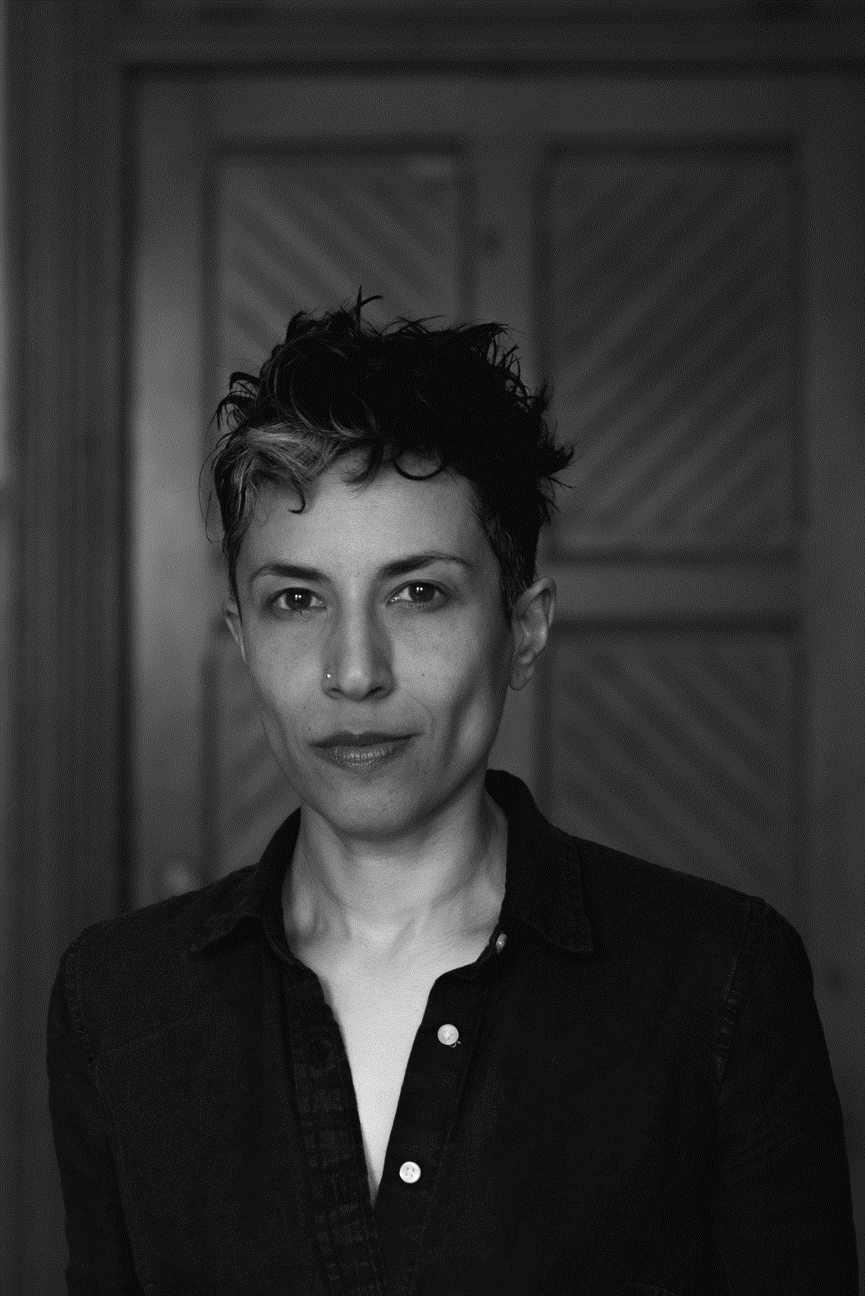
Naisargi N. Dave is a Professor in the Department of Anthropology at the University of Toronto. Her work spans sociocultural anthropology, queer theory, and animal studies, with a regional focus on India. She is affiliated with the Centre for South Asian Studies and the Bonham Centre for Sexual Diversity Studies. PhD, University of Michigan (2006) Research interests include interspecies ethics, affect theory, and the politics of imagination in South Asia. Her ethnographic work explores how activists navigate legal systems, emotional exhaustion, and intersectional inequalities. She has published extensively on queer communities and animal rights in India, arguing for ethics of indifference and creative relationality. Key awards: 2024 Gregory Bateson Prize for Indifference , 2013 Ruth Benedict Prize for Queer Activism in India , and an honorable mention for the Ruth Benedict Prize for her latest book. Advises graduate students in queer anthropology and animal activism Teaches courses on animality, literary anthropology, and affect Current projects include a book titled Murder: The Social Life of Violent Death in Queer India , examining violence against queer communities.
Hilary Nelson is an Assistant Professor in the Department of Fine Art at Maharishi International University (MIU), where she teaches courses such as Art of the Self, Color Theory, Sculpture I, and graduate-level seminars. She has also served as an Adjunct Instructor at MIU and Santa Fe Community College, and as a Visiting Lecturer at Grinnell College. Her academic journey includes an MFA and MA in Painting from the University of Iowa and a BFA in Painting and BS in Environmental Science from MIU. University of Iowa, MFA Painting, 2017 University of Iowa, MA Painting, 2016 Maharishi International University, BFA Painting, 2013 Maharishi International University, BS Environmental Science, 2007 Hilary Nelson's research and creative practice focus on the intersection of art, sustainability, and regenerative design. Her fields of interest include painting, drawing, sculpture, and curatorial practice, with a strong emphasis on environmental consciousness. She has developed and taught courses like 'Regenerative Art: Sustainability in Practice and Concept,' reflecting her commitment to ecological themes in art education. The 15 most recent articles highlight her active exhibition history, spanning solo and group shows across the U.S. and internationally. These works reflect trends in contemporary visual art, including installation, public art, conceptual practice, and interdisciplinary exploration. Her exhibitions often engage with themes of space, materiality, perception, and social critique, demonstrating a consistent evolution in her artistic voice. Scientific and Artistic Awards: Mildred Pelzer Lynch Fellowship, University of Iowa (2015–2017) Graduate Teaching Assistant Scholarship, University of Iowa (2014–2016) Faculty Research and Teaching Grants, Wege Foundation (2022, 2024) Artist Residencies at Yaddo, Vermont Studio Center, and international locations (2019–2024) Arts and Environmental Sciences Honors Awards from MIU (2007, 2013) Hilary Nelson has been actively involved in academic advising, curriculum development, and grant-funded research. She has led projects supported by the Wege Foundation, focusing on regenerative art and sustainability. Her teaching spans foundational to advanced levels, and she has mentored students through studio courses and graduate seminars. She has also curated exhibitions and organized artist talks, contributing to the broader academic and artistic community. She is co-founder of the Nelson Project, a collaborative art initiative with Trilby Nelson, and previously co-founded The Beauty Shop in Fairfield, IA—a non-profit gallery and music venue. She has also served as Gallery Curator at The Times Club in Iowa City and co-directed Unity Gallery at MIU, demonstrating strong leadership in curatorial and collaborative art environments.
James Lawler is a Professor in the Seidenberg School of Computer Science and Information Systems at Pace University, focusing on Information Technology. He has dedicated his career to advancing Disability Studies and STEM technologies for individuals with developmental and intellectual disabilities (IDD), while also contributing to e-Business strategies and social entrepreneurship. His work bridges technology and inclusivity, with a strong emphasis on community engagement and equity. Education: DPS, School of Computer Science and Information Systems, Pace University (2002) MBA, Graduate School of Business, Pace University (1974) BBA, Business Administration, Saint Francis College (1971) APC in Computer Applications (Audited), New York University (1979) Research Focus: Professor Lawler's research spans Customer Relationship Management (CRM) technologies, service-oriented architecture, and web services. He has pioneered initiatives for neurodiverse students in STEM, developed multisensory environments using virtual reality, and created programs like the Disability Film Festival to promote inclusion. His work often involves partnerships with AHRC New York City and other organizations. Awards: National Jefferson Award for Community Service (2024) Pace University Golden Graduates Reunion 50th Year of Service (2024) SEINFORMS Certificate of Recognition (2021) ISECON Meritorious Paper Award (2013) Grants & Professional Contributions: He has secured multiple grants for projects like the Disability Film Festival, robotics for elderly people with disabilities, and mobile app development for food waste reduction. His professional service includes roles with AHRC NYC, IEEE Education Society, and editorial boards for academic journals. He also teaches courses on design thinking, information systems, and e-commerce strategies.
Ariel Katz is an Associate Professor at the Faculty of Law, University of Toronto, where he teaches intellectual property, constitutional law, cyberlaw, and the intersection of competition law and intellectual property. He holds an SJD from the University of Toronto and prior degrees from the Hebrew University of Jerusalem. His research focuses on the economic analysis of competition law and intellectual property, with additional interests in digital trade, pharmaceutical regulation, and constitutional issues. LL.B., Hebrew University (1997) LL.M., Hebrew University (2001) S.J.D., University of Toronto (2005) Professor Katz’s research interests lie at the intersection of law, economics, and innovation policy. He explores how intellectual property and competition laws shape markets, innovation, and access to knowledge. His work critically examines doctrines such as fair dealing, copyright exhaustion, and collective administration of rights, often from a comparative and transatlantic perspective. He investigates the economic rationales behind legal rules and their implications for digital platforms, libraries, and global research. His recent publications demonstrate a sustained engagement with copyright and antitrust policy, particularly in digital environments. Themes include text and data mining, fair use evolution, data governance, and the impact of trade agreements on domestic law. His scholarship frequently bridges legal theory and practical policy, influencing academic and public discourse. Notable recognition includes: The Canadian Association of Research Libraries (CARL) Award of Merit (2022) Professor Katz has advised on policy matters, including submissions on copyright term extension under CUSMA. He was Director of the Centre for Innovation Law and Policy (2009–2012) and has collaborated with scholars across North America. He maintains an active blog and has written op-eds in major Canadian newspapers. His work appears in leading journals such as the University of Chicago Law Review , Antitrust Law Journal , and BYU Law Review . He is affiliated with the University of Toronto’s Faculty of Law and contributes to SSRN and public intellectual forums. Professor Katz has been involved in digital scholarship initiatives and has written on the role of libraries in knowledge ecosystems. His work connects legal doctrine with broader societal challenges, including access to medicines, digital rights, and constitutional integrity, particularly in the context of Canada and Israel.
Dr. Sam Ferguson is a Senior Lecturer at the School of Computer Science, University of Technology Sydney (UTS), with a multidisciplinary background in music performance, cognitive science, and psycho-acoustics. His research explores the intersection of sound, music, and human experience through creative coding, machine learning, and interactive systems. Key Research Areas: Sound and Music Computing, Human-Computer Interaction, Creative Coding, Cognitive Science, Installation Art, and Acoustics. Current Projects: ARC Linkage project on creative coding and multiplicitous media; industry collaborations on IoT-based audiovisual systems. Recent Publications: Focus on spatial audio complexity, gestural interaction with networked sound, music emotion recognition frameworks, and robotic performance through genre-based cultural platforms. Leadership Roles: Director of Teaching & Learning Engagement; former Deputy Head of School (Teaching and Learning); active in ACM Creativity and Cognition Steering Committee. Teaching: Courses like Digital Media Studio , Prototyping Physical Interaction , and Data Processing using R within UTS's interdisciplinary Software Development Studio.
Michael J. Schlosser is a faculty member at the Faculty of Mathematics , University of Vienna. His research focuses on combinatorics, number theory, and special functions, with a particular emphasis on hypergeometric and q-series, elliptic extensions, and rook theory. He has authored numerous publications in collaboration with prominent mathematicians such as Victor Guo, Meesue Yoo, and Christian Krattenthaler. Research Interests : Combinatorics and hypergeometric series Elliptic functions and their applications Partition theory and supercongruences Matrix inversions and determinant evaluations Students : Josef Küstner (Ph.D., 2022) Christian Stump (Ph.D., 2008) Editorial Roles : Associate Editor, Journal of Mathematical Analysis and Applications Editorial Board Member, The Ramanujan Journal Editorial Board Member, Journal of Algebraic Combinatorics
Jennifer Del Nero is a Clinical Assistant Professor at The College of New Jersey (TCNJ) within the Department of Special Education, Language, and Literacy in the School of Education. Her academic focus centers on literacy education, particularly through the lens of Gothic literature and popular culture. She has taught courses including Lit Strat, Assess & Instr , Internship II , and Exploring Classroom Communities . Ph.D. in Literacy Education, Rutgers University (2015) M.A. in English Literature, Rutgers University (2007) B.S. in Elementary Education/English, The College of New Jersey (2003) Her research explores adolescent literacy, creative writing instruction, and the integration of popular culture into reading curricula. She emphasizes aesthetic transactions with texts, using Gothic themes to foster critical thinking and engagement. Key publication themes include Gothic texts in literacy development, reading motivation, and interdisciplinary teaching. She has presented at conferences like the International Literacy Association (ILA) and American Reading Forum (ARF). Scientific Awards: Graduate Thesis with Distinction (2015) Edward Frye Endowed Graduate Fellowship (2012) Rutgers Graduate School of Education Research Fellowship (2012) Del Nero’s career includes roles as a literacy coach and teacher in New Jersey schools, alongside academic work at TCNJ and Rutgers University.
R. Edward Freeman is Stephen E. Bachand University Professor of Business Administration and Olsson Professor of Business Administration at the University of Virginia Darden School of Business. He serves as academic director of the Institute for Business in Society and previously directed Darden's Olsson Center for Applied Ethics from 1986 to 2009. Freeman maintains additional academic appointments as adjunct professor of stakeholder management at Copenhagen Business School, visiting professor at Nyenrode Business School, and adjunct professor of management at Monash University. Freeman's research focuses on stakeholder management, business ethics, and business strategy. His work explores how businesses can create value for multiple stakeholders without tradeoffs. He has developed innovative teaching methods incorporating theater, music, and philosophy into business education, including the popular 'Leadership and Theater' course. His publications reveal a consistent focus on stakeholder theory applications across diverse contexts, from sports ethics and gender equality to sustainable business practices and organizational decision-making. Recent work examines contemporary issues like transgender athletes in sports, sustainable food systems, and ethical leadership in crisis situations. His scientific achievements have been recognized through numerous awards: Seven honorary doctorates from institutions across Europe and Canada Lifetime Achievement Awards from World Resources Institute, Aspen Institute, Humboldt University, Academy of Management, and Society for Business Ethics Multiple teaching awards from Wharton, Carlson School, Darden, and Virginia State Council Freeman has advised numerous global corporations and has served as Co-editor in Chief of the Journal of Business Ethics. His stakeholder theory framework has influenced business practice worldwide and been translated into multiple languages. Beyond academia, he co-founded Stakeholder Media LLC, hosts The Stakeholder Podcast, and is active in music as a co-founder of Red Goat Records.
Professor Daniel Miller is a leading anthropologist at University College London (UCL), specializing in digital anthropology and material culture. He directs the Centre for Digital Anthropology and teaches the MSc in Digital Anthropology. His groundbreaking research on social media and smartphones has produced extensive comparative studies across nine countries through projects like Why We Post and The Anthropology of Smartphones and Smart Ageing (ASSA). PhD in Anthropology and Archaeology from Cambridge University (1983) Pioneered global ethnographic studies on digital media's societal impact Miller's research examines how technology shapes everyday life, with particular focus on smartphones, digital health (mHealth), and transnational relationships. His work bridges anthropology with philosophy, exploring concepts like eudaimonia (the good life) through ethnographic storytelling. His publications explore digital media's role in reconfiguring family dynamics, communication, and material culture. Recent projects include analyzing color and print trends in Western fashion, and investigating how digital technologies mediate relationships in diverse cultural contexts. Miller contributes to public anthropology through accessible writing and open-access scholarship, with his work receiving over 1.8 million downloads. His ethnographic approach combines academic rigor with narrative empathy, making complex social phenomena relatable.
Professor Matthias Bauer is a distinguished scholar of English literature at the Eberhard Karls University of Tübingen, where he has served as Professor of English since 2004. He currently holds the position of Chair of English Literatures and Cultures and acts as speaker for Modern Languages in the Faculty of Humanities. His academic journey includes a professorship at Saarland University (2001-2004) and extensive scholarly contributions across multiple research domains. First state examination in English and History from Münster University (1984) MA in English Literature from Yale University (1985) Dr. phil. from Münster University (1990; supervisor: Inge Leimberg) Habilitation from Münster University (1999) Professor Bauer's research spans Early Modern English literature (particularly Shakespeare and Metaphysical Poetry), nineteenth-century literature (with emphasis on Dickens), and poetry across historical periods. His work explores the aesthetics of co-creativity, the relationship between language and literature, and literary processes of sacralization and desacralization. He investigates how understanding literary texts functions, what competencies are required, and whether systematic annotation can facilitate comprehension. His recent publications reveal a strong focus on collaborative authorship in Early Modern literature, ambiguity studies, and the intersection of digital humanities with literary annotation. Professor Bauer consistently examines how texts create meaning through ambiguity, co-creation, and religious dimensions, connecting historical literary practices with contemporary theoretical frameworks. Deputy spokesperson for CRC/SFB 1391 "Different Aesthetics" (since 2019) Chair of project C5 "The Aesthetics of Co-Creativity in Early Modern English Literature" Chair of project C5 "Multiple Common Grounds" in CRC/SFB 1718 "Common Ground" Former chair of Research Training Group "Ambiguity: Production and Perception" (2013-2022) He actively supervises Bachelor's and Master's theses on literature from 1550-1900, literary theory, literature and linguistics, poetry, and literature and religion. His editorial work includes serving as co-editor of Connotations: A Journal for Critical Debate, the Literaturwissenschaftliches Jahrbuch, and multiple book series focusing on religion and literature. Professor Bauer leads research teams working on projects related to the Collaborative Research Center "Common Ground" (CRC/SFB 1718), where he chairs project C5 "Multiple Common Grounds: Linguistic Mechanisms for Literary Meaning." His department also hosts a peer-learning project on annotating literature, connecting theoretical research with practical pedagogical applications.
Sara Schaefer, MD, MHS, FAAN is an Associate Professor of Neurology at Yale School of Medicine, where she serves as Program Director for the Movement Disorders Fellowship and Adult Neurology Residency Program Director. She specializes in treating patients with movement disorders including Parkinson's disease, tremors, chorea, dystonia, and Huntington's disease, and evaluates patients for deep brain stimulation surgery. Dr. Schaefer is also deeply involved in medical education innovation, having designed interactive video-based curricula used worldwide. Dr. Schaefer's educational background includes: ScB from Brown University (2007) MD from The Ohio State University College of Medicine (2012) Internship in Medicine at Yale-New Haven Hospital (2013) Residency in Neurology at Yale-New Haven Hospital (2016) Chief Residency in Neurology at Yale-New Haven Hospital (2016) MHS with focus on medical education from Yale University (2019) Dr. Schaefer's primary research interests center on movement disorders and medical education. She has a particular focus on developing innovative educational tools for neurology training, including video-based curricula and podcasts. Her work aims to improve how movement disorders are taught to medical students, residents, and practicing physicians, with the goal of reducing diagnostic delays and improving patient care. She has designed an interactive, video-based online training curriculum in movement disorders that is used by learners worldwide and co-founded the MDS podcast. She also founded The Grey Matter Project, a virtual high school neuroscience club engaging students globally. Dr. Schaefer's scholarly work demonstrates a clear trajectory from clinical research in movement disorders toward an increasing focus on medical education innovation. While her early publications addressed specific movement disorder conditions and treatments, her more recent work centers on educational methodology, curriculum development, and assessment in neurology training. Her research bridges clinical neurology with educational science, creating practical tools that have been implemented across multiple institutions. Dr. Schaefer has received numerous honors and awards for her work: Fellowship Director of the Year from American Academy of Neurology (2025) Burton A. Sandok Visiting Professor of Neurologic Education from Mayo Clinic Department of Neurology (2024) Attending of the Year from Yale Department of Neurology (2023) Education Innovation Poster Award at Yale Medical Education Day (2018) Creative Expression of Human Values in Neurology award from American Academy of Neurology (2016) Alpha Omega Alpha Honor Medical Society (2012) Gold Humanism Honor Society (2012) As an educator and program director, Dr. Schaefer has mentored numerous neurology residents and fellows. She serves as co-founder and deputy editor of the MDS podcast, launched in January 2019, and founder and producer of the Neurology Nuts and Bolts: Constructing your Career podcast, launched in February 2022. She is the Movement Disorders Section Head of the Annual Academy of Neurology Resident In-Service Training Examination (RITE) Committee and CME editor for the Movement Disorders Journal. Her educational initiatives have received institutional support through Yale's educational infrastructure, though specific grant funding isn't detailed in the provided text. Dr. Schaefer founded The Grey Matter Project, a virtual high school neuroscience club that engages students worldwide with lectures, career panels, and projects related to neurology. She is also actively involved with the Movement Disorders Society Education Committee and has contributed to developing educational resources through this professional organization.
Kristiina Kumpulainen is a Professor at the University of Helsinki's Faculty of Educational Sciences, leading the Learning, Culture & Interventions (LECI) research group. Currently on leave but actively engaged in research, she supervises doctoral students in both the Doctoral Program in Cognition, Learning, Teaching and Communication and the Doctoral Program in School, Education, Society and Culture. Her scholarly contributions include 270 research outputs and leadership of 27 research projects, with recent work focusing on children's digital experiences and early childhood education systems. Her research interests center on educational sciences with emphasis on early childhood education, digital literacy development, learning environments, and educational change processes. She examines how children interact with technology, develop ecological imagination, and build multiliteracy skills across different contexts. Her work bridges theoretical frameworks with practical educational interventions, particularly examining agency-structure dynamics in educational settings and the implementation of child-centric educational systems. Analysis of her recent publications reveals consistent focus on digital childhoods, educational interventions, and comparative early childhood education systems. Her work spans multiple methodologies including qualitative case studies, comparative analyses, and theoretical explorations of learning across contexts. The research demonstrates strong international collaboration, particularly within Nordic countries and global comparative studies. Member of the Finnish Academy of Science and Letters (2019) 2020 Editor's Choice Award from British Educational Research Association (2021) Nomination for Outstanding Publication Award from EARLI (2002) Nomination for best paper award at THE POWER OF MEDIA IN EDUCATION Conference (2007) Professor Kumpulainen has supervised numerous doctoral students and served on dissertation committees. Her research has been supported by significant grants including the Australian Research Council, Finnish Academy of Science, and Nordic research networks. She actively participates in academic service through editorial boards, peer review activities (over 90 manuscript reviews), and professional committees. She directs the Playful Learning Center research laboratory, which focuses on innovative approaches to children's learning through play and technology integration.
Merlin Seller is a Lecturer in Design and Screen Cultures at the University of Edinburgh's Edinburgh College of Art, appointed in 2019. They teach theory and historical/cultural context across Film, Comics, Media and Game Studies. Seller co-founded the Game Worlds research cluster within the Centre for Data, Culture and Society. Education: MA from St Andrews University MSt from Oxford University PhD from University of East Anglia (UEA) on transmedia works between film, photography and painting in interwar England Seller's research interests span Game Studies, Film Studies, Horror, Non-human theory, and Queer/Trans approaches to games. Their work explores (Post-)Phenomenology, visuality in games, and the representation of nonhuman entities in screen-based media. Seller identifies as a proudly pansexual and trans academic with a background in Art History and Visual Cultural Studies. Analysis of Seller's publications reveals a strong interdisciplinary focus bridging Game Studies with critical theory. Their work frequently examines the intersection of nonhuman perspectives, queer theory, and phenomenological experience in games and film. Recurring themes include temporal mechanics, ecological consciousness, and the materiality of digital interfaces, demonstrating a consistent engagement with contemporary theoretical frameworks in media studies. Seller supervises PhD students including Yun Lu, Trina Tian (Siyu), and Danni C. Pascuma. They also teach courses such as 'Design, Play and Games,' 'Contemporary Cinema,' and 'Introduction to Queer Studies,' while supervising Honours dissertations. Seller co-organized the 'Affecting Game Space' conference through the Game Worlds research cluster. Their creative practice includes plein air paintings of videogame environments and dark comedy comics focused on speculative futures, visible through their portfolio at dearplayer.org.
Thomas P. Balázs is an Associate Professor in the Department of English at the University of Tennessee at Chattanooga . He specializes in Creative Writing , Speculative Fiction , and Comics and Graphic Novels , blending literary craft with cultural and religious commentary. His teaching extends to Western Humanities , British Literature , and Modernism , with a focus on psychoanalytic themes in literature. Research Focus: Balázs explores intersections of Jewish identity, antisemitism, and cultural memory through fiction and nonfiction. His work often critiques contemporary societal issues, such as in Art Over Man: The Roger Waters Test Case (2024) and The Nihilism of Antisemitism (2023). Publications: He has authored the short story collection Omicron Ceti III (2012) and contributed to anthologies like Horror Library and journals such as Tablet Magazine and Quillette . His narratives frequently merge supernatural elements with Jewish theological concepts. Engagement: Balázs participates in literary conferences (e.g., StokerCon, Meacham Writers Conference) and community events, often discussing diversity in comics and horror fiction. His Substack features biweekly reflections on culture and identity.
Patrick C. Shih is an Associate Professor of Informatics in the Luddy School of Informatics, Computing, and Engineering at Indiana University Bloomington, where he also serves as the Director of Graduate Studies for Data Science and Co-Director of the Animal Informatics MS and PhD track. He directs the Societal Computing Lab (SoCo Lab) and is a core faculty member of the Health Informatics PhD track. Dr. Shih's research focuses on how to better support health and wellbeing, specifically that of underserved and vulnerable populations, through the design, development, and evaluation of sociotechnical systems and community-based mechanisms. His work also designs technologies to amplify human and animal capabilities in animal-assisted interventions, improve animal welfare, and cultivate empathy for others. His research spans human-computer interaction, social media, collective intelligence, crowdsourcing, and online and geographic communities, with a particular emphasis on leveraging awareness of individual and community activities embedded in social media for civic engagement platforms. His recent publications reveal a strong trend toward health equity research, particularly focused on African American/Black communities, Alzheimer's disease and related dementias, breast cancer survivorship, and autism spectrum disorder. His work increasingly integrates generative AI, mobile health applications, and community-based participatory design approaches to address health disparities in vulnerable populations. ACM Senior Member (2020) NSF CAREER Award recipient Indiana University Trustees Teaching Award (2018-19) IU Groups Scholars Program STEM Mentor of the Year (2018-19) Multiple best paper awards at top-tier conferences Dr. Shih has successfully secured significant funding for his research, including a $3.7 million award to investigate inequities in environmental stressors and cognitive decline in urban and rural older adults. He serves on numerous editorial boards and program committees for leading HCI and computing conferences. His teaching portfolio includes courses on usable AI, mobile and pervasive design, and social computing. He leads the Societal Computing Lab, which focuses on developing technologies that address societal challenges through community engagement and participatory design.