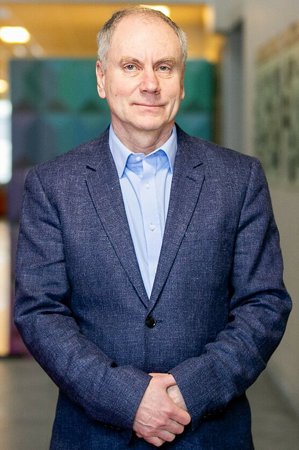
Gediminas Beresnevičius is a Senior Lecturer at the Faculty of Communication, Vilnius University, affiliated with the Department of Book, Media and Publishing Studies. He holds a Doctoral degree in Social Sciences (2010) from Šiauliai University, with a dissertation focusing on 'Educational dimensions of creativity and creative thinking'. His academic work spans over a decade, concentrating on creativity studies, innovation models, and problem-solving methodologies. Research interests include conceptual analysis of creativity terms, cognitive foundations of creative abilities, and application of creativity in business and education contexts. His publications critically examine creativity enhancement methods like brainstorming, analyze innovation quality factors, and explore cross-cultural communication strategies through case studies in corporate environments. Teaching activities focus on developing creativity in academic and professional settings. While no specific grants or awards are listed, his work contributes to interdisciplinary discussions at the intersection of psychology, linguistics, and organizational behavior. Professional activities include editorial and conference participation as indicated in academic portals.
Laura Del Vecchio Lança is a multidisciplinary researcher and educator at the Universitat de les Illes Balears (UIB), specializing in Spanish Philology, Modern and Classical studies. She teaches Studying English Film for the English Studies degree program in Mallorca and serves as a member of the BRICCS research group (Estudios Culturales Británicos y Comparativos: Identidades y Representación). Her work spans cultural studies, migration, and more-than-human worlds, with extensive collaborations including UNESCO, GIZ, and the World Government Summit. Education: MA in Construction and Representation of Cultural Identities (2024) from Universitat de Barcelona, specializing in globalization, migration and alterity (Grade: 9.45) BA in Translation, Interpretation and Applied Languages (2023) from Universitat Oberta de Catalunya and Universitat de Vic, specializing in English, Spanish and French (Grade: 7.89) Del Vecchio Lança's research centers on narrative practices that challenge collapse discourses and recognize non-human subjectivity. Her work integrates decolonial and feminist perspectives with futures literacy, examining how language constructs possible futures. She develops methodologies at the intersection of cultural heritage, degrowth thinking, and technological innovation, particularly through projects like Buzzing Against Collapse and Escletxes . Her recent publications reveal a strong focus on sustainability, emerging technologies, and social justice. The articles demonstrate consistent exploration of carbon neutrality, food systems, gender-technology intersections, and linguistic violence, reflecting her commitment to interdisciplinary approaches that bridge academic research with practical applications for social transformation. Professional Activities: Teaching: Studying English Film (English Studies degree) Research: Member of BRICCS research group Workshops: Futures literacy facilitation with institutions like Centre d'Arts Santa Mònica and GIZ Artistic Projects: Founder of Dê o Fora! Label and Publisher, performer in Guerra Fría musical project Her methodological contributions include the techDetector platform (2020), Envisioning Cities project, and LOW-TECH training model. She has presented at international conferences including UNESCO's Futures Literacy Congress and TaPRA, demonstrating her transdisciplinary approach that combines academic rigor with creative expression.
Dr. Fabian Hutmacher is a Lecturer at the University of Würzburg in the Psychology of Communication and New Media group within the Human-Computer-Media Institute. His work bridges cognitive psychology, media psychology, and theoretical psychology, with a focus on how digital technologies reshape fundamental psychological processes. His research examines the intersection of memory, digital media, and theoretical foundations of psychology. Hutmacher's primary research interests include autobiographical memory in the digital age, motivated reasoning regarding misinformation and conspiracy theories, theoretical challenges in psychology, and the psychological aspects of dementia. His work explores how digital documentation of life events affects memory formation and retrieval, how cognitive abilities influence responses to misinformation correction, and conceptual issues in psychological theory development. He has developed the AMEDIA model for understanding autobiographical memory in digital contexts. Hutmacher's recent publications span top journals including Psychological Inquiry , Scientific Reports , Cognitive Research: Principles and Implications , and American Psychologist . His work demonstrates interdisciplinary connections between cognitive psychology, media studies, philosophy of science, and dementia research. He frequently collaborates with Markus Appel, Stephan Schwan, and other colleagues at Würzburg. Hutmacher actively engages in science communication through public lectures, media appearances, and creative projects like art exhibitions on dementia experiences. His research has practical implications for understanding how digital technologies reshape our psychological experiences and memory processes in contemporary society.
Constantin-Alexandru Marin serves as an associate lecturer at the Faculty of Communication and Public Relations (CCPR) within the National School of Political Studies and Public Administration (SNSPA) in Bucharest, Romania, while concurrently pursuing his PhD in Communication Sciences. He maintains dual professional engagement as the founder and manager of Ability Development, a major Romanian training company delivering international programs. His academic trajectory centers on organizational communication and leadership development, with specific expertise in management methodologies, public speaking pedagogy, entrepreneurial skill cultivation, and business coaching frameworks. Marin operates at the intersection of transactional and transformational approaches, guided by principles of dedication, connection, and possibility in all professional endeavors. At CCPR, Marin teaches the specialized course Design Thinking (Gândirea de tip Design), integrating creative problem-solving methodologies into communication education. His professional training portfolio spans organizational communication systems, leadership development pipelines, public speaking mastery, entrepreneurial incubation, and executive coaching frameworks across Romanian and international corporate environments.
Dr. Peter Ellerton is a Senior Lecturer in Philosophy at the School of Historical and Philosophical Inquiry, Faculty of Humanities, Arts and Social Sciences, University of Queensland. His academic career centers on the development and implementation of critical thinking pedagogy across educational contexts, with significant contributions to both theoretical frameworks and practical classroom applications. Dr. Ellerton holds a Bachelor of Education from Griffith University, a Postgraduate Diploma from The University of Queensland, a Masters (Coursework) of Contemporary Science from Australian National University, and a Doctor of Philosophy from The University of Queensland. His doctoral research focused on 'Teaching for thinking: explaining pedagogical expertise in the development of the skills, values and virtues of inquiry,' establishing the foundation for his ongoing research program. His research spans three interconnected domains: Teaching for Thinking, Public Reasoning, and Critical Thinking. In Teaching for Thinking, he investigates how educators develop pedagogical expertise specifically focused on fostering students' thinking abilities. His Public Reasoning work examines the public understanding of science, group and individual decision-making, and critical thinking in political discourse, including notable contributions to climate change communication. His Critical Thinking research focuses on developing clear, actionable understandings of critical thinking's constituent skills to optimize pedagogical approaches. His publications reveal a strong trend toward interdisciplinary collaboration, particularly with STEM education researchers, and increasing attention to the challenges posed by AI in educational contexts. Dr. Ellerton actively supervises multiple PhD students working on diverse projects including vaccine hesitancy, collaborative decision-making in healthcare, and creating curious classrooms. He has secured significant funding for projects including the Queensland Police Service leadership program (2024-2026), Brisbane Catholic Education collaboration (2023-2025), and the SharingStories Foundation project on First Nations' perspectives (2023-2025). Dr. Ellerton maintains strong collaborative relationships with schools including Park Ridge State High School, San Sisto College, and Archdiocese of Brisbane Catholic Education. His DEFT Project (Developing Expertise Fostering Thinking) represents a major initiative in tertiary educator development focused on thinking skills, demonstrating his commitment to translating theoretical work into practical educational applications.
Dr Sarah Hopfinger is a part-time Research Lecturer at the Royal Conservatoire of Scotland in the Research and Knowledge Exchange Department. She is a queer disabled artist-researcher whose work spans dance, live art, theatre, disability studies, crip theory, chronic pain, ecology, and intergenerational collaboration. Her practice integrates performance creation with academic research, producing work that challenges conventional understandings of disability, wildness, and ecological relationships. Education: PhD in Performance (in) ecology: a practice-based approach, University of Glasgow (2012-2017) Visiting lecturer, University of Glasgow (2016-2018) Sarah Hopfinger's research centers on disability dance, chronic pain, and crip theory, exploring how these intersect with ecological performance and intergenerational practice. Her work is philosophically grounded in two interconnected frameworks: a crip politics that celebrates disability as a valid lifeway, and ecological thinking that acknowledges humans' entanglement with nonhuman life. Through her performances and scholarly work, she investigates how chronic pain experiences can offer insights into ecological pain, how wildness manifests across generations, and how disability can reshape performance practices. Her research methodology is fundamentally practice-led, with performance outcomes serving as both artistic expression and research findings. Scientific Awards: Athenaeum Award: Ecofutures (2019) Athenaeum Award: IETM and No Limits Festival (2019) Athenaeum Award: Working Creatively with Chronic Pain (2018) British Council: IETM and No Limits Festival (2019) Carnegie Trust Research Incentive Grant: Ecologies of Pain (2019) Sarah is actively mentoring the next generation of researchers as she accepts PhD students with interests in disability/crip and performance/dance, chronic pain/illness studies, ecological performance, autobiography, devised performance, and intergenerational practice. She serves as co-investigator on the AHRC Future Ecologies: Producing Dance Network and continues to develop her Ecologies of Pain research project. Her creative practice operates as both scholarly contribution and public engagement, with her current touring piece 'Pain and I' receiving critical acclaim for its nuanced exploration of chronic pain experiences. Her collaborative approach extends beyond academia to include partnerships with Battersea Arts Centre, South London Gallery, Platform, and various international festivals. These collaborations often involve diverse performers including children, non-trained dancers, and disabled artists, challenging conventional performance hierarchies and creating spaces for embodied knowledge production that values multiple ways of knowing and being.
Megan Strickfaden is a Professor in the Department of Human Ecology at the University of Alberta, within the Faculty of Agricultural, Life and Environmental Sciences. She holds adjunct roles at Donghua University (China) and has taught globally, including at Edinburgh Napier University and KU Leuven. Her research focuses on design for aging, disability, and inclusive environments, combining ethnographic methods with material culture studies. Education: PhD in Design Studies from Edinburgh Napier University, MDes in Industrial Design from the University of Alberta, and an Engineering Diploma in Design Research from Danmarks Tekniske Universitet. Research Interests : Human-centered design, dementia care environments, disability studies, multisensory design, and co-creation with marginalized communities. She has produced over 18 films, including Dementia Care by Design and Light in the Borderlands , exploring disability narratives through film. Awards : University of Alberta McCalla Professorship (2020/21), Great Supervisor Award (2018), and multiple grants for research and teaching. Teaching : Courses include HECOL 250 (Design Studies), HECOL 469/569 (Material Culture), and HECOL 661 (Design Perspectives). She actively mentors doctoral students in disability and design through the disAbility Mundus program. Labs/Teams : Leads projects with AGE-WELL, Design for All initiatives, and community partnerships like the Alberta Ability Lodges Society. Her work bridges academic research with practical applications in healthcare, urban design, and assistive technologies.
Dr. Andy Yeh is a Senior Lecturer in the School of Education at Queensland University of Technology (QUT). His primary roles include teaching pre-service teachers in Mathematics and ICT Education and supervising higher-degree research students. He has held academic positions since 2007, focusing on teacher education and innovative STEM education practices. Dr. Yeh's research emphasizes ICT integration in education, particularly through virtual reality (VR) tools like VRMath2 and makerspace learning environments (MLE). His work explores Web 2.0, Web3D, and mobile sensor technologies to enhance STEM education. He advocates for computational thinking and maker culture as integral to 21st-century skills. Key research areas include: Virtual Reality in Education STEAM Integration Makerspace Pedagogy Semiotics in Learning His publications highlight innovative teaching methods, such as using 3D modeling and coding in classrooms. He has conducted workshops for gifted students, trained over 400 teachers in China, and contributed to international conferences on STEM and ICT in education. Dr. Yeh founded MakerClubQUT to foster cross-disciplinary maker projects and leads the development of VRMath2, an online platform for collaborative STEM learning.
Robb Kunz is a Lecturer in the Department of English at Utah State University, where he teaches writing courses including ENGL 2010 (Intermediate Writing), ENGL 2200 (Literary Analysis), and ENGL 3440 (Writing in the Professions). He also serves as a Faculty Advisor for USU's Undergraduate Literary Magazine, Sink Hollow. Educational Background Master of Fine Arts (MFA) in Creative Writing from University of Idaho (2009) Master of Arts (MA) in English from Utah State University (2006) Bachelor of Arts (BA) in English from Utah State University (2003) Kunz focuses on writing pedagogy and literary mentorship, emphasizing practical writing skills for academic and professional contexts. His teaching combines foundational composition with creative expression, supporting students in developing critical thinking and communication abilities. In addition to his academic work, Kunz engages with rural life and creative hobbies like cross-stitch, while maintaining professional contributions through literary advising.
Sara Maria Leitão Jorge Marques de Almeida de Ibér is an Associate Professor at the School of Psychology and Life Sciences, Lusophone University of Humanities and Technologies (ULHT). She teaches undergraduate courses in Developmental Psychology and Educational Psychology, as well as graduate courses on creativity, cognitive excellence, and disruptive behavior. From 2010 to 2013, she coordinated CEPCA (Centre of Studies on Cognitive and Learning Psychology), an FCT-funded research unit, and has led the Intervention Program for the Gifted under ANEIS since 2003. Research Focus: Creativity, emotional intelligence, self-esteem, and cognitive development in university students. Key Contributions: Pioneering studies on mentoring programs' impact on psychological and cognitive outcomes. Her recent work (2024) explores how mentoring programs enhance creativity, emotional intelligence, and well-being in higher education, building on earlier foundational research on giftedness and creativity assessment (2006).
Melissa Bremmer is a Senior Lecturer at the Amsterdam University of the Arts , leading the Lectorate of Arts Education . Her work bridges music pedagogy, embodied cognition, and inclusive education across diverse contexts, including special needs and technology-enhanced learning. She collaborates globally with institutions like the University of California, Berkley, and the University of Exeter, where she completed her PhD on music teachers' pedagogical content knowledge through an embodied cognition lens. Education: Music Education (Conservatorium van Amsterdam), Educational Sciences (University of Amsterdam), PhD (University of Exeter). Her research focuses on embodied music pedagogy , inclusive music education , and interdisciplinary ArtsSciences collaboration . She designs creative curricula like Wicked Arts Education and develops tools for accessible music instruction, including digital instruments for students with disabilities. Recent publications analyze embodied learning trends, inclusive ensemble practices, and dynamical systems in music teaching. She serves on editorial boards, accreditation panels, and advisory committees, advocating for systemic change in arts education access for special needs learners. Melissa actively mentors through collaborative projects like My Music Ability and Design-a-thon , fostering partnerships between schools, conservatories, and cultural institutions worldwide. Her work emphasizes teacher roles as conceptual artists and researchers.
Dr. Shuxian Jin is a Research Fellow in the School of Psychology at the University of Sussex, where she joined the HONORLOGIC project on October 1, 2022, working with Professor Ayse Uskul. Her research examines how cultural settings, socio-ecological conditions, and patterns of interdependence shape cooperation, norms, and institutional choices across diverse societies. Dr. Jin completed her academic training with a BSc in Human Resources Management from Capital University of Economics and Business (2012-2016), an MSc in Applied Psychology from Nankai University (2016-2018, cum laude), and a PhD in Social Psychology from VU Amsterdam (2018-2023), supervised by Prof. Daniel Balliet, Prof. Paul van Lange, and Dr. Giuliana Spadaro. Her doctoral work included co-developing the Cooperation Databank (CoDa), a machine-readable repository of cooperation research spanning six decades. Her research program integrates meta-analytic approaches with cross-societal behavioral experiments, particularly focusing on Mediterranean societies to challenge traditional East-West cultural dichotomies. As coordinator of Work Packages 1 and 2 in the HONORLOGIC project, she investigates how honor influences social behaviors in contexts of shared or conflicting interests through economic game experiments across 13 different societies. Her methodological toolkit includes online and laboratory-based behavioral experiments, cross-societal surveys, and advanced meta-analytic techniques. Dr. Jin's publication record demonstrates a consistent focus on cross-cultural cooperation research, with numerous high-impact meta-analyses examining how cultural factors, gender, social class, and institutional structures influence cooperative behavior. Her work has been published in top-tier journals including Nature Human Behaviour, Journal of Personality and Social Psychology, and Psychological Bulletin, with several papers receiving significant attention in academic and policy circles. She actively contributes to open science initiatives and research infrastructure development, particularly through her work on the Cooperation Databank. Her research bridges Eastern and Western academic traditions, bringing unique perspectives to cultural psychology while maintaining rigorous methodological standards across diverse cultural contexts.
Professor Marianella Chamorro-Koc is a distinguished academic at Queensland University of Technology, where she holds the position of Professor in Industrial Design within the School of Design, Creative Industries, Education and Social Justice Faculty. With a BA from Pontificia Universidad Catolica del Peru, MA from Ohio State University, and PhD from QUT, her career spans over two decades of design research and education. Her transdisciplinary work focuses on human-centered technological solutions in healthcare, particularly designing devices for self-health management and promoting viable local manufacturing through initiatives like the CRC-P11 project. Her research explores critical intersections of design and technology, including: Person-centred health tech devices for chronic disease management Transformative service design for wellbeing in community contexts Human mobility solutions for people with disabilities Co-design methodologies for healthcare innovation Experience design principles for interactive products Advanced manufacturing strategies for Health 4.0 ecosystems These interests bridge industrial design, healthcare technology, and social innovation. Her recent publications demonstrate strong thematic coherence around healthcare innovation, with over 60% focusing on medical device design, patient experience, and health technology adoption. Emerging trends include pediatric care solutions, wearable rehabilitation technologies, co-design frameworks for healthcare systems, and advanced manufacturing applications. Her work consistently integrates human-centered methodologies with practical healthcare applications. Significant recognitions include: 2022 AAUT Citation Award for educational excellence Gold Design Award for inclusive design project 'Vis-ability' Two consecutive Good Design Australia Awards (2021-2022) for healthcare innovation Nationally Competitive Research Fellowship for disability mobility research As Senior Fellow of the Higher Education Academy, she leads research training initiatives and supervises doctoral candidates in health technology design. Her current supervision focuses on wearable devices for home-based rehabilitation. Major grants include: CRC-P11 for smart orthotics manufacturing Defense-funded Wearable Predictive Diagnostics project ARC Linkage Project on disability employment pathways She serves as Chief Investigator at QUT's Tier 2 Design for Health Lab and leads the PAS Lab Research Group. Her collaborations include Queensland Health clinicians, international universities (Germany, Colombia, Peru), and industry partners like i-Orthotics and Healthia Group to advance healthcare innovation through design-led approaches.
Professor Jacob O. Wobbrock is affiliated with the University of Washington , where he holds a position in the Information School and a courtesy role in the Paul G. Allen School of Computer Science & Engineering . He co-founded the DUB Group and MHCI+D degree , and serves as Interim Director of the MHCI+D program. As director of the ACE Lab and Founding Co-Director Emeritus of the CREATE Center , he leads research in human-computer interaction (HCI) and accessible computing . Education : B.S. in Symbolic Systems (1998), M.S. in Computer Science (2000), Ph.D. in Human-Computer Interaction (2006) Research Focus : Input techniques, performance modeling, mobile and accessible computing, VR, and gesture recognition Awards : ACM Fellow (2021), CHI Academy (2019), NSF CAREER (2010), ICMI/ASSETS/UIST Lasting Impact Awards His 15 most recent articles (2023-2025) explore AI-powered accessibility solutions, tactile 3D modeling, mobile reading adaptations, gesture recognition for motor impairments, and screen reader integration. These works span human-computer interaction , artificial intelligence , biomedical data analysis , and inclusive design in both academic and industry contexts. Scientific honors include the SIGCHI Social Impact Award and AMiner Most Influential Scholar rankings. As an entrepreneur , he co-founded AnswerDash (acquired by CloudEngage) and has contributed to patents and expert witness cases. His teaching and advising have produced doctoral graduates now at institutions like Harvard and CMU, though specific student names are not listed in this profile.
Dr. Maren Oepke is a Researcher at the Institute of Educational Science, University of Zurich, specializing in secondary school education, business education, and vocational training. She holds a PhD in Educational Science from the University of Mannheim (2004) and has over two decades of experience in academia, including roles as a Research Assistant (since 2023), Research Associate (since 2011), and business teacher (2000-2004). Her research examines: Digital learning integration in vocational contexts Language and mathematical competencies for study readiness Curriculum design for secondary and business education Critical thinking development in higher education Her publications (2013-2025) focus on educational assessment, vocational pedagogy, and competency modeling, with recurring themes in language acquisition, educational policy, and interdisciplinary learning frameworks. She serves on the editorial board of the Swiss Journal of Educational Sciences and contributes to governance projects like 'GoCC'.