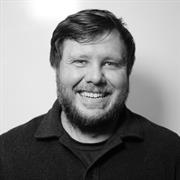
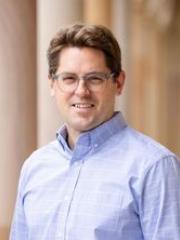
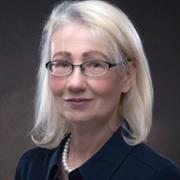
Dr. Yaron Meron is a Lecturer and researcher in design at the University of Sydney's School of Architecture, Design and Planning. He holds a PhD (RMIT, Melbourne) and two Master's degrees (RMIT, Central St Martins). His work bridges academic research and professional practice, focusing on graphic and communication design, socially engaged design, AI integration, and responsible design thinking. Meron’s research explores interdisciplinary challenges, design collaboration, and the societal impact of emerging technologies like AI. He coordinates the Civic & Social Design Research Group. Educations: PhD in Design (RMIT University, Melbourne) MA in Design (RMIT University, Melbourne) MA in Communication Design (Central Saint Martins, London) Research Interests: Graphic design as an interdisciplinary practice Artificial intelligence in design education and practice Media literacy and defamiliarisation techniques Socially engaged design methodologies Design briefs and stakeholder relationships Articles & Trends: Recent publications emphasize AI's role in design education, speculative urban futures, and critical design approaches to media literacy. His work frequently intersects with pedagogy, ethics, and technology’s societal implications. Labs/Teams: Coordinator of the Civic & Social Design Research Group, fostering collaborative projects on responsible design and interdisciplinary innovation.
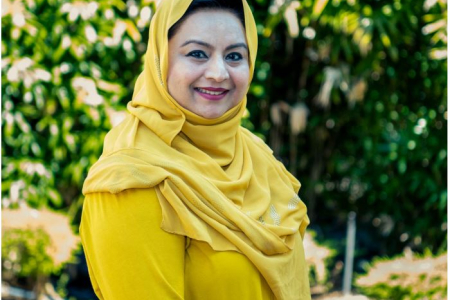
Dr. Farha Sattar is a Lecturer in Education (Mathematics) at the Faculty of Arts and Society, Charles Darwin University. With over thirty years of teaching experience in Mathematics, Science education, GIS, Remote Sensing, and e-Learning technologies at undergraduate and postgraduate levels, Dr. Sattar brings extensive expertise to her academic role. She holds a PhD in Geospatial Science from Charles Darwin University, focusing on Spatial Mathematical Modelling for 3D Gully Mapping and Erosion Quantification. Her educational background includes: PhD in Geospatial Science (Three Dimensional Gully Mapping and Erosion Quantification within a Geoinformatics Framework), Charles Darwin University (2012) Prior academic experience at several Asian and European universities Dr. Sattar's research spans multiple interdisciplinary fields with a strong focus on the intersection of education and technology. Her primary research interests include Mathematics Education, STEM Education, Geoscience Education, Spatial Mathematical Modelling, Drone Technology, Remote Sensing, Geographic Information Systems, and Innovative Pedagogies such as experiential learning and inquiry-based approaches. She has developed expertise in cognitive development, particularly in fostering critical and creative thinking skills through iSTEM approaches. An analysis of Dr. Sattar's recent publications reveals a consistent trajectory toward integrating emerging technologies like drones, augmented reality, and geospatial artificial intelligence into educational contexts. Her work demonstrates a progression from foundational geospatial research on erosion mapping to innovative applications in STEM education. Recent publications increasingly focus on drone technology for educational purposes, spatial data infrastructure for policy development, and computational thinking development through technology-enhanced learning. Dr. Sattar has received numerous accolades for her contributions to education and research: NT Science Week Awards – Inspired NT STEM Hero of the Year award (2021) Long Service Recognition Award (2023) Finalist, CDU Alumni Award (2023) Multiple Best Presentation Awards (2008, 2010, 2017) Australian College of Educators - 2021 College Medal Nominee As a supervisor, Dr. Sattar mentors postgraduate research students including Ayesha Farhan, who is working on "A Framework for Cognitive Development: Fostering Critical and Creative Thinking Skills, Using iSTEM Approach." She actively secures research funding through various projects such as "DBELaSTEM: Drone-Based Experiential Learning and STEM Education," "STEM_D & VR: Youth STEM Learning and Empowerment with Drones and VR," and "CodProg Drone Lab." Her research is supported by grants from NT Government projects and other external funding sources. Dr. Sattar leads the CodProg Drone Lab, an innovative research space exploring drone technology applications in education. She is a certified drone pilot and aeronautical radio operator, which enables her to bridge theoretical knowledge with practical applications. Her work with the "Flying Forward: Drones, STEM Equity, and Indigenous Empowerment" initiative demonstrates her commitment to community engagement and addressing educational disparities through technology.
Kees Dorst is a Professor of Transdisciplinary Innovation at the TD School of the University of Technology Sydney. He bridges philosophical understandings of design with practical applications, focusing on tackling complex societal challenges through designerly thinking. His research develops methodologies for strategic transformation and networked problem-solving in public sectors. Professor of Transdisciplinary Innovation, UTS Director, Designing Out Crime Research Centre International keynote speaker and advisor on design thinking Research Interests Dorst specializes in: Transdisciplinary innovation for societal challenges Design thinking and co-evolutionary processes Reframing complex problems in public policy Design cognition and metacognition Urban environment design for safety Recent Research Trends show increasing focus on: Hypercomplex problem-solving frameworks Strategic transformation through design Cognitive models in design processes Public sector innovation methodologies Teaching & Leadership includes: Bachelor of Creative Intelligence and Innovation Master of Creative Intelligence and Strategic Innovation Founding the Designing Out Crime Research Centre International design research symposium leadership
Mihye Won is an Associate Professor at Monash University’s Faculty of Education, specializing in innovative science education strategies. Her research integrates dialogic teaching, student-generated diagrams, immersive Virtual Reality (VR), and generative AI to enhance scientific understanding and creativity. She has secured Australian Research Council (ARC) funding for projects like Using Immersive Virtual Reality to Enhance Science Visualisation (2019–2025) and Drawing Science Diagrams to Enhance Scientific Creativity (2018–2025). Her work supports students, teachers, and early-career researchers, aligning with the UN Sustainable Development Goal for Education. PhD, University of Illinois at Urbana-Champaign: Inquiry-based science education via Dewey’s theory of inquiry Her research focuses on: Dialogic teaching to foster student reasoning Student-generated diagrams for conceptual understanding VR for visualizing complex science topics Generative AI in science learning Creative and critical thinking in science education Recent articles span VR applications, AI in physics education, collaborative drawing techniques, and curriculum-aligned creative pedagogy. Awards include the Most Valuable Paper Award 2024 for her work on enzyme-substrate interactions in VR. She serves on the advisory board for Chemistry Education Research and Practice and the editorial board of the International Journal of Science Education .
Ryan Kelly is an Associate Professor in the School of Computing Technologies at RMIT University, specializing in Human-Computer Interaction (HCI), digital health, and mixed reality. His research focuses on technology-enabled social connection and wellbeing, including designing communication tools for close relationships, digital health initiatives like the Music-Attuned Care via eHealth (MATCH) project, and VR applications for mental health. He collaborates with industry partners such as Google, Netflix, and the Worldwide Fund for Nature, and has developed technologies for older adults, including simplified video calling systems for aged care during the pandemic. His work has been featured globally in media, including Al-Jazeera's documentary All Hail the Algorithm . He actively contributes to the HCI community as a reviewer and committee member for conferences like ACM CHI and CSCW, holding roles such as Editor for CSCW 2025 and Awards Co-Chair for CSCW 2023. Ryan supervises PhD candidates exploring human-centered AI for social connection and online safety for older adults. His research aligns with UN Sustainable Development Goals 3 (Good Health), 9 (Industry Innovation), and 11 (Sustainable Cities). Key projects include the VR mindfulness application used by over 200,000 Australians and the Painpad device for pain logging in UK hospitals. He advocates for participatory design frameworks, emphasizing ethical AI and technology’s role in fostering meaningful human experiences.
Renee Crawford is an Associate Professor at Monash University’s School of Curriculum Teaching & Inclusive Education . With a career spanning higher education and secondary music teaching, she advocates for technology-integrated pedagogy and curriculum innovation. Her work bridges music education, teacher development, and sociological perspectives on educational inclusion.
Professor Lisa Kervin is a leading academic in early childhood education at the University of Wollongong (UOW), serving as Director of Early Start Research and holding a Professorial appointment in the School of Education. Her research focuses on young children’s literate practices, play-based learning, and digital technology integration in education. She leads the ARC Centre of Excellence for the Digital Child and has secured significant funding, including a 2025 ARC Future Fellowship exploring intergenerational play. Kervin was honored as a Member of the Order of Australia (AM) in 2024 for contributions to early childhood digital literacy research. She has supervised over 35 research students, many now in academic and leadership roles, and currently oversees seven doctoral candidates. Her work bridges theory and practice through collaborations with educators and industry partners, emphasizing interdisciplinary approaches to child development and policy influence globally. Education: PhD in Language and Literacy from UOW (2001–2004). Professional roles include Principal Fellow of the Australian Literacy Educators’ Association and Director qualifications from the Australian Institute of Company Directors. Her research spans digital childhood ethics, play pedagogy, and literacy curriculum design, with outputs impacting government policies and international educational frameworks. Ongoing projects include the ‘DigIQ’ program promoting digital literacy and ‘Playgroups for All Ages’ fostering intergenerational engagement. Grants and collaborations involve partnerships across six universities and 33 global organizations. Her teaching innovations include the Early Childhood Elevate Mentoring Program to support educators’ academic progression. Kervin’s work addresses critical issues like screen time impacts, STEAM education, and culturally responsive pedagogies, positioning her as a key voice in 21st-century early childhood education.
Dr. Michael (Miek) Dunbar is a Lecturer in Communication Design at RMIT University's School of Design , specializing in interaction and service design for regenerative futures. He co-leads the Greater Melbourne City Portrait initiative with Regen Melbourne, focusing on creating safe social and ecological urban frameworks. His work challenges anthropocentric data practices while developing digital public tools for urban decision-making. Key research areas include: Regenerative Design, More-than-human Data Sets, Collaborative Design Teams Teaching: Master of Communication Design program, Service Design, Work Integrated Learning His publications address urban data infrastructures, collaborative design methods, and regenerative practices. Projects like Australia's first Housing Monitor demonstrate his focus on civic data systems and urban sustainability. Current research explores: Relational ontologies in data visualization Multi-species sensing apparatuses Expanded participatory data governance
Julienne Senyard is an Associate Professor at Griffith University's Department of Management, affiliated with the Griffith Business School and the Centre for Work, Organisation and Wellbeing. She holds roles such as Program Outcomes Director for Griffith Business School and has over two decades of academic and entrepreneurial experience. She earned a PhD in Entrepreneurship from Queensland University of Technology (2015), with earlier degrees in Business Communication/Marketing and Arts from QUT and Griffith. Her research focuses on entrepreneurship, innovation, resourcefulness, and social impact, including refugee entrepreneurship and circular economy initiatives. Recent projects include evaluating waste management in First Nations communities and exploring AI's role in entrepreneurship education. Dr. Senyard has secured over $1.5M in research funding, including grants from the Queensland Government and Australian Research Council. Notable awards include the 2024 Vice Chancellor’s Innovation Engagement Award and Senior Fellow status from the Higher Education Academy. Teaching responsibilities include undergraduate courses like Innovation, Creativity, and Entrepreneurship (2043IBA) and postgraduate leadership modules. She supervises doctoral research on topics like social ventures, humanitarian integration, and agri-food systems. Her work emphasizes culturally grounded policy pathways and community-led solutions in circular economy frameworks.
Dr. Rob Rouse is a Lecturer at the School of Education, University of Queensland , with expertise in maker education and integrated STEM learning environments . Previously, he taught chemistry at a New York City performing arts secondary school through the New York City Teaching Fellows and served as former Director of the Southern Methodist University (SMU) Maker Education Project , co-founded with SMU's School of Engineering. PhD in Learning, Teaching, and Diversity from Vanderbilt University's Peabody College Current research focuses on supporting teachers to utilize school makerspaces for innovative, hands-on instruction Collaborates with informal STEM organizations to provide professional development for educators His work explores inclusive makerspace design , mobile instructional spaces , and K-12 teacher training . Publications emphasize systematic reviews of makerspace research , best practices for mobile STEM spaces , and culturally relevant maker pedagogy . While no specific scientific awards are listed, his projects like the MakerTruck mobile makerspace demonstrate practical impact. Dr. Rouse supervises PhD research on topics including maker pedagogy , differentiated science learning , and gender dynamics in STEM education . He actively partners with teams at institutions like the International Symposium on Academic Makerspaces and Australian Technology Education Research Conference .
Dr. Angela Finn is a Senior Lecturer at RMIT University in the Department of Fashion & Textiles , City Campus, Australia. With expertise in sustainable fashion design , fashion manufacturing , and practice-led research , she focuses on design methodology and knowledge transfer in fashion education. Teaching Interests : Fashion Design, Sustainable Fashion & Textiles, Design/Research Methodology Research Emphasis : Sustainable design strategies, technological integration in textiles, historical design adaptation Her 15 most recent publications explore themes like minimization in fashion design , luxury sustainability , and virtual teaching resources . Key subtopics include zero-waste design , regional manufacturing , and UV-protective textiles for health applications. Supervision Availability : Open to mentoring Masters or PhD students in sustainable fashion and textiles research.
Dr. Emma Collier-Baker serves as an Honorary Research Fellow at The University of Queensland's School of Psychology, where her work bridges comparative psychology, animal cognition, and developmental science. Her research program investigates cognitive mechanisms across species, with particular emphasis on experimental comparisons between non-human primates (especially chimpanzees) and human children. Her core research interests include: Comparative analysis of inferential reasoning and metacognition Evolution of social learning and cultural transmission Development of self-recognition and theory of mind Moral cognition and its evolutionary foundations Cross-cultural variations in cognitive processes Experimental methodologies for studying animal cognition Analysis of her publication record reveals consistent focus on experimental paradigms examining exclusion reasoning, invisible displacement understanding, and social learning biases. Her recent work demonstrates significant expansion into cross-cultural moral psychology, evidenced by large-scale international collaborations involving 28 cultural groups. The methodological diversity across her career—from primate cognition studies to cross-national surveys—highlights her interdisciplinary approach to understanding cognitive evolution. No scientific awards were documented in the source material. While her collaborative publications indicate extensive research partnerships, specific details regarding student supervision, grant funding, or laboratory facilities were not provided. Her honorary fellowship status suggests research-focused engagement without primary teaching responsibilities.
Dr. Bill Baker is a Senior Lecturer in Drama, Visual Arts & Music Education at the University of Tasmania's School of Education, College of Arts, Law and Education (CALE). With a career spanning 35 years, he specializes in arts education, technology-enhanced learning (TELT), and the scholarship of teaching and learning (SoTL). His research focuses on youth resilience through arts participation, particularly in community youth orchestras, and the preparation of pre-service teachers in arts pedagogy. Dr. Baker holds a Doctor of Education (RMIT, 2002), a Master of Education (Arts Administration, RMIT, 1997), and a Bachelor of Music Education (University of Melbourne, 1988). He has received multiple awards, including Senior Fellow of the Higher Education Academy (2019) and Honorary Life Member of the Australian Society for Music Education (2021). His funded projects include the Tasmanian Community Fund Grant and Australia-ASEAN Council grants for youth orchestra research. His peer-reviewed publications (over 40) address arts education, online teaching methodologies, and the social impacts of music participation. Current research collaborations include partnerships with the Tasmanian Youth Orchestra and institutions like University of Southern Queensland and The University of Melbourne. Dr. Baker supervises HDR students in arts participation, leadership, and teacher education reforms. Scientific Awards: Vice Chancellor's Teaching Excellence Award Vice Chancellor’s Citation for Outstanding Contribution to Student Learning CALE Teaching Excellence Award Senior Fellow, Higher Education Academy (UK) Honorary Life Member, Australian Society for Music Education Supervision & Teaching: Dr. Baker has supervised numerous HDR students, including completed PhDs on contemporary music pedagogy and Masters theses on visual arts education. He coordinates units in the Master of Teaching and Bachelor of Education degrees, emphasizing technology integration and reflective practice.
Dr. Lucy Lunevich is an Associate Professor (Education Focused) at RMIT University's School of Engineering, STEM College. She serves as Program Director for the Master of Engineering Management program and holds a City Campus Australia position. Her interdisciplinary expertise bridges engineering management with digital pedagogy. Research contributions focus on: Complex adaptive systems and system thinking Environmental sustainability and decarbonization Engineering economics and risk analysis Digital education transformation Her publications demonstrate integration of: Resilience engineering in disaster management Systems theory in infrastructure planning Creative pedagogy in engineering education Sustainable development frameworks Scientific recognition includes: Excellence in Post-Graduate Teaching Outstanding Students Experience Supervision availability for: Masters Research or PhD student supervision Engineering management thesis Complex systems research Professional background spans: International resource sector consultancy Fortune 500 strategy advising European business entrepreneurship Industrial collaborations with: Government agencies Private sector partners Global academic institutions
Dr. Ding Zhou is an Assistant Professor at the School of System Design and Intelligent Manufacturing (SDIM) at Southern University of Science and Technology (SUSTech). He holds a PhD in Industrial Design from Queensland University of Technology (QUT), Australia (commenced 2018), and prior academic roles include Associate Professor at Nanjing University of the Arts (2009–2018). His research focuses on cross-disciplinary innovation at the intersection of Industrial Design and STEM Education, emphasizing human-centric technology integration. He has conducted visiting research at the University of Virginia (2012) and Victoria University of Wellington (2014–2015). Education: PhD in Industrial Design, Queensland University of Technology (QUT), Australia (ongoing since 2018) M.A. and B.A. in Industrial Design (exact institutions unspecified) Research Interests: Dr. Zhou’s work bridges design science and education, prioritizing how technology enhances human experiences. Key areas include 3D printing applications in STEM education, exoskeleton robotics, computational design aesthetics, and user-centric design processes. He advocates for pedagogical frameworks that cultivate students’ transdisciplinary problem-solving skills through integrated STEM tasks. Articles Trends (2022–2025): Recent publications highlight advancements in 3D printing for education and manufacturing, human-robot interaction, and smart classroom technologies. Notable themes include scalable computer vision systems for posture detection, topology optimization in additive manufacturing, and BIM-enabled construction processes. Labs & Teams: He leads the Design Science and Educational Innovation Lab (DSEIL), focusing on translating theoretical research into practical educational tools and technologies.