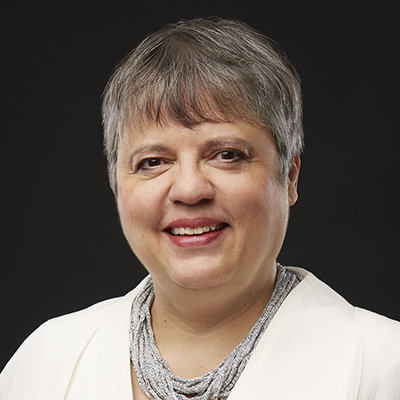
Professor Susannah Quinsee is the Vice President (Digital and Student Experience) and Senior Diversity Ambassador for Race Equality at City, University of London. She leads on digital transformation, student experience, post-pandemic educational strategies, curriculum design, and staff development. Her team oversees Library Services, Learning Enhancement, Digital Education, and collaborations across academic divisions. She is a Lego Serious Play facilitator, integrating creative methods into leadership and change management. Previously, she served as Director of Learning Development and Chair in Learning and Teaching Development. Her expertise spans online learning, student support, and large-scale institutional change. Key roles include National Teaching Fellow (2011), Learning and Teaching Excellence Ambassador (2017), and Visiting Professor at the University of Northampton. She has advised national agencies like AdvanceHE and authored widely on educational leadership, playful pedagogy, and digital strategies. Her research focuses on playful leadership and change management, addressing how institutions adapt to evolving educational landscapes. Awards include the National Teaching Fellowship and HEA Principal Fellowship, reflecting her contributions to teaching excellence and professional development.
Yasmin Kafai is a Professor at the University of Pennsylvania's Graduate School of Education (GSE), Department of Learning Sciences. Her research focuses on computational thinking, AI education, and equitable K-12 computing pedagogy. She has pioneered work on integrating electronic textiles (e-textiles) and participatory design into STEM education to engage youth in critical perspectives of technology. Kafai's recent work emphasizes algorithmic literacy, youth-led auditing of machine learning systems, and bridging technical and societal dimensions of computing. Key research areas include: computational empowerment, AI ethics in education, youth agency in technology design, and culturally responsive computing curricula. Her projects often involve hands-on making activities, such as constructing generative AI models or debugging e-textile systems, to foster both technical and critical understandings. Publications from 2024-2025 highlight trends in youth engagement with generative AI, algorithm auditing frameworks, and the intersection of physical computing with growth mindset practices. She has also explored the role of storytelling methodologies in reimagining computing narratives for marginalized groups. Kafai collaborates extensively with teachers to develop scalable professional development programs addressing equity in CS education. Her work frequently appears in learning sciences and computing education journals, with a focus on practical classroom implementations and systemic educational reforms. Ongoing efforts include designing 'Hour of Code' activities that integrate critical AI literacy and fostering youth as co-designers of ethical technology solutions.
Dr. Susana Castro-Kemp is an Associate Professor in Psychology and Human Development at University College London's Institute of Education (IOE), where she serves as Director of the Centre for Inclusive Education (CIE) since September 2023. Previously, she was a Reader in Education at the University of Roehampton for eight years. Her work focuses on inclusive education policy and practice globally, with particular expertise in special educational needs and disabilities (SEND), early childhood intervention, and mental health in schools. The IOE has been ranked number one in the world for Education for several consecutive years, providing an ideal environment for her impactful research. Dr. Castro-Kemp holds a PhD in Psychology jointly awarded in 2012 by the University of Porto (Portugal) and the University of North Carolina at Chapel Hill (USA). Her doctoral research was fully funded by the Foundation for Science and Technology/European Commission and the Global Education and Development Studies scholarships. She is a Chartered Psychologist with the British Psychological Society, a Senior Fellow of Advance HE, and a Recognised Research Supervisor by the UK Council for Graduate Education. Dr. Castro-Kemp's research centers on policy regulating education, health, and welfare services for children, particularly those with support needs. She examines inclusive education practices from users' perspectives, policy models leading to effective inclusive pedagogy, and country-level policy impacts on outcomes for children with special educational needs. Her work moves away from diagnostic labels toward engagement and civic participation as educational outcomes. She also investigates inclusion and early intervention in low- and middle-income countries, mental health in schools, and quality of early childhood education. Her recent publications reveal several key trends in inclusive education research. There's growing emphasis on understanding educational experiences through the voices of children and families rather than diagnostic labels. Much of her work examines the implementation gap between inclusive education policy and classroom practice. She has conducted significant research on how children with special educational needs experienced the pandemic, revealing both challenges and unexpected "silver linings" for some groups. Her corpus analysis of Ofsted reports shows narrow focus in early childhood education inspections, while her work on SEND policy increasingly takes an international comparative approach. Dr. Castro-Kemp has received recognition for her impactful work, including: Best Digital Humanities Project for Community Engagement Prize (2023) from the National Institute of Humanities and Social Sciences of South Africa for her project "Optimising collaborations and reducing inequalities of Early Childhood Intervention in post-Covid-19 South Africa" Dr. Castro-Kemp has secured approximately £1.3 million in research funding from various sources including ESRC, British Academy/Leverhulme Trust, European Commission, and private sponsors. Her current major project is 'ScopeSEND' (2024-2026), funded by the Nuffield Foundation (£250,000), examining international SEND policies. She has led numerous projects including "Transdisciplinary provision for children with disabilities in the Global South" (£3,500), "Optimising collaborations in South Africa" (£47,200), and "Froebel meets Ofsted" (£19,185). As a supervisor, she mentors MA/MSc and PhD students in education policy, early childhood, and inclusive education, having been nominated for student choice awards for excellent feedback and outstanding research supervision. As Director of the UCL Centre for Inclusive Education since 2023, Dr. Castro-Kemp leads a team focused on advancing knowledge exchange and research in inclusion and special needs. The Centre works with schools, educators, parents, and early years settings to translate research into practice. Her international collaborations include work with the World Health Organization as a technical advisor on the use of the International Classification of Functioning, Disability and Health (ICF) system in educational contexts. She also serves on the SEN Policy Research Forum and has provided oral evidence to the House of Commons Education Select Committee.
Sally M. Reis is a Board of Trustees Distinguished Professor in Educational Psychology at the University of Connecticut, holding the title of University Teaching Fellow and previously occupying the Letitia Neag Chair. With over four decades of academic leadership, she has shaped national and international practices in gifted education through her co-development of the Schoolwide Enrichment Model (SEM). Her academic credentials include: Ph.D. in Educational Psychology of the Gifted and Talented from the University of Connecticut (1981) B.A. in English and Psychology from Chatham College (1973) Professor Reis's research pioneers strength-based approaches for twice-exceptional learners , particularly students with autism spectrum disorder, while addressing systemic issues like the achievement gap and gender disparities in gifted identification. Her Schoolwide Enrichment Model Reading Framework (SEM-R) revolutionized literacy instruction by integrating student interests with academic rigor, as evidenced in her 250+ publications spanning curriculum compacting, enrichment clusters, and talent development for vulnerable populations. Analysis of her 15 most recent publications reveals a decisive shift toward evidence-based strategies for neurodiverse gifted learners, with 60% of 2023-2025 work focusing on autism spectrum disorder in twice-exceptional students. Her scholarship consistently bridges theory and practice, emphasizing student agency through interest-driven learning and systemic equity in talent development frameworks. Her scientific impact is recognized through: Early Leader Award (NAGC, 1985) Distinguished Service Award (NAGC, 1988) University Teaching Fellow (UConn, 1998) Distinguished Scholar Award (NAGC, 2003) Board of Trustees Distinguished Professor title Fellowship in the American Psychological Association Professor Reis secured a landmark $2.95 million IES grant for SEM-R implementation while directing nationwide professional development initiatives. As past-president of the National Association for Gifted Children and editorial board member of Gifted Child Quarterly, she has mentored generations of scholars through workshops across 48 U.S. states. Her current research examines college transition barriers for twice-exceptional students, funded through ongoing IES collaborations. Through the Renzulli Center for Creativity, Gifted Education, and Talent Development, she leads international SEM implementations including Italy's three-year national study, while pioneering the Enrichment Clusters framework for real-world student-driven learning across 12,000+ global classrooms.
Christian FISCH is an Associate Professor in Business Economics and Entrepreneurship at the University of Luxembourg's Interdisciplinary Centre for Security, Reliability and Trust (SnT). His research focuses on the intersection of entrepreneurship with digital technologies, venture finance, and socio-cultural influences. Key areas include blockchain-based financing mechanisms (e.g., ICOs), the psychological and digital identity aspects of entrepreneurs, and the impact of environmental/climate factors on entrepreneurial activity. He has published extensively in top journals, addressing topics such as B Corp certification signaling effects, venture capital decision-making, and the paradox of technology adoption among SMEs. His work spans both theoretical contributions (e.g., extending Schumpeterian frameworks) and applied analyses (e.g., post-pandemic entrepreneurial resilience). FISCH collaborates with global institutions, leveraging mixed-methods approaches including digital trace analysis from platforms like Twitter to study investor behavior and entrepreneurial traits. He has no listed awards but maintains active research agendas in decentralized finance, climate entrepreneurship, and cross-cultural entrepreneurial motivations. Professional activities include editorial roles in entrepreneurship journals and advising on innovation policy. His research often addresses emerging trends such as NFTs in creative industries, DAO governance structures, and the role of trademarks/patents in regional innovation ecosystems.
Harri Ylönen serves as Associate Professor in the Department of Film at Aalto University, Finland, specializing in cinematic production with emphasis on editing techniques and narrative development across documentary and fiction genres. His research spans critical areas including: Film Editing Methodologies Documentary Storytelling Fiction Film Production Television Series Development Creative Media Industries Professor Ylönen's mentorship has yielded exceptional student outcomes, with supervised works achieving international recognition. His students' films—such as Siiri Vaara's documentary 'Where the Light Breaks into Shards' and Sameli Muurimäki's 'Lollipop'—secured official selections across major festivals including International Short Film Competition, New Nordic Films, and R&A Shorts competitions throughout 2023. Professional contributions include editorial roles on prominent Finnish productions like the 'Paratiisi' TV series franchise (2020-2024), 'Helsinki-syndrooma', and feature films including 'A Rare Grand Alignment' (2023), demonstrating consistent engagement with contemporary cinematic practices.
Maureen Kendrick is a Professor and Deputy Department Head in the Department of Language & Literacy Education at the University of British Columbia's Faculty of Education. Her research examines literacy and multimodality as integrated communicative practices, addressing social and cultural issues in diverse contexts with particular emphasis on visual communication and refugee/migrant education. Her research interests span digital literacies, multiliteracy and multimodality, and international perspectives on literacy education. She investigates how youth from refugee backgrounds use multimodal approaches to construct identities and engage with learning, often through digital storytelling and visual methodologies. Her work extends to health literacy in Ugandan contexts and the role of play in early childhood literacy development across Canada, Kenya, and Uganda. Analysis of her recent publications reveals consistent focus on refugee/migrant education, digital storytelling, and multimodal literacy. She examines how digital tools empower marginalized youth to express identities while addressing challenges in language learning and cultural integration. Her research also explores HIV/AIDS education through makerspaces and the intersection of arts-based practices with science literacy. Dr. Kendrick's scientific recognition includes: Canadian Committee for Graduate Students in Education (CCGSE) Mentorship Award (2024) Killam Teaching Prize (2012-13) Alan C. Purves Award (2013) She actively supervises graduate students across doctoral and master's programs, with current research focusing on refugee education and multilingual learners. Her SSHRC-funded projects include the 2025-2029 grant 'Digital Multimodal Composing-To-Learn' and the 'Language and Literacy Learning Among Refugee and Migrant Background Children' initiative, involving collaborators from UBC, York, and Western universities. Dr. Kendrick leads international research teams across Canada, Uganda, and Kenya, developing community-engaged approaches to literacy education that bridge academic research and classroom practice.
Philip Bell is a Professor in the Learning Sciences & Human Development at the University of Washington College of Education . He holds the Shauna C. Larson Endowed Chair in Learning Sciences and serves as Director of the Institute for Science + Math Education . Additionally, he co-directs the LIFE Science of Learning Center , focusing on equity-driven innovation in STEM education. Education : PhD and MEd in Human Development & Cognition, Science/Math Education from UC Berkeley (1998, 1996); BS in Electrical Engineering & Computer Science from University of Colorado Boulder (1989). Bell’s research emphasizes cognitive and cultural approaches to learning across diverse environments, including everyday science expertise , learning technology design , culturally expansive instruction , and large-scale educational reform . His work bridges formal and informal learning contexts , addressing equity through participatory design research. Recent research trends include culturally sustaining pedagogies , climate justice science education , and systemic equity in STEM . His team develops STEM Teaching Tools and collaborates with national networks to improve science standards and instructional coherence. Scientific Awards : Shauna C. Larson Endowed Chair in Learning Sciences. Bell mentors a diverse group of doctoral students and has advised numerous PhD/MEd graduates now in academic and research roles. His projects span K-12 STEM innovation , science communication , and equity-focused policy , including contributions to the Next Generation Science Standards . He leads the Institute for Science + Math Education and collaborates with the Research+Practice Collaboratory , Seattle/Renton school districts, and national teams to scale equitable science education.
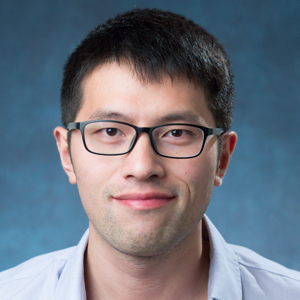
Chenhao Tan serves as an Associate Professor in the Department of Computer Science and the UChicago Data Science Institute at the University of Chicago. His academic journey includes a PhD from Cornell University, followed by a postdoctoral position at the University of Washington, and previous affiliation with the University of Colorado Boulder. Dr. Tan's research focuses on language and social dynamics , human-centered machine learning , and multi-community engagement . He is broadly interested in computational social science, natural language processing, and artificial intelligence. His work explores the paradigm of 'machine-in-the-loop' systems where AI serves as an assistant rather than a replacement for human capabilities, particularly in complex tasks requiring human judgment. His publications demonstrate significant contributions across multiple domains including AI ethics, creative writing assistance, political language analysis, and healthcare applications. His research shows a clear trajectory toward developing AI systems that enhance human capabilities while addressing important ethical considerations in AI deployment. Sloan Research Fellowship Dr. Tan's research program examines how machine learning can be integrated into human workflows to augment human capabilities rather than replace them. His laboratory investigates applications across social media, healthcare, creative writing, and political discourse analysis, with current projects focusing on AI platform moderation, detection of subtle signals in professional communication, and computational analysis of social dynamics.
Pamela Burnard is a Professor of Arts, Creativities and Educations at the University of Cambridge, UK. She also holds adjunct professorships at the University of Sydney, Western Sydney University, University of Foggia, and Instituto Katarina Gurska. A Fellow of prestigious organizations like the Royal Society of Arts and Chartered College of Teaching, she specializes in creativity research across arts, education, and interdisciplinary fields. Her qualifications include a PhD from the University of Reading and degrees in Music Performance and Education from institutions like the University of Melbourne and Indiana University. Research & Education : Burnard's work focuses on creativities theories, STEAM education, urban musics, and posthumanist approaches. She has supervised over 30 doctoral students and contributed to global projects like the Global Institute of Creative Thinking and the CUMIN network. Her research explores transdisciplinary practices, digital technologies, and policy impacts on education. Publications & Awards : Author/co-author of 20+ books and 120+ articles, she has published in journals like Thinking Skills and Creativity and Music Education Research . Awards include the Hugh Childers' Prize for her DipEd and fellowships in leading academic societies. Advisory Roles : She advises the REF Sub-Panel SP33 and serves on editorial boards for journals like Journal of Thinking Skills and Creativity . Her collaborations span universities globally, emphasizing creative pedagogies and inclusive education. Labs & Teams : Leads the Arts and Creativities Research Group (A&CRG) at Cambridge and contributes to networks like CRiCLE and NRICH. Her work bridges academia, industry, and communities to advance creative practices in education.
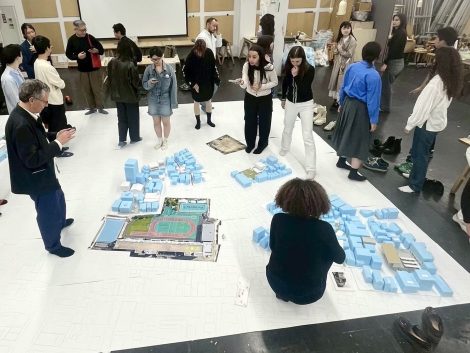
Keigo Kobayashi is an Associate Professor at Waseda University's Faculty of Science and Engineering, School of Creative Science and Engineering, Department of Architecture. He has served in this position since 2016, previously holding the rank of Assistant Professor from 2012 to 2016. His professional journey includes significant experience at the Office for Metropolitan Architecture (OMA) in Rotterdam, where he worked as a Senior Architect and Project Architect from 2007 to 2012. His educational background includes a Master of Architecture II from Harvard University's Graduate School of Design (2005), a Master of Architecture from Waseda University's Graduate School of Science and Engineering (2003), and a Bachelor's degree in Architecture from Waseda University's School of Science and Engineering (2002). Kobayashi's research focuses on architectural planning and city planning, with particular interests in food-related architecture, spatial behavior, and sustainable design. His work explores the intersection of architecture with everyday life, examining how spatial configurations influence human behavior and community formation. Recent research has investigated food systems in urban contexts, playful approaches to spatial design, and the relationship between architectural form and environmental performance. His publications demonstrate a strong focus on practical applications of architectural theory, with projects spanning from food truck design in Shodoshima to zero-energy housing solutions and innovative approaches to architectural education. His work shows a consistent interest in how architecture can respond to contemporary social challenges while maintaining theoretical rigor. Excellence in Concrete Construction Award 2019, American Concrete Institute (ACI), Qatar National Library / OMA Kobayashi actively contributes to architectural education through various committee memberships, including serving as Chief of the Subcommittee on Strategies for International Compatibility in Architectural Education at the Architectural Institute of Japan and leading the Caberra Accord Correspondence Subcommittee at the Japan Accreditation Board for Engineering Education. His teaching portfolio at Waseda University is extensive, covering architectural design studios from undergraduate to doctoral levels. He leads several research initiatives, including the Wakusei Project in Tosa, Kochi, NPO PLAT (Platform for Architectural Thinking), and the European Thinkbelt/McDonald's Radio University project which represents an innovative approach to architectural education and community engagement, particularly in contexts of migration and cultural exchange.
Laura A. Meek is an Assistant Professor in the Department of Anthropology at the University of British Columbia Okanagan , specializing in Medical Anthropology , Decolonial Science and Technology Studies , and East African research . She holds affiliations with interdisciplinary networks like the UBC-O Science and Technology Studies Collective and co-directs the Storying Otherwise: Creative Ethnographic Writing Hub . PhD, MA in Anthropology (University of California, Davis) MA in Women’s Studies (George Washington University) Honors BA in Comparative Human Development (University of Chicago) Her research examines counterfeit pharmaceuticals and bodily epistemologies in Tanzania, framed through feminist , decolonial , and anti-racist lenses . She investigates leprosy elimination campaigns and fugitive science practices across Africa and Hong Kong, with recent work focusing on creative ethnographic prose and critical disability studies . Her publications span high-impact journals like Social Science & Medicine and Medical Anthropology Quarterly , addressing themes of radical uncertainty and world-making practices . Laura’s 15 most recent articles (2021–2025) analyze: pharmaceutical counterfeits in East Africa, the temporal politics of leprosy , anti-colonial global health , and creative writing as research . Her work bridges Indian Ocean connections and STS frameworks to critique neocolonial health governance. 2025 Collaborative Research Mobility Award 2024 Wenner-Gren Workshop Grant 2023 MAE–MAT Early Career Paper Award 2021 Society for Humanistic Anthropology Creative Ethnographic Prose Prize 2018 Wenner-Gren Dissertation Grant 2013 NSF Doctoral Dissertation Grant She supervises M.A. and Ph.D. students in UBC-O’s Interdisciplinary Graduate Studies programs, particularly in global health , African politics , and STS . Her professional service includes co-chairing the 2026 Cascadia Medical Anthropology Seminar and serving on the American Anthropological Association Nominations Committee .
David M Feldshuh is a Professor in Performing and Media Arts at Cornell University with over 40 years of service, uniquely combining a board-certified emergency medicine physician career with theater artistry. As founding Artistic Director of the Schwartz Center for the Performing Arts, he leads a resident company of professional actors collaborating with students across Cornell. His education spans Dartmouth College (B.A. Philosophy, Phi Beta Kappa, cum laude), London Academy of Music and Dramatic Arts, and dual Ph.D. (Theatre) and M.D. (Medicine) from the University of Minnesota, followed by Emergency Medicine residency at Hennepin County Medical Center and board certification. Feldshuh’s research centers on theater as a vehicle for social change, particularly at the arts-healthcare intersection. He pioneers creativity training methodologies derived from Zen meditation, Gestalt Therapy, and martial arts to enhance professional presence. His work examines ethical dilemmas in medical practice through performance, with emphasis on cultural bias mitigation and historical trauma processing. His creative output reveals consistent focus on social justice narratives, evolving from historical adaptations like Antigone to contemporary explorations of systemic inequity. Recent works demonstrate increasing formal innovation through multi-role performance structures and transmedia storytelling approaches that bridge academic and public engagement. Major honors include: Pulitzer Prize Finalist and 5 Emmy Awards for Miss Evers' Boys Cornell’s Stephen H. Weiss Presidential Fellowship (highest teaching honor) Distinguished Service Award from Tuskegee University’s National Bioethics Center AMA “Freddy” Award for medical film excellence CINE Golden Eagle for documentary work Feldshuh mentors through honors tutorials and developed the globally adopted eCornell course Acting in Public , teaching 1,600+ students across 15 countries. His Schwartz Center leadership established institutional grant frameworks supporting large-scale productions like Bernstein’s Mass with 138 performers. Current initiatives include leadership workshops for Cornell Tech and corporate clients, extending his presence-training methodology beyond academia. He maintains active creative practice through the Schwartz Center’s resident company, directing major productions while integrating medical ethics into performance pedagogy. His stadium announcing role at Cornell commencements for 20+ years exemplifies his commitment to institutional community engagement.
Dr. Jerry K. Hoepner serves as Professor and Assistant Chair in the Department of Communication Sciences and Disorders at the University of Wisconsin - Eau Claire's College of Health and Human Sciences, where he has taught full-time since 2007 after beginning part-time in 2003. His roles include Student Engagement Coordinator and CSD Ambassadors Advisor, with clinical supervision remaining integral to his work. His educational foundation includes a Ph.D. in Communication Sciences and Disorders from the University of Wisconsin - Madison, an M.S. in Communication Sciences and Disorders from UWEC, a B.S. in Psychology from Minnesota State University - Mankato, and an A.A. from Bethany Lutheran College. He holds ASHA Certification (CCC-SLP) and Wisconsin State Licensure. Dr. Hoepner's research pioneers video self-modeling interventions, counseling methodologies, and healthcare perceptions for individuals with acquired cognitive-communication disorders, particularly traumatic brain injury (TBI) and aphasia. His innovative work encompasses the Chippewa Valley Aphasia Camp, Thursday Night Poets collective, and TBIconneCT/FUNconneCT social communication interventions. As co-founder of ASHA SIG20 for Counseling in CSD and the UWEC CSD SoTL Lab, he bridges scholarship with clinical practice while editing Teaching and Learning in Communication Sciences and Disorders . His publication trajectory reveals intensifying focus on qualitative analysis of patient experiences, project-based rehabilitation techniques, and counseling integration within SLP practice, with recent work examining poetry interventions, telehealth delivery, and sociolinguistic assessment frameworks. His distinguished recognition includes: ASHA Fellow designation (2021) UW System Regent's Teaching Excellence Award (2020) CAPCSD Distinguished Contribution Award (2023) Aphasia Access President's Award (2023) Multiple mentoring and scholarly honors Dr. Hoepner has mentored countless undergraduate research projects and graduate committees while securing federal TBI grants. His clinical leadership extends through Aphasia Access podcast contributions and statewide intervention programs that transform rehabilitation paradigms. His laboratory initiatives—including the SoTL Lab and project-based brain injury groups—embody his commitment to experiential learning, where students engage in camp immersion, clinical apprenticeships, and community-driven research that reshapes neurorehabilitation practices.
George Musgrave is a Senior Lecturer in Cultural Sociology and Creative Industries at the Institute for Creative and Cultural Entrepreneurship (ICCE) at Goldsmiths, University of London. An interdisciplinary sociologist of culture, he specializes in researching musicians' psychosocial working lives with a focus on mental health and wellbeing in the music industry. His work has directly influenced industry practices and government policy, including the establishment of the Music Minds Matter helpline in 2017. Dr. Musgrave holds a PhD from the Centre for Competition Policy (UEA), an MA in Politics, Philosophy and Economics, and a Cambridge MA (Cantab) in Social and Political Science. His academic journey reflects his interdisciplinary approach that bridges sociology, psychology, and economics in understanding creative work. His research interests center on the psychological experiences and working conditions of creative careers, particularly examining how the music industry impacts mental health. Musgrave investigates the paradox where music-making can be therapeutic while building a music career often proves detrimental to wellbeing. His work explores the intersections of identity, class, gender, and economic precarity in creative labor, with particular attention to how social media, streaming platforms, and industry structures affect musicians' mental health. Analyzing his recent publications reveals a consistent focus on mental health in the music industry across multiple dimensions: epidemiological studies of anxiety and depression among musicians, interventions and policy solutions, the impact of digital platforms, and the cultural narratives surrounding musical work. His research spans methodological approaches from quantitative surveys to qualitative interviews and critical policy analysis, consistently highlighting the need for structural changes in the music industry to support artist wellbeing. Fellow of the Royal Society for Public Health (FRSPH) Fellow of the Royal Society of Arts (FRSA) Fellow of the Higher Education Academy (FHEA) Editorial Board member of Cultural Trends journal Royal Musical Association Music and Mental Health Group Research Coordinator Dr. Musgrave has supervised 68 MA dissertations to completion and seven doctoral projects, including Dr. Steven Sparling (2021). His current PhD supervision spans interdisciplinary topics connecting music, psychology, and sociology. He has secured significant research funding from diverse sources including UKRI (ESRC), the Mayor of London, Help Musicians UK, and the Danish Partnership for Sustainable Development in Music. His major projects include 'Can Music Make You Sick?' and 'When Music Speaks,' which represent the largest studies to date on musicians' mental health in the UK and Scandinavia respectively. Beyond academia, Musgrave maintains an active music career, having signed with EMI/Sony/ATV and performed at major festivals including Reading and Leeds.