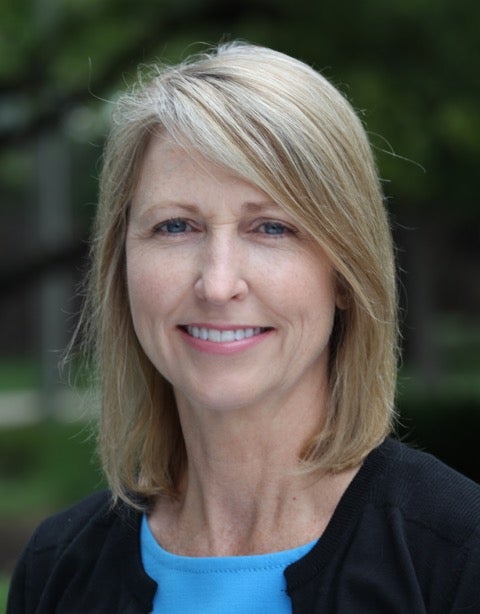
Katherine Isbister is a full professor in the Department of Computational Media at the University of California, Santa Cruz, where she directs the Center for Computational Experience. She was previously an associate professor jointly appointed between the Computer Science department at New York University’s Tandon School of Engineering and the NYU Game Center, and served as the founding Research Director of the Game Innovation Lab at NYU. Her research lies at the intersection of Human-Computer Interaction and digital games, focusing on emotion, social connection, and playful experiences. Key research themes include emotion in games , social play , fidget technologies , social VR , and digital characters . Her work combines technical prototyping, design research, and empirical evaluation to understand how interactive systems can support emotional and social experiences. Her publications span top venues such as CHI, DIS, and IEEE Transactions on Affective Computing. Trends in her recent work show a strong emphasis on embodied interaction, affective design, and socio-technical systems for emotional regulation and social connection. She explores how movement, touch, and presence in virtual spaces can enhance human experience. MIT Technology Review TR100 Young Innovator (1999) Best Paper Award, ACM CSCW (2018) New Voices New Visions Award (for SimWorks art series) She has advised numerous students and led research projects involving social wearables, movement-based games, and mental health interventions. Her lab has received recognition from media outlets including NPR, Scientific American, and The Guardian. She has also collaborated with industry partners such as Microsoft, Electronic Arts, and Ubisoft. She leads the Center for Computational Experience at UCSC and has previously directed the Game Innovation Lab at NYU. Her team has produced over 100 peer-reviewed publications and several exhibition-ready games and art installations.
Alexey Vladimirovich Vdovin is a Professor and Senior Research Fellow at the National Research University Higher School of Economics (HSE), working within the Faculty of Humanities and School of Philological Sciences. He began his tenure at HSE in 2012 and has accumulated 15 years of scientific and teaching experience. His academic journey includes a Doctor of Philology degree from HSE (2023), a PhD from the University of Tartu (2011), and his initial degree in 'Russian language and literature' from Vyatka State Humanitarian University (2007). He has held significant roles including Deputy Dean for Science at the Faculty of Humanities (2018-2020) and serves on numerous academic councils and committees. Vdovin's educational background demonstrates both depth and international perspective. After completing his undergraduate studies at Vyatka State Humanitarian University in 2007, he pursued doctoral studies at the University of Tartu, where he earned his PhD in 2011 with a dissertation on 'The concept of 'chapter of literature' in Russian criticism of the 1830-1860s.' His academic development has been enriched by numerous international experiences, including visiting researcher positions at Selwyn College, University of Cambridge (2019), Jordan Center at New York University (2017), and multiple research stays at Humboldt University in Berlin through the Aurora Erasmus Mundus program. Professor Vdovin's research focuses on Russian intellectual history, the history of ideas, the Russian Empire, Russian literature of the 19th century, and nationalism studies. His work particularly examines the formation of the Russian literary canon, representations of peasants in literature, and the relationship between literature and society. He has authored approximately 80 articles and 4 monographs on 19th-century Russian literature, culture, and criticism, with works on major figures like Turgenev, Dostoevsky, Tolstoy, Goncharov, Belinsky, Chernyshevsky, Dobrolyubov, and Nekrasov. His recent book 'Monsters at the Threshold: Dracula, Frankenstein, Viy and Other Literary Monsters' (2024) demonstrates his expanding interest in literary archetypes and cultural phenomena. Vdovin has received numerous awards and recognitions for his scholarly work, including the Moscow Government Prize for young scientists (2017), multiple 'Best Teacher' awards (2013-2015, 2017-2024), and recognition as a winner of HSE's competition for best Russian-language scientific works (2022, 2024). He has also received various letters of gratitude from HSE administration, the Faculty of Humanities, and the School of Philology for his contributions to academic life. As an advisor, Vdovin has supervised numerous student research projects, including Smirnova T.V.'s 2014 master's thesis on 'Representation of 'Russianness' and 'Otherness' in Russian essays of the 1840s.' He has also served as a curator for HSE's Personnel Reserve Program at the School of Philological Sciences and has been actively involved in dissertation councils. His research has been supported by significant grants, including a 2024-2025 Russian Science Foundation grant 'The Genre of 'Peasant Life Story' in Russian Literature Before 1861: Poetics, Plots, Socio-Cultural Functions' (No 24-28-00184) and a 2018-2020 RFBR grant on 'State and Literary Institutions: From Peter I's Reforms to the 'Great Reforms.' Professor Vdovin is actively engaged in academic communities beyond HSE, serving as editor-in-chief of the HSE preprint series 'Literary Studies' and participating in the Big Project 'Literature and Society: An Experience of Sociocultural Description.' He is also involved in public scholarship, frequently giving public lectures through platforms like 'Arzamas,' 'Postnauka,' and 'Stradarium,' and appearing on the 'Observer' television program (Culture channel). Since 2015, he has been a mentor at Maya Kucherskaya's Creative Writing School, bridging academic scholarship with creative practice.
Roberta Sinatra is a Professor in Social Data Science at the University of Copenhagen, with part-time affiliations at ITU Copenhagen, ISI Foundation (Italy), and CSH (Austria). She co-founded the NERDS Research Group at ITU and co-leads the Pioneer Centre for AI in Copenhagen. Research Interests: Her work spans computational social science, network science, and data science, focusing on fairness in AI, scientific careers, and human mobility. Recent projects include analyzing child protection algorithms and modeling urban bicycle networks. Scientific Awards: ERC Consolidator Grant Villum Young Investigator Grant Complex Systems Society Junior Prize DPG Young Scientist Award for Socio- and Econophysics Sapere Aude: Starting Grant Publications: Her research, often in top-tier venues like Nature and Science , explores interdisciplinary themes, including AI ethics, gender disparities in science, and social network dynamics. Labs & Teams: She leads research initiatives at the Center for Social Data Science (KU) and co-founded the NERDS Research Group at ITU, fostering international collaboration in network science and AI ethics.
Ranjay Krishna is an Assistant Professor at the Paul G. Allen School of Computer Science & Engineering at the University of Washington, where he co-directs the RAIVN lab and leads the computer vision team at the Allen Institute for AI (Ai2). His research intersects computer vision , natural language processing , robotics , and human-computer interaction . PhD in Computer Science from Stanford University (2021) Bachelor's and Master's degrees from Stanford and Cornell His work has received best paper , outstanding paper , and orals at top conferences like CVPR, ACL, CSCW, NeurIPS, UIST, and ECCV. Media outlets including Science , Forbes , and PBS NOVA have covered his research. He has been supported by grants from Google , Apple , NFS , and others. Ranjay advises a diverse group of 15 PhD and postdoctoral researchers , including Jieyu Zhang, Benlin Liu, and Cheng-Yu Hsieh. His teams have developed benchmarks like MemoryBench and The Colosseum , and his PathFinder framework achieved 74% accuracy in skin melanoma diagnosis—surpassing human experts by 9%. Notable contributions include: Perception Tokens for visual reasoning in MLMs SAM2Act for robotic manipulation with memory Synthetic Visual Genome dataset with 5.6M relationships
Toby Jia-Jun Li is an Assistant Professor in the Department of Computer Science and Engineering at the University of Notre Dame, where he leads the SaNDwich Lab. He also serves as the Director of the Human-Centered Responsible AI Lab in the Lucy Family Institute for Data & Society and is a Faculty Fellow at the Institute for Educational Initiatives (IEI). Previously, he was affiliated with Carnegie Mellon University's Human-Computer Interaction Institute (HCII) and GroupLens Research. Dr. Li's research spans the intersection of Human-Computer Interaction (HCI), End-User Software Engineering, Machine Learning (ML), and Natural Language Processing (NLP), with recent work focusing on addressing societal challenges in the future of work through human-AI collaborative approaches. His work has resulted in over 40 publications at premier venues including CHI, UIST, CSCW, ACL, and ICSE, with 8 papers winning Best Paper or Honorable Mention awards. His recent publications demonstrate a strong focus on human-AI collaboration across various domains, including code understanding, privacy, accessibility, and creative tools. The work shows a trajectory toward increasingly sophisticated integration of human-centered design with AI capabilities, particularly using large language models to enhance human productivity and address societal challenges. Google Research Scholar Award recipient Recipient of Yahoo! Fellowship ($100,000/year) Best Paper Award at UIST 2020 Best Paper Honorable Mention Award at CHI 2021 Best Paper Award at CSCW 2024 Best Paper Award at CHI 2025 Dr. Li actively mentors Ph.D. students and has established collaborations with Google, Microsoft Research, IBM Research, Adobe, Verizon, and J.P. Morgan. His research has been supported by NSF, Google Research Scholar Program, AnalytiXIN Initiative, Yahoo! InMind project, and J.P. Morgan. He is currently recruiting Ph.D. students and undergraduate researchers for his SaNDwich Lab, which focuses on developing interactive systems to empower individuals to create, configure, and extend AI-powered computing systems.
Dr. Farha Sattar is a Lecturer in Education (Mathematics) at the Faculty of Arts and Society, Charles Darwin University. With over thirty years of teaching experience in Mathematics, Science education, GIS, Remote Sensing, and e-Learning technologies at undergraduate and postgraduate levels, Dr. Sattar brings extensive expertise to her academic role. She holds a PhD in Geospatial Science from Charles Darwin University, focusing on Spatial Mathematical Modelling for 3D Gully Mapping and Erosion Quantification. Her educational background includes: PhD in Geospatial Science (Three Dimensional Gully Mapping and Erosion Quantification within a Geoinformatics Framework), Charles Darwin University (2012) Prior academic experience at several Asian and European universities Dr. Sattar's research spans multiple interdisciplinary fields with a strong focus on the intersection of education and technology. Her primary research interests include Mathematics Education, STEM Education, Geoscience Education, Spatial Mathematical Modelling, Drone Technology, Remote Sensing, Geographic Information Systems, and Innovative Pedagogies such as experiential learning and inquiry-based approaches. She has developed expertise in cognitive development, particularly in fostering critical and creative thinking skills through iSTEM approaches. An analysis of Dr. Sattar's recent publications reveals a consistent trajectory toward integrating emerging technologies like drones, augmented reality, and geospatial artificial intelligence into educational contexts. Her work demonstrates a progression from foundational geospatial research on erosion mapping to innovative applications in STEM education. Recent publications increasingly focus on drone technology for educational purposes, spatial data infrastructure for policy development, and computational thinking development through technology-enhanced learning. Dr. Sattar has received numerous accolades for her contributions to education and research: NT Science Week Awards – Inspired NT STEM Hero of the Year award (2021) Long Service Recognition Award (2023) Finalist, CDU Alumni Award (2023) Multiple Best Presentation Awards (2008, 2010, 2017) Australian College of Educators - 2021 College Medal Nominee As a supervisor, Dr. Sattar mentors postgraduate research students including Ayesha Farhan, who is working on "A Framework for Cognitive Development: Fostering Critical and Creative Thinking Skills, Using iSTEM Approach." She actively secures research funding through various projects such as "DBELaSTEM: Drone-Based Experiential Learning and STEM Education," "STEM_D & VR: Youth STEM Learning and Empowerment with Drones and VR," and "CodProg Drone Lab." Her research is supported by grants from NT Government projects and other external funding sources. Dr. Sattar leads the CodProg Drone Lab, an innovative research space exploring drone technology applications in education. She is a certified drone pilot and aeronautical radio operator, which enables her to bridge theoretical knowledge with practical applications. Her work with the "Flying Forward: Drones, STEM Equity, and Indigenous Empowerment" initiative demonstrates her commitment to community engagement and addressing educational disparities through technology.
Haidy Geismar serves as Professor of Anthropology at University College London (UCL), where she is affiliated with the Department of Anthropology. She co-directs UCL's Digital Anthropology Program and is the founding director of the School for the Creative and Cultural Industries at UCL East. Geismar also serves as curator of the UCL Ethnography collections, facilitating exhibitions with community groups, students, and artists. Her institutional affiliations extend to the Tate and Victoria and Albert Museum in London, where she maintains long-term professional relationships. Geismar's research explores the intersections of intellectual and cultural property, indigenous rights, and colonial legacies with digital technologies and museum practices. Her work focuses on how digital platforms transform cultural representation, particularly in the South Pacific region including Vanuatu and New Zealand. She investigates how communities engage with digital collections, examining both the materiality of digital objects and their social implications. Her research demonstrates how indigenous knowledge systems interact with contemporary digital infrastructures to create new forms of cultural expression and preservation. Analysis of Geismar's recent publications reveals a clear trajectory toward examining the material dimensions of digital culture within museum and archival contexts. Her work increasingly addresses how digital technologies reshape cultural heritage practices while maintaining critical attention to postcolonial perspectives. There is a notable emphasis on sensory experiences in digital spaces, the politics of representation in digital collections, and the ways digital platforms enable or constrain indigenous knowledge systems. Geismar's professional recognition includes: Mellon Research Fellow at Tate (2019-2020) Fellow of the Royal Anthropological Institute Chairperson of Te Maru o Hinemihi (since January 2024) Photography Committee member of the Royal Anthropological Institute (2016-2024) While specific grant information isn't detailed in the available materials, Geismar's sustained research projects indicate successful funding acquisition. Her long-term collaborations with the Vanuatu Cultural Centre since 2000 and with Maori curators in New Zealand since 2004 suggest significant research support. Current projects like 'Finding Photography' and 'Collecting in Context' demonstrate ongoing research activity requiring funding. Geismar has created the Culture Lab at UCL East, an experimental curatorial space designed as a collections-rich environment for innovative display and research. This facility serves as a hub for her work with the School for the Creative and Cultural Industries, which brings together academic research with creative practice. The Culture Lab hosts exhibitions like 'Power!' and facilitates collaborations between university researchers, community groups, and students, creating a dynamic space for exploring the intersection of material culture and digital technologies.
Marc-Antoine Dilhac serves as Associate Professor in the Department of Philosophy at the University of Montreal's Faculty of Arts and Sciences, where he also directs governance and international collaboration initiatives. He holds leadership roles as Scientific Director of Algora Lab and leads the Ethics and Politics research axis at the Centre de recherche en éthique (CRÉ). His academic affiliations extend to the Centre d'études et de recherches internationales (CÉRIUM) and the Canada Research Chair in Public Ethics and Political Theory (2014-2019). Education: PhD in Philosophy and Political Science, University of Paris I: Panthéon-Sorbonne (2009) Master 2 in Philosophy and Political Science, University of Paris I: Panthéon-Sorbonne (2003) Agrégation in Philosophy, University of Paris I: Panthéon-Sorbonne (2002) Dilhac's research spans ethics, political philosophy, and AI governance, with particular focus on democratic tolerance, multiculturalism, and the ethical implications of artificial intelligence. His work bridges theoretical political philosophy with practical applications in AI policy development, sustainable finance, and democratic institutions. He has contributed significantly to UNESCO's Recommendation on the Ethics of Artificial Intelligence and leads initiatives examining AI's impact on French-speaking culture and democratic values. His recent publications reveal a clear trajectory from foundational work on tolerance and justice theory toward contemporary AI ethics challenges. The thematic evolution shows increasing engagement with practical governance frameworks, particularly in finance and education sectors, while maintaining strong philosophical grounding in democratic theory and institutional design. Key Awards and Recognition: Canada Research Chair in Public Ethics and Political Theory (2014-2019) Banting Postdoctoral Fellowship (2011) Contributor to UNESCO's Recommendation on AI Ethics (2021) Dilhac has supervised over 15 graduate students across philosophy, political science, and interdisciplinary AI ethics programs. His research is supported by multiple grants from FRQSC, FRQNT, SSHRC, and MITACS, totaling over $2 million CAD. Current projects include the Generative AI Ethics Framework for Educational Technology (2024-2025) and the Sustainable Finance AI Tools project examining ESG/DEI disclosure analysis. He co-founded and leads the CORDÉ research group on corruption and democracy, and directs Algora Lab's work on AI governance. His upcoming February 2025 panel at Université Laval will address AI and Francophone cultural perspectives ahead of the Paris AI Action Summit.
Atsuo Takanishi is a distinguished Professor at Waseda University's Faculty of Science and Engineering, School of Creative Science and Engineering, with appointments in both the Department of Bioscience and Biotechnology and the Department of Modern Mechanical Engineering. With over 700 publications, 10,399 citations, and an h-index of 47, Professor Takanishi has established himself as a leading figure in robotics research. His work spans multiple institutions, including visiting positions at Showa University School of Dentistry and KDDI Research, Inc. Professor Takanishi received his Doctor of Engineering degree from Waseda University in 1985, following his undergraduate studies in the Faculty of Science and Engineering at the same institution, which he completed in 1980. His academic journey began with positions as an Assistant at Waseda University (1985-1988), Lecturer (1988-1990), and Associate Professor (1990-1997) before achieving his current Professor status. Professor Takanishi's research interests center around robotics and intelligent systems, with particular expertise in humanoid robotics, surgical dentistry applications, and biomechatronics. His work demonstrates a unique integration of mechanical engineering principles with biological systems, resulting in innovative robotic platforms that mimic human capabilities. Notably, his laboratory has developed the Waseda Anthropomorphic Saxophonist Robot series and various medical training simulators that have significantly advanced the field of human-robot interaction. His research in experimental psychology complements his robotics work, particularly in human-robot interaction studies. Analysis of Professor Takanishi's recent publications reveals a strong focus on practical applications of robotics technology, particularly in assistive devices for elderly mobility, medical training simulators, and agricultural robotics for Synecoculture environments. His work consistently bridges theoretical robotics with real-world implementation, with recent papers emphasizing reinforcement learning approaches, haptic feedback systems, and computer vision techniques for complex environments. The Waseda Anthropomorphic Saxophonist Robot series represents a culmination of decades of research in humanoid robotics and musical expression. IEEE Fellow (2020-present) Robotics Society of Japan Fellow (2012-present) Japan Society of Mechanical Engineers Fellow (2007-present) Multiple Best Paper Awards from IEEE conferences (ICRA, IROS, ROMANSY) BusinessWeek Asia's Stars Bloomberg (2001) IFToMM Award of Merit (2010) Professor Takanishi has maintained extensive collaborations with research institutions worldwide, particularly with Italian institutions through the Italy-Japan Workshop series. His laboratory has secured substantial funding from Japanese government agencies including the Japan Science and Technology Agency, with particular emphasis on projects bridging robotics with medical applications and human-centered technologies. His international recognition is evidenced by his numerous visiting professorships and collaborative projects across continents. Professor Takanishi leads the Takanishi Laboratory at Waseda University, which maintains specialized facilities for humanoid robotics development, medical robotics research, and human-robot interaction studies. The laboratory has developed several notable robotic platforms including the WABIAN series of bipedal humanoid robots, the WASEDA FLUTIST ROBOT, and various medical training simulators used in clinical education settings. His work on the WASEDA SAXOPHONIST ROBOT represents a unique fusion of musical artistry and robotics engineering.
Manex Aguirrezabal Zabaleta is an Associate Professor in the Department of Nordic Studies and Linguistics at the University of Copenhagen. He previously held positions as a Postdoc (2017-2019) and Assistant Professor at the same institution. His educational background includes: PhD in Natural Language Processing from the University of the Basque Country (UPV/EHU), conducted at the IXA NLP group. Master's degree in Natural Language Processing from UPV/EHU. Bachelor's degree in Computer Science (5 years) from UPV/EHU. Dr. Aguirrezabal's research focuses on the computational analysis of poetry , particularly stress patterns in English. He explores whether computers can effectively analyze poetic structures, a field with roots in the 1980s but revitalized by modern techniques. Additionally, he investigates language generation , computational morphology and phonology , and finite-state methods . His work bridges traditional linguistic inquiry with cutting-edge natural language processing. Recent publications (2023-2024) demonstrate a diverse engagement with computational linguistics, including poetry generation, multimodal corpus development, clickbait analysis, and fact-checking. His research often employs zero-shot learning and language models, reflecting current trends in AI-driven linguistic analysis. He has contributed to international collaborations such as ParlaMint (multilingual parliamentary corpora) and the GEHM Zoom corpus. While specific grant details are not provided, his active publication record indicates ongoing research support. Dr. Aguirrezabal maintains a strong connection to his Basque heritage, having pursued his early education in the Basque language.
Fiona Lee is the Arthur F. Thurnau Professor of Psychology at the University of Michigan, with affiliations in Organizational Studies and the Advisory Committee. She holds a Ph.D. from Harvard University. Her research focuses on three core areas: Identity Integration (how individuals navigate multiple identities), Power Dynamics (effects of power on behavior), and Cultural Differences (impact of cultural contexts on organizations and individuals). She teaches courses on Organizational Psychology and Research Methods in Personality/Social Contexts. Lee’s work bridges social psychology and organizational behavior, emphasizing multicultural experiences and adaptation. Her recent studies explore refugee well-being, racial discrimination coping strategies, and the role of family in resettlement processes. Notably, she investigates how cultural identity integration influences creativity, decision-making, and social tolerance. Her publications span cross-cultural communication, biculturalism, and institutional barriers faced by minorities. Lee’s research often combines qualitative and quantitative methods to address real-world challenges in workplace dynamics and global mobility.
Elodie Loubaresse is an Associate Professor of Management at Paris-Saclay University since 2009. She holds a PhD in Management from Paris 2 University (supervised by Pr. Isabelle Huault) and is a former student of Ecole Normale Supérieure of Cachan. Her research focuses on innovation-organization relationships in clusters, sectors, and educational contexts, with a strong emphasis on pedagogical innovation and distance learning. She currently leads the L3 Management program and the M1 Strategic Management program in distance learning. Her academic work spans organizational dynamics, cluster networks, and spatial mobility strategies. She has organized international conferences (e.g., AIMS 2022) and served as guest co-editor for special issues on coopetition in ecosystems (FCS 2023) and spatial mobilities (RFG 2012). She is a member of the AIMS scientific committee and contributes to journal peer reviews (Management & Avenir, Revue Française de Gestion). Her teaching portfolio includes courses on strategic management, research methodology, and entrepreneurship across undergraduate and graduate levels. She leads pedagogical innovation initiatives through her role in AUNEGe (French university network for distance education) and has developed resources on management fundamentals for digital education platforms.
Anna Chalachanova is an Associate Professor in the Department of Health at VID University College, Norway. Her academic work centers on disability research, inclusive methodologies, and citizenship studies, with a primary focus on people with intellectual disabilities across Norway, Slovakia, and Great Britain. Her research spans inclusive research practices, citizenship frameworks for people with intellectual disabilities, higher education accessibility, sexual citizenship, religious inclusion, and protective care. She investigates how intellectual disabilities intersect with everyday citizenship experiences, voting rights, educational participation, and personal assistance services through participatory and co-creative methodologies that prioritize disabled voices. Analysis of her 15 most recent publications (2019-2025) reveals consistent thematic focus on citizenship and inclusion, with methodological emphasis on participatory research. Key trends include comparative studies between Norway and Slovakia, sexual citizenship barriers within personal assistance systems, and higher education experiences for intellectually disabled students. Her work demonstrates strong commitment to amplifying marginalized perspectives through narrative and co-created research approaches. Chalachanova actively contributes to multiple research initiatives including the ongoing PATHWAYS project (Faculty of Social Sciences) examining vulnerable institutional pathways for youth, and "To allow in" focused on barrier reduction for people with intellectual disabilities. Completed projects include "Higher education for people with intellectual disabilities" and "My vote counts too!" which evaluated voting participation mechanisms. These projects involve collaborations across Norwegian institutions, Slovakia, and Great Britain. Based in VID University College's Department of Health, she operates within interdisciplinary teams addressing disability inclusion through international partnerships. Her work connects Norwegian higher education contexts with Slovakian comparative frameworks, driving initiatives that transform citizenship practices and educational access for people with intellectual disabilities through evidence-based interventions.
Shigeru Uesugi is Professor in the School of Creative Science and Engineering, Faculty of Science and Engineering, Waseda University. He directs interdisciplinary research that fuses mechanical engineering, human–robot interaction, and philosophy of technology to create co-creative interfaces, sports-assist devices, and mediated communication systems. Education: Ph.D. in Engineering, Waseda University Research Interests: Uesugi’s work centres on Human Interface & Interaction Design , Mediated Communication , and Being Design . He explores how technology can extend human bodily perception and foster co-creative relationships between users and machines, merging insights from robotics, sports science, and philosophy. Recent articles analyse embodied interaction in shared virtual spaces, remote collaboration via tangible interfaces such as networked “Lazy Susan” tables, and full-body rocking systems that create a sense of togetherness over distance. His publications reveal a steady focus on designing hardware–software hybrids that make remote partners feel co-present. Scientific Awards: 14th Okawa Thesis Award, Honorable Mention (2004) Human Interface Society Paper Award (2004) Grants & Projects: JSPS KAKENHI (A) “Comprehensive research on the relationship between scientific/technological innovation and human society” (2023-2026) JSPS KAKENHI Challenging Research “Transformations of intentionality and responsibility via artifacts” (2022-2025) JSPS KAKENHI “Fascia tension-propagation suit for motor-function enhancement” (2020-2023) Labs & Teams: He leads the Human-being Design Engineering Laboratory whose members develop co-creative interfaces, sports-training devices, and rehabilitation tools. The group maintains the website www.wesugi.mech.waseda.ac.jp and collaborates with the Waseda Research Institute for Science and Engineering.
Sandy J. Wayne serves as Dean of the College of Business Administration and Professor of Management at the University of Illinois Chicago (UIC), where she leads academic initiatives while maintaining an active research program. An internationally recognized expert in workplace leadership, her work focuses on developing high-performing employees through effective team leadership and organizational practices that enhance motivation and performance. She also investigates systemic barriers affecting the upward mobility of women and people of color in corporate environments. Dr. Wayne earned her academic credentials from: PhD in Management, Texas A&M University MBA, Illinois State University BS in Business Administration, Illinois State University Her research program spans leadership dynamics, organizational behavior, and diversity science. She examines how manager-employee relationships impact engagement and performance, with particular emphasis on work-family balance and career trajectory barriers for underrepresented groups. Her work bridges theoretical rigor with practical applications for organizations seeking to build inclusive, high-performance cultures through evidence-based leadership development. Analysis of her recent publications (2014-2024) reveals three dominant research streams: leader-member exchange theory (particularly LMX differentiation effects), servant leadership measurement and outcomes, and diversity dynamics in advancement pathways. Her work consistently appears in top-tier journals like Journal of Applied Psychology and Academy of Management Journal , demonstrating methodological sophistication through multi-level analyses and cross-cultural investigations. Dr. Wayne's scientific contributions have earned significant recognition: Decennial Influential Article Award for 2015 publication (2025) University Scholar, University of Illinois System (2020-2023) Faculty Impact Award, UIC Business (2019) Fellow, Academy of Management (2019) Decennial Influential Article Award for 2008 publication (2018) As Director of the Institute for Leadership Excellence and Development since 1996, she has cultivated a robust research ecosystem while leading institutional initiatives like the UIC Business Cohort Program and Business Scholars Program. Her administrative leadership extends to faculty development through her former role as Associate Dean for Faculty Affairs (2014-2022), demonstrating sustained commitment to academic excellence and organizational growth.