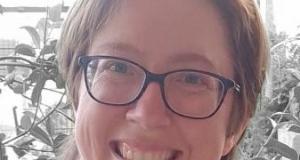
Megan Sweeney is Arthur F. Thurnau Professor of English, Afroamerican and African Studies, and Women's and Gender Studies at the University of Michigan. Her research examines African American literature, reading practices in carceral settings, and autotheory through works like Reading Is My Window and the lyric essay collection Mendings . Her scholarship has been supported by the Radcliffe Institute for Advanced Study, Ford Foundation, and Woodrow Wilson Foundation. Sweeney received the university's highest teaching awards including the 2021 John D'Arms Award for graduate mentoring and 2014 Thurnau Professorship. She serves as Director of Graduate Studies in English and Interim Editorial Director for Feminist Studies .
Gayle Letherby is a Visiting Professor of Sociology at the University of Plymouth’s Peninsula Medical School (Faculty of Health), and holds visiting roles at the University of Greenwich and the University of Bath’s Centre for Death and Society (CDAS). She is an Academician of the Academy of Social Sciences (since 2007) and recipient of the 2023 Lifetime Contribution to Autoethnography Award. Her research focuses on feminist methodology, health sociology, grief and bereavement, mobility studies, and criminology. She has supervised over 20 doctoral students across multiple universities, including topics like non-motherhood, occupational therapy, and gang culture in African Caribbean communities. Her teaching spans undergraduate and postgraduate levels, covering crime theory, auto/biographical research, and feminist epistemology. Notable collaborations include participatory studies on homeless individuals’ food experiences and ethnographic explorations of medical decision-making. Her interdisciplinary work bridges sociology, criminology, and health studies, with a strong emphasis on autoethnographic and creative methodologies. Recent research explores themes like grief narratives, gendered travel experiences, and the emotional dimensions of doctoral journeys. She has contributed to policy discussions on family-centred care and has been a guest lecturer globally, including at York University (Canada) and University College Cork (Ireland). Awards: Academy of Social Sciences Academician (2007), Lifetime Contribution to Autoethnography (2023) Teaching Expertise: Feminist research methods, criminology, sociology of health, gender studies Key Research Areas: Auto/biography, non-motherhood, medical sociology, mobility, grief studies
Prof. Dr. Andreas Butz is a Full Professor and Chair for Human-Computer Interaction at the Department for Informatics, Ludwig-Maximilians-Universität München (LMU Munich). He leads the Media Informatics Group, focusing on innovative interaction techniques and interfaces in immersive environments like VR/AR, automotive systems, and smart spaces. His research emphasizes perceptual user interfaces, social robotics, and designing systems that balance invisibility with transparency. Key research areas include: Virtual/Augmented Reality interfaces for productivity and social interaction AI-driven decision support in safety-critical domains (aviation, healthcare) Haptic and wearable interaction technologies Automotive UI design for driver assistance systems Principles of explainable AI and human-AI collaboration His work bridges theory and practice through projects like: VR-based movement training systems AI trust calibration mechanisms Multi-modal interaction frameworks for automotive environments Systems for analyzing long-term music listening behavior Recent articles explore topics ranging from AI support in pilot decision-making to haptic wearables and creative writing interfaces. His team collaborates with industry partners on electric vehicle information systems and in-car interaction challenges.
Dr. Jerry K. Hoepner serves as Professor and Assistant Chair in the Department of Communication Sciences and Disorders at the University of Wisconsin - Eau Claire's College of Health and Human Sciences, where he has taught full-time since 2007 after beginning part-time in 2003. His roles include Student Engagement Coordinator and CSD Ambassadors Advisor, with clinical supervision remaining integral to his work. His educational foundation includes a Ph.D. in Communication Sciences and Disorders from the University of Wisconsin - Madison, an M.S. in Communication Sciences and Disorders from UWEC, a B.S. in Psychology from Minnesota State University - Mankato, and an A.A. from Bethany Lutheran College. He holds ASHA Certification (CCC-SLP) and Wisconsin State Licensure. Dr. Hoepner's research pioneers video self-modeling interventions, counseling methodologies, and healthcare perceptions for individuals with acquired cognitive-communication disorders, particularly traumatic brain injury (TBI) and aphasia. His innovative work encompasses the Chippewa Valley Aphasia Camp, Thursday Night Poets collective, and TBIconneCT/FUNconneCT social communication interventions. As co-founder of ASHA SIG20 for Counseling in CSD and the UWEC CSD SoTL Lab, he bridges scholarship with clinical practice while editing Teaching and Learning in Communication Sciences and Disorders . His publication trajectory reveals intensifying focus on qualitative analysis of patient experiences, project-based rehabilitation techniques, and counseling integration within SLP practice, with recent work examining poetry interventions, telehealth delivery, and sociolinguistic assessment frameworks. His distinguished recognition includes: ASHA Fellow designation (2021) UW System Regent's Teaching Excellence Award (2020) CAPCSD Distinguished Contribution Award (2023) Aphasia Access President's Award (2023) Multiple mentoring and scholarly honors Dr. Hoepner has mentored countless undergraduate research projects and graduate committees while securing federal TBI grants. His clinical leadership extends through Aphasia Access podcast contributions and statewide intervention programs that transform rehabilitation paradigms. His laboratory initiatives—including the SoTL Lab and project-based brain injury groups—embody his commitment to experiential learning, where students engage in camp immersion, clinical apprenticeships, and community-driven research that reshapes neurorehabilitation practices.
Dr Stella Bolaki is Reader in American Literature and Medical Humanities at the School of English, University of Kent, and Co-Director of the Centre for Health and Medical Humanities. She has been a faculty member since 2011, after holding positions at the University of Glasgow and the University of Edinburgh, where she also held a postdoctoral fellowship at the Institute for Advanced Studies in the Humanities (IASH). Her educational background includes a BA from Athens and an MSc and PhD from the University of Edinburgh. BA, Athens MSc, University of Edinburgh PhD, University of Edinburgh Stella’s research spans interdisciplinary fields including contemporary American literature, medical humanities, disability studies, and Black feminist theory. Her work critically examines narratives of illness, chronic conditions, self-care, and the intersection of art and health. She has pioneered research on artists’ books as tools for wellbeing, testimony, and community engagement, particularly in contexts of trauma and social injustice. Her recent publications and projects reveal a consistent focus on expanding narrative forms in medical humanities—moving beyond traditional literary modes to include photography, performance, film, and digital storytelling. Themes of inequality, mental health, climate anxiety, and embodiment recur across her work, especially in her ongoing monograph on self-care. Fellow of the Higher Education Academy Wellcome Trust funding recipient British Academy funding recipient Research England grant awardee Kent’s AHRC Impact Acceleration Account funding Stella supervises doctoral research across a wide range of interdisciplinary topics and has co-supervised a CHASE-funded project on health zines. She contributes to teaching in American literature and medical humanities at the Kent and Medway Medical School. Her professional service includes editorial roles for Contemporary Cultural Studies in Illness, Health and Medicine and the Journal of Literary & Cultural Disability Studies , and leadership in the Eastern Arc Medical and Health Humanities Network and the Kent Medical Humanities Network. She leads public-facing research through creative workshops, exhibitions, and events such as ‘Artists’ Books and the Medical Humanities’ and ‘Mending the Psyche: Art as Reparation’, often in collaboration with NHS partners and community organizations.
Michelle Doas is an Associate Professor of Nursing at Chatham University 's College of Health Sciences , where she has been actively contributing since 2007. Her expertise spans clinical nursing, education, and interdisciplinary research applications. Ed,D., MSN, BSN, RN Research Interests Dr. Doas focuses on critical thinking development in nursing education , adult literacy in healthcare , and reminiscence therapy . Her work bridges clinical practice with pedagogical innovation, exploring how techniques from service industries (e.g., Disney's hospitality model) can enhance patient satisfaction and communication in healthcare settings. Article Trends Her publications and presentations demonstrate a consistent emphasis on improving clinical outcomes through structured interventions like mind mapping for education, relaxation therapy for post-operative care, and concept mapping for knowledge organization. Key themes include patient safety , workplace culture , and interdisciplinary applications in nursing. Scientific Awards She is a member of the prestigious Sigma Theta Tau International Honor Society , recognizing her contributions to nursing scholarship. Additional Contributions Dr. Doas has served on the Business Faculty Search Committee (2008) and presented on diverse topics such as food handling safety in environmental science contexts and nursing career advocacy at high school outreach events.
Pierre-Luc Landry is an Associate Professor of French and Francophone Studies at the University of Victoria (UVic), where he has been based since 2019 on the traditional territory of the Lək̓ʷəŋən and W̱SÁNEĆ peoples. He is affiliated with UVic’s Media Studies and Cultural, Social and Political Thought programs. His academic career spans teaching at Cégep de l'Outaouais, Université Laval, University of Ottawa, and the Royal Military College of Canada. Landry holds a PhD and MA in research-creation from Université Laval, following a B.A. in literature studies and a historical foundation from Cégep du Vieux-Montréal. Education: PhD in Research-Creation (Université Laval), MA in Research-Creation (Université Laval), BA in Literature Studies (Université Laval), Cégep du Vieux-Montréal (history) Research Affiliations: Director of Colonialisme, culture & critique / Colonialism, Culture & Critique; Director of Groupe de travail et d’expérimentation sur l’indiscipline; Regular Member of Esthétique et politique de l’image cinématographique (EPIC); Associate Member of Équipe de recherches en études queer au Québec (ÉRÉQQ) Landry’s research integrates queer activism, cultural critique, and creative experimentation. His work spans queer theories, settler colonial studies, Indigenous literature, and media studies, often blending scholarly analysis with artistic practice. His publications include critical essays, experimental texts, and novels that interrogate human behavior, temporalities, and marginalized identities through magical realism and existential themes. Notable awards include the Ottawa Book Prize (2016) for *Les corps extraterrestres* and the APFUCC Best Book Award (2021) for *QuébeQueer*. He received a SSHRC Postdoctoral Fellowship and was a finalist for the Gabrielle-Roy Prize and Radio-Canada Readers’ Prize. Landry co-hosts the podcast J’habite où je lutte with Vanessa Jérome, exploring political resistance and queer lived experiences. Key Themes: Queer resistance, anti-assimilationism, research-creation, political essays, and LGBTQ+ cultural production Media & Artistic Work: Podcast co-host, webzine creator, and multidisciplinary artist
Professor Roy Pea is the David Jacks Professor of Education & Learning Sciences at Stanford University, with a courtesy appointment in Computer Science. He served as Director of the H-STAR Institute (2007-2021) and founded Stanford’s PhD program in Learning Sciences and Technology Design. His research focuses on technology-enhanced learning, social foundations of human learning, and interdisciplinary applications of digital tools. Stanford University, School of Education Graduate School of Education Department Courtesy appointment in Computer Science His work spans complex domains like concussion education, climate change learning, and AI-driven mental health interventions. He co-authored the 2010 National Education Technology Plan and co-edited key texts including Video Research in the Learning Sciences and AI in Education . His NSF-funded LIFE Center (2004-2014) advanced learning science theories. Recent publications address: (1) linguistic framing of concussions and reporting behavior, (2) AI chatbots for mental health, (3) "engineering fiction" to reduce climate change abstractness, and (4) immersive AR/LLM learning experiences. His research integrates data science, psychology, and educational technology. Fellow, American Academy of Arts and Sciences (2019) Inaugural Fellow, International Society of the Learning Sciences (2018) Honorary Doctorate, The Open University (2018) Best Bridging Paper, EDM 2014 LAK13 Best Paper Award (2013) Roy mentors doctoral and master’s students in learning sciences, advising on topics related to technology, cognition, and equity. He contributes to digital education policy through roles on advisory boards for organizations like NSF, NIH, and the Joan Ganz Cooney Center. His patents include methods for digital video analysis and collaborative learning systems.
Univ.-Prof. Dr. Michaela Sambanis is a Professor of English Didactics at the Institute of English Philology within the Department of Philosophy and Humanities at Freie Universität Berlin. She has held this position since 2011 and previously served as the managing director of the Institute from Winter semester 2017/2018 to October 2019. Her academic journey includes research work at the Transfer Center for Neuroscience and Learning at the University of Ulm (2008-2011), completion of her habilitation in 2006, and her promotion in 2001. Professor Sambanis's research centers on the innovative intersection of educational neuroscience and language teaching methodology. Her work pioneers the field of Positive Foreign Language Didactics, connecting positive psychology with language education. She investigates embodied cognition approaches, particularly movement-based learning, and explores theater methods and arts integration in language instruction. Her research also addresses teacher well-being and health, multilingualism in educational settings, and the application of neuroscience findings to practical classroom situations. The k2teach project represents her current focus on teaching-learning labs in English teacher education. Her scholarly output demonstrates a consistent trajectory toward integrating neuroscience with language pedagogy, with recent publications increasingly addressing mental health, digital transformation in education, and positive psychology applications. The evolution of her work shows a progression from practical teaching methods to increasingly sophisticated neurodidactic frameworks that bridge scientific evidence with classroom practice. Professor Sambanis serves on multiple scientific advisory boards including the Goethe Institut in Munich, the Transfer Center for Neuroscience and Learning at the University of Ulm, and the Schlözer Program for Teacher Education. She is also the founding chair of the cross-state E&M Berlin-Brandenburg section and a member of the German Society for Foreign Language Research (DGFF). Her editorial work includes the SELT book series on English Language Teaching. Her teaching responsibilities include supervising master's theses in English teaching, and she has developed numerous teaching-learning laboratories that connect theoretical knowledge with practical application in teacher education. Her work demonstrates a strong commitment to evidence-based foreign language didactics that incorporates insights from neuroscience, psychology, and educational research.
Dr. Rachel Liebert is a Senior Research Fellow at the University of East London. Her work centers on critical examinations of psychology through decolonial, feminist, and social justice frameworks. She collaborates extensively with interdisciplinary scholars on topics ranging from indigenous epistemologies to institutional critiques of mental health systems. Research Focus Her scholarship interrogates: Decolonization of psychological praxis and epistemology Intersections of power, security, and mental health systems Creative methodologies including experimental writing and arts-based research Critical analyses of subjectivity, affect, and embodiment Psychedelic therapy's social and collective dimensions Publication Trends Recent works (2021-2025) demonstrate: Sustained focus on decolonial psychology and epistemic justice Increasing engagement with indigenous knowledge systems and creative methodologies Interdisciplinary bridges between critical psychology, sociology, and security studies Exploration of liminal spaces in institutional and therapeutic contexts
Professor Bonamy Oliver is a Professor of Developmental and Family Psychology at University College London's IOE - Faculty of Education and Society, leading the Mental Health, Wellbeing and Education Network. Her research focuses on children’s mental health, family relationships, and behavioral genetics. She developed the ESO observation tool, enabling remote parent-child interaction assessments, now used globally. She holds a prestigious 2023 ACAMH Impact Award and contributes to NICE guidelines. Academic roles include Associate Professor (2020-2024) and promoted to full Professor in 2024. She chairs IOE’s Mental Health and Wellbeing Network and directs NurtureLab. Education: PhD in Psychology and Behavioural Genetics (King’s College London, 2006), postdoctoral training at King’s College, followed by faculty roles at Sussex and Goldsmiths. Collaborations span UCL’s Institute of Mental Health, ICH GOS Mental Health Strategic Initiative, and the Accessible Genetics Consortium. Research interests include genetic influences on child development, intervention efficacy, and bridging academic-practitioner gaps. Recent work emphasizes mindful parenting, sibling dynamics, and resilience mechanisms. Articles (2024–2025) address parent-child relationships, polygenic scores in psychopathology, and cross-cultural studies of household chaos. Awards: ACAMH Impact Award (2023), NICE Guidelines contributor Leadership: Chair of IOE’s Mental Health Network, Director of NurtureLab Key Projects: ESO tool, CoTEDS children-of-twins study Advising and grants include interdisciplinary collaborations on child mental health interventions. Labs/Teams: NurtureLab at UCL, cross-institutional mental health initiatives.
Dr. Katherine Rogers is a Senior Lecturer in the School of Nursing and Midwifery at Queen’s University Belfast. Her research focuses on bioscience education for healthcare professions and cancer-related projects, with a particular emphasis on pharmacology and epidemiology. She holds a PhD and has authored/edited over 10 textbooks and numerous peer-reviewed articles. Notable awards include the Rising Star Teaching Award (2011) and Senior Fellow of the Higher Education Academy (2021). Dr. Rogers supervises PhD students in healthcare education and oncology, with current projects exploring disaster management education and enquiry-based learning in midwifery. Her pedagogical work emphasizes student engagement through innovative methods like podcasts, digital games, and interprofessional physiology events. She co-designed a pancreatic cancer awareness game and led the Physiology Health Check initiative. Professional activities include academic promotions mentoring and involvement in the Queen’s Communities and Place (QCAP) STEAM Summer Scheme. Dr. Rogers has mentored several successful students, including Fatmah Kreedi (Kuwaiti nurse education) and Anita Byrne (midwifery curriculum innovation). Her lab collaborations span pancreatic cancer awareness and clinical competency evaluation. She is actively involved in the Chronic Illness and Palliative Care Research Initiative and open to PhD applicants in bioscience education or cancer-focused research.
Sara Scott Shields is an Associate Professor and Associate Dean of Academic Affairs in the Department of Art Education at Florida State University (FSU), part of the College of Fine Arts. She holds a PhD in Art Education from the University of Georgia, and earlier degrees from East Carolina University. Her career spans 14 years of teaching at secondary and college levels, with a focus on integrating visual journaling, contemporary art, and community history into civically engaged pedagogy. Shields has been recognized with national awards including the Southeastern Higher Educator of the Year (2019) and Florida Higher Educator of the Year (2018). Education: PhD in Art Education, University of Georgia (Advisor: Dr. Tracie Costantino) MAEd in Art Education, East Carolina University (Advisor: Dr. Alice Arnold) BFA in Art Education and Ceramics, East Carolina University (Advisors: Dr. Nancy House and Seo Eo) Research Focus: Shields’ work emphasizes civically engaged art education , leveraging visual journaling and arts-based research to foster socially just educational practices. She explores how art can bridge personal/community histories with contemporary issues, empowering students and educators to engage in civic discourse. Her interdisciplinary approach integrates qualitative methods, practitioner research, and curriculum design. Recent Scholarship Trends: Her publications (2018–2025) highlight resilience during crises (e.g., pandemic impacts), youth-led artistic research, and digital-age pedagogical strategies. Notable works include frameworks for civically engaged art education and studies on graduate student identity in academia. Awards & Contributions: National & regional teaching awards Leadership in art education policy Advocacy for equity in arts curriculum Teaching & Mentorship: Shields instructs core art education courses such as Contemporary Issues in Art Education and Arts-Based Research . She mentors pre-service teachers in designing inclusive, community-oriented curricula. Labs/Teams: Active in FSU’s Art Education Department, contributing to interdisciplinary initiatives and community art projects.
Dr. Franceli Cibrian is an Assistant Professor in the Department of Electrical Engineering and Computer Science at Chapman University's Fowler School of Engineering. Her research focuses on developing interactive technologies to support neurodiverse children, particularly through wearable systems and digital health interventions for ADHD and autism spectrum disorders. Education: Ph.D. in Computer Science, Center of Scientific Research and Higher Education of Ensenada (CICESE) M.S. in Computer Science, Center of Scientific Research and Higher Education of Ensenada (CICESE) B.S. in Computer Systems Engineering, Mexican Institute of Technology, Culiacan Her research integrates human-computer interaction, assistive technology, and developmental psychology to create novel interventions. Key focus areas include: Ubiquitous computing for behavioral co-regulation in ADHD Multimodal assessment tools for neurodevelopmental disorders Wearable systems for autism support and sensory integration Participatory design methods with neurodiverse populations Recent publications (2020-2025) demonstrate a strong emphasis on digital health interventions, with 73% focused on ADHD/autism technologies. Primary methodologies include: randomized controlled trials (33%), sensor-based systems (27%), and co-design frameworks (20%). Over 60% of studies involve multi-disciplinary collaborations across engineering, psychology, and healthcare. Dr. Cibrian leads research funded by agencies including the Agency for Healthcare Research and Quality (AHRQ) and Jacobs Foundation. Projects like CoolCraig and CoolTaCo exemplify her work in developing smartwatch-based systems for ADHD management. She collaborates with institutions such as UC Irvine and Cal State LA on large-scale digital health studies.
Lucy Amelia Jane Bell is a Research Fellow at Sapienza University of Rome's Department of European, American and Intercultural Studies. Previously, she served as a Senior Lecturer in Hispanic Languages and Cultures at the University of Surrey (2013–2022). Her work bridges literary analysis, social theory, and activist practices. University of Cambridge BA (2008), MPhil (2009), PhD (2013) Her research focuses on Latin American literature and culture as instruments for social transformation. Key areas include cartonera publishing , prison reform , waste studies , and decolonial theory . She collaborates across disciplines with social anthropologists in marginalized communities. Recent publications explore intersections of necropolitics , environmental justice , and gender resistance , with a focus on Mexico and Brazil. Her 2022 book Taking Form, Making Worlds won the LASA Book Prize and pioneered trans-formal methodologies combining literary analysis with action research. Grants: AHRC, Global Challenges Research Fund, BBC Arts, Secretaría de la Cultura (Mexico) Projects: 'Cartonera Publishing' (2017–2020), 'Prisoner Publishing' (2020–2022)