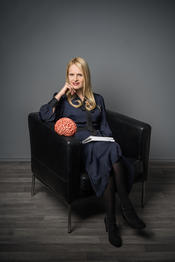
Signy Lynch is an Assistant Professor in English and Drama at the University of Toronto Mississauga (UTM) and a graduate faculty member at the Centre for Drama, Theatre and Performance Studies. Her research focuses on contemporary intercultural/diasporic performance, Black theatre, participatory performance, audience research, and critical theatre criticism in Canada. Education : PhD and MA from York University, Hon. BA from Queen’s University Her work explores the intersections of digital media and intercultural performance, including immersive theatre practices and audience dynamics in pandemic-era performances. She co-edits Canadian Theatre Review and investigates epistemic violence in traditional criticism frameworks. In the 15 most recent publications , Lynch examines topics like racial dynamics in theatre criticism, intermedial performance technologies, audience complicity in Indigenous storytelling, and pandemic-era performance adaptations. Her articles appear in Theatre Research in Canada , Contemporary Theatre Review , and New Theatre Quarterly . Awards : Barbara Godard Prize (2021), Governor General’s Gold Medal (2022), CTCA Outstanding Critical Essay runner-up (2022) Lynch co-directs the Centre for Spectatorship and Audience Research and serves on Cahoots Theatre’s board. Her SSHRC-funded research addresses hiring equity in Canadian theatre academia and reimagines critical dramaturgy for digital futures.
Jo Hsu (they/them) is an associate professor of Rhetoric and Writing and Women's, Gender, & Sexuality Studies at the University of Texas at Austin, where they also serve as Associate Chair of Women's, Gender, and Sexuality Studies. They are core faculty for the Center for Asian American Studies and have made significant contributions to trans and queer studies, disability studies, and Asian American rhetoric. Education and Background Ph.D., M.F.A. from Pennsylvania State University Research Interests Jo Hsu's research examines how stories shape policy and culture, with a focus on trans and queer narratives, disability justice, and Asian American rhetoric. Their work bridges academic scholarship with public engagement, exploring how storytelling functions as political strategy and community-building practice. They investigate how narratives of health, identity, and belonging circulate across medical, legal, and cultural contexts, particularly focusing on marginalized communities. Their current projects include examining far-right rhetorical strategies for disguising seemingly neutral beliefs and policies, and taking a narrative approach to health injustice, considering how stories infiltrate settings of health care practice and research. Awards and Recognition 2024 Book Award from the Rhetoric Society of America for "Constellating Home: Trans and Queer Asian American Rhetorics" 2023 Diamond Anniversary Book Award from the National Communication Association 2023 Innovations in Community Writing Book Award from the Conference on Community Writing Winifred Bryan Horner Outstanding Book Award from the Coalition of Feminist Scholars in the History of Rhetoric & Composition 2023 Rhetoric Society of America Fellows Early Career Award 2023 Leadership Award for People with Disabilities from the National Council of Teachers of English Public Engagement Jo Hsu is an active public intellectual whose work appears in major news outlets including the Huffington Post, the Hill, and the Boston Globe. They are committed to making academic knowledge accessible and relevant to broader publics, particularly in discussions about trans rights, disability justice, and racial equity. Their creative writing has been nominated for a Pushcart Prize, reflecting their commitment to both scholarly and artistic forms of expression. Laboratory and Community Work While not leading a traditional laboratory, Hsu's scholarly work functions as a form of community-based research that centers QTPOC (Queer and Trans People of Color) experiences and knowledge production. They are actively involved with organizations supporting trans folks in Texas, including Black Trans Leadership of Austin, Transgender Education Network of Texas, and Equality Texas. Their work emphasizes relationality and community accountability as central to knowledge creation.
Univ.-Prof. Dr. Michaela Sambanis is a Professor of English Didactics at the Institute of English Philology within the Department of Philosophy and Humanities at Freie Universität Berlin. She has held this position since 2011 and previously served as the managing director of the Institute from Winter semester 2017/2018 to October 2019. Her academic journey includes research work at the Transfer Center for Neuroscience and Learning at the University of Ulm (2008-2011), completion of her habilitation in 2006, and her promotion in 2001. Professor Sambanis's research centers on the innovative intersection of educational neuroscience and language teaching methodology. Her work pioneers the field of Positive Foreign Language Didactics, connecting positive psychology with language education. She investigates embodied cognition approaches, particularly movement-based learning, and explores theater methods and arts integration in language instruction. Her research also addresses teacher well-being and health, multilingualism in educational settings, and the application of neuroscience findings to practical classroom situations. The k2teach project represents her current focus on teaching-learning labs in English teacher education. Her scholarly output demonstrates a consistent trajectory toward integrating neuroscience with language pedagogy, with recent publications increasingly addressing mental health, digital transformation in education, and positive psychology applications. The evolution of her work shows a progression from practical teaching methods to increasingly sophisticated neurodidactic frameworks that bridge scientific evidence with classroom practice. Professor Sambanis serves on multiple scientific advisory boards including the Goethe Institut in Munich, the Transfer Center for Neuroscience and Learning at the University of Ulm, and the Schlözer Program for Teacher Education. She is also the founding chair of the cross-state E&M Berlin-Brandenburg section and a member of the German Society for Foreign Language Research (DGFF). Her editorial work includes the SELT book series on English Language Teaching. Her teaching responsibilities include supervising master's theses in English teaching, and she has developed numerous teaching-learning laboratories that connect theoretical knowledge with practical application in teacher education. Her work demonstrates a strong commitment to evidence-based foreign language didactics that incorporates insights from neuroscience, psychology, and educational research.
Dr. Tyll Robin Lemke is a researcher at Saarland University in the Department of Modern German Linguistics (Neuere deutsche Sprachwissenschaft). He serves as a scientific staff member in Project B3 of the Collaborative Research Center SFB 1102. His academic focus includes experimental linguistics, syntax, and psycholinguistics, with specialized expertise in ellipsis phenomena and fragment analysis. Lemke's research explores the cognitive underpinnings of language production and comprehension, particularly investigating how predictability, context, and information theory shape linguistic structures. His work employs diverse methodologies including corpus analysis, psycholinguistic experiments, computational modeling, and gamified experimental paradigms to examine ellipsis, fragments, and syntactic phenomena in German. Analysis of Lemke's recent publications reveals consistent themes: the role of predictability in language production, constraints on ellipsis resolution, information-theoretic approaches to language efficiency, and experimental validation of syntactic theories. His research bridges theoretical linguistics with cognitive science through innovative experimental designs. In the upcoming 2025/26 winter semester, Lemke is teaching courses on Experimental Linguistics and Ellipsis in Theory and Experiment. He maintains an active research program within the SFB 1102 collaborative framework and regularly presents at international linguistics conferences.
Edward K. CHAN is Professor of American Studies in Waseda University's School of Culture, Media and Society and Department of Transcultural Studies, where he has served since 2018 after holding academic positions at Aichi University, Nagoya University, and Kennesaw State University. His career demonstrates sustained transnational engagement with American cultural production through Japanese institutional frameworks. His educational trajectory includes a PhD in English from the University of Rochester (2004), MA in English from California State University, Fullerton (1993), and BA in English from the University of California, Riverside (1989). CHAN's research interrogates the racialized foundations of utopian thought, particularly examining how white nationalist movements construct utopian visions through neoliberal frameworks. His scholarship spans American literature, film studies, and transnational cultural consumption, with special focus on science fiction, dystopian narratives, and the intersection of race with family ideology. This work reveals consistent patterns in how racial hierarchies are naturalized through cultural production across historical periods. His publication trajectory demonstrates deepening engagement with white power ideology, evolving from foundational work on 1970s utopian subjectivity to contemporary analyses of neoliberal whiteness. The 2023 monograph 'White Power and American Neoliberal Culture' represents a culmination of this research arc, systematically documenting the convergence of economic restructuring and racialized utopianism in 21st-century America. His scientific recognition includes: University College Distinguished Research & Creative Activity Award (2010, Kennesaw State University) Eugenio Battisti Award for Best Article in Utopian Studies for 2006 (2007, Society for Utopian Studies) As President of the Society for Utopian Studies (2024-present), he mentors emerging scholars through international symposia like the 2024 'Utopia/Dystopia, Race, Nation' event funded by Waseda University grants. His teaching portfolio encompasses comprehensive undergraduate and graduate instruction in American literature, film studies, and postcolonial theory, with 2025 syllabi showing active course development. He currently leads the 'Racial Utopianism and Cultural Representation' research project, fostering international collaborations between Japanese and global scholars while supervising graduate research in transcultural studies through Waseda's Department of Transcultural Studies.
Dr. Elisenda Bueichekú serves as a Research Scientist at the Yale School of Medicine within the Radiology & Biomedical Imaging Department . Her work focuses on neuroimaging applications in neurodegenerative disorders, particularly Alzheimer’s disease progression and memory systems analysis. She collaborates with leading researchers in the Mental Health PET Radioligand Development (MHPRD) Program and the PET Core facility. Primary Affiliation: Yale School of Medicine Department: Radiology & Biomedical Imaging Research Programs: MHPRD Program, PET Core Her research integrates multimodal neuroimaging techniques to investigate: Tau pathology propagation patterns Connectome-based disease modeling Cortical hub analysis in memory systems Cognitive resilience mechanisms Neuroimaging of anosognosia Functional network contributions to creativity Dr. Bueichekú contributes to translational research through: Advanced PET/MRI methodologies Spatiotemporal disease progression mapping Development of imaging-based biomarkers Recent publications demonstrate expertise in: Alzheimer’s disease neuroimaging Tau and amyloid co-accumulation Functional connectivity analysis Memory system characterization Scientific contributions include: 2025 Center for Brain & Mind Health Pilot Grant Key publications in top-tier journals (Nature Aging, Alzheimer's & Dementia, etc.)
Professor Philip Armstrong is a distinguished academic and poet at the University of Canterbury, where he has served in the English Department within the Faculty of Arts since February 1998. His work bridges scholarly research and creative practice, establishing him as a significant voice in contemporary literary studies and poetry. PhD in Critical and Cultural Theory, University of Wales (1992-1995) MA(Hons), University of Auckland (1990-1991) Armstrong's research centers on literary representations of the natural world, with particular expertise in human-animal studies, Shakespearean scholarship, and environmental humanities. His interdisciplinary approach connects literary theory with ecological concerns, examining how cultural narratives shape our relationship with non-human entities. His scholarly publications span from analyses of Shakespeare to contemporary explorations of human-animal relations, including his acclaimed book Sheep (2016) and the forthcoming Disturbing Nature in Narrative Literature (2025). As a creative writer, Armstrong has published two award-winning poetry collections: Sinking Lessons (2020), which won the Kathleen Grattan Award for Poetry, and Touch Screen (2025). His poetry often explores the intersection of human experience with natural and technological environments, demonstrating his consistent thematic concern with boundaries between human and non-human worlds. Kathleen Grattan Award for Poetry (2019) Landfall Essay Prize (2011) Caselberg Trust International Poetry Prize (runner-up) Armstrong actively supervises graduate students in both scholarly and creative writing projects, mentoring the next generation of literary scholars and poets. His teaching encompasses literary studies, with a focus on Shakespeare, and graduate-level creative writing. He has also contributed significantly to public discourse through essays, interviews, and literary criticism published in major journals and media outlets across New Zealand, Australia, the UK, and the USA. His creative and scholarly work frequently appears in prominent literary journals including Landfall , Sport , PN Review , and JAAM , reflecting his standing in the international literary community. Living in Lyttelton, New Zealand, Armstrong's work remains deeply engaged with both local and global literary traditions.
Alistair McCulloch is a Professor in the Learning and Teaching Unit at the University of South Australia, with significant expertise in doctoral education and research supervision. Previously, he served as Professor and Dean of Research and Knowledge Transfer at Edge Hill University near Liverpool for over 12 years, where he was responsible for the development and quality of the university's research degree programs. His primary research interests focus on doctoral education, PhD supervision, and graduate education, with particular attention to the experiences of part-time doctoral students, especially working mothers. McCulloch's work explores sociocultural transitions in doctoral education, the role of oral examinations (vivas), and the concept of serendipity in research. His research demonstrates a consistent concern with the wellbeing of doctoral students and the structural factors that affect their success. McCulloch's publication record shows a clear evolution from early work in political history (notably his 1979 thesis on the 1910 UK General Election) toward contemporary issues in higher education. His recent work (2022-2025) focuses on critical issues in doctoral education including student wellbeing, supervisor-student relationships, and assessment practices. He has been particularly active in examining the experiences of marginalized doctoral student populations and has contributed significantly to the literature on part-time doctoral study. As an academic leader, McCulloch has been involved with the Quality in Postgraduate Research (QPR) conference series held in Adelaide, South Australia, which brings together international scholars interested in doctoral education. His work bridges theoretical perspectives (including Marxist theory on work and alienation) with practical concerns in doctoral program design and implementation.
Maja KORICA is a Full Professor of Strategic Management at IÉSEG School of Management in France. She holds a DPhil in Management Studies from the University of Oxford. Her academic roles include previous positions as Reader in Management and Organisation at Warwick Business School (2021–2023), Assistant Dean (2017–2019), and earlier roles as Associate/Assistant Professor there (2013–2021). Her research focuses on strategy, sustainability, organizational behavior, healthcare management, and pedagogy in management education. She has contributed to understanding managerial work dynamics, knowledge mobilization in healthcare, and innovative teaching methodologies like structured shadowing. Her research spans topics such as CSR, creative industries, and the intersection of aesthetics and organizational style. She has published widely in journals like British Journal of Management , Organization Science , and Management Learning , emphasizing practical and theoretical contributions to management studies. Notable works include analyses of managerial mood work in creative settings and attentional practices of healthcare CEOs. KORICA’s teaching spans undergraduate and postgraduate programs, including Responsible Leadership and International Business Strategy. She has advised on organizational decline in alternative structures, such as coworking cooperatives.
Yoshiko Matsumoto is the Yamato Ichihashi Professor in Japanese History and Civilization and Professor of East Asian Languages and Cultures at Stanford University, with a courtesy appointment in Linguistics. She has been a faculty member at Stanford since 1992, progressing from Assistant Professor to her current distinguished position. Matsumoto also serves as coordinator of the Japanese Language Program and has held significant administrative roles including Chair of the Department of Asian Languages (2003-2005) and Interim Chair of the Department of East Asian Languages and Cultures (2016). Matsumoto earned her Ph.D. in Linguistics from the University of California, Berkeley (1989), following M.A. degrees in Linguistics from UC Berkeley and General and Applied Linguistics from the University of Tsukuba, an M.I.A. in American Studies from the University of Tsukuba, and a B.A. in English Language & Literature from Japan Women's University. Professor Matsumoto's research focuses on linguistic pragmatics from cross-linguistic perspectives, with particular expertise in Japanese language. Her work spans structural and sociocultural aspects of language in use, including noun-modifying clause constructions, honorifics, discourse markers, and the intersection of language with gender and aging. She has pioneered research on conversational narratives of older adults, examining how ordinary framing strategies help individuals navigate difficult experiences. Her current projects explore intergenerational communication through haiku, communicative abilities of people with dementia, and noun-modifying constructions across Eurasian languages. Matsumoto's scholarship consistently bridges theoretical linguistics with practical applications for understanding human communication in diverse social contexts. Matsumoto's recent publications reveal a growing focus on practical applications of linguistic research for social benefit, particularly in intergenerational communication and dementia care. Her work increasingly integrates arts-based approaches, especially haiku poetry, to bridge generational divides and enhance communication with elderly populations. The research shows a consistent trajectory from theoretical linguistic frameworks toward applied, human-centered language studies that address real-world challenges in aging societies, with particular attention to how ordinary language practices help individuals navigate life transitions and difficult experiences. Dean's Award for Distinguished Teaching, School of Humanities and Sciences, Stanford University (2000) Richard E. Guggenhime Faculty Scholar, Stanford University (2000-2003) Violet Andrews Whittier Fellow, Stanford Humanities Center (2019-2020) Faculty Research Fellow, Michelle R. Clayman Institute for Gender Research (2014-2015) Research Fellow, Japan Foundation (2002) Internal Fellow, Stanford Humanities Center (2005-2006) Presidential Fund for Innovation in the Humanities, Stanford University (2009-2011) Professor Matsumoto has mentored numerous students through her teaching in Japanese language and linguistics courses, including specialized offerings on language and aging, points in Japanese grammar, and haiku-based communication. Her research has been supported by prestigious grants from the National Endowment for the Humanities, the Japan Foundation, and Stanford's Presidential Fund for Innovation in the Humanities. She has served on multiple editorial boards including the Journal of Pragmatics since 1992, demonstrating long-standing leadership in her field. Matsumoto has also advised students through individual studies and thesis projects in East Asian Languages and Cultures. Matsumoto leads several collaborative research initiatives including the 'Sharing Conversations' project which examines intergenerational communication through haiku, and research on communicative abilities of people with dementia. Her work often involves interdisciplinary teams spanning linguistics, gerontology, and creative arts, with fieldwork conducted in both Japan and the United States. The 'Noun-Modifying Constructions in Languages of Eurasia' project represents a major international collaboration examining linguistic structures across cultural boundaries. She also directs the 'Language, Old Age and Gender in Japan' project supported by the Stanford University/Japan Foundation, and the 'Difficult Conversations Continue: Memories of the 3.11 Disaster and Bereavement Narratives' project focused on post-disaster communication.
Dr. George Cole is an Associate Professor of Spanish at Texas Tech University's Classical & Modern Languages & Literatures (CMLL) Department. He specializes in Hispanic Caribbean literature and culture (Cuba and Puerto Rico), Afro-Caribbean religious practices, and Hispanic speculative genres like fantasy, horror, and science fiction. His work bridges literature, theater, and cultural anthropology, with a focus on Yoruba religious traditions and their representation in art. Education: B.A. in French Language and Literature, University of Puerto Rico M.A., Washington State University Ph.D., Arizona State University (2005) Research Interests: Dr. Cole explores Afro-Cuban cultural identity, Latin American drama and poetry, and transgressive genres such as detective fiction and graphic novels. His recent projects examine intersections between supernatural elements and criminal narratives. He also investigates the role of Santería in Cuban cinema and literature. Awards: Nominated for AriZoni Theatre Award (Best Supporting Actor, 2002 & 2004) Three-time 'Outstanding Faculty Member' recognition from Texas Tech's College of Arts & Sciences (2005–2007) Leadership & Service: Dr. Cole has served as Director of Spanish and Portuguese Graduate Studies (2018–2025), Interim Director (2022), and Co-Director of the Hispanic Studies Collection. He also holds editorial roles at Dura and Revista Temas Americanistas . Creative Works: His poetry collections Círculos concéntricos (2014) and Hojas sueltas (2015), and the cyberpunk noir short story collection Cadáveres en la oscura ciudad y otros relatos (2023) showcase his narrative versatility. He has authored plays like La indocumentada (2008) and directed six theater productions at Texas Tech.
Courtney N. Reed is a Lecturer in Digital Technologies at Loughborough University London, where she joined in November 2023. She maintains a dual role as a visiting research fellow at the Max Planck Institute for Informatics. Her academic journey includes a BMus in Electronic Production and Design from Berklee College of Music (2016), followed by an MSc (2018) and PhD (2023) in Computer Science from Queen Mary University of London. Prior to her current position, she completed postdoctoral research at both the Max Planck Institute for Informatics and King's College London. Bachelor of Music: Electronic Production and Design, Berklee College of Music (2016) Master of Science: Computer Science, Queen Mary University of London (2018) Doctor of Philosophy: Computer Science, Queen Mary University of London (2023) Dr. Reed's research explores the entangled relationships between humans, bodies, instruments, and technology in music interaction, with particular focus on vocal electromyography (VoxEMG) and the vocalist-voice relationship. Her work incorporates feminist and post-human theories to examine sociopolitical contexts within arts technology, aiming to design for creativity while acknowledging individual, messy bodies in artistic practice. She has developed an open-source platform for vocal electromyography to investigate how biosignal feedback changes understanding and perception of the body in vocal performance. Her interdisciplinary approach bridges music technology, human-computer interaction, and embodied interaction studies. Analysis of Dr. Reed's recent publications (2023-2025) reveals a strong thematic focus on embodied interaction in music technology, with particular emphasis on vocal performance, biosignal feedback, and the philosophical underpinnings of digital instrument design. Her work consistently integrates theoretical frameworks like Karen Barad's agential realism with practical applications in digital musical instruments. Key trends include the exploration of ambiguity in data representation, the sociocultural dimensions of timbre in instrument design, and the development of novel methodologies for understanding embodied musical experiences through micro-phenomenology and ethnographic approaches. ACM SIGCHI Outstanding Dissertation Award (2024) for her thesis 'Imagining & Sensing: Understanding and Extending the Vocalist-Voice Relationship Through Biosignal Feedback' Best Newcomer Award at Loughborough University London's Community Awards Celebration (2024) Dr. Reed actively contributes to the academic community through conference organization and leadership roles. She serves as Member-at-Large on the NIME Board, previously chaired papers for NIME 2024, and co-organized the IBM SkillsBuild Sprint at Loughborough London. She has also chaired sessions at the ACM TEI Conference and co-chaired the Student Design Competition. Her collaborative work spans multiple institutions and includes significant contributions to interdisciplinary projects that bridge music, technology, and human experience. She has been instrumental in developing the senSInt research group and the RaveNET wearable network project. Dr. Reed leads the senSInt research group which focuses on sensorimotor interaction in music and performance contexts. The group develops innovative technologies including the VoxEMG platform for vocal electromyography, the Bones anti-corset for vocal performance, and the RaveNET network of wearable biosensing nodes. These projects explore the intersection of biosignals, embodied interaction, and musical expression, creating novel frameworks for understanding how technology mediates human creativity and performance. The group frequently collaborates with musicians, technologists, and theorists to develop and test these systems in real-world performance contexts.
Dmitri Tymoczko is a Professor of Music at Princeton University, where he has taught composition and theory since 2002. His work bridges the gap between academic music theory and contemporary composition, creating a unique interdisciplinary approach that has earned him recognition as a leading figure in modern music scholarship and creation. Tymoczko's research interests focus on the geometric modeling of musical structures, polystylistic composition that draws from genres spanning Renaissance to rock, and the mathematical foundations of tonality. His theoretical work explores how harmonic structures can be represented geometrically, revealing fundamental patterns that connect diverse musical traditions. He approaches composition as 'a logical deduction from absurd premises,' blending rigorous structural thinking with playful musical exploration. His scholarly publications and compositions reveal a consistent interest in the intersection of mathematical precision and expressive freedom. The articles demonstrate expertise across music theory, composition, and the cognitive aspects of musical perception, with recurring themes of geometric modeling, tonal structure, and genre hybridization. His work often challenges traditional boundaries between academic and popular music forms. Guggenheim fellowship Rhodes Scholarship Leonard Bernstein fellowship from Tanglewood Fellowship from the Radcliffe Institute for Advanced Study Block lectureship from the Society for Industrial and Applied Mathematics First music-theory article published in Science magazine Tymoczko maintains an active performance career alongside his academic work, with his compositions performed by leading ensembles including the Brentano Quartet, Newspeak, and Roomful of Teeth. His teaching integrates theoretical insights with practical composition, fostering a generation of musicians who understand music's structural foundations while embracing creative freedom. He has developed innovative tools like the musical programming language 'arca' to explore new compositional possibilities.
Associate Professor Peter Pugsley is affiliated with the University of Adelaide's School of Humanities, within the Faculty of Arts, Business, Law and Economics. He holds the position of Associate Professor and previously served as Head of the Department of Media. His research focuses on Asian cinema, global cinema trends, popular culture, and media systems, with notable publications on Japanese high school films, cross-cultural cinematic exchanges, and Asian media policy. He teaches courses such as Asian Film Studies and Screenwriting, and has supervised numerous PhD/Masters candidates. He currently serves as President of the Screen Studies Association of Australia and Aotearoa New Zealand (SSAAANZ). Research Interests: Asian film aesthetics, cross-cultural media interactions, television studies, cultural policy, and Australia-Asia relations. His work spans Indian, Malaysian, Hong Kong, Singaporean, and Chinese media, including analyses of TV, film, and social media. Publications: His 15 most recent works (2023-2010) explore topics like East Asian calligraphy in cinema, French-Japanese film exchanges, and gender discourses in Tamil cinema. These contributions highlight transnational film dynamics, cultural symbolism, and media's role in shaping identity. Professional Activities: He has taught abroad at Ritsumeikan University (Kyoto) and contributes to community radio. His leadership in SSAAANZ underscores his influence in screen studies. No scientific awards are explicitly listed, but his prolific publication record reflects academic recognition. Advising & Grants: Supervises multiple graduate students on film and media topics. His teaching spans film theory, screenwriting, and global cinema approaches, reflecting his commitment to both research and pedagogy.
Serge CARDINAL is a Full Professor at the Department of Art History, Cinema, and Audiovisual Media at Université de Montréal. His research focuses on the intersections of sound, music, and cinema, blending philosophical inquiry with creative practice. He leads projects exploring musicality in film, interdisciplinary analysis methods, and the legacy of cinema through installations and exhibitions. Education: The text does not explicitly detail his formal education, but his extensive academic output and professorial role suggest advanced degrees in cinema studies and related fields. Research Interests : Musicality in film, research-creation, Deleuzean philosophy applied to cinema, actor studies, and interdisciplinary audiovisual practices. His work bridges theory and practice, using soundscapes, installations, and performances to analyze cinematic material. Recent Projects : Includes installations like Tombeau de Gilles Groulx (2019) and The Political Glenn Gould (2024), as well as collaborative research networks like the OICRM. He has explored digital tools for cinematic analysis (Numalyse, 2025) and sound transcription in intermedia contexts (Studio Glenn Gould, 2021). Grants & Funding : Recipient of grants from FRQSC and SSHRC for projects on sound in Quebec cinema, research-creation methodologies, and interdisciplinary music-cinema studies. Leads teams in strategic research programs and individual creation grants. Labs/Teams : Member of the Observatoire interdisciplinaire de création et de recherche en musique (OICRM) and the research-creation lab La création sonore: cinéma, arts médiatiques, arts du son .