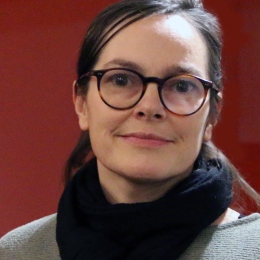
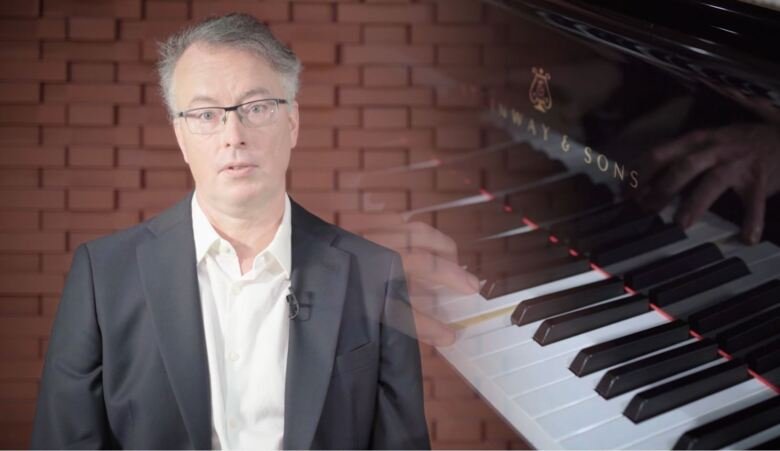
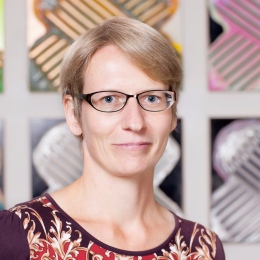
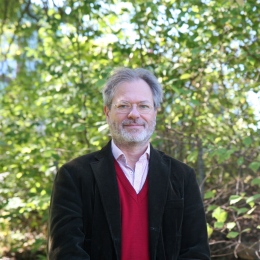
Tobias Pettersson is a Senior Lecturer at the Department of Pedagogy: Music, Dance and Drama , University of Gothenburg . His roles include Undergraduate Teaching Coordinator and Education Coordinator for both first/second cycle education and teacher training programs. He works at the intersection of musicology , gender studies , and pedagogical traditions . Current position since 2015 Active in teacher education since the 1990s Doctoral degree in musicology (2004) Research Focus: Analyzes the origins and persistence of musical traditions , gender equality in music life , and education for sustainable development . Led projects at the Centre for Environment and Sustainability (2012-2014) and developed web-based educational toolboxes. Key Contributions: Publications on Beethoven's canonization in Swedish education (2004), gender dynamics in performing arts (2006), and critical analyses of musicological epistemology (2005). His work bridges historical musicology , pedagogical theory , and sustainability education . Contact: Email: tobias.pettersson@gu.se Office: Eklandagatan 86, 41259 Göteborg
Hedvig Kjellström is a Professor at the Division of Robotics, Perception and Learning within the School of Electrical Engineering and Computer Science at KTH Royal Institute of Technology. She holds significant affiliations with the Swedish e-Science Research Centre and the Max Planck Institute for Intelligent Systems in Germany. Her work spans multiple interdisciplinary domains and she serves as Editor-in-Chief for CVIU and was Program Chair for CVPR 2025. Her research centers on Computer Vision as a sub-field of AI, with three interconnected themes: Computational Aesthetics (exploring aesthetic aspects of human communicative behavior), Communicative Behavior (developing models of how humans and animals perceive and produce non-verbal communication), and Embodied Artificial Intelligence (creating methodologies for robots and autonomous agents to perceive the world through sensors, primarily vision). Her work has significant applications in medical diagnostics, animal welfare, human-robot interaction, and creative arts. Analysis of her recent publications reveals a strong trend toward multimodal AI systems that integrate vision, language, and action understanding. Her research increasingly focuses on animal-centered applications, particularly equine pain detection and behavior analysis, while maintaining strong foundations in human communication modeling, gesture recognition, and 3D reconstruction techniques. The interdisciplinary nature of her work bridges computer science with veterinary medicine, neuroscience, and performing arts. Hedvig Kjellström actively supervises numerous PhD and Master's students across various projects and maintains extensive collaborations with institutions including Karolinska Institutet, Swedish University of Agricultural Sciences, and international partners. Her research is supported by major funding bodies including WASP, VR, and SeRC. She leads or participates in several notable projects including OrchestrAI (communication between conductor and orchestra), ANITA (Animal Translator), MARTHA (3D horse motion analysis), and STING (synthesis and analysis with transducers and invertible neural generators). Her work with ACAI (Animal Centered Artificial Intelligence), which she co-founded and directs, demonstrates her commitment to applying AI for animal welfare.
Anna Sofia Rossholm is an Associate Professor in Cinema Studies and Deputy Head of the Department of Media Studies at Stockholm University. Her work bridges film studies, literary adaptation, and gender studies, with a focus on Swedish cinematic heritage, including the works of Astrid Lindgren and Ingmar Bergman. She teaches courses on gender in moving images, Swedish film culture, and ecocriticism, and supervises students at bachelor's, master's, and PhD levels. Her research explores screenwriting practices, transmedial storytelling, and the intersection of cinema with nature and memory. Current projects investigate authors like Lindgren and Bergman, film tourism, and eco-critical analyses of postwar wildlife documentaries. Recent publications include studies on women’s screenwriting in Swedish cinema and Bergman’s legacy in tourism. Rossholm’s interdisciplinary approach combines archival analysis with theoretical frameworks from eco-criticism and childhood studies. She has authored a monograph on Ingmar Bergman’s creative process and contributes to debates on film pedagogy and HIV representation. Her work highlights the transmedia dimensions of storytelling and the cultural significance of Swedish cinema history.
Robert Pettersson serves as an Associate Professor and Researcher at Mid Sweden University, affiliated with the Department of Economics, Geography, Law and Tourism (EJT) and the European Tourism Research Institute (ETOUR) in Östersund. His academic career spans over two decades with significant contributions to tourism studies, particularly in indigenous tourism, event management, and outdoor recreation. Pettersson's work bridges theoretical research with practical policy applications, focusing on sustainable development in northern contexts. His research centers on indigenous cultural tourism , where he has pioneered studies on Sami festivals and heritage in northern Sweden; event management , with expertise in hallmark events, social impact assessment, and evaluation frameworks; and outdoor recreation , examining environmental sustainability and social integration through sports and nature-based activities. Pettersson employs innovative spatial analysis techniques including GPS tracking to study tourist mobility and behavior, contributing methodological advancements to the field. His work consistently addresses the tension between cultural preservation and tourism development. Analysis of Pettersson's publication trajectory reveals an evolution from foundational research on Sami tourism (early 2000s) to contemporary studies on event portfolios, non-use value, and immigrant integration through outdoor activities. Recent work emphasizes holistic evaluation tools addressing social, environmental, and economic dimensions of events. This progression demonstrates his responsiveness to emerging challenges in sustainable tourism while maintaining focus on marginalized communities and northern regional development. No specific scientific awards are documented in the provided information. However, Pettersson's leadership in major research projects and extensive publication record in high-impact journals like Journal of Policy Research in Tourism, Leisure and Events and Scandinavian Journal of Hospitality and Tourism underscores his scholarly impact. His co-authored review on event evaluation (2015) remains a seminal reference in the field. Pettersson actively contributes to applied research through projects including Mistra Sport and Outdoors and Östersund CCI (Place development through cultural and creative industries). He has produced practical guides on event evaluation covering social effects (2024), environmental impacts (2023), and tourism economics (2023), translating academic insights into tools for event organizers and policymakers. His collaborative work with organizations like the Nordic Symposium in Hospitality and Tourism demonstrates commitment to knowledge exchange. As a core member of ETOUR, Pettersson participates in a multidisciplinary research environment focused on tourism's role in northern societies. The institute facilitates collaboration between tourism, geography, economics, and law scholars to address complex regional challenges including sustainable resource management and community well-being. Pettersson's ongoing projects continue to explore how events and outdoor activities can drive inclusive regional development.
Fredrik Ullén is a Professor of Cognitive Neuroscience at the Department of Neuroscience, Karolinska Institutet. He leads the Neuropsychology of Music research group and serves as Director of the Department of Cognitive Neuropsychology at the Max Planck Institute for Empirical Aesthetics. His work focuses on the neural mechanisms of expertise, creativity, and the interplay between genes and environment in skill acquisition, particularly in music. Affiliations: Department of Neuroscience, Karolinska Institutet Neuropsychology of Music Group Max Planck Institute for Empirical Aesthetics (Frankfurt) Research Interests: Neurobiology of musical skill and creativity Genetic and environmental influences on expertise Cognitive mechanisms of flow and intrinsic motivation Music as a tool for understanding brain plasticity Awards: 2022 KI Culture Prize for bridging science and culture 2021 Scientific Member of the Max Planck Society 2017 Fellow of Academia Europaea Key Contributions: Combines neuroimaging, behavioral genetics, and experimental psychology to explore how intensive training shapes the brain and how genetic factors interact with environmental influences in skill development. His group’s work has advanced understanding of music’s role in cognition and mental health.
Bobby Lee Townsend Sturm JR is an Associate Professor at KTH Royal Institute of Technology, leading the MUSAiC project (ERC-2019-COG). He holds a PhD in Electrical and Computer Engineering from UC Santa Barbara (2009), followed by postdoctoral research at LAM, Paris 6, and academic roles at Aalborg University and Queen Mary University of London. His research focuses on AI ethics in music, generative AI for music, and folk music preservation. Current roles at KTH include teaching and supervising in Machine Learning, Music Informatics, and AI Ethics. He has pioneered AI music generation challenges (e.g., 2020 Double Jigs Challenge) and investigates societal impacts of AI on traditional music cultures. His work bridges technical innovation with cultural and ethical considerations, addressing issues like data colonialism, algorithmic bias, and human-AI collaboration in creative contexts. Education: PhD (UCSB, 2009), Postdoc (Paris 6), Academic appointments at Aalborg University (2010–2014) and Queen Mary University (2014–2018) Key Projects: MUSAiC (ERC), Virtual Session System for Irish Music, Traditional Music Dataset Analysis Teaching: Courses in Machine Learning, Music Acoustics, and ICT Innovation Publications span peer-reviewed journals and conferences, emphasizing ethical AI, music generation, and interdisciplinary research in MIR (Music Information Retrieval). He actively collaborates with musicians, anthropologists, and technologists to ensure culturally informed AI development.
Jonny Holmström serves as Professor at Umeå University's Department of Informatics and directs the Swedish Center for Digital Innovation (SCDI), which he co-founded. He holds an additional affiliation as Professor at the Centre for Transdisciplinary AI, focusing on bridging theoretical research with practical AI applications across sectors including forestry, banking, and public services. His work appears in premier journals such as MIS Quarterly, Information Systems Journal, and Journal of Information Technology. His research centers on digital innovation, transformation, and entrepreneurship, examining how organizations navigate digital change through platform governance, AI integration, and entrepreneurial storytelling. Recent work investigates generative AI's impact on business model design, data work practices, and organizational transformation, emphasizing practical frameworks for managing digital transitions while addressing resistance and ethical considerations. Analysis of his 15 most recent publications (2024-2026) reveals a dominant focus on generative AI's organizational implications, particularly its role in reshaping platform governance, facilitating innovation through prompting, and transforming business models. Concurrent themes include digital platform evolution, data flow management in innovation networks, and citizen-centric digital government design, reflecting a consistent emphasis on practical implementation challenges in real-world contexts. Holmström leads significant research initiatives including a 28 MSEK program at Umeå University and the Kempe Foundation-funded SCDI AI Business Lab. His current project 'Using No-Code AI to Teach Machine Learning in Higher Education' (2024) aims to democratize AI education. He serves on editorial boards for CAIS, EJIS, Information and Organization, and JAIS, and heads the Swedish Center for Digital Innovation research group while participating in 'AI and society' collaborations. He founded and directs the Swedish Center for Digital Innovation (SCDI), which operates the SCDI AI Business Lab exploring practical AI applications for businesses. His work integrates with the Centre for Transdisciplinary AI to advance cross-sector AI implementation, particularly in public services and sustainable business models within the circular economy framework.
Kathrin Kaufhold is an Associate Professor in Applied Linguistics at Stockholm University's Department of English. Her research examines academic writing practices in multilingual and interdisciplinary contexts, focusing on knowledge recontextualization, translanguaging strategies, and institutional communication dynamics. She coordinates undergraduate thesis projects and teaches academic writing, research methods, and sociolinguistics. Current research explores participation in academic writing dialogues Investigates English's role in multilingual university environments Examines institutional communication mediation processes Her work bridges theoretical frameworks from Vygotskian socio-cultural theory and genre pedagogy with practical applications in writing center operations and healthcare communication. She leads the Language and Power research network addressing contemporary linguistic challenges in polarized academic environments. Key collaborations include projects with: Karolina Wirdenäs (healthcare communication) Niina Hynninen (academic writing evolution) Maria Kuteeva (language policy in Nordic universities) Her teaching emphasizes: Academic writing development Research methodology applications Discourse analysis frameworks Applied linguistics principles
Jessica Edlom serves as a PhD student and adjunct teacher at Karlstad University, actively contributing to strategic communication research within the global music industry. Her work bridges academic theory and practical industry challenges, with particular focus on digital transformation and fan-brand relationships. Her core research examines strategic communication practices, fan engagement dynamics, and transmedia marketing strategies in music. She investigates how artists like ABBA and Taylor Swift leverage phygital experiences to cultivate fan communities, exploring tensions between commercial imperatives and authenticity. Key interests include pandemic-era industry adaptation, value co-creation mechanisms, and the commodification of fan participation through choreographed engagement. Analysis of her publication timeline reveals a clear evolution from foundational studies on Nordic music branding (2017-2019) toward cutting-edge explorations of immersive technologies and fan experience design (2023-2025). Recurring thematic threads include the strategic mobilization of fan communities through social media, authenticity maintenance in digital branding, and industry adaptation to technological disruption. Her methodological approach frequently employs strategy-as-practice frameworks to uncover practitioner-level tensions in brand work.
Tobias Axelsson is a Senior Lecturer at Örebro University's School of Humanities, Education and Social Sciences, Department of Humanities, Education and Social Sciences. He holds a PhD in Gender Studies, which he defended in 2019 with his thesis "När män möts som pappor" (When men meet as fathers). Axelsson works both as a senior lecturer in Civics/Social Science and as a postdoctoral researcher in Gender Studies. His research interests focus on: Feminist perspectives on fatherhood, fathers, and fathering Gender and parenting support Gender and early childhood education and care Violence studies, particularly regarding men's attitudes toward female genital mutilation Axelsson is currently working as a postdoctoral researcher in the EU Horizon 2020 funded project RESISTIRÉ (2021-2024), which focuses on "Responding to Outbreaks through Co-creative Inclusive Equality Strategies." His research examines how fathering is constructed in gender-equal Sweden, particularly through his analysis of "fathering spaces" - social services directed to fathers on parental leave. He has contributed to international projects on men's parental leave, including reports for the EU Mutual Learning Programme in Gender Equality and an Austrian project on paternity leave. His scientific contributions include numerous publications on gender equality in preschool, feminist perspectives on fatherhood, and men's engagement in issues related to gender-based violence. Axelsson's research demonstrates a consistent focus on how gender norms shape parenting practices and institutional approaches to gender equality. Axelsson actively collaborates with various stakeholders: Participation in a national reference group on parenting support under the Swedish Agency for Family Law and Parenting Support since 2019 Lecturing at conferences on masculinity and gender equality Collaboration with municipalities like Askersund on gender equality work in preschool and school Providing expertise to County Administrative Boards on gender equality and parenting support He is affiliated with several research environments: Centre for Feminist Social Studies (CFS) CVS - The Centre for Violence Studies ReCEL - Research on Children's Education and Learning Critical Studies on Men and Masculinities Feminist violence studies
Thomas Borén is a Professor of Human Geography at Stockholm University , where he also chairs the Urban and Regional Planning Programme and founded the Stockholm University Higher Seminar in Urban and Regional Planning (SUHSIS) . His work bridges urban and cultural geography with a focus on interactions between urban development strategies, cultural producers, and decision-makers. University : Stockholm University Department : Department of Human Geography Academic Rank : Professor Borén’s research explores urban policy mobilities , creative city frameworks , and spatial justice , often through comparative studies in Sweden , Eastern Europe , and Asia . He leads the STARTUP (Horizon Europe) project and co-leads the LABOUR project (Horizon 2020) analyzing informal employment in Asia. His past work includes CICERONE , RELOCAL , and Urban Riots studies. Recent publications emphasize policy diffusion , urban sustainability , and the socio-political dynamics of creativity . He has contributed to European Planning Studies , Urban Geography , and Environment and Planning C . Borén also edits Geografiska Notiser and has published monographs on post-Soviet urbanism. His teaching focuses on urban geography and regional planning , and he has collaborated with institutions across Europe , Asia , and North America . Current projects include STARTUP (2025–2028) and LABOUR (2022–2025).
Adrian Vågberg is a doctoral student at KTH Royal Institute of Technology's PHYSICS OF LIGHT AND MATTER department. His research focuses on Artificial Intelligence , particularly the intersection of Human-AI Collaboration and Meme Analysis . He contributed to a groundbreaking study on AI-generated humor, published in 2025, analyzing how humans and large language models (LLMs) co-create memes. The work highlights AI's productivity alongside human creativity in crafting culturally resonant content. His work emphasizes Quantitative evaluation of meme creativity/shareability Human-AI iterative design processes Cultural context in digital humor As part of the Interactive Media Technology program, his research bridges computational creativity and social media dynamics. No specific awards or grants are listed, though his work is part of KTH's broader AI research initiatives.
Danielle Ekman Ladru is a Senior Lecturer and Head of the Department of Child and Youth Studies at Stockholm University. Her research bridges childhood studies, human geography, and urban planning, focusing on children’s spatiality, mobility practices, and participation in public spaces. She leads the Formas-funded project Sustainable Vertical Childhoods? and co-led the research on The Whole City as a Preschool Yard , examining how dense urban environments shape children’s play and mobility. Research Interests : Spatiality, mobility, public space, urban planning, childhood geography Teaching : Lecturer in Child and Youth Studies master’s program Projects : Sustainable Vertical Childhoods? (2019–present) Learning in the City (funded by Vetenskapsrådet, 2015–2020) Her recent publications analyze urban inequalities during the pandemic, the role of materialities in mobile preschools, and national identity construction in Nordic curricula. She supervises doctoral students in childhood studies and collaborates with interdisciplinary networks on children’s geographies.
Per Frankelius is an Associate Professor and Senior Lecturer in Business Administration at Linköping University's Department of Economic and Industrial Development (IEI). His work centers on understanding and stimulating innovative processes, primarily in agriculture, with marketing as a key component. He serves as process manager for Agtech Sweden (formerly Agtech 2030), a major innovation initiative funded by Vinnova with a budget of nearly 200 million SEK. Frankelius's research focuses on the intersection of innovation, marketing, and business analysis. He defines innovation as 'original concepts that gain acceptance in society,' arguing that marketing and external factors are natural parts of the innovation process. His current work emphasizes agricultural innovations, climate calculations, and the role of agriculture in addressing global challenges like food security and climate change. He has developed visual models of company development over time and studies 'X-factors'—external elements not central to mainstream economic models. His publications reveal a strong trend toward practical applications of innovation theory in agriculture and sustainability. The research spans climate policy, technological standardization, resource integration in green services, and international agricultural technology transfer. Frankelius frequently connects innovation to broader societal challenges, particularly food security and the role of agriculture in peace and stability. His work bridges theoretical business administration with practical agricultural applications, often challenging conventional paradigms like the IPCC's climate calculations for agriculture. Silver Medal, Agritechnica Innovation Award (as part of Agtech 2030 team) Frankelius actively participates in societal debates, writing for publications like The Lancet and Aftonbladet. He advocates for investment in agricultural innovation to prevent food shortages that could lead to conflict. His work with Agtech Sweden involves collaboration with numerous industry partners, government agencies, and international organizations. The initiative has secured significant funding from Vinnova and has established a national knowledge hub for agricultural digitalization with a 20 million SEK budget. As co-leader of the innovation environment Agtech Sweden, Frankelius works with partners to establish an innovation ecosystem focused on sensors, digital technology, AI, and the Internet of Things for tomorrow's agriculture. The initiative includes projects like solar co-farming, precision agriculture, and international delegation trips to share knowledge and develop new technologies.
Marie Hållander is an Associate Professor and Lecturer in Pedagogy at Södertörn University, Sweden. She teaches within teacher education and pedagogical frameworks, focusing on transformative educational theories. Current academic rank: Associate Professor Email: marie.hallander@sh.se Her research explores: Witnessing and testimonies in education Emotions, shame, and suffering in pedagogical contexts Biopolitics and profanation in teaching Subjectivity and feminist critiques Aesthetic experiences in sloyd (craft) education Escapism and cinematic representations Recent publications span interdisciplinary topics at the intersection of philosophy, cultural critique, and pedagogy. Highlights include: 2025: Analysis of sloyd education through discourse theory 2024: Philosophical exploration of religious education 2022: Re-evaluation of shame's educational role 2021: Escapism via cinema and its pedagogical applications 2020: Multi-article contributions to Agamben-inspired pedagogy 2018: Feminist and biopolitical educational frameworks