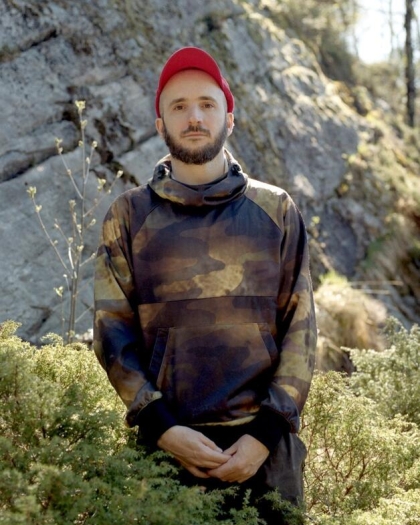
Daniel Leunbach is a Senior Lecturer at the School of Business, University of Oslo , specializing in Entrepreneurship . He teaches courses in strategy, innovation management, and entrepreneurship while integrating philosophy and psychology into his research to study decision-making under uncertainty. Ph.D. in Strategy and Entrepreneurship, University of Oslo MSc in Innovation and Entrepreneurship, University of Oslo BSc in Molecular Biology, University of Bergen His research explores the intersection of entrepreneurship theory , philosophy , and psychology , focusing on how entrepreneurs navigate situations where outcome probabilities are impossible to quantify. Recent publications investigate topics such as entrepreneurial imagination through poetry , resource acquisition negotiations , and Wittgensteinian approaches to defining entrepreneurship . Leunbach collaborates with scholars like Truls Erikson and Glenn Roger Kristiansen , publishing in journals such as Academy of Management Review , Scandinavian Journal of Management , and Journal of Business Venturing Design . He is affiliated with the Entrepreneurship (ENT) research group and consults on entrepreneurial decision-making frameworks.
Britt Kramvig is a Professor at the School of Business and Economics , part of the Faculty of Biosciences, Fisheries and Economics (BFE) at UiT The Arctic University of Norway. Her research intersects decolonization , Indigenous (Sámi) studies, and creative industries , with a focus on storytelling, archive decolonization, and Arctic land-seascapes. She coordinates PhD studies in Tourism and Northern Studies and teaches courses on qualitative methods, climate change impacts on tourism, and knowledge co-production. Research Interests: Kramvig explores the decolonial potential of Indigenous archives , creative industries as decolonial praxis , and Arctic environmental humanities . Her work emphasizes ontology over epistemology , art-science collaborations (e.g., Dark Ecology, BAT), and indigenous survivance in tourism and cultural policy. She actively disrupts appropriation processes in Arctic landscapes through pluriversal storytelling. Key Collaborations: Kramvig contributes to international projects like Surviving the Unthinkable and The New Sámi Renaissance , advocating for indigenous data sovereignty and decolonial research ethics . She leads interdisciplinary efforts to integrate Sámi epistemologies into environmental science and policymaking. Recent Publications: Her 2023-2025 works address Arctic decolonization , indigenous archival practices , and co-creation in tourism , often published in journals like Environmental Research Letters and GeoHumanities . Notable topics include counter-mapping , indigenous survivance , and collaborative listening in Arctic soundscapes. Academic Affiliations: Member of the Norwegian Scientific Academy for Polar Research and the Indigenous Voices research group at UiT. She participates in the OKTA - Sami Art and Friction-Filled Communities on Festivals project.
Jim Torresen is a Professor at the Norwegian University of Science and Technology (NTNU), specializing in Computer Science, Artificial Intelligence, and Robotics. He earned his M.Sc. and Dr.ing. (Ph.D.) in computer architecture and design from NTNU in 1991 and 1996 respectively, followed by industry experience in hardware design before transitioning to academia in 1999. Research Interests: His work spans Machine Learning, Evolvable Hardware, and Ethical AI, with notable contributions to music technology, facial expression recognition, and healthcare monitoring systems. He actively explores interdisciplinary applications of AI in creative domains and clinical environments. Publications & Editorial Roles: Torresen has published extensively in journals like Frontiers in Artificial Intelligence and Genetic Programming and Evolvable Machines . He serves as a Topic Editor for Frontiers in Explainable AI and has editorial roles in robotics and biomedical AI domains.
Gabriele de Seta is a researcher at the University of Bergen's Department of Linguistic, Literary and Aesthetic Studies, leading the ALGOFOLK project funded by the Trond Mohn Foundation (2024-2028). A sociologist by training with a PhD from Hong Kong Polytechnic University, he previously served as postdoctoral fellow at Academia Sinica (Taipei) and on the ERC-funded Machine Vision in Everyday Life project. Department of Ethnology, Academia Sinica (postdoctoral fellow) Department of Linguistic, Literary and Aesthetic Studies, University of Bergen (researcher) His research focuses on algorithmic folklore, synthetic ethnography, and Chinese digital culture. He examines how digital technologies and creative practices mutually shape each other, particularly in China's sociotechnical landscape. Key areas include platform governance, machine vision, algorithmic accountability, and digital vernaculars. Recent publications analyze TikTok/Douyin's infrastructural role, deepfakes, QR codes as globalized gateways, and Chinese internet vulgarity. His work combines theoretical frameworks from STS, media studies, and digital anthropology with fieldwork on Chinese digital practices. Trond Mohn Foundation Starting Grant ERC-funded research As educator, he designed the Machine Vision module for Bergen's Critical Approaches to Technology and Society course and taught Key Theories in Digital Culture. He supervises multiple MA/PhD students including co-supervision of Hanna Lauvli. Through his blog and podcast, he promotes public engagement with digital research.
Ronny Scherer is Center Director and Professor at CEMO (Center for Educational Measurement) and Deputy Director at CREATE (Center for Research on Equality in Education) at the University of Oslo's Faculty of Educational Sciences. His work bridges educational measurement, assessment, and evaluation with a focus on research syntheses and complex sampling surveys. Dr. Scherer's research spans two interconnected domains: substantive areas including digital divides, equity and equality in education, and measurement of complex cognitive skills (such as complex problem solving, adaptability, computational thinking, and executive functioning); and methodological areas focusing on advanced meta-analytic techniques, multilevel structural equation modeling, and spatial analysis of complex survey data. His work frequently utilizes international large-scale assessment data from PISA, ICILS, TIMSS, PIRLS, PIAAC, and TALIS. His publication record demonstrates a clear trajectory toward increasingly sophisticated meta-analytic approaches, with recent work focusing on second-order meta-analyses, AI-assisted screening methods, and advanced techniques for handling complex survey data. His research consistently addresses critical educational challenges related to equity, digital literacy, and measurement of 21st century skills. Dr. Scherer has secured significant research funding for projects including ARISE (Academic resilience in mathematics and science among vulnerable students), DiDiRes (Digital inequalities in education), and ADAPT21 (Educational assessments of the 21st century: Measuring and understanding students' adaptability in complex problem solving situations). Co-director of CREATE (Centre for Research on Equality in Education) since 2023 Professor of Educational Assessment and Measurement at CEMO since 2019 Extensive experience with international large-scale assessments including ICILS, TALIS, and PIAAC As an educator, Dr. Scherer teaches advanced courses in measurement models, multilevel models, meta-analysis, and equity in education. He actively supervises graduate students interested in his research areas and has developed numerous workshops on structural equation modeling and meta-analytic methods for international audiences.
Alf Steinar Sætre is a Professor of Innovation and Strategy at the Norwegian University of Science and Technology (NTNU), Department of Industrial Economics and Technology Management. He leads the Norwegian Research School in Innovation's Program (NORSi-PIMS), collaborating with institutions like Harvard Business School and INSEAD. His research focuses on innovation management, ambiguity in innovation processes, organizational adaptation, and sustainable business models. Education: MSc in Economics and Business Administration from the Norwegian School of Economics, Bergen PhD in Organizational Communication from the University of Texas at Austin (Fulbright Scholar) Research Interests: Management of ambiguity in innovation Innovation project termination Organizational learning and adaptation Sustainability integration in business models His work bridges theory and practice, emphasizing strategic problem formulation and psychological ownership in innovation. Teaching & Awards: Recipient of Indøk's Lecturer of the Year (2018) Teaches Innovation Management (TIØ4180) and Engaged Scholarship (ØK8101) Outreach: Leads the PIMS Executive Forum, connecting executives with innovation scholars. Authored books like Communication in Organizations and contributed to global research networks.
Bjørg Dale is a Professor at the Department of Health and Nursing Sciences at the University of Agder, Norway. She is affiliated with the Center for Care Research, South and holds a PhD in Nursing Science from the University of Oslo (2009) for her work on compensatory care in older adults. Education: PhD in Nursing Science (2009), University of Oslo Clinical experience: Nurse and leader in municipal and specialist health services since 1978 Research Focus includes ageing research, elderly care, municipal health services, and holistic patient processes. Her work emphasizes transitions between hospital and home care, nursing competence, and self-care among older adults. Publication Trends show a focus on nursing competence in municipal acute care, psychometric validation of healthcare instruments, telemedicine applications, and quality of life in elderly populations. Key methodologies include cross-sectional and qualitative studies. Collaborations span institutions like the University of Oslo and South Eastern Norway Regional Health Authority. She contributes to nursing education reform and policy discussions on elderly care challenges. Contact: Email bjorg.dale@uia.no | Office: C4060, Jon Lilletuns vei 9, 4879 Grimstad, Norway
Jason Nelson is a Professor of Digital Culture in the Department of Linguistic, Literary and Aesthetic Studies at the University of Bergen, Norway. He is a creator of digital poems and fictions, builder of surrealist and politically focused art games and digital creatures. His work is exhibited widely in galleries and journals around the globe at FILE, ACM, LEA, ISEA, SIGGRAPH, ELO and numerous other venues. Nelson serves on organizational boards including the Australia Council Literature Board and the Electronic Literature Organization. Nelson's research focuses on the intersection of digital technology, creative writing, and artistic expression. He explores how AI and machine learning can be harnessed for creative purposes, developing new forms of digital literature and interactive art. His work often involves building expansive visual worlds through collaborative AI processes, creating interactive digital poetry, and developing novel approaches to digital narrative. Nelson's research spans digital humanities, electronic literature, AI-generated art, and interactive media, with particular emphasis on how these technologies transform creative processes and experiences. Over the past decade, Nelson's work has increasingly focused on the creative potential of AI technologies, especially in the areas of text-to-image generation and multimodal authorship. His projects often blend game engines with poetic expression, creating immersive experiences that challenge traditional boundaries between human and machine creativity. Recent works explore themes of multispecies futures, time perception, and the transformation of physical spaces through augmented reality. Nelson has received numerous scientific awards and fellowships including: Fulbright Fellowship at the University of Bergen Moore Fellowship at the National University of Ireland Winner of the Digital Writing Prize, Queensland Literary Awards (15,000 AUD) Winner of the Woollahra Library Digital Poetry Prize (5,000 AUD) Runner-Up Prize at the Videomedeja digital art exhibition Finalist for the Turn-on Literature Prize Finalist for the Queensland Literary Awards, Digital Writing Category Multiple finalist nominations for the New Media Writing Prize Nelson actively participates in academic advising and has secured significant research funding, including a 125,000 AUD grant from the Australia Council of the Arts, Literature Board for his project "Cube Cryptext and Nomencluster," which was recognized as the world's largest interactive art-game. His work "Nine Billion Branches" received multiple awards including the Digital Writing Prize from the Queensland Literary Awards. He has also received a 75,000 NOK grant for the "Flood Mosaic Artwork" project featured in the Floodlines Exhibition at the State Library of Queensland. Nelson is affiliated with the Center for Digital Narrative at the University of Bergen, where he collaborates with researchers like Scott Robert Rettberg and Alinta Krauth. Together they form EphemerLab, exploring new creative processes that move beyond simple "ask and generate" AI methods. Their work involves stitching together hundreds of individual image fragments and components into cohesive visual and narrative concepts, pushing the boundaries of what's possible with current AI technologies.
Alexander Refsum Jensenius is a Professor of Music Technology and Director of the RITMO Centre for Interdisciplinary Studies in Rhythm, Time and Motion at the University of Oslo. He also leads the fourMs Lab and co-founded the MishMash Centre for AI and Creativity. His work bridges musicology, psychology, and technology, focusing on embodied music cognition, human motion analysis, and creative applications of AI. Notably, he pioneered research on air guitar motion and human micromotion through projects like the Oslo Standstill Database . Educated at the University of Oslo (BA in Music and Mathematics, MA in Musicology) and Chalmers University of Technology (MSc in Applied IT), Jensenius holds a PhD in Music Technology from UiO. He has held visiting researcher roles at UC Berkeley, McGill University, and KTH. Leadership roles include Department of Musicology Head (2013–2016) and Steering Committee Chair for the International Conference on New Interfaces for Musical Expression (NIME, 2011–2022). Research interests span music-related body motion, AI in creative contexts, and open research practices. Key contributions include the Music Moves and Motion Capture MOOCs, the Musical Gestures Toolbox software, and monographs like Sound Actions and Sonic Design . His work emphasizes interdisciplinary collaboration, with projects addressing ventilation systems' acoustic properties and cell culture vibrational effects. Awards include the European Open Data Champion recognition. He advocates for open science and maintains extensive digital archives of research materials, emphasizing institutional web pages as critical research infrastructure.
Karen O'Brien is a Professor in the Department of Sociology and Human Geography at the University of Oslo, where she has been a full-time faculty member since 2005. She is internationally recognized for her work on the human and social dimensions of global environmental change, with a focus on climate change, adaptation, and transformative pathways to sustainability. She currently serves as co-chair of the IPBES transformative change assessment and has contributed to major scientific assessments including the IPCC Fifth Assessment Report. Her educational background includes a BA in International Relations from the College of William and Mary (1985), an MS in Environmental Studies from the University of Wisconsin-Madison (1990), and a PhD in Geography from Pennsylvania State University (1995). She completed a postdoc at the North American Commission for Environmental Cooperation in 1996 and was a Senior Research Fellow at CICERO from 1997 to 2005. Karen O'Brien's research centers on integrative and transdisciplinary approaches to sustainability, emphasizing the role of beliefs, values, and worldviews in driving social and systems change. She is a leading proponent of quantum social science as a framework for understanding and scaling transformative change. Her recent scholarly output explores youth activism, climate education, and the philosophical underpinnings of transformation in the Anthropocene. Her publications reveal a strong thematic focus on transformation, adaptation, and the intersection of climate change with social theory. Articles consistently engage with interdisciplinary frameworks, action research, and innovative methodologies such as SenseMaker, reflecting her commitment to bridging science, policy, and societal action. BBVA Foundation's Frontiers of Knowledge Award for Climate Change (2021) Member of Academia Europaea (2022) University of Oslo Student Parliament's Teaching Award (2015) Burtoni Prize for Adaptation Research (2011) AAG Meridian Book Award (2008) Shared in the 2007 Nobel Peace Prize as part of the IPCC Karen O'Brien has supervised numerous PhD and Master’s students, though specific names are not listed in the provided text. She has led significant research projects such as the AdaptationCONNECTS project and co-founded cCHANGE, an organization dedicated to sustainability transformations. Her advisory roles include membership on the Science Committees of Future Earth and Our Common Future in a Changing Climate, as well as leadership in the transition to global sustainability research initiatives. She has no reported grants listed, but her involvement in large-scale international assessments implies substantial funding support. She is affiliated with key research platforms including the Department of Sociology and Human Geography at the University of Oslo, where she has served on the Board, and the Research Center for Socially Inclusive Energy Transition (Include). Her work is deeply collaborative, involving networks such as IPBES, IPCC, and Future Earth, and she frequently publishes with interdisciplinary teams across Europe and North America.
Elisabet Apelmo serves as Senior Lecturer in the Department of Social Work at Malmö University, Sweden. A visual artist with a PhD in Sociology, she bridges creative practice and academic inquiry to explore the complex intersections of bodily experience, sport, disability, and gender within contemporary society. Her research program centers on sociological analyses of bodily difference, particularly examining how physical education environments construct inclusion and exclusion through gendered and ableist frameworks. Apelmo employs phenomenological approaches and visual methodology to investigate how disabled bodies navigate sporting spaces, challenging normative assumptions about athletic participation and bodily capability. Her work consistently reveals how sporting cultures simultaneously enable and constrain identities, particularly for women and people with disabilities. Analysis of Apelmo's publication history shows sustained engagement with critical disability theory, gender studies, and sport sociology spanning nearly two decades. Her scholarship demonstrates methodological innovation through visual approaches and phenomenological frameworks, with recurring themes including the social construction of disability in sport contexts, gendered bodily experiences in physical education, and the material-semiotic relationships between bodies and technologies like wheelchairs. Among her current research initiatives are investigations into participation and exclusion dynamics in mainstream physical education from disability and gender perspectives, and ethnographic studies examining how dancers strategically use their bodies and gazes to disrupt stereotypical perceptions of physical impairment. These projects reflect her commitment to generating knowledge that directly challenges ableist assumptions within sporting cultures and educational settings.
Tore Slaatta is a Professor of Media Studies at the University of Oslo (UiO) and holds a Professor II position at the Department of Archives, Library and Information Science (ABI) at Oslo Metropolitan University (OsloMet). He is also an Honorary Research Fellow at the Centre for Cultural Policy Research at the University of Glasgow. With extensive experience in media and cultural research, he has led major projects for institutions like the Research Council of Norway, the Norwegian Media Authority, and the Fritt Ord Foundation.
Jim Tørresen is a Professor of Computer Science at the Department of Informatics, University of Oslo, where he has been employed since 1999 (Associate Professor 1999-2005, Professor since 2006). He serves as group leader for the Robotics and Intelligent Systems (ROBIN) research group and is also a Principal Investigator at the Centre for Interdisciplinary Studies in Rhythm, Time and Motion (RITMO). His academic career includes visiting positions at Cornell University's Creative Machines Lab (2010-2011) and Kyoto University in Japan (1993-1994). His educational background includes a Dr.ing. (Ph.D.) in Computer Architecture from the Norwegian University of Science and Technology (1996) and an M.Sc. in Computer Architecture from the same institution (1991). Before his academic career, he worked in industry at Navia Aviation (1998-1999) and NERA Telecommunications (1996-1998). Tørresen's research spans artificial intelligence, robotics, and bio-inspired computing. His work focuses on biology-inspired algorithms, programmable logic (FPGA), robotics (simulation, prototyping, control), and human-robot interaction. He has made significant contributions to areas including evolutionary computing, reconfigurable hardware, and adaptive systems. His research often bridges theoretical computer science with practical applications in healthcare, music, and industrial settings. His recent publications demonstrate a strong focus on human-robot interaction, particularly in healthcare contexts for elderly care, as well as applications in sports science, musical robotics, and geological engineering. His work shows a consistent pattern of interdisciplinary research that combines machine learning techniques with domain-specific challenges. Tørresen has also authored a popular science book on artificial intelligence in the "what is" series by Universitetsforlaget, which discusses fundamental concepts, methods, future perspectives, and ethical aspects of AI. He has been active in academic leadership, serving as General Chair for the 22nd International Conference on Field Programmable Logic and Applications (FPL) in 2012 and the 9th Joint IEEE International Conference of Developmental Learning and Epigenetic Robotics in 2019. As group leader of ROBIN, he oversees research on intelligent systems that operate in dynamic environments requiring runtime adaptation. The group works at both fundamental and applied levels, using evolutionary algorithms for robot learning and machine learning techniques for classification and recognition tasks in various application domains.
Czarecah Tuppil Oropilla (Eya) serves as a Postdoctoral Researcher at Western Norway University of Applied Sciences (HVL) within the Department of Pedagogy, Religion and Social Sciences. She actively contributes to the KINDknow Centre for Systemic Research on Diversity and Sustainable Futures and co-leads the EX-PED-LAB project focused on pedagogical innovations in early childhood education. Her academic foundation includes a cum laude Bachelor's degree in Family Life and Child Development from the University of the Philippines and an internationally recognized Erasmus Mundus Master's degree in Early Childhood Education and Care, earned through a consortium of Oslo Metropolitan University, University of Gothenburg, Technical University Dublin, and University of Malta. Dr. Oropilla's research investigates intergenerational engagements between children and elderly adults, children's participatory rights, and social sustainability within Early Childhood Education and Care (ECEC) frameworks. Her work emphasizes collaborative explorations and co-creative pedagogical approaches to foster sustainable futures in diverse educational settings. Her 2024 publications reveal thematic cohesion around emergent ocean literacy through coastal explorations, playful co-creation tools for educators, and movement-based learning in preschool contexts. These works collectively advance ECEC through interdisciplinary methodologies bridging environmental education, teacher professional development, and child-centered innovation. Scientific recognition includes: Erasmus Mundus Scholarship for Master's studies Cum laude distinction for Bachelor's degree As an educator, she supervises MBA 515/516 courses and delivers lectures for MARE550 on Ageing and Interprofessional Collaboration. Her EX-PED-LAB leadership and "PedPod" podcast initiative facilitate knowledge exchange among global ECEC researchers through dialogic formats. She actively participates in the KINDknow Centre's Work Package on Families, Generations and Belonging and the "Barnehagen som (ut)danningsarena" research group, examining systemic approaches to diversity and sustainability in Norwegian kindergarten practices through collaborative research frameworks.
Anna Elisabet Einarsson is a Dean at the Academy of Opera , part of the Oslo National Academy of the Arts . She holds degrees in organ, conducting, baroque interpretation from the Malmö Academy of Music and specialized opera training from the Oslo National Academy of Opera. As an active opera and concert singer since her 2000 debut, she has premiered contemporary works, received accolades like the Royal Norwegian Academy of Music Award, and been nominated for a US Grammy. Education in organ, conducting, and baroque interpretation Opera singer with international acclaim Focus on sustainable careers in the arts Research on collective creative processes and accessibility Her research explores intersections between opera, societal challenges, and gender diversity, with recent publications addressing cultural policy and non-binary representation. She has collaborated on academic lectures and workshops, emphasizing career development and risk management in creative teams. Scientific awards include: Royal Norwegian Academy of Music Award US Grammy nomination Her work bridges artistic practice with pedagogical innovation, contributing to Norway’s performing arts discourse through leadership and scholarship.