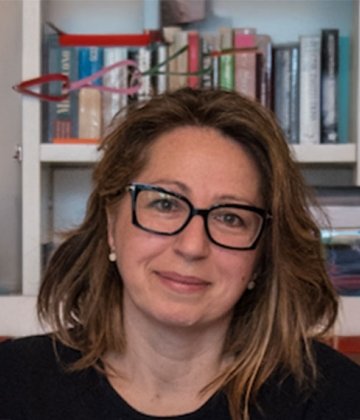
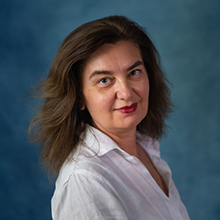
Myriam Mariani is a Full Professor of Applied Economics at Bocconi University, where she also serves as the Dean for Strategy. She holds a PhD from Marche Polytechnic University and completed a postdoctoral Marie Curie fellowship at MERIT. Her research explores inventors' motivations, gender disparities in innovation, career impacts of temporal flexibility, and knowledge transmission processes. Research interests include labor economics in innovation, gender dynamics in STEM fields, organizational behavior in R&D, and strategic management of intellectual property. Her work combines empirical analysis with policy implications for workforce diversity and innovation efficiency. Her recent publications focus on parental impacts on inventor careers, cross-cultural acquisition effects on gender equity, and leadership development in industrial research. She teaches courses on Industry Analysis and Innovation Economics.
Francesca Alby is a Full Professor of Social Psychology at Sapienza University of Rome, affiliated with the Department of Developmental and Socialization Psychology. She specializes in qualitative research methodologies, particularly ethnographic approaches, discourse analysis, and interactional studies. Her research focuses on communication dynamics in healthcare contexts (especially oncology consultations), group processes, professional work practices in institutional settings, and the role of artifacts in social cognition. She leads the LINC (Language, Interaction and Culture) research group analyzing communication in healthcare and organizational environments. Teaching responsibilities include courses such as 'Psicologia Sociale della Comunicazione' and 'Psicologia Sociale dei Gruppi,' delivered both in-person and via digital platforms like Unitelma Sapienza. She actively supports students with disabilities through institutional services, emphasizing inclusive evaluation practices. Her research projects include developing coding systems for oncological communication analysis and investigating intercultural medical encounters. Collaborations focus on improving communication practices in healthcare, residential care facilities, and educational settings.
Carlo Giorgio Benedetto is an Associate Professor in the Department of Engineering and Architecture at the University of Parma, Italy. He teaches across multiple programs including Architecture Regeneration Sustainability and Communication and Contemporary Media for Creative Industries, with active teaching appointments from 2014/2015 through 2025/2026. His academic focus lies in architectural design, urban composition, and sustainable regeneration. Department of Engineering and Architecture, University of Parma Teaching in First and Second Cycle Degree Programs Focus on Architectural and Urban Design His research interests center on architectural and urban composition, with a strong emphasis on urban morphology, typology, and the regeneration of historical sites. He explores the theoretical and practical dimensions of architectural design, particularly in the context of sustainable urban development and the reinterpretation of ancient and modern urban spaces. The recent publications reflect a consistent engagement with architectural theory, historical figures like Max Bill, and practical redevelopment projects such as the Sant’Agostino Complex in Comacchio. His work spans topics from geometric design principles to the pedagogy of architectural education and interventions in historic towers. The articles collectively highlight a research trajectory rooted in Italian architectural heritage, urban regeneration, and design innovation. Notable scholarly contributions include editorial work on architectural pedagogy and publications on the intersection of memory, space, and form. While no formal awards are listed, his sustained publication record and leadership in academic journals underscore his scholarly impact. He has supervised or collaborated with researchers such as Roberto Menghi and Martina Landsberger. Although no formal grants are mentioned, his long-standing teaching and publication activities suggest active involvement in funded research or institutional projects. His role in developing curricula and teaching core design courses indicates significant academic leadership. Carlo Giorgio Benedetto is associated with architectural research groups at the University of Parma, particularly within the Department of Engineering and Architecture. His work appears linked to initiatives in urban regeneration, architectural education, and the documentation of Italian architectural heritage, likely involving collaborative teams focused on design studios and editorial projects.
Stefania Sbarra is an Associate Professor of German Literature at Ca' Foscari University of Venice, affiliated with the Department of Comparative Linguistic and Cultural Studies. She holds a PhD in German Studies from the University of Pisa (2001) and has been a researcher at the University of Ferrara (2000-2008) before joining Ca' Foscari. Her academic roles include membership in the University Quality Assurance Committee (PQA) and representing the Single Guarantee Committee (CUG). She co-directs the journal *Annali di Ca' Foscari. Western Series* since 2016. Her research focuses on German literature from the Goethe era through the 19th century to contemporary works, emphasizing Nietzsche, Kleist, German Realism, and intercultural narratives. Key publications include *La statua di Glauco* (2006) on Rousseau's influence and *«Il confine, il confine...»* (2019) on Fontane and Nietzsche. She has contributed to major journals like *Goethe-Jahrbuch* and *Etudes Germaniques*. Teaching includes courses on modern German literature, cultural history, and advanced literary analysis. Awards include an honorable mention in the 2022 LabTrad Award for her translation of Emine Sevgi Özdamar's *Il cortile nello specchio*. Her work bridges literary analysis, cultural studies, and interdisciplinary approaches to German cultural heritage.
Danielle Elizabeth Parrott is a Research Fellow at the Interdepartmental Center for Mind/Brain Sciences (CIMEC) of the University of Trento, specializing in cognitive neuroscience applications. Her work bridges laboratory research with real-world security and creative domains. Her research focuses on neuromodulation techniques like transcranial direct current stimulation (tDCS) to enhance visual perception, particularly in security screening contexts, and investigates neural correlates of visual creativity through functional connectivity analysis. Key interests include parietal cortex function, visual search optimization, and the cognitive mechanisms underlying artistic planning. Recent publications demonstrate consistent application of neuroscience methods to practical challenges, with emphasis on improving novice performance in X-ray screening and mapping brain networks involved in creative processes. Her interdisciplinary approach leverages CIMEC's collaborative environment for mind/brain sciences research. Dr. Parrott maintains active research through CIMEC's facilities at Corso Bettini 31, Rovereto, with primary communication via university email.
Gianmarco Cherchi is a Tenure-Track Assistant Professor and Computer Science Researcher in the Department of Mathematics and Computer Science at the University of Cagliari, Italy, where he also completed his PhD. He teaches courses in Data Visualization and Web Programming at the undergraduate level. His research lies at the intersection of Computer Graphics and Geometry Processing, with a strong focus on surface and volumetric mesh generation, optimization, digital fabrication, and polycube-based modeling. His work combines algorithmic innovation with practical applications in fabrication, visualization, and interactive systems. The recent publications highlight a consistent trend in advanced hexahedral meshing techniques (e.g., HexBox, VOLMAP), robust geometric computation (e.g., mesh booleans), and interactive tools (e.g., ProtoSketchAR, Py3DViewer). His research spans theoretical algorithm development, benchmark creation, and applied systems for VR/AR and simulation. His scientific accolades include the Young Investigator Award 2024 from the Shape Modeling International Organization, and prior Best Thesis Awards from the Eurographics Italy Association for both his M.Sc. and Ph.D. work. Cherchi actively collaborates with researchers such as Marco Livesu, Riccardo Scateni, and others, contributing to major surveys and state-of-the-art methods in hexahedral meshing. His work is supported by publications in top venues like ACM Transactions on Graphics (SIGGRAPH), Computer Graphics Forum (Eurographics), and IEEE VR. He has also developed practical software tools like Py3DViewer for geometry processing prototyping. He leads research in digital fabrication pipelines, as evidenced by publications on polycube decomposition for manufacturing and automated flat pattern generation. His lab work involves developing interactive and robust systems for 3D modeling and analysis.
Andrea Bottino is an Associate Professor at the Department of Control and Computer Engineering (DAUIN) at the Polytechnic University of Turin. He has been actively involved in the Computer Graphics and Vision Group and leads various VR@POLITO initiatives. Chair of the Master HUMANAIZE program Coordinator of multiple Machine Learning for Vision and Multimedia courses Research Focus : Augmented and Virtual Reality for education and safety Computer Vision with applications to medical imaging and kinship analysis Human-Computer Interaction in immersive environments Multimodal Learning systems XR for Cultural Heritage Publication Trends : Recent works focus on AI applications , XR training systems , and computer vision techniques applied to medical diagnostics and cultural preservation . Leadership Roles : Scientific Director for MEI - Interactive Egyptian Museum Coordinator of PNRR Mission 4 projects Principal Investigator for Holo-BLSD and ALPTECH initiatives Labs and Collaborations : Active in Visionary LAB and VR@POLITO Collaborates with Balletto Teatro di Torino for cultural XR applications Partners with Fondazione Museo Egizio and Robin Studio
Allegra Indraccolo is a Researcher in General Psychology at the European University of Rome within the School of Psychology. She is a core member of the Clinical and Cognitive Psychology Laboratory (CCPL), conducting experimental research on cross-modal correspondences, working memory, attention (including eStroop paradigms), decision making, and moral judgment. Dr. Indraccolo holds a Ph.D. in Cognitive Psychology. Her research spans cognitive and experimental psychology with primary focus areas including cross-modal perception, moral psychology, visuo-spatial working memory, creativity, embodied cognition, and attentional biases. She investigates how perceptual information influences cognitive processes and behavioral responses through rigorous experimental designs. Analysis of her publications (2013-2019) reveals consistent interdisciplinary work bridging cognitive psychology and neuroscience. Key trends include examining cross-modal correspondences in working memory performance, neural correlates of autism spectrum traits via EEG, temporal reproduction mechanisms, and attentional biases in food perception. Her methodology frequently combines behavioral experiments with neuroimaging techniques like eLORETA/sLORETA. She actively contributes to the Clinical and Cognitive Psychology Laboratory (CCPL), which develops digital psychological tools including the eStroop implementation, and supports experimental research in clinical and cognitive domains through advanced technical infrastructure.