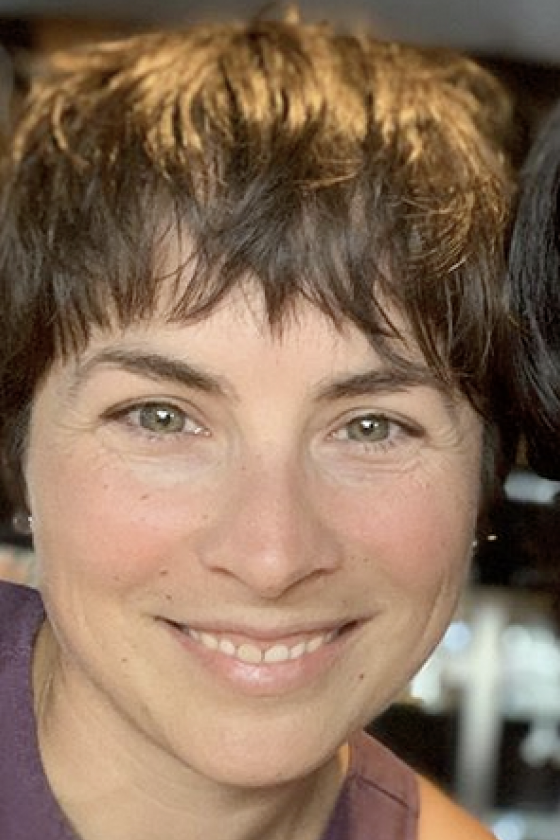
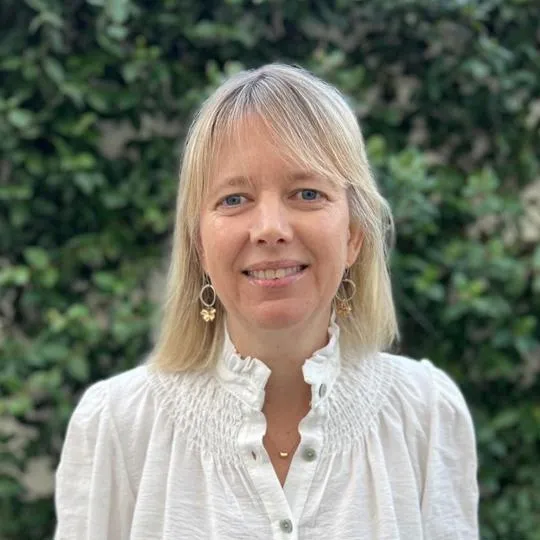
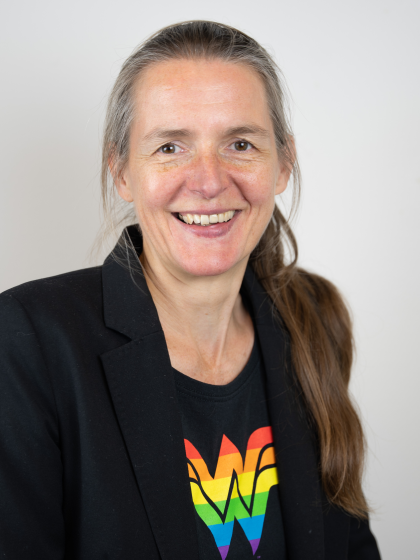
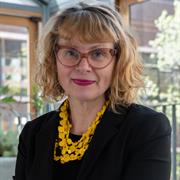
Katherine V. Gough is Professor of Human Geography at Lund University, Sweden, with a 30-year research focus on housing/home, work/entrepreneurship, youth/elderly geographies, mobility, urbanisation, and climate change across Africa, Latin America, and Asia-Pacific. She collaborates with Loughborough University's Clear Climate team on extreme heat mitigation in Ghana and leads the 'Trocha de Paz' project for Colombia's 'Total Peace' agenda. Research Themes Extreme Heat in Ghana Peacebuilding in Colombia Rural-Urban Dynamics Her multidisciplinary approach bridges academia, policy, and communities through projects like VEWEC, REFIT, and Paz Alto Cauca. Current work emphasizes: Climate-resilient housing design Post-conflict governance Informal sector innovation Scientific Engagement: British Academy funded VEWEC and REFIT projects Principal Investigator for Trocha de Paz (Colombia) Her collaborative research strengthens stakeholder networks in: West African urban livelihoods Colombian territorial peacebuilding Tropical climate adaptation
Asma Mehan, Ph.D. , is an Assistant Professor at the Huckabee College of Architecture, Texas Tech University , with a Ph.D. in Architecture, History, and Project from Politecnico di Torino (2017). Her work bridges architectural humanities and critical urban studies , focusing on urban inclusivity, heritage preservation, and climate justice. She authored two books— Tehran: From Sacred to Radical (2022) and Kuala Lumpur: Community, Infrastructure, and Urban Inclusivity (2020)—and leads the Coordination Team of the AESOP Young Academics network. Education: Ph.D. in Architecture, History, and Project, Politecnico di Torino (2017) Her research spans spatial justice , feminist placemaking , and heritage studies , addressing issues like oil urbanism , digital citizen participation , and resilient housing . Articles highlight her interdisciplinary approach to urban resilience, AI integration, and socio-environmental equity. She has held fellowships including the FCT Scientific Employment Stimulus and NIAS-KNAW Urban Citizenship Fellowship. Scientific Awards: AESOP Young Academics Award European Architectural History Network (EAHN) Fellowship Society of Architectural Historians (SAH) Grant ZK/U Berlin Researcher-in-Residence SAHGB Award Dr. Mehan has taught at TU Delft and Politecnico di Torino, guest lectured at TU Munich and Deakin University, and conducted visiting research in Switzerland, Australia, and Berlin. Her work appears in over 50 publications across English, Persian, and Italian, emphasizing critical pedagogy , collaborative design , and policy toolkits for urban inclusivity.
Karl Bell is an Associate Professor in Cultural and Social History at the University of Portsmouth, specializing in supernatural and environmental history, folklore, and Victorian popular culture. He joined in 2007 after teaching at the University of East Anglia. Co-director, Centre for Port Cities and Maritime Cultures Co-Principal Investigator, 'From Sail to Steam, Carbon to Green' (Lloyd’s Register-funded, 2025-2031) Former director, Supernatural Cities project (2016-2022) Education: PhD in History, University of East Anglia (2007) MA in Modern History, Birkbeck College, University of London (2001) BA Hons in Modern History, Anglia Ruskin University (1992) His research explores the relationship between modernity, enchantment, and the Gothic, with a focus on coastal environments, psychogeography, and the revival of folklore in contemporary culture. He has authored books like the award-winning The Legend of Spring-heeled Jack and The Magical Imagination . Recent publications examine maritime haunting, urban Gothic mindscapes, and the evolution of supernatural narratives. His work bridges historical analysis with literary and cultural studies, emphasizing affective landscapes and storytelling. Scientific Awards: Outstanding PhD Supervisor Award, University of Portsmouth (2017) He has secured AHRC funding for 'Lost Voices: Spiritualism in the First World War' (2017) and leads the Lloyd’s Register-funded 'From Sail to Steam' project (2025-2031). As founder of Portsmouth Darkfest (2016-2021), he fostered academic-creative collaborations and developed the Portsmyth app. He teaches undergraduate and postgraduate courses, including the MA Victorian Gothic distance learning program, and serves on editorial boards of Revenant and Coastal Studies and Society .
T.C. Chang is Professor of Geography at NUS, specializing in urban cultural geography and tourism development in Asia. His research examines arts, heritage, and gentrification in cities, with focus on Singaporean and Chinese urban contexts. Education includes a PhD from McGill University. Research investigates creative placemaking, heritage conservation, and community engagement in urban redevelopment. Authored works include 'Joo Chiat: A Living Legacy' and edited volumes on Asian tourism. Awarded multiple teaching honors including NUS Outstanding Educator Award (2006) and Annual Teaching Excellence Awards. Teaches courses on tourism geography, global cities, and field studies in Southeast Asia.
Geertje Slingerland is an Assistant Professor of Urban Studies at the Faculty of Architecture and the Built Environment, Delft University of Technology (TU Delft). Her work focuses on developing and studying participatory and co-design methods in urban contexts, with a mission to increase awareness of excluded groups in participation processes and develop methods to involve overlooked residents. Dr. Slingerland obtained her PhD entitled 'Together we make places: Designing connections in urban spaces' at the Technology, Policy and Management Faculty of TU Delft. Prior to rejoining TU Delft as an assistant professor, she worked at Rotterdam University of Applied Sciences as a senior researcher. She was also part of TU Delft's Participatory Systems initiative. Her research interests span participatory design, community-driven research, human-computer interaction, citizen participation, and urban studies. With a background in Interaction Design, she investigates how design can contribute to positive behavioral change in people and ultimately systemic change in society. Her expertise includes co-design, participatory design, urban communities, qualitative research, research-through-design, and citizen empowerment and engagement. She focuses on the smart and social city, using participatory approaches to work with residents and local organizations to address neighborhood and city challenges through playful, creative, and digital methods. Dr. Slingerland's recent publications demonstrate a strong focus on participatory urban design, with particular attention to digital engagement, climate action, and inclusive city-making. Her work bridges urban studies, human-computer interaction, and community engagement, often examining how technology can facilitate more inclusive participation in urban planning processes. She has conducted case studies in Rotterdam, The Hague, and Cork (Ireland), developing frameworks for participatory placemaking that connect citizens with each other and their environments. Scientific Awards: Best Student Paper Award (2022) Dr. Slingerland actively engages with the public through media contributions on urban design topics, particularly focusing on gender-inclusive urban spaces. Her recent media appearances have addressed designing public spaces with women, unsafe places for women, urban safety for young women, and how streets and public spaces are typically designed according to men's preferences. She has participated in significant academic events including serving as Chair of the Programme Committee for the 182nd Dies Natalis & Delta Week in 2024, and has been involved in projects related to citizen voices in climate action.
Nicole Latulippe is an Associate Professor in the Department of Human Geography at the University of Toronto Scarborough (UTSC), with a cross-appointment in the Department of Physical and Environmental Sciences. She focuses on Indigenous environmental governance, anticolonial research methodologies, and relational geographies through community-engaged practices. Ph.D. in Geography from University of Toronto M.A. in Geography from University of Guelph B.A. (Hons) in Geography from Nipissing University Her research explores Indigenous knowledge systems in environmental governance, settler-Indigenous relations in urban spaces, and decolonizing methodologies. Current projects include land/water stewardship in Toronto, treaty citizenship, and pathways to just futures through Indigenous placemaking. Her recent publications emphasize fisheries policy alternatives rooted in Indigenous relationality, co-creative research with Toronto Islands communities, and Indigenous-led environmental governance frameworks. Themes include knowledge sovereignty, colonial-disruption strategies, and land-based relational ethics. Scientific Awards: Connaught New Researcher Award (2022), SSHRC Insight Development Grant (2021), SSHRC Connection Grant (2019) Community Collaborations: Nipissing First Nation fisheries stewardship, Indigenous Environmental Justice Project, Mississaugas of the Credit First Nation partnerships
Dr. Tiffany Fairey is a Senior Research Fellow and visual sociologist at King's College London's Department of War Studies, where she specializes in participatory research and visual peacebuilding. With over two decades of experience, she previously co-founded the award-winning charity PhotoVoice and holds affiliations with the Visual Embodied Methodologies Network and Everyday Peace Indicators. Her research focuses on arts-based peacebuilding, conflict transformation, and ethical dimensions of visual methodologies. Current projects include the Leverhulme-funded Imaging Peace study examining photography's role in peacebuilding across multiple countries, and ESRC-funded work on intersectional gendered violence. Fairey's publications consistently explore participatory visual methods and peace photography, with recent work emphasizing community-centered approaches to reconciliation and strategic narrative development in post-conflict settings. Her 2025 monograph Imaging Peace represents a culmination of her multi-country empirical research. Her contributions have been recognized with prestigious awards including the Royal Photographic Society's Hood Medal and the SSPP Impact Prize. She actively consults on photovoice methodology and serves on advisory boards for organizations including the Post-Conflict Research Centre and Inclusive Rigour Co-Lab.
Prof. Bettina van Hoven holds the Aletta Jacobs Chair in 'Place, Social Change and Collaborative Research for Wellbeing and Justice' at University College Groningen (University of Groningen). She earned her PhD in 1999 from the University of Plymouth with research on post-socialist rural societies in Germany. Her work focuses on participatory methodologies addressing marginalized groups' spatial experiences, including disability, aging, migration, and environmental challenges. She advocates 'slow science' emphasizing ethical collaboration and community co-creation. Education: PhD (University of Plymouth, 1999), studies in Biology and Physical Geography (University of Osnabrück and Plymouth). Research: Integrates visual methods, community partnerships, and arts-based dissemination to produce inclusive knowledge. Key themes include urban wellbeing, disability inclusion, and participatory resilience-building. Teaching: Project-based learning focused on bridging theory and real-world challenges. Advising: Supervised 9 PhD students since 2013, including works on climate action, Syrian refugee masculinities, and aging-in-place. Labs/Teams: Leads the Aletta Jacobs Chair research group, collaborating with organizations like 'This Abled City' to improve urban accessibility. Serves on editorial boards for Emotion, Space and Society and Journal for Undergraduate Ethnography .
Linda Ryan Bengtsson is an Associate Professor in the Department of Geography, Media and Communication at Karlstad University. She holds roles as a research advisor and collaborates with public/private entities, including Hagfors municipality, Visit Värmland, and Uddeholm. Her work focuses on geomedia studies, exploring the interplay between place, media practices, and digital culture within cultural industries and tourism. Education: She completed her doctoral dissertation on public art installations and interactive experience in 2012. Teaching includes undergraduate and advanced courses in visual culture, digital design, and design methodology. Research Interests: Her interdisciplinary research combines human geography, tourism studies, and business administration. Key projects include the 'Bruksort 2.0' ecosystem initiative (2024-2025) and the 'Music Ecosystems' EU project (2018-2021). She co-edits the book Geomedia Studies: Spaces and Mobilities in Mediatized Worlds (2017/2018). Collaborations: She serves on boards for the Baltic Sea Foundation and Visit Värmland, emphasizing strategic research environments and funding. Recent articles (2024) address geomedia futures in tourism, pandemic impacts on music industries, and virtual reality immersion. Awards: No specific prizes mentioned, though her work receives grants from Vinnova, EU, and regional agencies. Her research environment development focuses on co-creation with industry partners. Advising/Grants: As a research advisor, she strengthens funding opportunities and national/international collaborations. Projects like 'Experience Industry: Geomedia Technologies for Live Performance' highlight her focus on applied research. Labs/Teams: Central to the Geomedia Studies Research Group, she leads projects like 'Digital Place-Based Experiences' and 'Crisis Communication' initiatives in rural tourism sectors.
Charlotte Baskerville is a postgraduate researcher at the University of York (School of Arts and Creative Technologies) and Head of Choral Music at Warwick School. Her PhD research explores placemaking through composition, focusing on community engagement and shared musical identity. She holds a BA from Christ’s College, Cambridge (2015) and a master’s thesis on music cognition under Prof. Ian Cross. Her work bridges composition, choral performance, and community projects with groups like dementia care groups and schools. A prize-winning clarinetist and choral scholar, she actively performs with choirs in Cheltenham, Gloucester, and Tewkesbury. Her research interests center on creative placemaking via collaborative composition processes, leveraging local musical heritage to foster community identity. Her compositional output spans liturgical works, seasonal carols, and secular choral pieces, emphasizing accessibility and communal participation. Recent publications reflect her dual focus on sacred music traditions and innovative community-driven projects. Education: Bachelor of Arts in Music, Christ’s College, Cambridge (2015) Master’s thesis on music cognition under Prof. Ian Cross Sir Jack Lyons Research Scholar, University of York Awards: Christ’s College Charles Blackham Memorial Recital Competition (2016) Professional Roles: Head of Choral Music at Warwick School Clarinetist with multiple ensembles Active choral singer in multiple locations Her compositional output emphasizes collaborative creation with communities, particularly through workshops and participatory performances. Current projects involve primary/secondary schools, professional choirs, and dementia groups, aiming to strengthen communal bonds through shared musical experiences.
Nik Luka is an Associate Professor at the School of Architecture, McGill University, with a joint appointment in Urban Planning. He holds a Ph.D. from the University of Toronto, an M.Arch. from Laval University, and a B.A.A. from Toronto Metropolitan University. His roles include Associate Director of the Centre for Interdisciplinary Research on Montréal and associate memberships in the Department of Equity, Ethics, and Policy and the Bieler School of Environment. Ph.D. (Toronto) M.Arch. (Laval) B.A.A. (Toronto Met.) Luka specializes in ethnography, landscape studies, and critical design/planning research, focusing on REURBANISM—the transformation of (sub)urban landscapes through collaborative design and participatory governance. His work bridges natural processes and human culture, emphasizing narrative, discourse, and policy-led urbanism. His recent publications highlight trends in recreational mobilities, densification, transit-oriented development, and periurban landscape dynamics. Themes span urban walkability, public space design, and transdisciplinary approaches to sustainability. SSHRC Partnership Grant with Canada Mortgage and Housing Corporation Collaborative projects in Sweden and continental Europe Champ des Possibles partnership in Montreal Luka engages with community organizations such as the Montreal Urban Ecology Centre, Convercité, and Suspicious Fish, blending academic research with civic practice. His affiliations include the Trottier Institute for Sustainability in Engineering and Design and international collaborations on landscape connectivity.
Eduardo Staszowski is an Associate Professor of Design Strategies at Parsons School of Design, The New School. He serves as co-founder and Director of the Parsons DESIS Lab, dedicated to advancing design-led social innovation for equitable and sustainable urban practices. His research explores intersections of design, public policy, and participatory methods to enhance civic engagement and governance. Staszowski teaches courses in Design Strategies, Participatory Design, and Social Innovation, co-coordinates the Graduate Minor in Civic Service Design, and edits the Designing in Dark Times book series with Bloomsbury. His research focuses on experimental approaches to fostering stakeholder collaboration in policy development and civic service design, emphasizing design’s role as an intermediary in complex social systems. He has secured multiple research grants and awards since joining The New School in 2008. Recent publications include edited volumes on design’s transformative potential in addressing contemporary societal challenges and articles exploring urban sustainability and community-driven initiatives. Staszowski’s teaching and research are practice-driven, engaging external partners to address real-world challenges in public policy and social innovation. His courses allow students to navigate interdisciplinary projects, blending theory and action. The DESIS Lab’s work exemplifies his commitment to bridging design practice with systemic social change, particularly in fostering inclusive urban environments and governance frameworks.
Distinguished Professor Larissa Hjorth is a digital ethnographer and ARC Future Fellow leading research on mobile media, grief, and ageing at RMIT University's School of Media & Communication. Her work explores intergenerational connection, digital kinship, and loss in the Asia-Pacific. She has directed major initiatives like the Design & Creative Practice ECP Platform and co-founded the Digital Ethnography Research Centre (DERC). With over $8M in grants, she collaborates with ACMI, Intel, and international networks like Aging in Data. She supervises 20+ PhD students and advises global grief research networks. Recent projects include studies on QR codes in public spaces, co-designing ICT strategies for older adults, and digital rituals around death. Research interests span mobile media ethnography, playful urban design, and ethical digital practices. Her ARC Future Fellowship (2023-2027) investigates mobile media mourning rituals, while her Aging in Data project examines older adults' data experiences. Teaching spans 20 years across design, art, and media disciplines. Awards: ARC Future Fellowship, Japan Foundation Fellowship, Asialink Residency Key Collaborations: SSHRC (Canada), Concordia University, DORS (death online network) Labs: DERC, Museum Digital-Social Futures project Grants: 7+ ARC grants, Young and Well CRC, CCI CoE Notable outputs include works on pandemic-era QR code placemaking, WeChat's role in intergenerational care, and co-designed risk strategies for older adults' ICT use. Her creative projects like The Children's Sensorium blend art and mindfulness to support youth well-being.
Janet McGaw is an Associate Professor in Architectural Design at the University of Melbourne’s Faculty of Architecture, Building and Planning. She holds dual expertise as a registered architect and visual artist, with a PhD by Creative Works. Her research focuses on equitable, sustainable urban spaces and the intersection of place, identity, and health. Key projects include the Million Minds Program (2019–2024), co-leading investigations into Indigenous cultural practices’ impact on youth well-being, and the Yalinguth audio app project (2014–present). She has led major grants like the ARC Linkage Grant on Indigenous Placemaking (2010–2014) and pioneered creative collaborations in bio-materials research. Education includes a PhD by Creative Works and prior degrees from the University of Melbourne. She coordinates the Master of Architecture’s core design studio, emphasizing culturally sensitive design. Leadership roles include Chairing the Architecture Design Studios review (2022), co-chairing decolonization curriculum reforms, and Pathway coordination in Bachelor programs (2015–2019). Research interests span decolonial design, Indigenous health, and creative methodologies. Recent publications (2023–2025) explore cultural therapy models for Indigenous youth mental health, bioinformed materials, and community-driven placemaking. Her work bridges art, architecture, and public health, advocating for marginalized voices in urban spaces. Awards include the 2007 Dean’s Prize for Research and RAIA Vic Chapter recognition. She actively collaborates with First Nations Elders and interdisciplinary teams on projects like the Mycelium Matters Webinar and spatial design interventions in Melbourne.
Sandra Stauffer is a Professor of Music Education and Interim Dean of the Herberger Institute for Design and the Arts at Arizona State University (ASU). She holds a Ph.D., M.M., and B.S. in Music Education from the University of Michigan and West Chester University. Her research focuses on children’s musical creativity, place-conscious pedagogy, narrative inquiry, and technology integration in music education. Stauffer’s academic roles include coordinating graduate studies in music education and leading the Music, Learning, and Society Research Group. Her work includes collaborations with composer Morton Subotnick on educational software development and co-authoring influential books such as Narrative in Music Education (2009) and Narrative Soundings (2012). She has received grants totaling over $900,000 for projects addressing music education equity and curriculum innovation. Her teaching spans undergraduate and graduate courses in music education, including Art of Teaching Children Music and research seminars. She actively contributes to K-12 curriculum development through textbook series like Silver Burdett Making Music and serves on national and international educational boards.