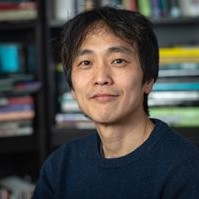
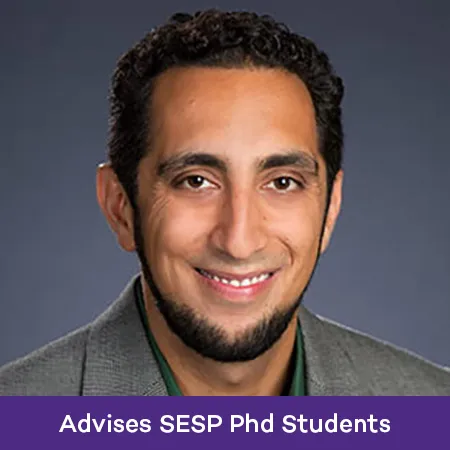
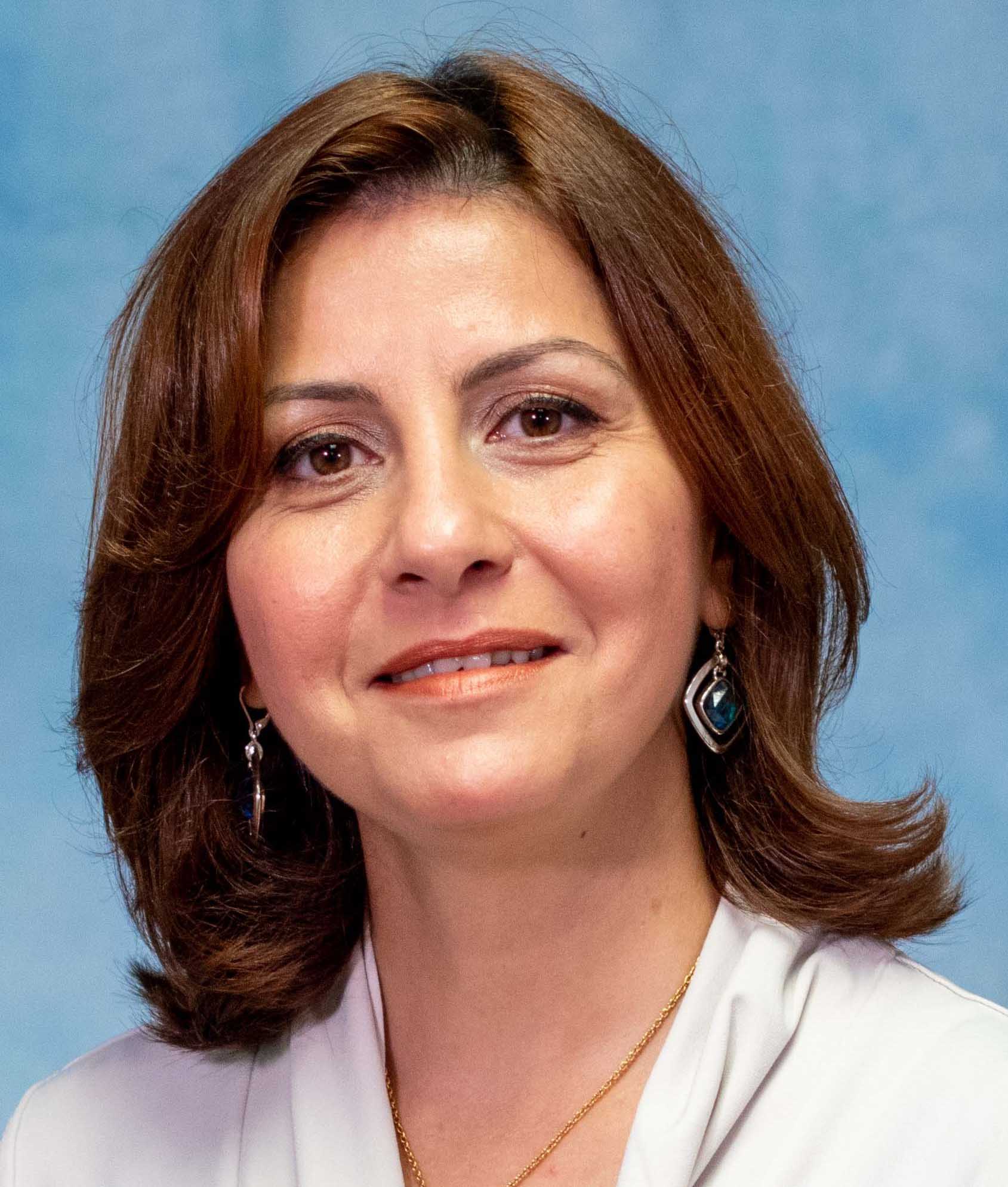
Malcolm Innes is a Senior Lecturer at the Edinburgh Napier University's School of Arts and Creative Industries . With over 10 years of research outputs, his work spans lighting design, smart textile applications, and heritage conservation. Specializes in lighting for historical sites Leader in community co-design urban lighting Expert in light-sensitive material preservation Research trends focus on: Merging art and science in illumination Smart textiles for performance environments Heritage site lighting innovation Projects include: 12 Closes Community Co-design (2016-2022) Dunbar SciFest Projection (2015) Edinburgh Zoo Night Trail (2014-2015)
Amy J. Ko is a Professor and Associate Dean for Academics at the Paul G. Allen School of Computer Science & Engineering and The Information School at the University of Washington, Seattle . She serves as Editor-in-Chief of ACM TOCE , co-directs Reciprocal Reviews and CS for All Washington , and leads the CENSOR Research Lab . Her work prioritizes equitable, liberatory computing education , bridging human-computer interaction and social justice . Research Focus: Equity in CS education, AI literacy, inclusive design, developer productivity, and ethical technology use Awards: Best Paper Award (2024, 2022) Diversity + Inclusion Award (2024) Most Influential Paper Honorable Mention (2014) Honorable Mention (2024, 2023) Publications: Over 184 works spanning program comprehension, assessment design, ethical pedagogy, and democratizing computing education Books: Foundations of Information , Critically Conscious Computing , and Teaching Accessible Computing Her Google Scholar profile reflects citations under her deadname, which she advocates to correct. She emphasizes student agency and community collaboration , particularly with marginalized groups in computing spaces.
Arash Azadegan is a Professor and Department Vice Chair at Rutgers Business School , specializing in Supply Chain Management . His research focuses on supply chain disruptions, disaster response in commercial and humanitarian settings, and inter-organizational creativity and innovation. Ph.D., Arizona State University, Supply Chain Management M.B.A., Seattle University, Business Administration B.S., Oregon State University, Mechanical Engineering With over ten years of industry experience at Fortune 500 companies like Ford Motor Company and Fortune Brands, Dr. Azadegan integrates practical insights into his academic work. He is an active member of the Decision Sciences Institute and contributes to executive education programs, including a Mini-MBA: Digital Supply Chain Management . His work has been published in journals such as the Journal of Operations Management , Production and Operations Management Journal , and Journal of Supply Chain Management , addressing topics like supply chain resilience and risk mitigation. Media outlets like Fast Company , CNN Business , and Supply Chain Brain have frequently cited his expertise on global supply chain dynamics.
Jim Mason is a Senior Lecturer and Programme Leader for Music Production at the University of Chester's School for the Creative Industries. With over two decades of experience since 2001, he has pioneered student-led industry projects that resulted in three UK club chart hits (2016, 2022, 2025) and contributed to academic research in electronic dance music origins. Education: MA in Learning and Teaching (University of Liverpool, 2003-2010), BA in Popular Music and Recording (University of Salford, 1993-1996) His research focuses on the intersection of historical music production techniques and contemporary commercial applications, particularly examining early electronic music innovations (Pink Floyd's 'On the Run'), 1980s harmonic patterns, and PWL Records' sonic legacy. Recent publications explore how retro styles influence modern chart success. Jim teaches computer music creation, recording, mixing, and music for moving visuals, while maintaining active industry engagement through consultancy (Performing Right Society), music transcription, and the Drake Music Project supporting disabled musicians. His career spans 16 UK club chart hits and Top 40 Official Singles Chart entries. Scientific Awards: Advance HE Membership (2011) Professional activities include academic paper presentations at prestigious conferences like Crosstown Traffic and Hidden Musicians, plus diverse musical work ranging from film soundtrack recordings to corporate audio production.
Matthew Styles is a Senior Lecturer in Saxophone Studies at the Western Australian Academy of Performing Arts (WAAPA), Edith Cowan University. He serves as Coordinator of Honours (Music) and is a postgraduate supervisor with extensive experience in musician injury research through collaboration with sports science specialists. As a faculty member, he teaches research preparation courses, creative projects, and woodwind workshops across undergraduate and postgraduate levels. Matthew holds a Doctor of Musical Arts from the University of Western Australia (2008), a Bachelor of Music with Second Class Honours from the same institution, and two Certificate IV qualifications in Training and Assessment (2013 and 2023). His academic journey includes studies at the Royal College of Music, London, and mentorship under renowned saxophonists including Bob Berg, Martin Robertson, Dr. Kyle Horch, Dr. Otis Murphy, and Dr. Eugene Rousseau. His research interests center on cross-genre pedagogy and performance, specifically bridging classical and jazz traditions for classical musicians, and developing injury mitigation strategies for saxophonists through multi-disciplinary approaches with sports science. With over 30 years of professional experience as a saxophonist across jazz, classical, funk, and avant-garde genres, Styles brings practical insight to his academic work. His research outputs demonstrate consistent productivity with publications spanning from 2009 to 2025, showing particular focus on saxophone health, performance techniques, and cross-genre exploration. The publications reveal a trajectory from performance-focused outputs toward increasingly research-intensive work examining health, pedagogy, and interdisciplinary approaches. 2004 Churchill Fellowship HenriSelmerParis Artist D'Addario Artist JLV Sound Ambassador Dr. Styles actively supervises doctoral and master's students, currently serving as Principal Supervisor for three PhD candidates and Associate Supervisor for one PhD candidate. His completed supervision portfolio includes four PhD students as Principal Supervisor and five as Associate Supervisor across diverse musical topics. He has secured research funding including an ECU Early Career Researcher Grant ($23,560) for his project 'Saxology: recasting third stream music for the saxophone' (2014-2015). As director of 'The Phone Co.', he leads performance initiatives that integrate his research interests with practical application. His professional activities extend to membership in the Australian Society for Performing Arts Healthcare (since 2012), Performing Arts Medical Association (since 2015), and Western Australian Music (since 2022), where he serves as a conference reviewer, demonstrating his commitment to advancing knowledge in performing arts healthcare and music education.
Peter Biľak is a Slovakian graphic and typeface designer based in The Hague, currently serving as a Part-Time Lecturer at the Royal Academy of Art . He co-founded Typotheque in 1999 and Indian Type Foundry in 2009, focusing on multilingual typography, CJK systems, and accessibility (e.g., Zed Braille ). His work bridges type design with interdisciplinary collaborations, including modern dance with Make-Move-Think.org . Education : MFA in Graphic Design from the Jan van Eyck Academy (1999). Biľak’s research explores typographic principles across scripts (Latin, CJK, Indic), Braille spacing , and design ethics . His 15 most recent articles address vertical/horizontal writing systems , interdisciplinary design , and typeface functionality in urban contexts like the Paris Metro . He collaborates internationally, contributes to design theory, and advocates for reclusive creative practices as a response to digital visibility pressures. His typefaces (e.g., Greta , Fedra , Lava ) emphasize cultural inclusivity and technical precision.
Prof. Dr.-Ing. Carsten Deckert serves as Professor of Innovation and Production Management at Hochschule Düsseldorf University of Applied Sciences within the Faculty of Mechanical and Process Engineering. He leads the WIM (Business Information Systems and Management) program and teaches courses including Basics of Business Administration, Procurement and Supply Chain Management, Technology Management, Innovation and Technology Management, and Operations Management, along with electives in Sustainable Logistics and Behavioral Economics. Dr. Deckert's research focuses on the intersection of cultural influences and innovation capacity at both national and organizational levels, sustainable logistics systems, engineering creativity, and social innovation. His work examines how cultural dimensions such as collectivism, performance orientation, trust, and tolerance impact a nation's ability to innovate. He has pioneered research on measuring engineering creativity and comparing it with artificial intelligence capabilities, while also exploring sustainable logistics solutions including micro-depots for urban parcel delivery and underground cargo transport systems. His extensive publication record of 117 publications with over 57,000 reads demonstrates significant scholarly impact across multiple disciplines. The recent articles reveal a clear research trajectory examining cultural determinants of innovation, sustainable logistics solutions for urban environments, and creativity in engineering education. His work bridges theoretical frameworks with practical business applications, often presented through detailed case studies on topics ranging from synthesizer development to rap music commercialization. Dr. Deckert actively supervises bachelor's and master's theses in areas including cultural influences on innovation capacity, creativity in engineering, social innovation, sustainable logistics, and behavioral economics. He encourages students to submit inquiries regarding thesis supervision with details about their degree program, expected supervision period, preferred subject areas, and academic transcripts. His research projects include the assessment of the ecological and economic implementation of the CargoCap system at the Bergisch Gladbach site, demonstrating his commitment to practical, sustainable logistics solutions.
Stephan Hankammer serves as Professor for Sustainable Management, Innovation and Entrepreneurship at Alanus University of Arts and Society, where he also holds the position of Pro-Dean of the Business Department. He leads the Sustainable Business program, teaching courses in Sustainable Entrepreneurship, Sustainability Management, and Innovation Management. His research focuses on business models that actively contribute to the regeneration of ecological and social systems within planetary boundaries, moving beyond mere sustainability toward restorative business practices. Hankammer completed his doctoral studies at RWTH Aachen University with a focus on collaborative value creation from a sustainability perspective. He co-founded and serves as Scientific Director of the Institute for Regenerative Management (REGWI), a research institute affiliated with Alanus University. His academic background includes interdisciplinary studies in European Studies and Philosophy at Philipps-Universität Marburg and Business Administration at Westfälische Wilhelms-Universität Münster, with additional studies in Spain through ERASMUS and DAAD scholarships. Hankammer's research examines four key areas: the role of collaboration between stakeholders in sustainable business models, regenerative business principles that actively improve ecosystems, the dual challenge of digital and sustainable transformation, and business models that place the common good at their center. His work bridges academic research with practical applications, focusing on how businesses can transform to operate within planetary boundaries while serving societal needs. His publication record shows consistent output in high-impact journals such as Journal of Cleaner Production and Journal of Business Economics, with research themes centered on sustainable business models, degrowth economics, and the intersection of mass customization with sustainability. His work demonstrates a clear progression from examining sustainable business practices toward more transformative regenerative business models. Best paper presentation award at European Roundtable for Sustainable Consumption and Production Conference (ERSCP) 2017 Hankammer actively advises students and collaborates on research projects including "Industry 4.0 from a Sustainability Perspective" and "Regenerative Business Models" with multiple social impact companies. He serves on the editorial board of the International Journal of Sustainable Design and regularly reviews for prominent sustainability journals. At Alanus University, Hankammer leads the Chair for Sustainable Management, Innovation and Entrepreneurship, which focuses on developing conditions, logics, and methods for regenerative, circular, and co-creative business practices. His work has significant implications for businesses seeking to move beyond sustainability toward active regeneration of ecological and social systems.
Jin-Kyu Jung is a Professor at the School of Interdisciplinary Arts & Sciences, University of Washington Bothell, and an Adjunct Professor in the Department of Geography at the University of Washington (Seattle). His expertise spans urban geography, GIS, and community-based research. He holds a Ph.D. in Geography from SUNY Buffalo, alongside degrees in Urban Engineering and Urban Planning. Dr. Jung’s research focuses on critical GIS, geovisualization, and urban inequality. He integrates qualitative and quantitative methods to explore socio-spatial dynamics, particularly in marginalized communities. His work emphasizes participatory engaged research and community-based learning, aiming to bridge academic knowledge with real-world applications. He teaches courses on GIS, geovisualization, and urban planning, promoting student-centered and experiential learning. His recent projects include studies on smart cities in Seattle and climate change in the Ecuadorian Andes. He also serves as a Senior Research Fellow at SUNY Buffalo’s Center for Urban Studies. Dr. Jung’s publications span topics like GIS methodologies, urban policy, and child-centered spatial research. His teaching and research highlight interdisciplinary approaches to spatial justice and equitable urban development.
Julio M. Ottino is the Walter P. Murphy Professor of Chemical and Biological Engineering and holds a courtesy appointment in Mechanical Engineering at Northwestern University. He also serves as a Professor of Management and Organizations at the Kellogg School of Management. His research focuses on complex systems, granular matter dynamics, and mixing/segregation phenomena, with applications spanning engineering, geophysics, and environmental science. Ottino’s work bridges theory, computation, and experimentation, addressing challenges in granular flow optimization and segregation control. He is affiliated with the Theoretical and Applied Mechanics Graduate Program and leads the Ottino Research Group. Key research interests include agent-based modeling, network theory, and the interplay between order and disorder in physical systems. His contributions span fluid dynamics, nonlinear systems, and engineering education innovation. Awards: Member of the National Academy of Sciences (2022), G.I. Taylor Medal (2023), and numerous engineering accolades. Publications: Over 200 peer-reviewed articles on granular flows, segregation forces, and mixing dynamics. Education: Ph.D. in Chemical Engineering (assumed based on career trajectory). Ottino’s work emphasizes cross-disciplinary collaboration, as highlighted in his book ArtScience: Creativity in the post-Google Generation . His lab explores cutting-edge topics like machine learning for mixing optimization and ergodic subset analysis in chaotic systems.
Sepehr Vakil is an Associate Professor of Learning Sciences at Northwestern University’s School of Education and Social Policy (SESP) , serving as the Founding Faculty Director of the Center for Technology, Policy, and Opportunity and the Technology, People, and Policy (MTePP) Master’s program . He holds a PhD from UC Berkeley (2016) and B.S./M.S. degrees in Electrical Engineering from UCLA (2006/2007). His work bridges STEM education , technology ethics , and global policy , with a focus on equity, cultural relevance, and societal impact. Dr. Vakil’s research examines AI’s role in education , global STEM curriculum politics , and the sociopolitical dimensions of technology . He advises the Spencer Foundation’s AI initiative and serves on National Academy of Sciences committees addressing K-12 data competencies and equity in STEM education. His awards include the NSF CAREER Award (2018) and the Jan Hawkins Award (2022). Earlier roles include Assistant Professor and Associate Director of Equity at the University of Texas at Austin’s Center for STEM Education. He co-designs culturally meaningful STEM programs with communities, critiques militarism in education, and explores how immigration policies intersect with global demands for engineers. Education: PhD, Education in Mathematics, Science, and Technology, UC Berkeley (2016) M.S. & B.S., Electrical Engineering, UCLA (2007 & 2006) Awards & Leadership: NASEM Committee Member on K-12 Data Competencies (2024) Spencer Foundation Senior Adviser on AI (2024) Jan Hawkins Award (2022), NSF CAREER (2018), NAEd/Spencer Fellowship (2018) Key Projects: Co-designing STEM programs with marginalized communities Researching AI ethics in education Policy analysis of global engineering education demands His work emphasizes critical pedagogy and systemic equity , challenging dominant narratives in STEM to center marginalized voices and global perspectives.
Marwan Hassan is a Professor in the Department of Geography within the Faculty of Arts at the University of British Columbia. His research focuses on geomorphology and hydrology, with extensive work on river systems, sediment transport, and landscape evolution. He maintains an active research program with numerous publications and collaborations across the globe, and leads the Hassan Lab which develops innovative tools like the LegoFlume for river science research. Education: PhD in Geography from The Hebrew University of Jerusalem (1989) MSc in Geography from The Hebrew University of Jerusalem BA in Geography from Ben Gurion University of the Negev Professor Hassan's research spans a wide range of topics in geomorphology and hydrology, including landscape evolution, hill-slope and channel interactions, channel stability and morphology, river sediment transport, stream ecology, and in-channel wood dynamics. His work addresses fundamental processes involving flow and sediment transport across multiple scales, from individual sediment grains to entire watersheds. His research extends beyond traditional fluvial geomorphology into urban hydrology, hyporheic flow, desert floods, water quality, and water resources management. A significant component of his research involves model development and experimental flume work to complement field observations, with a particular focus on step-pool streams as evidenced by his 18-year field observation study. Analysis of Professor Hassan's recent publications reveals a strong emphasis on sediment dynamics in gravel-bed rivers, with particular attention to the relationships between sediment supply timing, bedload transport, and channel morphology. His work combines experimental approaches in both field and laboratory settings with theoretical modeling to understand fundamental fluvial processes. His research has practical applications in river management, restoration, and understanding the impacts of major infrastructure like dams on river systems, as demonstrated by his studies on the Three Gorges Dam and Wenchuan Earthquake impacts. Professor Hassan leads an active research group at UBC that develops innovative methodologies for studying river systems. His lab's development of the LegoFlume represents a creative approach to experimental fluvial geomorphology. His collaborative work spans multiple countries and institutions, reflecting the global relevance of his research on river processes and management.
Professor Pauline Jones is a leading academic in educational linguistics and literacy education at the University of Wollongong's School of Education, part of the Faculty of the Arts, Social Sciences and Humanities. She holds a Ph.D. in Educational Linguistics from the University of New South Wales (2005). Her research focuses on language in education, disciplinary literacy development, multimodal digital authoring, and climate change education. Jones has secured over $3.5M in competitive grants and has co-led projects like the Transforming Literacy Outcomes (TRANSLIT) study. She currently serves as co-convenor of the Interdisciplinary Discourse analysis in Education, the Arts and Social Sciences (IDEAS) research group and chairs the Climate Change in Education Special Interest Group. Jones has held national roles including Immediate Past President of the Primary English Teaching Association Australia (PETAA) and executive membership in the International Systemic Functional Linguistics Association (ISFLA). Her teaching expertise spans English curriculum pedagogy, TESOL, and dialogic pedagogy, with co-authored best-selling texts like Teaching Language in Context . She supervises doctoral students researching topics like multimodality, online learning, and sustainability education. Education: Ph.D. in Educational Linguistics, University of New South Wales (2005) Research Interests: Educational linguistics/semiotics, disciplinary literacy development across STEM/English/history, multimodal digital texts, climate change education, and teacher professional development. Current projects investigate literacy transitions (TRANSLIT), digital explanations in science classrooms, and online discussion forums. Grants & Funding: Over $3.5M in ARC, NSW DoE, and OLT grants. Recent projects include Developing transferable skills: Improving writing outcomes (NSW DoE, 2020–2023) and Building capacity to scaffold online discussion (OLT, 2015). Teaching & Supervision: Oversees PhD topics such as sustainability pedagogies, AI in EFL literacy, and curriculum equity. Co-authored influential texts and leads teacher training initiatives through PETAA partnerships. Labs/Teams: IDEAS research group, Climate Change in Education SIG, and Sustainable Futures Project Working Group.
Dr Alex Marshall is a Senior Lecturer in German at the Department of Management Culture and Creativity, part of the College of Business, Technology and Engineering at Sheffield Hallam University. He also serves as academic lead for the Languages Society. His teaching spans German language and culture, intercultural studies, academic English, and linguistics. Marshall holds a DPhil (PhD) alongside MA and MSc qualifications. Research interests focus on Zionism and nationalism in the long 19th century, with additional work on utopian writing, anti-modernism, and humor theory. He convenes the Nationalism and Irony symposium and has published widely on topics including Herzl’s literary works and historical cultural performances. His work bridges literary analysis, political theory, and cultural history. Recent presentations include analyses of ironic nationalism in modern contexts, Zionism’s transnational dimensions, and humor’s role in political discourse. Notable outputs include a 2020 book chapter on Moses Hess’s reception of nationalisms and a 2016 journal article examining vaudeville stereotypes. His research highlights intersections between cultural critique and political identity formation. Teaching responsibilities include German language modules (stages 1–4), academic skills development, and interdisciplinary courses like 'Interculturality in Practice.' He actively engages with public scholarship through symposia and community-oriented talks.
Rasha Karakchi serves as a Lecturer in the Department of Computer Science and Engineering at the University of South Carolina's Molinaroli College of Engineering and Computing, where she teaches diverse courses while maintaining an active research program in hardware acceleration and embedded systems. Her academic foundation includes: Ph.D. in Computer Science and Engineering, University of South Carolina (2020) M.E. in Computer Engineering, University of South Carolina (2016) Dr. Karakchi's research centers on high-performance reconfigurable embedded systems, with particular focus on hardware acceleration for automata processing, spiking neural networks, and genomic sequence alignment. Her work bridges theoretical computer science with practical hardware implementation, emphasizing energy efficiency and real-time performance in security-critical applications. Analysis of her 2023-2025 publications reveals a dominant research trajectory applying machine learning to optimize hardware configurations for domain-specific tasks. Key thematic clusters include ML-enhanced automata processors for pattern matching, lightweight encryption engines for embedded security, and specialized architectures for spiking neural network acceleration—all demonstrating consistent innovation in hardware-software co-design for computationally intensive workloads. Her research excellence has been recognized through: SPARC Award (South Carolina's Program to Advance Research and Creativity)