Monika Kotowska is a Researcher at the Department of Criminology and Forensics , affiliated with the University of Warmia and Mazury in Olsztyn . Her work bridges legal sciences and criminology, focusing on organized crime, female criminality, juvenile delinquency, and contemporary social pathologies. Key Research Areas : Organized crime dynamics Gender-specific crime patterns Youth criminal behavior Modern social pathologies Prison rehabilitation Scientific Contributions : Published 72 papers (Scopus/WoS) Engaged in empirical studies on domestic violence protection, inmate mental health, and legal reforms Explores intersections of religion, law, and social reintegration
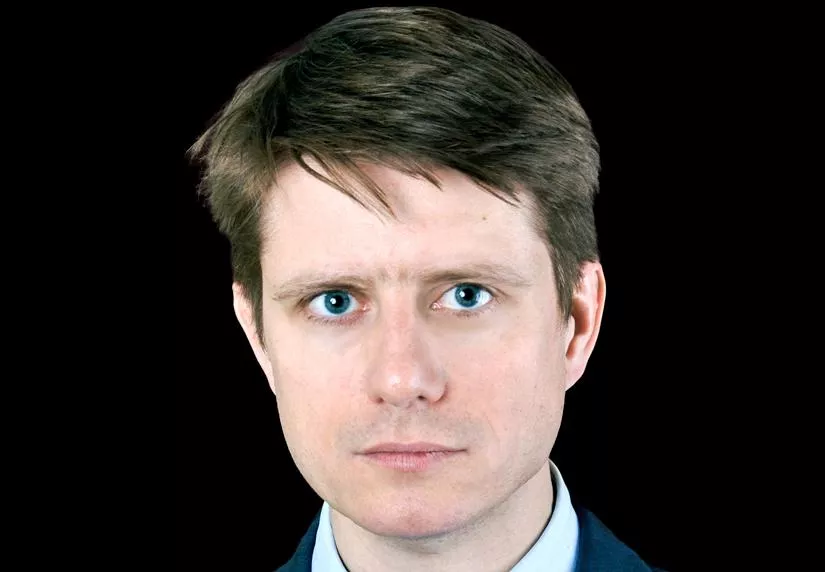
Bartosz Zalewski is a Polish legal historian and Roman law expert currently serving as Assistant Professor at the Department of Political-Legal Doctrines and Roman Law, Institute of Legal Sciences, Maria Curie-Skłodowska University. He completed his law studies at the same faculty in 2014 with distinction, earned attorney-at-law qualifications in 2018, and received his PhD in 2020 with highest honors for his dissertation Humanitas in the Legislation of Constantine the Great , which was honored in the Polish Society for Legal History Competition (2020-2022). Member of Scientific Thomistic Society Representative of junior staff at UMCS Institute of Legal Studies Active in legal NGO collaborations His research focuses on Roman criminal law reception in medieval and modern European law, Christian influence on Roman jurisprudence , and St. Thomas Aquinas' legal philosophy . Teaching includes Roman Law, Latin legal terminology, and specialized lectures on Roman economic institutions and European legal foundations. Current projects explore Roman law's impact on early modern public international law concepts. Scientific achievements include 20 publications, with 2024 articles analyzing: Retributive punishment in Roman kingship St. Isidore's natural law theories Medieval glossators' maritime law interpretations He has contributed to understanding how Roman legal institutions evolved through accusatorial procedure transformations and insanity exemption jurisprudence in medieval Sicilian and canon law. The 2016 Leksykon tradycji rzymskiego prawa prywatnego dictionary entries reflect his expertise in foundational Roman legal concepts.
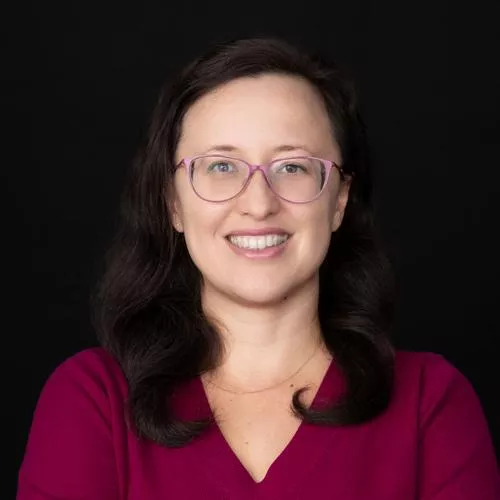
Katarzyna Jankowiak serves as an Assistant Professor at Adam Mickiewicz University in Poznań's Faculty of English, specializing in psycholinguistics and neurolinguistics with expertise in bilingual language processing. Her research integrates electrophysiological methods (EEG/ERP) with behavioral measures to investigate cognitive mechanisms underlying metaphor comprehension, emotional language processing, and stereotype activation in bilingual contexts. Her research interests focus on psycholinguistics, neurolinguistics, bilingualism and cognition, event-related potentials, figurative language processing, emotional language processing, clinical linguistics, metaphor comprehension, gender stereotypes in language, and neurophysiological measures . She employs sophisticated methodologies including EEG, galvanic skin response, and eye-tracking to examine how language proficiency, mood states, and modality affect cognitive processing in bilingual speakers. Analysis of her recent publications (2021-2025) reveals consistent focus on bilingual metaphor processing, emotional language comprehension across languages, and neural correlates of stereotype activation. Her work demonstrates that emotional reactivity is reduced in non-native languages, that mood states differentially affect semantic processing in L1 versus L2, and that bilinguals show decreased sensitivity to gender stereotypes in their foreign language. Methodologically, she bridges behavioral and neurophysiological approaches to provide comprehensive insights into bilingual cognition. Scientific Awards and Recognition: START scholarship from Foundation for Polish Science (2019/2020) Multiple AMU Rector's Prizes for research and organizational achievements (2021-2023) Minister of Education and Science scholarship for outstanding young researchers (2022) Adam Mickiewicz University Vice-Chancellor's scholarships for outstanding PhD work (2014-2018) Dr. Jankowiak actively contributes to academic service as project/grant reviewer for international organizations (SSHRC, NSF, Fulbright Commission, NAWA) and as peer reviewer for over 20 journals including Bilingualism: Language and Cognition , NeuroImage , and International Journal of Psychophysiology . She has organized numerous international conferences including Young Linguists' Meetings and Cognitive Neuroscience of Language Embodiment events, demonstrating strong leadership in her field.
Dr. Renata Kołodziejczyk serves as Assistant Professor in the Department of Special Education at the John Paul II Catholic University of Lublin's Faculty of Social Sciences. Her work focuses on inclusive education, speech therapy for hearing-impaired individuals, and the Cued Speech method (Fonogestów), with particular emphasis on language accessibility and communication support systems. Department of Special Education, Institute of Pedagogy Faculty of Social Sciences, John Paul II Catholic University of Lublin Her research explores: Development of communication skills in deaf individuals Implementation of Cued Speech across educational settings Universal design for learning environments Teacher training for inclusive education Educational accessibility for hearing-impaired students Deaf community integration strategies Recent publications demonstrate trends in: Cued Speech methodology advancements Inclusive curriculum design Assistive communication technologies Life course analysis for hearing-impaired individuals Educational policy implementation Interdisciplinary rehabilitation approaches Scientific contributions recognized through: 4th Degree Team Award (2019) Bronze Cross of Merit (2015) Editorial roles in 'Logopedia' journal Leadership in Polish Cued Speech Association Key projects managed: Cued Speech Europa (EU-funded) Language Creativity of Hearing-Impaired Youth (KUL-funded) Postgraduate Training in Communication Support (Ministry-funded) Integrated Development Program (EU-funded)
Rafał Wiśniewski serves as Professor at the Faculty of Social and Economic Sciences, Cardinal Stefan Wyszyński University in Warsaw. His academic profile centers on sociological research with 51 publications and active engagement through weekly consultations (Wednesdays 20:00-21:00, Room 319). His research spans cultural policy , aging societies , and community dynamics , with notable focus on seniors' social activity, family ties, migration impacts, and cultural institutions during crises like the COVID-19 pandemic. Keyword analysis reveals strong emphasis on local community development, creative competences, and participatory culture. Professor Wiśniewski maintains collaborative networks via team code xqmvv4y and holds an ORCID (0000-0002-7952-8021). His bibliometric profile shows a Scopus h-index of 2 and SNIP of 0.798, reflecting growing scholarly impact in Polish sociology. Current activities include one research project and media engagement, with ministerial evaluation score of 2,047. No formal advisees or laboratory affiliations are documented in available materials.
Dr. hab. Anna Kucharska is an Assistant Professor at the Department of Language Acquisition and Didactics , Institute of Linguistics , John Paul II Catholic University of Lublin (Faculty of Humanities). Her work focuses on French and Italian as foreign languages, with particular emphasis on essay writing, argumentation theory, and cultural aspects in language education. Research Interests: Foreign language pedagogy, rhetorical devices, textual cohesion, enunciative theory, legal linguistics, and cross-cultural communication. Membership: Polish Neophilological Society, Associazione Internazionale Professori di Italiano, KUL Expert Team, and CKE National Exam Commission. Kucharska’s publications analyze linguistic and textual complexity in learner writing, causal expressions in essays, and cultural conceptualization in legal texts. She has presented extensively at international conferences and participates in textbook translation projects. Her scientific award includes the Erasmus+ Staff Mobility scholarship for teaching exchanges. Notable Publications: 2025: Student attitudes in French essay writing 2023: Contrastive analysis of Italian Civil Code terminology 2019: Classical vs. modern rhetoric in language education 2017: Textual complexity in intermediate Italian learners Kucharska serves as an external reviewer for national exams and contributes to academic projects like PWP - Vocational education in modern languages . Her work bridges theoretical linguistics with practical language teaching methodologies.
Anna Nacher is a Professor at Jagiellonian University’s Institute of Audiovisual Arts, Department of Audiovisual Media, and serves as the Head of her department. Her research spans media theory through cultural studies, sound studies, e-literature, and video games as artistic strategies, with a focus on post-digital imaging, platformed internet dynamics, and non-representational media frameworks. Education : Not explicitly detailed in the text. Research Interests : She investigates the intersections of transmedia storytelling, data visualization, and socio-political narratives, particularly in migration studies and climate crisis contexts. Her work bridges physical and digital spaces, emphasizing "code/space" relationships and the aesthetics of networked media. Article Trends : Recent publications explore pandemic-era digital literature, hashtag movements, and eco-critical practices. Themes include digital humanities, interactive media, and the use of computational tools to analyze migration, environmental change, and social activism. Scientific Awards : Fulbright Scholar (2019/2020) Laureate of Granty na Granty II competition (2021) Advising & Grants : She supervises PhD students (e.g., Marta Snoch on scent in audiovisual media) and collaborates internationally, including with UCLA Art|Sci Center on the Breath Library project. Her grants include participation in the "elit and COVID-19" project and leadership in "Post-Digital Imaging" (2017-2019). Labs & Teams : She works with Victoria Vesna’s UCLA Art|Sci Center, contributes to the Electronic Literature Organization, and engages in interdisciplinary teams for projects like Breath Library and Electronic Literature Organization conferences.
Dr hab. Sebastian Kwiecień, PhD, is an Associate Professor at the Department of Labour and Social Insurance Law within the Faculty of Law, Canon Law and Administration at the John Paul II Catholic University of Lublin . His academic and practical expertise spans labor law, intellectual property, and the historical legal frameworks of Poland's interwar period. PhD in Law (2007), habilitation (2017) Specializes in employee creativity, copyright trolling, and interwar economic/labor law Co-author of studies on AI training data licensing and industrial tax policy Research Interests focus on: Labor Law: Employment contracts, HR management, and social security Intellectual Property: Copyright trolling, employee rights, and flat-rate compensation Legal History: Interwar Polish industrial/economic law, land reform, and notarial regulations Recent Publications reveal a trend toward interdisciplinary analysis, merging historical legal systems with modern challenges like: AI ethics and copyright compliance Interwar-era employment frameworks Land reform policies and tax law evolution Industrial safety and vocational training Digital rights management Comparative EU/US copyright enforcement Teaching Activities include lectures on employer responsibilities, HR management, and interwar administrative law, alongside seminars on corporate legal practices.
Kateryna Novikova serves as Assistant Professor in the Department of Sociology at SWPS University's Faculty of Social Sciences in Warsaw, where she contributes to both the Department of Sociology and the Center for the Study of History and Justice. Her academic profile bridges sociological theory, historical analysis, and contemporary digital society research with particular emphasis on Central and Eastern European contexts. Her research program centers on digital sociology methodologies including ethnography, discourse analysis, and content analysis. Key investigation areas encompass public discourses on emerging technologies, human agency within digital ecosystems, micro-entrepreneurship dynamics, and knowledge-sharing mechanisms in social innovation. Recent publications demonstrate consistent exploration of how digital transformations reshape labor markets, social identity formation, and organizational human capital. Analysis of her 15 most recent publications reveals a distinctive interdisciplinary trajectory connecting Soviet-era cultural studies with contemporary digital challenges. Her work consistently examines labor transformation across temporal contexts—from Soviet cinematic representations to modern platform economies—while maintaining focus on Polish societal evolution within European frameworks. Methodologically, she integrates qualitative digital ethnography with historical comparative analysis. Dr. Novikova actively participates in international research ecosystems as an expert evaluator for major funding bodies including the Polish Academy of Sciences, COST, FNRS Belgium, and EU education agencies. Her practical engagement includes serving as Managing Editor of Statistics Poland's 'Statistics in Transition' journal (2020) and collaborating with Internews on digital civil society development (2020-2021). She co-founded Poland's Digital Sociology Section and participates in the Polish Sociological Association's Social Anthropology Section. At SWPS University, she teaches courses on diversity and community building, intercultural communication, business etiquette, and digital transformation's societal impacts. Her pedagogical approach connects theoretical frameworks with contemporary case studies examining technology's influence on social capital and organizational behavior.
Piotr Piesiewicz , Associate Professor at SWPS University , is a legal scholar specializing in Intellectual Property Law , Copyright Law , and Internet Law . Affiliated with the Faculty of Law in Warsaw and serving as Head of the Center for Legal Education , he focuses on the intersection of Law and Technology , particularly Digital Copyright and Social Media Law . At SWPS, he teaches Media and Advertising Law , Legal Protection of Information , and Copyright (Visual Arts) . Research Interests : His work examines how emerging technologies challenge traditional legal frameworks, including AI's impact on academic integrity , hyperlink liability , and legal education reform . He advocates for interdisciplinary collaboration between law schools and industries. Legal Clinic Leadership : Since 2011, he has contributed to the SWPS Legal Clinic , introducing peer-tutoring methods in 2017 to enhance practical legal training. Public Policy Contributions : He explores nudge and boost theories in public health, analyzing their legal implications during crises like the COVID-19 pandemic . Key Publications : Spanning copyright enforcement in civil proceedings, social media liability , and peer-learning models , his work addresses gaps between legal systems and technological advancements .
Dr. Olga Smalej-Kołodziej is a Lecturer at the Department of Management Research Methods, Institute of Management and Quality Sciences, Faculty of Economics, University of Maria Curie-Skłodowska (UMCS). Her academic work focuses on youth-oriented economic and marketing research, including consumer behavior, financial literacy, labor market dynamics, and work-life balance. Research Areas: Youth finance, financial literacy, labor market, socio-psychological studies, market research, and educational programs for graduates. Teaching Activities: Consumer behavior, marketing research, market research, and data analysis. Consultation Details: In-person on Mondays (9:45-11:15) at room 515 EC; online via MS Teams on Wednesdays (11:30 a.m.-1:00 p.m.) with team code 1q793pn. Publications: 12 documented outputs with a focus on youth-related economic and social studies, though specific titles are not listed.
Prof. Agnieszka Libura is a distinguished academic at the University of Wrocław's Faculty of Philology, affiliated with the Department of Applied Linguistics. She holds the title of Professor (prof. UWr) and leads the Center for Cognitive Research on Language and Communication since 2019. Her primary research focuses on cognitive linguistics, semantics, and pragmatics, with particular attention to conceptual integration theory, metaphor, and humor analysis in digital contexts. Prof. Libura has held significant roles in academic societies, serving as vice-chair (2011–2015) and chair (2015–2019) of the Polish Society for Cognitive Linguistics. Her scholarly contributions include monographs like *Teoria przestrzeni mentalnych i integracji pojęciowej* (2010) and edited volumes such as *Cognitive Amalgams in Art* (2007). She teaches courses on linguistics, metaphor theory, and semantics, and has experience in Polish language education internationally, including at Humboldt University in Berlin. Her research explores interdisciplinary intersections between language, culture, and cognition. Recent work examines multimodal humor in internet memes, conceptual blending in science fiction, and heritage language attrition patterns. She actively engages in public intellectual discourse, contributing to debates on language policy and cognitive approaches to literature. Prof. Libura’s publications span over 50 articles and books since 1995, reflecting her commitment to advancing cognitive linguistics methodologies. Her current projects investigate internet humor’s sociocultural dimensions and the application of conceptual integration theory to contemporary linguistic problems.
Tomasz Dobiszewski is an Assistant Professor at the Eugeniusz Geppert Academy of Art and Design in Wrocław, Poland, within the Faculty of Graphics and Media Art 's Media Art Department . He works across photography, video, and multimedia installations to explore perception limitations, time-space relationships, and digital-physical intersections. Education: MA from University of Arts in Poznań (2005), PhD from Eugeniusz Geppert Academy (2018) Key Research: Visual cognition, intermedia art, AI integration, and imperceptible phenomena visualization His artistic practice reveals a consistent exploration of perception paradoxes and media taming through projects like: Tracking the Sun (2022) - Using solar exposure to create negative-burned records Designations (2013) - Word-shaped lens photography based on Wittgensteinian concepts Blackout Group collaborations (2023) - 3D printing and AI experiments Scientific Awards: 2017 - Jerzy Grotowski Scholarship 2012 - Minister of Culture and National Heritage Scholarship His recent works showcase AI's artistic potential through projects like Album Primo-Avrilesque (2023) and The Sixth Obstruction (2024), while maintaining analog techniques in works such as Shadowplay (2010) and Palingenesis (2004).
Dr. Małgorzata Wideł-Ignaszczak serves as Assistant Professor in the Department of Translation and Slavic Languages at John Paul II Catholic University of Lublin's Faculty of Humanities. Specializing in Polish-Russian translation dynamics and theolinguistics, her work bridges religious language analysis with intercultural communication. She teaches Business Russian while examining lexical transmission between Catholic and Orthodox traditions. 1999-2004: Master's in Slavic Philology, Lublin 2004-2010: Doctoral studies at Lublin 2011: PhD in Linguistics 2002: Academic Russian certification from Pushkin Institute 2003-2004: Postgraduate Social Studies at Olsztyn Research Domains : Theolinguistics: Analyzing Polish and Russian religious vocabulary Translation Studies: Polish-Russian theological text adaptation Intercultural Communication: Church discourse across cultures Business Russian Pedagogy: Specialized language instruction Publication Trends (2011-2024) reveal consistent focus on: Religious lexical transfer between Polish and Russian Discourse analysis of ecclesiastical texts Translation challenges in Catholic-Orthodox contexts Intercultural teaching methodologies Business Russian curriculum development Pandemic-era religious communication Awards & Grants : Erasmus+ Scholarships (2011-2024) CEEPUS Mobility Grant (2023) PROM Project Scholarships (2015, 2021, 2022) NCBiR-funded project participation (2018) Polish Academy of Sciences collaboration Academic Service : Organized 2024 'Language and Religion' conference Co-hosted 2022 International Scientific Conference Editor-in-Chief of 'Language – Media – Religion' publication (2023) Member of International Slavic Committee's Religious Language Commission Peer-review for 'Roczniki Humanistyczne' and 'Studia Rossica Posnaniensia'
Dr. Dorota Kuncewicz is an Assistant Professor at the Department of Clinical Psychology, Faculty of Social Sciences, John Paul II Catholic University of Lublin. Her academic work bridges clinical psychology with narrative inquiry, focusing on existential dimensions of psychotherapy and the application of literary theory tools to psychological analysis. ORCID: 0000-0002-9717-7333 Research Interests include: Narrative approaches to psychotherapy Context-based communication Attachment pattern dynamics Psychology of religious deidentification Gender roles in liturgical contexts Human dignity in clinical practice Recent article trends demonstrate interdisciplinary work combining narrative analysis (appearing in Forum Qualitative Sozialforschung and Narrative Inquiry ), attachment theory studies (in Journal of Social and Personal Relationships ), and novel applications of literary theory in psychological contexts. Scientific Awards : Professor Joseph B. Sidowski Award (2020, 2021) Academic Contributions : Editor-in-chief of " Clinical psychology for the sake of human dignity " (2022) Co-author on attachment pattern research presented at international conferences in Lisbon (2019) and Zagreb (2023) Active participation in national clinical psychology conferences Teaching & Service : Developed educational materials on therapeutic boundaries and communication skills, including collaboration with KNPP-Optima University of Szczecin.