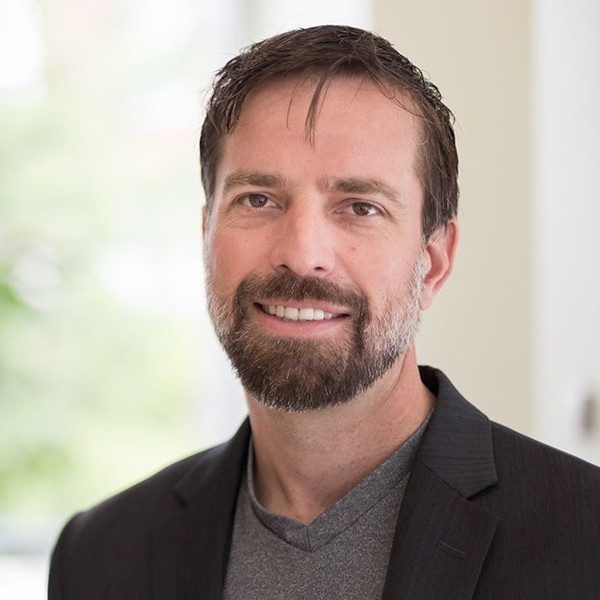
Steven LE CORRE is a University Professor at the Department of Thermal Energy Mechanics within the Nantes Thermal and Energy Laboratory (UMR_C 6607) at the University of Nantes . His work focuses on mechanical modeling and simulation, with applications spanning composites, complex fluids, and biomedical engineering. Current PhD Students: Sana Koubaa (Thermoplastic pultrusion), Violette Brulliard (Intervertebral disc modeling) Defended Theses: Arthur Levy (Ultrasonic welding of composites), Céline Dubois (X-FEM in automobile crashes), Jelmer Jongsma (Polymer adhesive structures), Guillaume Rückert (A-TIG welding fluxes), Yosra Guétari (Cutting simulation via X-FEM) Research interests include fibrous media modeling , multiphysical simulation , and applications to composite manufacturing processes , short-fiber-reinforced fluids , and hydrogel/tissue engineering . His work integrates computational mechanics with industrial and biomedical challenges. Professor LE CORRE is based at POLYTECH NANTES campus ( La Chantrerie, rue Christian Pauc ), with office R126 in the Isitem Building. His research is conducted in collaboration with the Nantes Thermal and Energy Laboratory, a CNRS-affiliated research unit.
Harvey Miller is a Professor and Reusche Chair in Geographic Information Science at The Ohio State University's Department of Geography, College of Arts and Sciences. He serves as Director of the Center for Urban and Regional Analysis (CURA). His research focuses on GIScience, mobility science, and sustainable transportation, particularly integrating geospatial techniques with transportation equity, time geography, and urban sustainability. He teaches courses in geospatial databases, spatial modeling, and sustainable transportation. Education: Ph.D. (Geography), The Ohio State University, 1991 M.A. (Geography), Kent State University, 1987 B.A. (Geography), Kent State University, 1985 Research Interests: His work explores geospatial analysis of urban mobility, accessibility equity, and smart city technologies. Notable projects include the Ghost Neighborhoods initiative (3D modeling of historic Black neighborhoods), analysis of public transit reliability, and environmental justice tool development. He co-authored a National Academies report on geospatial tools for environmental justice. Achievements: Co-chair of National Academies consensus study on environmental justice tools Lead on Columbus Smart City Operating System project Recipient of U.S. Department of Transportation funding Labs/Teams: Director of CURA, collaborating with institutions like the Ohio History Connection on urban heritage projects. Affiliated with the Sustainability Institute and Translational Data Analytics Institute at OSU.
Gaofeng Jia is Associate Professor in Civil and Environmental Engineering at Colorado State University's Walter Scott, Jr. College of Engineering. He specializes in natural hazard risk assessment, infrastructure resilience, and uncertainty quantification. Research integrates simulation-based approaches with high-performance computing for assessing complex engineering systems. Core areas include infrastructure deterioration modeling, wave energy converter optimization, tsunami evacuation planning, and surrogate modeling techniques. Recent work emphasizes physics-informed machine learning for engineering applications. Publications demonstrate consistent methodological innovation in uncertainty quantification across domains including seismic engineering, coastal hazards, renewable energy systems, and structural reliability. Articles employ advanced computational statistics, Bayesian methods, and multi-fidelity modeling. Young Researcher Best Paper Award Best Student Paper Award
Dong Ngo Duy is an Associate Professor in the Department of Civil & Environmental Engineering at Monash University, where he serves as the Head of the Transport Section. He holds a PhD in Traffic Flow Theory and Simulation from Delft University of Technology and has held academic positions at the University of Leeds (UK), University of Canterbury (NZ), and now Monash University (Australia). PhD, Traffic Flow Theory, Technische Universiteit Delft (2006) MSc, Traffic Engineering, Linköpings Universitet (2002) His research focuses on Connected and Autonomous Vehicles (CAVs) , Traffic Flow Theory , Data Fusion , and Urban Network Optimization . He applies AI and machine learning to model, predict, and control multi-modal traffic systems, aiming to develop smart city platforms for sustainable transport in mega-cities. The recent trend in his publications (2022–2025) reflects a strong focus on intelligent transportation, including trajectory planning, risk-aware control, car-following modeling using neural symbolic regression, and intercity mobility analysis. His work bridges theoretical modeling with practical applications in emerging connected environments. Scientific Awards: UK Research Council (EPSRC) Advanced Fellow Award (2011–2016) in Connected and Autonomous Vehicles Dong Ngo Duy actively supervises PhD students and contributes to major research initiatives in intelligent transport systems. His work aligns with UN Sustainable Development Goals, particularly in sustainable cities and transport. He previously chaired the Connected Traffic Systems Lab at the University of Canterbury and continues to lead impactful research in transport innovation.
Dr. Saidi Siuhi serves as an Associate Professor of Civil Engineering at South Carolina State University, where he teaches undergraduate and graduate courses while conducting research and providing institutional service across departmental and university levels. His academic credentials include: Ph.D. in Civil Engineering from the University of Nevada, Las Vegas (2009) M.Sc. in Civil Engineering from Florida State University (2006) B.Sc. in Civil Engineering from the University of Dar-es-Salaam (2003) Specializing in transportation engineering, Dr. Siuhi's research focuses on traffic safety, transportation planning, and microscopic traffic simulation. His work addresses critical transportation challenges including distracted driving/walking behaviors, traffic management during special events (notably the 2017 solar eclipse), and the application of advanced computational methods to transportation networks. He integrates emerging technologies like virtual reality, machine learning, and deep learning to develop innovative safety solutions for complex transportation systems. Analysis of his recent publications (2021-2025) reveals a strong trajectory toward computational transportation safety, with increasing emphasis on AI-driven solutions for pedestrian safety, driver behavior analysis, and infrastructure monitoring. His work consistently bridges theoretical transportation models with practical safety applications, particularly in distracted behavior analysis and event-based traffic management. Dr. Siuhi actively mentors students through senior design projects (CE 459/460) and graduate coursework, though specific advisee names aren't documented. His service contributions span departmental, college, and university committees, supporting academic operations and strategic initiatives within the engineering program.
Matthew B. Panzer serves as Associate Dean for Graduate Education and Post-Doctoral Affairs at the University of Virginia's School of Engineering and Applied Sciences, holding professorships in Mechanical & Aerospace Engineering and courtesy in Biomedical Engineering. As Deputy Director of the Center for Applied Biomechanics, he leads research in impact biomechanics and injury prevention. Education: B.S. in Mechanical Engineering, University of Waterloo, 2003 M.S. in Mechanical Engineering, University of Waterloo, 2006 Ph.D. in Biomedical Engineering, Duke University, 2012 Research Focus: Panzer's work employs computational and experimental methods to investigate high-rate non-linear mechanics in tissue mechanics, impact biomechanics, vehicle crashworthiness, military blast/ballistics, and sports injury. Current projects include traumatic brain injury mechanisms in football helmet impacts, biological tissue characterization, human body model development for automotive safety, and protective system design. His approach integrates finite element modeling with experimental validation to translate biomechanical findings into clinical and safety applications. Publication Trends: Recent work (2022-2025) emphasizes brain injury metrics, sex-specific biomechanical responses, and finite element model validation across automotive, sports, and military contexts. Key themes include rotational loading effects, biofidelic model development, and injury risk function derivation, demonstrating strong interdisciplinary integration of neuroscience, engineering, and computational science. Awards: Shannon Fellow (2024-2027) Copenhaver Fellow (2023) MAE Early Career Researcher of the Year (2021, 2022) UVA Research Achievement Award (2019) MAE Young Research of the Year (2018, 2019) Grants and Teaching: Panzer has secured over 40 research grants as Principal Investigator from federal agencies and industry partners. He teaches graduate courses including MAE 6710: Finite Element Analysis (annually since 2015), MAE 7030: Injury Biomechanics, and MAE 6952: Impact Mechanics, mentoring graduate students in biomechanics research despite no specific advisees listed in source materials. Laboratory Leadership: At the Center for Applied Biomechanics, Panzer directs teams conducting experimental testing and computational modeling to advance injury mechanism understanding and develop protective technologies for automotive, sports, and military applications.
Dr. Albert Gan is a Professor in the Department of Civil and Environmental Engineering at Florida International University (FIU), affiliated with the College of Engineering and Computing. He holds a Ph.D. from the University of Florida (1996). His research focuses on transportation engineering, emphasizing highway safety, traffic simulation, intelligent transportation systems (ITS), GIS applications, transit planning, and data-driven decision-making. He has developed over 20 transportation software systems, including the Florida Transit Information System (FTIS), and secured over $19M in research funding as PI/Co-PI. Dr. Gan teaches courses like Transportation and Traffic Engineering and has advised 18 Ph.D. and 40+ M.S. students. Research Interests: Highway safety analysis and crash prediction ITS applications for real-time traffic management Data integration and visualization tools for transportation systems GIS-based transportation modeling Transit planning and service optimization Freeway operations and ramp metering strategies Awards & Mentoring: Recipient of FIU’s inaugural Dean’s Doctoral Mentorship Award. His students have won multiple Best ITE Student Paper Awards (2000, 2004, 2005). The FIU ITE Student Chapter, under his advisement, was named International Chapter of the Year five times (2001, 2004, 2005, 2007, 2008). Key Contributions: Authored/co-authored over 230 refereed papers and technical reports. Key projects include Safety Analyst implementation in Florida, evaluation of cable median barriers, and development of crash modification factor (CMF) methodologies. Active in transportation data standardization and public involvement strategies for infrastructure projects. Labs & Collaborations: Leads research at the Lehman Center for Transportation Research. Collaborates closely with Florida Department of Transportation (FDOT) and other state agencies on safety and ITS initiatives.
Eren Erman Ozguven is an Associate Professor and Director of the Resilient Infrastructure and Disaster Response (RIDER) Center at the FAMU-FSU College of Engineering's Department of Civil and Environmental Engineering. His research focuses on emergency evacuation modeling, traffic safety, and disaster resilience. He holds a Ph.D. from Rutgers University (2012) and M.S./B.S. degrees from Bogazici University (2006/2002). University: Florida A&M University-Florida State University School: FAMU-FSU College of Engineering Department: Civil and Environmental Engineering Research interests include GIS-based analysis of transportation networks, hurricane evacuation planning, and smart city infrastructure. Ozguven leads projects funded by NSF and FDOT, addressing vulnerable populations' needs during disasters. His work integrates AI, remote sensing, and simulation tools for resilience. Key articles focus on disaster risk reduction, evacuation modeling, and roadway safety using advanced data analytics. Notable grants include NSF projects on rural resiliency hubs and hurricane-pandemic shelter planning. Ozguven advises 10+ students and collaborates with RIDER Center to develop tech-driven solutions for community resilience. Labs/Teams: RIDER Center, ASAP Center (Aging Population Safety).
Dr. Leonie Baumann is an Assistant Professor in the Department of Economics at McGill University, specializing in Economic Theory, Networks, Mechanism Design, and Game Theory. She holds a Ph.D. (summa cum laude) and M.Sc. in Economics from the University of Hamburg, and dual B.A. degrees from the University of Siegen. Currently on maternity leave, Dr. Baumann previously served as a Postdoctoral Research Associate at the University of Cambridge. Her research explores social interactions in microeconomic theory, with a focus on network formation dynamics, strategic evidence disclosure, and robust implementation mechanisms. Recent work examines how network structures influence economic decision-making and resource allocation. Dr. Baumann's publications demonstrate consistent focus on network economics and game-theoretic modeling, with emerging applications in discrimination mechanisms and evidence disclosure. Her methodological approaches combine theoretical rigor with computational innovations. Awards & Recognition: Vice-Chancellor's Innovation Award (2020) Econometric Society Travel Grant (2015) Multiple research grants including SSHRC and FQRSC funding Supervision & Service: Currently advising 4 doctoral students on topics ranging from biosolvent characterization to indoor air quality Active editorial board member for Journal of Mathematical Economics Organizes international conferences on economic theory
Zhou Zhou is an Assistant Professor (tenure track) in Neuronic Engineering at KTH Royal Institute of Technology's Department of Biomedical Engineering and Health Systems. He is affiliated with the Digital Futures Faculty, a cross-disciplinary research center focusing on digital technologies for societal challenges. His research focuses on neurotrauma prevention, prediction, and protection through computational modeling, machine learning, and biomechanical validation. Dr. Zhou holds a PhD from KTH (2019) and completed postdoctoral training at Stanford University, specializing in sports safety and concussion prevention. His work is supported by VINNOVA, Swedish Research Council, and others. He received the 2025 Göran Gustafsson Prize for young researchers. Research interests include in silico modeling, fluid mechanics, and safety standardization for helmets. Zhou teaches courses such as Biomechanics and Neuronics (HL2035/CH213V) and leads labs in human and animal neurotrauma modeling. He seeks postdoctoral candidates for rat neurotrauma research. Education: PhD in Biomedical Engineering, KTH (2019); Postdoc at Stanford University (Sports Safety) Key Projects: InSilicoHealth ITN, helmet evaluation via virtual testing Labs/Teams: Neuronic Engineering Division, Digital Futures Collaboratory
Goong Chen is a Professor at Texas A&M University (TAMU) within the College of Arts & Sciences. His research focuses on Control Theory, Applied Mathematics, and interdisciplinary applications in computational mechanics, fluid dynamics, and quantum systems. He holds a Ph.D. from the University of Wisconsin (1977) and a B.S. from National Tsing-Hua University (1972). His research interests span computational biomechanics, forensic modeling, nanofluidics, and mathematical physics. Recent work includes modal analysis of animal motion, crash mechanics of aircraft, and forensic reconstruction of disasters. He has contributed to theoretical advancements in PDEs, nonlinear dynamics, and quantum computing. Chen’s articles address cutting-edge topics like thermoelastic plates, Volterra equations, and DFIM systems. He has pioneered numerical methods for complex systems using OpenFOAM and finite element techniques. His computational models have been applied to real-world scenarios such as submarine implosions and chemical warfare forensics. No academic awards are explicitly listed, but his extensive publication record reflects significant contributions to applied mathematics and engineering. He leads research teams focused on interdisciplinary challenges in computational science and engineering.
Glenn Daehn is the Mars G. Fontana Professor of Metallurgical Engineering at The Ohio State University , where he has served as faculty since 1988. His work bridges materials science , advanced manufacturing , and STEM education , with leadership roles in initiatives like the Ohio Manufacturing Institute and NSF's HAMMER Center. Ph.D. & M.S., Materials Science & Engineering, Stanford University B.S., Materials Science & Engineering (departmental honors), Northwestern University Professor Daehn specializes in impulse-based manufacturing , focusing on plastic deformation , impact welding , and solid-state joining of dissimilar materials. His research drives innovations in lightweight materials, aerospace manufacturing, and biomedical device fabrication. His publications reveal a strong emphasis on dynamic material processing , robotic manufacturing , and sustainable materials systems . Recent work explores orbital cold welding and AI-enhanced surgical plate bending systems. ASM Marcus A. Grossman Young Author Award (1990) Army Research Office Young Investigator Award (1992) 2022 ASM Gold Medal Award Ranked top 2% of scientists worldwide (2021) Daehn has received multiple Lumley Research Awards and led groundbreaking projects including Metamorphic Manufacturing and Hybrid Autonomous Manufacturing . He maintains active collaborations with industry through initiatives like the Center for Design and Manufacturing Excellence .
Sergio Alejandro Useche Hernandez is an active Assistant Professor specializing in transportation safety and traffic psychology, with 134 publications reflecting deep expertise in human behavioral factors within mobility systems. His research spans road safety compliance, sustainable transport adoption, and mental health impacts across diverse populations including cyclists, delivery workers, and public transport users. His primary research interests focus on the intersection of psychology and transportation engineering, particularly sensation seeking in vulnerable road users, gender disparities in mobility choices, and technology-induced distractions. He employs advanced methodologies including Structural Equation Modeling (SEM), cross-cultural surveys, and systematic literature reviews to investigate phenomena like e-scooter adoption barriers in developing countries and mental health outcomes among transport workers. Key contributions include the validated SSC scale for cyclist risk assessment and frameworks for evaluating sustainable mobility policies through interdisciplinary lenses. Analysis of his 15 most recent publications (2024-2026) reveals three dominant trends: (1) growing emphasis on digital distractions across transport modes (cycling, motorcycling, driving), (2) sophisticated gender-based analyses of mobility barriers and safety outcomes, and (3) methodological innovation through integrated theoretical frameworks like TPB-UTAUT. His work consistently bridges academic rigor with policy relevance, particularly regarding last-mile delivery risks and post-crash psychological recovery. While no specific scientific awards are documented in the source material, his extensive publication record in high-impact journals (e.g., Accident Analysis and Prevention , Transportation Research Part F ) demonstrates significant scholarly recognition. The absence of listed advisees suggests primary focus on independent or collaborative research rather than graduate supervision, though his faculty position implies potential mentoring activities. His work shows strong alignment with European mobility policy initiatives and cross-national studies spanning Spain, Australia, Latvia, and the Dominican Republic, indicating robust international collaboration networks.
Zachary Doerzaph is an Associate Professor in Virginia Tech’s Department of Biomedical Engineering and Mechanics, and serves as Executive Director of the Virginia Tech Transportation Institute (VTTI) and President of the Global Center for Automotive Performance and Simulation (GCAPS). His research focuses on automotive safety, connected/automated vehicles, driver behavior, and infrastructure design. He leads a multidisciplinary team addressing next-gen transportation challenges through advanced technologies like big data analytics and AI. Education : Ph.D. Industrial and Systems Engineering (2007), Virginia Tech M.S. Industrial and Systems Engineering (2004), Virginia Tech B.S. Mechanical Engineering (2001), University of Idaho Research Interests : Connected/automated vehicle systems Driver-vehicle interaction Risk prediction and mitigation Infrastructure safety design Human factors in transportation Key Contributions : Developed PREPARES rear-end collision mitigation system Advanced LiDAR/radar fusion for vehicle sensing Guided automated vehicle handover studies Testified on autonomous tech impacts to U.S. Senate (2018) Awards : Virginia Business 100 (2022) Virginia Tech Distinguished Leader in Research (2021, 2023) Labs/Initiatives : Virginia Tech Transportation Institute Global Center for Automotive Performance and Simulation
Professor Lynn Meuleners is a Senior Principal Research Fellow at the Western Australian Centre for Road Safety Research (WACRSR) and holds roles as a Senior Honorary Research Fellow in the School of Psychological Science and a Senior Principal Research Fellow in the UWA Law School at The University of Western Australia (UWA). With over 21 years of experience as an epidemiologist in road safety, her work focuses on data linkage, older drivers, driver simulation, road safety policy, and fatigue in heavy vehicle drivers. She has a PhD from Curtin University and an MSc from the University of Manchester. Her extensive collaborations include institutions such as the Department of Health WA, Main Roads WA, WA Police, and the Road Safety Commission. She has secured significant funding, including grants from the NHMRC, ARC, and others, totaling over $2 million. Notable projects include studies on cataract surgery’s impact on falls and drug driving deterrence regimes. Her research interests span road safety interventions, older driver safety, and the application of driving simulators. She has published over 200 peer-reviewed articles and technical reports, contributing to policy changes nationally and internationally. Her work aligns with UN Sustainable Development Goals related to road safety and public health. Current initiatives include the eFOVID study examining visual field disorders and crash risk, as well as projects on cycling infrastructure safety and personalized feedback systems to reduce road crashes among young drivers.