Professor Damian Damianov holds the Chair in Finance at Durham University Business School. His research examines asset pricing anomalies, housing market dynamics, and household financial behavior, with particular focus on boom-bust cycles in real estate and cryptocurrency markets. Methodologies combine econometric analysis with behavioral experiments to study price formation mechanisms. Recent work investigates housing affordability policies, wealth accumulation pathways, and cross-market contagion effects. His laboratory develops novel experimental designs to test auction mechanisms and fundraising strategies for charitable organizations. Current projects analyze: (1) Property tax compliance in shared occupancy arrangements; (2) Uncertainty transmission across cryptocurrency markets; (3) Lifecycle models of household wealth management.
Ke Xu is an Assistant Professor at the Department of Finance, Faculty of Business and Economics, University of Victoria. His research bridges finance, econometrics, and cryptocurrency, focusing on market microstructure, high-frequency trading, and price discovery mechanisms. He has extensively studied Bitcoin ETFs, fractional cointegration models, and machine learning applications in financial markets. Key Research Areas: Market Microstructure High-Frequency Trading Cryptocurrency Dynamics Price Discovery Machine Learning in Finance Financial Econometrics Article Trends: Xu’s work spans empirical analyses of Bitcoin ETFs, volatility modeling (e.g., affine GARCH), and algorithmic trading strategies. His recent papers explore mini flash crashes using machine learning, regulatory impacts on market quality, and sustainable crypto portfolios.
Dr. Xiaopeng Li is the Harvey D. Spangler Professor in the Department of Civil and Environmental Engineering at the University of Wisconsin-Madison, with an affiliation in the Department of Electrical and Computer Engineering. He leads the USDOT Rural Autonomous Vehicle Program and previously directed the National Institute for Congestion Reduction. He earned his B.S. in Civil Engineering from Tsinghua University (2006), M.S. in Civil Engineering (2007), M.S. in Applied Mathematics (2010), and Ph.D. in Civil Engineering (2011) from the University of Illinois at Urbana-Champaign. His research focuses on modeling and field experiments for connected, electric, and automated vehicles (CAVs), infrastructure systems analysis, and interdependent network modeling. He has pioneered physics-enhanced machine learning frameworks for vehicle control and developed simulation tools for CAV deployment. His 2025-2024 publications highlight advancements in Connected vehicle trajectory modeling Energy consumption optimization Edge computing for autonomous operations Residual learning control systems Equity analysis in AV deployment Communication technologies for V2X Awards include: TRB Best Paper Award (2025) NSF CAREER (2015) ASCE Fellow (2024) IEEE Senior Member (2022) Multiple institution-specific fellowships He has advised 15+ graduate students, secured $35M+ in grants from NSF, USDOT, and industry partners, and chairs the IEEE ITSS Emerging Transportation Technology Testing committee. His work addresses real-world AV implementation, safety validation, and sustainable transportation systems.
Dr. Isabel Straw is an Assistant Professor in Healthcare Artificial Intelligence & Cybersecurity at the Faculty of Population Health Sciences, University College London. She leads the CRASH Team (Cybersecurity Resiliency & AI Safety in Healthcare) and collaborates with the Centre for Healthcare Cybersecurity at the University of California San Diego. As an Emergency Doctor at Homerton Hospital NHS Trust, her research bridges clinical practice, AI development, and cybersecurity. PhD in Artificial Intelligence Contributed to UNESCO's Recommendation on the Ethics of AI Developed CIPHER: tool for modeling patient harms from cyberattacks Co-led international workshops on healthcare cybersecurity Featured in 15+ international media outlets Her research examines technology-facilitated abuse, algorithmic bias in healthcare, and risks from interconnected medical technologies. She has delivered over 70 invited talks, including DEF CON and May Contain Hackers events. Recent publications include: 2025: Cybersecurity in family medicine clinics 2024: Sex-based disparities in cardiac ML algorithms 2023: Biotechnological syndromes and digital pathologies 2022: Ethical model calibration in medical AI 2020: AI biases in mental health She leads UCL postgraduate modules on Healthcare AI and Cybersecurity, and mentors MSc students on topics including AI fairness in oncology and cardiology. Her work has informed WHO policy, UK parliamentary frameworks, and UN AI governance reports.
Lingxi Li is a Professor at the Elmore Family School of Electrical and Computer Engineering at Purdue University's Indianapolis campus. His research focuses on modeling complex systems, connected and automated vehicles, intelligent transportation systems, and parallel intelligence. He holds a Ph.D. from the University of Illinois at Urbana-Champaign (2008), and master's and bachelor's degrees from the Chinese Academy of Sciences (2003) and Tsinghua University (2000). Research Interests: Dr. Li's work bridges control systems, transportation engineering, and AI, with emphasis on human-machine interaction, autonomous vehicle systems, and scenario-based traffic modeling. His projects include developing frameworks for Industry 5.0 collaboration, enhancing traffic flow prediction through parallel learning, and advancing safety in micro-mobility systems like e-scooters. Recent Publications: Over 15+ articles (2023-2025) explore topics such as game-theoretic vehicle interaction modeling, vision-language systems for autonomous driving, and acoustic SLAM technologies. These studies reflect a focus on real-world validation and system integration in smart transportation. Labs & Initiatives: Leads research in autonomous mining systems and scenario engineering for intelligent vehicles, leveraging parallel intelligence concepts. Collaborates on projects like ParallelWorkforce (Industry 5.0 frameworks) and SceNDD++ (naturalistic driving datasets).
Miguel Ángel Sotelo Vázquez is a full Professor at the University of Alcalá, leading the INVETT Research Group (Intelligent Vehicles and Traffic Technologies). He holds the Department of Automatic Control and specializes in autonomous systems, particularly in path planning, sensor fusion, and human-vehicle interaction. His research integrates machine learning, robotics, and control theory to address challenges in intelligent transportation systems. He earned his Ph.D. in 2001 with a thesis on autonomous vehicle navigation in partially known environments. His work emphasizes real-world deployment, explainable AI, and safety-critical systems. Recent projects focus on lane change prediction, pedestrian behavior modeling, and cybersecurity for autonomous systems. Key contributions include neuro-symbolic frameworks for decision-making, real-time multi-physics field reconstruction, and cross-cultural studies of pedestrian interactions. He collaborates internationally on urban mobility resilience and hydrogen refueling infrastructure. Research Highlights : Development of knowledge graph-based prediction architectures Experimental validation of human-vehicle interaction in VR environments Creation of the SCOUT trajectory prediction framework
Antonio Alguacil Cabrerizo is an Assistant Professor (starting 2025) at Université de Sherbrooke, where he currently serves as a Postdoctoral Fellow (2023-2025). His academic trajectory includes dual doctoral degrees in Mechanical Engineering from Université de Sherbrooke and École Nationale Supérieure d'Aéronautique et de l'Espace, complemented by aerospace engineering degrees from ENSEEIHT and Universidad Politécnica de Madrid. His research integrates computational fluid dynamics with machine learning, focusing on: Aeroacoustic prediction and noise source identification Deep learning surrogates for fluid and acoustic systems Turbomachinery and airfoil aerodynamics Data-driven modeling of spatiotemporal physical systems This work advances computational efficiency in simulating complex wave propagation, turbulence effects, and fluid-structure interactions. Publication analysis reveals consistent focus on developing neural network-based computational methods for aeroacoustics and fluid dynamics. His 15 most recent works demonstrate progressive refinement in applying convolutional architectures to predict acoustic scattering, refraction phenomena, and turbomachinery noise with increasing physical accuracy and computational efficiency. Awards and recognition include: Top 5 in AIAA Best Student Paper in Aeroacoustics (2024) Graduate Scholarship Award from CFD Society of Canada (2022) Eureka Scholarship from Université de Sherbrooke (2021) Best Poster Prize at CRASH Day (2021) He secured a $70,000 CAD startup grant (2025-2028) from Université de Sherbrooke for establishing his research program. No student advising relationships or laboratory affiliations are currently documented.
Li Song is a Professor and holds the Lesch Centennial Chair & Lloyd G. and Joyce Austin Presidential Professor at the University of Oklahoma's Aerospace & Mechanical Engineering Department. He leads the Building Energy Efficiency Lab and serves as AME Associate Director for Research. His expertise spans building energy systems, HVAC optimization, and fault detection technologies. Education: Ph.D. (Thermal/Fluid Science, 2004) from University of Nebraska-Lincoln; M.S. (Thermal/Fluid Science, 1996) from Harbin Institute of Technology; B.S. (Thermal Energy Systems, 1993) from Shengyang University of Civil Engineering and Architecture. Research focuses on energy-efficient HVAC systems, fault detection algorithms, and building performance analytics. Notable contributions include the ULEM-FDD system for high-performance buildings and virtual sensor technologies for airflow/water flow measurement. Awards include the ConocoPhillips Energy Prize (2011 finalist) and Bes-Tech Innovation Award (2006). Publications emphasize HVAC control strategies, energy modeling, and IoT-enabled diagnostics. Courses taught include Thermodynamics, Energy Efficient Building Systems Design, and HVAC Systems Engineering.
Associate Professor Jason Thompson holds an Associate Professor position in the Department of Psychiatry at the University of Melbourne. He is affiliated with the Faculty of Medicine, Dentistry and Health Sciences and previously served as Co-Director of the Transport, Health and Urban Systems (THUS) Research Laboratory at the Melbourne School of Design. He earned a PhD in Medicine (2015) from Deakin University, a Master's in Clinical Psychology, and a Bachelor of Science with Honours. His research focuses on computational social science applied to injury rehabilitation, compensation systems, and healthcare design. He has attracted over $5M in research funding and published over 100 articles. Key areas include agent-based modeling, systems dynamics, and policy analysis for public health challenges such as pandemic response and urban mobility. Thompson currently leads the NHMRC Centre of Excellence in Compensable Injury after Road Crashes. Grants: ARC Future Fellowship (2022), DECRA (2017) Awards: Best Paper Award (Computational Social Science Society of the Americas, 2017) Labs: THUS Research Lab (until 2024) His work bridges epidemiological modeling (e.g., influencing Victoria's 2020 pandemic exit strategy) and complex systems analysis for injury prevention and health system design.
Hao Yang is an Assistant Professor in the Department of Civil and Systems Engineering at Johns Hopkins University, with dual affiliations at the Johns Hopkins Data Science and AI Institute and the Johns Hopkins Institute for Assured Autonomy. His research develops Trustworthy Machine Learning methods to enhance urban mobility systems, focusing on traffic safety, equity, and sustainability through ethical AI and human-machine cooperative systems. Yang earned dual bachelor's degrees in Electrical and Computer Engineering from Beijing University of Posts and Telecommunications and the University of London, followed by a Ph.D. in Civil Engineering (Transportation) from the University of Washington. His educational background bridges telecommunications, electrical engineering, and transportation systems. His research integrates spatio-temporal modeling, assured autonomous systems, and multimodal representation learning to address transportation equity and safety. Key projects include edge-AI-powered traffic surveillance, real-time crash identification, and cooperative signal assistance for vulnerable road users. His work emphasizes ethical AI deployment in cyber-physical infrastructure to create sustainable urban mobility solutions. Recent publications reveal a strategic shift toward large language models and multimodal AI for transportation challenges, with strong emphasis on explainability, reliability, and equity in traffic crash prediction, flow forecasting, and autonomous driving systems. This evolution demonstrates his commitment to adapting cutting-edge AI for real-world transportation problems. Yang's scientific contributions have earned significant recognition: Michael Kyte Outstanding Student of the Year Award (2022) High-Value Research Award from AASHTO (2022) Best Paper Award from TRB Information Systems Committee (2023) Best and Outstanding Dissertation Awards (2024) IEEE DTPI Outstanding Paper Award (2022) TRANSFOR22 Data Competition 2nd place (2022) ASCE Bridges Photo Contest First Place (2021) He actively mentors graduate researchers and seeks 2-3 PhD students for Fall 2025 to advance trustworthy AI in transportation. His research is supported by NSF, USDOT, and AASHTO grants including the Real-Time Truck Parking Information System project that received the High-Value Research Award. Current work focuses on edge-AI for traffic safety and multimodal data integration. Yang leads research within Johns Hopkins' Data Science and AI Institute and Institute for Assured Autonomy, collaborating with Transportation Research Board committees. His lab develops real-time perception systems using edge computing and representation learning, with active projects on non-motorized user safety and equitable traffic management for people with disabilities.
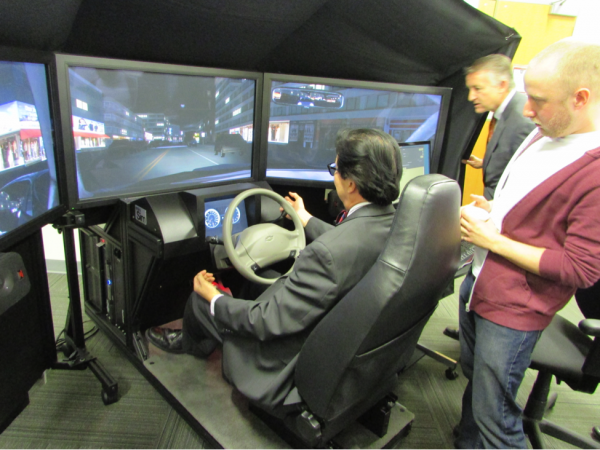
Professor Chris Lee is a faculty member in the Department of Transportation Science and Engineering at the University of Windsor's Faculty of Engineering. His research focuses on advancing transportation safety through the analysis of driver behavior, traffic flow dynamics, and the integration of emerging technologies like autonomous vehicles and machine learning. Key areas include collision risk prediction, driver vigilance assessment, and the development of advanced car-following models. He has contributed to initiatives such as the Transportation Science and Engineering scholarship program, supporting student research in innovative technologies like driving simulators for lane change behavior studies. His work bridges engineering and human factors, addressing challenges such as driver response to autonomous systems, heavy vehicle traffic management, and cross-cultural automotive design. Lee's interdisciplinary approach leverages data analytics, physiological signals, and machine learning to solve real-world transportation problems. His research has implications for policy-making, infrastructure design, and vehicle safety standards. Lee has collaborated extensively on projects analyzing crash precursors, variable speed limits, and the impact of ITS (Intelligent Transportation Systems) on safety. His publications span over two decades, demonstrating a commitment to both academic rigor and practical applications in transportation engineering. Notable contributions include refining car-following models, studying driver aggression, and evaluating the effectiveness of traffic management strategies.
Haitham Al-Deek is a Professor in the Department of Civil, Environmental, and Construction Engineering at the University of Central Florida's College of Engineering and Computer Science. He leads the Intelligent Transportation Systems and Data Analytics Lab and has over 32 years of experience in transportation engineering, planning, and operations. His work is nationally recognized, particularly in freeway operations and intelligent transportation systems (ITS). Ph.D., Civil Engineering-Transportation Engineering, University of California, Berkeley (1991) M.S., Civil Engineering-Transportation Engineering, University of California, Berkeley (1987) B.S., Civil Engineering (with Honors), University of California, Berkeley (1985) Dr. Al-Deek's research focuses on wrong-way driving countermeasures, connected and automated vehicles, traffic safety, and data analytics. He pioneered innovative ITS solutions for detecting and preventing wrong-way driving, including the development of a high-success-rate detection system in partnership with the Central Florida Expressway Authority (CFX). His work extends to freight transportation, electronic toll collection, and sustainable transportation systems. He has also contributed to safety performance functions and driver behavior modeling. His recent publications highlight advanced methodologies in network screening for crash modeling, the use of crowdsourced data (e.g., Waze) for incident detection, optimization of wrong-way driving countermeasures, and benefit-cost analyses of safety technologies. These works reflect a strong trend toward data-driven, real-time, and cost-effective solutions in transportation safety and operations. Scientific awards and recognitions include: TRB Chairman Award (2018, 2012) Multiple TRB Best Paper Awards (Freeway Operations and Regional TSM&O, 2023–2003) TRB Best Student Paper Awards (2022, 2019, 2018, 2017) UCF Excellence in Research Award (2018) UCF Researcher of the Year (1999) Distinguished Researcher, UCF College of Engineering (2003) Dr. Al-Deek has supervised 15 Ph.D. students and 29 M.S. theses and has secured over $10.3 million in research funding from agencies including FDOT, TRB, USDOT, and CFX. He serves as a technical editor for TRR and associate editor for the Journal of Intelligent Transportation Systems. He also chaired key TRB paper review subcommittees and is an active professional engineer in Florida. He leads the Intelligent Transportation Systems and Data Analytics Lab, which focuses on real-world applications of ITS, data warehousing, and advanced analytics for transportation safety and efficiency.
Amit Sen is a Professor of Economics at Xavier University, with expertise in econometrics, applied statistics, and time series analysis. He co-directs the Center for International Business and oversees international study programs for the MBA and B.S.B.A. in International Business. His research focuses on methodological challenges in unit root testing and structural breaks in time series data. Educational Background: Ph.D. in Economics & Statistics (co-major) from North Carolina State University, M.E. in Economics, and B.A. (Honours) in Mathematics. Sen’s research has been published in leading journals such as the Journal of Business and Economic Statistics, The Econometrics Journal, and Computational Statistics & Data Analysis. His work emphasizes statistical inference in non-stationary time series and economic applications like income convergence and unemployment disparities. He teaches econometrics, time series analysis, and international business courses across undergraduate, M.S., and MBA programs. Sen also contributes to the Philosophy, Politics & the Public Honors program and the Modern Languages & International Economics B.A. program at Xavier. His recent publications (2018-2003) explore unit root methodologies, innovation variance breaks, and economic empirics, reflecting a consistent focus on advancing econometric techniques for real-world data analysis. No scientific awards are mentioned in the provided text.
Prof. Dr. Jochen Garcke is a faculty member at the Institute for Numerical Simulation, University of Bonn, with a dual affiliation at Fraunhofer SCAI's Department of Numerical Data-Based Prediction. His work bridges numerical simulation and machine learning, focusing on high-dimensional problems, sparse grids, and optimal control. Key research themes: Sparse grids, machine learning for simulations, reinforcement learning, uncertainty quantification Teaching includes courses on Numerical Methods in Science and Technology and Scientific Computing , emphasizing practical machine learning applications. Recent publications explore hybrid models combining data-driven and physics-based approaches in automotive engineering, wind turbines, and geoscientific modeling. His group employs adaptive sparse grids, graph algorithms, and spectral methods to tackle challenges in crash simulations, fluctuating renewable energy systems, and turbulent flow analysis. Collaborations span Fraunhofer SCAI and industry 4.0 initiatives.
Gregory Erhardt is an Associate Professor at the University of Kentucky's Stanley and Karen Pigman College of Engineering. His research focuses on advancing transportation forecasting through evidence-based policy decisions, integrating big data and activity-based models to address challenges in transit investment and emerging mobility technologies. Research Interests: Activity-Based Travel Models, Big Data Applications, Forecast Accuracy Assessment Email: greg.erhardt@uky.edu Erhardt's work spans the intersection of transportation infrastructure, data science, and policy analysis. He specializes in developing modeling tools to predict the effects of transit projects, evaluating ride-hailing impacts, and improving forecasting methodologies. Recent publications highlight trends in transportation network companies (TNCs), activity-based modeling frameworks, and transit ridership dynamics. His research explores ride-hailing driver participation, multi-modal optimization, and the relationship between microtransit and congestion patterns. Key themes include the integration of longitudinal datasets, bias mitigation in TNC data analysis, and evaluating the accuracy of traffic forecasting systems. His work provides actionable insights for policymakers in a rapidly evolving transportation landscape.