Nancy Margaret Reid is a University Professor of Statistical Sciences at the University of Toronto, holding the Canada Research Chair in Statistical Theory and Applications. She has served as Scientific Director of the Canadian Statistical Sciences Institute (2015–2019) and led the Department of Statistical Sciences as Chair (1997–2002). Her research focuses on theoretical statistics, particularly likelihood inference and foundational aspects of statistical methodology. Reid earned her PhD from Stanford University (1979) under Rupert G. Miller, with Brad Efron and Vernon Johns on her committee. Reid's accolades include Fellowships from the Royal Society, Royal Society of Canada, and National Academy of Sciences, as well as the Guy Medal in Gold (2022) and David R. Cox Award (2023). She has authored influential books like *Theory of the Design of Experiments* and contributed to courses on mathematical statistics and likelihood inference. Active in academic service, she teaches graduate-level courses and has advised numerous students and postdocs in theoretical and applied statistical research.
Joel Goh is Associate Professor at the Department of Analytics and Operations, NUS Business School, National University of Singapore. He serves as Director of the J.Y. Pillay Comparative Asia Research Centre (under NUS Global Asia Institute) and PhD Program Director at the Institute of Operations Research and Analytics (IORA). Previously, he was Assistant Professor at Harvard Business School (2014-2017) and Visiting Scholar (2017-2022). BSc, MSc, PhD in Operations, Information, and Technology from Stanford University His research focuses on healthcare analytics (preventing health conditions, hospital operations, frailty assessment), supply chain analytics (digital business models, platform leakage), and service platform operations (hospital-at-home programs, incentive design). He co-created the Robust Optimization Made Easy (ROME) software. Recent publications analyze workplace psychological safety (2024), hospital-at-home models (2024), and platform leakage dynamics (2023). His work spans 18+ journals with 740+ citations for burnout cost studies (2022) and 606+ citations for physician well-being research (2017). Teaching Honors : 2023: Best MBA Teaching & Skinner Innovation Award 2021: NUS Annual Teaching Excellence Award 2020: Early Career Research Excellence Award & 40 Under 40 Best MBA Professors Advising & Grants : Served as PhD Program Director. Received NUS Start-Up Grant R-314-000-110-133 (2021) and Humanities & Social Sciences Fellowship (2021). Editorial roles include Associate Editor at Management Science , Manufacturing & Service Operations Management , and Senior Editor at Production and Operations Management .
Jonathan T. Barron is a Researcher at Google DeepMind in San Francisco, specializing in Computer Vision , Neural Rendering , and 3D Scene Reconstruction . He earned his PhD at UC Berkeley under Jitendra Malik and has pioneered advancements in NeRF (Neural Radiance Fields) and diffusion-based 3D generation. Research Interests : Computer Vision, Deep Learning, Generative AI, Image Processing, and 3D Reconstruction via Radiance Fields. His work includes Bolt3D for rapid 3D scene generation, CAT3D/CAT4D for text-to-3D/4D, and Zip-NeRF for anti-aliased radiance fields. He has also developed real-time rendering frameworks like SMERF and NeRF-Casting for reflections. Scientific awards: PAMI Young Researcher Award He has served as Area Chair for CVPR, ICCV, and NeurIPS, and his research is widely adopted in applications like Google's Lens Blur , Portrait Mode , and Jump VR .
Heather Battey is a Professor in the Department of Mathematics at Imperial College London's Faculty of Natural Sciences. Her work bridges foundational statistical theory with practical scientific applications, focusing on parametrization effects, sparsity, and high-dimensional inference. Education PhD, University of Cambridge (2008-2011) Research Interests Battey's research examines how model structure and parametrization influence inferential procedures, particularly in high-dimensional settings. She investigates the equivalence between sparsity and reparametrization, and challenges traditional Fisherian statistical abstractions through modern practices. Her publications reveal a pattern of innovation in high-dimensional regression, covariance matrix analysis, and statistical methodology for complex data. Collaborations span disciplines including machine learning, economics, and biomedical research. Scientific Awards Fellow of the Institute of Mathematical Statistics (2023) EPSRC Early Career Research Fellowship (2020-2026) EPSRC Postdoctoral Research Fellowship (2017-2020) Advising and Grants Battey supervises PhD students Charlotte Edgar, Jakub Rybak, and Rebecca Lewis, with informal guidance to Henrique Hoeltgebaum. Over 15 pre-doctoral researchers have been mentored in topics ranging from support vector machines to spatial point processes. Current funding includes an EPSRC grant for theoretical foundations of inference with nuisance parameters and prior support for covariance matrix inference.
Richard J. Cook is a University Professor and Mathematics Faculty Research Chair in the Department of Statistics and Actuarial Science at the University of Waterloo. He holds cross-appointments at the School of Public Health and Health Systems at the University of Waterloo and the Faculty of Health Sciences at McMaster University. Previously, he held a Tier I Canada Research Chair in Statistical Methods for Health Research from 2005 to 2019. His educational background includes: BSc in Statistics from McMaster University MMath in Mathematics from University of Waterloo PhD in Statistics from University of Waterloo Professor Cook's research focuses on developing and applying statistical methods for public health research. His primary areas of interest include the analysis of life history data, longitudinal data analysis, methods for incomplete data, clinical trial design, and multivariate analysis. His work provides critical methodological frameworks for understanding disease progression and evaluating interventions in complex health settings. He has made significant contributions to the development of multistate models for disease processes and methods for handling interval-censored data. His extensive publication record demonstrates consistent focus on methodological innovations addressing real-world health research challenges. Recent work emphasizes estimand specification in clinical trials, transportability of research findings, and causal inference methods. His research bridges theoretical statistics with practical applications in autoimmune diseases, transfusion medicine, and public health. Professor Cook has received significant professional recognition: Tier I Canada Research Chair in Statistical Methods for Health Research (2005-2019) Mathematics Faculty Research Chair at University of Waterloo His students have earned prestigious awards including multiple Pierre-Robillard Awards, ISCB Student Conference Awards, and ENAR Distinguished Student Paper Awards, with notable achievements like Dr. Shu (Joy) Jiang being named in the Forbes Top 30 Under 30 North America (2023) for Healthcare. Professor Cook has advised numerous graduate students throughout his career, with many going on to successful academic and industry positions. His research has been supported by various grants, and he collaborates extensively with researchers in rheumatology, transfusion medicine, and public health through affiliations with the Centre for Prognosis Studies in Rheumatic Diseases, the International Psoriasis and Arthritis Research Team, and the McMaster Centre for Transfusion Research. He leads a vibrant research team that includes research associates, post-doctoral fellows, and graduate students working on cutting-edge statistical methodology. His research group maintains strong connections with multiple institutions and research centers focused on health outcomes and disease progression.
Prof. Martin Haenggi is the Frank M. Freimann Professor of Electrical Engineering and Concurrent Professor in the Department of Applied and Computational Mathematics and Statistics at the University of Notre Dame. He holds a Dr.sc.techn. (Ph.D.) from ETH Zurich and has been at Notre Dame since 2000. His research focuses on stochastic geometry and wireless networks, including cellular, heterogeneous, vehicular, and millimeter-wave systems. He has held sabbaticals at UCSD (2007–2008), EPFL (2014–2015), and ETH Zurich (2021–2022). Education: Dipl.-Ing. (M.Sc.), ETH Zurich, 1995 Dr.sc.techn. (Ph.D.), ETH Zurich, 1999 Research interests emphasize stochastic geometry for analyzing network performance, including coverage, interference, and reliability in wireless systems. Key areas include meta distributions, spatial-temporal analysis, and network optimization. His work has been recognized with IEEE Fellow status, Clarivate Highly Cited Researcher distinction, and NSF CAREER Award (2005). Grants and Awards: NSF Award (Deep Stochastic Geometry: 2020–2023) NSF Award (Toward a Stochastic Geometry for Cellular Systems: 2015–2019) Rice Prize (2017), Best Survey Paper Award (2017), and Best Tutorial Paper Award (2010) from IEEE Communications Society Teaching includes advanced courses on stochastic geometry, wireless networks, and signal processing. His lab focuses on theoretical and applied aspects of network modeling, with collaborations in industry and academia.
Ricardo Gutierrez-Osuna is a Professor in the Department of Computer Science and Engineering at Texas A&M University, part of the College of Engineering. He leads the PSI Lab and focuses on machine learning, speech processing, and digital health applications. His research spans topics like wearable sensors, foreign accent conversion, and physiological monitoring. Education: Ph.D. (Computer Engineering, NC State, 1998), M.S. (Computer Engineering, NC State, 1995), B.S. (Electrical Engineering, Universidad Politécnica de Madrid, 1992). Research interests include intelligent sensors, speech processing, machine learning, neuromorphic computation, and mobile robotics. His work bridges computer science and biomedical engineering, with applications in health monitoring and human-computer interaction. Awards: NSF CAREER Award (2002) Ramón y Cajal Award (2005-2010) Texas A&M Barbara and Ralph Cox Fellow (2009) Multiple teaching awards (2009-2010) His lab develops innovative technologies like stress-detecting wearables, biofeedback games, and systems for non-native speech improvement. He collaborates on projects involving voice conversion, glucose prediction algorithms, and multi-modal sensing devices.
Vishal Ahuja is an Associate Professor and Corrigan Research Professor at Southern Methodist University's Cox School of Business, with adjunct faculty status at University of Texas Southwestern Medical Center. He focuses on decision analytic tools for healthcare improvement through operations management. PhD, University of Chicago Booth School of Business MBA, University of Chicago Booth School of Business His research interests span healthcare operations, service optimization, and AI applications in clinical decision-making. He collaborates with the Department of Veterans Affairs, Parkland Hospital, and pediatric institutions to address care quality and delivery efficiency. Recent publications emphasize predictive modeling for chronic disease management, adaptive clinical trial design, and regulatory healthcare policy. Awards include the Dlin/Fischer Clinical Research Award (2021), INFORMS Pierskalla Award (2012), and 2025 AI75 recognition for Dallas-Fort Worth AI leadership. D CEO Excellence in Healthcare Award - Outstanding Healthcare Innovator (2023) NSF Game Changer Academies for Advancing Research Innovation (2022) C. Jackson Grayson Faculty Innovation Award (2022-23) At SMU, he teaches graduate courses in operations, supply chain, and service management, integrating corporate sector experience from chemical and consumer goods industries. His work has been cited by the FDA in safety labeling changes workshops.
Yuguo Chen is a Professor in the Department of Statistics at the University of Illinois at Urbana-Champaign (UIUC), serving as Interim Department Chair and Director of the Illinois Statistics Office. He holds affiliations with the Department of Computer Science, Information Trust Institute, Coordinated Science Lab, and Illinois Informatics Institute. Chen earned his PhD in Statistics from Stanford University (2001) and a B.S. in Mathematics from the University of Science and Technology of China (1997). His research focuses on Monte Carlo methods, network data analysis, state space models, bioinformatics, and Bayesian inference. Key interests include scalable network estimation, community detection, and applications in public health, education, and computational biology. Recent work highlights include advancements in dynamic network modeling, Bayesian latent class models for cognitive diagnosis, and statistical methods for analyzing multi-layer networks. His contributions have been recognized through awards such as the American Statistical Association Fellowship (2018) and the Charles Edison Lectureship (2018). Editorial Roles: Associate Editor of Journal of the American Statistical Association , Journal of Computational and Graphical Statistics , and Journal of Algebraic Statistics . Grants & Consulting: Directs the Illinois Statistics Office, providing interdisciplinary research support. Active in collaborative projects involving healthcare, education, and computational infrastructure. Labs & Teams: Leads initiatives at the Coordinated Science Lab and Information Trust Institute, integrating statistical methods with cybersecurity and data-driven decision-making.
Ismael Castillo is a Professor of Statistics at Sorbonne Université , affiliated with the Laboratoire de Probabilités, Statistique et Modélisation (LPSM) and its Statistics, Data, Algorithms team. He serves as Associate Editor for Annals of Statistics , Bernoulli , and co-Editor for Bayesian Analysis . Research Interests : Mathematical statistics with emphasis on Bayesian nonparametrics , inference in high-dimensional structures , uncertainty quantification , and applications in signal processing and life sciences . Recent Work spans deep neural networks with heavy-tailed weights , posterior and variational inference , fractional posteriors in semiparametric models , and deep Gaussian processes . His publications demonstrate expertise in multiple testing procedures , Spike and Slab priors , and nonparametric Bayesian methods . Awards : IMS Fellow , Honorary Fellow of Institut Universitaire de France , and Best Paper Prize (2021) for research on Pólya tree posterior distributions. Students : Supervised PhD candidates Paul Egels , Thibault Randrianarisoa , and co-supervised Bo Ning (FSMP postdoc) and Kweku Abraham (Hadamard postdoc). Grants : ANR BACKUP (2023-2027, coordinator) and ANR GAP (2021-2025, member).
Ye Zhisheng is the Dean’s Chair and Associate Professor in the Department of Industrial Systems Engineering & Management at the National University of Singapore (NUS). His research focuses on reliability engineering, inventory control, emergency response systems, and statistical modeling. He holds a PhD in Industrial and Systems Engineering from NUS, along with a BEng in Material Science and Engineering and a BEco in Economics from Tsinghua University. His work emphasizes practical applications in mission-critical systems, predictive maintenance, and data-driven decision-making. Current research initiatives include optimal maintenance policies for manufacturing systems, degradation analysis of bearings, and federated learning approaches for battery lifecycle prediction. He has pioneered methods for integrating physics-informed neural networks into prognostics and health management (PHM) systems. Key technical contributions span advanced statistical methodologies like sieve estimation for survival data, phase-type distributions modeling, and condition-based maintenance optimization. His interdisciplinary approach bridges operations research, mechanical engineering, and computer science to address complex reliability challenges. Recent projects include resilient consensus-based power grid management and contamination source identification frameworks. Notable collaborations involve developing intelligent cross-domain fault diagnosis systems using transformer networks and advancing the Internet of Federated Things (IoFT) for distributed data analytics. His work has been applied in aerospace, telecommunication infrastructure, and medical emergency response systems.
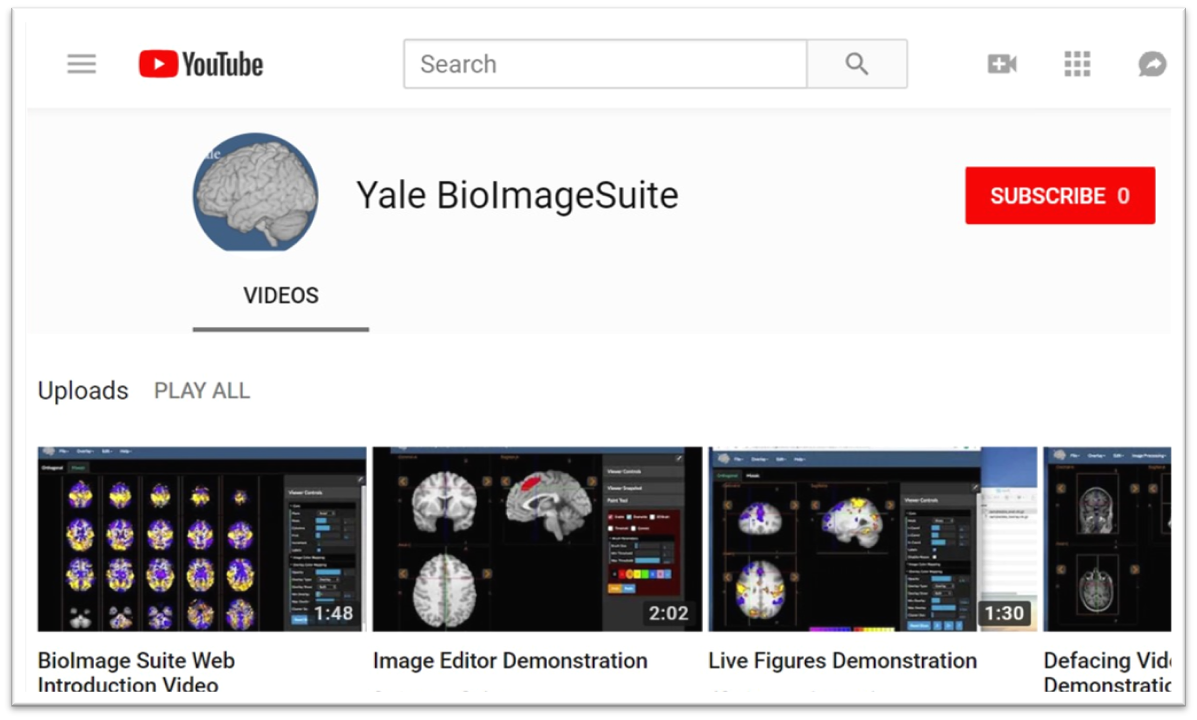
Xenophon Papademetris is a Professor of Biomedical Informatics & Data Science and Radiology & Biomedical Imaging at Yale School of Medicine. He serves as Associate Director of Biomedical Imaging Data Sciences at Yale Biomedical Imaging Institute and directs the Medical Software and Medical Artificial Intelligence Certificate Program. PhD in Electrical and Information Sciences from Yale University (2000) BA from Cambridge University (1994) Postdoctoral Fellowship at Yale University (2002) His research focuses on medical image analysis, machine learning, and biomedical software development. He has developed tools like BioImage Suite Web and contributed to standards committees at the Association for the Advancement of Medical Instrumentation (AAMI). His work spans modalities including MRI, CT, PET, and optical imaging. Recent publications emphasize neuroimaging analysis, explainable AI in healthcare, and multimodal data integration across species. He leads NIH-funded research under the BRAIN Initiative (R24 MH114805) and has authored a textbook on Medical Software published by Cambridge University Press. IEEE Senior Member Yale Brown-Coxe Postdoctoral Fellowship Harding Bliss Prize for Excellence in Engineering He directs the BioImage Suite Project, creating web-based image analysis tools using JavaScript and WebAssembly. His teaching includes both academic courses and a Coursera program on Medical Software with over 14,000 enrollments.
Gary W. Cox is the William Bennett Munro Professor of Political Science at Stanford University. He specializes in American Politics, Comparative Politics, and Political Methodology, with a focus on electoral systems, legislative behavior, and historical political economy. His work examines how institutional frameworks shape political competition, representation, and governance across historical and comparative contexts. Education: Ph.D. in Social Science, California Institute of Technology (1982) B.S. in History, California Institute of Technology (1978) Research Interests: Cox investigates the interplay between electoral institutions and political outcomes, including the effects of proportional representation on voter mobilization, the historical evolution of legislative power, and the political economy of suffrage reform. His research combines quantitative and historical methods to analyze topics like party systems, legislative agendas, and the long-term impacts of constitutional design. Key Contributions: Cox’s seminal works include The Efficient Secret (1983), Legislative Leviathan (1999), and Marketing Sovereign Promises (2016), which have won multiple awards. His recent articles address gender representation in parliamentary systems, the role of warfare in state formation, and the strategic dynamics of electoral teams. Awards & Honors: Guggenheim Fellow Elected to the American Academy of Arts and Sciences (1996) Elected to the National Academy of Sciences (2005) Recipient of major prizes including the Samuel H. Beer Dissertation Prize (1983) and the George H. Hallett Award (2003, 2007) Advising & Grants: Cox has advised numerous graduate students and has secured grants for research on electoral reform, legislative agendas, and historical political economy. His work often bridges theoretical and empirical analyses of political institutions. Labs/Teams: While no specific lab is named, Cox collaborates widely on projects analyzing legislative behavior and electoral systems through interdisciplinary teams.
Patrick Brown is an Associate Professor at the University of Toronto , affiliated with the Department of Statistical Sciences and cross-appointed to the Centre for Global Health Research and St. Michael's Hospital . His research focuses on spatio-temporal data modeling , Bayesian inference , and non-parametric methods for spatial epidemiology and environmental sciences. Fields of Interest : Spatial Statistics, Cancer Statistics, Statistical Software Education : PhD from University of Lancaster His methodological work encompasses Bayesian inference for non-Gaussian spatial data, Gaussian Markov random fields, and computational techniques like INLA and MRA. Applied research themes include disease mapping, environmental risk assessment, and public health surveillance using real-world data sources such as electronic health records and wastewater monitoring . He has developed key R packages (mapmisc, geostatsp, diseasemapping) supporting spatial statistical applications. Current collaborative projects span diverse fields: Ultra-diffuse galaxy detection with astrophysical applications Multi-pollutant mortality studies in Canadian cities SARS-CoV-2 seropositivity tracking Homelessness population estimation using EHR Geospatial cancer risk tools for Nova Scotia His work bridges statistical innovation with global health challenges , emphasizing computationally efficient solutions for large-scale spatiotemporal datasets.
Halina Frydman is a Professor in the Department of Statistics and Operations Research at the Leonard N. Stern School of Business, New York University, where she has been a faculty member since 1978. Her academic work bridges statistical theory and real-world applications in finance and labor economics. Institution: New York University School: Leonard N. Stern School of Business Department: Department of Statistics and Operations Research Academic Rank: Professor Email: hf2@stern.nyu.edu Education: Ph.D. in Mathematical Statistics, Columbia University, 1978 M.A. in Mathematical Statistics, Columbia University, 1974 B.S. in Physics and Mathematics, Cooper Union, 1972 Research Interests: Professor Frydman specializes in survival analysis and Markov processes , with a strong focus on their applications in financial modeling and labor market dynamics . Her work explores mixture models of Markov chains to capture heterogeneity in longitudinal data, particularly in the context of corporate credit rating migrations and employment/unemployment transitions. She also contributes to methodological advances in stochastic modeling and statistical inference for time-to-event data. Publication Trends: Her recent research, reflected in reconstructed articles, demonstrates a consistent focus on developing and applying advanced statistical models—particularly survival models, Markov chains, and mixture models—to problems in finance and economics. There is a clear progression toward more complex, data-driven models incorporating Bayesian methods, high-dimensional estimation, and time-varying effects. Scientific Awards: No awards explicitly mentioned in the source text. Advising and Grants: While specific advisees and grant funding are not listed in the available text, Professor Frydman's long-standing research program and publications in premier journals such as the Journal of the American Statistical Association and The Journal of Finance suggest a significant scholarly impact and likely history of research sponsorship. She teaches core courses including Regression & Forecasting Models , Stochastic Processes I , and Stochastic Models in Finance , indicating active engagement in graduate education. Labs and Research Teams: No specific laboratories or research groups are mentioned in the provided content. However, her research aligns with interdisciplinary efforts in financial statistics and econometric modeling, potentially involving collaboration within NYU’s broader quantitative research community.