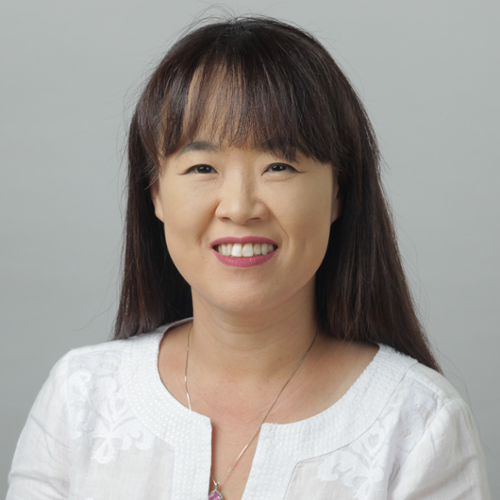
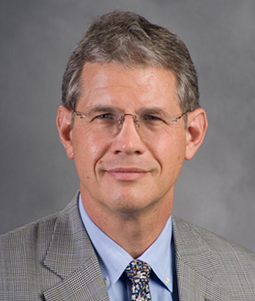
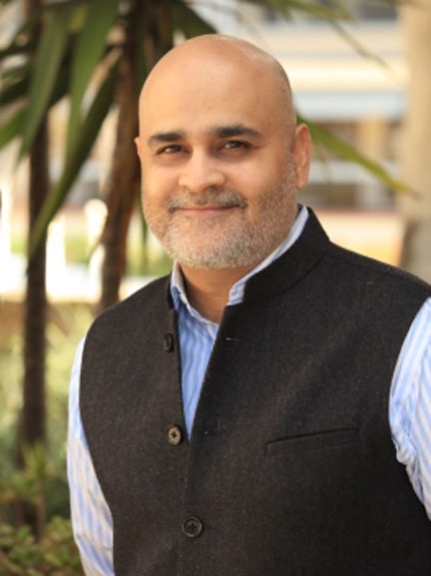
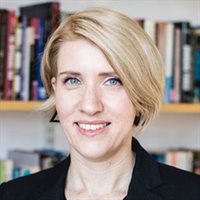
Sue Mialon is an Associate Professor in the Department of Economics at Emory University. Her research focuses on Law and Economics, Industrial Organization, and Microeconomic Theory. She holds a PhD from the University of Texas, Austin (2002), alongside advanced degrees from Korea University (MA, 1996; BA, 1992). Her work analyzes regulatory frameworks, market competition dynamics, and the intersection of legal systems with economic behavior. Notable themes include net neutrality, discrimination incentives, and the economic impacts of legal standards. Recent studies address abortion policy, inheritance inequality, and counterterrorism strategies. Mialon’s research often bridges theoretical models with real-world policy implications, contributing to fields like antitrust enforcement and public policy evaluation. Her publications span journals such as the Journal of Regulatory Economics, Labour, and the Journal of Economic Behavior and Organization. She maintains a website at Emory and can be contacted via smialon@emory.edu.
Virginia Page Fortna is the Harold Brown Professor of U.S. Foreign and Security Policy and Chair of the Department of Political Science at Columbia University. She is a leading scholar in international relations with expertise in conflict resolution, peacekeeping operations, and civil war dynamics. Professor Fortna earned her BA from Wesleyan University and completed her Ph.D. at Harvard University in 1998. Her academic career has been centered at Columbia where she has established herself as a prominent figure in international security studies through rigorous research and scholarly leadership. Fortna's research focuses on terrorism in civil conflicts, international climate politics, peace durability after wars, and war termination processes. Her work integrates quantitative and qualitative methodologies while addressing policy-relevant questions. She is particularly renowned for her groundbreaking studies on peacekeeping effectiveness that have reshaped academic understanding of post-conflict stabilization. Her scholarship consistently challenges conventional wisdom, as evidenced by recent work questioning whether terrorism is truly 'a weapon of the weak.' Her publication record shows an evolution from foundational work on peace agreements and ceasefire durability to more recent investigations of terrorist tactics in civil wars. Throughout her career, Fortna has maintained methodological innovation, often developing new datasets to address critical questions in international security. Her research combines theoretical diversity with empirical rigor, making significant contributions to both academic debates and policy discussions. Elected to the American Academy of Arts and Sciences (2021) Lenfest Distinguished Columbia Faculty Award (2014) Karl Deutsch Award from International Studies Association (2010) Fellowships at multiple prestigious research institutions Professor Fortna mentors graduate students through Columbia's Ph.D. program and teaches courses on international politics, climate change, war termination, terrorism, cooperation and security, and research methods. Her research has received substantial support through fellowships from leading academic institutions, reflecting the significance and policy relevance of her work in international relations. Based in New York with connections to Portland, Oregon, Fortna continues active research on terrorism in civil wars and international power dynamics in the anthropocene. Her scholarship remains highly influential in both academic and policy circles, particularly regarding effective conflict resolution strategies and international security frameworks.
Dr Folahanmi Aina is a Lecturer in Development Studies at SOAS University of London, specializing in the Political Economy of Violence, Conflict, and Development. He holds a PhD in Leadership Studies from King’s College London, with academic qualifications from institutions including the University of Oxford and Seoul National University. His research focuses on peace, security, and development challenges in West Africa’s Sahel and Lake Chad Basin regions, particularly addressing terrorism, insurgency, and governance failures. Education: BSc (Zaria) → MSc (Oxford) → MA (Seoul) → PhD (King’s College London). Research emphasizes transnational security dynamics, counterterrorism strategies, and the interplay between climate change and violent extremism. He has published in journals like African Security and Democracy and Security , and received the prestigious General Lamine Cissé Young Researcher Award. Recent work examines armed banditry in Nigeria, exploring its linkages to drug trafficking, pandemic impacts, and humanitarian crises. His studies highlight the need for process-based leadership and credible governance to address sub-national fragility.
David K. Linnan is an Associate Professor of Law at the Joseph F. Rice School of Law, University of South Carolina, holding tenure since 1993. He is also affiliated with the University of South Carolina School of the Environment and multiple international institutions including the University of Melbourne’s Asian Law Centre and Gadjah Mada University’s International Undergraduate Program. His expertise spans Asian Law, Legal Development, and International Economic Law. Education includes a J.D. from the University of Chicago (1979) and a B.A. from Emory University (1976). He has conducted extensive research across Indonesia, Australia, and Germany, including a Fulbright fellowship in Jakarta and research at the Max Planck Institute in Germany. His teaching focuses on comparative law, international environmental law, and financial sector regulation. Research interests include legal legitimacy, interfaith relations, and instructional technology integration in legal education. He has pioneered international collaborative courses using videoconferencing, linking students across USC, Indonesian universities, and Australian institutions. Major grants include a $1.2M USAID award (2000–2004) for the Law and Finance Institutional Partnership (LFIP) in Jakarta. Linnan has held visiting professorships at Gadjah Mada University (2015) and University of Washington (2004). His recent work emphasizes Southeast Asian legal infrastructure, judicial recruitment analysis, and transnational economic frameworks like ASEAN Economic Community and the Trans-Pacific Partnership.
Sharad Joshi is a Professor at the Middlebury Institute of International Studies, specializing in terrorism and nuclear security in South and Southeast Asia. He joined the Institute as a postdoctoral fellow at the James Martin Center for Nonproliferation Studies in 2006 and transitioned to full-time faculty in 2011. He also served as a research associate and interim director of the Monterey Terrorism Research and Education Program. Ph.D. in International Affairs, University of Pittsburgh M.A. in Politics, Jawaharlal Nehru University B.A. (Honors) in Economics, University of Rajasthan His research focuses on terrorism, nuclear weapons, and WMD proliferation, with emphasis on South Asian nuclear rivalry, CBRN terrorism, and transnational extremist networks. His courses include Global Politics , Great Power Competition , and specialized seminars on terrorism and nuclear issues. Recent publications analyze U.S.-India relations, China-Pakistan nuclear deals, and WMD security challenges. He leads the International Strategic Crisis Negotiation Exercise (ISCNE) , simulating Central Asian geopolitical crises involving China, India, Russia, and regional states.
Dr. Altea Pericoli is a Postdoctoral Research Fellow at Lund University's Centre for Advanced Middle Eastern Studies (CMES) and Department of Political Science, with additional affiliation to the MECW (The Middle East in the Contemporary World) project. Her research examines geopolitical dimensions of humanitarian aid, focusing on Gulf States' contributions in conflict zones and Islamic social welfare mechanisms. She earned her PhD in Institutions and Policies from Milan's Catholic University of the Sacred Heart in 2023, complemented by visiting research periods at Durham University, Oxford Center for Islamic Studies, Vienna University, Doha Institute, and Chr. Michelsen Institute. Her doctoral work earned the BRISMES Early Career Development Scholarship for monograph development. Pericoli's research centers on Islamic financing instruments (particularly zakat) for social protection in protracted crises, analyzing Gulf donors' humanitarian strategies across the Middle East, Horn of Africa, and South Asia. Her work bridges political science and Islamic studies, contributing to Sustainable Development Goals on poverty reduction and peacebuilding through examinations of religious funding mechanisms in contexts like Gaza, Somalia, and Bangladesh refugee crises. Her publication trends reveal concentrated analysis of Qatar and UAE foreign aid strategies, with growing emphasis on innovative refugee financing through Islamic instruments and the interplay between religious funding and international humanitarian frameworks. Recent works increasingly address statelessness challenges and pandemic responses using Islamic finance mechanisms. Her scholarly recognition includes: BRISMES Early Career Development Scholarship (2023) for doctoral monograph development Sir William Luce Fellowship at Durham University (2024) Pericoli actively contributes to major research initiatives as core personnel in SWEMENA (Swedish Middle East and North Africa Network) and MECW 2.0, demonstrating extensive collaboration across European and Middle Eastern institutions. While formal student supervision isn't documented, her workshop organization and conference presentations indicate active research community mentorship. Embedded within Lund University's Centre for Advanced Middle Eastern Studies, she participates in interdisciplinary networks facilitating comparative analysis of humanitarian governance and Gulf State foreign policies through projects connecting Swedish, European, and Middle Eastern academic communities.
Gerald G. Sander is a Professor of Constitutional, Administrative, and European Law at the University of Public Administration and Finance Ludwigsburg since 2012. He has an extensive academic background, including a Doctorate in Law from the University of Tübingen and a Magister rerum publicarum from the University of Speyer. His career spans roles as a lawyer, researcher, and academic leader, with editorial board memberships in journals like Pravni Vjesnik and Internal Security . Education: Dr. iur., University of Tübingen (2000) Magister rerum publicarum, University of Speyer (1996) Magister Artium in Political Science, University of Tübingen (1994) Sander’s research interests focus on European Union Law, Constitutional Law, Public Health Law, and International Trade Law. His work addresses the intersection of EU regulations with national policies, particularly in areas like pharmaceutical trade, food safety, language rights, and environmental governance. He has contributed extensively to debates on climate agreements, security law, and the legal implications of EU expansion. His publications include analyses of the Codex Alimentarius Commission’s role in international food standards, the legality of EU stabilization mechanisms, and interdisciplinary studies on security law. Recent articles examine genetic testing rights, transnational labor relations, and judicial interactions between EU and national courts. His scholarly output often integrates legal, economic, and public health perspectives. Academic leadership roles include serving as Dean of Postgraduate Programs (MPM/MEPA) and Director of the Institute for Applied Research (2013–2019). He has also held editorial positions and collaborated internationally with institutions in the Czech Republic, Croatia, and Poland.
Kai Gehring is a Professor for Political Economy and Sustainable Development at the University of Bern , with affiliation to the Wyss Academy for Nature and the ifo Institute in Munich. He holds a PhD in Economics from the University of Göttingen (advisor: Axel Dreher) and a Diplom (M.Sc equivalent) from the University of Mannheim. His academic career includes research stays at Harvard, Cambridge, Stanford, and MIT, along with a 4-year Ambizione Grant from the Swiss National Science Foundation. Member, CESifo Member, European Development Network (EUDN) Member, Development Economics Committee of the German Economic Association Member, Globalization and Development Group (GlaD) His research integrates economics with political science, sociology, and history to examine institutional dynamics in developed and developing countries. Key areas include political economy of international organizations (IMF, World Bank, EU), conflict resolution , sustainable development , and narrative economics using NLP on media/social data. Recent methodological projects employ satellite imagery and machine learning for mining activity tracking. Major article trends span three decades of African government formation challenges ( Minister Project ), climate change policy narratives, artisanal mining impacts, and terrorist propaganda analysis. He has published 17+ peer-reviewed articles across journals like European Economic Review , World Development , and Journal of Development Economics . Scientific Awards Ambizione Grant (Swiss National Science Foundation) As an educator, Gehring has taught at the University of Mannheim, Heidelberg University, Kaiserslautern University of Applied Sciences, and the University of Zurich. His Minister Project actively engages citizen scientists to build comprehensive datasets on African government members' linguistic and regional origins.
David Siegel is a Professor of Political Science and Public Policy at Duke University , with joint appointments in the Sanford School of Public Policy and Trinity College of Arts & Sciences . His research focuses on collective action in contexts like political violence , terrorism , and electoral behavior , while integrating game theory and social network analysis into political science. Education : Ph.D. in Political Science from Stanford University (2006) Key Institutions : Duke University (2019–present), Florida State University (prior to Duke) His scientific awards include the Political Ties Award (2012) and an honorable mention for the William F. Riker Prize (2012). He has secured major grants from the National Science Foundation for projects exploring theory-based measurement of power and second-order impacts of PRC aggression toward Taiwan . Recent publications analyze measurement theory in political science, strategic terrorism in civil wars, and collective action costs . These align with his broader interests in political networks , security studies , and behavioral electoral theory . Siegel also co-authored influential books like A Behavioral Theory of Elections and A Mathematics Course for Political and Social Research . He teaches advanced courses in game theory , social networks , political methodology , and terrorism , emphasizing analytical rigor and empirical-theoretical integration.
Prof. Dr. jur. Angelika Emmerich-Fritsche serves as an Associate Professor of Law at Friedrich-Alexander-Universität Erlangen-Nürnberg (FAU) since November 27, 2013, with additional teaching responsibilities at the University of Bamberg through the Coordination Office for Legal Sciences. Her academic appointment places her within the Faculty of Law, specifically in the Department of Public Law, where she teaches Public and Constitutional Law, International Business Law, International Law, Public Law with a European Reference, European Law, and German and European Constitutional Law. Dr. Emmerich-Fritsche's educational foundation includes law studies at the Universities of Passau (with specialized French language training), Geneva, and Erlangen (1981-1986). She earned her doctorate from the University of Bayreuth in 1998 and completed both German State Examinations (1987 and 1990), including legal traineeship with an internship at Cleary, Gottlieb, Steen & Hamilton in Brussels. Her academic progression shows steady advancement from research assistant (1990-2002) to senior assistant (2002-2006), culminating in her habilitation at FAU's Faculty of Law in 2006. Her scholarly interests focus on the transformation of legal frameworks in globalization, examining constitutional law, European integration, international economic law, and human rights through a philosophical lens. Her research trajectory consistently explores the evolution from traditional international law toward what she terms 'world law,' addressing critical contemporary issues including national constitutional identity in European context, human rights application to transnational entities, water privatization, and environmental regulation. Analysis of her 15 most recent publications reveals a sophisticated integration of theoretical legal philosophy with practical applications across constitutional, European, and international law domains. Her work demonstrates increasing engagement with global governance challenges, particularly evident in her later publications addressing terrorist financing, democratic rights, and environmental law through a world law perspective. Dr. Emmerich-Fritsche maintains an active dual career as both an academic legal scholar and practicing attorney, having been admitted to the Nuremberg Bar Association in 2007 and becoming a partner at Dr. Maeder & Partner law firm in Fürth. Her professional activities extend to international academic collaborations, including guest lectureships at Immanuel Kant University Kaliningrad and participation in an EU Tempus project with teaching in Minsk, Belarus, reflecting her commitment to transnational legal discourse.
Serge Banyongen is a Part-time Professor in the Department of Political Studies at the University of Ottawa's Faculty of Social Sciences. His work focuses on the intersection of media, politics, and international relations, with specialized expertise in African geopolitics, crisis communication, terrorism narratives, and Sino-African diplomatic dynamics. He communicates fluently in both French and English. Banyongen's research explores how communication strategies shape political and social outcomes in high-stakes environments. Key themes include: Social media's role in amplifying crises (e.g., pandemics, elections) Rhetorical tactics in counterterrorism discourse Power asymmetries in international cooperation frameworks Digital transformation of media ecosystems in Africa His publications (2010–2024) demonstrate consistent focus on crisis management during terrorist incidents, political transitions in Senegal, disinformation in Cameroonian elections, and China's diplomatic engagement with Africa. Methodologically, he employs pragma-dialectical analysis, ethnography, and narrative deconstruction.
Dr. Magda Long is a Visiting Research Fellow at King’s College London’s King’s Centre for the Study of Intelligence and the War Studies Department, alongside roles at the University of Nottingham and University of Exeter. Her work bridges academic research with practical policy analysis, focusing on covert action, intelligence strategy, and irregular warfare. She holds a PhD in Intelligence and International Security from King’s College London and has extensive experience in defense analysis (RAND Corporation), risk management (Deloitte), and post-conflict security roles. Her research examines how states employ covert means for foreign policy, counterterrorism, and unconventional warfare. Her educational background includes an MA in Intelligence and International Security from King’s College London and prior professional training in business intelligence. Research interests center on covert operations’ utility, ethical dilemmas in intelligence, and the evolving role of covert action in modern geopolitical conflicts. Publications span edited volumes on national approaches to covert action, articles analyzing post-9/11 U.S. strategy, and case studies on Ukraine’s civilian resistance. Her work often explores the intersection of technology (e.g., cyber operations) and traditional covert methods, emphasizing adaptability in intelligence tradecraft.
Dr. Anna Getmansky is an Associate Professor of International Relations at the London School of Economics and Political Science (LSE) , based in the Department of International Relations. Her research focuses on the sources and consequences of intrastate and interstate conflicts, particularly examining how domestic political institutions influence conflict dynamics. She specializes in quantitative analysis of conflicts, including case studies on the Israeli-Palestinian conflict, Syrian refugee crises, and terrorism policy design. Her work explores topics such as Ethnic bias toward refugees in co-religious societies Public opinion shifts during interstate conflicts Military service’s impact on partisan preferences International organizations’ resource allocation mechanisms Dr. Getmansky’s recent publications analyze methodological pitfalls in terrorism research, refugee integration challenges, and the political ramifications of wartime experiences. She is actively supervising PhD students focusing on quantitative conflict analysis and welcomes applications for 2025/26. Her research has been published in top journals across political science and international relations, with a focus on empirical rigor and policy relevance.
Peter Ivan Belk is an Adjunct Professor at the Security Studies Program within the McCourt School of Public Policy at Georgetown University. His academic role is complemented by a distinguished career in U.S. national security and defense policy. His educational background includes: B.A. in Political Science from the University of Pennsylvania M.A. in National Security Studies from Georgetown University J.D. from Columbia Law School M.S.S. from the U.S. Army War College Mr. Belk specializes in national security, defense readiness, and strategic policy , with deep expertise in weapons of mass destruction, counterterrorism, and international arms control. His career spans high-level government positions in the Department of Defense, National Security Council, and Department of State, where he led strategic planning and policy development. His featured publications reflect his focus on geopolitical strategy, NATO, and international credibility in security affairs. Though no recent articles are listed, his work centers on defense policy, military strategy, and global security cooperation. He is affiliated with the Council on Foreign Relations and has served in both active and reserve components of the U.S. Army as a civil affairs and military intelligence officer. Mr. Belk is also a licensed attorney in Washington, D.C., and New York, with private sector experience in law, finance, and consulting. His academic appointment is held in a personal capacity and does not represent the views of the U.S. government.
James J.F. Forest is a Professor in the School of Criminology and Justice Studies at the University of Massachusetts Lowell, where he serves as Director of Security Studies and teaches undergraduate, master's, and doctoral courses on contemporary security studies, terrorism and counterterrorism, homeland security, and weapons of mass destruction. He is also the Editor-in-Chief of the peer-reviewed scholarly journal Perspectives on Terrorism. Previously, he served as a Senior Fellow for the U.S. Joint Special Operations University (2010-2019) and as a faculty member at the United States Military Academy (2001-2010), where he was Director of Terrorism Studies at the Combating Terrorism Center at West Point for six years and Assistant Dean for Academic Assessment for three years. Dr. Forest's educational background includes a Ph.D. in Higher Education Administration from Boston College (1998), an MA in International Development Education from Stanford University (1994), a BS in Foreign Service from Georgetown University (1993), and an AA in Liberal Arts from De Anza College (1991). His research focuses on international security, terrorism & counterterrorism, national security, military & defense policy, weapons of mass destruction, homeland security, critical infrastructure protection, and transnational organized crime. His recent work has increasingly emphasized digital influence warfare, information operations, and the intersection of social media, propaganda, and political warfare in the modern security landscape. Dr. Forest's scholarly output shows a clear evolution from traditional terrorism studies toward understanding the digital information environment as a critical domain for contemporary security challenges. His recent publications focus on how state and non-state actors leverage social media platforms for influence operations, with particular attention to disinformation campaigns, cognitive warfare, and the strategic manipulation of online information ecosystems. Superior Civilian Service Award (2010), Leadership - Department of the Army America's most esteemed terrorism and national security expert (2006), Service, Community - Foreign Policy Magazine Commander's Award for Public Service (2005), Leadership - Department of Army Commander's Award for Civilian Service (2004), Leadership - Department of Army Achievement Medal for Civilian Service (2003), Service, Community - Department of the Army Mary T. Kinnane Award for Excellence in Higher Education (1998), Scholarship/Research - Boston College Dr. Forest has provided expert testimony and briefings to the intelligence community and U.S. Senate committee hearings. He has served as an expert witness in terrorism-related court cases and has been involved in significant research projects including grants from the Ford Foundation, Department of Defense, and FBI Counterterrorism Branch. His work with the Center for Terrorism & Security Studies at UMass Lowell has established it as a prominent research hub for contemporary security challenges, particularly focusing on the evolving nature of terrorism in the digital age.