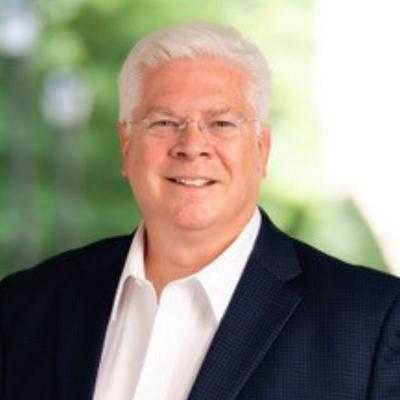
Kellen Myers is an Associate Professor in the Division of Math & Science at Tusculum University, focused on mathematical modeling in epidemiology and combinatorics. He holds a Ph.D. in Mathematics from Rutgers University (2015). Current position: Associate Professor of Mathematics Affiliation: Tusculum University Education: Ph.D. in Mathematics, Rutgers University (2015) His research spans: Epidemiological modeling of multi-host disease systems and antibiotic resistance Combinatorics, particularly Rado numbers and Ramsey theory Analysis of public health risks in carceral and resource-limited settings Recent publications emphasize seasonal disease dynamics, HIV/AIDS-related resistance patterns, and mathematical approaches to social network security simulations.
David L. Thomas serves as Professor of Intelligence Studies at The Institute of World Politics (IWP), bringing over three decades of operational experience from the U.S. intelligence community. His background includes critical roles as an analyst in the Soviet/Warsaw Pact Division of the Defense Intelligence Agency's Foreign Intelligence Directorate and at the Arms Control and Disarmament Agency. Academic credentials include: B.A. & M.A. from Brown University (1970) D-Phil. from Oxford University (1980) Prior academic appointments featured positions as Adjunct Professor at Georgetown University's National Security Studies Program (1987-1994) and Research Associate at the Center for Strategic and International Studies (1981-1986). His research centers on intelligence-policy interfaces with specialized focus on: Counterintelligence frameworks in democratic systems Cold War-era U.S. intelligence operations Arms control verification methodologies Soviet/Warsaw Pact analytical tradecraft Teaching responsibilities include core IWP courses on intelligence collection, policy formulation, and international security field studies. Professor Thomas maintains active professional engagement through lectures at the National War College, National Defense University, Joint Military Intelligence College, and Central Intelligence Agency, bridging academic theory with real-world intelligence practice.
Dr. Christopher Murphy is a Senior Lecturer in Intelligence Studies at the University of Salford's School of Arts, Media and Creative Technologies, where he has taught since 2006. He is affiliated with the Politics & Contemporary History Research Centre and has established himself as a specialist in British intelligence history. His research interests focus on the history of the British intelligence community, particularly the Special Operations Executive (SOE) during World War II. His expertise spans intelligence history, security studies, and the evolution of the British security state. Dr. Murphy's publications reveal a consistent focus on SOE operations, intelligence analysis methodologies, and the historical development of intelligence institutions. Dr. Murphy's publication record shows a clear progression from early work on SOE's foreign currency transactions and origins in France to more recent comprehensive works on British intelligence history and contemporary intelligence analysis. His research demonstrates increasing breadth from specific WWII operations to broader examinations of the intelligence community's evolution through the Cold War to the present day. Vice Chancellor's Distinguished Teaching Award (2016) Dr. Murphy actively supervises PhD students in British intelligence history and contemporary intelligence studies. His current research includes the 'Ensemble' project which applies AI to intelligence analysis. He convenes multiple modules across undergraduate and postgraduate levels, directly integrating his research expertise into teaching. His laboratory work focuses on historical intelligence analysis methods and their application to contemporary security challenges.
Steven R. Hooper serves as an Assistant Professor in the Global Security and Intelligence Studies Department, College of Business, Security and Intelligence at Embry-Riddle Aeronautical University. A retired FBI agent with 30 years of service, he held key leadership roles including Acting Special Agent in Charge of the Phoenix Field Office and head of the National Security Branch overseeing Counterintelligence, Counterterrorism, and Critical Incident Response programs. His prior experience spans the U.S. Secret Service (1982-1984) and international operations like leading a Russian Organized Crime Task Force in Budapest. His academic credentials include: M.S. in Criminal Justice/Homeland Security from Saint Joseph's University B.S. in Criminal Justice from Saint Anselm College Advanced training at the George C. Marshall School for European Security Studies and Kellogg School of Business Professor Hooper's expertise centers on operational security disciplines: Counterintelligence, National Security, Crisis Management, and Counterterrorism. His teaching integrates Cold War espionage investigations, Soviet GRU operations, and executive protection protocols into courses like SIS 335 (Counter-Intelligence) and SIS 395K (Critical Incident Response Planning). This practitioner-focused approach emphasizes real-world threat assessment over theoretical frameworks. As a Certified Protection Professional (CPP) and co-owner of Tripwire Security Solutions, he bridges academic instruction with active industry consulting in risk analysis and incident response. While no formal research grants or publications are documented, his Secret Service and FBI background provides students with unique access to intelligence community methodologies. His advising style prioritizes career readiness through tactical training and professional network access via AFIO and ASIS affiliations.
Jim Hamby serves as an Adjunct Instructor at Mercyhurst University, leveraging his 32+ years as a retired U.S. Army Colonel and Defense Intelligence Senior Executive Service professional within the Department of Defense and U.S. Intelligence Community. His globally focused career specialized in high-stakes intelligence operations against critical adversaries. His research interests span Intelligence Operations, Human Intelligence (HUMINT), Counterintelligence, Defense Intelligence, and Critical Infrastructure Security, informed by foundational roles such as establishing the DoD HUMINT Training Joint Center of Excellence and concluding active duty as Chief of Counterintelligence & HUMINT (J2X) at U.S. Central Command, alongside pioneering service as the first Deputy Director of the Defense Clandestine Service.