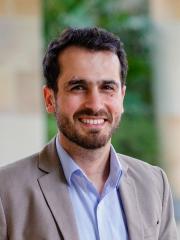
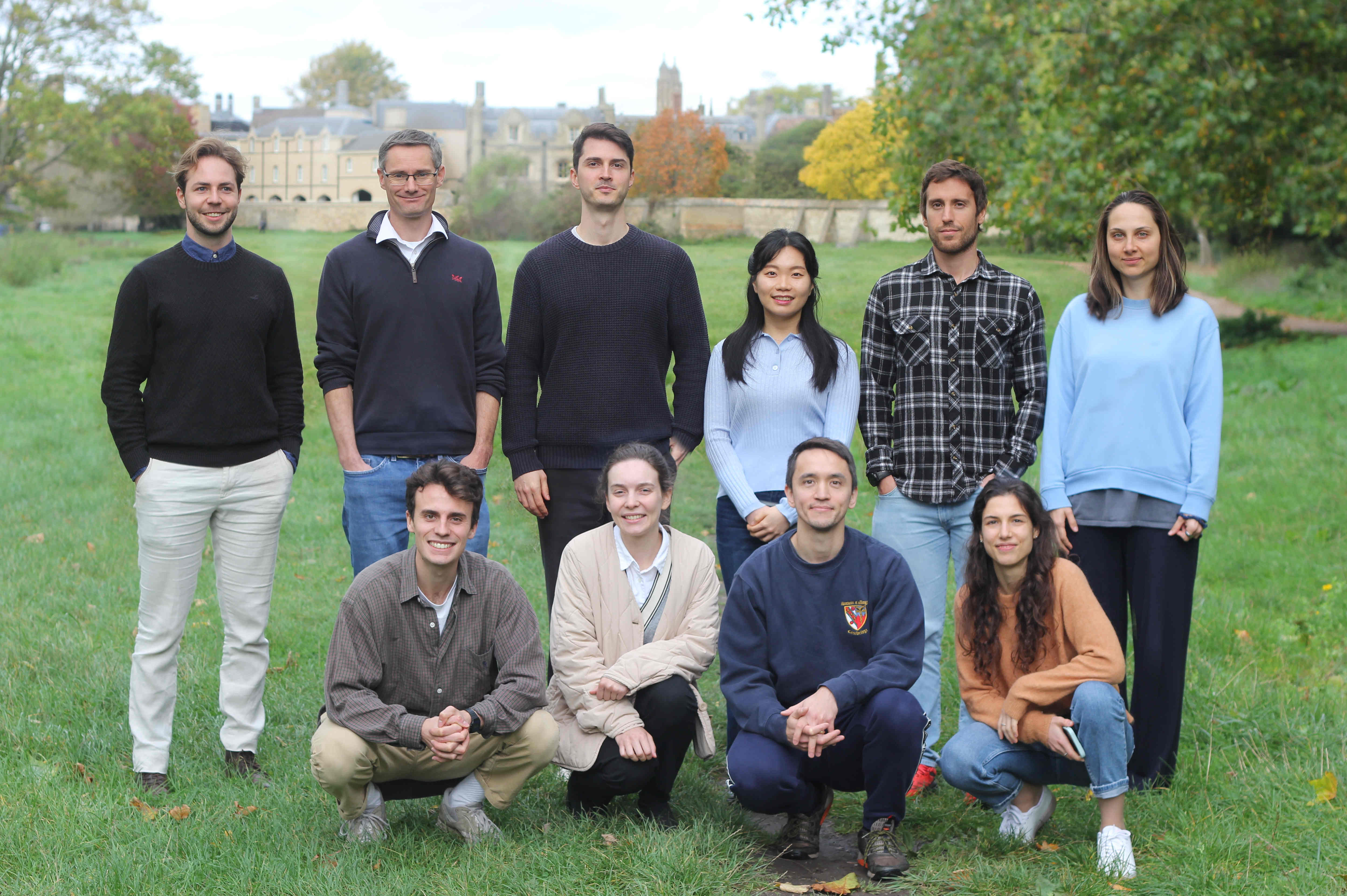
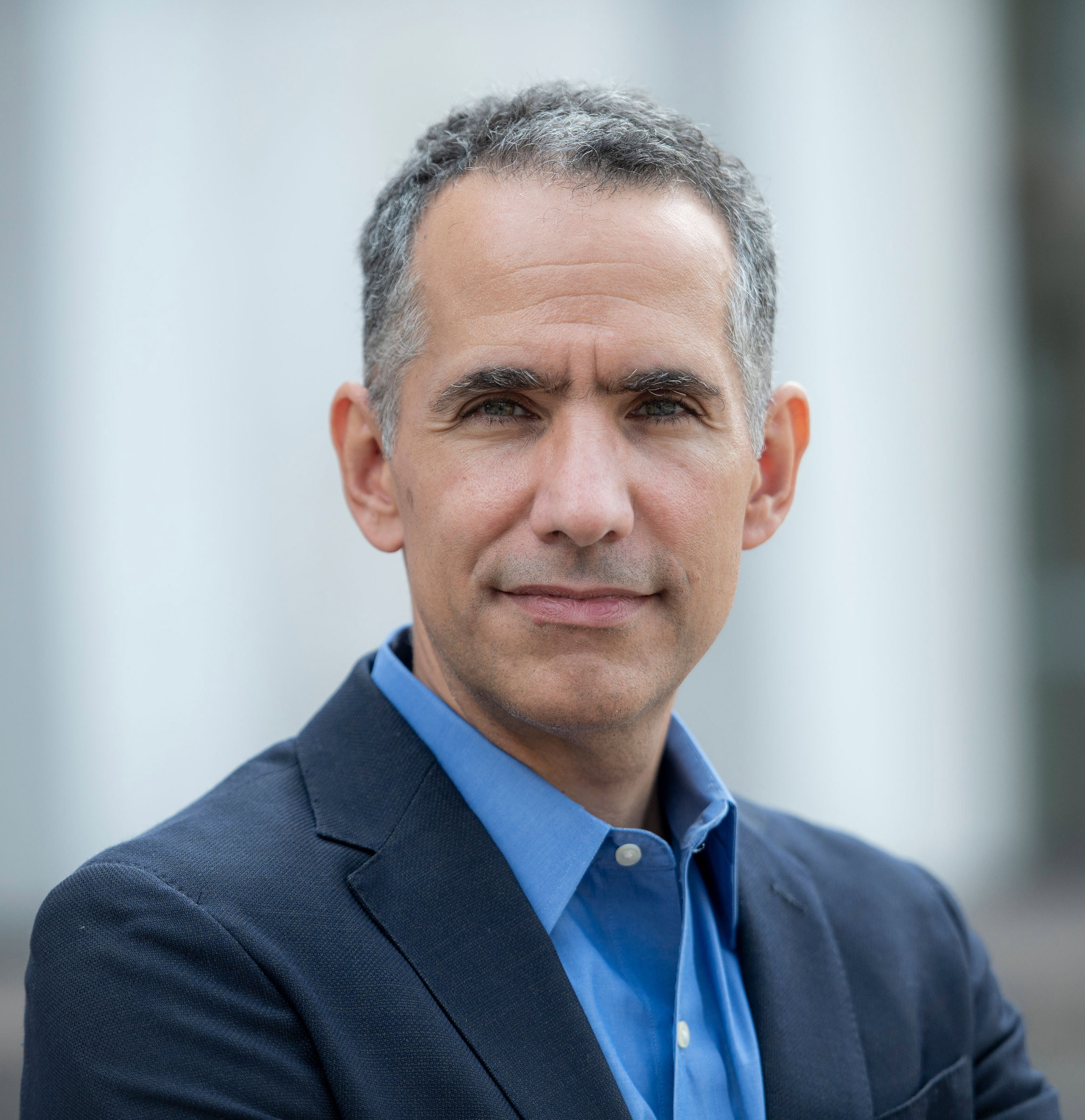
Prof. Niki Kilbertus is an Assistant Professor at the Technical University of Munich (TUM) in the Department of Informatics, and Group Leader at Helmholtz AI. His research focuses on causal machine learning, ethical AI systems, and applications in healthcare, climate science, and dynamical systems. He earned his PhD from the University of Cambridge (2020) and has held positions at DeepMind, Google, and Amazon during his studies. His research interests include causal discovery, fairness in AI, counterfactual reasoning, and integrating physics-based constraints into neural networks. Key contributions include foundational work on fair machine learning (e.g., avoiding discrimination through causal models) and developing methods for causal inference in complex systems like healthcare and climate modeling. Recent work emphasizes generative models for causal interventions, robust treatment effect estimation, and physically consistent neural differential equations. He leads a large interdisciplinary group with over 20 students and postdocs working on projects funded by Helmholtz Association, ERC, and industry collaborations. Notable awards include the Leopoldina Prize for Young Scientists (2024) and membership in the Junge Akademie. His lab maintains active partnerships with ELLIS, MCML, and the Zuse Institute Berlin.
Indian Institute of Technology Hyderabad (IITH)India
Vineeth N Balasubramanian is a Professor in the Department of Computer Science & Engineering at the Indian Institute of Technology Hyderabad, with affiliate faculty status in the Department of Artificial Intelligence. His research focuses on the intersection of deep learning, machine learning, and computer vision, emphasizing explainability, robustness, and real-world applications. He leads Lab 1055, which investigates problems such as Explainable and robust AI/ML systems Lifelong learning in evolving environments Multimodal vision-language models Applications in agriculture, autonomous navigation, and human behavior analysis His recent work includes causal reasoning in transformers, vision-language model capabilities, and drone-based object detection. Funded by organizations like Google, Microsoft, Intel, and DST, he has received multiple awards including the World's Top 2% Scientists (2022-23), INSA/INAE Fellowships, and Best Paper recognitions. Lab 1055 collaborates with institutions like CMU, UBC, and Monash University, contributing to cutting-edge advancements in AI.
Bo Dai is an Assistant Professor at the School of Computational Science and Engineering, Georgia Institute of Technology, and a Staff Research Scientist at Google DeepMind. His research focuses on Agent AI, Generative Models, and Representation Learning, aiming to create decision-making agents through world modeling. He holds a Ph.D. from Georgia Tech (2013–2018) and previously worked at Google Brain. Dai has authored numerous influential papers in top conferences like NeurIPS, ICML, and ICLR, and received the AISTATS Best Paper Award (2016). Education: Ph.D., School of Computational Science and Engineering, Georgia Tech (2013–2018) Research Interests: Reinforcement Learning and Representation Learning for decision-making agents Generative Models and their integration with Agent AI Provable and scalable algorithms for real-world applications His work bridges theory and practice, emphasizing spectral representations and provable guarantees in complex systems. Key Article Trends: His recent work emphasizes scalable spectral methods for multi-agent systems, diffusion policies, and representation-based techniques in reinforcement learning. He also explores LLM alignment and sim-to-real transfer learning. Awards: AISTATS Best Paper Award (2016) NeurIPS Workshop Best Paper (2017) Ross Fellowship (2011–2012) Advising & Grants: Supervises 6 current Ph.D. and M.S. students. Active in organizing workshops on reinforcement learning and serves as an Area Chair for top conferences. Labs & Software: Leads development of Representation-based Reinforcement Learning and Repr-Control toolboxes for nonlinear control and stochastic systems.
Alexei A. Efros is a Professor in the Department of Electrical Engineering and Computer Sciences (EECS) at UC Berkeley, where he holds the Howard Friesen Professorship and is affiliated with the Berkeley Artificial Intelligence Research (BAIR) Lab. He previously served on the faculty at the Robotics Institute of Carnegie Mellon University (CMU) and completed a postdoctoral fellowship at the University of Oxford. His research spans data-driven computer vision, self-supervised learning, computational photography, and applications to computer graphics and robotics. His research interests include: Data-Driven Computer Vision Self-Supervised and Unsupervised Learning Generative Models and Image Synthesis Visual Representation Learning Applications in Robotics and Human-Computer Interaction Intersections with Human Vision and the Humanities The recent publications highlight a strong trend toward self-supervised learning, visual reasoning, and generative modeling, particularly diffusion models and 3D scene understanding. His work increasingly bridges computer vision with language, robotics, and cognitive science, emphasizing interpretability and real-world applicability. There is a clear focus on leveraging unlabeled data and developing methods for robust, generalizable AI systems. His scientific awards and recognitions include: Berkeley Fellowship Google Fellowship Soros Fellowship NSF Fellowship SIGGRAPH Outstanding Doctoral Dissertation Award Facebook Fellowship Adobe Fellowship CMU School of Computer Science Distinguished Dissertation Award ACM Doctoral Dissertation Honorable Mention Alexei Efros has advised numerous PhD students and postdocs, many of whom have gone on to faculty positions at top institutions including CMU, Stanford, MIT, Columbia, NYU, and Georgia Tech. His lab has received research funding from major tech companies and federal agencies, though specific grants are not detailed in the text. He teaches core computer vision and machine learning courses at both undergraduate and graduate levels at UC Berkeley. His research group is highly active, with ongoing projects in 3D perception, generative modeling, and vision-language systems. He leads a vibrant research lab at UC Berkeley, part of the BAIR consortium, collaborating with leading researchers such as Jitendra Malik, Trevor Darrell, Pieter Abbeel, and Angjoo Kanazawa. His lab fosters strong interdisciplinary connections with institutions worldwide, including Oxford, INRIA, and École Normale Supérieure.
Max Planck Institute for Intelligent SystemsGermany
Celestine Mendler-Dünner is a Principal Investigator at the ELLIS Institute in Tübingen, co-affiliated with the Max Planck Institute for Intelligent Systems and the Tübingen AI Center. She leads the Algorithms and Society research group, focusing on machine learning in social contexts and the role of prediction in digital economies. Her work bridges theoretical machine learning with practical societal impact, developing tools for safe, reliable, and equitable AI ecosystems. Her educational background includes a PhD from ETH Zurich in collaboration with IBM Research, followed by an SNSF postdoctoral fellowship at UC Berkeley hosted by Moritz Hardt. She was previously a group leader at the Max Planck Institute for Intelligent Systems before joining the ELLIS Institute. Mendler-Dünner's research spans several interconnected themes including performative prediction (where predictions change the behavior they aim to predict), algorithmic collective action (how participants can steer AI systems toward common goals), and the role of LLMs in social science research. Her work combines theoretical foundations with practical implementations, addressing challenges in interactive machine learning, optimization in dynamic environments, and context-specific evaluation of AI systems. She particularly examines how algorithmic predictions mediate services and platforms at societal scale, exploring concepts of economic power in digital markets. Her publication record shows a clear evolution from system-aware machine learning algorithms (including foundational work on IBM Snap ML) toward increasingly sociotechnical questions at the intersection of machine learning, economics, and policy. Recent work focuses on measuring performative power in digital economies, evaluating LLMs as risk scores, and developing frameworks for algorithmic collective action in recommender systems and labor markets. Among her notable recognitions are the ETH Medal for her dissertation, the IBM Research Division Award, the Fritz Kutter Award, and the IBM Eminence and Excellence Award. She is an ELLIS Scholar, a fellow of the Elisabeth-Schiemann-Kolleg, and affiliated with several prestigious research programs including the International Max Planck Research School for Intelligent Systems and the Max Planck ETH Center for Learning Systems. ETH Medal (dissertation award) IBM Research Division Award Fritz Kutter Award IBM Eminence and Excellence Award SNSF Early Postdoc Mobility Fellowship Mendler-Dünner actively mentors the next generation of researchers, advising PhD student Patrik Wolf and supervising research interns including Joachim Baumann, Haiqing Zhu, and Anna Badalyan, as well as Master's student Dorothee Sigg. She serves as core faculty for the International Max Planck Research School and associated faculty for the Max Planck ETH Center for Learning Systems. Her group has secured significant research funding through fellowships and institutional support, enabling work on projects like Powermeter (measuring search engine influence) and Snap ML (resource-efficient machine learning library with over 1 million PyPI downloads). She leads the Algorithms and Society research group, which examines machine learning as part of broader sociotechnical ecosystems. The group explores human-population interactions with algorithmic systems and incorporates these insights into learning system fundamentals. Current projects include investigating economic incentives in digital platforms, developing tools for systematic LLM evaluation in social science contexts, and creating frameworks for collective action in algorithmic systems. Mendler-Dünner also co-organizes the Algorithmic Collective Action workshop at NeurIPS 2025, demonstrating her leadership in emerging research directions at the AI-society interface.
Raul Vicente Zafra is a Professor of Data Science at the University of Tartu, Faculty of Science and Technology, Institute of Computer Science, where he has been working since 2013. His research spans computational neuroscience, artificial intelligence, and data science, with a particular focus on bridging biological and artificial models of intelligence. Education: PhD in Physics (2001-2006), University of the Balearic Islands BSc in Physics (1997-2001) Professor Zafra's research interests center on computational neuroscience and artificial intelligence, with specific expertise in brain-computer interfaces, reinforcement learning, neural modeling, and explainable AI. His work bridges the gap between biological and artificial intelligence systems, exploring how neural principles can inform machine learning algorithms and vice versa. He has made significant contributions to understanding neural coherence, time interval learning in neural systems, and the application of information theory to brain-computer interfaces. His research often involves interdisciplinary collaboration between computer science, neuroscience, and medicine. Analysis of Zafra's recent publications reveals a strong focus on the intersection of artificial intelligence and neuroscience. His work spans explainable AI methods, brain-computer interfaces, reinforcement learning models that mimic cognitive processes, and neurophysiological studies of brain activity. A notable trend is his exploration of how biological principles of neural computation can inform and improve artificial intelligence systems, particularly in areas like time-based learning, consciousness modeling, and neural coherence. Scientific Awards: 2012: Attendee at the 62nd Lindau Nobel Laureate Meeting 2007: Quantum Electronics and Optics Division Prize of the European Physical Society for the best PhD Thesis in Applied Optics in Europe 2006: PhD Extraordinary Award of the Physics Department of the University of the Balearic Islands 2001: Physics Degree Extraordinary Award (First Class Honors, best GPA) 1997: Bronze Medal in the "8th Spanish Physics Olympiad" Professor Zafra has been principal investigator on numerous significant research projects including the Estonian Centre of Excellence in Artificial Intelligence, Cardiovascular Stress Impacts On Neuronal Function, and Bridging biological and artificial models of vision. His grant portfolio demonstrates strong funding support from the Estonian Research Council, European Commission, and other major funding bodies. He has supervised multiple PhD students and mentored early-career researchers in computational neuroscience and AI. His laboratory work focuses on developing computational models of neural systems and applying these insights to artificial intelligence. Current research directions include explainable AI methods, brain-computer interfaces, modeling of consciousness and cognitive processes, and the application of AI to healthcare challenges.
Matthias Hein is a Professor at the Department of Computer Science, Faculty of Mathematics and Natural Sciences, University of Tübingen. His research focuses on Machine Learning , Adversarial Robustness , and Out-of-Distribution Detection , with applications in computer vision and medical imaging. He has received notable recognition including the Best Paper Honorable Mention Prize at ICLR 2021 and Outstanding Paper Award at CVPR 2021. His work includes developing benchmarks like RobustBench and Spurious ImageNet , and frameworks such as Sparse-RS and DIG-IN . His recent publications emphasize adversarial robustness across multiple domains (vision, text), counterfactual explanations for classifiers, and improved OOD detection methods . Collaborators include prominent researchers like Francesco Croce, Julian Bitterwolf, and Alexander Meinke. Scientific Awards : Best Paper Honorable Mention (ICLR 2021) CVPR 2021 Outstanding Paper Award Key Research Areas : Adversarial Robustness Vision-Language Models Medical Imaging AI Neural Network Calibration
Professor Scott A. Shalkowski is a faculty member in the Department of Philosophy at the University of Leeds, part of the School of Philosophy, Religion and History of Science. He holds the academic rank of Professor and specializes in modality, philosophy of religion, philosophical logic, and the epistemology of religious belief. His work bridges metaphysics, epistemology, and the philosophy of religion, with a focus on modal epistemology and theoretical virtues. Education: PhD in Philosophy, University of Michigan BA in Philosophy, Houghton College Research Interests: Shalkowski’s research explores modal epistemology, method in metaphysics, mathematical nominalism, and the epistemology of religious belief. He has contributed to debates on logical pluralism, modal realism, and the relationship between science and religion. Publications: His work spans topics like modal logic, theoretical virtues, and metaphysical frameworks. Notable articles include Modal Epistemology for Modalists (2023) and Modalism and Logical Pluralism (2009). His research often emphasizes empirical grounding in philosophical theorizing. Awards: Shalkowski has received awards from the National Endowment for the Humanities, Australian Research Council, and British Academy. He was also nominated for an Excellence in Teaching Award. Grants & Labs: His research has been supported by grants from major funding bodies. He contributes to interdisciplinary discussions through his work in the Centre for Philosophy of Religion and Theology and the Centre for Theoretical Philosophy at Leeds.
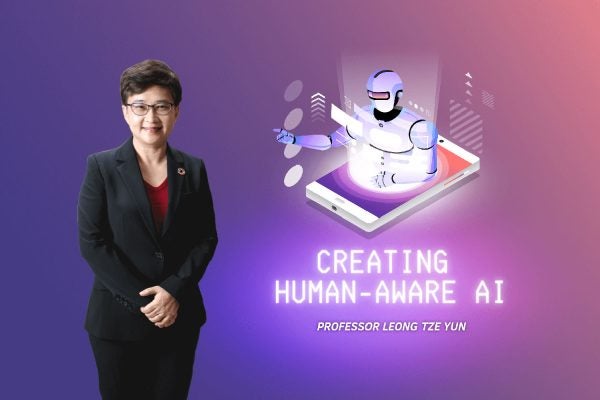
LEONG Tze Yun is a Professor in the Department of Computer Science at the School of Computing, National University of Singapore (NUS). She holds S.B., S.M., and Ph.D. degrees in Computer Science from the Massachusetts Institute of Technology (MIT). Her academic career spans both research and industry experience, with significant contributions to the fields of artificial intelligence and health informatics. Dr. Leong's educational background includes: Ph.D. in Electrical Engineering & Computer Science, Massachusetts Institute of Technology S.M. in Electrical Engineering & Computer Science, Massachusetts Institute of Technology S.B. in Computer Science & Engineering, Massachusetts Institute of Technology Her primary research interests focus on responsible AI, dynamic decision-making, neurocognitive modeling, reinforcement learning, artificial general intelligence, and biomedical and health informatics. Her work bridges the gap between theoretical AI development and practical healthcare applications, with an emphasis on ethical considerations and human-centered design. She directs the Medical Computing Laboratory at NUS, a multidisciplinary research program exploring human-aware decision modeling in complex environments. Analysis of her recent publications reveals a strong trend toward responsible AI development, with significant contributions to reinforcement learning techniques, causal inference methods, and applications of AI in healthcare. Her work increasingly integrates ethical considerations with technical AI development, particularly evident in her 2024 publications on medical AI and human values. Her scientific recognition includes: Fellow of the American College of Medical Informatics (ACMI) Founding Fellow of the International Academy of Health Sciences Informatics (IAHSI) Member of Eta Kappa Nu (Honor Society for Electrical Engineers) Dr. Leong has supervised numerous doctoral and master's students throughout her career, many of whom have gone on to prominent positions at institutions like Google, Netflix, Mayo Clinic, and academic institutions worldwide. Her advisory work extends to significant policy development, including contributions to WHO guidance on ethics and governance of AI for health. She currently serves on the World Health Organization (WHO) Expert Group on Ethics and Governance of AI for Health, the World Economic Forum (WEF) AI Governance Alliance, and the Advisory Council on AI in Uzbekistan. Her laboratory work focuses on developing adaptive systems that evolve with changing technical functionalities, system infrastructures, usage patterns, and operational contexts, with applications spanning prediction and decision analytics, human-aware robotics, game artificial intelligence, personalized education, and assistive care for elderly with neurocognitive disorders.
Judy Hoffman is an Associate Professor in the College of Computing at Georgia Institute of Technology, with a joint appointment in the School of Interactive Computing and affiliation to the Machine Learning Center . She received tenure in April 2025 after joining Georgia Tech as an Assistant Professor. Her research focuses on enabling AI systems that are reliable, fair, and resource-efficient. PhD in Electrical Engineering and Computer Science (2016, UC Berkeley) Postdoctoral Fellowships at Stanford (2017) and UC Berkeley (2018) Former Research Scientist at Facebook AI Research Her work intersects computer vision and machine learning , with specialization in domain adaptation , adversarial robustness , and algorithmic fairness . She has published over 40 peer-reviewed articles, including the award-winning DeCAF (ICML 2024 Test of Time Award) and co-founded Women in Computer Vision (2015), which has sponsored ~40 women annually to premier conferences. ICML Test of Time Award (2024) NSF CAREER Award (2022) PAMI Distinguished Young Researcher (2023) Samsung AI Researcher of the Year (2021) Dr. Hoffman has served as Program Chair for CVPR 2023, Associate Editor for T-PAMI (2021-2023), and co-organizer of workshops at major AI conferences. She has delivered over 70 invited talks and contributes to open-source projects like cycada_release (567 stars) and lsda (47 stars).
Siva Balakrishnan is an Associate Professor at Carnegie Mellon University with a joint appointment in the Department of Statistics and Data Science and the Machine Learning Department . He holds an affiliation with the Dietrich College of Humanities and Social Sciences. Previously, he was a postdoctoral researcher at UC Berkeley's Department of Statistics, advised by Martin Wainwright and Bin Yu, and earned his Ph.D. in Computer Science from CMU's Language Technologies Institute under Jaime Carbonell. His research focuses on statistical machine learning, causal inference, and high-dimensional statistics, with notable contributions to domain adaptation, optimal transport, and robust statistics. Education: Ph.D. in Computer Science, Carnegie Mellon University (Language Technologies Institute) Postdoctoral Researcher, University of California, Berkeley (Department of Statistics) Research Interests: His work bridges theoretical foundations and algorithmic development, emphasizing robust statistical methods and their applications in causal inference, public policy, and machine learning. Key areas include nonparametric methods, optimization, and high-dimensional data analysis. He has pioneered techniques in domain adaptation, such as the RLSbench framework for relaxed label shift scenarios. Awards & Grants: Amazon Research Award (2021) Google Research Scholar Award (2021) NVIDIA Pioneer Award (2018) IMS Lawrence D. Brown Student Award (2020, 2022) National Science Foundation Grants (CCF-1763734, DMS-1713003, etc.) Professional Activities: He serves as an Associate Editor for JASA and on the editorial boards of Foundations and Trends in Statistics . His work has been featured in top venues like NeurIPS, ICML, and the Annals of Statistics. He currently holds a sabbatical at UC Berkeley's Department of Statistics (Spring 2025). Labs & Collaborations: He actively participates in the Statistics and Machine Learning Reading Group and the Causal Inference Working Group , fostering interdisciplinary research in CMU's vibrant academic community.
Swiss Federal Institute of Technology in LausanneSwitzerland
Peter A. Flach is Professor of Artificial Intelligence at the Intelligent Systems Laboratory, School of Computer Science, University of Bristol, where he has been faculty since 1997 and was promoted to Professor in 2003. He currently directs the UKRI AI Centre for Doctoral Training in Practice-Oriented Artificial Intelligence and serves as Vice-President of the European Association for Data Science (EuADS), having previously served as its President. His research centers on rigorous evaluation and improvement of machine learning systems, with seminal contributions to classifier calibration (including Beta Calibration and Precision-Recall-Gain curves), explainable AI frameworks, and data science methodology. He pioneered the extension of CRISP-DM to data science trajectories and developed Explainability Fact Sheets for systematic assessment of XAI approaches. His work bridges theoretical foundations with practical deployment in real-world systems. Analysis of his recent publications reveals a dominant focus on interpretable and reliable machine learning, with strong emphasis on performance evaluation metrics, model calibration techniques, and human-centered explainability. His research increasingly addresses healthcare applications through projects like SPHERE and clinical decision support systems, while maintaining core contributions to fundamental ML theory. His scientific recognition includes prestigious fellowships: Fellow of the European Lab for Learning and Intelligent Systems (ELLIS) Fellow of the European Association for Artificial Intelligence (EurAI) Professor Flach has secured major research funding including UKRI Centre for Doctoral Training grants and EU network funding (TAILOR). He leads extensive collaborations across Engineering, Population Health Science, and international institutions (Monash University, Polytechnic University of Valencia), plus over 20 industry partners in the Practice-Oriented AI CDT including LV= and QinetiQ. His work with the SPHERE project demonstrates successful translation of AI research into residential healthcare settings. He leads the Intelligent Systems Laboratory at Bristol, which develops influential open-source tools including the FAT Forensics Python toolbox for algorithmic fairness and the Explainability Fact Sheets framework. His lab maintains strong connections with the European AI community through ELLIS and EurAI, positioning Bristol as a hub for human-centered and methodologically rigorous AI research.
Dr. Metin Uyanik is a Senior Lecturer at the School of Economics, The University of Queensland. He holds a PhD from Johns Hopkins University (2016) and previously worked as a Postdoctoral Research Fellow at the University of Rochester's Wallis Institute of Political Economy. His research focuses on Economic Theory, Game Theory, Political Economy, Computational Economics, and Mathematical Economics. His work has been published in top-tier journals such as Economic Theory , Games and Economic Behavior , and Journal of Mathematical Economics . Education: Bachelor of Economics, Bogazici University Masters (Research) of Economics, Koc University Doctor of Philosophy, The Johns Hopkins University Research Interests: Dr. Uyanik's research bridges theoretical and applied economics, emphasizing foundational mathematical approaches. His work explores general equilibrium theory, discontinuous games, topological methods in economics, and welfare economics. Key themes include the analysis of non-convex economies, fixed-point theorems, and the integration of axiomatic frameworks with behavioral assumptions. Teaching: He teaches Advanced Microeconomics, Economics for Commerce, and Introduction to Strategic Thinking at UQ. His pedagogical focus includes mathematical rigor and practical applications of economic theory. Collaborations & Future Work: Collaborations with scholars like M. Ali Khan and Richard P. McLean highlight his engagement with complex theoretical frameworks. Ongoing projects include studies on large production economies, myersonian common knowledge, and computational methods in equilibrium analysis.
Richard E. Turner is a Professor of Machine Learning at the University of Cambridge's Department of Engineering and Research Lead for AI for Weather Prediction at the Alan Turing Institute. He serves as Cambridge Lead for the EPSRC Probabilistic AI Hub and previously held roles including Visiting Researcher at Microsoft Research, Co-Director of the AI4ER CDT, and Course Director for the Machine Learning and Machine Intelligence MPhil program. Current research focuses on probabilistic machine learning fundamentals, environmental prediction (weather/climate), and spatio-temporal modeling combining deep learning with Bayesian methods Supervised 26 PhD students (13 graduated) and 7 research assistants/associates Secured over £30M in research funding from EPSRC, Microsoft, Toyota, Google, DeepMind, Amazon, and Improbable Featured in BBC Radio 5 Live's The Naked Scientist, BBC World Service's Click, and Wired Magazine His recent publications demonstrate expertise in diffusion models for PDE simulations, Gaussian Processes for environmental applications, and Bayesian methods for spatio-temporal forecasting. Key trends include climate modeling using ML, neural PDE solvers, and scalable probabilistic inference. Awards : Cambridge Students' Union Teaching Award for Lecturing; supervised Qualcomm Innovation Fellowship winner Collaborations : Microsoft Research (AI4Science), Alan Turing Institute, EPSRC Probabilistic AI Hub Turner leads the Turner Group within Cambridge's Machine Learning Group, focusing on uncertainty-aware ML for scientific applications. Current research assistants work on topics like meta-learning, Bayesian inference, and climate science applications.
Esteban Rossi-Hansberg is the Glen A. Lloyd Distinguished Service Professor of Economics at the University of Chicago's Kenneth C. Griffin Department of Economics (since 2021). Previously, he held professorships at Princeton University (2005–2021) and Stanford University (2002–2005). He earned his Ph.D. in Economics from the University of Chicago in 2002. He serves as a Research Associate at the National Bureau of Economic Research (NBER) and a Research Fellow at the Center for Economic Policy Research (CEPR). He co-directs the Becker Friedman Institute's International Economics and Economic Geography Initiative and is Lead Editor of the Journal of Political Economy . His research focuses on international trade, regional and urban economics, growth, organizational economics, and climate change. Key topics include city structure, offshoring impacts, spatial frictions, climate adaptation, and agglomeration effects. His work has been published in major economics journals, and he has received prestigious awards such as the Alfred Sloan Fellowship (2007), August Lösch Prize (2010), and election to the American Academy of Arts and Sciences (2022). Recent work explores the economic geography of climate change, including adaptation strategies and migration dynamics. He has analyzed spatial distribution of economic activity under climate scenarios and the role of carbon taxes in reshaping global economies. His studies often use dynamic spatial models to quantify local and global economic impacts. His contributions span theoretical frameworks and empirical analyses, addressing policy questions like optimal industrial strategies, spatial equity, and adaptation to environmental challenges. He collaborates widely, with co-authors including Klaus Desmet, Stephen Redding, and others, producing influential papers on migration, trade, and urban systems.