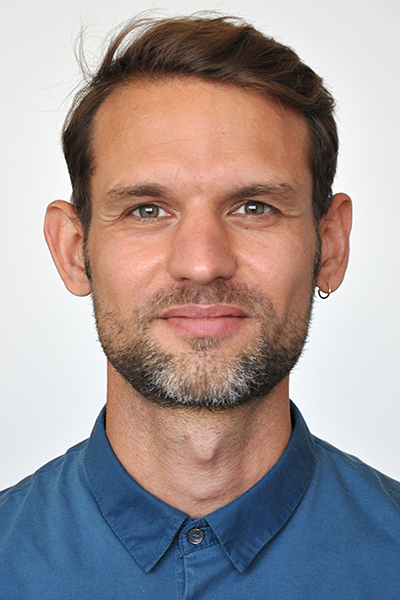
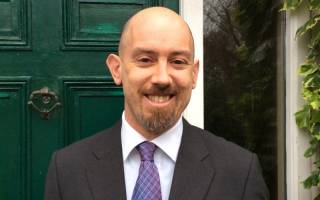
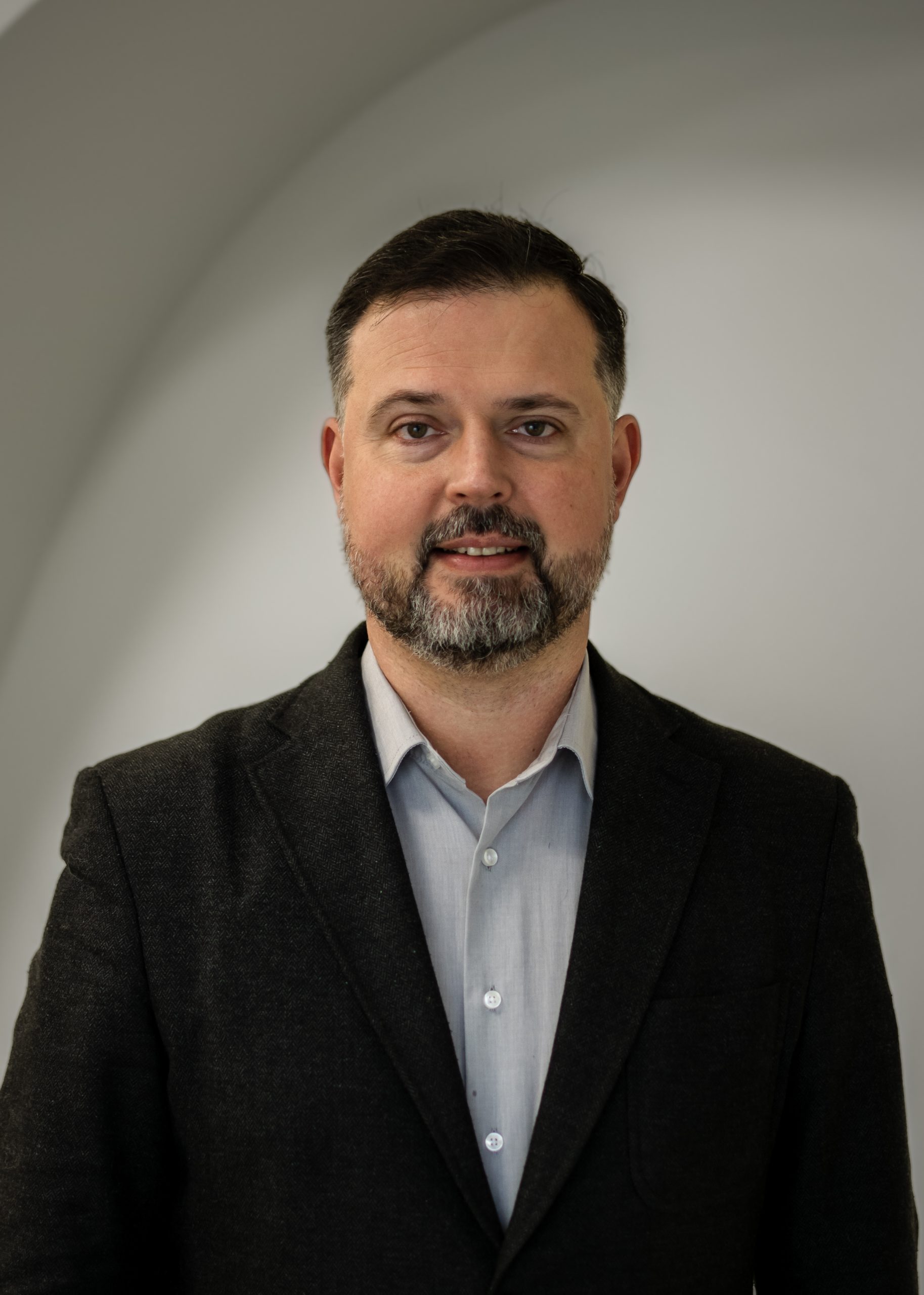
Keith Ewing is a Professor of Public Law at The Dickson Poon School of Law, King's College London since 1989. Previously, he held visiting professorships at the University of Western Australia (1992), University of Alberta (1987-88), and Osgoode Hall Law School (1982). Earlier roles included positions at the University of Edinburgh (1978-83) and University of Cambridge (1983-1989). His research focuses on labour law and constitutional reform, particularly the intersection of social rights and constitutional frameworks. He teaches undergraduate Public Law and graduate European Labour Law. His publications span constitutional law, human rights, and labour rights, with recent works addressing post-Brexit legal frameworks, trade agreements' labour provisions, and emergency governance during the pandemic. Notable books include MI5, the Cold War, and the Rule of Law (2020) and co-edited volumes on the Right to Strike in International Law (2020). His articles frequently analyze judicial roles, electoral democracy, and transnational legal challenges. Ewing has led projects such as the CONPRE initiative (2015-2017) on parliamentary human rights protections and a British Academy-funded study on counter-terrorism and human rights (2007). His work contributes to UN SDGs related to justice, equality, and sustainable development through legal reforms.
Stefan Binder is a Senior Research Assistant at the Institute for Social Anthropology and Cultural Studies (ISEK) at the University of Zurich's Faculty of Arts and Social Sciences. His academic work focuses on the intersections of gender, sexuality, and religious studies with particular attention to secular and non-religious perspectives. His primary research interests include gender and sexuality studies, queer anthropology, secularity and non-religion, religious aesthetics, ethics, and temporal dimensions of religious practices. Binder's work employs anthropological approaches to explore contested notions of "newness" and "generational change" within queer and trans* communities in both South Asia (particularly India) and Europe. His research also investigates the sensory, material, and aesthetic dimensions of lived everyday religion and non-religion. Binder's publication record shows a strong focus on nonreligion studies, with particular emphasis on atheist activism in South India. His work frequently examines the relationship between secularism and religious pluralism, with attention to how these concepts manifest in everyday practices and experiences. His scholarship demonstrates interdisciplinary engagement across religious studies, anthropology, gender studies, and South Asian studies. His monograph Total Atheism: Secular Activism and the Politics of Difference in South India (2020) represents a significant contribution to the field of nonreligion studies. His recent articles (2021-2023) continue to develop theoretical frameworks for understanding secularism, nonreligion, and religious aesthetics through ethnographic approaches.
Elaine M. Huang is an Associate Professor of Human-Computer Interaction at the Department of Informatics, University of Zurich, where she has served since 2010. She also leads the People and Computing Lab, focusing on the dynamic interplay between human practices and technological advancements. Her academic background includes: PhD in Computer Science, Georgia Institute of Technology (2006) Dr. Huang's research centers on human-computer interaction, examining the bidirectional relationship between technology and human practices. She is particularly known for her work on gender equality in technology, challenging assumptions about innate gender differences and investigating how AI systems may perpetuate biases. Her research also spans sustainable interaction design, mental health technologies, and chronic disease management, always emphasizing empirical data over intuition. Analysis of her recent publications (2023-2025) reveals a strong trajectory toward socially impactful HCI, with significant focus on health technologies (diabetes management, mental health), cultural sensitivity in design, and the ethical challenges of AI. Her methodology often involves field studies to understand real-world technology use, countering the industry's reliance on intuition. As head of the People and Computing Lab, Dr. Huang oversees a research group dedicated to designing and evaluating technologies that address complex human needs. The lab's work frequently involves co-design with diverse user communities to ensure relevance and inclusivity in technological solutions.
Kent A. Ono is a Distinguished Professor in the Department of Communication at the University of Utah, where he has held faculty appointments since 2012. Previously, he served as Department Chair (2012-2017) and has held leadership positions including Director of Asian American Studies at UIUC (2002-2007) and Director of Cultural Studies at UC Davis (1999-2002). He earned his PhD in Rhetorical Studies from the University of Iowa (1992), MA from Miami University (1988), and BA from DePauw University (1987). Professor Ono's research examines critical media analysis through frameworks of race, gender, sexuality, and nation. His work spans rhetorical theory, intercultural communication, and cultural studies, with emphasis on: Representations of Asian Americans in media Immigration discourse and border rhetoric Postcolonial media criticism Critical race methodologies Transnational cultural flows His recent publications demonstrate sustained focus on immigration rhetoric, racial representation in media, and critical intercultural communication. Thematic analysis reveals consistent engagement with power structures, identity negotiation, and resistance narratives across 30+ years of scholarship, with emerging work on K-pop globalization and digital culture. Awards & Honors: Presidential Citation, National Communication Association (2024) Fellow, International Communication Association (2021) Douglas W. Ehninger Distinguished Rhetorical Scholar (2018) Distinguished Scholar Awards from NCA (2015, 2022), WSCA (2020) Teachers on Teaching Award, NCA (2015) He has held editorial leadership positions including Editor of Communication and Critical/Cultural Studies and co-editor of NYU Press's Critical Cultural Communication series. As NCA President (2020), he advanced equity initiatives and disciplinary transformation. Ono founded the Asian American Cultural Politics Research Cluster at UC Davis and secured grants including 'Portraits of Courage: Photographs by Shane Sato' (2019). He teaches graduate seminars in Rhetorical Studies and International Communication.
Eugenia Rho is an Assistant Professor in the Department of Computer Science at Virginia Polytechnic Institute and State University (Virginia Tech), part of the College of Engineering. Her research focuses on data analytics, machine learning, natural language processing, and human-computer interaction, with particular emphasis on social media discourse, online identity dynamics, and ethical AI applications. Education includes a Ph.D. in Information and Computer Sciences from the University of California, Irvine (2020), and a B.A. in Political Science from Columbia University (2011). Her interdisciplinary background bridges computer science and social sciences. Research interests span AI-assisted communication tools, counterspeech strategies for online hate mitigation, and neurodivergent perspectives in technology design. Her work often integrates computational methods with social science theories to address real-world challenges such as bias detection, mental health support, and ethical AI deployment. Recent publications highlight themes like AI collaboration in writing, identity-driven online interactions, and the efficacy of counterspeech. Her projects frequently involve designing human-centered technologies that prioritize accessibility and ethical considerations. No scientific awards are explicitly mentioned in the provided text. She maintains an active Google Scholar profile and a personal homepage (URLs not provided in the text).
John Ford is an Associate Professor in the Department of Nuclear Engineering at Texas A&M University. His research focuses on radiobiology, radiation carcinogenesis, and medical applications of radiation. He holds academic appointments within the College of Engineering and contributes to the Health Physics, Radiation Biology & Medical Physics research group. Education includes a B.S. and M.S. in Nuclear Engineering from Mississippi State University (1982, 1986), a Ph.D. in Biomedical Sciences from the University of Tennessee (1992), and postdoctoral training at Oak Ridge National Laboratory (1992–1993). His work emphasizes understanding radiation effects on biological systems, with notable contributions to radiation dosimetry, bystander signaling mechanisms, and dietary modulation of radiation damage. Recent studies explore space radiation monitoring technologies and therapeutic applications of radiation. Awards include the BP Award for Teaching Excellence (2007) and ARRO Educator of the Year (2013–2014). Research spans interdisciplinary areas such as radiation-induced cancer mechanisms, nutritional interventions to mitigate radiation effects, and advanced radiation detection instrumentation. He has advised numerous projects in radiation safety curriculum development and collaborated on NASA-funded studies modeling radiation impacts on astronauts.
Dr. Richard McMahon is a Lecturer in EU Politics at the Department of Political Science, University College London (UCL). He specializes in the intersection of political narratives, cultural identity, and European integration. His research focuses on how conceptualizations of Europe and national identities shape political dynamics, with current emphasis on China-EU mutual representations. Previously, he held roles at the University of Portsmouth, University College Cork, and others. McMahon earned his PhD in History and Civilisation from the European University Institute, analyzing transnational race scientists' efforts to classify Europeans by race. His research spans EU narratives, counter-narratives in populist politics, and the historical context of race classification. Recent work includes co-editing special issues on EU narratives and Chinese-EU relations. He has taught widely across institutions, covering EU studies, international law, and cultural studies. McMahon's interdisciplinary approach bridges political science, history, and anthropology, addressing topics like Brexit, enlargement, and transnational scientific networks. Publications include monographs such as The Races of Europe: Construction of National Identities in the Social Sciences, 1839-1939 and edited volumes on transnational power struggles and European integration narratives. His work frequently appears in journals like Journal of Contemporary European Studies and European Societies .
Professor Keita Takayama is a prominent academic in education studies at the University of South Australia’s UniSA Education Futures. His work focuses on global education policy, comparative education, and teacher education methodology. He actively engages with transnational policy processes, decolonial research frameworks, and critical analyses of international assessments like PISA. As editor of the Asia-Pacific Journal of Teacher Education (APJTE), he emphasizes rethinking teacher subjectivity and pedagogical practices. His research critiques the politics of knowledge production and advocates for methodological innovations like 'Asia as Method.' Recent work addresses contradictions in education export policies, linguistic imperialism in scholarship, and the role of education in resisting authoritarianism. Education Background: Doctorate in Education (focus on comparative policy studies) Advanced training in decolonial methodologies and policy analysis Research Interests: Professor Takayama’s work bridges global and local educational contexts. Key themes include: Policy mobilities & transnational education governance Reimagining comparative education through 'negative' comparative frameworks Ethics of academic publishing and knowledge dissemination Teacher education’s role in shaping democratic societies Labs/Teams: Leads the APJTE editorial collective and co-founded the iTKNe transnational knowledge exchange platform for teacher educators. Active in global academic networks addressing East Asian education stereotypes and postcolonial educational research.
Sanaa Ahmed is an Assistant Professor at the Faculty of Law, University of Calgary, where she joined in 2021. Prior to her current position, she was a Killam Postdoctoral Fellow at Dalhousie University. Her academic journey spans across multiple institutions and countries, reflecting her international perspective on legal issues. Her educational background includes: PhD from York University (2019) LLM from University of Warwick (2005) LLB from S.M. Law College, University of Karachi (2002) BA from University of Karachi (1998) Sanaa Ahmed's research focuses on the intersection of financial systems and criminal activity, with particular emphasis on money laundering , financial crime , and financial regulation . Her work also extends to criminal law , human rights , and surveillance practices. She examines how regulatory frameworks function in practice, particularly in the Canadian context, while also investigating transnational dimensions of financial crime and regulation in countries like Pakistan. Her approach combines legal analysis with political economy perspectives to understand the complex relationships between state institutions, capital flows, and crime prevention mechanisms. Her recent publications demonstrate a consistent focus on money laundering and financial regulation, with increasing attention to Canadian contexts in her most recent work (2023). She has also maintained a strong interest in Pakistan's regulatory environment and has explored connections between financial crime, human rights, and development in African contexts. Her work appears in diverse venues including academic journals, book chapters, and conference proceedings, reflecting her interdisciplinary approach to these complex legal issues. Her notable awards include: Killam Postdoctoral Fellowship, Dalhousie University (2019) Harley D. Hallet Graduate Scholarship, Osgoode Hall Law School (2018) Peter W. Hogg Graduate Award (2016) Before her academic career, Sanaa Ahmed had significant professional experience in journalism, working as an editor, writer, producer and reporter for several media outlets in Pakistan. This background informs her approach to legal scholarship, particularly in examining the practical implementation of regulatory frameworks and the relationship between law, media, and public understanding of financial crime. Her teaching includes courses on Crime (LAW 410) and Money Laundering (LAW 693), directly connecting her research expertise with her pedagogical responsibilities. While specific information about research labs or teams is not provided in the available materials, her collaborative work on publications like "Presence through absence? Understanding the role of capital in the African Human Rights Action Plan" suggests active engagement with international research networks focused on financial crime, human rights, and development.
Dr. Nerijus Maliukevičius serves as an Assistant Professor at Vilnius University's Institute of International Relations and Political Science, where he conducts research and teaching within the Department of Political Behavior and Institutional Studies. His expertise centers on information warfare, strategic communication, and Russian geopolitical strategies, with extensive publications analyzing disinformation campaigns targeting Baltic and European states. Maliukevičius' research interests focus on Information Warfare , Russian Studies , and Propaganda Countermeasures , examining how technological advances reshape conflict dynamics. His work investigates Kremlin influence operations across media ecosystems, emphasizing social resilience frameworks and psychological defense mechanisms against hybrid threats. Key contributions include foundational studies on Russian information geopolitics and contemporary analyses of operations like Ghostwriter that exploit digital vulnerabilities in democratic societies. His publication trajectory reveals a strategic evolution from theoretical frameworks (2002-2008) toward actionable counter-strategies, with recent work prioritizing social resilience metrics and Nordic-Baltic defense coordination. This shift reflects escalating geopolitical tensions following Crimea's annexation and Ukraine's invasion, where his analyses of Russian media tactics have gained critical policy relevance across NATO and EU institutions. Maliukevičius has secured major research funding including the IARPA-funded SAGE project (2016-2019) for geopolitical forecasting and Lithuania's national disinformation study (2021). He regularly advises governments through high-impact presentations at NATO StratCom CoE, NED forums, and Lublin Triangle initiatives, translating academic insights into operational countermeasures against active measures. As co-leader of Vilnius University's Politics of Technology Research Group and Belarus Research Group, he directs collaborative investigations into AI-driven disinformation and authoritarian influence networks. His teams develop early-warning systems for hybrid threats while training next-generation analysts through specialized courses like Information Warfare and Strategic Political Communication.
Robert J. Schoelkopf is the Sterling Professor of Applied Physics at Yale School of Engineering & Applied Science, with a secondary appointment in the Department of Physics (Faculty of Arts and Sciences). He co-founded the field of circuit quantum electrodynamics (circuit QED), pioneering breakthroughs in solid-state quantum computing, including the transmon qubit, quantum bus, and first demonstrations of quantum algorithms and error correction. He directs the Yale Quantum Institute. Ph.D., California Institute of Technology A.B., Princeton University Research Interests: His work focuses on superconducting devices for quantum information processing, enabling revolutionary advances in quantum computing and sensing. Key contributions include foundational circuit QED innovations and quantum error correction protocols. Awards & Honors: Comstock Prize in Physics (2024) Connecticut Medal of Science (2017) John Stewart Bell Prize (2013) Joseph F. Keithley Award (2009) Yale University Junior Faculty Fellowship (2002) Packard Fellowship (2000) Leadership & Collaborations: Schoelkopf collaborates extensively with Michel Devoret and Steven Girvin. He co-founded Quantum Circuits Inc. and leads the Yale Quantum Institute. His lab emphasizes a fun, inclusive environment aligned with Yale's quantum research initiatives.
Mashood Baderin is a Professor at SOAS University of London's School of Law, where he has established himself as a leading scholar in Islamic law, international law, and human rights. With over 90 publications spanning more than two decades, Professor Baderin has made significant contributions to bridging Islamic legal traditions with contemporary international legal frameworks. Professor Baderin's research interests focus on the intersection of Islamic jurisprudence with modern legal challenges. His work explores how Islamic legal principles can inform contemporary human rights frameworks, international criminal justice systems, and social reform initiatives in Muslim-majority countries. He has extensively examined Islamic legal theory (usul al-fiqh), the application of Islamic law in modern contexts, and the relationship between Islamic law and international legal norms. His most recent publications reveal a continued focus on the universality of international law from Islamic perspectives, the application of Islamic law in African contexts, and the relationship between Islamic principles and human rights frameworks. Professor Baderin has edited significant works including 'Islamic Legal Theory' (2014) and authored the widely recognized 'Islamic Law: A Very Short Introduction' (2021). Professor Baderin has supervised numerous doctoral students working on Islamic law topics with regional focus on Nigeria, Saudi Arabia, and the UAE. His students' research often examines gender issues, legal reform, and the practical application of Islamic law in contemporary settings.
Dr. Deirdre Serjeantson is an Undergraduate Tutor and Fellow at Sidney Sussex College, University of Cambridge. Her research focuses on Renaissance literature, translation studies, and the cultural intersections of early modern Ireland and England. Her work explores the interplay between Petrarchism and Protestant theology in sonnet sequences, the history of the book, and the adaptation of classical and biblical motifs in early modern writing. She has published extensively on topics such as Anne Lock's A Meditation of a Penitent Sinner , Richard Verstegan's symbolic use of Babylon, and the influence of Scottish reformation poetry on English verse. Her recent articles analyze the religious and national identities embedded in sixteenth- and seventeenth-century texts, with a particular interest in gender, authorship, and cross-cultural transmission. She can be contacted at tutors@sid.cam.ac.uk or dcs40@cam.ac.uk .
Jiang Hu is a Professor in the Department of Electrical and Computer Engineering at Texas A&M University, holding the Eric D. Rubin '06 Endowed Professorship. He also serves as Co-Director of Graduate Programs and is affiliated with the Computer Science & Engineering department. His research focuses on VLSI design automation, machine learning applications, and hardware security. He has held roles as editor for IEEE Transactions on CAD and ACM Transactions on Design Automation, and chaired the 2012 ACM International Symposium on Physical Design. Education: B.S. in Optical Engineering (Zhejiang University, 1990), M.S. in Physics (1997), and Ph.D. in Electrical Engineering (University of Minnesota, 2001). He worked at IBM Microelectronics before joining Texas A&M in 2002. Research interests include energy-efficient VLSI circuits, on-chip communication fabrics, analog layout automation, and AI-driven EDA. Recent work emphasizes machine learning for design closure, privacy-preserving frameworks, and systolic array-based architectures. Awards: IEEE Fellow (2016) Humboldt Research Fellowship (2012) Multiple best paper awards at DAC, ICCAD, and ASPDAC Advising and grants: Leads initiatives like the SLICE project, NSF workshops on ML-EDA infrastructure, and serves as Editor-in-Chief of ACM TODAES since 2024. His work bridges academic research and industry applications in EDA and semiconductor design. Labs/Teams: Active contributor to open-source tools like ALIGN for analog layout generation and collaborations on machine learning for EDA commons.
Dr. Farzana Aman Tanima is a Senior Lecturer at the University of Sydney Business School’s Accounting, Governance, and Regulation department. She previously held roles at the University of Wollongong (2017–2023). Her research focuses on critical and dialogic accounting, social justice, and challenging neoliberal frameworks through participatory approaches. Born in Bangladesh, she earned her PhD in 2015 from Victoria University of Wellington, New Zealand, with a thesis on dialogic accounting practices for marginalized women. Education: PhD in Accounting, Victoria University of Wellington, 2015 Undergraduate Honours Degree, Victoria University of Wellington Research Interests: Dr. Tanima’s work centers on dialogic accounting to democratize accounting practices, with focus on NGOs, microfinance, Indigenous education, and race. She employs participatory action research and autoethnography to address systemic inequalities. Key areas include: Accounting’s role in empowerment and development Decolonizing accounting education through Jindaola Critical race theory and counter-accounting Awards: 2024 Mary Parker Follet Award (AAAJ Journal) 2020 VC OCTAL Teaching Award 2015 AFAANZ Best PhD Award Teaching & Mentorship: She leads pedagogical initiatives embedding Indigenous perspectives into curricula and fosters dialogic learning. Supervised two completed PhDs, with co-authored publications. Active in mentoring early-career researchers through invited talks and workshops. Labs/Teams: Part of the Alternative Accounting Research Network and editorial boards for CPA Journal and Financial Accountability & Management . Co-leads special issues on critical dialogics and publicness in accounting.