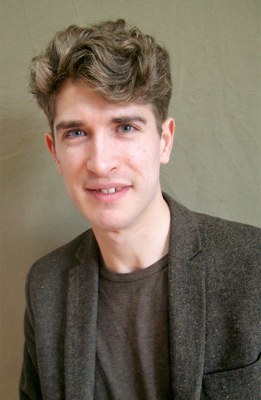
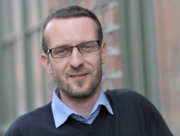
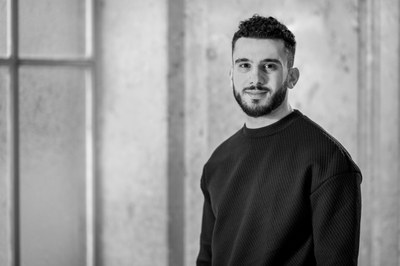
Dr. Victor Kempf is a postdoctoral researcher at the Institut für Philosophie , Humboldt-Universität zu Berlin, since March 2025. He completed his PhD at Goethe-Universität Frankfurt in 2017 and focuses on social and political philosophy from a critical theory perspective.
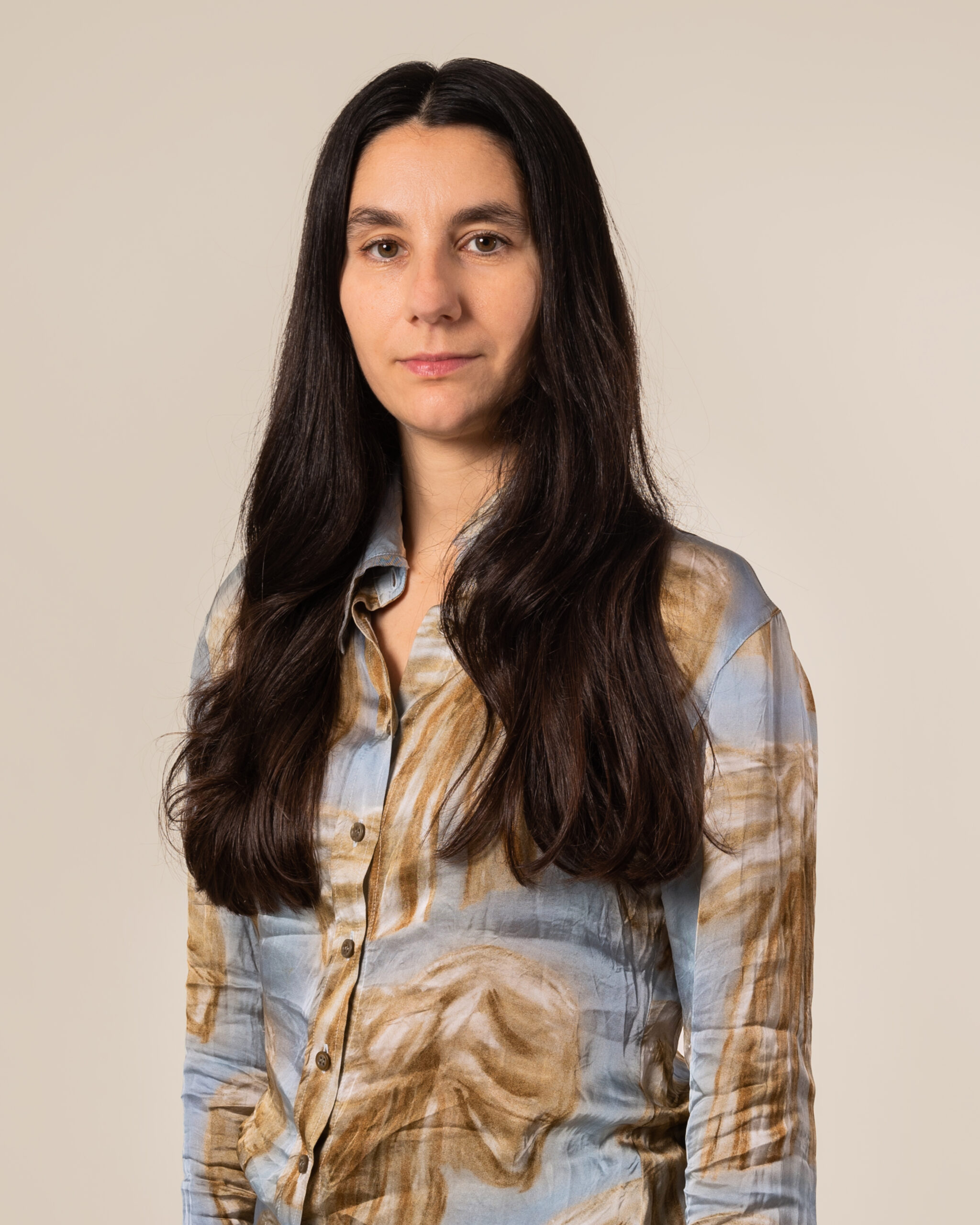
Cecilia Valenti is a Junior Professor for Film Studies at the Institute for Film, Theatre, Media and Cultural Studies, Johannes Gutenberg University Mainz. Her research spans feminist postcolonial theory, archival practices of world cinema, television history, and militant documentary traditions. She actively organizes the IMACS Master's program and participates in academic self-governance via the Georg Forster Forum. Valenti's publications focus on global film heritage, feminist media critique, and political film practices. Her work intersects with 1930s left-wing cinema, archival activism (e.g., Cinemien network), and feminist reworkings of militant film. She teaches seminars on anti-colonial film practice, including Sarah Maldoror's work. She is affiliated with the Zeughauskino Berlin's archival department and co-founded the curatorial collective 'The Canine Condition,' which organized film series in Berlin, Frankfurt, Vienna, and London (2009–2017). Her contact details: cevalent@uni-mainz.de, phone +49 (6131) 39-31750, office hours Wednesday 4-5 PM by appointment.
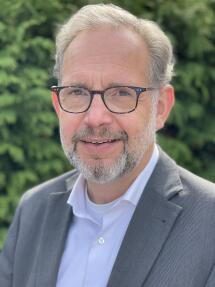
Dr. Christian Peters is an Associate Professor of Church History at the University of Münster , leading the Institute for Westphalian Church History and the Münster Research Centre for Pietism . His scholarly contributions focus on the evolution of Reformation-era theology , Pietist movements , and territorial church governance from the 16th to 18th centuries. Peters' research spans 21st-century church historiography , confessional text analysis , and regional Protestant developments . His recent publications explore Westphalian church orders , Reformation jubilees , and early modern liturgical materials , with a particular emphasis on Lutheran and Reformed interplay and territorial identity formation . His editorial work includes the Yearbook for Westphalian Church History (2018-2024), reflecting his role in academic publishing and interdisciplinary collaboration . Peters has also contributed extensively to lexicographic entries in Die Religion in Geschichte und Gegenwart and Luther Handbuch , focusing on Reformation figures and confessional doctrines .
Dr. Matthias Möller is a researcher and academic coordinator at the University of Freiburg, currently serving as Scientific Coordinator of the Strategy Network KulturWissen vernetzt since July 2021. He holds a doctorate from the Ludwig Uhland Institute for Empirical Cultural Studies in Tübingen (2012) and has held academic roles including Acting Professor at the Institute for Cultural Anthropology and European Ethnology (2019–2020) and lecturer at University College Freiburg (2015–2018). His work focuses on social movements, urban studies, right-wing extremism, and cooperative housing. Education: Master's degree in Empirical Cultural Studies, Sociology, and Computer Science (2005) Doctorate, Ludwig Uhland Institute for Empirical Cultural Studies, Tübingen (2012) Research Interests: His research explores cultural knowledge networks, self-organization in housing cooperatives (e.g., Freidorf), right-wing populism, and urban-rural dynamics. Key projects include GrundRisse – A Neighborhood in Transition (2019–2021) and the Work is Work project (2017–2019). He has authored monographs like Living in Cooperation (2015) and co-edited volumes on housing and social movements. Teaching & Grants: Recent courses include seminars on urban-rural representations and cultural anthropology methods. He has received grants from the Hans Böckler Foundation and coordinates interdisciplinary projects linking academia with museums and urban initiatives. Professional Networks: Active in organizations like the German Society for Empirical Cultural Studies and the Société Internationale d'Ethnologie et de Folklore. He organizes conferences on topics like mobility and civil society, and has presented widely on housing cooperatives and political radicalism.
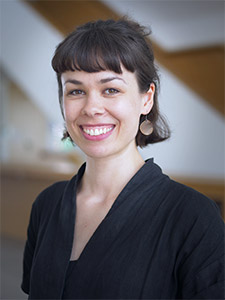
Dr. Julia Winkler is a Researcher at the Chair of Communication Psychology and New Media at the University of Würzburg , Germany. She earned her doctorate in 2023 with the dissertation topic "The experience of emotional shifts as a narrative process." Her research focuses on narrative psychology , media effects on emotional states , and climate change communication , particularly through fictional narratives. She has extensively published on emotional shifts in stories, narrative transportation, and strategies to counter extremist online content. Education: MA and BA in Media and Communication Studies (University of Mannheim) Her recent publications analyze emotional responses to media stimuli (2024), event-congruent emotions in narrative persuasion (2023), and radicalization prevention through media literacy education (2020–2017). She actively contributes to understanding how narrative structures influence affective experiences and decision-making, with a special interest in climate communication strategies. Her work appears in journals like Frontiers in Psychology , Media Psychology , and Discourse Processes , as well as edited volumes on extremist propaganda prevention.
Dr. Christoph Günther is a researcher at the Institute of Ethnology and African Studies at Johannes Gutenberg University Mainz, where he leads a BMBF-funded Junior Research Group on Jihadism on the Internet since 2017. Previously, he served as a Guest Professor at the same institution during Summer Semester 2016, hosted by Prof. Dr. Matthias Krings. His academic journey includes research positions at the Max Planck Institute for Social Anthropology in Halle/Saale until 2016 and teaching appointments at the Universities of Marburg and Leipzig. PhD from University of Leipzig (2013) MA in Islamic Studies, History and Arabic Studies from University of Bamberg (2002-2008) Studies at University of Cairo (2004/2005) DFG Research Training Group Fellow at University of Leipzig (2010-2013) Dr. Günther specializes in the ideology and visual culture of the Islamic State (IS), with particular focus on jihadist online propaganda, visual communication strategies, and the intersection of religious ideology with state-building aspirations. His research examines how IS constructs authority through visual media and how these materials are received and appropriated by various audiences. He is recognized as an expert in this field and is frequently consulted by media outlets for his in-depth knowledge of IS propaganda mechanisms. His research has identified significant shifts in jihadist propaganda quality since 2013, moving beyond traditional political or Islamic studies approaches to incorporate media-cultural and media-anthropological perspectives. This interdisciplinary approach provides novel insights into jihadists' self-perception and how their messaging resonates with different audiences, including non-regional viewers in the 'Global North' and regional Arabic-speaking populations. Regular media commentator on IS ideology and visual culture Organizer of the 'Jihadi Audiovisualities' conference (October 2018) Conducted research on IS propaganda targeting Western audiences Investigated regional Arabic material from Syria and Iraq Analyzed Boko Haram's Hausa-language propaganda Dr. Günther's work bridges academic research and practical counter-terrorism efforts through his contributions to understanding jihadist justification narratives and potential counter-narratives. His research has significant societal relevance given the evolving nature of online radicalization and the professionalization of jihadist media production.
Prof. Dr. Sybille Bauriedl is Professor in the Department of Integrative Geography at the University of Flensburg, serving as Head of the Study Program for the Interdisciplinary Institute for Environmental, Social and Human Sciences and Deputy Institute Spokesperson. Her institutional roles position her at the intersection of critical geography, environmental justice, and social transformation. Her research spans: Urban political ecology with focus on metabolic urbanism and climate justice Feminist critiques of platform capitalism in care and urban services Decolonial methodologies in mapping and spatial memory practices Gendered dimensions of climate adaptation and urban governance Critical analyses of smart city discourse and platform urbanism Analysis of her 2022-2025 publications reveals a concentrated focus on the platformization of urban life, particularly examining how digital platforms transform care work, urban metabolism, and spatial justice in European cities. Her work consistently integrates feminist and post-colonial perspectives into critiques of techno-capitalist urban restructuring, with growing attention to climate-resilient rural-urban cooperation models. While no formal advising relationships or scientific awards are documented in the provided materials, her institutional leadership roles suggest significant administrative and educational contributions. Her departmental focus on Integrative Geography reflects her commitment to transdisciplinary approaches addressing environmental and social crises.
Prof. Dr. Britta Frede is Acting Professor for the Chair of Islamic Studies at the University of Bayreuth since April 2022 and a Postdoctoral Researcher in the DFG Cluster of Excellence Africa Multiple. Her work focuses on translocal relations and global interconnections of Muslim Africa since 1800, Islamic education, manuscript culture, and popular Islamic movements like Sufism and the Muslim Brotherhood, with regional expertise in North Africa (Maghreb/Mauritania) and sub-Saharan Africa (East Africa/Kenya). Doctorate in Islamic Studies, Free University of Berlin (2012) Editor of the Africa section of the Orientalistische Literaturzeitung (2024–) Member of academic councils and editorial boards, including Islamic Africa (Brill) Her research explores Islamic education systems, Saharan manuscript traditions, and gender dynamics in Islamic authority. Recent publications analyze transcontinental manuscript collaboration, traditional female learning circles in Nouakchott, and postcolonial governance of Islamic heritage. She has received the Annemarie Schimmel Foundation Research Prize (2015) and Hedwig Hintze Women's Promotion Prize (2013). Her grants include Volkswagen Foundation and DFG funding for projects on Islamic reform, de-radicalization, and manuscript preservation.
Dr. Clara-Auguste Süß is a postdoctoral researcher and Associate Fellow at the Peace Research Institute Frankfurt (PRIF), where she contributes to the Research Department Intrastate Conflict and the Research Group Radicalization, Terrorism, and Extremism Prevention. Since May 2024, she has also served as Postdoctoral Research Fellow and Outreach & Transfer Manager at the Merian Centre for Advanced Studies in the Maghreb (MECAM), hosted by the German Institute for Global and Area Studies (GIGA). Her work bridges academic research and policy engagement in the fields of political violence, social movements, and extremism in North Africa. Education: PhD in Political Science, Goethe University Frankfurt (2023) M.A. in Political Science, Philipps University Marburg (2017) B.A. in Political Science and Communication Studies, TU Dresden (2014) Her research centers on Islamist radicalization processes, political transformation, and marginalization in Tunisia, particularly in the aftermath of the Arab Spring. She investigates how socioeconomic grievances, political opportunities, and framing processes contribute to radicalization, with a strong emphasis on empirical and policy-relevant analysis. Her work also explores co-escalation dynamics in contentious politics and the impact of global crises—such as the pandemic and the war in Ukraine—on extremist mobilization in the MENA region. Dr. Süß’s recent publications reflect a consistent focus on comparative studies of Egypt and Tunisia, the role of state and societal responses to extremism, and interdisciplinary approaches to peace and conflict research. Her articles span academic journals, policy briefs, and public commentary, demonstrating a commitment to knowledge transfer and public engagement. Scientific Awards and Recognitions: Friedrich Ebert Foundation Scholarship (2015–2017) She has actively contributed to academic governance as a Board Member of the EuroMeSCo Young Researchers Lab (2022–2023), Representative of the PRIF board for assistants (2021–2023), and member of the Leibniz PhD Network (2019–2021). Her advisory role is implied through collaborative publications and leadership in research projects, though no formal PhD students are listed. She has been involved in major research alliances such as PRIF’s Radicalization, Extremism, and Terrorism Prevention group and contributes to high-impact policy assessments like the Friedensgutachten. Her work is embedded in transnational research networks focused on the Maghreb, social movements, and conflict prevention.
Dr. Andreas Dafnos is a Researcher at the Institute of Political Science, Bundeswehr University Munich, focusing on comparative digital dynamics of riots and multi-method integration within the SPARTA research project. He previously completed his Ph.D. at the University of Sheffield (2021) with a thesis on the mobilization processes of the British far-right (2009–2019) and holds a double Master’s Degree in Public Policy and Human Development from Maastricht University and the United Nations University, as well as a Bachelor’s in Business Administration from Athens University of Economics and Business. Current affiliations: Institute of Political Science, Bundeswehr University Munich; Centre for Analysis of the Radical Right (CARR) Fellow Education: Ph.D. (Sheffield), MSc (Maastricht/UNU), BSc (Athens UoE) His research interests span Social Movement Theory , Political Extremism and Radicalization , Social Media Analytics , and Far-Right Politics . His work includes protest event analysis, automated event extraction tools for far-right studies, and analysis of violent conspiratorial narratives in extreme right manifestos. Recent projects include transnational radical-right mobilization in the UK, the Right-Wing Terrorism and Violence (RTV) Dataset, and the European Violent Right-Wing Extremism Monitoring Project, where he serves as a country expert for Greece, Cyprus, and the UK. His publications address topics such as the 2009–2019 far-right mobilizations in Britain, the Battle of Cable Street's legacy, and methodologies for countering radicalization. He is fluent in Greek and English.
Dr. Jannis Julien Grimm is a Researcher at the Institute for Social Movement and Protest Studies (ipb) and the Center for Middle Eastern and North African Politics at Freie Universität Berlin. He holds dual roles as Regional Coordinator for Trade Unions and Social Justice in the MENA region and Libya Policy Analyst at the Friedrich-Ebert-Stiftung (since 2019). His academic career includes doctoral research on post-revolutionary Egypt’s protest dynamics, culminating in his 2020 thesis and 2022 book Contested Legitimacies . He co-leads the SAFEResearch project, developing fieldwork safety protocols, and contributes to academic journals like Forschungsjournal Soziale Bewegungen . His work bridges political theory with empirical research on authoritarianism, social mobilization, and academic freedom in the Middle East. Education: Studied Middle Eastern Studies and Political Science in Münster, Berlin, and Cairo. Completed PhD at the Berlin Graduate School Muslim Cultures and Societies (2015–2019). Research Interests: Focuses on protest dynamics, authoritarian restoration in post-Arab Spring states, and researcher safety in hostile environments. Explores discursive strategies in contentious politics, particularly how narratives shape mobilization and repression outcomes in Egypt and MENA. Grants & Projects: Led SAFEResearch (since 2016) and contributed to SWP Berlin’s ‘Elite Change in the Arab World’ project. Supervised by Prof. Cilja Harders and Prof. Carola Richter during doctoral studies. Labs/Teams: Active at ipb and the Center for Middle Eastern Politics. Convenes the Politics from Below colloquium on social movement theory.
Al Makin is a Lecturer at the Faculty of Ushuluddin, State Islamic University Sunan Kalijaga in Yogyakarta, Indonesia. He is also a regular contributor to The Jakarta Post's op-ed column, where he writes extensively on issues related to Islam, politics, and society in Indonesia and the broader Muslim world. His educational background includes a Ph.D. in Islamic Studies from Ruprecht-Karls University, Heidelberg, Germany (2008), an M.A. in Islamic Studies from McGill University, Montreal, Canada (1999), and a B.A. in Islamic Studies from State Islamic University, Sunan Kalijaga Yogyakarta, Indonesia (1996). Dr. Makin's research primarily focuses on the history and literature of the formative period of Islam. He proposes that during Islam's emergence, there were multiple local Arab cults with Judeo-Christian influences and several claimants to prophethood, including figures like Musaylima and Umayya. His work challenges traditional narratives by suggesting a more complex religious landscape during Islam's formative years. Additionally, he extensively researches modern Indonesian Islam, examining the tensions between radical and moderate interpretations, religious pluralism, and the role of Islam in contemporary Indonesian politics and society. His body of work demonstrates a consistent concern with religious freedom, pluralism, and the dangers of religious extremism in Indonesia. Throughout his career, Dr. Makin has been awarded several scholarships and grants that have supported his academic work. He previously served as a Visiting Research Fellow at the Käte Hamburger Kolleg from April 2009 to March 2010, where he conducted research on 'Self-Reflection in the Transmission of the Rival's Message,' comparing the poems of Umayya (a contemporary claimant to prophethood during Muhammad's time) with the Quran. Dr. Makin has established himself as a prominent voice in Indonesian intellectual discourse, particularly regarding the challenges facing Indonesian Islam. His writings consistently advocate for religious tolerance, intellectual freedom, and a nuanced understanding of Islam that can coexist with modern democratic values. He has documented the increasing influence of conservative and radical voices in Indonesian religious institutions and politics, while offering critical analysis of how these developments affect Indonesia's social fabric and democratic institutions.
Prof. Dr. Andreas M. Bock is Professor of Political Science and Chair of Uncertainty Research at Akkon-Hochschule für Humanwissenschaften in Berlin. He teaches in the Master's program in Crisis, Conflict & Disaster Communication and the Bachelor's in International Emergency and Disaster Relief. His academic background includes a doctorate from Ludwig-Maximilians-Universität München, with prior teaching roles at the Geschwister-Scholl-Institute, Bundeswehr University Munich, and the University of Augsburg. Doctorate in Political Science, Ludwig-Maximilians-Universität München Studied political science, social psychology, and international law Thesis on John Rawls’s 'The Law of Nations' Andreas Bock’s research centers on international relations, conflict analysis, and the psychological dimensions of security and crisis decision-making. He investigates how cognitive phenomena such as inattentional blindness and misperception influence foreign policy and crisis responses. His work bridges theoretical political science with practical crisis management, drawing on historical analogies like the Cuban Missile Crisis and contemporary issues such as the Iranian nuclear program and terrorism. His recent publications reflect a consistent focus on geopolitical crises, threat perception, and transformative learning in conflict resolution. He frequently analyzes how actors fail to perceive looming dangers due to cognitive biases. His articles span topics including NATO-Russia tensions, counterterrorism strategies, refugee discourse, and nuclear proliferation, often employing interdisciplinary frameworks from psychology and philosophy. Bock has contributed to numerous peer-reviewed journals such as Zeitschrift für Außen- und Sicherheitspolitik , International Journal , and Journal of Strategic Security , as well as public platforms like Zeit Online and Psychologie Heute. His forthcoming monograph, Walking Blindly into Disaster? The Psychological Dimension of International Conflicts , further develops his core thesis on cognitive failures in global politics. Bock has been actively involved in research projects related to international assistance and crisis resilience. He is affiliated with the Institute for Research in International Assistance (IRIA) and has contributed to studies on intercultural competencies in emergency services and risk assessment. He has also gained substantial practical experience as a project coordinator for NGOs such as Humedica and Caritas, managing humanitarian operations in Pakistan and Albania. This field experience informs his academic work, particularly in disaster response and conflict transformation. While no formal advising or grant data is listed, his collaborative research with scholars like Ingo Henneberg and Fatma Zan indicates active academic engagement. His conference presentations at ISA, MPSA, and AABSS highlight his international scholarly presence.
Nader Hotait is a Researcher and PhD candidate at the Berlin Institute for Empirical Integration and Migration Research (BIM) at Humboldt University Berlin. His current doctoral research at the University of Mannheim's Graduate School of Economic and Social Sciences (GESS) focuses on Islamist radicalization narratives. He holds an MA in Sociology from the University of Potsdam and a BA in Social Sciences from the University of Augsburg and Humboldt University Berlin. His academic career includes roles as a research associate at Humboldt University (since 2021), honorary researcher at the DeZIM Institute, and research positions at the University of Potsdam and WZB Berlin Social Science Center. His teaching portfolio includes courses on Political Islam, Social Inequality, and Social Structure Analysis. Key research interests include social inequality mechanisms, religious communities, migration studies, and the intersection of digital technologies with these fields. He leads projects like 'Deutscher Islam als Alternative zum Islamismus?' (BMBF-funded) and co-directs the 'DIGITSOC' research unit analyzing digital societies. His methodological expertise includes mixed-methods research and data science, reflected in his R package 'estatclass' for statistical analysis.
Prof. Dr. Julian Junk is Professor for Extremism Research and Resilience to Extremism at the Hesse State University of Applied Sciences for Public Management and Security (HöMS), where he also heads the Research Center for Resilience to Extremism. He concurrently serves as Head of the Research Group on Radicalization, Terrorism, and Extremism Prevention at the Peace Research Institute Frankfurt (PRIF), a leading Leibniz Institute. He has held academic and research positions at Leipzig University, Potsdam University, Goethe University Frankfurt, and Freie Universität Berlin, and has been a visiting scholar at Columbia University, University of Hamburg, and WZB Berlin. Master of Public Administration and Management, University of Konstanz, Lund, and IEP Aix-en-Provence (2006–2010) Julian Junk’s research centers on radicalization, extremism, and security policy, with a strong focus on evaluation methodologies in prevention programs (P/CVE). His work explores the dynamics of digital radicalization, the role of civil society in deradicalization, and the ethical challenges of researching extremist content online. He contributes significantly to the conceptualization of radicalization as a multidimensional process, advocating for inclusive and evidence-based policy interventions. His recent publications analyze trends in online extremism, evaluation frameworks in multi-agency prevention settings, and transnational security risks such as political polarization and right-wing terrorism. He has co-edited influential volumes on security studies, UN peacekeeping, and radicalization, and regularly contributes to the annual Friedensgutachten (Peace Report) on transnational security risks. Contributor, Friedensgutachten (Peace Report) on Transnational Security Risks (2018–2025) Member, Federal Task Force on Islamism Prevention Julian Junk leads the PrEval research network, focusing on evaluation in extremism prevention, and has directed major research projects such as RADIS, VORTEX, and KURI. He collaborates extensively with governmental and civil society actors to transfer academic insights into practice. His work emphasizes the importance of ethical research, democratic resilience, and interdisciplinary collaboration in addressing contemporary security challenges. He has advised and collaborated with institutions including the European Commission (Radicalisation Awareness Network), German Federal Government, and various Leibniz associations. His editorial roles include co-editing special issues and books on security studies and radicalization.