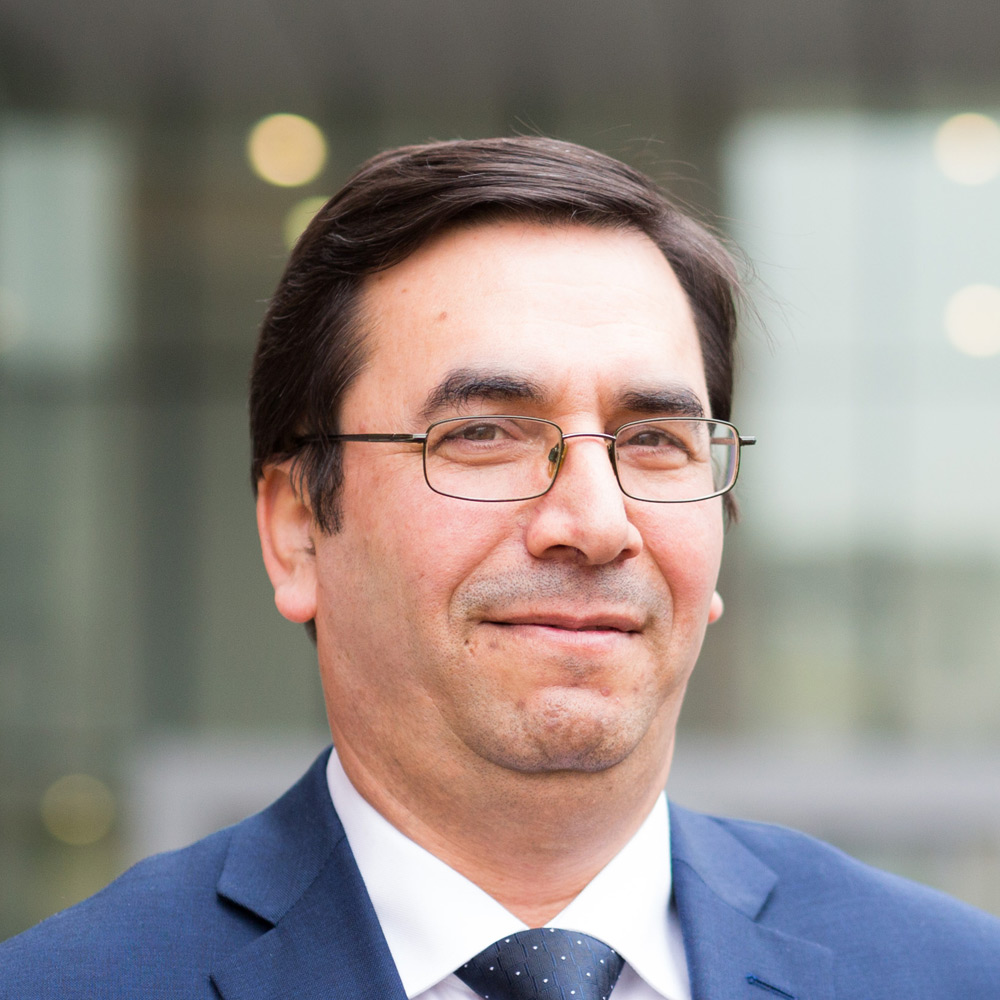
Professor Richard Bellamy is a leading scholar in political science and constitutional theory at University College London (UCL) and serves as a Senior Fellow at the Hertie School, Berlin. He holds a PhD from the University of Cambridge and has held visiting positions across Europe and Australia. Doctor of Philosophy , University of Cambridge (1983) MA Cantab , University of Cambridge (1979) His research spans democratic theory , republicanism , constitutionalism , and EU studies , with a focus on Italian political thought and global ethics . His recent articles explore rule of law , data ethics , and EU differentiated integration . He has authored over 150 publications and 11 monographs, including the acclaimed Political Constitutionalism . Key awards include: Fellow of the British Academy (2022) 2016 PADEMIA Research Award Serena Medal (2012) David and Elaine Spitz Prize (2009) Fellow of the Academy of Social Sciences (2008) Member, Academia Europaea (2024) Bellamy has supervised 24 PhD students and led major Leverhulme , ESRC , and European Commission projects. His current work includes Defending the Political Constitution (Oxford UP) and The Democratic Prince (political leadership study). He co-edits The Cambridge Companion to Constitutional Theory and The Cambridge Dictionary of Political Thought .
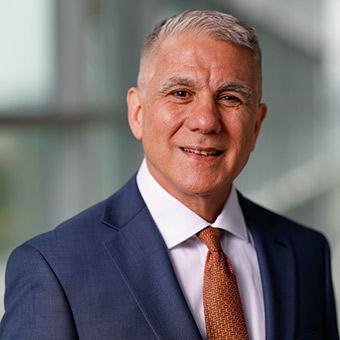
Professor Mehmet Demirbag serves as Deputy Dean of Essex Business School and Professor of International Business at the University of Essex. Previously, he held significant leadership roles including Vice Dean (Internationalisation) and Head of Department of Strategy and Organisation at Strathclyde Business School, and Chair in International Business at the University of Sheffield Management School. His extensive academic career spans over a decade in UK higher education institutions with specialized expertise in international business strategy. Dr. Demirbag completed his Master's degree in Business Analysis at the University of Leicester and earned his PhD at the University of Bradford Management School. His educational background established the foundation for his research focus on international business phenomena, particularly regarding emerging economies and multinational enterprises. His research interests center around internationalisation of R&D activities, offshore R&D, FDI location choice, product and regional diversification strategies of MNEs, multinationals from emerging countries, international mergers and acquisitions, and reverse knowledge transfer by emerging country MNEs. These interconnected research streams examine how firms navigate global markets, particularly focusing on the strategic behavior of emerging market multinationals and their interactions with developed economies. Analysis of his recent publications reveals consistent thematic patterns across international business, strategic management, and human resource management domains. His work demonstrates particular emphasis on emerging market multinationals, cross-border knowledge transfer mechanisms, international strategic decision-making in uncertain environments, and the institutional contexts shaping multinational enterprise behavior. The interdisciplinary nature of his research bridges theoretical frameworks from international business, strategic management, and organizational studies. Professor Demirbag maintains active editorial roles as consulting editor of the Journal of International Management and advisory editor of Eurasian Business Review. He has co-guest edited special issues for numerous prestigious journals including British Journal of Management, Human Resource Management, Journal of World Business, and International Business Review, among others. His editorial contributions span research areas related to emerging market MNEs, MNEs in emerging markets, transitional periphery contexts, and human resource management in uncertain environments. As an educator, Professor Demirbag teaches International Business and International Strategic Management at undergraduate, postgraduate, and executive levels. His supervision portfolio includes doctoral candidates such as Selman Alisan Gemuhluoglu and previously guided Koushik Das Sarma to completion of their PhD in Business Administration. His research has received funding from various sources including the European Commission, and his work on FDI and SMEs has contributed to REF impact cases at both the University of Bradford and the University of Sheffield.
Benjamin Mangrum is Associate Professor of Literature at MIT's School of Humanities, Arts, and Social Sciences, specializing in 20th/21st-century literature, digital humanities, and environmental humanities. His scholarship examines literature's engagement with technology, environmental crisis, and political liberalism. Dr. Mangrum's research analyzes computational obsolescence, environmental rights discourse, and the intersections of literary form with political thought. His publications demonstrate interdisciplinary approaches combining literary criticism with philosophy, digital studies, and environmental theory. Recent publications show growing engagement with energy humanities, data visualization ecologies, and artificial intelligence's cultural implications. His work consistently examines how literary forms mediate technological change and environmental consciousness. Awards: Levitan Prize (2023) Fellowships: Michigan Society of Fellows Professor Mangrum teaches courses on comedy, science fiction, environmental literature, and AI at both undergraduate and graduate levels.
Jeffrey Shoulson is Professor of English at Brandeis University, serving concurrently as Vice Provost for Undergraduate Affairs and Dean of Undergraduate Studies. His academic career spans roles at the University of Connecticut, Middlebury College, and University of Pennsylvania. Ph.D., Yale University M.Phil., University of Cambridge B.A., Princeton University Specializing in early modern literature and culture, Shoulson's research examines Jewish-Christian intellectual encounters (16th-17th centuries), Bible translation history, and religious cultural intersections. His work bridges literary analysis with historical research on cultural intermediaries. Recent publications analyze early modern moral frameworks (2025), Renaissance global networks (2019), and comparative inquisitorial practices (2023). Articles demonstrate expertise spanning religious ritual (2022), diasporic identity (2017), and Hebraic influence on English literature (2015). Doris and Simon Konover Chair of Judaic Studies (2012-2017) Ruth and Lillian Marino Chair (2014) Salo W. Baron Prize (2002) Fulbright Fellowship (1989-1990) Shoulson's administrative leadership includes directing undergraduate studies while maintaining active research. He has held prestigious fellowships at the Katz Center for Judaic Studies and Fulbright programs.
Veronique Munoz-Darde is Professor of Philosophy at University College London (UCL) since 1994 and concurrently at UC Berkeley since 2009. Her primary institutional affiliations are with the Department of Philosophy in UCL's Faculty of Arts and Humanities and Berkeley's College of Letters and Science. She holds a PhD from the European University Institute (1994) and maintains active transatlantic academic engagement. Her research centers on practical reasoning, ethics, and political philosophy with specific focus areas including: aggregation and numbers in practical reasoning; transitivity of 'better than'; social significance of risk; justification of taxation; nature of regret; social goods like universities and museums; and political ideals of equality, fraternity, and solidarity. Her work bridges abstract ethical theory with concrete political applications, particularly through Rawlsian frameworks. Analysis of her 15 most recent publications reveals consistent engagement with foundational questions of justice through multiple lenses: contractualist thought (Rawls, Scanlon), value theory, institutional design, and moral psychology. Key thematic clusters include the critique and development of egalitarian frameworks, analysis of political emotions (fraternity, regret), and examination of social goods under austerity. Her methodology combines conceptual rigor with attention to real-world political constraints. She has held visiting positions at Harvard University and the École des Hautes Études en Sciences Sociales. Her major publications include the monograph La justice sociale: le libéralisme égalitaire de John Rawls (2001) and the forthcoming The Regulation of Intimacy . Current teaching includes seminars on Equality, Hume's Treatise, Raz's Morality of Freedom, Contractualist thought, and Regulation of Intimacy at both institutions. Her research addresses Sustainable Development Goals 1 (No Poverty), 4 (Quality Education), 5 (Gender Equality), and 10 (Reduced Inequalities), demonstrating commitment to philosophy's practical social relevance. She maintains active scholarly presence through ORCID (0000-0002-3718-0936) and Academia.edu.
Mathias Risse is the Berthold Beitz Professor in Human Rights, Global Affairs and Philosophy at Harvard Kennedy School (HKS), where he also directs the Carr-Ryan Center for Human Rights and the Program on the Ethics of Emerging Technologies. He teaches at HKS, Harvard College, and the Harvard Extension School, and is affiliated with the Philosophy Department and the Weatherhead Center for International Affairs. Education & Career: Risse earned his PhD from Princeton University (2000) and previously taught at Yale University. He has held visiting roles at the National University of Singapore, NYU Abu Dhabi, and Leuphana University (Germany). He joined Harvard in 2002 and currently resides in Somerville, MA. Research Focus: His work bridges political philosophy and technology ethics, addressing global justice, human rights, climate change, and the societal impacts of AI. Key themes include Indigenous philosophies, digital governance, and ethical trade frameworks. Recent books include Political Theory of the Digital Age (2023) and On Trade Justice (2019). Awards & Leadership: Risse organizes international conferences fostering cross-cultural collaboration, directs the McCloy Fellowship program for German students, and co-hosts the Carr Center’s Justice Matters podcast. His writings on race, protest, and technology ethics have shaped public discourse. Grants & Outreach: He advises on AI ethics, climate policy, and global governance. Recent projects include analyses of solar geoengineering, Indigenous rights frameworks, and the societal implications of advanced AI systems. Labs/Teams: Central roles in the Edmond J. Safra Center for Ethics, the Carr Center for Human Rights Policy, and interdisciplinary initiatives on emerging technologies.
Dr. Sulamith Graefenstein is a Visiting Fellow at the Australian National University's Centre for Heritage and Museum Studies, within the School of Literature, Languages & Linguistics. Her research focuses on Memory Studies and Museum Studies, examining how human rights museums and memorial institutions shape transnational justice and solidarity, particularly in contexts of Holocaust memory and colonial histories. She holds a PhD in Museum Studies from ANU, an MA in Cultural Studies from the University of Konstanz, and a BA in European Studies from Karlsruhe Institute of Technology. Her work spans international research in Belgium, Austria, Canada, the U.S., and South Korea, with notable publications analyzing multidirectional memory frameworks, decolonial memorial practices, and methodological challenges in youth identity research. Key topics include the role of monuments (e.g., Sydney’s Comfort Women statue), human rights narratives in museums, and intersections of Holocaust memory with colonial violence. Notable outputs include her 2025 chapter on transnational memory in human rights museums and her 2013 book critiquing Australia’s colonial history representation in its national museum. Her 2020 article on survey methodologies for non-binary identities demonstrates interdisciplinary reach.
David Caldwell is an Associate Professor at the School of Education within UniSA Education Futures at the University of South Australia. His research focuses on transdisciplinary learning, particularly in the context of ecojustice and place-based education. He co-led the Fresh Water Literacies project, funded by UniSA's Research Themes Investment Scheme, which developed interdisciplinary curricula to address sustainability and ecological literacy in primary education. His work often bridges education, environmental science, and social semiotics. Key contributions include publications on pre-service teacher training, linguistic analysis in sports discourse, and innovative pedagogical approaches in diverse educational settings. He collaborates with regional organizations like Natural Resources Management (NRM) and emphasizes collaborative, transdisciplinary research. His recent work explores NLP applications in creativity assessment and the role of language in shaping cultural identities. David also serves as a Research Degree Supervisor, contributing to the academic development of emerging scholars in education and linguistics. His research highlights intersections between education, ecology, and cultural systems, aiming to foster socially just and scientifically literate communities.
Marjan Moosavi is the Roshan Clinical Assistant Professor in Persian Studies and Performing Arts at the University of Maryland, affiliated with the School of Languages, Literatures, and Cultures and the School of Theatre, Dance, and Performance Studies. She also serves as Associate Director of PersDig@UMD under the Roshan Institute for Persian Studies, leading digital humanities initiatives. Her research focuses on transnational theatre practices, Middle Eastern performance, and intersections with gender, history, and politics. Education: She holds a Ph.D. in Theatre and Performance Studies from the University of Toronto. Professional roles include Regional Managing Editor for TheTheatreTimes.com and leadership in projects like the Persian Digital Humanities Initiative. Research Interests: Her work explores Performance in Middle Eastern contexts Counter-sacred and political dimensions of Iranian theatre Transnational digital curation and pedagogy Shakespearean adaptations in Iranian culture Border challenges for MENA scholars in global conferences Advising and Grants: She mentors graduate students and designs curricula at the University of Maryland. Her grants include the Roshan Initiative supporting digital humanities projects. Recent work highlights include organizing the Woman, Life, Freedom lecture series on Iranian protest theatre and curating the Rebels and Revels virtual exhibit of MENA theatre photos. Labs/Teams: Core member of the Roshan Institute for Persian Studies and PersDig@UMD digital humanities team. Collaborates with the School of Theatre, Dance, and Performance Studies on transdisciplinary projects.
Andrew Peterson is a Professor of Character and Citizenship Education at the University of Birmingham's School of Education, affiliated with the Jubilee Centre for Character and Virtues. He holds an adjunct professorship at the University of South Australia. His research explores the intersection of character and citizenship education, focusing on civic virtues, compassion, and global citizenship. Peterson has authored/co-authored over a dozen books, including Compassion and Education and co-edited major handbooks on citizenship and social justice. Education: PhD, University of Kent/Canterbury Christ Church University College MEd, The Open University MA in Philosophy, University of Kent PGCE Post-Compulsory Education, Canterbury Christ Church University College BA/BSc, Canterbury Christ Church College Research Interests: Peterson investigates civic virtues, democratic deliberation, and the moral dimensions of education. His work bridges historical, philosophical, and policy-oriented perspectives, addressing issues like religious education, history curricula, and youth activism. He leads the Leverhulme Trust-funded project on youth civic learning spaces and serves as editor for the Journal of Philosophy in Schools and assistant editor for the British Journal of Educational Studies . Grants & Collaborations: His Leverhulme Trust project examines new civic learning spaces shaped by youth activism. He has held an Australian Research Council DECRA Fellowship, focusing on global citizenship education in Australian high schools. His work is published in outlets like Studies of Philosophy of Education and Compare: A Journal of Comparative and International Education . Labs/Teams: Based at the Jubilee Centre, his team explores character and virtues education. Collaborations include international networks on global citizenship and social justice.
Dr Michał Wolski is an Assistant Professor at the Department of Editing, University of Wrocław’s Faculty of Philology. Specializing in literature and film studies, he holds degrees in Polish Philology (editing), Journalism, and Typography. His research focuses on vampire imagery, pop culture, comic book theory, and text aesthetics. Education: M.A. in Polish Philology (editing spec.), Journalism & Creative Writing, Academic Typography. PhD (2017): The Imagination of the Vampire in the Face of Models of the Contemporary Antihero . Research Interests: Cultural analysis of vampires in media, typographic design in publishing, superhero narratives, adaptation strategies, and Polish popular culture history. Publications: Authored Sensitive Bloodsuckers (2020), edited Lexicon of (Less Known) Vampire Films (2018), and published over 40 articles in journals like Zeszyty Komiksowe and Journal of Adaptation in Film and Performance . Leadership: Founded the Trickster research association, organized 20+ conferences, and contributed to 13 monographs on pop culture. Co-manages the POPkultura–POPliteratura book series. Projects: Led CLARIN infrastructure work (2013–2015) and editorial projects on vampire films. Currently oversees Stanisław Vincenz Archive initiatives. Labs/Teams: Active in the Department of Editorial Studies and Wrocław’s pop culture research networks.
Professor Katja Grötzner Neves of Concordia University is a leading scholar in socio-environmental governance and decolonization studies. Her work bridges political ecology, transdisciplinary research, and biodiversity conservation frameworks through institutional analysis of botanic gardens and marine environments. Full Professor, Sociology and Anthropology SSHRC-funded research on postnormal conservation Decolonial pedagogy innovator Co-PI for FRQNT/FRQSC network initiatives Key research areas include: Botanic gardens as conservation governance actors Neoliberalism's impact on environmental practices Transdisciplinary approaches to socio-ecological challenges Historical analysis of technological and environmental intersections Publication trends show: 2013-2024 focus on biodiversity governance 2004-2015 marine conservation studies 2011-2014 institutional transformation analysis 2007-2011 environmental knowledge production Scientific recognition includes: Outstanding Service Award (2013, Canadian Sociological Association) SSHRC/FRQ competitive grants exceeding $3.5M Notable media engagements: The Guardian feature by Naomi Klein (2010), expert testimony on Azorean heritage (2011), and international documentary participation (2011).
Fabio Petito is Professor of Religion and International Affairs (International Relations) in the School of Global Studies at the University of Sussex. He is also the founding Director of the Religion & Foreign Policy Initiative at the University of Sussex, Non-resident Senior Fellow at the Atlantic Council’s Freedom and Prosperity Center, and Head of the Religions & International Relations Programme at the Italian Institute for International Political Studies (ISPI), supported by the Italian Ministry of Foreign Affairs and International Cooperation. His academic background includes a PhD in International Relations from the London School of Economics and Political Science, an MSc in International Politics from Aberystwyth University, and a Laurea in Economic and Social Disciplines from Bocconi University, Milan. He has taught at SOAS, ESCP-EAP, and L’Orientale University. Petito’s research centers on the role of religion and civilizations in International Relations. He has pioneered work on religious engagement in foreign policy, the postsecular in global politics, and interreligious dialogue as a strategy for promoting Freedom of Religion or Belief (FoRB). His influential publications include Religion in International Relations (2003), Towards a Postsecular International Politics (2014), and Human Fraternity & Inclusive Citizenship (2021). He has also contributed to civilizational dialogue theory and the political theology of Carl Schmitt. His recent publications reflect a strong policy orientation, focusing on FoRB, sustainable development (SDGs), interreligious peacebuilding, and the integration of religious actors into foreign policy. These works demonstrate a shift from theoretical critique to actionable policy frameworks, emphasizing dialogue, inclusion, and integral human development. Non-resident Senior Fellow, Atlantic Council’s Freedom and Prosperity Center Member, OSCE/ODIHR Panel of Experts on FoRB (2019–2022) Expert Adviser, German Federal Ministry for Economic Cooperation and Development (2019–2020) Expert Adviser, EU Special Envoy for FoRB (2019–2019) Petito has supervised numerous PhD students in International Relations, Law, and Philosophy, including topics on Chinese international thought, Islamic eschatology, and Christian-Buddhist dual belonging. His research has been funded by the ESRC, British Council, Luce Foundation, and Italian Ministry of Foreign Affairs. He is currently working on projects linking religious engagement to the 2030 SDGs, human fraternity in the Mediterranean, and the theoretical implications of religious engagement for IR. He leads the Religion & Foreign Policy Initiative at Sussex and has collaborated with institutions such as the Community of Sant’Egidio, Wilton Park, and OSCE/ODIHR. His work bridges academia and policy, creating platforms for transatlantic and multilateral dialogue on FoRB and religious engagement.
Aaron John Spitzer is an Associate Professor of Arctic Governance at the Department of Comparative Politics, University of Bergen (UiB), Norway. He is co-leader of the international research project Indigenous Peoples and Governance in the Arctic and leads the ERC-funded Contested Frontiers (CONFRONT) project (2024–2029), which explores constitutional politics in settler-state peripheries. His academic work bridges comparative politics, constitutional law, and normative political theory. Research Interests: Arctic and Indigenous Governance Settler-Colonial Constitutionalism Metapolitics and the Boundary Problem Self-Determination vs. Liberal Democracy Truth Commissions and Transitional Justice Land Claims and Co-Management Institutions His recent publications analyze the Finnmark Act, Sami land rights, settler voting rights in US territories, and truth commissions in Norway and Canada. The articles reflect a consistent thematic focus on the tension between individual liberal rights and collective Indigenous self-determination, particularly in federal and post-colonial contexts. His methodological approach combines comparative case studies, legal analysis, and political theory. Scientific Awards and Funding: European Research Council (ERC) Starting Grant (101115513), 2024–2029 Advising and Grants: Aaron Spitzer has co-supervised PhD research, notably collaborating with Per Selle on Sami governance topics. He has secured major external funding, including from the Research Council of Norway (projects 302041, 274976, 248159, 259416, 230839), and leads a high-profile ERC project, indicating strong grant-writing capacity and leadership in Arctic political studies. Labs and Research Teams: Spitzer is co-leader of the Indigenous Peoples and Governance in the Arctic project and principal investigator of the Contested Frontiers (CONFRONT) research group. He collaborates extensively with scholars at UiB, Chr. Michelsen Institute, and UiT The Arctic University of Norway, forming a robust network in Indigenous and Arctic political studies.
Mikhaïl Xifaras serves as Professor of Public Law at Sciences Po's Law School since September 2008, holding a secondment position at New York University Abu Dhabi since 2021. His academic appointments include Visiting Professorships at Harvard Law School (since 2011) and Keio Law School in Japan (since 2012). His educational background spans multiple disciplines: Agrégation de l'enseignement supérieur in Public Law (2004), Agrégation in Philosophy (1993), and Doctorate in Philosophy from Besançon (2001). He graduated from the École Normale Supérieure of Fontenay-Saint Cloud in 1990. Xifaras specializes in the intersection of legal philosophy and political theory, with particular focus on property theory, critical legal studies, and the historical evolution of legal thought. His research examines how philosophical frameworks from Kant to contemporary critical theorists shape legal institutions, with recurring themes in global governance, democratic theory, and the critique of presidential systems. He explores property not merely as an economic institution but as a site of political struggle and emancipatory potential. His scholarly output demonstrates consistent engagement with structuralist and post-structuralist methodologies, particularly through Barthesian semiotics applied to legal doctrine. The articles reveal a trajectory moving from national legal theory toward global constitutionalism, with increasing focus on transnational commons and post-capitalist property models. Prix Ouverture Internationale of the Université Libre de Bruxelles (2003) Marie-Curie Grant from the European Commission (2003) Fulbright Scholarship at Harvard Law School (2000) Fondation Thiers Grant (1999) Junior Member of the Institut Universitaire de France (2006-2011) Xifaras has secured significant competitive research funding including European Commission grants and Fulbright support. His academic leadership includes directing doctoral programs and co-editing the journal Jurisprudence. His international collaborations span institutions in the United States, Japan, and across Europe, reflecting his transnational research focus. While specific lab affiliations aren't documented, his work with the Law School's Research Centre and participation in cooperative projects like Digilaw and Environmental Justice initiatives indicate active engagement with interdisciplinary research teams.