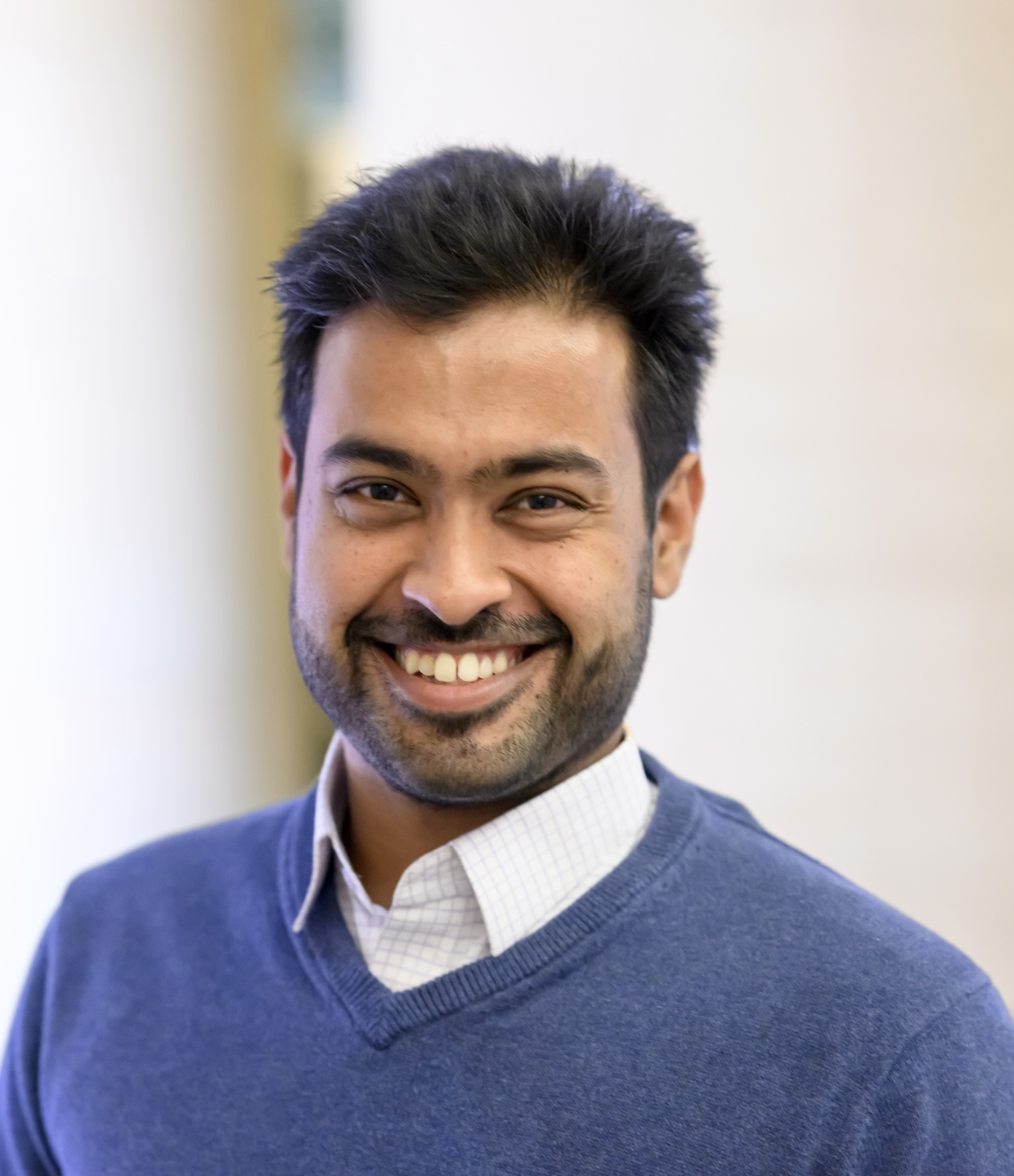
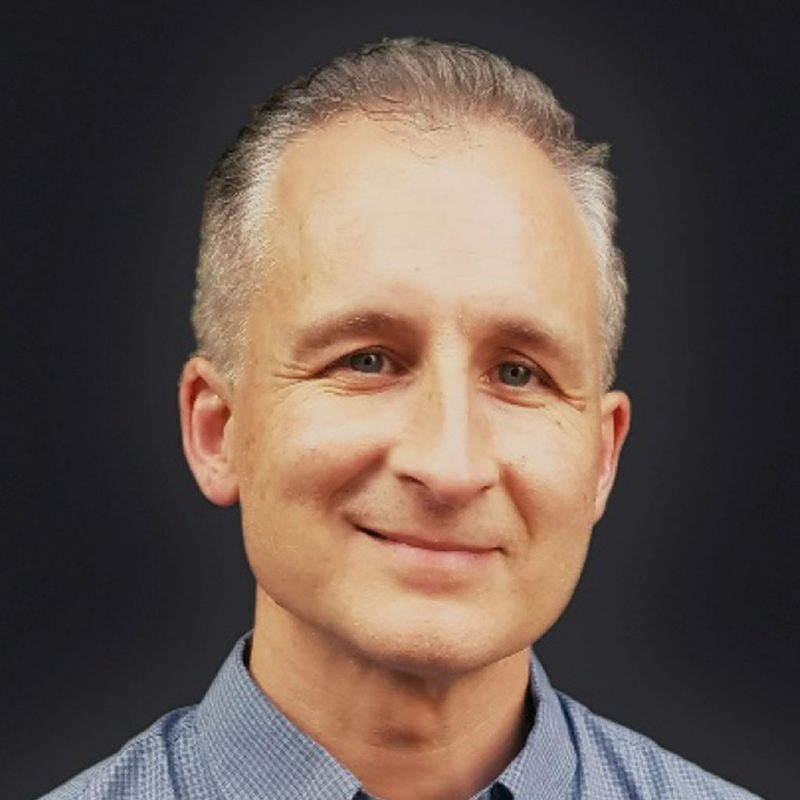
Kishalay De is an Assistant Professor in the Department of Astronomy at Columbia University and an Associate Research Scientist at the Center for Computational Astrophysics, Flatiron Institute. His research focuses on using wide-field imaging surveys to study cosmic transients from stellar binaries in the Milky Way and distant Universe. He specializes in analyzing data from missions like Palomar Gattini-IR (PGIR), Zwicky Transient Facility (ZTF), and NASA's WISE telescope to understand stellar cataclysms and their role in shaping the universe via gravitational waves and electromagnetic signatures. Affiliations: Columbia University, Flatiron Institute Education: PhD in Astrophysics (Caltech, 2021), B.Sc. Physics (Indian Institute of Science, 2016) His work includes discovering heavily obscured novae in the Galactic plane and characterizing infrared transients linked to stellar mergers and black hole accretion. He is leading a project analyzing 15 years of WISE archival data to study transient mid-infrared phenomena. Awards: NASA Einstein Fellowship (2021–2024), Kavli Institute Fellowship.
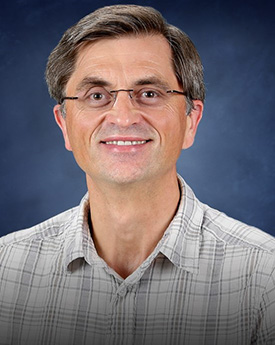
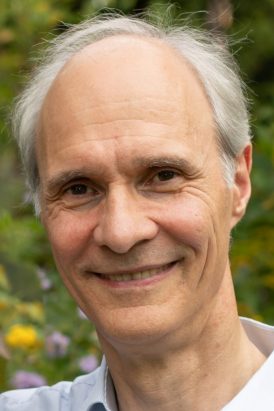
Professor Stephen Croft is a faculty member at Lancaster University , affiliated with the School of Engineering . His research focuses on Nuclear Materials Measurement Science , with expertise in radiation detection, neutron interrogation, and X-ray/gamma-ray spectroscopy. Current projects include cosmic ray neutron monitoring , active neutron interrogation of nuclear materials , and radiation damage assessment . His recent publications emphasize semi-empirical modeling of atomic interactions and advanced detection techniques for nuclear applications. He has contributed to understanding vacancy transfer probabilities , X-ray fluorescence cross-sections , and water detection in nuclear environments . His work supports nuclear security, power plant safety, and space weather monitoring. Scientific awards : None explicitly mentioned in the text. Research groups : Involved in Nuclear Space Weather initiatives.
Dr. Eleonora Di Valentino is a Senior Research Fellow at the University of Sheffield's School of Mathematical and Physical Sciences, specializing in cosmology and fundamental physics. Her research focuses on resolving cosmological tensions, particularly the Hubble constant discrepancy, by exploring dynamical dark energy models, dark matter interactions, and cosmic microwave background (CMB) anomalies. She leads analyses combining cutting-edge datasets like DESI BAO and gravitational wave observations to probe the universe's evolution. Key research interests include: Interacting dark energy models and their observational signatures CMB anisotropies and their implications for early universe physics Neutrino mass constraints and dark matter thermodynamics Modified gravity approaches to cosmological tensions Multimessenger cosmology using BAO and gravitational wave data Her work highlights trends in addressing the Hubble tension via late-time dark sector interactions and non-standard dark matter behavior. She actively contributes to collaborative projects like the CosmoVerse initiative and the Dark Energy Survey (DES). Dr. Di Valentino's research group affiliation is the Cosmology, Relativity, and Gravitation (CRAG) group, where she develops novel methodologies for cosmological parameter estimation and model testing.
David M. Higdon is a Professor and Department Head of the Department of Statistics at Virginia Tech within the College of Science. He specializes in Bayesian statistical modeling of environmental and physical systems, focusing on integrating physical observations with computer simulations for prediction and inference. Previously, he spent 14 years at Los Alamos National Laboratory as a scientist and group leader in the Statistical Sciences Group. Education: Ph.D. in Statistics, University of Washington, 1994 M.A. in Mathematics, University of California San Diego, 1989 B.A. in Mathematics, University of California San Diego, 1987 Research Interests: Higdon’s work spans space-time modeling , inverse problems in hydrology and imaging , statistical modeling in ecology and environmental science , and multiscale models . He develops methods for parallel processing in posterior exploration , statistical computing , and Monte Carlo simulations . His research addresses critical challenges in uncertainty quantification (UQ), including climate modeling, nuclear density functional theory, and geophysical imaging. Publications Trends: His recent articles emphasize Bayesian methodologies applied to complex systems, such as climate forecasting, materials science, and cosmology. A recurring theme is the development of emulators and surrogate models to handle computationally intensive simulations. Awards: Fellow of the American Statistical Association Advising & Grants: While no specific advisees are listed, Higdon has contributed to interdisciplinary collaborations in UQ and statistical modeling. His work has been supported by grants from agencies such as the National Science Foundation and Department of Energy. Labs/Teams: He leads the Statistics Department’s efforts in UQ and computational statistics, fostering collaborations across engineering, environmental science, and physics.
Mark Hertzberg is an Associate Professor in the Department of Physics and Astronomy at Tufts University, located within the School of Arts and Sciences. He holds a PhD from MIT (2010), following degrees from the University of Sydney. His research focuses on theoretical physics at the intersection of cosmology, particle physics, and astrophysics, with a particular emphasis on dark matter (e.g., axions), cosmological inflation, gravitation theory, and quantum phenomena. He has been Director of the Institute of Cosmology at Tufts since 2023. Education: PhD Physics, MIT, 2010 MSc Physics, University of Sydney, 2004 BSc Physics & Mathematics, University of Sydney, 2002 Research Interests: Dark matter structure and axion physics Cosmological inflation and post-inflationary dynamics Gravitational theory and quantum gravity constraints Large-scale structure and cosmic microwave background analysis Grants: Multiple NSF awards including 'Cosmology and Fundamental Physics' (2024-2026) and 'Constraining Physics Beyond the Standard Model with Cosmological Observations' (2023-2026). Teaching: Courses include General Relativity, Cosmology, Quantum Field Theory, and graduate research supervision.
Matias Zaldarriaga is the Richard Black Professor in the School of Natural Sciences at the Institute for Advanced Study (IAS), Princeton. His research focuses on theoretical cosmology, gravitational waves, and the Cosmic Microwave Background (CMB). He has held previous faculty positions at Harvard University (2003-2009) and New York University (2001-2002). Education: Ph.D. in Physics, Massachusetts Institute of Technology, 1998 Licenciado en Ciencias Físicas, Universidad de Buenos Aires, 1994 Zaldarriaga's work centers on decoding the early universe through CMB analysis and gravitational-wave astrophysics. He investigates inflation, large-scale structure formation, and black hole dynamics, leveraging advanced statistical methods to probe fundamental physics from cosmological data. His recent publications (2023-2025) demonstrate a strong focus on gravitational-wave data analysis, including novel algorithms for detecting binary black hole mergers, constraints on inflationary physics from large-scale surveys, and modeling supermassive black hole evolution. Key themes include higher-order waveform harmonics, pulsar timing arrays, and computational innovations for gravitational-wave astronomy. Awards and Honors: Gruber Cosmology Prize (2021) MacArthur Fellowship (2006) European Physical Society Gribov Medal (2005) Sloan Fellowship (2004) Helen B. Warner Prize, American Astronomical Society (2003) Packard Fellowship (2001) He collaborates extensively with international teams (e.g., LIGO-Virgo-KAGRA, DESI) and mentors researchers in cosmology and astrophysics. His group develops open-source tools for gravitational-wave inference and cosmological parameter estimation.
Elena Pierpaoli is Professor of Physics and Astronomy at USC Dornsife College, specializing in theoretical cosmology. Her research aims to determine the Universe's content and evolution through astrophysical observations. Primary research areas include Cosmic Microwave Background analysis, dark energy and dark matter properties, early universe physics, and cosmological model testing using galaxy clusters and large-scale structure data. Recent work focuses on gravitational lensing effects in CMB data and galaxy cluster dynamics. Research involves major collaborations including the Simons Observatory and CMB-S4 projects, developing next-generation cosmological surveys and instrumentation for precision cosmology.
Yen-Chi Chen is an Associate Professor in the Department of Statistics at the University of Washington. He also holds positions as a Data Science Fellow at the UW eScience Institute and as a co-investigator and statistician at the National Alzheimer's Coordinating Center. His academic career spans multiple interdisciplinary fields including statistics, data science, and astrostatistics. Chen's educational background includes a Ph.D. from Carnegie Mellon University, where he received prestigious awards including the Umesh K. Gavasakar Thesis Award (2017) and the William S. Dietrich II Presidential Ph.D. Fellowship Award (2015). His research focuses on nonparametric statistics, topological data analysis, missing data methodologies, cluster analysis, manifold learning, and applications in large-scale structure analysis and astrostatistics. Chen has made significant contributions to the development of statistical methods for analyzing cosmic web structures, GPS data, and causal inference with continuous treatments. His work bridges theoretical statistics with practical applications in astronomy, neuroscience, and public health. Analysis of his recent publications reveals a strong emphasis on developing novel statistical frameworks for complex data structures, particularly focusing on density-based methods, manifold learning, and approaches that address challenges in missing data and causal inference without standard assumptions. ASA Noether Early Career Scholar Award, American Statistical Association (2022) CAREER Award, National Science Foundation (2022-2027) Umesh K. Gavasakar Thesis Award, Carnegie Mellon University (2017) William S. Dietrich II Presidential Ph.D. Fellowship Award, Carnegie Mellon University (2015) Chen has advised numerous graduate students across multiple publications, with a focus on developing new statistical methodologies. His research has been supported by major funding agencies including the National Science Foundation and the National Institutes of Health. He is actively involved in several research groups including the UW Geometric Data Analysis Group, the UW Center for Statistics and the Social Sciences, and the National Alzheimer's Coordinating Center.
Ellen Zweibel is the W. L. Kraushaar Professor of Astronomy and Physics at the University of Wisconsin–Madison , where she has been a faculty member since 2003. She holds a joint appointment in the Department of Astronomy and Physics . Zweibel earned her undergraduate degree in Mathematics from the University of Chicago and her Ph.D. in Astrophysical Sciences from Princeton University. Her research focuses on plasma astrophysics , particularly the evolution of astrophysical magnetic fields , cosmic ray feedback in galactic and intergalactic environments, and stellar differential rotation dynamics. Recent work examines cosmic ray interactions with the interstellar medium, magnetic instabilities in galaxy clusters, and turbulence-driven dynamo processes. Zweibel's publications highlight collaborations on missions like HelioSwarm and SOFIA/HAWC+ , including the discovery of a magnetized dust ring in the Galactic Center . She leads NSF-funded research on microscale plasma processes in high-beta environments and contributes to understanding magnetic reconnection across astrophysical contexts.
Matt Nowinski is a Collegiate Associate Professor in the Department of Mechanical Engineering at Virginia Tech's College of Engineering. His professional roles include advisory board memberships and leadership positions within the department. He holds multiple degrees including a Ph.D. in Mechanical Engineering from ETH Zurich (1999), an M.S. in Computer Science from Syracuse University (2022), and prior mechanical/aerospace engineering degrees from Virginia Tech. His research focuses on asteroid dynamics (particularly D-type and V-type asteroids), gas turbine engines, aeroelasticity, and education technology. Notable areas include lightcurve analysis, surface mineralogy modeling, and machine learning applications in astronomy. His work bridges aerospace engineering with astrophysics, leveraging both experimental and computational methods. Dr. Nowinski has over 24 years of industry experience as a Boeing subject matter expert in military communications systems, complemented by academic roles at George Mason University and University of Chicago. He is a recipient of the John Jones Faculty Fellowship and Society of Distinguished Alumni honor. His research contributions span asteroid characterization, turbine blade flutter mechanisms, and telescope instrumentation. Current work emphasizes observational astronomy through the Stone Edge Observatory and Slack-based collaborative platforms. He actively contributes to advancing STEM education through innovative curricula and research integration.
Dr. Miguel Rico-Ramirez serves as Associate Professor of Radar Hydrology and Hydroinformatics at the University of Bristol's School of Civil, Aerospace and Design Engineering. His research integrates advanced radar technology with hydrological modeling to address critical water resource challenges including flood forecasting, drought management, and precipitation measurement across diverse global contexts from South Korea to Mexico City. Education: Bachelor of Engineering (Eng.) Master of Engineering (M.Eng.) Ph.D. in Engineering, University of Bristol His research program focuses on radar-based precipitation estimation, hydroinformatics, and flood prediction systems. He pioneers deep learning applications for rainfall nowcasting and develops innovative methods for uncertainty quantification in hydrological modeling. Current work emphasizes cosmic-ray neutron sensor validation, satellite-based flood mapping, and seasonal forecast applications for reservoir operations, with strong emphasis on translating research into operational water management solutions. Recent publications (2023-2025) reveal three dominant research thrusts: (1) deep learning frameworks for spatiotemporal rainfall prediction, (2) global validation of precipitation and soil moisture datasets using novel sensor networks, and (3) operational implementation of seasonal forecasts for drought mitigation in South Korea. His work consistently bridges radar meteorology with practical hydrological applications across urban and data-scarce environments. Scientific Awards: No specific awards documented in source materials Dr. Rico-Ramirez supervises postgraduate researchers in radar hydrology and hydroinformatics, with projects spanning flood early warning systems, precipitation nowcasting, and climate adaptation strategies. His research receives funding for international collaborations focused on water security challenges, particularly in drought-prone regions and data-scarce basins like the Nile Delta. Current grants support development of integrated forecasting systems combining global datasets with machine learning for extreme event management. He leads the Radar Hydrology research group within Bristol's Water and Environmental Engineering division, collaborating closely with Professor Dawei Han on hydroinformatics and Dr. Rafael Rosolem on water-climate interactions. The team maintains active partnerships with meteorological agencies and water authorities globally, particularly in flood forecasting system implementation across South Korea and Mexico.
Wolfgang Lorenzon is a Professor of Physics at the University of Michigan, specializing in experimental particle physics, nuclear physics, and astrophysics. His research spans three major experimental programs: the LUX-ZEPLIN (LZ) dark matter experiment at SURF, the MUSE experiment at PSI for proton radius measurements, and the SpinQuest collaboration at Fermilab studying hadronic physics. He has held significant roles in major collaborations including SeaQuest and HERMES, where he served as Deputy Spokesman from 1997-1998. His educational background includes a Ph.D. (1988) and Diploma (1984), both from the University of Basel. Lorenzon has built a distinguished research career focusing on precision measurements in particle and nuclear physics, with particular expertise in detector development and experimental techniques. Lorenzon's research interests center on fundamental questions in particle physics. His work on the LZ experiment involves developing the in-line radon removal system for the central time-projection chamber, crucial for enhancing the detector's sensitivity to WIMPs. At PSI, he leads the development of liquid hydrogen targets for the MUSE experiment, which aims to resolve discrepancies in proton charge radius measurements. His hadronic physics work with SeaQuest and SpinQuest focuses on understanding nucleon structure through antiquark distributions and polarized Drell-Yan processes. His research bridges theoretical questions with cutting-edge experimental techniques, often requiring innovative detector solutions. Analysis of his recent publications (2023-2025) reveals a strong focus on dark matter detection using liquid xenon technology, precision measurements of nucleon structure, and development of next-generation detectors. His work spans theoretical interpretation of experimental results, detector development, and analysis of fundamental particle interactions. The research shows increasing collaboration across international boundaries, with significant contributions to multiple major experiments simultaneously. Scientific Awards: Fellow of the American Physical Society Lorenzon has mentored numerous graduate students through completion of their Ph.D. degrees, with recent graduates including Haley Reid (2024), Noah Wuerfel and Chami Amarasinghe (2023), Maris Arthurs (2022), Marshall Scott (2020), and Daniel Morton (2019). His current research group includes postdocs, graduate students, and undergraduate researchers. His research is supported by multiple grants from the National Science Foundation (Grant 2110229) and the Department of Energy (Grant SC0019193 and Subcontract 734299), as well as University of Michigan funding. Lorenzon leads a research group with active laboratories at both the Homer A. Neal Laboratory (3265 HANL) and West Hall (357 WH) at the University of Michigan. His team collaborates with international groups at Fermilab, SURF in South Dakota, and the Paul Scherrer Institute in Switzerland. The group maintains strong connections with the LZ collaboration, MUSE experiment, and SpinQuest collaboration, contributing both technical expertise and physics analysis capabilities to these major international efforts.
Julian Adamek is a computational cosmologist and lead developer of gevolution , a general-relativistic N-body code for cosmological simulations. His work focuses on modeling relativistic effects in cosmic structure formation to better understand gravity’s role on large scales and dark energy. Research Interests: Computational Cosmology, Theoretical Cosmology, Large-scale structure of the Universe, Relativistic N-body simulations. Technical Leadership: Lead developer of gevolution , a public cosmological simulation code available via GitHub. Recent publications span diverse applications of deep learning in geospatial analytics, environmental monitoring, and computer vision, including phenology modeling, biomass mapping, conflict assessment, and 3D reconstruction from point clouds. Key Trends: Integration of AI/ML for environmental tasks, cross-domain applications (cosmology, ecology, forestry), and satellite data processing. Technical Focus: Transformer networks, diffusion models, super-resolution imaging, and ensemble learning for uncertainty quantification. Julian collaborates with researchers in cosmology and geospatial science, though specific students or awards are not mentioned in the provided texts.
Laura Blecha is an Associate Professor in the Physics Department at the University of Florida, specializing in astrophysics. Her research focuses on supermassive black hole (SMBH) and galaxy evolution through numerical simulations and observational collaborations. PhD from Harvard University (2012) Full Member of NANOGrav pulsar timing collaboration Associate Member of the LISA Consortium Her work spans three primary areas: SMBH Formation & Evolution : Origins of SMBHs, galaxy merger-driven growth, and intermediate-mass black hole demographics AGN Fueling & Feedback : Hydrodynamic simulations of AGN activation mechanisms and observational bias in AGN detection Binary SMBH Dynamics : Gravitational wave recoil effects, three-body interactions, and pulsar timing array detection strategies Recent publications (2025) focus on dual AGN detection with Keck AO, JWST studies of primordial galaxies, and NANOGrav gravitational wave background analysis. Her group develops sub-grid models for SMBH dynamics in cosmological simulations and investigates signatures of black hole mergers in galaxy clusters. Laura's research combines computational methods (Illustris, BRAHMA simulations) with observational validation through: JWST NIRSpec spectroscopy Pulsar Timing Array analysis Multiwavelength imaging campaigns
Hubert Wagner is an Assistant Professor in Data Science at the University of Florida's Department of Mathematics, part of the College of Liberal Arts and Sciences. He teaches courses such as Computational Applied Topology and Linear Algebra for Data Science. Prior to joining UF, he completed a postdoctoral fellowship at IST Austria under Herbert Edelsbrunner and earned his PhD from Jagiellonian University under Marian Mrozek. His research focuses on developing topological algorithms and tools for practical applications in fields like astrophysics and biomedicine. Notably, he received the 2022 Google Research Scholar Award in Algorithms & Optimization for his work on Bregman divergences and topological methods in high-dimensional data analysis. His research interests span computational geometry, topological data analysis, machine learning, and algorithm engineering. Recent projects include optimizing topological computations for large-scale imaging data (e.g., cosmic microwave background analysis) and detecting adversarial attacks on neural networks using persistent homology. He emphasizes practical applications through collaborations with industry and interdisciplinary research. Hubert is actively involved in academic service, including course development and mentoring. His work has been published in leading venues such as SoCG and NeurIPS, with a focus on bridging theoretical foundations and real-world computational challenges.