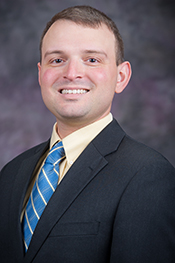
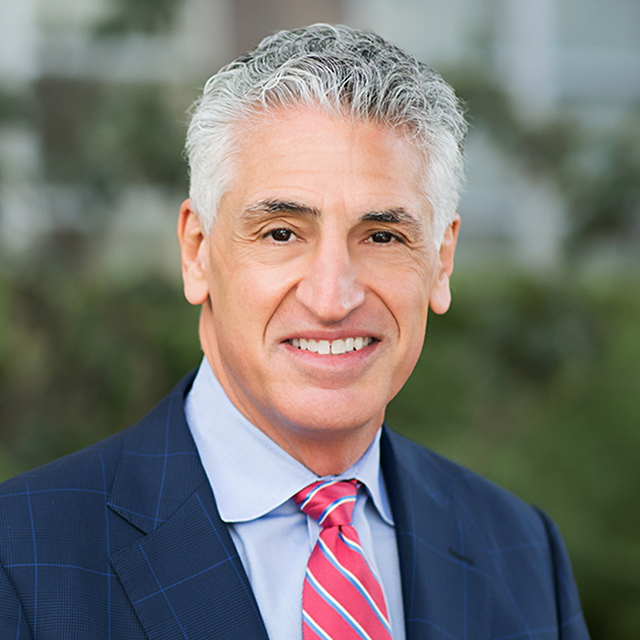
Laura Blecha is an Associate Professor in the Physics Department at the University of Florida, specializing in astrophysics. Her research focuses on supermassive black hole (SMBH) and galaxy evolution through numerical simulations and observational collaborations. PhD from Harvard University (2012) Full Member of NANOGrav pulsar timing collaboration Associate Member of the LISA Consortium Her work spans three primary areas: SMBH Formation & Evolution : Origins of SMBHs, galaxy merger-driven growth, and intermediate-mass black hole demographics AGN Fueling & Feedback : Hydrodynamic simulations of AGN activation mechanisms and observational bias in AGN detection Binary SMBH Dynamics : Gravitational wave recoil effects, three-body interactions, and pulsar timing array detection strategies Recent publications (2025) focus on dual AGN detection with Keck AO, JWST studies of primordial galaxies, and NANOGrav gravitational wave background analysis. Her group develops sub-grid models for SMBH dynamics in cosmological simulations and investigates signatures of black hole mergers in galaxy clusters. Laura's research combines computational methods (Illustris, BRAHMA simulations) with observational validation through: JWST NIRSpec spectroscopy Pulsar Timing Array analysis Multiwavelength imaging campaigns
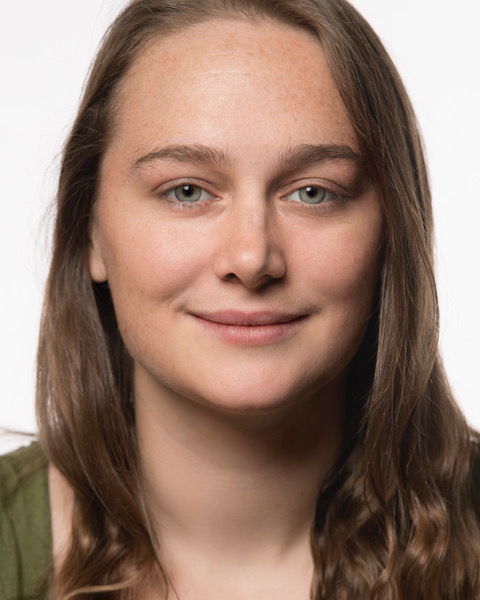
Jesse Liu is an Assistant Professor of Physics at the New York University College of Arts & Science , joining in Spring 2025. He collaborates with the ATLAS Experiment at CERN and leads the NYU Experimental Particle Physics group. Research Interests: Liu's work bridges fundamental particle physics and detector innovation. He investigates Tau-lepton electromagnetic dipoles via photon collisions at the LHC High-luminosity LHC silicon tracker upgrades Dark matter searches through collider experiments and the BREAD axion detection project Cosmic ray physics using ATLAS data Recent Publications focus on tau magnetic moment measurements, detector thermal stress mitigation, and cosmic ray signature analysis. His work has been featured in Phys. Rev. D , Phys. Rev. Lett. , and JINST . Outreach & Mentorship: Liu actively engages in public science communication through Pint of Science talks The Conversation articles School visits to CERN First-gen student mentorship at NYU CU*iP Contact: Office at 726 Broadway, Room 852, New York City. Email: jesse.liu2@nyu.edu
Amir Bahadori serves as Professor and Nuclear Engineering Program Director in the Department of Mechanical and Nuclear Engineering at Kansas State University's Carl R. Ice College of Engineering, holding the Hal and Mary Siegele Professorship in Engineering. He directs the Radiological Engineering Analysis Laboratory (REAL) and established the Institute for Radiation Health Studies (IRHS) in 2024, focusing on radiation protection, space radiation environments, and radiation health effects. His educational background includes: Ph.D. in Biomedical Engineering, University of Florida (2012) M.S. in Nuclear Engineering Sciences, University of Florida (2010) B.S. in Mechanical Engineering and Mathematics, Kansas State University (2008) Bahadori's research spans radiation transport modeling, dosimetry, and risk assessment with applications in space exploration, medical physics, and radiation epidemiology. He develops computational frameworks for radiation exposure scenarios and biological response prediction, emphasizing space radiation protection for Artemis missions and chronic exposure studies through the Million Person Study collaboration. Analysis of his recent publications reveals dominant themes in space radiation measurement (Artemis missions), radiation epidemiology (Million Person Study innovations), and advanced detection systems (miniaturized neutron spectrometers). His work increasingly integrates big data approaches for radiation risk assessment and electrostatic shielding concepts for deep-space exploration. His scientific recognition includes: NASA Graduate Student Research Fellowship (2009) Certified Health Physicist designation Big 12 faculty fellowship (2022-2023) NCRP council election (2024) Two USPTO patents Bahadori secures substantial research funding from NASA for space radiation instrumentation, Department of Energy projects via the Kansas City National Security Campus, and collaborative epidemiological studies. He mentors nuclear engineering graduate students while leading interdisciplinary teams developing radiation protection solutions for aerospace and medical applications. His laboratory infrastructure includes the REAL with Beocat high-performance computing resources, radiation detectors, and a 3D printer, plus the IRHS with a Precision X-ray XRad320 irradiator and radon chamber. These facilities support collaborations across K-State colleges and external organizations for radiation health effect studies.
Nicola McConkey is an Ernest Rutherford Fellow and Lecturer in Particle Physics at the School of Physical and Chemical Sciences, Queen Mary University of London. She joined the Particle Physics Research Centre in 2024 and leads experimental work in neutrino interactions and detector development. Her affiliations include the Centre for Fundamental Physics and Centre for Experimental and Applied Physics. McConkey is an active member of international collaborations including SBND, DUNE, and MicroBooNE, where she contributed to the assembly of SBND and pioneered high-statistics measurements of electron-neutrino interactions using liquid argon detectors. Her research focuses on three primary domains: neutrino physics (particularly neutrino-argon scattering cross-sections), quantum technology applications for neutrino mass measurement, and liquid argon time projection chamber (LArTPC) detector development. McConkey's investigations aim to advance fundamental particle physics through precision measurements and technological innovation, with emphasis on improving detection capabilities for next-generation neutrino experiments. Publications predominantly explore neutrino interaction dynamics, cross-section measurements, and detector performance optimizations across MicroBooNE, SBND, and DUNE collaborations. Research trends demonstrate consistent focus on refining LArTPC technologies, developing machine learning applications for particle reconstruction, and probing beyond-Standard-Model physics through neutrino interactions. Scientific Awards: Ernest Rutherford Fellowship (2022) McConkey advises two PhD students (Oscar Chow, Yoshita Dabburi) and leads significant research funding including: STFC Grant: 'Piecing together the neutrino mass puzzle' (£431,666; 2024-2027) STFC Outreach Grant: 'Quantum Technologies for Neutrino Mass' (£99,999; 2024-2025) She coordinates research within the Particle Physics Research Centre laboratory and collaborates extensively within the SBND, DUNE, and MicroBooNE international teams, alongside leading the Quantum Technologies for Neutrino Mass collaboration developing novel measurement techniques.
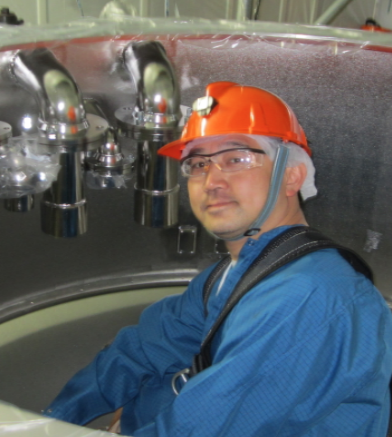
Masatoshi Takano is a Professor at the Faculty of Science and Engineering, Waseda University, specializing in theoretical studies of nuclear physics, particle physics, and astrophysics. His work focuses on nuclear equations of state (EOS) for neutron stars and core-collapse supernovae, incorporating realistic nuclear forces like the Argonne v18 and Urbana IX potentials. He has developed variational methods with explicit energy functionals to model hyperonic nuclear matter, spin-orbit forces, and finite-temperature effects. Education : PhD in Science, Waseda University Professional Memberships : American Physical Society, Japan Physical Society Research spans neutron star structure, supernova simulations, and nuclear matter phase transitions. His recent presentations address neutrino emission rates, braking radiation in nuclear matter, and cluster variational methods. Key collaborations include H. Togashi, K. Nakazato, and K. Sumiyoshi. Scientific contributions involve refining variational energy expressions for asymmetric nuclear matter, incorporating three-body forces, and studying pion condensation effects on neutron star cooling. He has applied his EOS models to multidimensional supernova simulations and cosmic ray detector design.
Carlos Argüelles-Delgado is an Assistant Professor of Physics at Harvard University's Department of Physics within the Faculty of Arts and Sciences. His research focuses on neutrino physics and astroparticle physics, particularly using data from the IceCube Neutrino Observatory. He explores properties of neutrinos, including potential Beyond Standard Model effects, and contributes to the development of the IceCube-Gen2 upgrade. His work includes analyzing high-energy neutrinos, studying cosmic origins, and advancing detector capabilities. Education: Ph.D. in Physics from the University of Wisconsin at Madison (2015), M.Sc. in Physics from Pontificia Universidad Católica del Perú (2012), and B.Sc. in Physics from the same institution (2008). Research Interests: Neutrino oscillations, dark matter annihilation signatures, sterile neutrinos, and astrophysical neutrino flavor measurements. He develops novel analysis techniques, such as Bayesian methods and Monte Carlo simulations, and collaborates on global neutrino data projects. Awards: 2021 Sloan Research Fellow, 2021 IUPAP Young Scientist Prize, and 2020 IceCube Collaboration Impact Award. His contributions include advancing diversity initiatives and software tools for neutrino data analysis. Teaching: Taught Electricity and Magnetism at Harvard, and previously taught physics at the undergraduate and high school levels. Active in outreach, including mentoring students and organizing workshops like the IceDUNE Workshop (2021). Labs/Teams: Leads analyses in the IceCube Collaboration’s Beyond the Standard Model Working Group and participates in the IceCube-Gen2 project. Collaborates with Janet Conrad’s group at MIT and the Wisconsin IceCube Particle Astrophysics Center.
Pearl Sandick is a Professor in the Department of Physics and Astronomy and Interim Dean in the College of Science at the University of Utah. She has previously served as Associate Chair of the Department of Physics and Astronomy and Associate Dean for Faculty and Research in the College of Science. Her academic journey at the University of Utah began in 2011 as an Assistant Professor, progressing to Associate Professor in 2017, and achieving the rank of Professor in 2022. Her educational background includes: BA in Mathematics from New York University (2003) PhD in Physics from the University of Minnesota (2008) Sandick is a theoretical particle physicist whose research focuses on physics beyond the Standard Model, with particular emphasis on dark matter. Her work spans theoretical modeling, connections to astrophysical observations, and implications for experimental detection. She investigates various dark matter candidates and their potential signatures in current and future experiments, including collider searches, direct detection experiments, and indirect detection through astrophysical observations. Her research also extends to connections between particle physics and cosmology, including early universe phenomena and implications for cosmic structure formation. She has developed computational tools like MADHAT for dark matter analysis and has made significant contributions to understanding how stellar evolution can constrain axion physics. Her scholarly contributions have been recognized with several prestigious awards: University of Utah Early Career Teaching Award (2016) University of Utah Distinguished Mentor Award Linda K. Amos Award for Distinguished Service to Women University of Utah Presidential Scholar Sandick has been actively involved in mentoring graduate students, as evidenced by her teaching of PhD thesis research and Master's research courses. She has secured significant research funding from the National Science Foundation and other agencies to support her work on dark matter, dark energy, and new physics. Her grant portfolio includes projects on theoretical particle physics, connections to astrophysical observations, and studies on graduate education reform following a departmental tragedy. She is an active member of the American Physical Society, having served as Chair of the regional Four Corners Section in 2021-2022, demonstrating her commitment to the broader physics community and leadership in her field.
Mark C. Chen is a Professor of Physics at Queen's University, holding the Gordon and Patricia Gray Chair in Particle Astrophysics and serving as a CIFAR Senior Fellow. He leads research in neutrino physics, geo neutrinos, and particle astrophysics, with a focus on experiments like SNO+ and the Sudbury Neutrino Observatory (SNO). His work addresses fundamental questions in particle physics, Earth's composition, and dark matter detection. Affiliations: Queen's University, CIFAR Roles: Chairholder, Senior Fellow, Department Head Chen's research spans neutrino oscillations, geo neutrino detection, and novel scintillator technologies. He contributed to SNO's discovery of neutrino flavor oscillations and pioneered SNO+'s liquid scintillator design to explore low-energy neutrinos, neutrinoless double beta decay, and Earth's radiogenic heat. His work bridges particle physics and geoscience, seeking answers to questions like neutrino mass and dark matter properties. His teaching includes advanced courses in mechanics, experimental physics, and astroparticle physics (PHYS 225-844). He has published extensively on neutrino experiments and collaborates internationally on projects like Borexino and SNO+. Awards: Gordon & Patricia Gray Chair, CIFAR Senior Fellowship Chen's grants and collaborations fund detector development, neutrino studies, and outreach. He co-leads SNO+ and advises on low-background environments for dark matter detectors. His lab focuses on scintillator optimization and neutrino detection technologies.
Professor Malcolm Fairbairn is a faculty member at King's College London's Department of Physics, part of the Faculty of Natural, Mathematical & Engineering Sciences. His research focuses on the intersection of cosmology, particle physics, and astrophysics, particularly dark matter, dark energy, and cosmological inflation. He leads projects like the ERC Consolidator Grant (2015–2020) investigating dark matter in the early Universe. He collaborates with initiatives such as the MoEDAL experiment at CERN (magnetic monopole searches) and the Cherenkov Telescope Array (CTA) for gamma-ray astronomy. His interests extend to gravitational waves, supermassive black hole formation, and particle astrophysics. Fairbairn has contributed to studies on axion dark matter, primordial black holes, and dark matter constraints from dwarf galaxies. He is affiliated with the Theoretical Particle Physics & Cosmology (TPPC) Group, exploring beyond-Standard-Model physics, including supersymmetry and extra dimensions. Publications span topics like dark matter relic abundance, JWST observations of black holes, and LHC searches for exotic particles. He has advised on outreach projects like the 'Dark Matter' exhibition at Science Gallery London and interviews with alumni (e.g., Royal Navy submariner Chris Tuckley).
Dr. Michael S. Conte is Professor of Surgery at the University of California, San Francisco (UCSF) School of Medicine, where he serves as Co-director of the UCSF Heart & Vascular Center and Chief of the Division of Vascular & Endovascular Surgery. Specializing in vascular surgery, Dr. Conte focuses on diseases of the aorta, aneurysms, carotid artery disease, peripheral artery disease (PAD), and diabetic vascular disease, performing complex revascularization procedures to preserve limb function and prevent amputations. Dr. Conte received his medical degree from Albert Einstein College of Medicine in 1986, completed surgical residency at Weill Cornell Medicine, and vascular surgery training at Brigham and Women's Hospital and Harvard Medical School. His clinical and research work has significantly advanced the field of vascular surgery, particularly in chronic limb-threatening ischemia (CLTI) management. Dr. Conte's research interests center on vascular interventions, limb preservation strategies, diabetic foot complications, and vascular disease outcomes. He led the largest multicenter clinical trial of leg bypass surgery for severe PAD and has been instrumental in the BEST-CLI trial comparing surgical versus endovascular approaches for CLTI. His work investigates mechanisms of vascular injury response, angioplasty and bypass failure, and methods to identify patients at risk for poor outcomes. Analysis of Dr. Conte's recent publications (2023-2025) reveals a strong emphasis on CLTI management, diabetic foot care, health disparities in vascular treatment, and quality improvement in vascular surgery. His research spans clinical trials, systematic reviews, guideline development, and health services research, demonstrating consistent contributions to evidence-based vascular care. American Heart Association 2019 Peripheral Vascular Disease Distinguished Achievement Award San Francisco Magazine 2016 Bay Area Top Doctors Best Doctors, Inc. 2015 Best Doctors in America New York Weill Cornell Medical Center Alumni Council 2006 Distinguished Achievement Award NHLBI/Lifeline 1999 Mentored Clinical Scientist Development Award Dr. Conte has secured significant NIH funding for research on diabetic foot care and vascular interventions, serving as Principal Investigator on multiple grants including the UCSF Diabetic Foot Clinical Research Unit (NIH U01DK119100) and research on specialized lipid mediators in vascular injury (NIH R01HL119508). He has established multidisciplinary 'toe and flow' programs at UCSF focused on limb preservation for patients with diabetic foot complications. As an active member of the Society for Vascular Surgery and Society of University Surgeons, Dr. Conte serves on editorial boards for leading vascular journals and has contributed to clinical practice guidelines. His clinical practice emphasizes complex revascularization procedures, and he is board certified in Vascular Surgery by the American Board of Surgery.
Dr. Steven Cummer is the William H. Younger Distinguished Professor of Engineering and Associate Chair of Faculty Affairs in the Department of Electrical and Computer Engineering at Duke University's Pratt School of Engineering. He is also recognized as a Bass Fellow at Duke University. Dr. Cummer received his educational foundation at Stanford University, earning his B.S.E.E. in 1991, M.S.E.E. in 1993, and Ph.D. in Electrical Engineering in 1997. After completing his doctorate, he spent two years at NASA Goddard Space Flight Center as an NRC postdoctoral research associate before joining Duke University in 1999. B.S.E.E. Stanford University, 1991 M.S.E.E. Stanford University, 1993 Ph.D. Stanford University, 1997 Dr. Cummer's research focuses on theoretical and experimental electromagnetic problems related to geophysical remote sensing and engineered electromagnetic materials. His work spans multiple disciplines, including lightning physics, terrestrial gamma-ray flashes, acoustic metamaterials, and transformation optics. He has made significant contributions to understanding the connection between lightning discharges and high-energy atmospheric phenomena, particularly terrestrial gamma-ray flashes (TGFs). His research in acoustic metamaterials has pioneered new approaches to sound manipulation and control, with applications in medical imaging, underwater acoustics, and noise control. Analysis of Dr. Cummer's recent publications shows a continued focus on atmospheric electricity phenomena, particularly lightning and terrestrial gamma-ray flashes, while simultaneously advancing the field of acoustic metamaterials. His work integrates experimental observations with theoretical modeling, often using sophisticated radio frequency and optical measurement techniques. The interdisciplinary nature of his research bridges electrical engineering, atmospheric science, and physics. Dr. Cummer has received numerous prestigious awards for his research contributions: National Science Foundation CAREER award (2001) Presidential Early Career Award for Scientists and Engineers (PECASE) (2001) Fellow of the Institute for Electrical and Electronics Engineers (2011) Stansell Family Distinguished Research Award from the Pratt School of Engineering (2018) As an educator, Dr. Cummer has taught a range of courses in electrical and computer engineering, including Fields and Waves, Waves in Matter, and various project-based courses. His research group has been consistently supported by grants from the National Science Foundation and other agencies, enabling both fundamental research and student training. Dr. Cummer has mentored numerous graduate students who have gone on to successful careers in academia and industry. Dr. Cummer leads a research laboratory that combines experimental and theoretical approaches to study electromagnetic phenomena. His team utilizes sophisticated radio frequency measurement systems, optical instrumentation, and computational modeling to investigate lightning physics, atmospheric electricity, and acoustic metamaterials. Recent field campaigns have included airborne observations of gamma-ray emissions from thunderstorms.
Pablo Parra Espada is an Associate Professor at the Department of Automática, University of Alcalá (Spain), affiliated with the Space Research Group (SRG-UAH). He holds a PhD from the University of Alcalá (2012) titled Integración de tecnologías de desarrollo y análisis basadas en componentes bajo un enfoque multi-plataforma , supervised by Dr. Sebastián Sánchez Prieto and Dr. Óscar Rodríguez Polo. His research focuses on space systems engineering , particularly in RISC-V processor design , embedded systems , and model-driven engineering . Key areas include hardware-software co-design for satellite systems, real-time computing, and fault-tolerant architectures. He has contributed to the Solar Orbiter mission through work on the Energetic Particle Detector (EPD) and its on-board software validation. His recent work emphasizes virtualization techniques for LEON processors, FPGA-based digital beamforming , and spaceborne phased array systems . He also explores model-driven approaches for automated configuration of ground support equipment. His interdisciplinary contributions bridge computer architecture with aerospace applications. Prof. Parra Espada has published extensively on topics such as hardware performance monitoring, memory management units for satellites, and system-level verification of space software. His work combines rigorous engineering methodologies with cutting-edge technologies to address challenges in space instrumentation and embedded systems.
Allen Mincer is a Professor of Physics and Collegiate Professor at New York University's College of Arts and Science, Department of Physics. He leads research in experimental high energy particle physics and astrophysics as a member of the NYU Experimental Particle Physics Group, with major contributions to the ATLAS and Milagro collaborations. His educational background includes a Ph.D. from the University of Maryland, College Park (1984) and a B.S. from Brooklyn College (1978). Mincer's research spans particle physics discoveries (top quark, Higgs boson) and cosmic ray astrophysics. He specializes in detector development, data analysis for high-energy collisions, and cosmic ray observations. His work integrates experimental physics with innovative educational approaches, particularly in physics pedagogy. Analysis of his publications (2020-2005) reveals dual research trajectories: LHC-focused studies on Higgs physics, supersymmetry searches, and trigger systems via ATLAS, alongside Milagro-based cosmic ray research mapping TeV emissions and anisotropies in the Galactic plane. His scientific recognition includes: Teach/Tech Award, New York University (2018) Collegiate Professor appointment at NYU (2008) Golden Dozen Teaching Award, NYU (1995, 2000) Mincer mentors undergraduate and graduate researchers while pioneering physics education through flipped classrooms, experimental pedagogy courses, and curriculum development for courses ranging from introductory physics to graduate particle physics. He actively contributes to the NYU Experimental Particle Physics Group, maintaining leadership roles in ATLAS detector operations and Milagro cosmic ray data analysis.
Corbin E. Covault serves as Professor and Chair of the Department of Physics at Case Western Reserve University (CWRU), leading experimental research in particle astrophysics and cosmic ray physics through major international collaborations including the Pierre Auger Observatory and Cherenkov Telescope Array (CTA). B.A., Massachusetts Institute of Technology (1985) Ph.D., Harvard University (1991) Covault's research centers on experimental particle astrophysics with emphasis on ultra-high energy cosmic rays, gamma-ray astronomy, and advanced instrumentation. His group develops photodetection systems, GPS timing solutions, and wireless communications for cosmic ray detectors. Key projects include investigating macroscopic dark matter using Auger fluorescence telescopes, designing a 100+ meter diameter 'flat' telescope for exoplanet detection, and pioneering spectral CT imaging with quantum dot X-ray detectors. His instrumentation work directly impacts next-generation observatories like CTA, where his team deploys silicon photomultiplier camera systems. Analysis of Covault's 15 most recent publications (2016-2019) reveals dominant research trends in cosmic ray mass composition, anisotropy studies, and multi-messenger astrophysics. His work consistently bridges particle physics and astrophysics through ultra-high energy cosmic ray observations, neutrino follow-ups of gravitational wave events, and development of novel detection methodologies. Key thematic areas include hadronic interaction modeling at extreme energies, radio-based cosmic ray detection, and searches for exotic particles like magnetic monopoles. Covault leads the CWRU group in the Pierre Auger Collaboration as a member of its 15-person Technical Board, overseeing instrument performance and data integrity. His group received MRI grant funding for CTA camera development starting August 2018, focusing on GPS timing synchronization and rapid trigger processing. Collaborative projects include spectral CT imaging with Philips and Wayne State University, optical SETI telescope development, and macro dark matter investigations with Glenn Starkman. His laboratory activities center on the Auger and CTA observatories, with instrumentation specialties in photodetection systems, GPS timing networks, and wireless data transfer. The CWRU group maintains active roles in Auger's science analysis teams and CTA's prototype deployment at Mt. Hopkins Observatory, Arizona.
Professor Andrew Newsam is a faculty member at Liverpool John Moores University's Astrophysics Research Institute (ARI), where he serves as Professor of Astronomy Education and Engagement since 2012. He has been instrumental in developing the National Schools' Observatory and astronomy distance learning courses, bridging observational astronomy with STEM education initiatives. Education: PhD in Astrophysics from University of Glasgow (1994), BSc in Physics with Computing from University of Warwick (1991) His research spans observational astronomy, high-energy astrophysics, and science education. Recent publications focus on nova remnants (RS Ophiuchi), gamma-ray bright novas (Nova Persei 2018, V392 Persei), microlensing surveys (Angstrom Project), and educational outreach. He has contributed to planetary eclipse studies and interstellar dynamics research. Key trends in his publications include: binary star systems (56% of works), transient phenomena (43%), and educational technology (35%). His citations show strong engagement with nova studies (22% of total citations) and microlensing research (19% of total citations). Scientific Awards: Teaching Fellowship Award for Individual Excellence (2009) Curriculum Innovation Award (2007) Queens Anniversary Prize for Higher and Further Education (2005) As chair of multiple education and outreach panels (2016-2025), he has shaped astronomy policy and public engagement strategies. He received STFC grants for STEM capacity building (2020) and BBSRC funding for citizen science projects (2019).