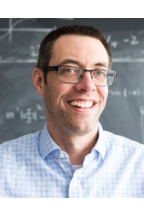
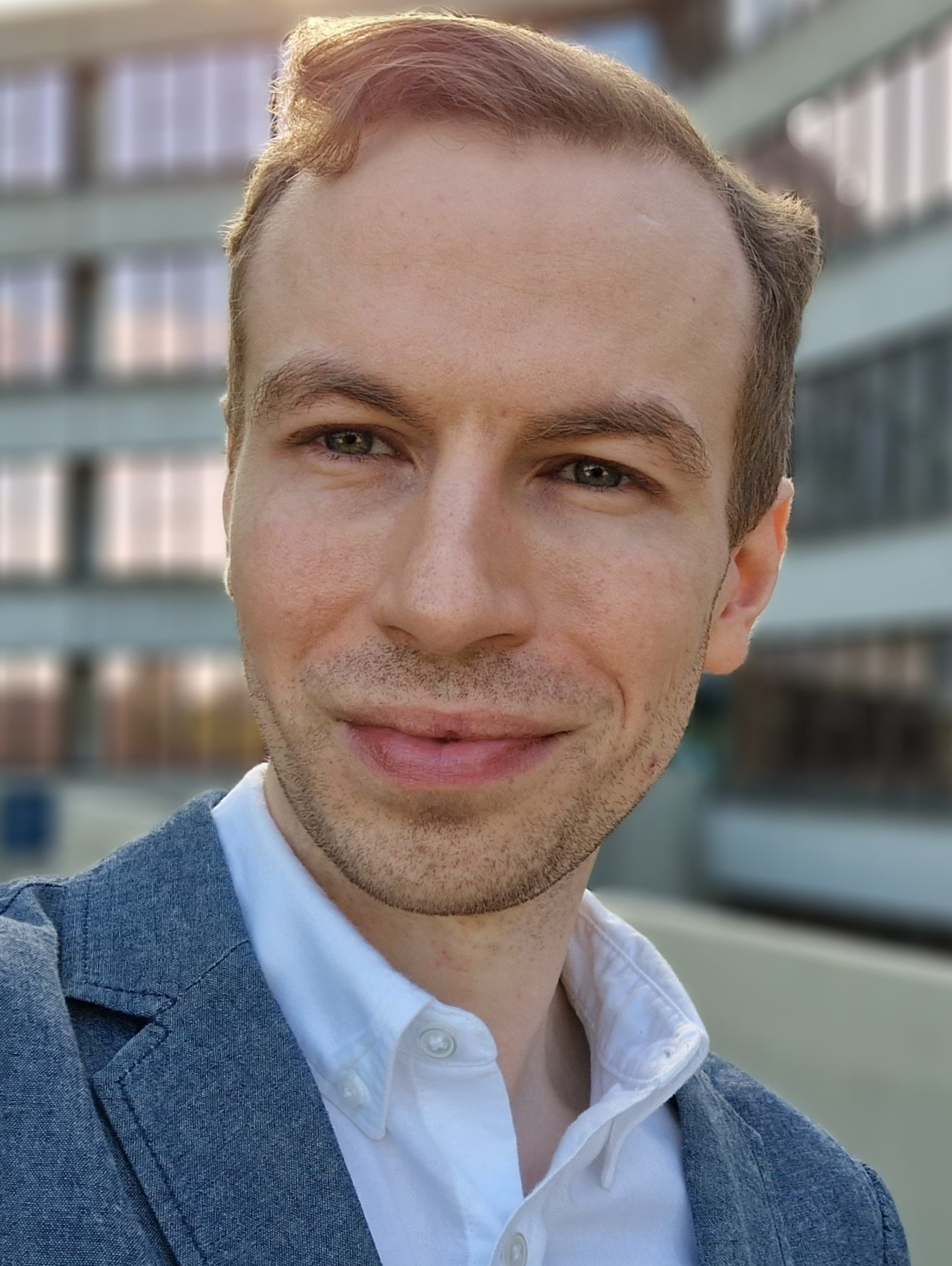
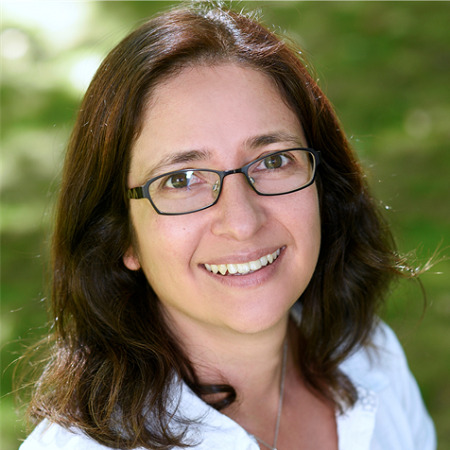
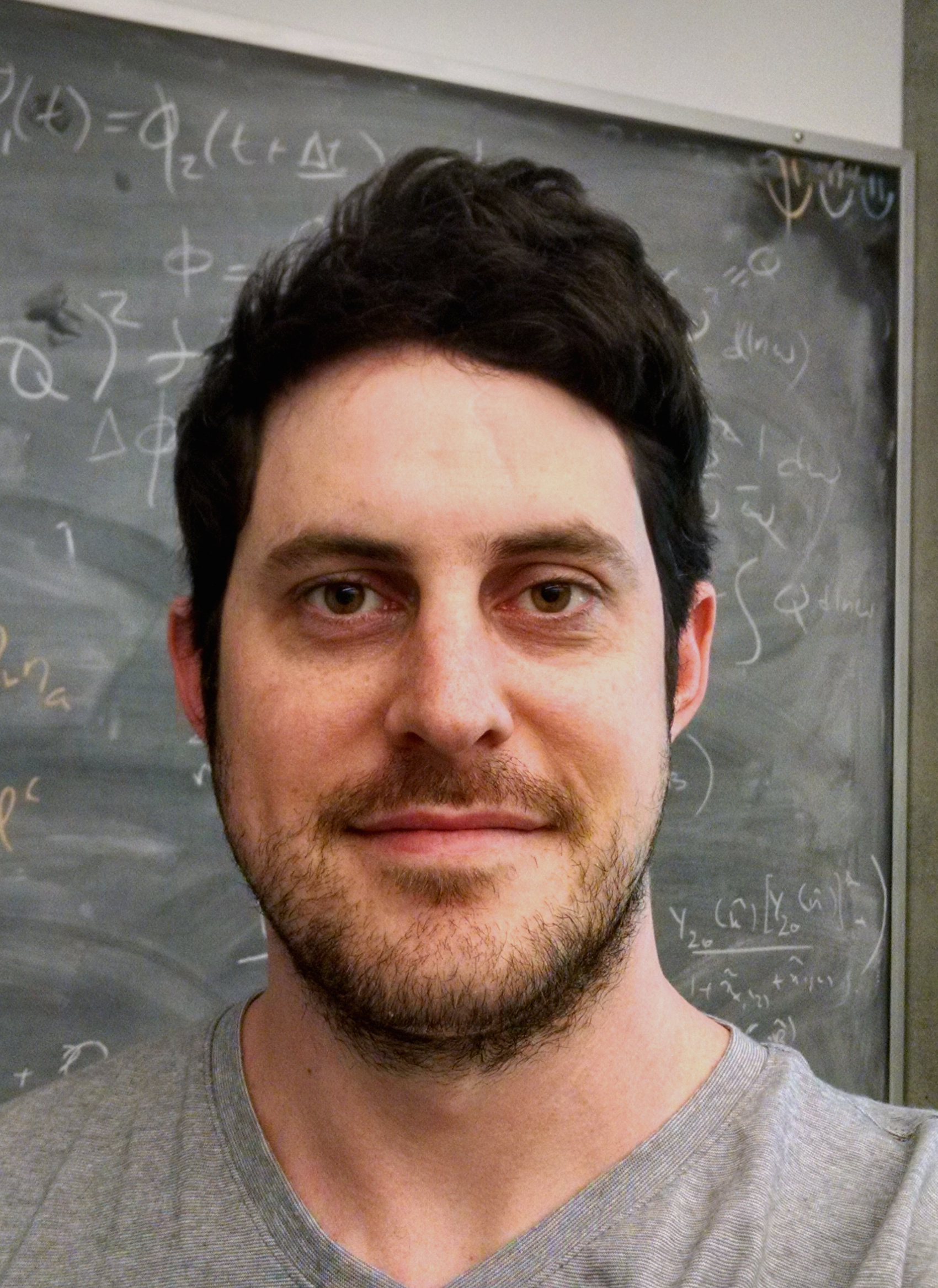
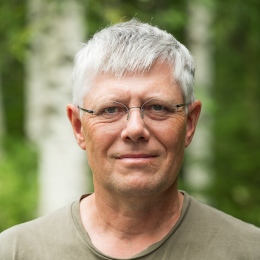
Will Percival is a Professor and Distinguished Research Chair in Astrophysics at the University of Waterloo, directing the Waterloo Centre for Astrophysics. His research focuses on observational cosmology, cosmological structure formation, galaxy surveys, and large-scale structure. He leads major international collaborations such as the extended Baryon Oscillation Spectroscopic Survey (eBOSS), the Euclid satellite mission, and the Dark Energy Spectroscopic Instrument (DESI). He earned his PhD from the University of Oxford in 1999. His awards include the Chinese Academy of Sciences Distinguished Scientist Fellowship (2016), the Royal Astronomical Society Team Award (2008), and the Philip Leverhulme Prize (2007). He has served on committees for the European Space Agency, UK Space Agency, and UK STFC. He teaches PHYS 475 - Cosmology annually since 2020. His research emphasizes extracting cosmological insights from galaxy surveys, including physics from the early universe and modern cosmic evolution. His publications span Baryon Acoustic Oscillations, galaxy clustering analysis, and survey methodology. He coordinates large international teams for precision cosmological measurements.
Robin Ciardullo is a Professor in the Department of Astronomy and Astrophysics at Penn State University. He has been a faculty member since 1990 and currently serves as the Observing Manager for the Hobby Eberly Telescope Dark Energy Experiment (HETDEX). Education Undergraduate: Yale University Ph.D. in Astronomy: University of California, Los Angeles (1986) Research Interests Extragalactic Astronomy High-redshift emission-line galaxies Galaxy evolution Cosmic distance scale Dark matter Ionized gas in galaxies Stellar populations Intracluster stars Stellar Astronomy Planetary nebulae Post-asymptotic giant branch (Post-AGB) stars Novae Globular clusters Interstellar Medium Physics of ionization Emission line analysis Professional Roles Observing Manager, HETDEX (Hobby Eberly Telescope Dark Energy Experiment) Member of all four HETDEX science working groups Co-investigator for the 100 square Degree in Narrow-Band (ODIN) survey for Lyα galaxies Chair, Users Committee for the US National Optical Astronomy Observatories Member, US Gemini Telescope Science Advisory Committee Member, NSF Program Review Committee for NoirLab Laboratory & Team Affiliations Robin leads observational operations for HETDEX, focusing on dark energy studies and large-scale galaxy surveys. His work involves collaboration with the ODIN survey team, which investigates Lyα galaxies in cosmological contexts. Contact Information Email: rbc3@psu.edu Email: rbc@astro.psu.edu Office: 428A Davey Laboratory, Penn State University Phone: (814) 865-6601 FAX: (814) 863-3399
Alyssa A Goodman is the Robert Wheeler Willson Professor at Harvard University, specializing in astrophysics with a focus on star formation, galactic structure, and scientific computing. Her work integrates advanced visualization techniques and computational methods to explore the Milky Way’s 3D structure, such as the discovery of the Radcliffe Wave. She leads the MilkyWay3D.org initiative, democratizing access to 3D galactic data for researchers and the public. Her research emphasizes 3D dust mapping using Gaia data, revealing unexpected galactic phenomena like oscillating structures and star-forming complexes. Goodman’s presentations, such as ' Seeing the Milky Way in 3D ', highlight her efforts to bridge computational astronomy with public engagement. She also contributes to education through tools like the WorldWide Telescope, fostering spatial thinking and STEM literacy. Key projects include analyzing the Local Bubble’s magnetic field, studying stellar kinematics in star-forming regions, and developing AI-driven tools like AstroLLaMA for astronomy. Her work spans from fundamental astrophysics to applied data science, emphasizing interdisciplinary collaboration and open science practices.
Dr. Eugene Vasiliev is an STFC Ernest Rutherford Fellow at the School of Mathematics and Physics, University of Surrey, UK. He specializes in galactic and stellar dynamics, focusing on supermassive black holes, Milky Way modeling, and the use of Gaia astrometric data. He develops advanced computational tools such as AGAMA, Forstand, and SMILE for dynamical modeling and action-based analysis. His research spans: Dynamical modeling of galaxies using the Schwarzschild method Action-based modeling of the Milky Way and dark matter halos Interactions between the Milky Way and the Large Magellanic Cloud Tidal disruption events and black hole feeding rates Structure and evolution of globular clusters and nuclear star clusters His recent publications (2022–2024) show a strong focus on refining Milky Way models using Gaia data, exploring phase-space substructures from past mergers, and improving black hole mass measurements in nearby galaxies. He frequently collaborates with leading researchers like James Binney, Vasily Belokurov, and Monica Valluri. His work is instrumental in advancing our understanding of galactic formation and evolution in the era of large-scale surveys. He has developed key software tools widely used in the astrophysics community. STFC Ernest Rutherford Fellowship Dr. Vasiliev actively mentors and collaborates on projects involving dynamical modeling, data analysis, and software development. He has delivered numerous talks and outreach lectures on black holes, galactic dynamics, and Gaia science. He leads research efforts that integrate observational data with theoretical modeling to probe the structure and history of the Milky Way.
Ed Macaulay is a Lecturer in Physics and Data Science at Queen Mary University of London's Department of Physics and Astronomy. He holds a DPhil in Astrophysics from the University of Oxford and has held postdoctoral positions at the University of Queensland and the Institute of Cosmology & Gravitation in Portsmouth. His research focuses on supernova cosmology, peculiar velocities, gravitational lensing, and physics education research. He teaches modules including Professional Software and Career Practices for data science apprenticeships and Electromagnetic Waves and Optics for physics undergraduates. Education: DPhil in Astrophysics (University of Oxford) Postdoctoral Experience: University of Queensland, Institute of Cosmology & Gravitation (Portsmouth) Research Interests: Combines observational cosmology with data science techniques to study dark matter/energy through peculiar velocities and gravitational lensing effects. Advocates evidence-based, inclusive pedagogy in physics education. Active in outreach via Astronomy on Tap and Stargazing Live. Publications: Focus on cosmological analyses using supernova surveys (Dark Energy Survey), Hubble constant measurements, and large-scale structure dynamics. Recent work addresses lensing effects on supernova observations and redshift-space distortion anomalies. Awards: No specific honors listed, though contributions to Dark Energy Survey collaborations are notable. Teaching & Grants: Develops data science/physics curricula emphasizing software practices. Previously taught at University of East Anglia and University of North Georgia, fostering interest in physics education methodologies.
Dr. Susana Scott is an Associate Professor in the Department of Infectious Disease Epidemiology and International Health at the London School of Hygiene and Tropical Medicine (LSHTM), Faculty of Epidemiology and Population Health. With over 20 years of experience in maternal and infectious disease epidemiology in low-income countries, she has established herself as a leading researcher in improving healthcare access for vulnerable populations in Sub-Saharan Africa. Dr. Scott completed her MSc in Communicable Disease Epidemiology at LSHTM in 1997 and later earned her PhD in Infectious Disease Epidemiology from LSHTM, which investigated the immunogenicity and safety of measles vaccine in HIV-1 infected children in Lusaka, Zambia. Her educational background includes extensive field experience gained through seven years living and working in Sub-Saharan Africa. Her research focuses on malaria prevention and maternal-child health in resource-limited settings. She has spent seven years living and working in Sub-Saharan Africa, with significant experience in Zambia and The Gambia. Her current work centers on optimizing the delivery and effectiveness of Seasonal Malaria Chemoprevention (SMC) in children across 13 West and Central African countries through the OPT-SMC implementation research project. Dr. Scott previously coordinated the COSMIC trial, which aimed to bring malaria health services closer to pregnant women in rural areas of The Gambia, Benin and Burkina Faso. She has also been involved in monitoring and evaluating the scaling up of Seasonal Malaria Chemoprevention in 7 West African countries. Dr. Scott serves as co-Programme Director for the Distance Learning Epidemiology Master's programme at LSHTM and has extensive experience teaching and organizing courses for both distance learning and intensive MSc Epidemiology programs. She is actively involved in several research centers including the Malaria Centre and the Centre for Maternal Adolescent Reproductive & Child Health (MARCH). Her publication record demonstrates expertise in malaria epidemiology, maternal and child health, vaccine effectiveness, and implementation science. Current research projects focus on improving access to malaria prevention services for hard-to-reach communities, with particular emphasis on seasonal malaria chemoprevention strategies across multiple African countries.
Prof. Roberto Trotta is a Professor of Theoretical Physics at SISSA (Trieste, Italy) and Visiting Professor of Astrostatistics at Imperial College London. He leads the Theoretical and Scientific Data Science group at SISSA and directs its Interdisciplinary Lab. His research focuses on cosmology, dark matter/energy, and applying machine learning/AI to astrophysical data. He holds a PhD from the University of Geneva and an MSc from ETH Zurich. He has been a faculty member at Imperial College London (2008–2023) and a Visiting Professor at Gresham College (2019–2022). Education: PhD in Theoretical Physics, University of Geneva, Switzerland (2004) MSc (Hons) in Physics, ETH Zurich, Switzerland (2011) Research: Analyzes cosmological observations to study dark matter/energy, early universe physics, and particle-physics connections. Develops Bayesian methods, machine learning, and AI for data analysis. Leads projects like STAR NRE and StratLearn-z for improved astrophysical modeling. Collaborates on experiments like LISA, DARWIN, and EDGES. Public Engagement: Award-winning science communicator; authored The Edge of the Sky (2014) and STARBORN (2023). Public lectures at Gresham College and international festivals. Recognized with the Annie Maunder Medal (2020) and Foreign Policy's Global Thinkers (2014). Awards: Annie Maunder Medal (Royal Astronomical Society, 2020) Chair Georges Lemaître (2018) Foreign Policy 100 Global Thinkers (2014) Michelson Prize (2008) Leadership: Directed Imperial’s Centre for Languages, Culture, and Communication (2015–2020). Founded Data Fusion Consultants (2012–2020) for statistical consultancy. Collaborates with museums and artists on science communication. Labs/Teams: Leads the SISSA Data Science group and collaborates with the Theoretical and Scientific Data Science team at SISSA. Active in interdisciplinary projects like the AstroML group and DARWIN observatory collaborations.
Shri Kulkarni is the George Ellery Hale Professor of Astronomy at the California Institute of Technology , where he has been a faculty member since 1987. He has served as Department Chair and Director of Caltech Optical Observatories (Palomar and Keck Observatories). Currently, he leads the Zwicky Transient Survey , a large-scale effort to monitor the sky for short-timescale phenomena. His research focuses on Compact objects, including neutron stars and gamma-ray bursts Cosmic explosions and related discoveries Key contributions: first detection of millisecond pulsars, brown dwarfs, galactic fast radio bursts, and determination of gamma-ray burst distances Scientific accolades include Helen B. Warner Award (American Astronomical Society) Alan T Waterman Prize (National Science Foundation), awarded to the most accomplished scientist/engineer under 35 in the USA
Matthew Giesler is a postdoctoral scholar in the TAPIR group at the California Institute of Technology (Caltech), specializing in computational and theoretical astrophysics. His research focuses on numerical relativity, particularly using the Spectral Einstein Code (SpEC) as part of the Simulating eXtreme Spacetimes (SXS) collaboration to study black holes and gravitational waves. He contributes to large-scale simulations of binary black hole mergers and neutron star collisions, emphasizing high-precision modeling and waveform analysis. His work involves advancing numerical methods like discontinuous Galerkin techniques and investigating topics such as black hole ringdown overtones, small mass-ratio corrections, and gravitational wave parameter estimation. Giesler collaborates extensively with international teams including LIGO, Virgo, and KAGRA to analyze observational data from gravitational wave detectors. Key projects include the SXS Collaboration's catalogs of binary black hole simulations and studies of extreme mass ratio systems. His research bridges theoretical predictions with observational data, contributing to tests of general relativity and cosmological parameter constraints. Despite no listed formal awards, his contributions to gravitational wave astronomy are highlighted through high-impact publications and collaborative efforts in multi-messenger astrophysics. His work supports the development of SpECTRE, a multi-physics simulation framework, and informs future gravitational wave detectors' data analysis methods.
Patrick Yates-Jones is a Research Fellow in Physics (Astronomy) at the School of Natural Sciences, University of Tasmania, where he has been employed since 2021, first as a Research Associate (2021-2024) and currently as a Research Fellow (2025-present). His work focuses on astronomy, satellite tracking, and data acquisition and processing within the Physics department at the Sandy Bay Campus. Dr. Yates-Jones holds a PhD in Physics and Astronomy (2017-2021), a Bachelor of Science with Honours in Astrophysics (2016), and a Bachelor of Science in Mathematics and Physics (2013-2015), all from the University of Tasmania. He also completed a Diploma of Modern Languages in French from the University of New England (2012-2015). His primary research interests span multiple areas of astronomy and astrophysics: Cosmology and extragalactic astronomy - studying the large-scale structure of the universe and distant galaxies High energy astrophysics and galactic cosmic rays - investigating energetic phenomena in our galaxy and beyond Astronomical instrumentation - developing new techniques for radio telescopes Astrodynamics and space situational awareness - tracking satellites and space debris His research particularly focuses on numerical modelling of plasma jets launched from Active Galactic Nuclei at the centers of distant galaxies and developing innovative radio astronomy instrumentation techniques for Australia's nationwide network of radio telescopes. Analysis of Dr. Yates-Jones' publication record reveals a strong focus on radio astronomy and AGN jet simulations . His work consistently explores the dynamics and observable signatures of radio jets in various environments, with increasing sophistication in modeling techniques over time. The research spans theoretical simulations, observational analysis, and instrumentation development, showing an integrated approach to understanding active galactic nuclei and their impact on galaxy evolution. Recent work has expanded into space situational awareness and satellite tracking applications. Dr. Yates-Jones has secured significant research funding, including: Co-I on an ALCG computing grant titled 'Towards More Realistic Modeling Of Supermassive Black Hole Jets In Galaxy Formation' for 45 MSU of computing time on the NCI Gadi supercomputer Participation in the Long Baseline Array (LBA) Observation project with CSIRO Astronomy and Space Science ($300,000) Space Seed Funding for 'next generation of space craft tracking software' from the Department of State Growth (Tas) ($44,330) As an educator, Dr. Yates-Jones has lecturing experience in Computational Physics (KYA320) and Games Physics (KIT212) at the University of Tasmania. He has supervised multiple doctoral students with current projects including 'Hybrid tracking of space junk,' 'Simulations of black hole jets,' and 'Radio Rainbows: Modelling the birth and rebirth of black hole jets.' His completed doctoral supervision includes Larissa Adele Jerrim's work on 'Magnetic Fields and Polarisation Properties of Radio Galaxies in Numerical Simulations.' He also has experience running labs, tutorials, and marking undergraduate Maths and Physics units.
Adam Guy Riess is an American astrophysicist and Bloomberg Distinguished Professor at Johns Hopkins University and the Space Telescope Science Institute. He is renowned for his groundbreaking research on the accelerating expansion of the universe, for which he shared the 2011 Nobel Prize in Physics with Saul Perlmutter and Brian Schmidt. Riess currently leads the SH0ES (Supernova, H 0 , for the Equation of State of dark energy) team, which has produced increasingly precise measurements of the Hubble constant. His educational background includes: Bachelor of Science from Massachusetts Institute of Technology (1992), where he was Phi Beta Kappa PhD from Harvard University (1996), supervised by Robert Kirshner and William H. Press Riess's research focuses on using Type Ia supernovae as cosmological probes to measure the expansion history of the universe. His early work with the High-z Supernova Search Team provided the first evidence for cosmic acceleration, suggesting the existence of dark energy. More recently, he has been at the center of the scientific debate regarding the 'Hubble tension'—a discrepancy between measurements of the universe's expansion rate using nearby supernovae and measurements inferred from the cosmic microwave background radiation. His work with the SH0ES team has achieved measurements of the Hubble constant approaching 1% precision. Analysis of Riess's publication record reveals a consistent focus on observational cosmology using supernovae as standard candles. His work has evolved from the initial discovery of accelerating expansion to increasingly precise measurements of cosmological parameters. Recent publications center on resolving the Hubble tension, with sophisticated analyses of Cepheid variables and Type Ia supernovae to refine local measurements of the Hubble constant. His research bridges observational astronomy, statistical analysis, and theoretical cosmology. Among his numerous scientific honors are: Nobel Prize in Physics (2011) Shaw Prize in Astronomy (2006) Breakthrough Prize in Fundamental Physics (2015) Albert Einstein Medal (2011) MacArthur Fellowship (2008) Gruber Cosmology Prize (2007) Riess has received substantial research funding supporting his work on cosmic expansion measurements. As a Bloomberg Distinguished Professor at Johns Hopkins University since 2016, he leads a research group focused on precision cosmology. He has mentored numerous students and postdoctoral researchers, though specific names aren't detailed in the source material. His work with the SH0ES team involves collaboration between Johns Hopkins University, the Space Telescope Science Institute, and other institutions worldwide. Riess leads the SH0ES collaboration, which utilizes the Hubble Space Telescope to measure the local value of the Hubble constant with unprecedented precision. The team combines observations of Cepheid variable stars and Type Ia supernovae to construct a cosmic distance ladder. Their work represents one of the most precise local measurements of cosmic expansion and continues to challenge our understanding of fundamental cosmology through the persistent Hubble tension.
Joakim Edsjö is a Professor of Theoretical Physics at the Department of Physics (Fysikum) , Stockholm University , focusing on astroparticle physics and dark matter research. He actively participates in both research and education, serving as section dean for the mathematical-physical section at the Faculty of Science since 2024. Research Interests: Dark Matter, Supersymmetry, Neutrino Detection, Gamma-Ray Astronomy, Computational Physics Teaching: Quantum Mechanics Summer Course (FK5033) Projects: Co-developer of DarkSUSY , WimpSim , and GAMBIT software packages Research Trends: His publications focus on dark matter annihilation signals across multiple astrophysical contexts, including solar neutrino analysis, gamma-ray phenomenology, and computational tool development for beyond-standard-model physics. Key methodologies involve Monte Carlo simulations, cross-experiment data fitting, and neutrino oscillation modeling. Leadership: Previously chaired the Natural Sciences Area's undergraduate education committee (2016-2023) and leads pandemic-era teaching transformation studies comparing global university responses.
Indranil Banik is a Research Fellow at the Institute of Cosmology & Gravitation within the Faculty of Technology at the University of Portsmouth. His research focuses on fundamental cosmological questions, particularly addressing the Hubble tension through innovative theoretical approaches. Dr. Banik's research interests span multiple areas of theoretical and observational cosmology. His work primarily investigates the Hubble tension problem through various approaches including local void hypothesis testing, gravitational constant variation models, and analysis of large-scale structure. His research also extends to galaxy formation, particularly examining the rarity of the Magellanic Cloud system in cosmological simulations. His recent publications (2024-2025) demonstrate a consistent focus on resolving cosmological tensions, with three papers addressing the Hubble tension from different angles and one examining the Magellanic Cloud system's rarity in simulations. These works have garnered significant attention in the scientific community, with multiple papers being picked up by numerous news outlets and referenced on social media platforms. Dr. Banik actively collaborates with researchers across institutions, as evidenced by his co-authored publications with scientists from various affiliations. His work appears in leading astronomy journals including Monthly Notices of the Royal Astronomical Society and Universe.
Wolfgang Enzi serves as a Research Fellow at the Institute of Cosmology & Gravitation within the Faculty of Technology at the University of Portsmouth. His research is centered on gravitational lensing and its applications in cosmology, including the measurement of the Hubble constant and the study of dark matter properties through strong lensing systems. His research interests span several key areas: Gravitational Lensing (strong and microlensing) Cosmological Parameter Estimation Dark Matter and Substructure Supernovae as Cosmological Probes Machine Learning for Astrophysical Data Euclid Space Mission Data Analysis Enzi's recent publications (2025) demonstrate a strong focus on advancing gravitational lensing techniques. He has developed machine learning algorithms for identifying lenses in Euclid data and investigated systematic biases in time-delay cosmography. His work on double-source-plane lenses and microlensed supernovae provides novel methods for measuring cosmic distances and dark matter distributions, contributing significantly to observational cosmology. Scientific awards: No specific awards or fellowships are mentioned in the available information. There is no publicly listed information regarding students advised by Enzi or specific research grants he has led. However, his active role in the Euclid Collaboration suggests involvement in large-scale funded projects. Enzi is embedded within the Institute of Cosmology & Gravitation at Portsmouth, collaborating closely with the Euclid team. He participates in international workshops and outreach events, such as the Lensing Odyssey Workshop and Year 12 taster days, promoting gravitational lensing research and astronomy education.