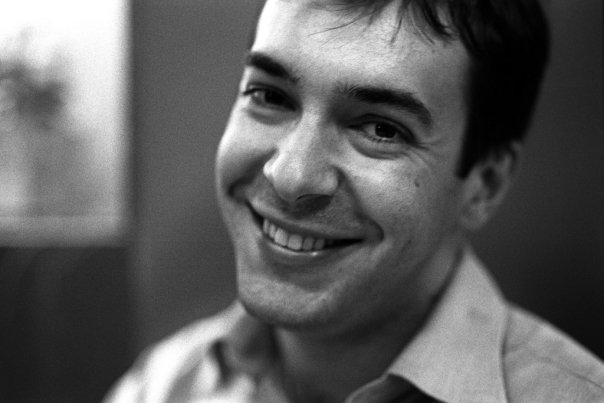
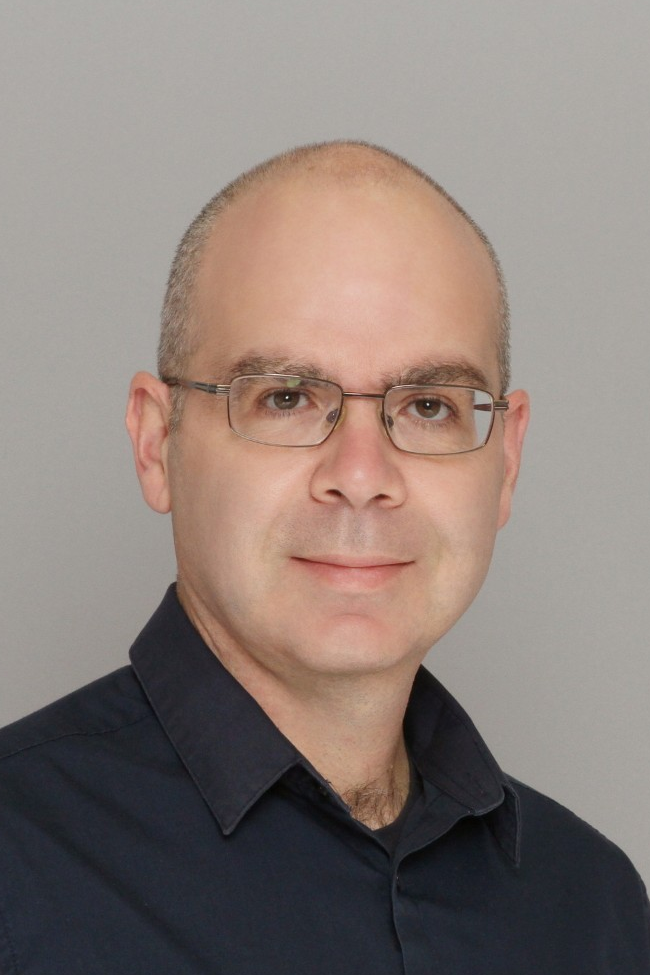
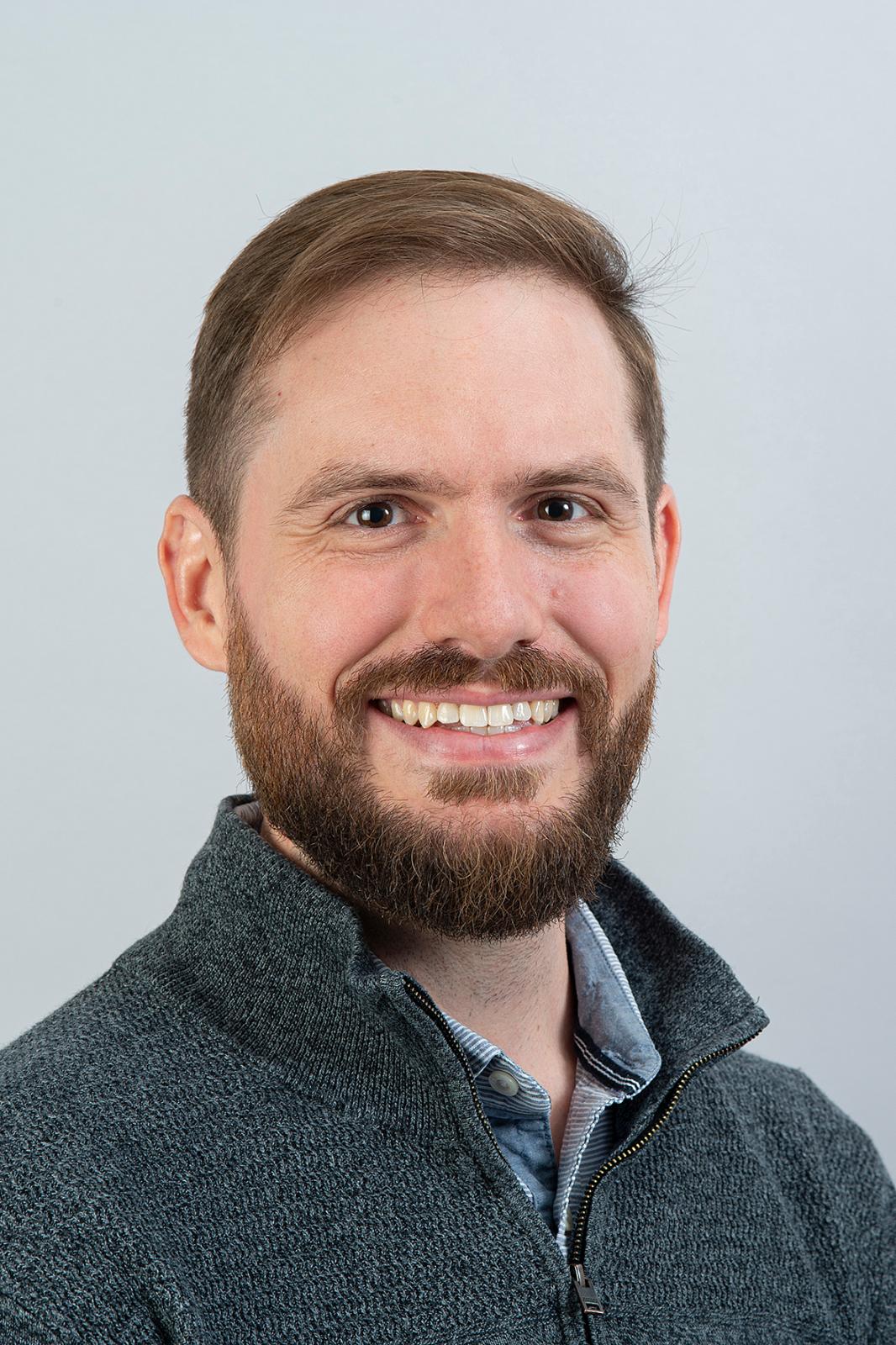
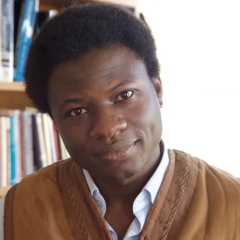
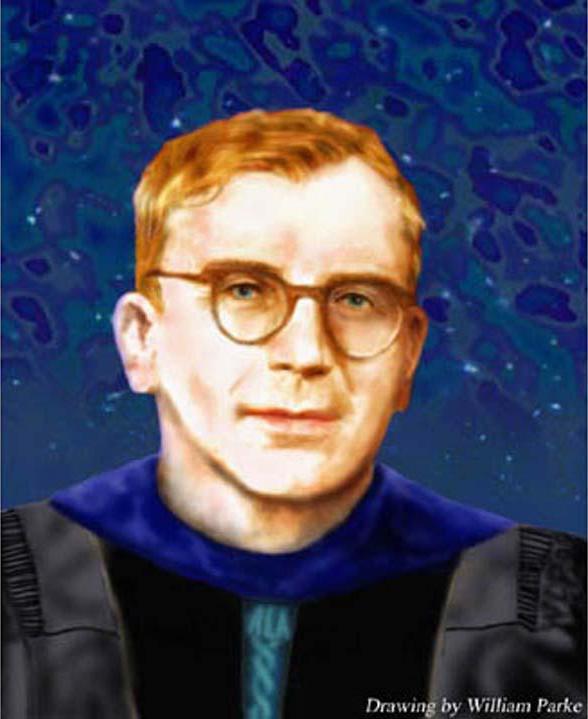
Pier Stefano Corasaniti is a Research Director at the CNRS and coordinates the COSGAL (Cosmology & Galaxies) research group at the Paris Observatory , where he leads the COS (Cosmology: Origin & Structures) team within the Laboratoire d’Étude de l’Univers et des Phénomènes Extrêmes (LUX). He is a member of the Euclid mission consortium and collaborates with international programs such as CHEX-MATE and The300 Project. Primary Affiliation: CNRS Host Institution: Paris Observatory Research Group: COSGAL Team Leadership: COS (Cosmology: Origin & Structures) His research focuses on cosmology and extragalactic astrophysics, particularly dark energy and dark matter, using numerical simulations of cosmic structure formation. His work integrates theoretical models with observational data from international collaborations. Other interests include computational physics applications in biophysics, finance, and Bayesian statistical data analysis. Scientific Awards: ERC Starting Grant (1.5 M€) for 'Exploring Dark Energy through Cosmic Structures' (EDECS) Corasaniti earned his Physics degree at the University of Rome 'La Sapienza' with a thesis on non-Gaussian signatures of topological defects in the Cosmic Microwave Background (CMB), supervised by Franco Occhionero and Luca Amendola. He obtained a PhD at the University of Sussex on non-standard dark energy scenarios under Ed Copeland, followed by postdoctoral research at Columbia University's Institute of String, Cosmology and Astroparticle Physics. Beyond academia, he enjoys music, literature, and strategy games.
Bohdan Hnatyk is a Leading Researcher and Reader (equivalent to Associate Professor) at the Department of Astronomy and Space Physics, Physical Faculty, Taras Shevchenko National University of Kyiv. He has been affiliated with the university since 2002, previously serving as Director of the Astronomical Observatory (2001-2004) and Head of the Scientific Laboratory "Astronomical Observatory" (2004-2008). His educational credentials include: M.Sc. in Physics from L'viv State University (1974) Ph.D. in Physical and Mathematical Sciences from Main Astronomical Observatory NAS of Ukraine (1983) Doctor of Sciences in Physical and Mathematical Sciences from Main Astronomical Observatory NAS of Ukraine (1997) Hnatyk's research focuses on cosmic plasma physics, cosmic ray astrophysics, and cosmic topological defects. He pioneered analytical methods for shock wave propagation in supernova remnants within non-uniform media and investigated ultra-high energy cosmic ray acceleration mechanisms. His work on cosmic strings explores their astrophysical signatures, including potential gamma-ray burst production. Publication trends reveal sustained expertise in high-energy astrophysical phenomena, with recent work emphasizing multiwavelength analysis of relativistic jets and supernova remnant modeling. His current involvement in the Cherenkov Telescope Array (CTA) project demonstrates ongoing commitment to gamma-ray astronomy advancements. His recognition includes: Barabashow Prize from the National Academy of Sciences of Ukraine for astronomy research (1999) While specific student advisement details are unavailable, his leadership in the Astronomical Observatory and participation in international collaborations like CTA indicate significant research mentorship. Current projects focus on gamma-ray source analysis through the CTA observatory. Hnatyk maintains active roles in the university's Astronomical Observatory and contributes to global initiatives including the Cherenkov Telescope Array, positioning him at the forefront of observational gamma-ray astrophysics.
Dr. Jaume Jesús Carot Giner is a University Professor of Theoretical Physics at the University of the Balearic Islands (UIB), where he has been a faculty member since completing his PhD in Physics from the same institution in January 1987. He holds a Physics degree from the University of Barcelona (1982) and has maintained a distinguished academic career spanning over three decades. His institutional affiliations include an Honorary Research Fellow position at the University of Aberdeen, where he conducted a postdoctoral stay from 1987-1989 funded by a Fleming Scholarship from the British Council. Professor Carot has also held teaching positions at the Universidade da Madeira in Portugal and has conducted research stays across the United Kingdom, Canada, Germany, and Portugal. Professor Carot's research focuses on the theory of General Relativity, with particular emphasis on mathematical developments in differential geometry, exact solutions of Einstein's equations, relativistic magnetohydrodynamics, dark matter solutions, relativistic elasticity theory (applied to neutron star crust modeling), and gravitational radiation. His work bridges theoretical physics with mathematical rigor, contributing to our understanding of fundamental gravitational phenomena. His research output includes approximately sixty articles in indexed international journals and a similar number of book chapters and scientific publications. His recent scholarly contributions demonstrate continued engagement with cutting-edge topics in gravitational physics, including exact solutions of Einstein's equations with dark matter halos, relativistic magnetohydrodynamics in neutron star environments, and mathematical frameworks for gravitational wave emission. These publications reflect his sustained expertise across multiple subfields of theoretical gravity physics, maintaining relevance with contemporary research directions in the field. Honorary Research Fellow at the University of Aberdeen Professor Carot has supervised two doctoral theses along with numerous undergraduate and master's theses. He has participated in over twenty competitive research projects, serving as principal investigator for several. His academic leadership extends to significant administrative roles, including Director of the Master's Degree in Physics and Director of the Doctoral Program in Physics (both with quality recognition) at UIB. He has served in various vice-rector positions at UIB, including Vice-rector for Teaching and Postgraduate Studies, Vice-rector for Research and Postgraduate Studies (2013-2017), and Vice-rector for Research and Internationalization (2017-February 2019). His national and international influence includes membership in the CRUE R&D&I sectoral commission executive committee (2015), the EU's RIS3 Expert Group (February 2017-May 2019), and the CRUE working group for the 'Iberian Knowledge Agenda' (2018-2019). As an active member of the 'Física Gravitacional: Teoria i Observació (GRAVITY)' consolidated R&D group, Professor Carot continues to contribute to collaborative research efforts in gravitational physics. His current teaching responsibilities include 'Relativity and Geometry' for the Master's in Advanced Physics and Applied Mathematics, 'Mathematical Models of Physics' for the Mathematics Degree, and 'Classical Mechanics' for the Physics Degree, demonstrating his commitment to both advanced and foundational physics education.
Michele Re Fiorentin serves as a Fixed-term Assistant Professor in the Department of Applied Science and Technology (DISAT) at the Polytechnic University of Turin, where he is affiliated with the Institute of Fundamental Physics and Materials for Nanotechnology. His academic duties encompass teaching advanced courses such as Physics of electrified interfaces at the PhD level and foundational physics courses including Physics II for Engineering Physics students across multiple academic years up to 2025/26. His research program centers on theoretical and computational materials science , with primary interests in the electronic structure of nanomaterials, electrocatalysis for CO 2 conversion, and the optical properties of 2D materials. Employing ab initio quantum mechanical simulations and machine learning techniques, he investigates phenomena ranging from CO 2 reduction mechanisms on silver electrodes to defect engineering in tungsten disulfide monolayers, contributing to sustainable energy technologies and advanced material design. Analysis of his recent publications (2023-2025) reveals a pronounced focus on computational discovery of electrocatalysts for carbon dioxide valorization and the manipulation of quantum properties in low-dimensional systems. Key themes include voltage-dependent reaction kinetics, linear dichroism in monolayers, and strain engineering in van der Waals heterostructures, demonstrating an interdisciplinary approach that integrates physics, chemistry, and data science. Scientific Recognition: Learning to Teach (L2T) certification, Polytechnic University of Turin (June 2024) As a PhD supervisor, Re Fiorentin guides doctoral candidates in the Physics and Materials Science programs, currently mentoring Wei Wang (Materials Science, 39th cycle) and Michele Giovanni Bianchi (Physics, 38th cycle), while having successfully supervised Clara Salvini to completion (Materials Science, 35th cycle). His research is supported by collaborative grants investigating nanomaterials for energy applications and theoretical physics of matter. Within the Institute of Fundamental Physics and Materials for Nanotechnology, he actively participates in research teams focused on computational materials discovery, collaborating closely with senior scientists like Giancarlo Cicero and Francesca Risplendi on projects spanning electrocatalysis, 2D materials, and semiconductor physics.
Professor Arttu Rajantie is a Professor of Theoretical Physics at Imperial College London's Department of Physics in the Faculty of Natural Sciences. He serves as Admissions Tutor for Physics undergraduate programmes and joined Imperial College in 2005 after postdoctoral positions at Sussex and Cambridge. His research focuses on quantum field theory applications in cosmology and particle physics. Research interests include quantum field theory, cosmology, particle physics, and magnetic monopole detection through the MoEDAL experiment at CERN's LHC. Recent publications demonstrate strong focus on quantum phenomena in curved spacetime, inflationary cosmology, and experimental searches for exotic particles. Educational background includes a PhD from University of Helsinki, Finland. Current work involves theoretical modeling of cosmic inflation mechanisms and experimental particle detection techniques for beyond-Standard Model physics.
Professor Dimitris Tsoumbelis is a faculty member in the Department of Mathematics at the University of Patras, where he has held the position of Professor since 1989. He previously served at the University of Ioannina (1979–1989) and held academic roles including Assistant Professor and Lecturer. His educational background includes a B.Sc. (1971), M.A. (1973), and Ph.D. (1977) from The City University of New York. He also completed military service in the Technical Corps of the Greek Armed Forces (1977–1979). His research focuses on theoretical physics and mathematical physics, with expertise in general relativity, cosmology, gravitational waves, and differential equations. Key areas include cosmological models, spacetime geometry, soliton solutions, and integrable systems. Recent work explores continuous symmetric reductions of the Adler-Bobenko-Suris equations and Riemann-Hilbert formulations for nonlinear systems. Professor Tsoumbelis has taught undergraduate and postgraduate courses on differential equations, relativity, and computational mathematics using tools like Mathematica and Maple. He has held significant administrative roles, including Director of Postgraduate Studies (1997–1999) and Chairman of the Department of Mathematics (1999–2003). He has managed major research projects, including those under the EPEAEK II framework and the Karatheodory Program for fundamental research. His contributions span over 25 peer-reviewed articles in journals like Physical Review Letters, General Relativity and Gravitation, and Communications in Mathematical Physics. He has organized conferences such as NEB VI (1994) and contributed to academic leadership through roles in curriculum reform and international collaborative programs.
Dr. Peter Weck is a Research Officer in the Department of Physics at Swansea University's Faculty of Science and Engineering. He joined the theory group in October 2023 following his 2023 PhD in Physics from Johns Hopkins University. His research focuses on the low-energy frontier of string theory, particularly exploring gravitational soliton solutions in asymptotically anti-de Sitter geometries. This work addresses quantum gravity approximations, black hole microstates, and holographic connections between field theories and gravity. His expertise spans quantum gravity, holography, and supersymmetric field theories. Notable recent contributions include studies on SCFT deformations, Chern-Simons integrability, and confinement mechanisms via gravitational duals. He actively publishes in leading journals like Journal of High Energy Physics and Nuclear Physics B . Dr. Weck's work bridges string theory with gravitational physics, advancing methods for understanding black hole entropy and gauge-gravity duality. His current projects emphasize systematic construction of soliton solutions with specified supersymmetry properties.
Professor François Schiettekatte is a faculty member in the Department of Physics at the University of Montreal, affiliated with the Faculty of Arts and Sciences. He serves as Deputy Director of the Regroupement québécois des matériaux de pointe (RQMP) and leads research on ion implantation, semiconductor defects, and advanced materials for gravitational wave detectors. His work integrates experimental and computational methods, including nanocalorimetry and ion beam analysis. His research focuses on defects in semiconductors, ion beam modification of materials, and thermal noise reduction in optical coatings for detectors like LIGO. Key areas include: Ion implantation-induced defect dynamics in semiconductors Development of low-thermal-noise coatings for gravitational wave observatories Characterization of amorphous silicon relaxation mechanisms Optimization of thin film properties via rapid annealing Recent publications emphasize materials for gravitational wave detectors and high-performance coatings. He has supervised over 15 graduate students in topics like quantum dot intermixing and mirror coating optimization. His grants include strategic research funding from FRQNT and NSERC, with leadership in the RQMP network. Lab affiliations include the Laboratoire de faisceaux d'ions and the Laboratoire René-J.-A.-Lévesque, where advanced ion beam facilities enable cutting-edge material analysis. His work bridges fundamental physics and applied engineering, with implications for next-generation sensors and energy systems.
Dr. Nicholas Tailby is a Lecturer in Geology at the University of New England's School of Environmental and Rural Science. He holds a BSc (First Class Honours) and PhD from the Australian National University. His research bridges experimental mineral growth studies and natural rock analysis to understand mineral responses to environmental conditions, combining thermodynamics and kinetics to interpret geological processes. His education includes foundational training at the Australian National University, where he developed expertise in geological processes through both undergraduate and doctoral research programs. Tailby's research focuses on geochemistry, petrology, and mineralogy, with particular interest in using minerals as environmental proxies. Key themes include: Thermobarometry using quartz phenocrysts to determine pre-eruptive magma conditions Redox condition analysis through polyvalent elements in zircon and apatite Mineral response to geological changes through diffusion interface studies He maintains active collaborations across experimental and field geology. Analyses of Tailby's recent publications show strong focus on experimental geochemistry and mineral physics. Research trends include: Advanced spectroscopy techniques (XANES) for element speciation Diffusion kinetics in silicate minerals Early Earth environmental reconstruction using zircon proxies Novel applications in dark matter detection through mineral defects This interdisciplinary work spans geology, physics, and materials science. Tailby maintains memberships in professional societies including the Geological Society of Australia and Mineralogical Society of America, facilitating ongoing research collaborations and knowledge exchange. Current lab activities focus on experimental petrology setups and analytical technique development.
Daniel G. Figueroa is a Research Professor at CSIC's Instituto de Física Corpuscular, leading investigations in gravitational wave physics, cosmic inflation, and early universe phenomena. His research develops theoretical frameworks and computational tools to probe fundamental physics through cosmological signatures. Dr. Figueroa pioneered the CosmoLattice simulation code for modeling field dynamics in expanding spacetimes, enabling precision studies of reheating mechanisms, topological defect evolution, and gravitational wave generation. Current projects examine axion inflation dynamics, cosmic string signatures, and gravitational reheating scenarios. Recent publications analyze pulsar timing array data, nonlinear axion field behavior, and LISA mission science goals. His work supports next-generation gravitational wave observatories including LISA and Einstein Telescope through theoretical predictions and data interpretation frameworks. Dr. Figueroa maintains active collaboration within international consortia including the LISA Cosmology Working Group, advancing cosmic frontier research through interdisciplinary approaches.
Dr. Nico Klingner is a researcher at the Helmholtz Center Dresden-Rossendorf (HZDR) within the Ion Beam Physics and Materials Research department. His work focuses on advanced ion beam technologies, nanofabrication, and quantum engineering. He leads the Ion Beam Center group, specializing in focused ion beam (FIB) applications including He-ion microscopy, defect engineering in semiconductors, and materials characterization. Research interests include nanoscale materials modification, quantum emitter development in silicon, radiation-tolerant semiconductors, and sustainable catalytic systems. His group develops novel ion beam strategies for low-thermal-conductance materials and explores cosmic particle origins through radionuclide analysis. Key contributions include wafer-scale fabrication of telecom single-photon emitters, programmable quantum defect activation, and roadmap analysis for FIB technologies. His techniques enable precise nanofabrication down to 10nm scale and advanced in-situ imaging of material dynamics. Expertise spans Rutherford backscattering spectrometry, time-of-flight secondary ion mass spectrometry (ToF-SIMS), and correlative nanoparticle analysis using instruments like npSCOPE. His work bridges fundamental materials science with applied technologies in quantum devices, catalysis, and aerospace materials.
Levon Pogosian is a Professor and Department Chair in the Department of Physics at Simon Fraser University . His research focuses on theoretical cosmology, including dark energy, cosmic acceleration, cosmic microwave background (CMB), structure formation, and topological defects like cosmic strings and domain walls. He has developed computational codes such as CMBACT and MGCAMB for cosmological analysis. Education: BSc (Yerevan), MSc (West Virginia), PhD (Case Western Reserve) Research Interests: Particle cosmology, fundamental physics from CMB, topological defects, primordial magnetic fields, and modified gravity theories. Scientific Awards : B.C. Sugar Achievement Award at SFU (2022) 2021 Buchalter Cosmology Prize (1st Prize, shared with Karsten Jedamzik) Research Group : He leads the Cosmology Group at SFU, mentoring students and researchers in studies of cosmic defects and cosmological models.
Dr. Devin Crichton holds the Professorship for Physics at ETH Zürich, focusing on observational cosmology and radio astronomy. His research centers on large-scale structure studies, galaxy cluster physics, and cosmic microwave background (CMB) analysis through major experiments like the Atacama Cosmology Telescope (ACT) and the Hydrogen Intensity Real-Time Analysis eXperiment (HIRAX). Key projects include developing SKA simulation frameworks and investigating 21cm intensity mapping for cosmological insights. His work spans telescope instrumentation (e.g., HIRAX antenna design), CMB power spectrum analysis, and SZ-selected cluster catalogs. Contributions include advancing understanding of cosmic string wakes and quasar feedback mechanisms through multi-wavelength observations. Dr. Crichton collaborates on international initiatives such as the Simons Observatory and LiteBIRD, addressing questions about dark energy, neutrino physics, and early universe cosmology. His technical expertise includes data pipeline development for real-time analysis and precision measurement systems for radio telescope noise characterization.
Ousmane Kodio is an Assistant Professor in the Department of Mechanical Engineering at the University of California, Santa Barbara (UCSB), where he leads the TEST Lab (Theory, Experiment, Simulation To Test ideas). His research spans soft matter, fluid mechanics, and pattern formation, with applications in soft robotics and health. His educational background includes a PhD in Mathematics from the University of Oxford (Lincoln College, Senior Scholar), an Engineering degree from ESPCI Paris, and a Master's in Theoretical Physics of Complex Systems from Pierre and Marie Curie University. Prof. Kodio's work focuses on understanding patterns in soft matter through an eclectic approach combining theory, experimentation, and simulation. Key research areas include active soft matter (studying filamentary structures from DNA to cosmic scales), pattern formation in multi-physics systems, machine learning for complex systems, and societal mathematics addressing real-world problems in developing countries. His methodology emphasizes data-driven discovery of physical laws in systems ranging from biological growth to collective behavior. Analysis of his 2019-2023 publications reveals a dominant focus on elastic instabilities (buckling, wrinkling) in thin structures, with interdisciplinary expansion into public health through CO2 monitoring for airborne disease transmission. The TEST Lab consistently bridges fundamental mechanics with practical applications across engineering and biological contexts. Scientific recognition includes: Regents' Junior Faculty Fellowship (2025) Prof. Kodio mentors students in the TEST Lab and teaches ME 211 (Pattern Formation and Self-Organization) for interdisciplinary graduate students and ME 16 (Dynamics) for undergraduate mechanical engineers. While specific grants beyond his fellowship aren't detailed, his research integrates societal impact through mathematical modeling for challenges like malaria and locust infestations. Current lab projects explore growth mechanics in living filaments and predictive models for disease transmission, with future work targeting soft robotics advancements. The TEST Lab maintains strong cross-disciplinary collaborations across engineering, biology, and social sciences, operating at the intersection of applied mathematics and real-world problem solving for both technological innovation and societal benefit.
George Gamow was a renowned theoretical physicist and professor at George Washington University (1934–1956), known for pioneering work in astrophysics, cosmology, and genetics. He developed the Big Bang theory’s physical framework, contributed to nuclear physics, and explored the genetic code. His annual theoretical physics conferences brought top scientists like Bohr, Einstein, and Feynman to Washington. Education: Studied at Odessa's Novorossiya University and Leningrad University, with fellowships at Copenhagen and Cambridge. Escaped Soviet oppression via defection in 1933. Became a U.S. citizen in 1939. Research focused on stellar energy mechanisms, nucleosynthesis, cosmic background radiation prediction, and DNA-protein coding. His popular science books (e.g., One, Two, Three... Infinity ) inspired future scientists. Awards: 1956 Kalinga Prize (UNESCO) for science communication. Advised key students like Ralph Alpher (Big Bang nucleosynthesis) and Charles Critchfield (thermonuclear reactions). Collaborated with Edward Teller, Niels Bohr, and Francis Crick. Led research at Carnegie Institution, advised U.S. military, and later taught at University of Colorado (1956–1968). Left a legacy blending bold theoretical work with public science education.